Amazing sesame-crusted salmon
What to Use Instead of Breadcrumbs for Breading: 9 Crunchy Swaps
Updated Sep 18, 2026
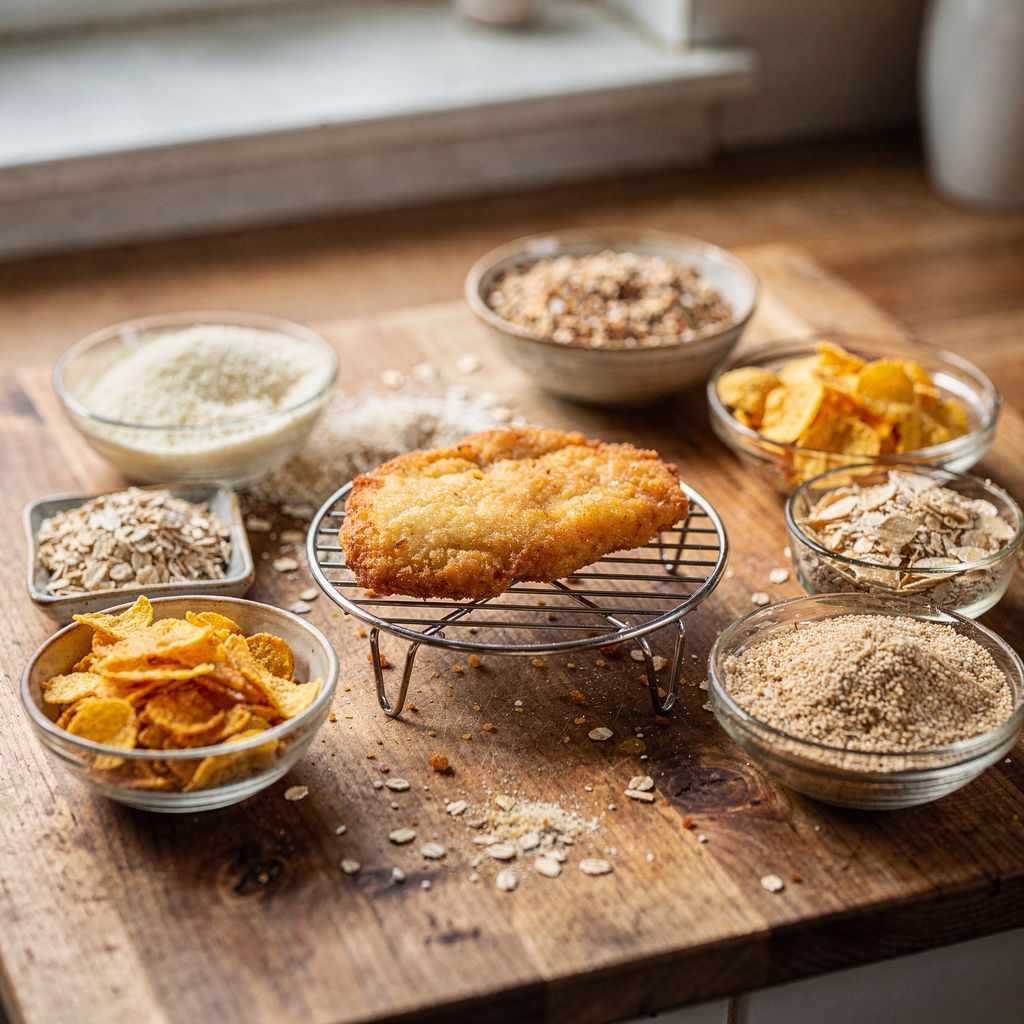
You can swap breadcrumbs for panko, crushed cornflakes, oats, ground nuts, sesame seeds, grated parmesan, coarse cornmeal, shredded coconut, or crushed crackers — almost always in a 1:1 ratio. But it's not just about what goes in the third bowl. Fatty, sweeter coatings brown faster, so they need a lower temperature, and a coarser crumb behaves differently than a fine powder. Here's every swap, with its ratio, coarseness, and the right frying or baking temperature.
You can replace breadcrumbs with panko, crushed cornflakes, oats, ground nuts, sesame seeds, parmesan, coarse cornmeal, coconut, or crushed crackers — almost always in a 1:1 ratio. Here's every substitute, with its ratio to breadcrumbs and frying temperature:
Panko — 1:1, fry at 170–180°C (340–355°F). The crunchiest, most all-purpose swap.
Cornflakes (unsweetened) — 1:1, 160–170°C (320–340°F). Crush to 2–3mm pieces.
Oats — 1:1, bake at 200°C (400°F). Give large flakes a quick pulse in a blender.
Ground nuts and almonds — 3/4 the volume of breadcrumbs, 150–160°C (300–320°F). Brown quickly.
Sesame and flax seeds — 1:1, 160–170°C (320–340°F). Best mixed with starch.
Grated parmesan — never on its own, always 1:1 with panko or oats, 160°C (320°F).
Coarse cornmeal (polenta) — 1:1, 170–180°C (340–355°F). A craggy golden crust.
Shredded coconut — 1:1, 150–160°C (300–320°F). Sweeter, good with fish and chicken.
Crushed crackers, pretzels, or crisps — 1:1, 160°C (320°F). The emergency fix using whatever's in the cupboard.
The 1:1 ratio is by volume, not weight. Breadcrumbs are dense, while panko and oats are airy — 100g of breadcrumbs is roughly equivalent to 50–60g of panko at the same volume.
A breadcrumb substitute needs to be dry, coarsely crushed to 1–3mm, and ideally sugar-free — that way it soaks up the egg, tightens up when heated, and forms a crust that holds together. Anything that ticks those three boxes can do the job.
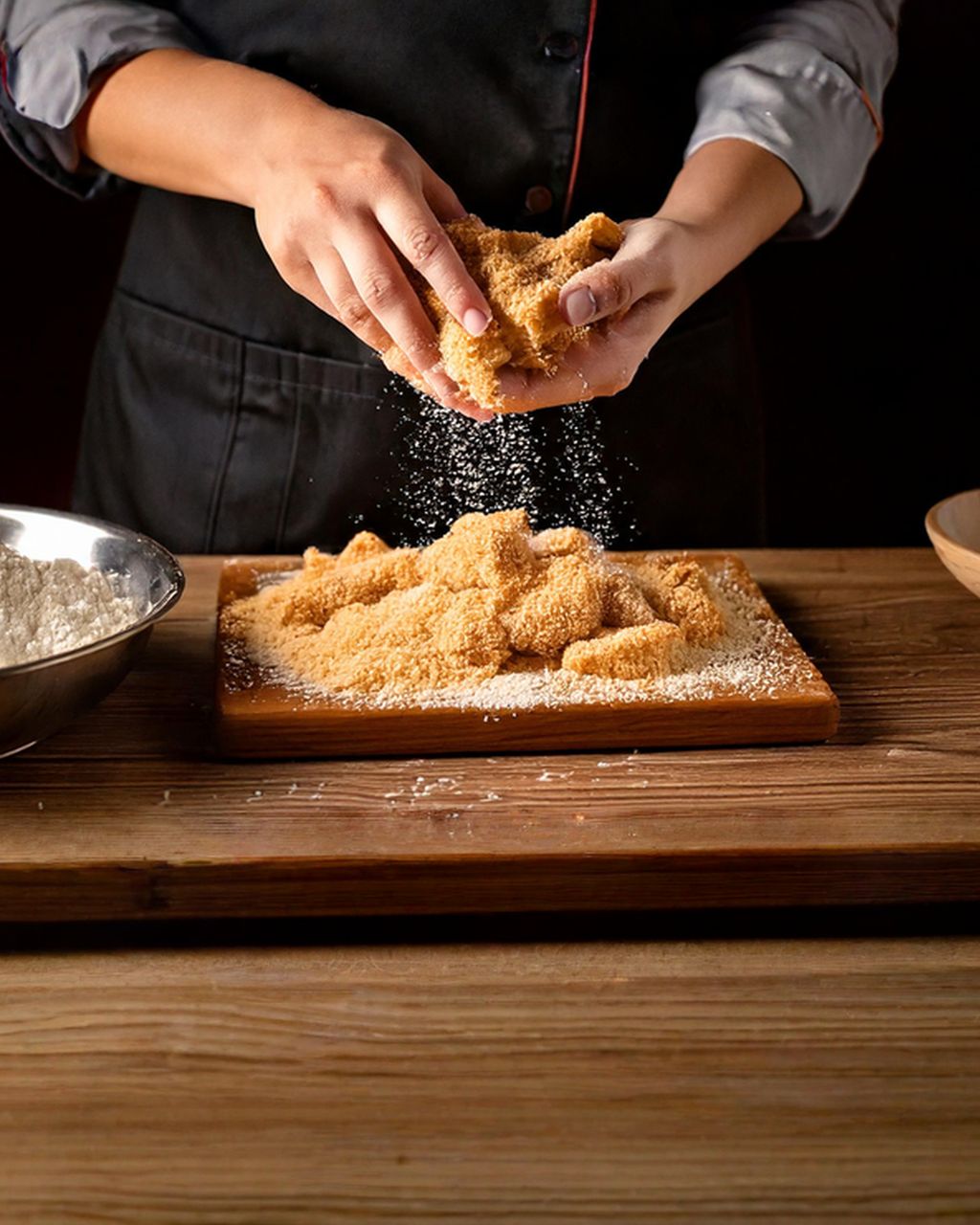
The principle stays the same as a classic three-step breading. Flour or starch in the first bowl dries the surface of the meat, egg in the second acts as glue, and the third layer is what gives you the crunch. A substitute only changes the third bowl — leave the first two as they are. We covered the full three-step method in detail in Three-Step Breading, Step by Step.
Two things that決定 the outcome:
Coarseness. The coarser the crumb, the more little facets there are to go crunchy. A powder made from over-blended cornflakes behaves like flour and gives you a hard shell, not a crust. Aim for a texture like coarse semolina.
Fat and sugar in the coating. Nuts, coconut, cheese, and cereal all brown noticeably faster than bread-based breadcrumbs. Drop the frying temperature by 10–20°C for these, or you'll end up with a burnt coating and a raw centre.
And one extra step that works for every substitute: let the breaded piece rest in the fridge for 10–15 minutes. The egg firms up, the coating bonds properly, and it won't slip off during frying.
Panko is the best breadcrumb substitute if crunch is your main priority — swap it in at a 1:1 ratio and fry at the same 170–180°C. Japanese panko is milled from crustless white bread, which gives light flakes rather than a dense powder. The flakes don't pack down into a solid layer, air gets trapped between them, and the fried coating ends up feeling lighter than a dense layer of regular breadcrumbs.
It suits pretty much everything: chicken and pork schnitzels, fried cheese, fish fillets, breaded vegetables, and prawns.
Make panko at home: trim the crusts off toast bread or light white bread, grate it coarsely on a box grater (not a blender — that turns it to dust), and spread it on a baking tray. Dry it out at 120°C (250°F) for 10–15 minutes, until it's dry but still white. Once it starts to turn golden, it's too late — it'll just burn during frying.
Crushed unsweetened cornflakes swap in for breadcrumbs at a 1:1 ratio and give the loudest crunch of any substitute on this list. Put them in a bag and roll over them with a rolling pin to get pieces about 2–3mm — in a blender they turn to dust in a second.
Watch out for two things:
Sugar. Even "unsweetened" cornflakes typically have around 6–9g per 100g depending on the brand, so they brown faster. Fry at 160–170°C, not 180°C.
Gluten. Cornflakes are often sweetened with barley malt extract, so they're not automatically gluten-free. For a gluten-free version, look for certified gluten-free corn flakes or extruded corn puffs.
Anything else crunchy from the cupboard works the same way: salted crackers, pretzel sticks, pretzels, rusks. These are already salted, so skip salt in the coating entirely and just season the meat before breading it.
Oats replace breadcrumbs 1:1 and are almost certainly the cheapest option you already have at home. Use fine oats as they are; pulse large rolled oats for 3–4 seconds first — whole flakes are too big, stick out, and break off during frying.
Oats don't give as sharp a crunch as panko — they roughen the surface and add a nutty flavour instead. Two things bump up the result:
Mix the oats 1:1 with panko or coarse cornmeal. You get the oaty flavour plus a proper crunch.
An oat coating behaves better baked in the oven at 200°C (400°F) than deep-fried. In hot oil it darkens fast and tastes scorched.
Ground nuts replace breadcrumbs at 3/4 the volume — they're denser and fattier, so using the same amount would give you a heavy, greasy coating. Walnuts, hazelnuts, almonds, and pistachios all work; flaked almonds or coarsely chopped kernels are best, not a fine ground meal.
The fat in nuts speeds up browning, so fry at 150–160°C and expect the coating to be done sooner than with breadcrumbs. The oven is even more foolproof: 190–200°C, 18–20 minutes.
A nut coating is great on fish fillets, chicken breast, goat's cheese, and celeriac schnitzels. For thicker cuts of meat, flatten them to about 1cm first — otherwise the nuts turn bitter before the meat cooks through.
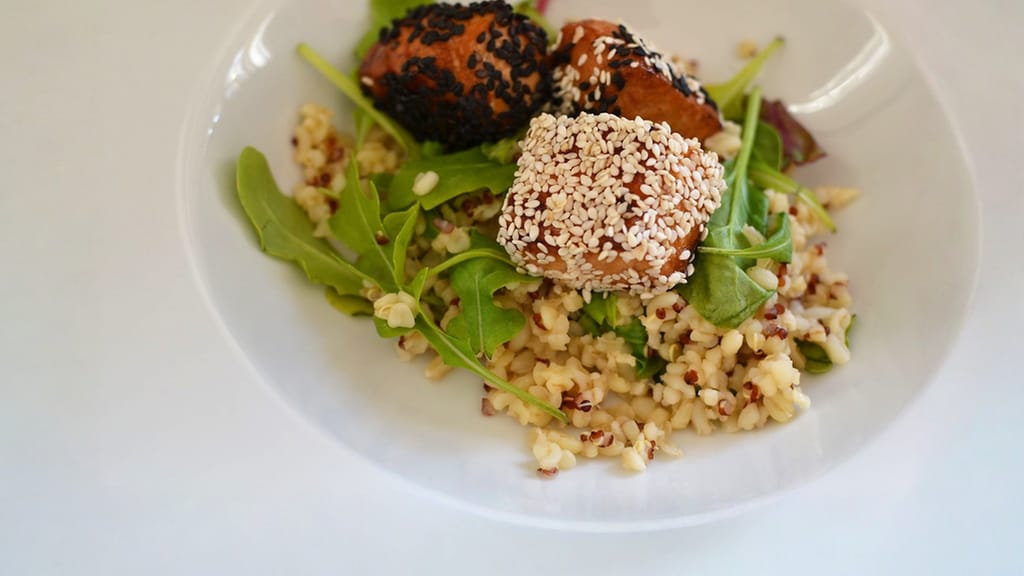
Sesame seeds replace breadcrumbs 1:1, but on their own they don't hold as well — the seeds are smooth and a thick layer just sheds. The fix is to mix them with cornstarch or coarse semolina at a ratio of 2 parts sesame to 1 part starch: the starch binds the seeds together and helps them stick to the egg.
Don't toast the sesame before breading. It toasts on its own while the meat fries, and pre-toasted seeds would turn bitter. Fry at 160–170°C.
Coarsely crushed flaxseed, crushed sunflower seeds, and poppy seeds all work the same way — but flax and poppy coatings darken quickly, so baking suits them better than deep-frying.
Amazing sesame-crusted salmon
Sesame-crusted salmon: a seed coating standing in for breadcrumbs on fish
Replace breadcrumbs with parmesan only halfway — always 1:1 with panko, oats, or almond flour. The cheese melts as it heats, fusing the coating into one solid crust; without a drier component it'll just run off onto the bottom of the pan.
Three rules for a cheese coating:
Lower the heat: 160°C in the pan, or 190–200°C in the oven.
Skip the salt: real parmesan has around 1.6g of salt per 100g, and pre-grated blends often have far more — check the label. Don't add extra salt to the coating.
Use a hard cheese, not semi-hard: parmesan, grana padano, or pecorino. Cheeses like Edam just melt into a puddle.
A cheese crust is best on vegetables — courgette, aubergine, cauliflower, asparagus. It doesn't matter here that the coating ends up more baked-on than fried.
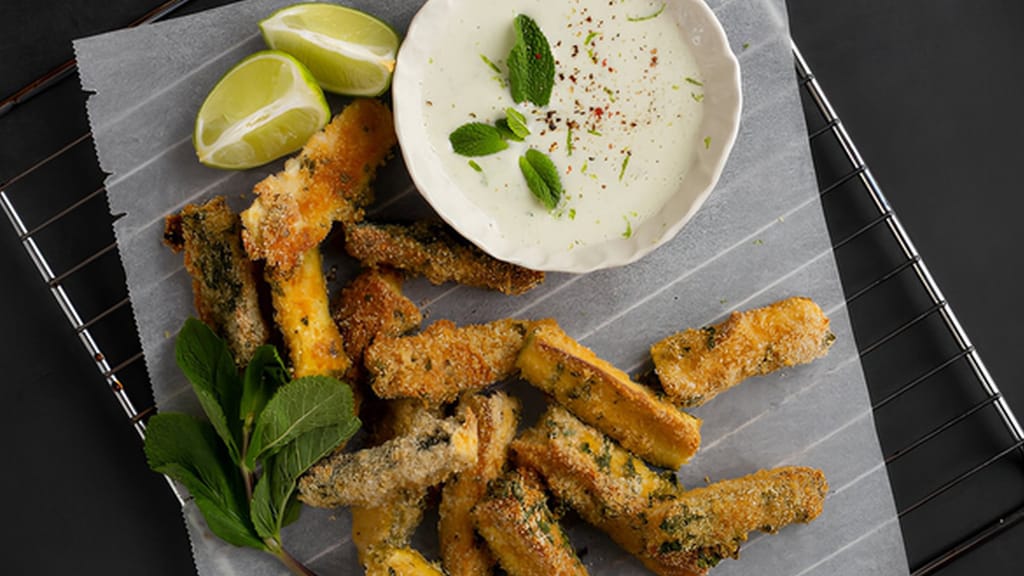
Crispy zucchini fries with parmesan crust
Courgette fries with a parmesan crust: breading without breadcrumbs in practice
Coarse cornmeal replaces breadcrumbs 1:1 and gives a craggy golden crust that stays crunchy even after cooling. It's the best choice for fish fillets, squid, courgette, and fried green tomatoes — anywhere you want a firm shell around a soft centre.
Go for coarse cornmeal, not fine instant polenta. Fine cornmeal soaks up moisture, swells, and gives a hard, floury coating.
Cornstarch is a different category altogether: it doesn't coat on its own, but a tablespoon of starch per 100g of any substitute dries out the coating and noticeably boosts the crunch. It even works better than plain flour in the first bowl of a three-step breading.
Shredded coconut replaces breadcrumbs 1:1, but it's sweet and fatty, so fry at 150–160°C and keep a close eye on it. It works best mixed 1:1 with panko — the coconut brings flavour, the panko brings structure.
It's great on prawns, chicken strips, fish bites, and fried halloumi-style cheese. A sweet-and-sour or chilli dip pairs naturally with a coconut coating, since the sweetness of the crust needs something to balance it.
Coconut flour is a different thing from shredded coconut: it's had the fat removed, absorbs huge amounts of moisture, and doesn't work as a coating on its own. Only use it in the first bowl in place of flour.
Crushed crisps or tortilla chips replace breadcrumbs 1:1 and are the quickest emergency fix — but also the fattiest and saltiest coating of the bunch. Crisps have around 33–37g of fat and roughly 1.3–1.5g of salt per 100g, so the breaded food ends up noticeably greasier.
You can crush them by hand right in the bag — no blender needed. Fry at 160°C, or better yet, bake at 200°C — in the oven, their own fat takes care of the golden colour without needing extra oil.
Gluten-free breadcrumb substitutes include cornmeal breadcrumbs, coarse polenta, almond flour, crushed rice cakes, certified gluten-free oats, or millet and buckwheat flakes — all used at a 1:1 ratio.
Don't forget the first bowl of the three-step breading. Plain wheat flour there brings the gluten straight back, even if the coating itself is gluten-free. Swap it for rice flour or cornstarch — starch also dries out the coating and improves the crunch.
Four traps that trip people up with gluten-free breading:
Cornflakes are often sweetened with barley malt — look for a version specifically labelled gluten-free.
Regular oats aren't gluten-free due to cross-contamination during processing; you need certified ones.
Soy sauce in marinades usually contains wheat; use tamari instead.
Shared frying oil used for regular breaded food contaminates the coating — fry in fresh, clean oil.
Gluten-free coatings generally brown faster and hold together less well, since they lack gluten to act as a binder. Resting in the fridge before frying matters even more here than with wheat breadcrumbs.
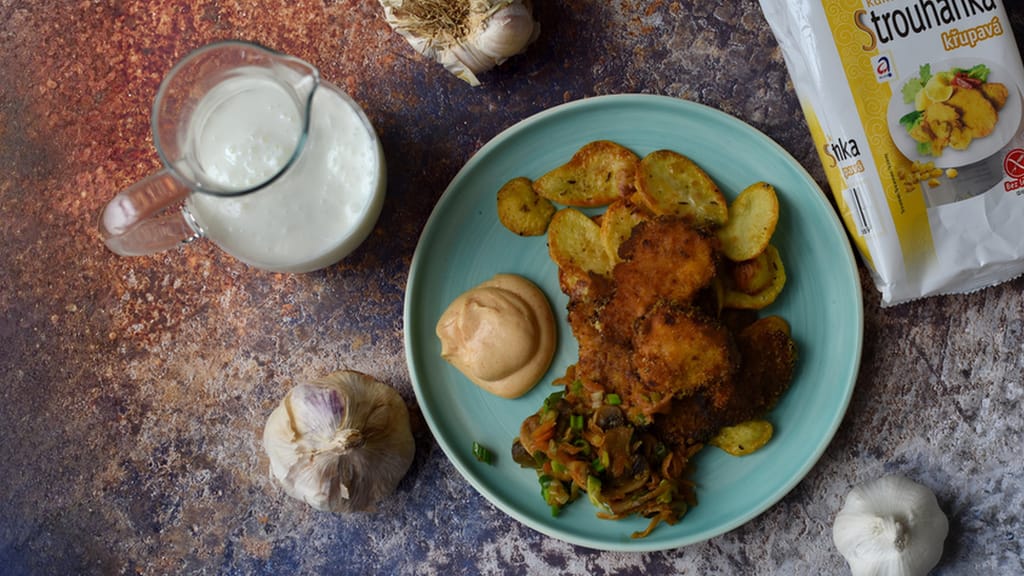
Baked crispy cutlets in cornmeal breading
Baked crunchy schnitzels in cornmeal breadcrumbs: a gluten-free swap, step by step
Classic breadcrumbs and panko can handle 170–180°C, while all the fattier, sweeter substitutes want 150–160°C. That 20°C difference is what decides whether you end up with a golden coating or a black one.
Specifically:
170–180°C (340–355°F) — panko, homemade bread breadcrumbs, coarse cornmeal.
160–170°C (320–340°F) — cornflakes, sesame, crackers, crisps.
150–160°C (300–320°F) — ground nuts, almonds, coconut, parmesan blends.
Oats — bake at 200°C (400°F); not suited to deep-frying. In hot oil they darken before the meat cooks through.
A few other things that matter:
At least 1cm of oil. The schnitzel should float in the oil, not sit on the bottom of the pan — otherwise the underside of the coating scorches.
Don't overcrowd the pan. Every extra piece drops the oil temperature by 10–15°C, and the coating soaks up fat instead of frying.
Oven at 200°C (400°F), fan setting. Drizzle the coating with oil (about 2 tablespoons per tray) or toss it with a tablespoon of oil beforehand — without fat it just dries out instead of browning. Bake for 18–25 minutes, flipping halfway.
Air fryer: 190°C (375°F), 12–15 minutes. The coating needs to be drizzled with oil, or it'll stay pale and floury.
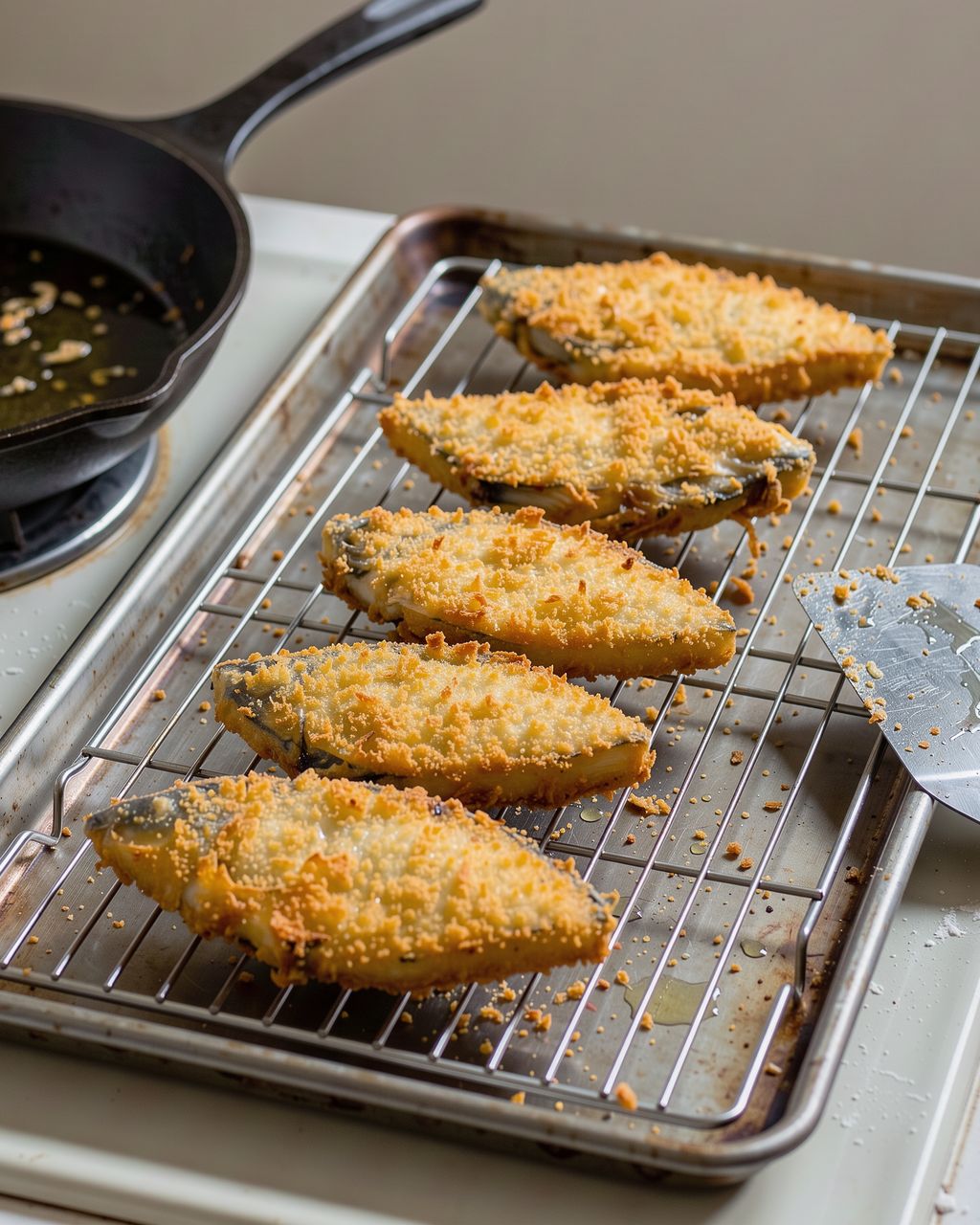
After frying, rest on a wire rack, not on paper towel. Paper traps steam under the coating, and the crust turns soft within two minutes.
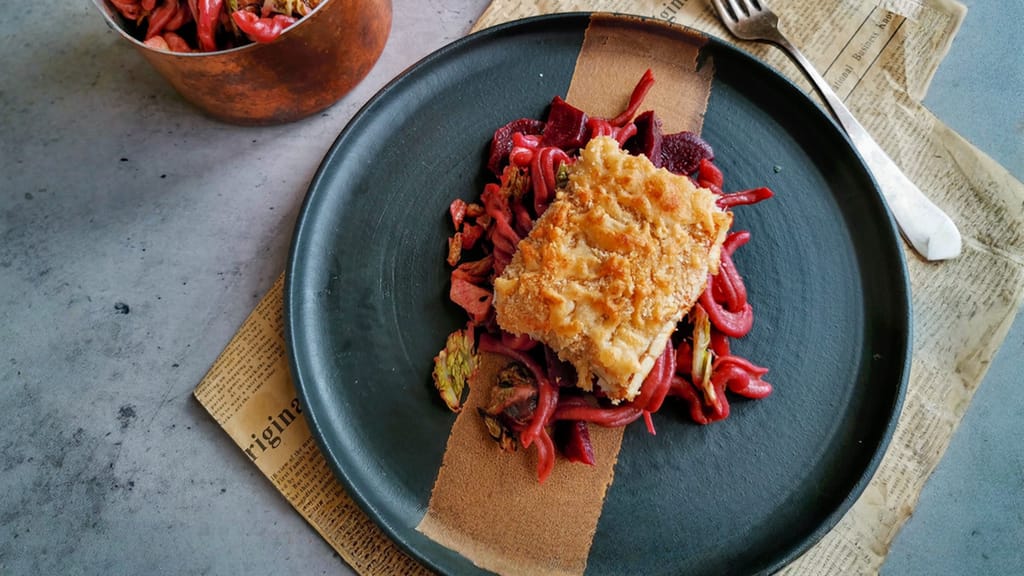
Fish fillets with a crispy crust
Fish fillet with a crunchy crust: an oven-baked coating instead of fried breadcrumbs
The most common mistake is blitzing the substitute too fine — the crumb turns into flour, and the coating goes hard instead of staying crunchy. Five more things worth watching for:
A damp meat surface. Nothing sticks to wet meat. Pat it dry with a paper towel before it goes anywhere near the flour.
Skipping the first bowl. Without flour or starch, the egg slides straight off the meat and the coating comes loose while frying.
No resting time. 10–15 minutes in the fridge after breading is the difference between a crust that holds and one that ends up floating in the oil next to the schnitzel.
Using the same temperature for everything. Nuts and cheese at 180°C turn bitter before the meat is even cooked through.
Salting an already-salty coating. Crackers, crisps, and parmesan are all salty on their own. Season the meat, not the coating.
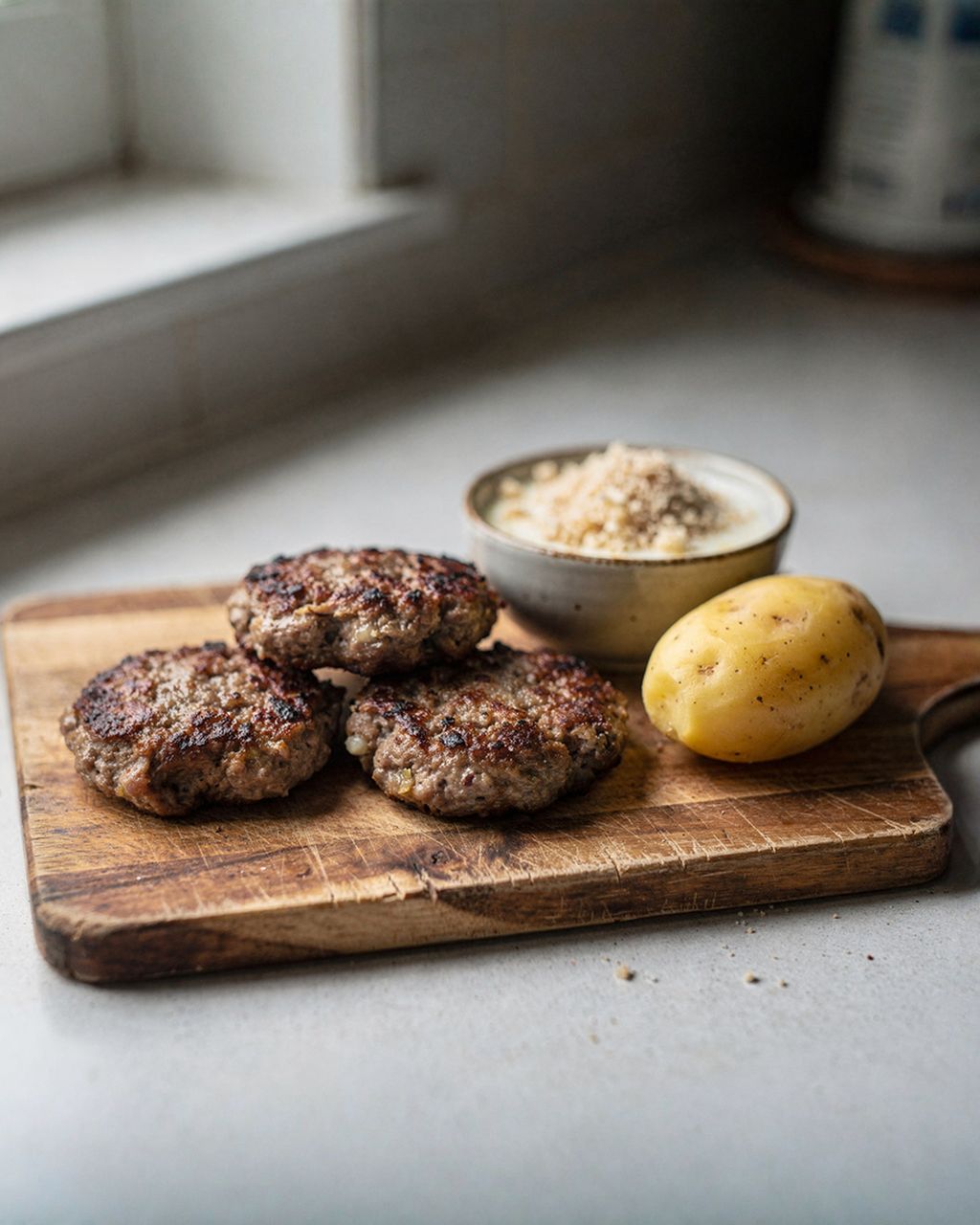
When you're replacing breadcrumbs inside the meat — in meatloaf, meatballs, or stuffed vegetables — you're after the opposite of crunch. A binder needs to soak up the juices and hold everything together, not form a crust.
For 500g of minced meat, these all work:
50g of oats soaked for 10 minutes in 50ml of milk or stock.
1 bread roll or 2 slices of bread soaked and squeezed out (the classic method breadcrumbs simply speed up).
100g of cooked, cooled rice or cold cooked potatoes, coarsely grated.
2 tablespoons of ground flaxseed — it binds moisture and also takes over part of the egg's job.
If your meatloaf is also missing the egg, we've broken down the substitute ratios in What to Use Instead of Eggs in Meatloaf and Meatballs.
Yes, but you'll get a thin shell rather than a crunchy crust — a flour coating is always just a stopgap. Cornstarch or potato starch works better, or a 1:1 flour-and-starch mix: the starch dries out the coating and gives a noticeably crunchier result once fried than flour alone. It's fine for thin slices of meat, squid, or courgette, but not for a proper schnitzel.
In a three-step breading, egg can be replaced with thick plain yogurt, Dijon mustard, aquafaba (chickpea brine), or plant milk mixed with a tablespoon of starch per 100 ml. All of these hold the coating about as well as egg — just apply them in a thin layer and let the breaded piece rest in the fridge for 15 minutes, since coatings stick more slowly without egg. Mustard also adds a flavour that works nicely with pork and chicken.
Dry breading mixes (panko, crushed cereal, crackers, polenta) keep for roughly 2–3 months in an airtight container somewhere dry and dark. Nut, almond, and coconut coatings go rancid, though — store those in the fridge for about 3 weeks, or freeze them straight away. Your nose is the best judge either way: if a crumb mix smells like old oil or tastes bitter, toss it, since frying only makes that bitterness stronger.
Yes, and mixing often gives the best result — combine one textural component with one flavour component in a 1:1 ratio. Reliable pairings include panko with parmesan, oats with cornmeal, coconut with panko, or almonds with sesame. The rule of thumb: at least half the mix should be dry and low-fat, otherwise the coating turns soft and starts weeping.
To dust a greased tin, use coarse semolina, ground poppy seeds, ground nuts, or coconut — for a sweet bundt cake, cocoa mixed with sugar works too. For topping bakes and gratinated pasta, panko, crushed crackers, or coarse cornmeal mixed with parmesan and a spoonful of melted butter does the job — without fat, the topping just dries out instead of turning golden.
One recipe worth heating the oven for, one tip, and one deal from the shop. Nothing else.