Spring meatloaf with wild garlic and sweet potato mash
Updated Sep 5, 2026
You can replace the egg in meatloaf and meatballs with soaked bread, boiled potato, starch, oats, or ground flaxseed — the basic rule is 30g breadcrumbs plus 60ml milk per egg, while concentrated binders like starch or psyllium need only 3–10g. And here's the key thing: egg was never really the main binder in ground meat. What actually holds it together is swollen starch from bread and the proteins that salt and a few minutes of kneading pull out of the meat. Once you understand that, swapping out the egg is easy — and your meatloaf often turns out even more tender without it.
One egg per 500g of ground meat can be replaced with 30g breadcrumbs and 60ml milk, 60g grated boiled potato, 10g starch, 30g fine rolled oats, or 7g ground flaxseed. The exact amount depends on one thing only — whether your recipe already includes soaked bread.
If your recipe already has a roll or bun soaked in milk (classic meatloaf): just skip the egg and add an extra 10g of potato starch, or 15g breadcrumbs and 30ml milk. No more than that is needed.
If your recipe has no bread at all (meatballs made from just meat and onion): for every egg, make a panade from 30g breadcrumbs and 60ml milk.
Ratios per egg — meaning per 500g of ground meat:
Breadcrumbs + milk: 30g breadcrumbs, 60ml milk or stock, let sit 10 minutes
Soft bun crumb + milk: 40g crumb, 40ml milk, 10 minutes
Cold boiled potato, finely grated: 60g, no extra liquid needed
Potato or corn starch: 10g mixed into 30ml cold milk
Fine rolled oats: 30g, 60ml milk or stock, 15 minutes
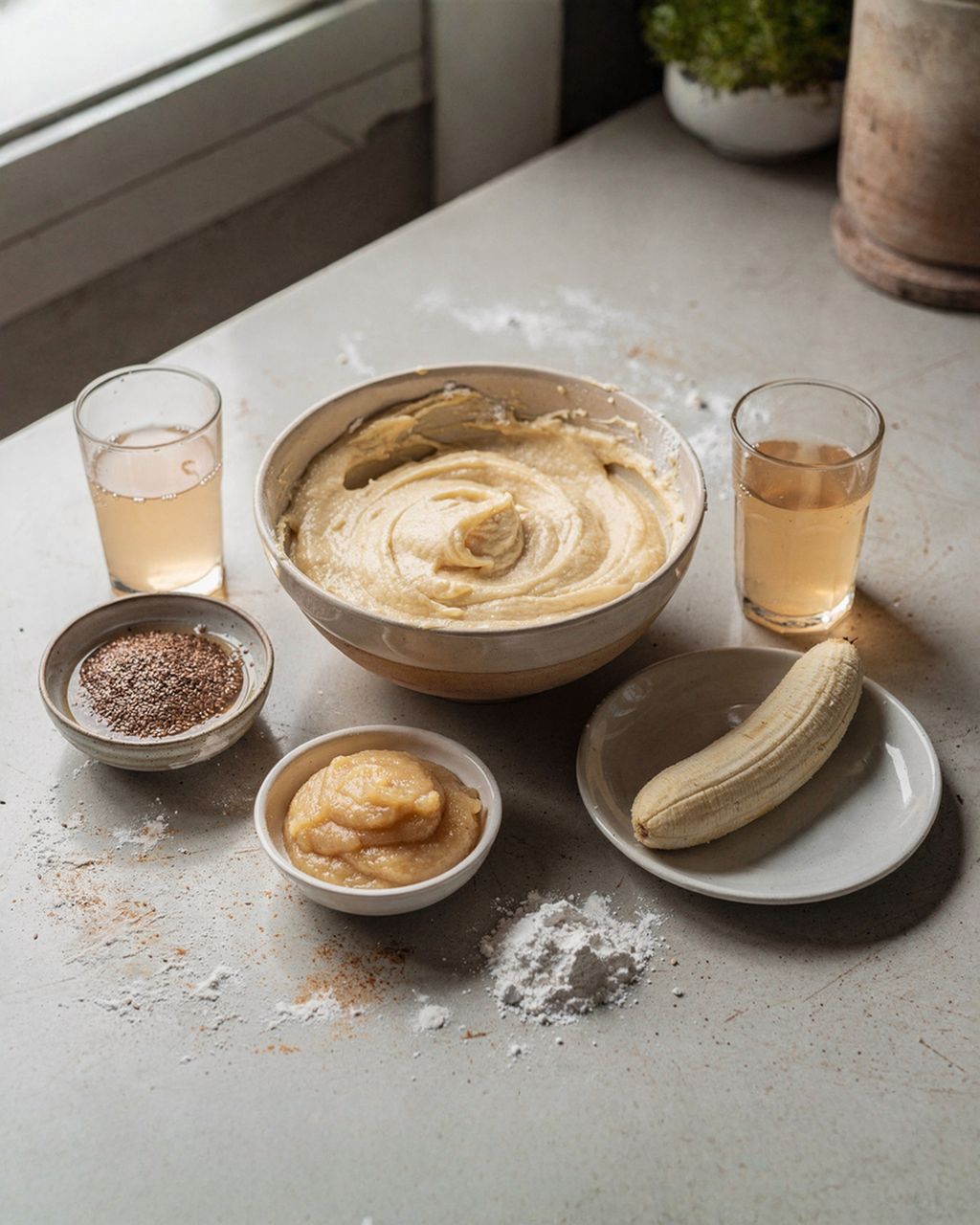
Ground flaxseed: 7g (1 tbsp), 45ml warm water, 10 minutes
Chia seeds: 10g (1 tbsp), 45ml water, 15 minutes
Psyllium: 3g (weigh it rather than use a teaspoon — the amount varies a lot between whole husks and powder), 60ml water, 5 minutes
Grated hard cheese: 30g, no liquid
Instant mashed potato flakes: 15g, no liquid — an emergency fix for a mixture that's too wet
Always let the dry ingredient swell in liquid first, never add it straight into the meat. You'll see why just below.
Egg barely binds meatloaf and meatballs at all — it's about three-quarters water and contains only around 6g of protein — the mixture is really held together by swollen starch from bread and myosin drawn out by salt. One egg without its shell weighs around 50g, of which roughly 37g is water. That protein does set during baking and forms a thin web between the meat and breadcrumbs, but it's a weak contribution compared to two things that work far more powerfully in the mixture.
Gelatinized starch from soaked bread. When heated, starch absorbs water, swells, and forms a sticky network between the muscle fibers. At the same time, it weaves between the meat proteins and stops them from contracting too much during baking and squeezing out the juices. That's why meatloaf with a panade is more tender than meatloaf without one — and why egg simply can't replace it.
Myosin drawn out by salt. Salt dissolves the muscle proteins on the surface of ground meat. When you knead the mixture for a bit, these proteins link up with each other and the mixture starts sticking to itself. This is the exact same mechanism that holds sausage together — and sausage has no egg in it at all.
Egg can actually cause harm, too. Its protein sets before the meat does, and in excess it pushes water out — that's why meatballs made with three eggs turn out rubbery and dry instead of firmer. The tried-and-tested ratio is one egg per 500g of meat, and anything above that makes the result worse.
The practical takeaway: without eggs, you're not missing a glue. You're missing a bit of water and a bit of protein — and either substitute from the table above supplies exactly that.
Salt the meat first, before anything else, then knead it by hand for one to two minutes. This alone binds the mixture, and you'll stop missing the egg.
How much salt: 1.5–1.8% of the meat's weight, meaning 7.5–9g per 500g. If your mixture also includes bacon, cheese, soy sauce, or salty stock, stick to the lower end.
When: salt the meat first, on its own. Only after that add onion, spices, and the panade.
How long: 1–2 minutes. The mixture is ready when it sticks to your palm and pulls short strands as you lift your hand away.
When to stop: after three minutes of intense kneading, you're doing more harm than good. Too much protein bonding makes the texture rubbery and dense, not firmer.
With lean ground meat (chicken breast, lean beef), binding takes longer and the result is drier. Add 50g of finely grated bacon or a tablespoon of oil per 500g — fat holds the mixture together just as well as starch does.
A panade made from 30g breadcrumbs and 60ml milk replicates an egg most faithfully, because it does both jobs at once — binding and holding in the juices. It's the first choice for meatloaf.
Use slightly stale dry rolls, buns, or classic breadcrumbs. Fresh soft bread turns to mush and makes the mixture too loose; if that's all you have, use 40g of crumb and cut the milk to 40ml. Panko works too and binds slightly better, since the flakes are larger.
You can swap the milk for stock, sour cream diluted with water, or plant-based milk. It won't affect how it works — the starch will absorb whatever liquid you give it.
For one egg, finely grate 60g of cold boiled potato and don't add any extra liquid. The potato supplies both starch and water in one step.
It needs to be cold — warm potato turns to mush in the mixture. It works best when boiled the day before, since the starch has time to firm up and the texture improves. Potato is great in meatballs; in meatloaf, combine it with bread, or the slice tends to come out soft.
10g of potato or corn starch mixed into 30ml of cold milk replaces one egg while adding almost nothing extra to the mixture. It's ideal when your recipe already includes bread and you just want to make up for what the egg was contributing.
Potato starch binds a little more strongly and is gluten-free. Plain flour works similarly but gives the meat a slightly floury taste — treat it as a third choice, not your first.
30g of fine rolled oats soaked in 60ml of milk or stock for 15 minutes replaces one egg and gives meatballs a noticeably heartier bite.
Fine oats break down and disappear into the mixture, while larger flakes stay noticeable — some people like that, some don't. If you want to be sure, pulse the oats in a blender for a few seconds. Use them sparingly in meatloaf: above 60g per 500g of meat, the slice starts to taste mushy.
One egg can be replaced with 7g of ground flaxseed soaked in 45ml of warm water for 10 minutes. For chia, use 10g (1 tbsp) in 45ml of water and let it sit for 15 minutes.
These work better in meat than in baking, since here nobody's after fluffiness — just binding. Keep in mind that flaxseed will darken the mixture and add a slightly nutty flavor, which isn't always welcome in pork meatloaf. Always grind the seeds first: whole seeds swell only once inside the mixture and can leave small tears when you slice it.
3g of psyllium and 60ml of water replaces one egg and binds more strongly than any other substitute on this list. Weigh psyllium rather than measuring by teaspoon — the volume varies a lot depending on whether you have whole husks or fine powder. That's exactly why it's easy to overdo.
Above 5g per 500g of meat, you'll get a rubbery, almost springy texture that can't be fixed. It's most useful where the mixture is already wet from the start — think fish cakes or a mix with lots of vegetables.
30g of grated hard cheese partially replaces egg: it firms up during baking, helps bind the mixture, and adds flavor. Curd cheese and sour cream alone barely bind anything — they add moisture, but the mixture will still fall apart.
A practical approach: 40g of curd cheese or sour cream for moisture plus 10g of starch for binding. Don't rely on a dairy product alone as your egg substitute.
Aquafaba, store-bought egg replacers meant for baking, dry gelatin — and simply leaving the egg out with nothing in its place — all fail as substitutes in ground meat, each in its own way:
Aquafaba. It whips up beautifully in a cake, but in meatloaf it's just 45ml of salty liquid. It waters the mixture down and doesn't bind anything.
Store-bought egg replacers for baking. Most rely on leavening agents and starch designed to make things rise. In meatloaf, they create little air bubbles and a crumbly slice.
Dry gelatin. It won't bind anything in a raw mixture, and once it hits the oven, it just melts and runs out into the pan.
Leaving the egg out with nothing in its place. The single most common mistake. Without extra liquid, the mixture tightens up in the oven and the slice falls apart.
Egg is optional in meatloaf, but you do need to pay closer attention to how the slice holds together — a loaf gets cut, so it needs consistency all the way through. Three things take care of that: a generous panade, chilling the mixture before shaping, and letting it rest after baking.
Don't skimp on the panade. For 1kg of meat, use 60g breadcrumbs and 120ml milk. Without eggs, err on the side of a bit more rather than less.
Chill the mixture. Put the finished mixture in the fridge for 30 minutes before shaping it into a loaf. Cold fat holds its shape, so the loaf won't slump in the oven.
Let the meatloaf rest after baking. Bake at 180°C (350°F); a 1kg loaf takes roughly 60–75 minutes. The USDA's recommended internal temperature for ground beef and pork is 71°C (160°F), so aim for 72°C (162°F) to give yourself a safety margin; for ground poultry it's 74°C (165°F). Then let the meatloaf rest at least 10 minutes out of the oven. Slicing meatloaf while it's hot will crumble even the egg-bound version — the proteins need time to settle.
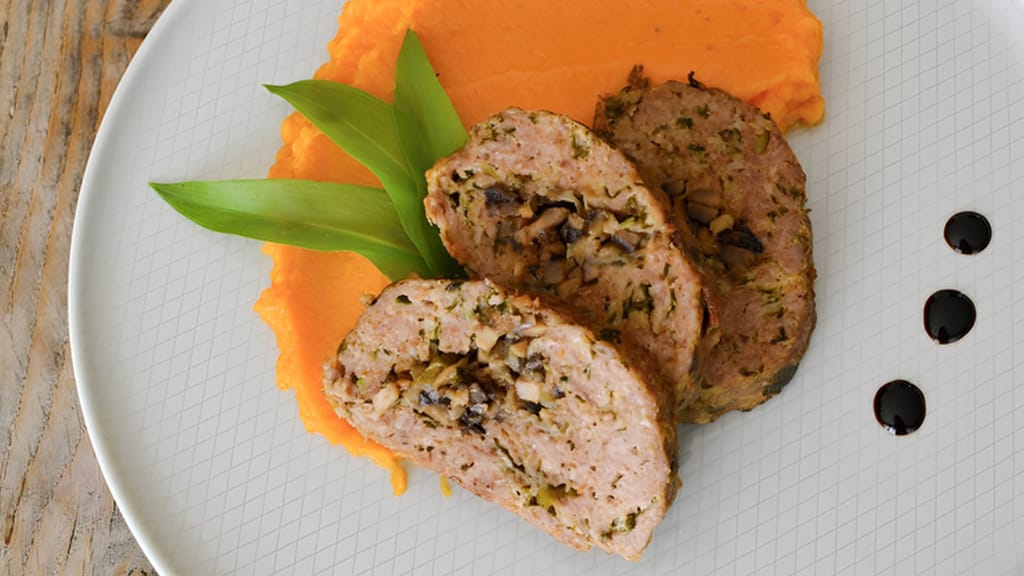
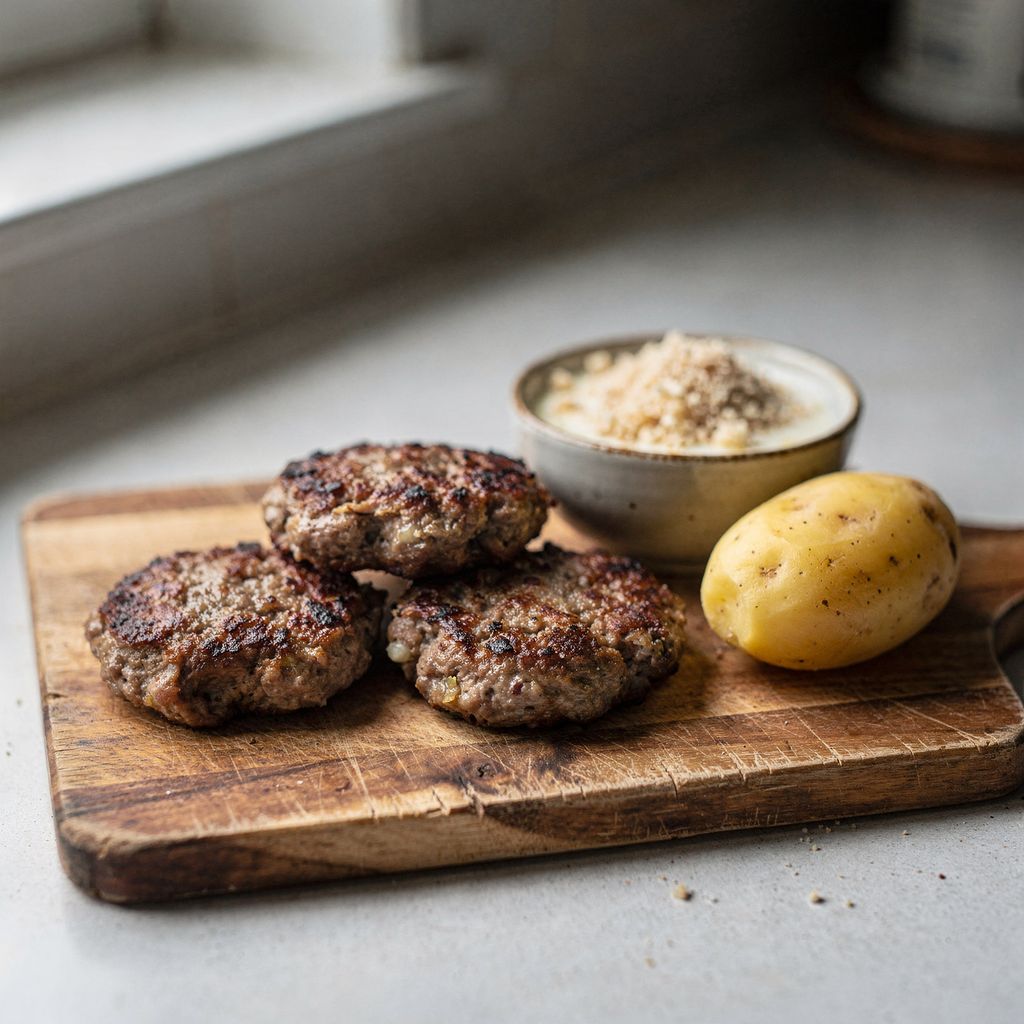
Spring meatloaf with wild garlic and sweet potato mash
Spring meatloaf with wild garlic and sweet potato purée — a great base for testing out these egg-substitute ratios
Meatballs miss the egg less than meatloaf does, because the seared crust in the pan holds them together. The key is to chill the mixture, then leave it alone once it hits the pan.
30 minutes in the fridge before frying. Shape the patties with wet hands afterward and the mixture won't stick to you.
A hot pan, medium heat, no poking. Don't touch the meatball for the first 3 minutes. The crust that forms in that time holds it together better than any egg could. Then flip and cook for another 4–5 minutes.
Breading without egg. Let the breadcrumbs stick to a thin layer of thick mustard, mayonnaise, or plant-based milk mixed with a spoonful of starch. A three-step breading works fine without egg — it just needs a stickier middle layer.
Smaller is safer. A patty 7–8cm across and 1.5cm thick flips without any risk; one 12–14cm across will crack when you try to turn it.
The same rules apply to meatballs — except there, the round shape works in your favor, since simmering in sauce gives it nowhere to break.
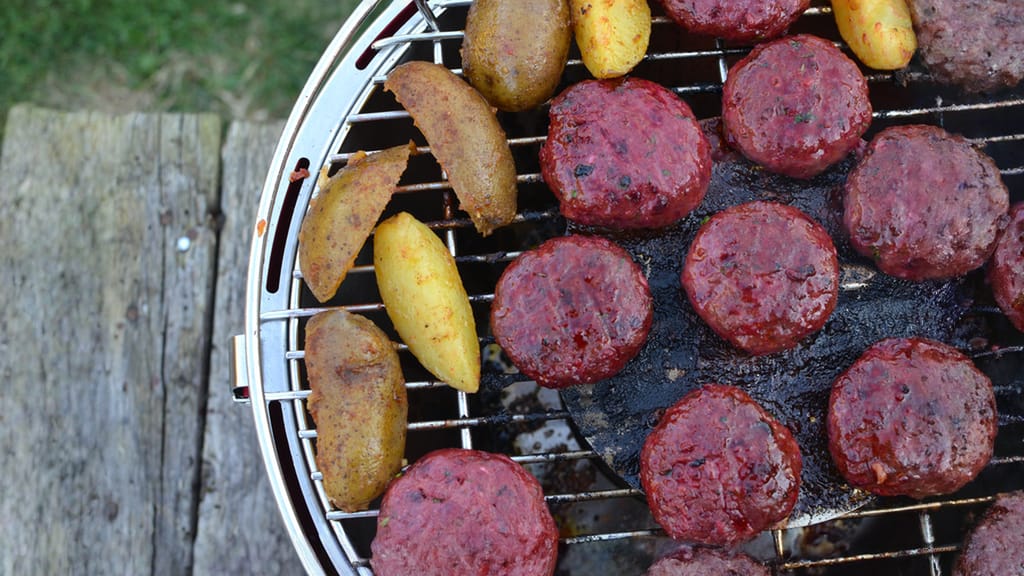
Weekend tip: beetroot beef burgers
Beef and beetroot meatballs — beetroot releases a lot of water, so starch really earns its keep here
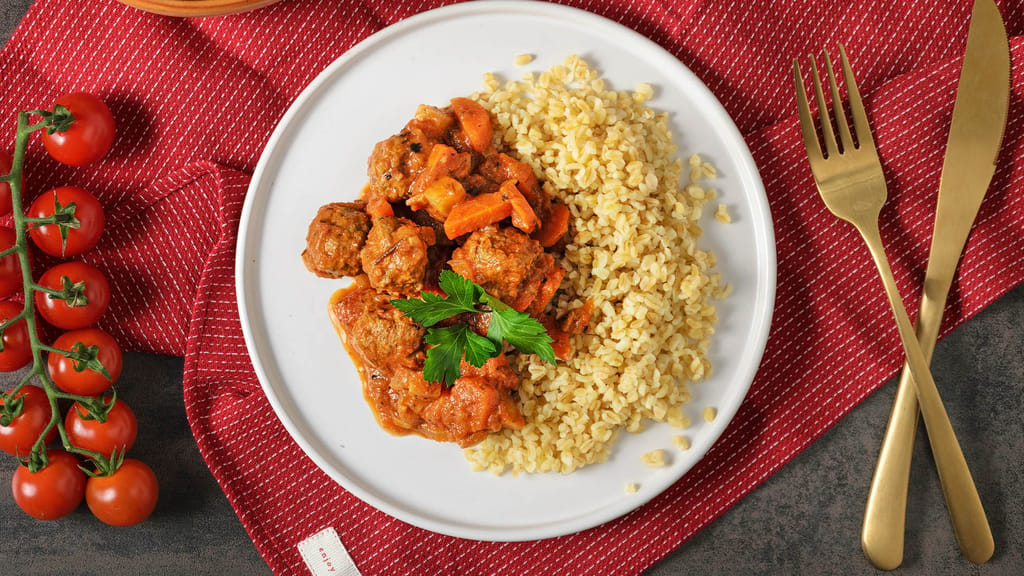
Meatballs in vegetable sauce
Meatballs in vegetable sauce — the round shape forgives a mixture that skipped the egg
With legumes and vegetables, there's no myosin to draw out — salt and kneading don't work there, so starch has to do all the work on its own. With fish, on the other hand, you can draw out myosin just like with meat: salt the fish mixture first and knead it briefly — this is exactly how surimi holds together. But fish releases a lot of water, so you'll still need starch or psyllium on top of that. Use a higher dose than you would with ground meat.
Fish cakes: per 500g of fish, use 40g breadcrumbs and 5g psyllium, with no extra liquid. The fish releases enough water on its own.
Legumes (lentils, chickpeas, beans): per 500g of cooked, mashed mixture, use 50g breadcrumbs or 40g oats. Let the legumes drain thoroughly and cool before mixing.
Vegetable patties (zucchini, carrot, potato): always squeeze out grated vegetables in a kitchen towel before mixing them in. Then use 40g breadcrumbs and 15g starch per 500g. Most vegetable patties that fall apart don't actually have a binding problem — they have a water problem.
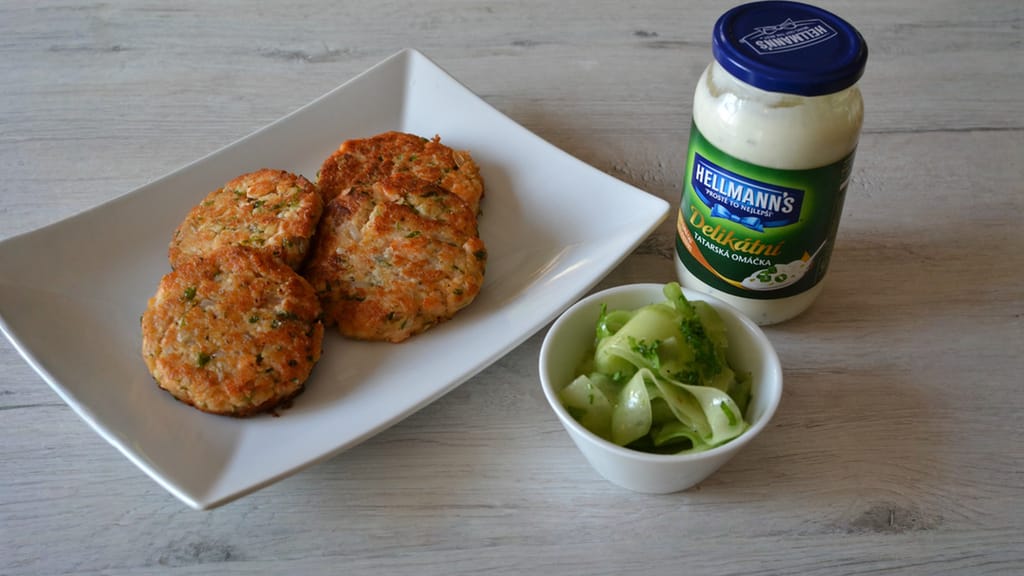
Salmon patties with creamy tartar sauce
Salmon cakes with delicate tartar sauce — a good example of a mixture where the binder also has to handle the water from the fish
Crumbly meatballs usually have one of three causes — a mixture that's too wet, one that's too dry, or a pan that isn't hot enough — and each has its own fix.
The mixture is wet and won't hold its shape. Stir in 15g of instant mashed potato flakes or 10g of starch and chill it for 30 minutes. Don't add more breadcrumbs — they need time to swell, and you don't have that time right now.
The mixture is dry and crumbly. It's missing liquid, not binder. Add 30ml of milk or stock per 500g and knead again.
The mixture holds together in your hand but falls apart in the pan. You didn't salt or knead it enough, or the pan isn't hot enough. Knead the mixture for another minute and wait until the oil in the pan starts to ripple.
Before changing anything about the mixture, fry a single test patty. In three minutes you'll know how the whole batch will behave — and you'll get to taste the seasoning too, which you can't otherwise do with raw ground meat.
One egg per 500g of ground meat, so two for a 1kg loaf. Any more actually makes things worse: the protein from extra eggs sets before the meat does during baking and pushes water out of the mixture, leaving you with a rubbery, drier loaf instead of a firmer one.
Yes — often better than ones made with egg. Freeze them chilled and raw, spaced out individually on a tray, and only transfer them to a bag once they're fully frozen. Fry them straight from frozen over slightly lower heat, adding about 3 extra minutes per side — thawing first would only soften them and make them fall apart more.
Potato starch (10g per 500g of meat) or finely grated boiled potato (60g). Both are naturally gluten-free and bind just as well as breadcrumbs. If you use gluten-free breadcrumbs or gluten-free oats instead, keep the same ratio, just soak them 5 minutes longer — they absorb liquid more slowly.
Breadcrumbs, starch, and potato won't affect the flavor at all. Flaxseed (slightly nutty, and it darkens the slice), oats (a mild grainy taste), and hard cheese (noticeably, though usually for the better) will be detectable. If you want the substitute to disappear completely, go for starch or a bread-and-milk panade.
You can, but don't count on it as a binder. Mayonnaise is mostly fat and adds richness — two tablespoons, roughly 30g per 500g of meat, is the right amount. Something else needs to handle the binding, typically 10g of starch or soaked breadcrumbs. Mayo on its own will only soften the mixture, and it'll still fall apart.
One recipe worth heating the oven for, one tip, and one deal from the shop. Nothing else.