What to Substitute for Baking Powder
Baker's Ammonia (Ammonium Bicarbonate): What It Is, Which Cookies Need It and What to Substitute
Updated Oct 17, 2026
Baker's ammonia, also known as ammonium bicarbonate or hartshorn, is an old-fashioned leavening agent that has nothing to do with yeast. In the oven it breaks down completely into gases, which makes thin cookies exceptionally crisp, dry and light. Baking powder and baking soda can't quite do that. Here you'll find out how ammonium bicarbonate works, why it smells of ammonia while baking, which cookies it belongs in and what to use instead when you don't have any.
Baker's ammonia is ammonium bicarbonate (NH₄HCO₃), which may also be listed on packaging as ammonium or the additive E 503(ii). It's a white crystalline powder with a sharp, typical ammonia smell. In Czech it's called "pastry yeast", but it has nothing to do with yeast; it has just always been known by that name.
It's one of the oldest chemical leavening agents. In German it's called Hirschhornsalz, "hartshorn salt", because it was once obtained by dry distillation of deer antlers and horns. Today it's made industrially, and in the Czech Republic you'll find it in small bags, mainly in the run-up to Christmas.
Don't mix it up with other "yeasts":
Baker's ammonia = ammonium bicarbonate, a chemical leavener for cookies.
Yeast = live yeast for risen dough. To find out how to tell whether it's still active, see our article on how long yeast keeps.
Nutritional yeast = inactive yeast used as a seasoning, which doesn't leaven at all.
With heat, ammonium bicarbonate breaks down completely into carbon dioxide, ammonia and water vapor. All three are gases, so nothing is left behind in the dough. The breakdown starts at around 36 °C (97 °F) and happens quickly in a hot oven.
This gives you three differences compared with baking powder and baking soda:
No salt or aftertaste is left behind. Baking powder and baking soda leave residual salts in the dough, which make cookies moister and can give them a slightly "soapy" taste. Ammonium bicarbonate doesn't, as long as it has fully evaporated.
The dough spreads out and cracks. The gas is released all at once and forms irregular, coarser pockets. The cookies are light and airy, and snap with that characteristic dry crunch.
The cookies stay dry and crisp for longer. There are no salts in them to absorb moisture from the air, so they soften more slowly than cookies made with baking powder or soda.
But it only does this in thin dough. In a thick layer the ammonia stays trapped inside and the cookies smell of it.
An ammonia smell during baking is normal and means the ammonium bicarbonate is working. Ammonia is one of the three gases it breaks down into, and it escapes completely from thin cookies during baking. Finished, cooled cookies shouldn't smell of it at all.
Ventilate while baking and don't lean over the oven when you open it. The steam is sharp.
Do the cookies still smell of ammonia? They were too thick, underbaked, or there was too much ammonium bicarbonate. Leave such cookies lying on a rack for a few hours and some of the smell will fade. Next time, roll the dough thinner or bake it a few minutes longer at a lower temperature so it has time to dry out.
Don't taste the raw dough. Until the ammonium bicarbonate has broken down, it's unpleasantly bitter and ammonia-like.
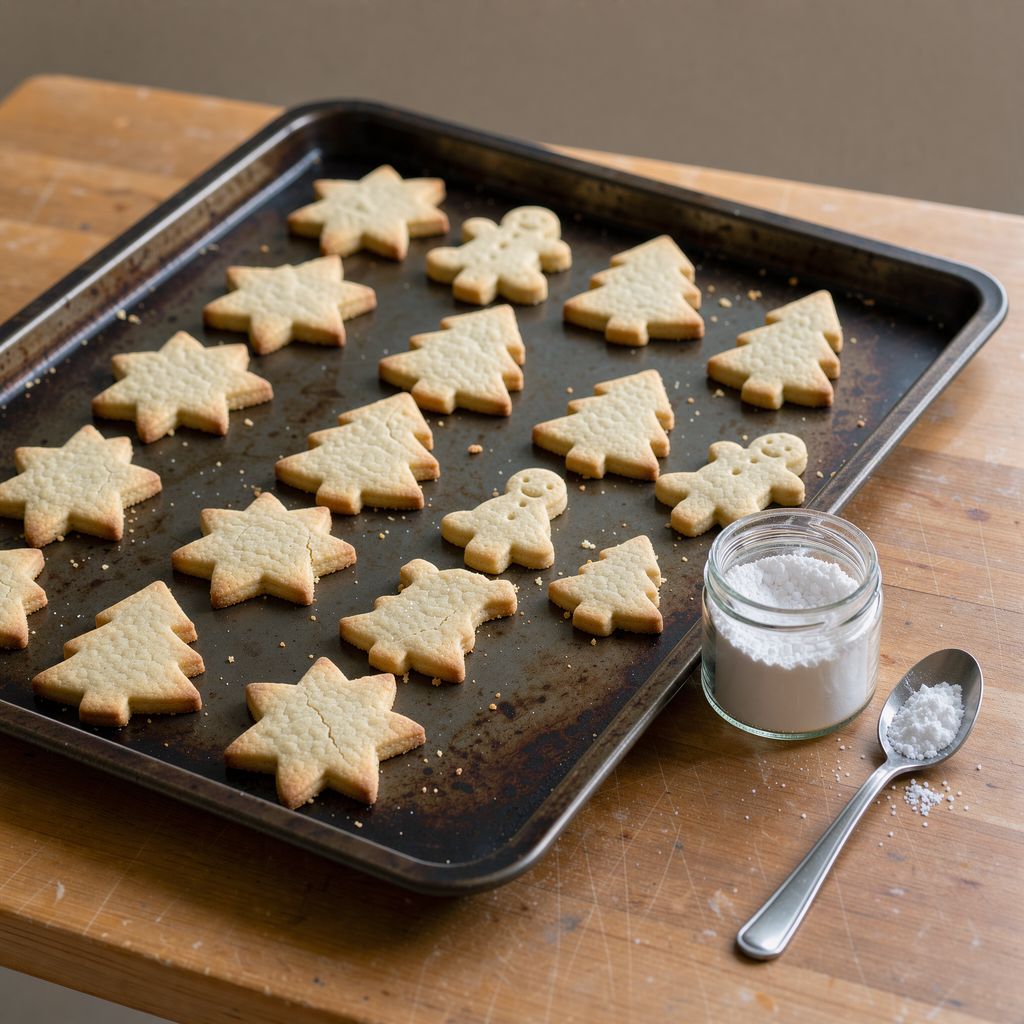
Baker's ammonia belongs in flat, dry, crisp bakes up to about 5 mm (¼ inch) thick: hard gingerbread cookies for decorating, ginger snaps, cut-out and stamped cookies, thin butter cookies and savory crackers. Use it anywhere you want a dry snap instead of a soft crumb. For an overview of more classics, see our article on types of Christmas cookies.
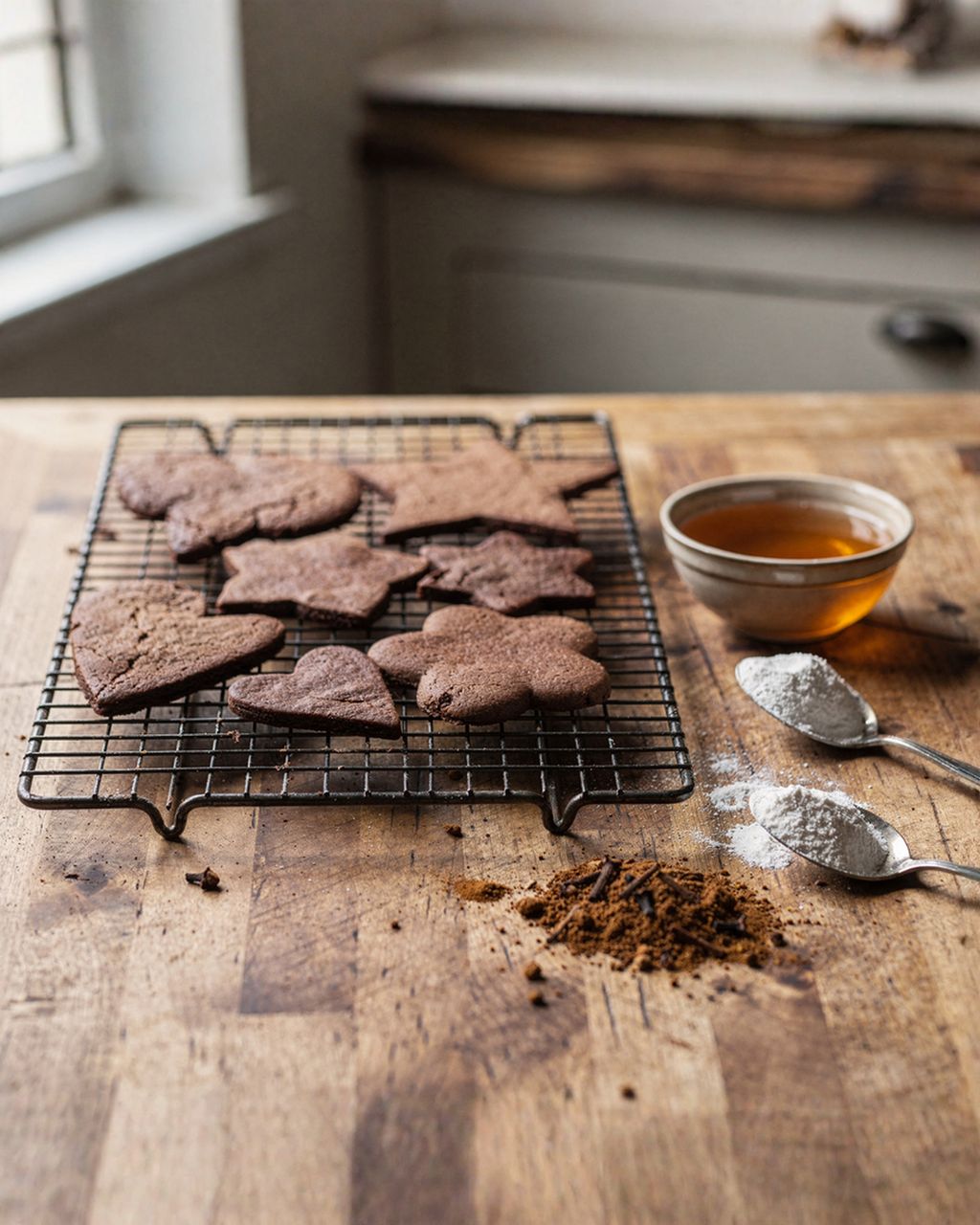
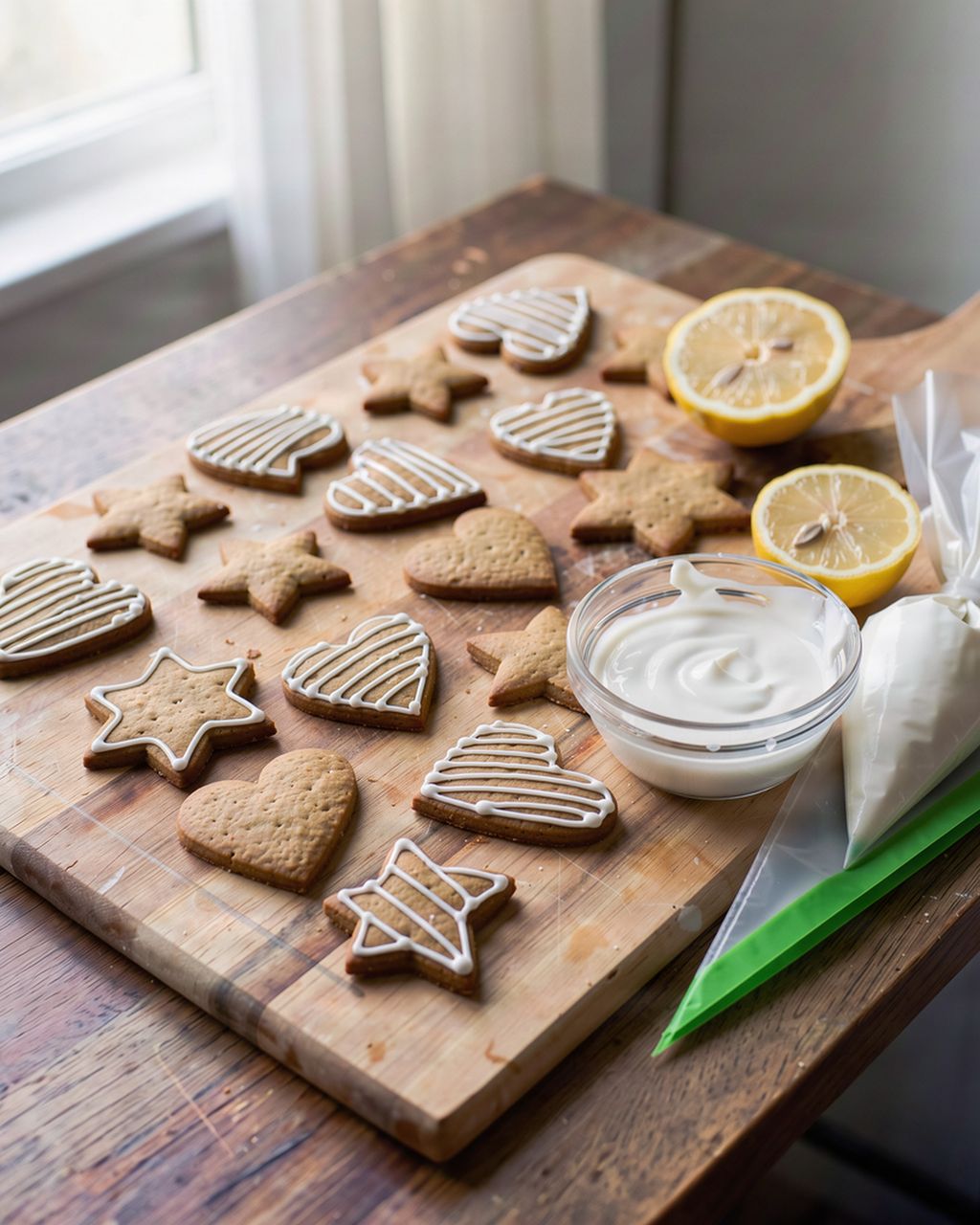
Hard gingerbread for decorating and hanging on the tree. Ammonium bicarbonate (often combined with baking soda) gives them a dry, firm structure that doesn't warp and lasts for years as an ornament.
Ginger puffs (zázvorky). A dough of sugar, eggs, flour and ground ginger puffs up in the oven thanks to the ammonium bicarbonate, so the cookies stay hollow inside. That's where their typical shape comes from.
Cut-out and stamped cookies made from a stiffer dough that should stay dry and crisp.
Savory crackers and wine sticks. Ammonium bicarbonate makes them airy and doesn't leave the salty aftertaste of baking soda. To keep them crisp, store them as described in our article on how to store Christmas cookies so they stay crisp.
Traditional bakes from abroad: German Springerle and Lebkuchen, Scandinavian drömmar, Polish amoniaczki.
Where not to use it:
Soft honey gingerbread. These should stay soft, so they're leavened with baking soda, which reacts with the honey. Try soft honey gingerbread that doesn't go hard. Why soda rather than baking powder is explained in our article on baking soda in gingerbread.
Linzer cookies and other tender butter doughs. Their tenderness comes from the butter, and they don't need a leavener. A good example is classic tender Linzer cookies.
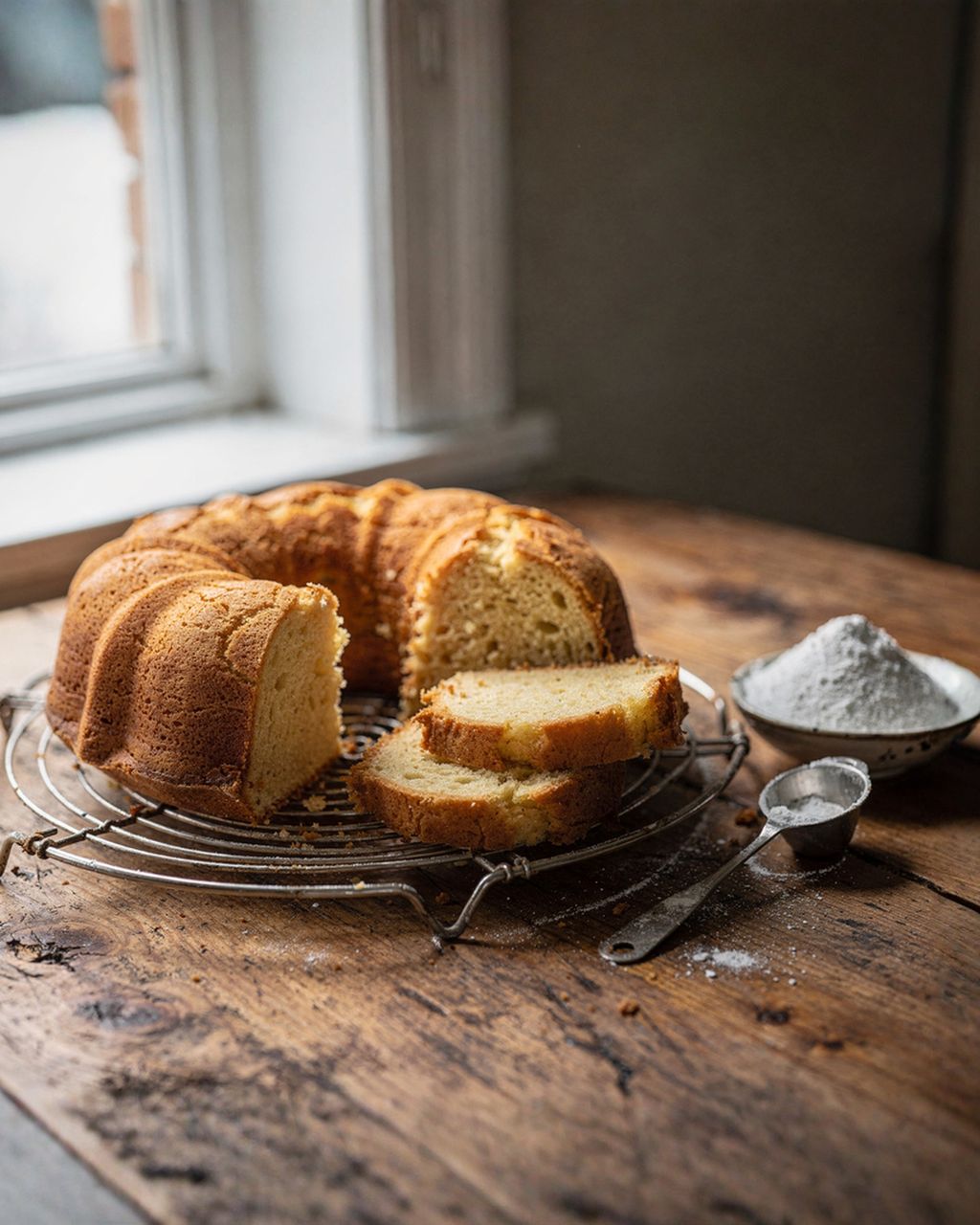
Bundt cakes, yeast cakes, bars, sponge cakes. They're too tall and moist.
Manufacturers usually give around 20 g of ammonium bicarbonate per 1 kg of flour, which is about 10 g per 500 g. Old recipes often use less, for example half a teaspoon for a smaller batch. It's strong, so weigh it precisely and treat the amount as a ceiling, not a minimum.
How to work with it:
Dissolve it in a little cold liquid. A tablespoon of milk, water or beaten egg is enough, and only then mix it into the dough. The crystals may not dissolve in dry flour, leaving bitter, ammonia-tasting spots in the cookies. Some finely ground products can be mixed straight into the flour, so follow the packaging.
Don't use warm liquid. Ammonium bicarbonate starts to break down at around 36 °C (97 °F), and some of its strength would escape before baking.
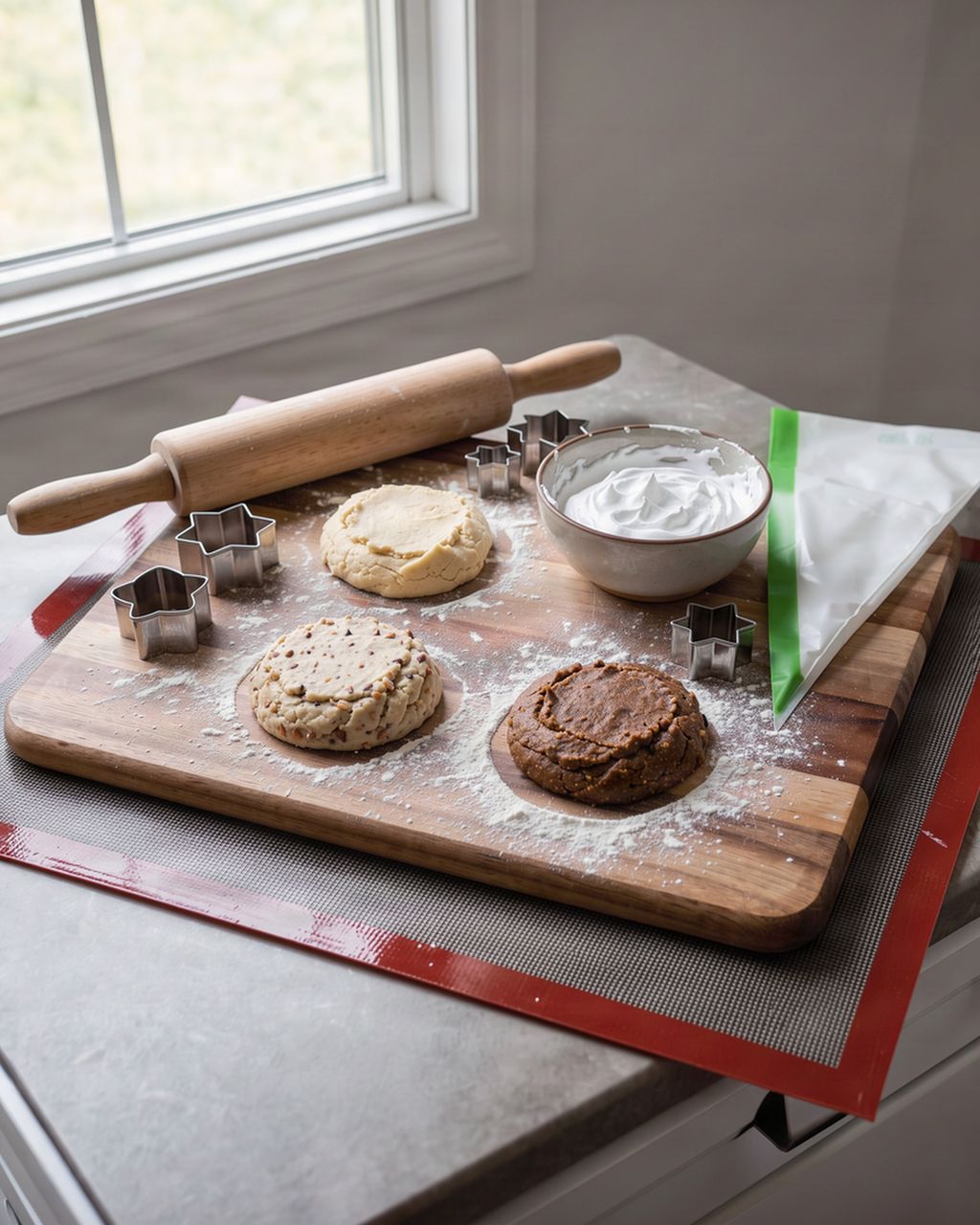
Roll thin, 3–5 mm (⅛–¼ inch). Thicker pieces won't have time to let the gases escape.
Put them into a well-preheated oven. Typically 160–180 °C (320–355 °F), depending on the recipe. The quick burst of heat gives the ammonium bicarbonate its proper "explosion", so the cookies rise nicely and crack.
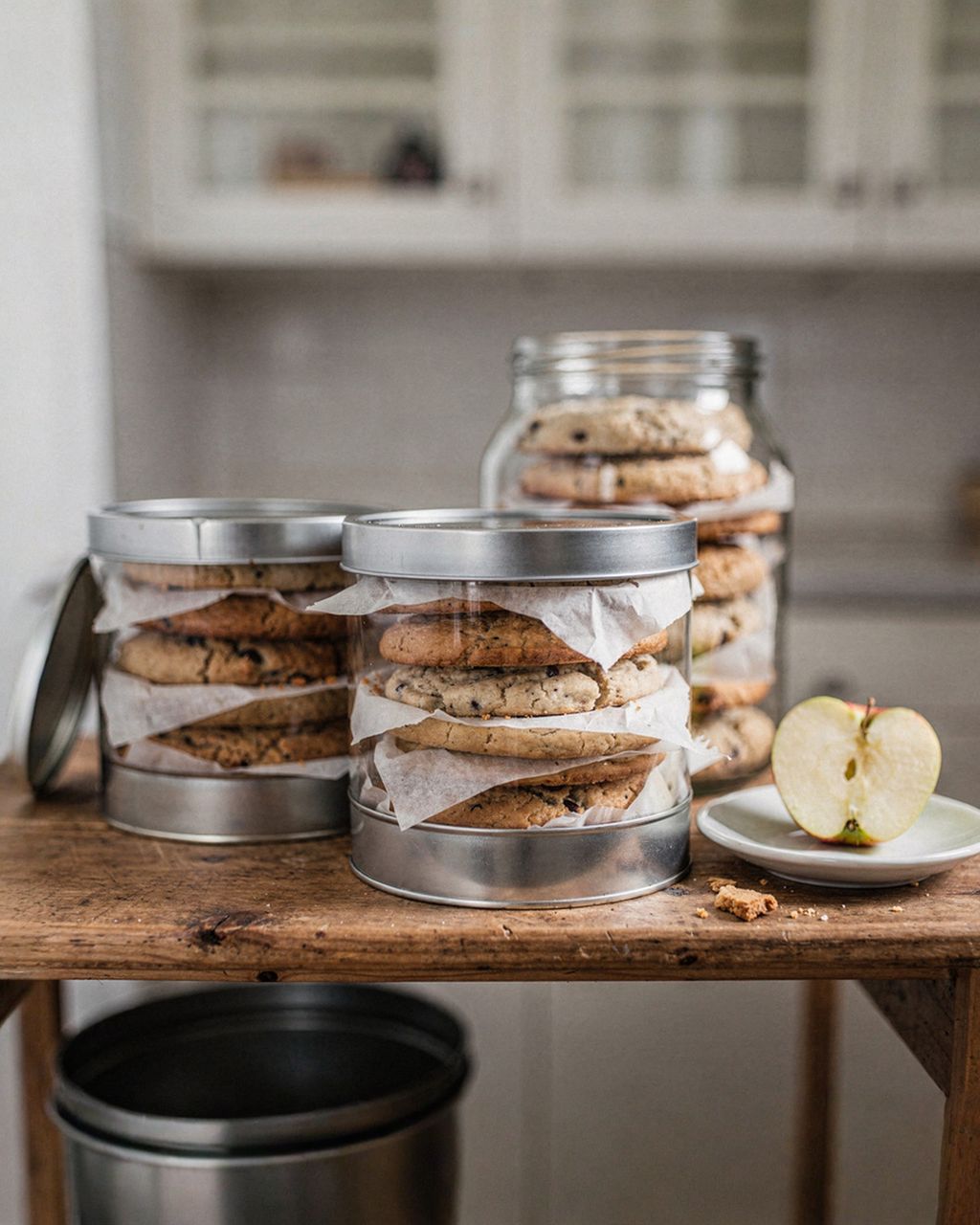
Let the cookies cool freely on a rack so any leftover ammonia escapes, and only then put them away in a tin.
Keep in mind that cookies made with ammonium bicarbonate spread more. Leave gaps of at least 2–3 cm (about 1 inch) between them on the baking sheet.
You can replace ammonium bicarbonate with baking powder at a 1:1 ratio or with a smaller amount of baking soda, roughly half, always with an acidic ingredient. Be aware that the cookies will be softer and less crisp. No substitute gives exactly the same dry crispness, but you can get close.
Baking powder, 1:1. The simplest and safest substitute. For 10 g of ammonium bicarbonate, use 10 g of baking powder, which is roughly 2 teaspoons. The cookies will be a bit more "cakey", with finer pores, and will soften faster.
Baking soda, smaller amount. Use less than you would of ammonium bicarbonate, roughly half, and always with an acidic ingredient so it reacts (honey, cocoa, sour cream, lemon juice). That's why it suits hard gingerbread best. Without acid it leaves a soapy aftertaste and the cookies turn brown. If you're unsure, stick to a recipe that is written for baking soda.
A combination of baking powder and baking soda is used in recipes from abroad where cookies should crack nicely. There is then significantly less soda than baking powder.
Whichever you choose, you can make up for the crispness with technique: roll the dough thinner, bake 2–4 minutes longer at a temperature 10–20 °C (20–35 °F) lower so the cookies dry out, and store them in a tightly closed tin as soon as they've cooled. You'll find both baking powder and baking soda among the baking ingredients. For more baking powder substitutes, for example if you've run out of that too, see our article on what to use instead of baking powder.
Store baker's ammonia in a tightly closed screw-top jar, somewhere cool and dark. Ammonium bicarbonate slowly breaks down even at room temperature. In an open bag it gradually loses strength, and its ammonia smell seeps into nearby food.
Label the jar. White powder is easily mistaken for sugar or salt.
Crystals stuck together in clumps are fine. Crush and dissolve them before use.
Can't smell any ammonia at all? Then the ammonium bicarbonate hardly leavens anymore, and it's time to buy fresh.
Not in thin, well-baked cookies. Baker's ammonia (ammonium bicarbonate, E 503(ii)) is an additive approved in the EU, and in a dough like this it breaks down completely into gases in the oven. In thin cookies those gases escape during baking. The only unpleasant parts are breathing in the fumes when you open the oven and tasting raw dough, where the ammonium bicarbonate hasn't broken down yet.
Baker's ammonia (ammonium bicarbonate) breaks down completely with heat and doesn't need an acid. Baking soda (sodium bicarbonate) needs an acidic ingredient to react and leaves salt behind in the dough, which draws in moisture and softens the cookies. That's why baker's ammonia gives dry, crisp cookies, while baking soda gives soft gingerbread.
Yes, ammonium bicarbonate itself is an inorganic compound with no gluten and no animal ingredients. To be safe, check the packaging for added starch or a warning about traces of gluten. In a vegan dough, dissolve it in a tablespoon of cold water or plant milk rather than in egg.
No, yeast can't stand in for baker's ammonia. Yeast needs time to rise and gives the dough a soft, bread-like crumb, whereas ammonium bicarbonate only works in the oven and makes cookies dry and crisp. As a substitute, use baking powder or baking soda.
In the Czech Republic, baker's ammonia is sold in 30–100 g bags in supermarkets, drugstores and baking supply shops. It's easiest to find before Christmas, when the most cookies are baked. Look for "ammonium" or "ammonium bicarbonate" on the packaging.
One recipe worth heating the oven for, one tip, and one deal from the shop. Nothing else.