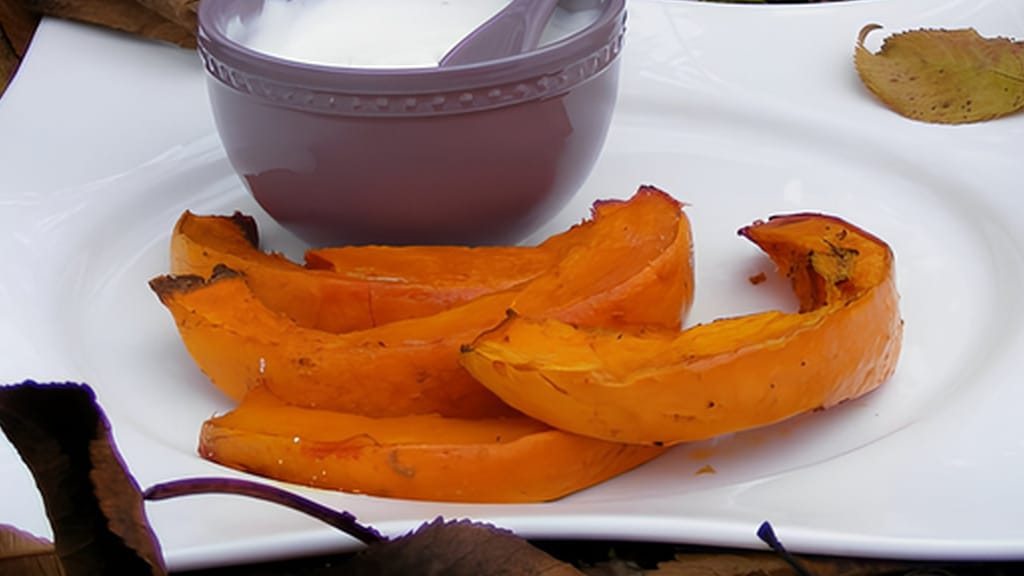
Hellishly spicy roasted pumpkin
Pumpkin Soup: How to Get a Silky-Smooth Autumn Classic

Updated Jul 19, 2026
A great pumpkin soup comes down to three things: the right pumpkin, well-balanced spices, and a good, thorough blend until silky smooth. Even a total beginner can pull this off — here's the whole process, from picking the right pumpkin through roasting to that silky texture, plus how to season it and plate it up so it looks like it came straight from a bistro.
The best pumpkin for a creamy soup is Hokkaido squash — no need to peel it, it has a nutty flavour, and once roasted it breaks down into a velvety texture. Right behind it is butternut squash, with sweeter, more delicate flesh. Both are reliable choices. A large Halloween pumpkin, on the other hand, has no place here: its flesh is watery and bland, and the soup will end up thin and flavourless.
Quick comparison:
Hokkaido — no peeling needed, nutty-sweet, makes a thick, deep-orange soup. The all-round winner.
Butternut squash — the sweetest and most delicate, needs peeling, very few seeds.
Muscat pumpkin — mild and aromatic, a good alternative when you want a bolder flavour.
Hokkaido is the top pick for soup because you don't need to peel it — the skin softens during roasting and blends right in with the flesh, which saves you the most annoying part of prep. The flesh is firm, nutty-sweet, and makes a thick, deep-orange soup. One squash weighs roughly 1–1.5 kg and makes enough soup for about 4 servings.
Butternut squash is the sweetest, most delicate option. It has an elongated neck with very few seeds, so you get more usable flesh than from round varieties. It does need peeling, but the flesh is softer and makes an especially silky soup. Reach for it when you want a bigger natural sweetness without adding any sugar.
A ripe pumpkin has hard, matte skin and makes a hollow sound when you tap it. Avoid any with soft spots, cracks, or mould around the stem. Fresh pumpkin season runs from September to November — that's when you'll find them at farmers' markets and in regular shops alike. Kept whole in a cool, dry spot, they'll last for weeks, even months, so it's worth buying a few at once.
The base of a good pumpkin soup is simple: pumpkin, onion, garlic, good stock, and a fat to smooth it out (cream, coconut milk, or butter). Then round out the flavour with spices — nutmeg, ginger, and cinnamon — and a touch of acidity (lemon juice), so the soup doesn't taste flat.
The spices that suit pumpkin best:
Nutmeg — subtly sweet with a light kick; adds depth to the soup. Just a pinch of freshly grated nutmeg is enough.
Ginger — brings out the pumpkin's sweetness and adds a warming edge, perfect for the colder months.
Cinnamon — aromatic and sweet, pairs beautifully with both nutmeg and ginger.
Chilli or hot paprika — a pinch for contrast, if you want the soup to finish with a bit of heat.
The stock carries the flavour: vegetable stock keeps the soup light and vegan straight off the bat, while chicken stock makes it heartier. And the fat you add at the end decides how the soup coats your tongue — classic cream, or for a vegan version, coconut milk (which adds a subtly exotic note) or almond cream. Don't forget the salt, and that splash of lemon: pumpkin is naturally sweet, and without some acidity it tastes flat.
The method is always the same:
Wash the pumpkin and halve it with a sharp, heavy knife.
Scoop out the seeds and fibres with a spoon (don't throw the seeds away — you can toast them for a topping).
Leave the skin on Hokkaido squash; peel butternut squash with a peeler or knife.
Cut into even cubes, roughly 2–3 cm, so they cook through evenly.
Roast or boil until soft.
Roasting gives a bolder, sweeter flavour: spread the cubes on a baking tray lined with parchment, drizzle with olive oil, season with salt, and roast in an oven preheated to 200°C (400°F) for about 25–30 minutes, until soft and starting to caramelise at the edges.
Boiling is quicker and lighter: drop the cubes into lightly salted boiling water and cook for 15–20 minutes until soft. The soup will taste fresher and cleaner this way, just not as sweet as with roasted pumpkin.
Hellishly spicy roasted pumpkin
Fiery roasted pumpkin — the base for a soup with a spicy kick
A smooth soup comes down to the order of steps and a good blender: soften the onion and garlic in butter or oil, add the roasted pumpkin, pour in the stock, simmer briefly, then blend until smooth. The more powerful the blender and the longer you blend, the silkier the result.
The amount of stock controls the thickness — start with less and add more as needed; a thicker soup feels heartier, a thinner one lighter. Only cook the onion and garlic until translucent, so they don't turn bitter. Season with salt and pepper gradually while cooking, then adjust the final taste once it's blended. For restaurant-level smoothness, pass the soup through a fine sieve afterwards — it'll strip out any last bits of fibre.
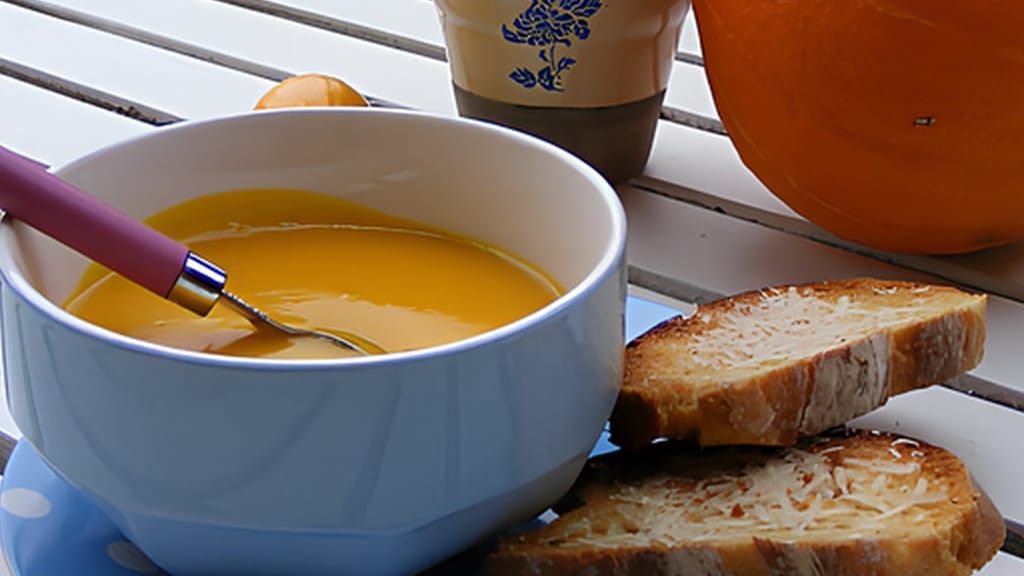
Pumpkin soup – the tastiest soup in autumn colours
Step-by-step Hokkaido pumpkin soup — Yumsto's tried-and-tested recipe
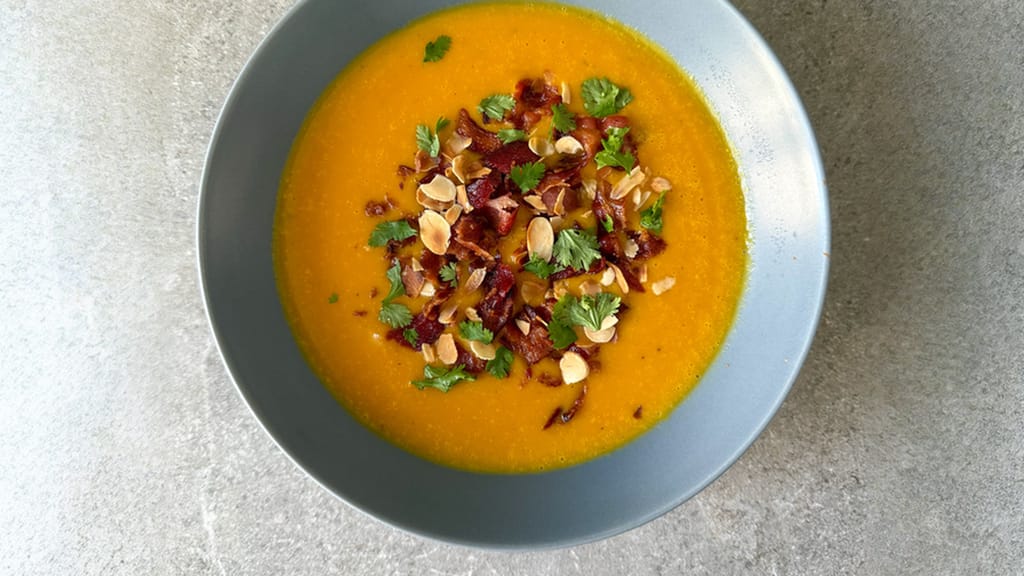
Pumpkin soup with crispy bacon
Pumpkin soup with crispy bacon — a heartier version for meat-lovers
Three things bring pumpkin soup to life: a crunchy topping (toasted pumpkin or sunflower seeds, croutons), a swirl of fat (cream, coconut milk, good olive oil, or pumpkin seed oil), and a fresh herb or a pinch of spice on top. The contrast between crunchy and velvety turns an ordinary soup into a plate that looks like you really thought it through.
Pumpkin soup calls for something to dip — best of all, crusty homemade bread to mop up the last spoonful. And since the soup itself is light, it works beautifully as a starter before a heartier main course, like mushroom lasagne or slow-roasted pork with red cabbage.
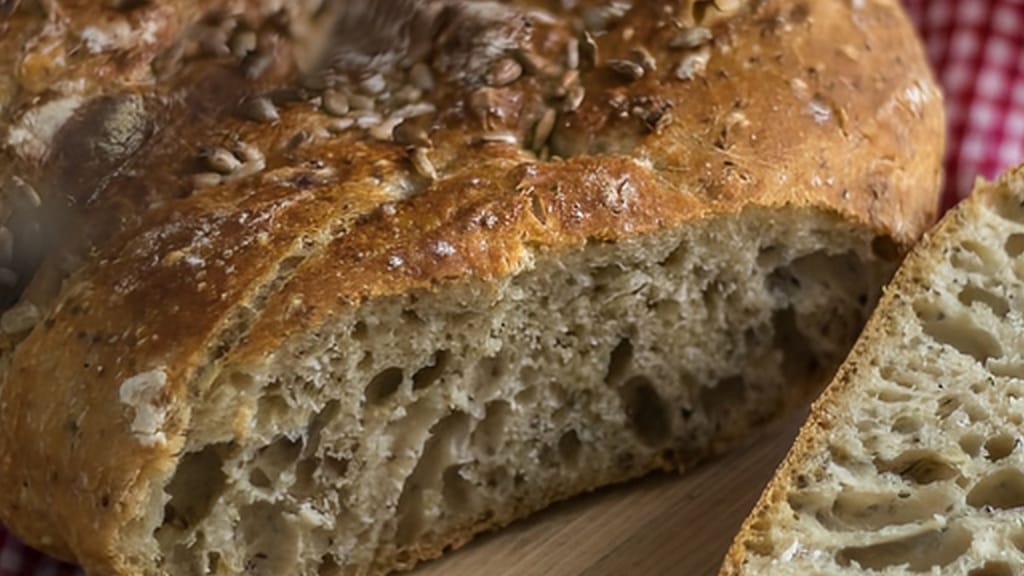
Homemade bread
Homemade bread with creamy soup — perfect for dipping
Pumpkin soup is one of the lightest yet most filling soups around — it's low in calories, high in fibre, and packed with beta-carotene (a precursor to vitamin A), which is what gives pumpkin its deep orange colour. According to nutrition experts, pumpkin is mainly a good source of vitamin A, vitamin C, and potassium, and cooking it actually increases how well the body absorbs beta-carotene.
Beta-carotene and vitamin A — studies link these to eye health and immune support; pumpkin is also a good source of lutein and zeaxanthin.
Vitamin C — supports collagen production and immune defence.
Fibre — aids digestion and keeps you full without feeling heavy, which is why this soup fits nicely into a lighter diet.
This is general food information, not medical advice — for specific health concerns, talk to a doctor or nutritionist.
No, there's no need to peel Hokkaido squash. Its skin softens right up during roasting or boiling, and once you blend the soup, it disappears completely into the flesh. Just wash the pumpkin, halve it, and scoop out the seeds. Only tougher varieties, like butternut squash, actually need peeling.
To thicken a thin soup, simmer it uncovered for a few minutes to let some water evaporate, or blend in a cooked potato or a spoonful of cooked lentils. If your soup is too thick, just stir in some warm stock or water and blend briefly again.
Yes, pumpkin soup freezes really well and keeps for about 3 months. Just leave out the cream before freezing — stir it in only when reheating, so the milk fat doesn't separate. In the fridge, cooked soup keeps for 3–4 days in a sealed container.
Bitterness usually comes from burnt garlic or onion, or spices that were toasted too long — cook them only until translucent. A flat, bland taste usually means not enough salt or missing acidity: add salt and a few drops of lemon juice and the flavour will instantly come alive. The variety matters too — a watery Halloween pumpkin will never give you much flavour.
The best swap for cream is coconut milk (full-fat, from a can), which gives the soup a silky texture with a subtly exotic note. Almond or oat cooking cream also work well, as does a spoonful of tahini for a nutty depth. Use vegetable stock as your base and the whole soup becomes plant-based straight away.
One recipe worth heating the oven for, one tip, and one deal from the shop. Nothing else.