At a glance
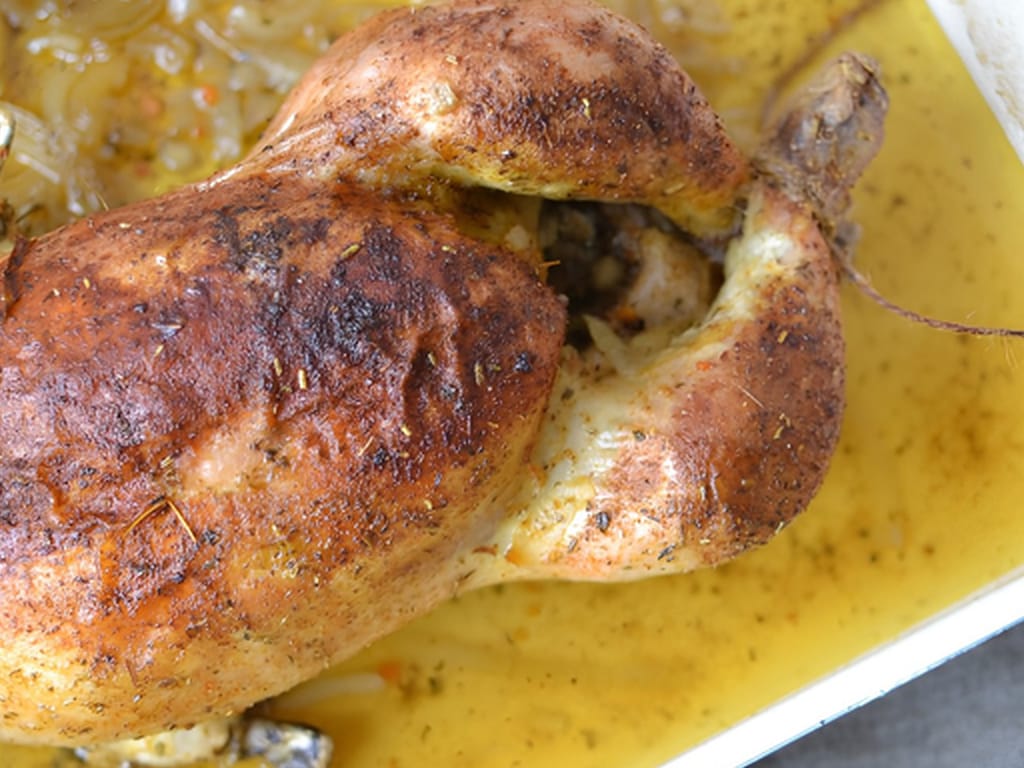
You're looking at a hands-on but rewarding project—this roasted chicken needs about 30 minutes of prep (rinsing, seasoning, and trimming wings) plus roughly 1.5 hours in the oven. The key is starting hot to get that golden skin, then dropping the temperature to let the meat cook through gently and stay juicy, all while letting the pan drippings turn into something delicious.
1/7
Rinse, dry and tie the legs
Rinse a nice fresh chicken, pat it thoroughly dry, and tie the legs together. If you want to go all out, stuff the chicken with a tasty filling of your choice. If you'd rather skip the extra fuss and just enjoy the chicken, simply tie the legs and move on.
For this step
0/12/7
Season it well
Season the chicken all over. Salt, pepper, sweet paprika, garlic, cumin… whatever you like.
For this step
0/43/7
Trim the wing tips
Cut the end two sections off each chicken wing. You'll need to bend the wing at the joint to break it, then cut it away. What's left sticking out is just the last wing section, right by the body.
How it went
Nobody has tried this recipe yet
Be the first to say how it went.
Anyone can answer, without signing in or buying. Answers aren't verified. The percentage is the share of “Worked out” answers, shown from 5 answers.
Tips from the Yumsto kitchen
Why it works
A short start at 200 °C dries and browns the skin, then the meat roasts gently at 160 °C and stays juicy. Water with onion and garlic in the pan stops the drippings from burning and turns into the base of the gravy. The trimmed wing tips under the bird lift it off the pan and flavor the juices at the same time.
Tips
There's no need to rinse raw chicken – food-safety agencies advise against it, because splashing water spreads bacteria around the kitchen. Pat it thoroughly dry with paper towel instead; dry skin crisps better too. If you have time, salt the chicken a few hours ahead or the night before and keep it covered on the bottom shelf of the fridge, in a dish that catches any drips. Wash your hands, board and knife after handling raw meat.
Food safety and storage
The chicken is done when a thermometer in the thickest part of the thigh reads at least 75 °C. Without one, you can't be completely sure. Pierce the thickest part of the thigh – the juices must run clear and the meat must not be pink. If in doubt, keep roasting. It's safest to bake the stuffing separately. If you do stuff the bird, fill it right before roasting; the stuffing in the center must also reach 75 °C, so roasting will take longer. Bread stuffing contains gluten. Refrigerate leftovers within 2 hours and eat within 3 days.
Gravy and sides
Let the chicken rest for 10–15 minutes after roasting so the juices settle into the meat. Meanwhile, skim the excess fat from the pan, mash or blend the onion straight into the juices and simmer briefly. Potatoes, mash or rice and a cucumber salad go well with it.
Common questions
How long should I roast a bigger or smaller chicken?
The recipe assumes an average bird and notes the time varies slightly with size. A thermometer is the surest guide: at least 75 °C in the thigh.
Smoked or sweet paprika?
Both work – smoked gives a smoky flavor, sweet is milder.
Why isn't the skin crispy?
It wasn't dried well enough, or the chicken is steaming in the pan. Dry the skin thoroughly and roast uncovered, as the method says.
What can I do with the bones?
Make stock from the carcass and trimmings: cover with cold water, add vegetables and simmer gently with the lid on.
Want a recipe like this every Thursday?
One recipe worth heating the oven for, and one tip that saves you time. Nothing else.