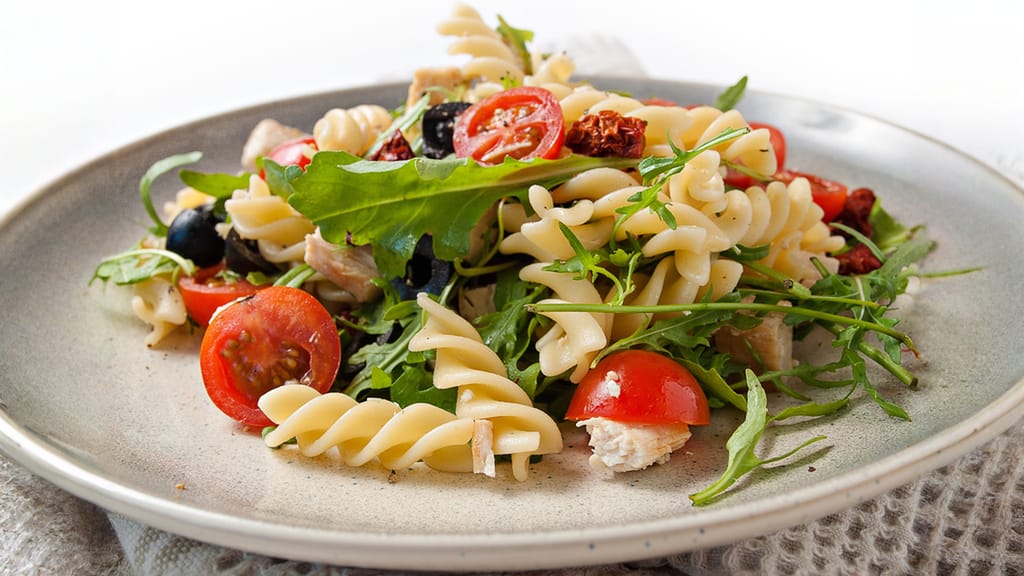
Pasta salad with chicken strips, tomatoes and arugula
Updated Sep 5, 2026
Chicken keeps in the fridge at 0–4°C for just 1–2 days raw and 3–4 days cooked — the shortest window of any common meat. Poultry has a high water content, a higher pH than beef (around 5.8–6.2 versus 5.4–5.6), and, according to monitoring by the State Veterinary Administration, routinely carries Campylobacter, so bacteria multiply faster in it than in pork or beef. Below you'll find exact times by type of meat, where to store it in the fridge, and when it's simply not worth trying to save.
Raw chicken keeps in the fridge at 0–4°C for 1–2 days, cooked chicken for 3–4 days, and minced chicken and offal for just 1 day. Count the time from the moment the meat comes into your home:
Raw whole chicken – 1–2 days
Raw chicken pieces (breast, thighs, wings, cutlets) – 1–2 days
Minced chicken – 1 day, 2 at the absolute most
Raw marinated chicken – 1–2 days, marinating doesn't extend this
Chicken offal (liver, gizzards, hearts) – 1 day
Cooked chicken (roasted, boiled, fried) – 3–4 days
Chicken stock and soup with meat – 3–4 days
Thawed raw chicken – 1 day (even if the date on the pack is later)
On a shop-bought pack, the "use by" date takes priority. If it falls within two days of purchase, follow it — it's a safety date, not a guideline like "best before". And if it's later but you've already opened the pack, start counting again: 1–2 days from opening.
These times are based on USDA FSIS guidance, with minced meat and offal deliberately kept stricter. They apply to a fridge that genuinely chills to 4°C or below — in an older fridge set to 7°C, the safe window effectively shrinks by half.
Chicken spoils faster because it offers bacteria better conditions than other meats — more water, a pH around 5.8–6.2 (higher than beef), and a soft structure microbes can easily grow through.
On top of that, three more factors come into play:
Contamination is common. According to monitoring by the State Veterinary Administration and the National Reference Laboratory for Campylobacter, Campylobacter is repeatedly confirmed in roughly 70% of chilled poultry samples on the market and about 60% of broiler caecum samples at slaughterhouses. This isn't a defect in any particular pack — it's simply a feature of raw poultry.
Chilling only slows bacterial growth, it doesn't stop it. At 4°C most bacteria divide slowly, but they still divide. At 8°C they multiply noticeably faster, and shelf life is essentially cut in half.
Large surface area. Cut-up cutlets or strips have far more exposed surface than a whole chicken, and that surface is exactly where bacteria live. That's why sliced meat keeps for less time than a thigh left whole.
Cooking resets this: heat destroys the surface bacteria, which is why cooked chicken lasts 3–4 days instead of two. But cooking won't rescue meat that's already spoiled — more on that below.
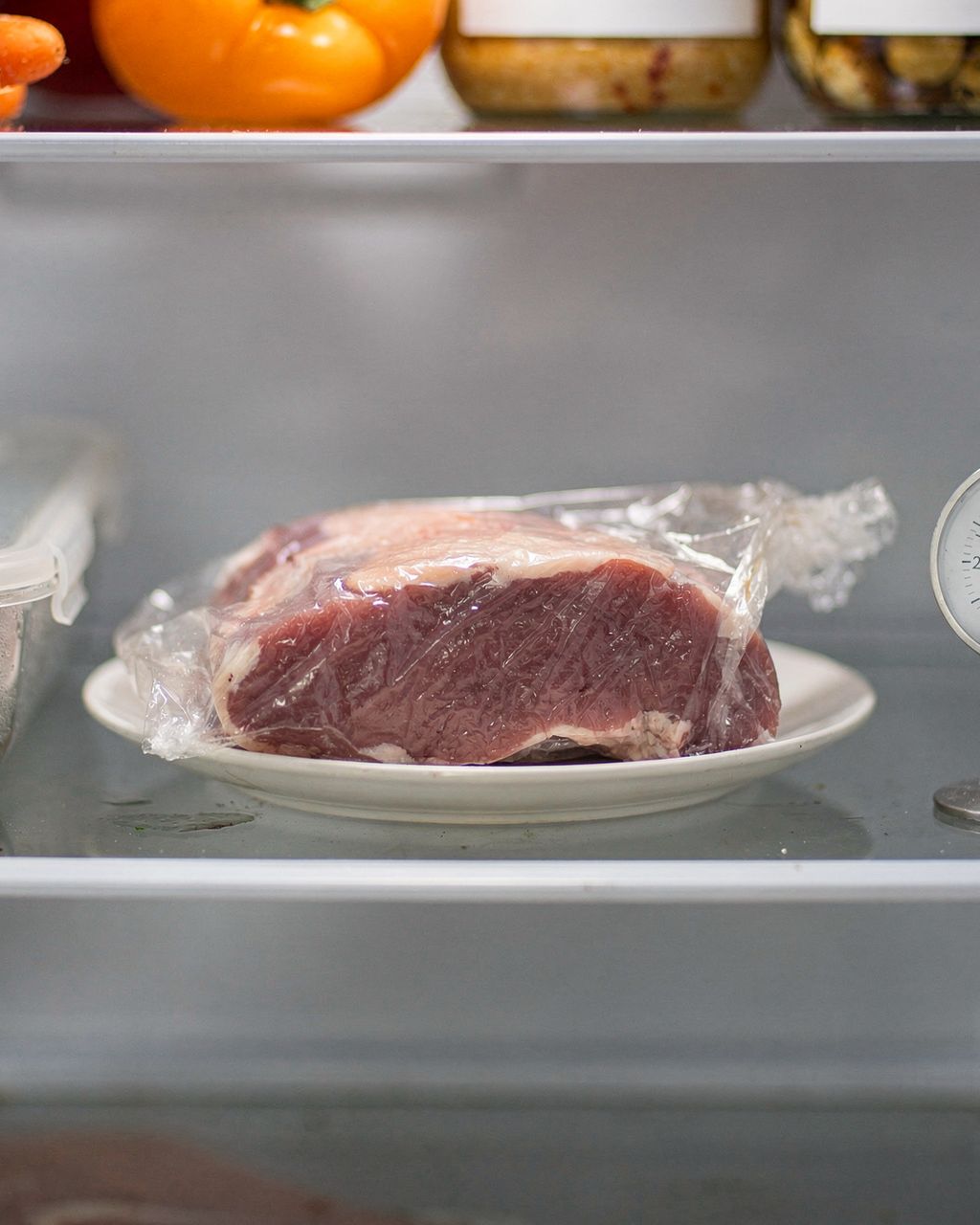
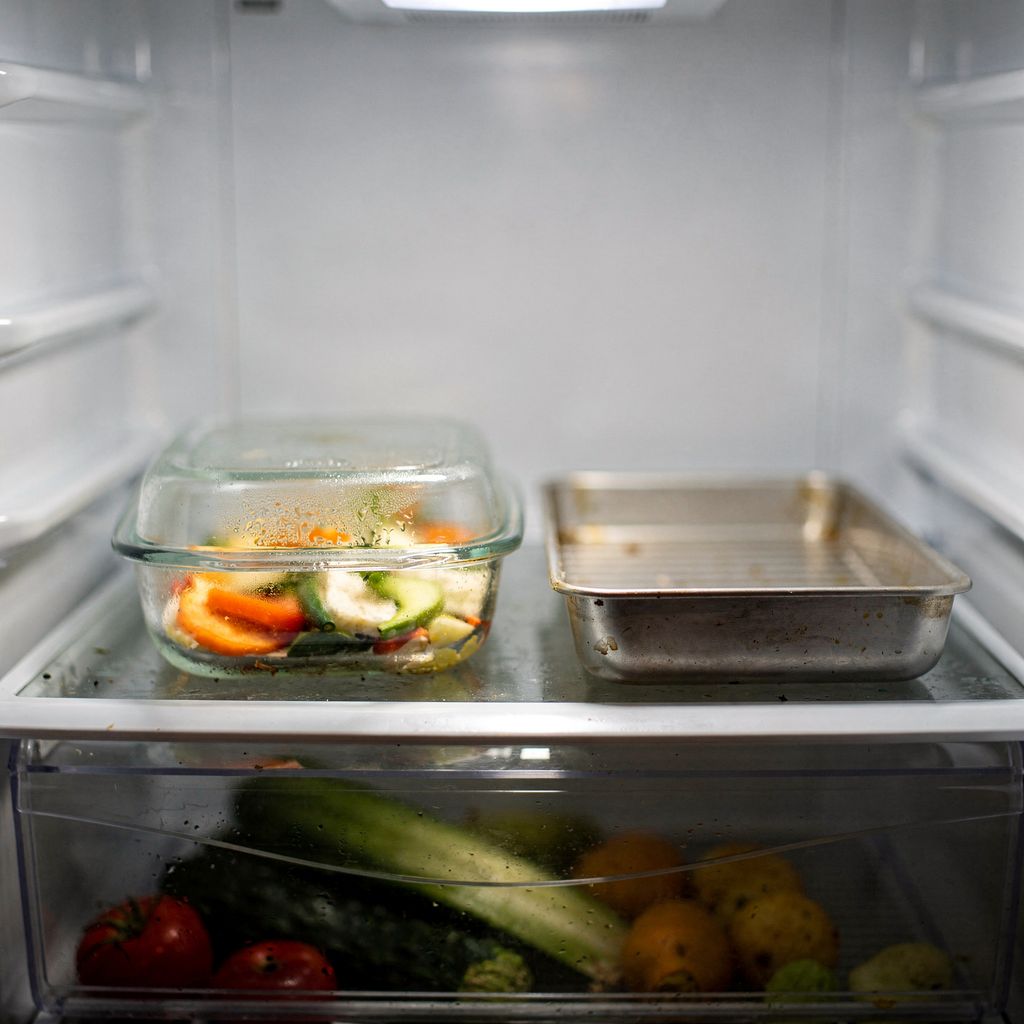
Raw chicken belongs on the bottom shelf, above the vegetable drawer — that's usually the coldest spot (0–4°C), and nothing can drip from it onto foods that won't be cooked before eating.
Leave it in its original packaging until you need it. Vacuum-packed chicken and chicken packed in a protective atmosphere (labelled "MAP" or "packed in a protective atmosphere") is sitting in a better environment than anything you could recreate at home.
Set the pack on a plate or tray. Chicken juice is the most common source of cross-contamination in a home fridge.
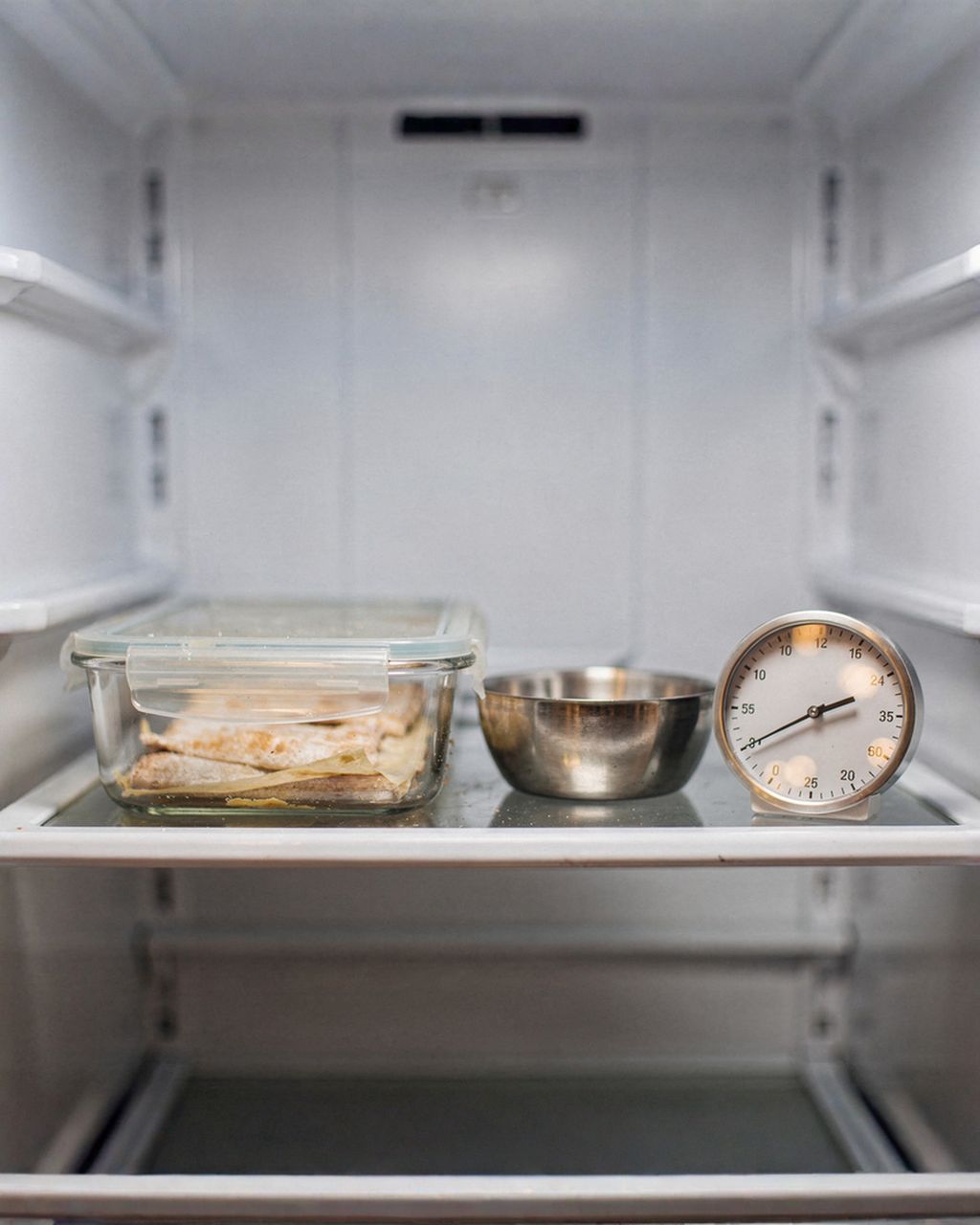
Transfer opened chicken into a sealable container, not a bowl covered with foil. This cuts down on both moisture loss and air exposure.
Don't keep it in the door. That's where temperature swings the most — by as much as 3–5°C every time you open the fridge.
Don't rinse it. Water won't kill bacteria, it just splashes them around the sink, chopping board and tea towel. Only cooking to 75°C at the core reliably kills them.
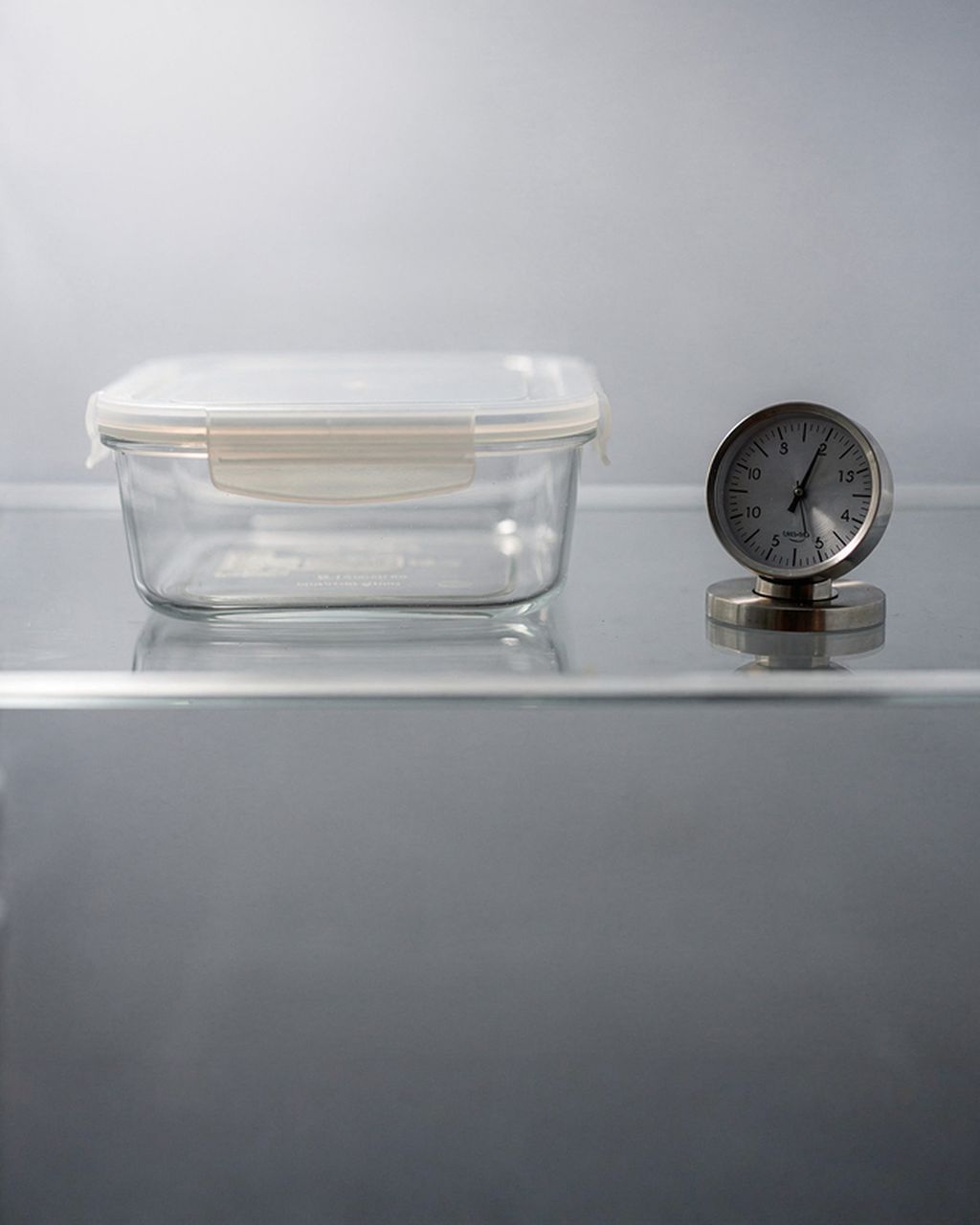
Check your own fridge's temperature with a cheap thermometer placed on the middle shelf. Most people's fridges run warmer than they think, and a dial setting like "3" tells you nothing about the actual °C.
Both raw and cooked chicken can be left out of the cold for a maximum of 2 hours — and at temperatures above 30°C (a hot kitchen, a car, a summer garden), just 1 hour. The 5–60°C range is the zone where bacteria multiply fastest, and time spent in it adds up across the whole day: the trip home from the shop, an hour on the counter while marinating, and cooling down after lunch.
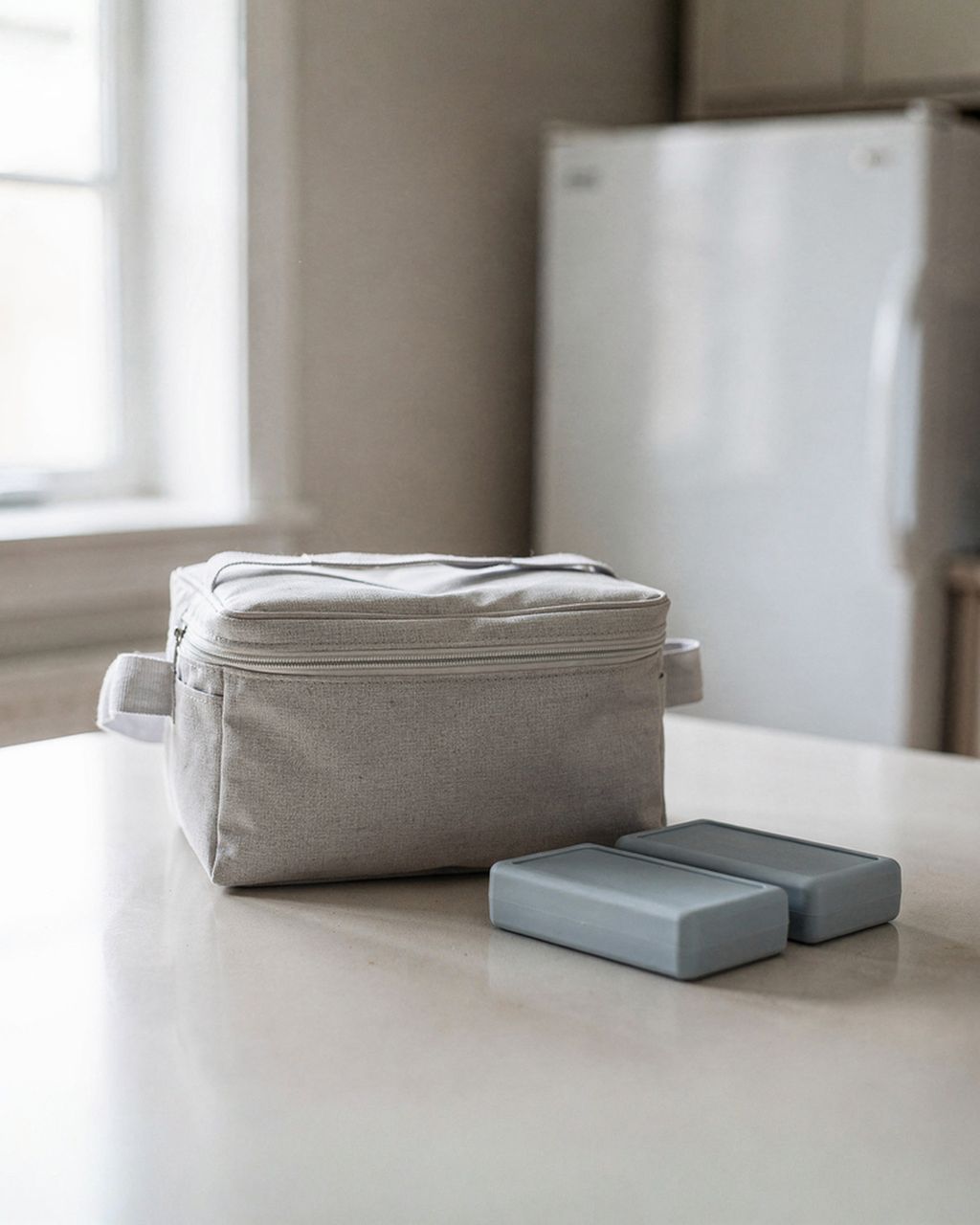
The practical takeaway: buy chicken last on your shopping trip and carry it home in a bag with a cold pack. If your shopping takes more than an hour in the warmth, subtract that time from the two days you'd otherwise get in the fridge.
You can tell spoiled chicken by three things: texture, smell, and colour — and just one of them is reason enough to throw it out.
Texture. Fresh chicken is moist but smooth and springy. A sticky or slimy film that clings to your fingers is a clear sign bacteria have multiplied on the surface.
Smell. Fresh poultry has only a faint, fairly neutral smell. A sour, ammonia-like, or sickly-sweet odour means it's done for — and it won't wash off with rinsing or disappear under spices.
Colour. Healthy chicken is pink to pale pinkish-white. A grey, dull, or greenish tinge, especially at the edges and cut surfaces, means bin it. Cloudy, thick liquid pooled at the bottom of the pack is the same warning sign.
Two extra things people often miss:
Vacuum-packed chicken can smell off for a moment after opening — sour or "cheesy" — and this usually clears within a few minutes in the open air. If the smell hasn't gone within about half an hour, it's not just the packaging.
No smell doesn't mean it's safe. Neither Campylobacter nor Salmonella changes the look or smell of meat. That's why you should go mainly by the date and storage time, not your nose — your senses only catch the part of the problem that's already visible.
Cooked, roasted, or fried chicken keeps in the fridge for 3–4 days, but only if you cool it quickly. Leave leftovers out for a maximum of two hours, then refrigerate them — even while still slightly warm. The worry that warm food will "ruin the fridge" is a myth responsible for a lot of spoiled leftovers.
Cool it smartly:
Split the meat into smaller portions in shallow, sealable containers. A layer up to 5cm deep drops below 4°C within 1–2 hours, while a deep, full roasting dish can easily take 6 hours or more — hours versus half a day.
Meat picked off the carcass keeps better than a whole chicken, which cools slowly from the outside in over many hours.
Reheat only once — and do it thoroughly, until the meat is hot right through the centre, roughly 75°C. Reheating the same portion repeatedly sends it back through the temperature zone where bacteria multiply each time.
Leftover roast chicken also happens to be one of the best ingredients for a quick dinner — shredded into a salad, stirred into risotto, or simmered into a proper stock from the carcass.
Pasta salad with chicken strips, tomatoes and arugula
Pasta salad with chicken strips: the fastest way to use up leftover chicken
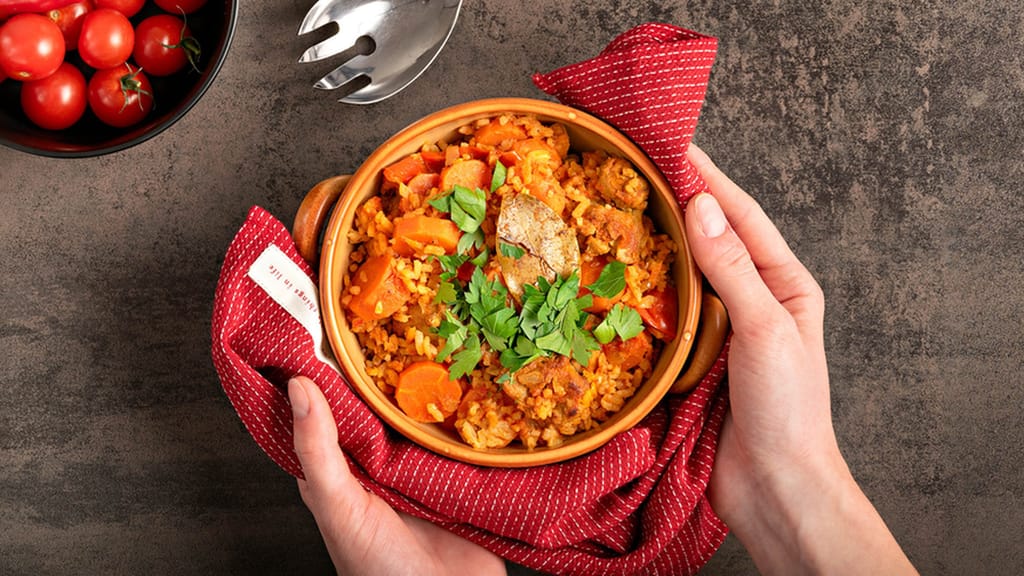
Baked chicken and vegetable risotto
Baked risotto with chicken and vegetables: what to do with leftover roast chicken
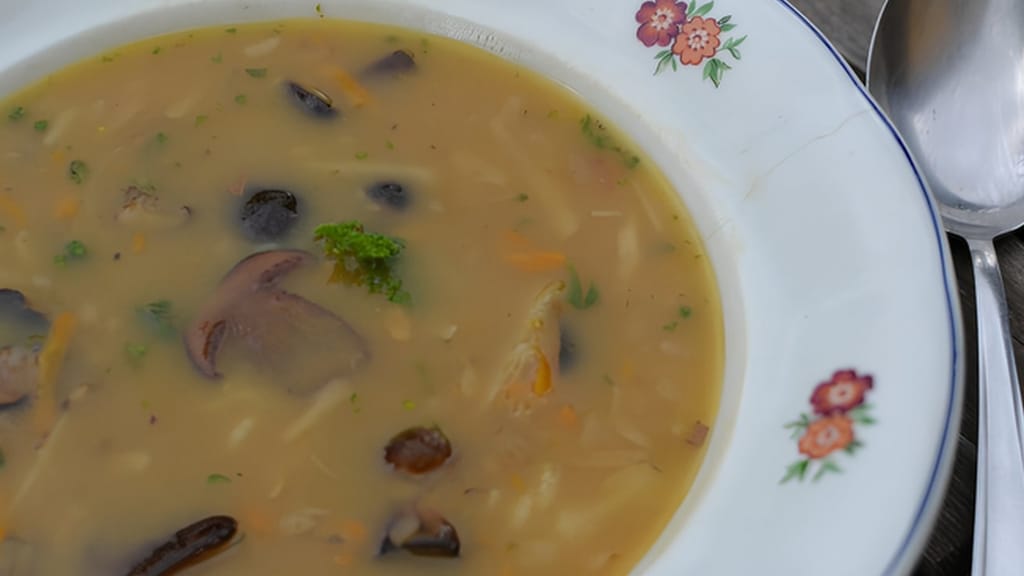
Thickened chicken broth with meat and mushrooms
Rich chicken stock with meat and mushrooms, made from a roast chicken carcass
No, raw marinated chicken keeps for the same 1–2 days in the fridge as unmarinated chicken. A marinade adds flavour, not preservation — acid from lemon or yoghurt slows bacterial growth slightly, but not by days, and oil mainly just prevents moisture loss.
Here's what that means in practice:
Always marinate in the fridge, never on the counter. A few hours sitting out on the kitchen worktop can burn through your entire safety margin.
Marinate in a sealed container or bag, not in an open bowl covered with a tea towel.
Never use marinade that raw chicken sat in as a sauce. If you want to cook it down and use it, it must be brought to a full boil first.
Marinating chicken longer doesn't improve it. Breast meat left in an acidic marinade beyond about 4 hours turns mushy and starts falling apart — with poultry, shorter is better.
If you know you won't get to freshly marinated chicken within two days, freeze it right away instead — you can even marinate in the freezer, since the meat will soak up the flavour as it thaws.
Chicken keeps in the freezer at −18°C for 3–12 months depending on the type: whole raw chicken lasts longest, minced and cooked chicken the shortest amount of time.
Whole raw chicken – 9–12 months at −18°C
Raw pieces and cutlets – 6–9 months
Minced chicken – 3–4 months
Cooked chicken – 2–4 months
Freeze it before its fridge shelf life runs out, not on the last possible day when it's already borderline — the freezer preserves quality, it doesn't restore it.
Thaw it in the fridge overnight, not in the sink or the microwave: the surface warms up before the centre has thawed, and that surface is exactly where the bacteria are. For a large chicken, allow roughly 24 hours per 2kg. Use thawed raw meat within one day; you can only refreeze it if it thawed in the fridge and is still ice-cold — though quality will drop.
Unopened vacuum-packed chicken or chicken packed in a protective atmosphere keeps until the "use by" date on the pack — the exact timeframe is set by the manufacturer depending on the gas mix used and the storage temperature, so go by the date rather than guessing yourself. Once you open the pack, that protection ends and the usual rule applies: 1–2 days at 0–4°C. The longer shelf life comes from the reduced oxygen inside the pack, not from better meat quality.
No, chicken breast and thighs keep for the same length of time in the fridge — 1–2 days at 0–4°C. Thighs have a slightly higher fat and iron content, so they turn rancid sooner in long-term freezing, but in the fridge the difference is negligible. Piece size matters more: a whole bone-in thigh keeps a touch better than cut-up strips, simply because it has less exposed surface area.
No, cooking won't save spoiled chicken. Heat destroys the bacteria themselves, but some of them leave behind heat-resistant toxins that survive even a rolling boil and can still make you ill, even from thoroughly cooked meat. Throw out any chicken that's past its date or shows signs of spoilage.
A closed fridge holds a safe temperature for roughly 4 hours; according to the FSIS and FDA, a full freezer stays safe for up to 48 hours, a half-full one for only 24 hours. If the outage lasted longer than that, or the meat feels lukewarm to the touch, throw it away. Raw chicken that has thawed but is still ice-cold (4°C or below) and still has ice crystals can be refrozen, though the quality will drop.
Chicken stock and finished soup with chicken keep for 3–4 days in the fridge, provided you cool them quickly and store them in a sealed container. Speed up cooling by pouring the stock into smaller containers or setting the pot in a cold water bath. For longer storage, freeze it — stock keeps for 2–3 months in the freezer.
One recipe worth heating the oven for, one tip, and one deal from the shop. Nothing else.