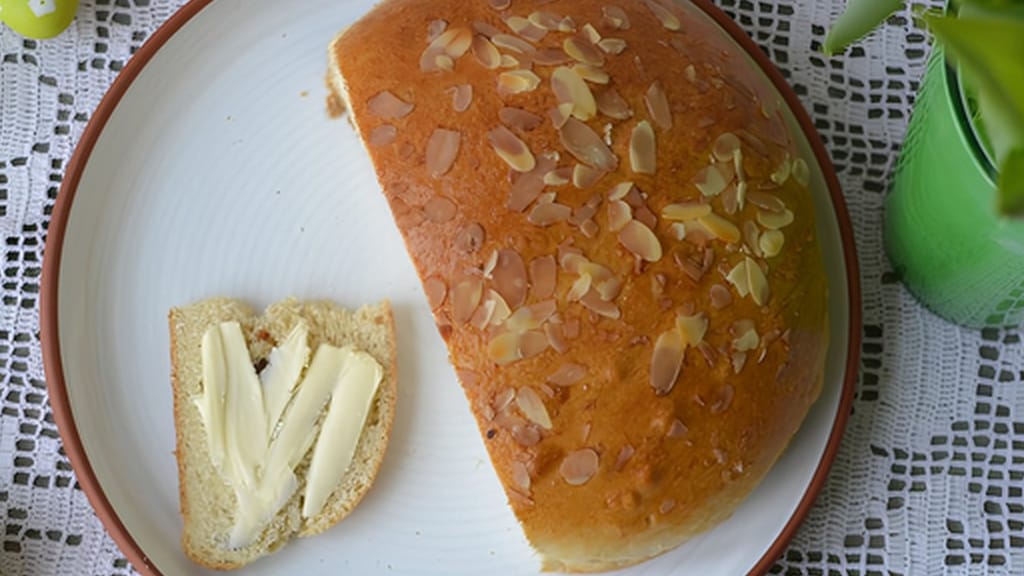
Easter classic: fragrant mazanec bread
What to Brush on Vánočka Before Baking: Egg Yolk, Milk and a Double Coat
Updated Sep 17, 2026
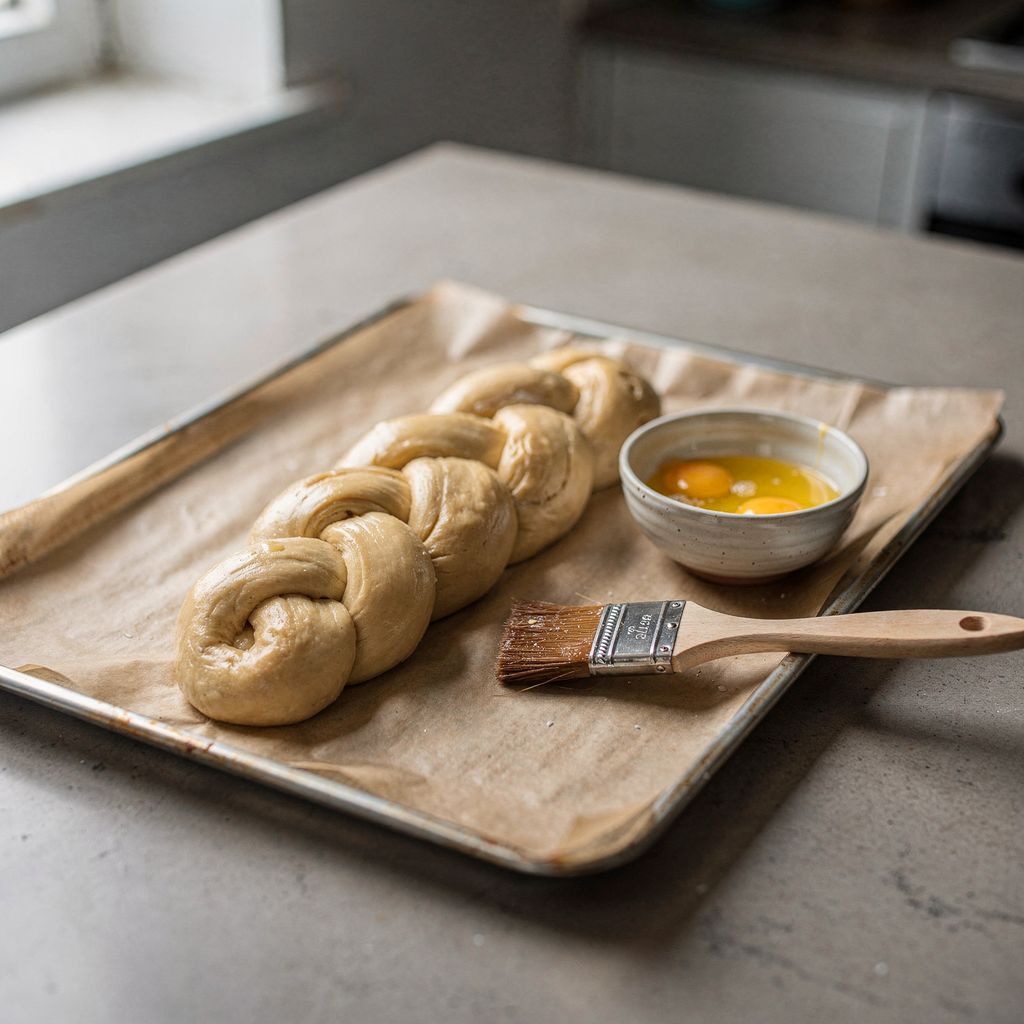
Brush your vánočka with a beaten egg yolk mixed with a spoonful of milk — and brush it twice: once right after braiding, and again just before it goes into the oven. Egg yolk alone gives the richest golden-brown colour, milk thins it out so it spreads in a thin, streak-free layer, and the double coat keeps the surface from drying out while it rises so the baked loaf comes out glossy. Below you'll find the exact ratios, timing, and what to do if the surface browns faster than the inside bakes through.
You've got three options — whole egg yolk with milk, a whole beaten egg, or egg white alone. They differ in exactly one thing: how much colour and how much shine each gives.
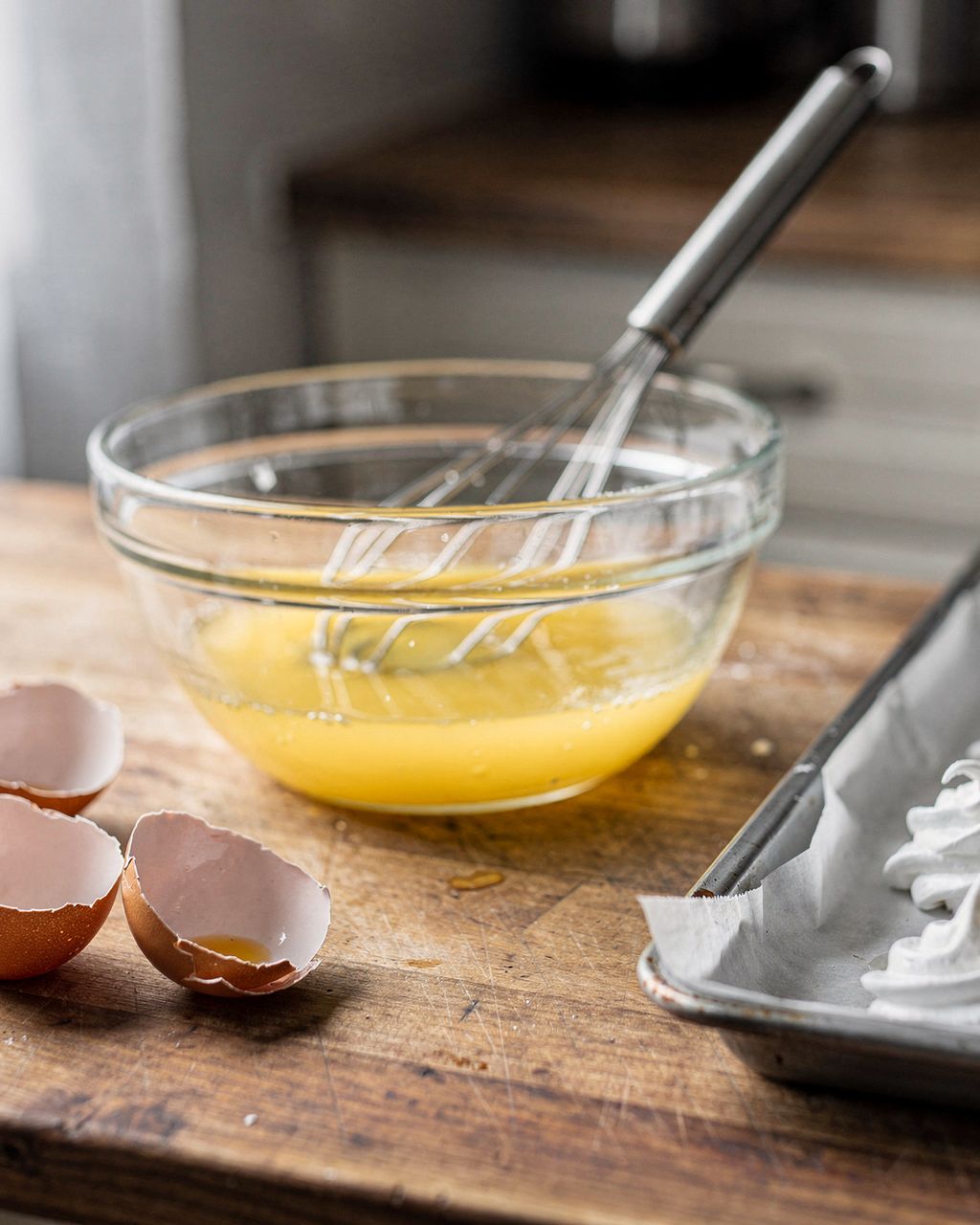
Egg yolk + a spoonful of milk — the richest golden-brown colour and a lovely shine. This is the classic choice for vánočka. The colour comes from yolk proteins browning through the Maillard reaction during baking, plus the yolk's own yellow-orange pigments. That's why the surface browns sooner and more deeply than untreated dough.
A whole beaten egg + a spoonful of water — a sensible compromise. The white adds shine, the yolk adds colour, and the result is golden, just a shade lighter than with yolk alone. If you don't want to bother separating the egg, go with this.
Egg white alone — shine with almost no colour. This works better as the first coat during proofing than as the final one, since on its own it leaves the surface pale.
If you want to go a shade darker still, swap the milk for cream — it dilutes the yolk less and adds its own milk proteins, so the surface takes on a deeper colour.
For one vánočka, 1 egg yolk + 1 tablespoon of milk (about 15 ml) is plenty. For a whole egg, the ratio is 1 egg + 1 tablespoon of water.
And here's the one trick that makes the biggest difference: add a pinch of salt to the wash and let it sit for 10–15 minutes. Salt breaks down the protein bonds in the egg, so the thick, gel-like mixture loosens up and takes on a consistency closer to water. A wash like this spreads into a smooth, even, thin layer without leaving streaks or dried lumps of egg white. If you're short on time, pass the beaten egg through a fine sieve instead — it does almost the same job.
Stir the wash with a fork, not a whisk. A whisk beats air bubbles into the egg, and those dry on the surface of the loaf as tiny pale specks.
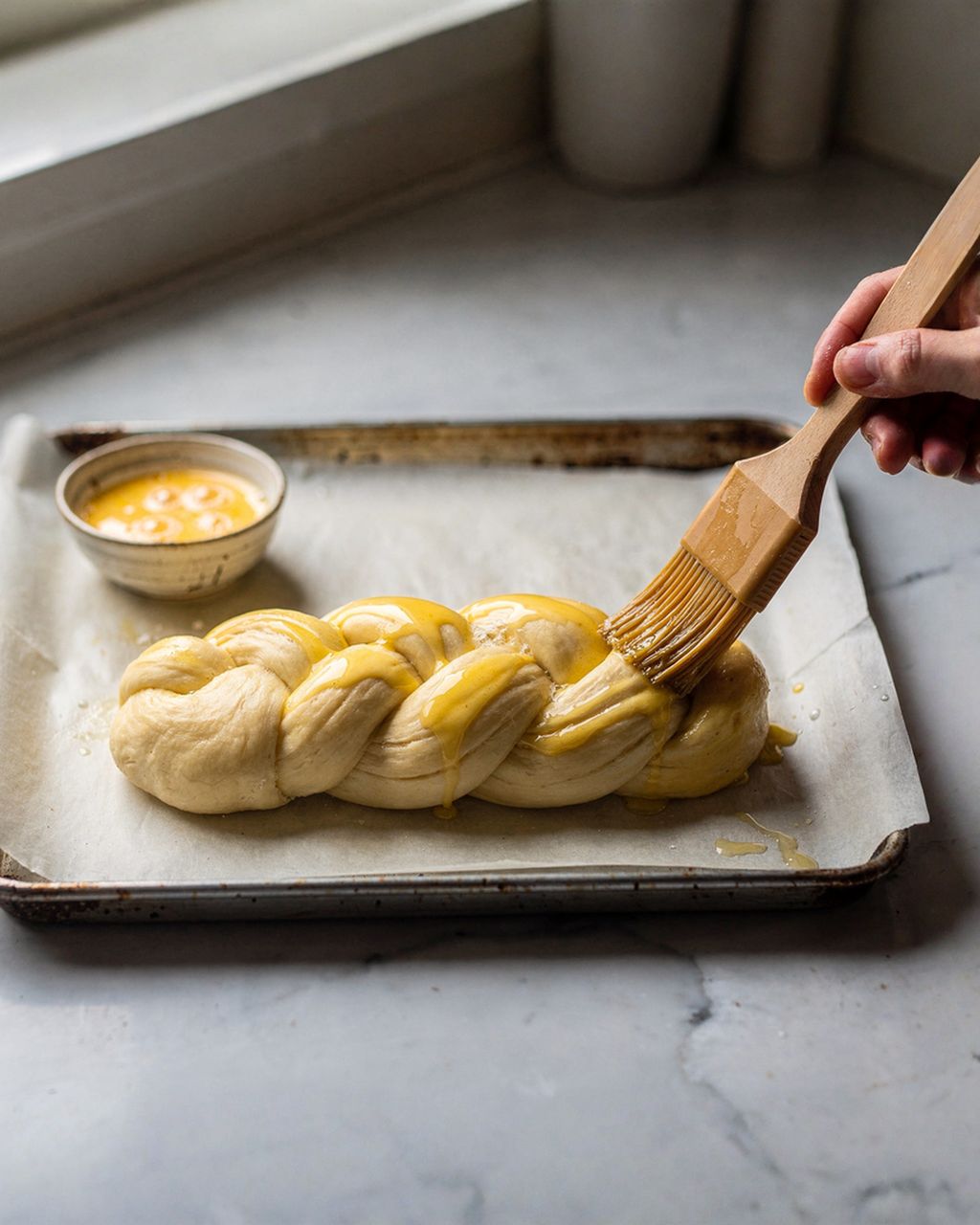
The best results come from brushing twice: once right after braiding, and again just before baking. Each coat does a different job.
First coat (after braiding, before the final rise) — this stops the surface from drying out and forming a skin. A dried-out skin is a problem for two reasons: it limits how much the dough can expand while baking, and the second coat won't sit evenly on top of it, leaving dull patches.
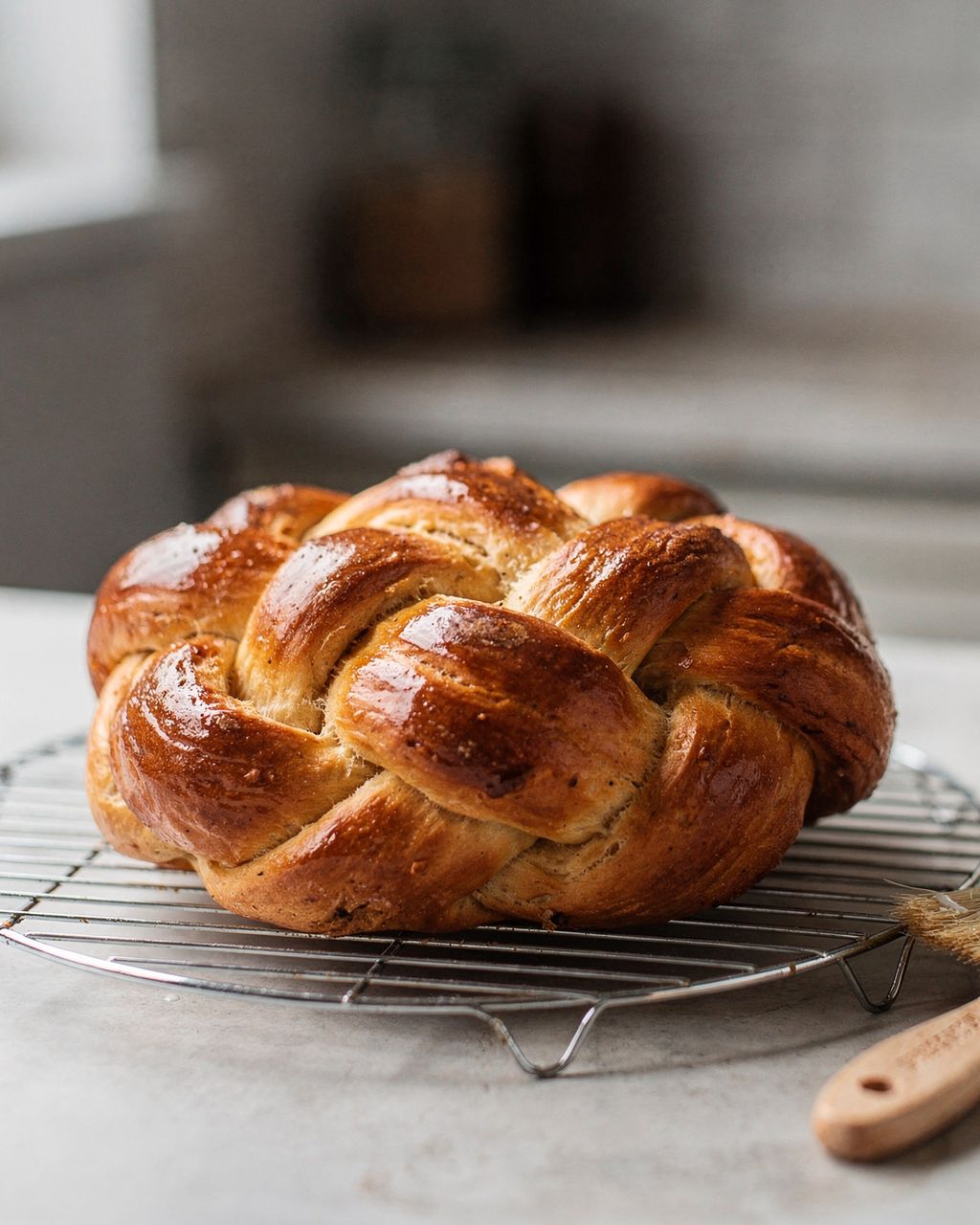
Second coat (just before it goes into the oven) — this is the one that creates the colour and shine.
Do the second coat really right before baking, not twenty minutes ahead. And go gently: risen dough is delicate, and if you press with the brush it'll deflate under your hand. Keep the brush light, barely skimming the surface.
If you're not confident about the braiding or what properly risen dough should look like, start with the basic ratios for yeasted dough — no egg wash will fix dough that hasn't risen properly.
Apply a thin, even layer and work it into every fold between the braided strands. Vánočka expands in the oven, and whatever's tucked into those creases now gets pushed up and exposed — if there's no wash in there, you'll see pale streaks between the golden strands once it's baked.
A soft brush. Silicone works, but a classic bristle brush spreads a thinner, more even layer.
A thin layer, not a puddle. Excess egg pools on the surface into unsightly lumps and blackens at the edge of a strand before the rest of the loaf catches up.
Two thin coats beat one thick one. That's the whole reason for brushing twice.
Watch the edges. Egg wash must not run down onto the baking tray.
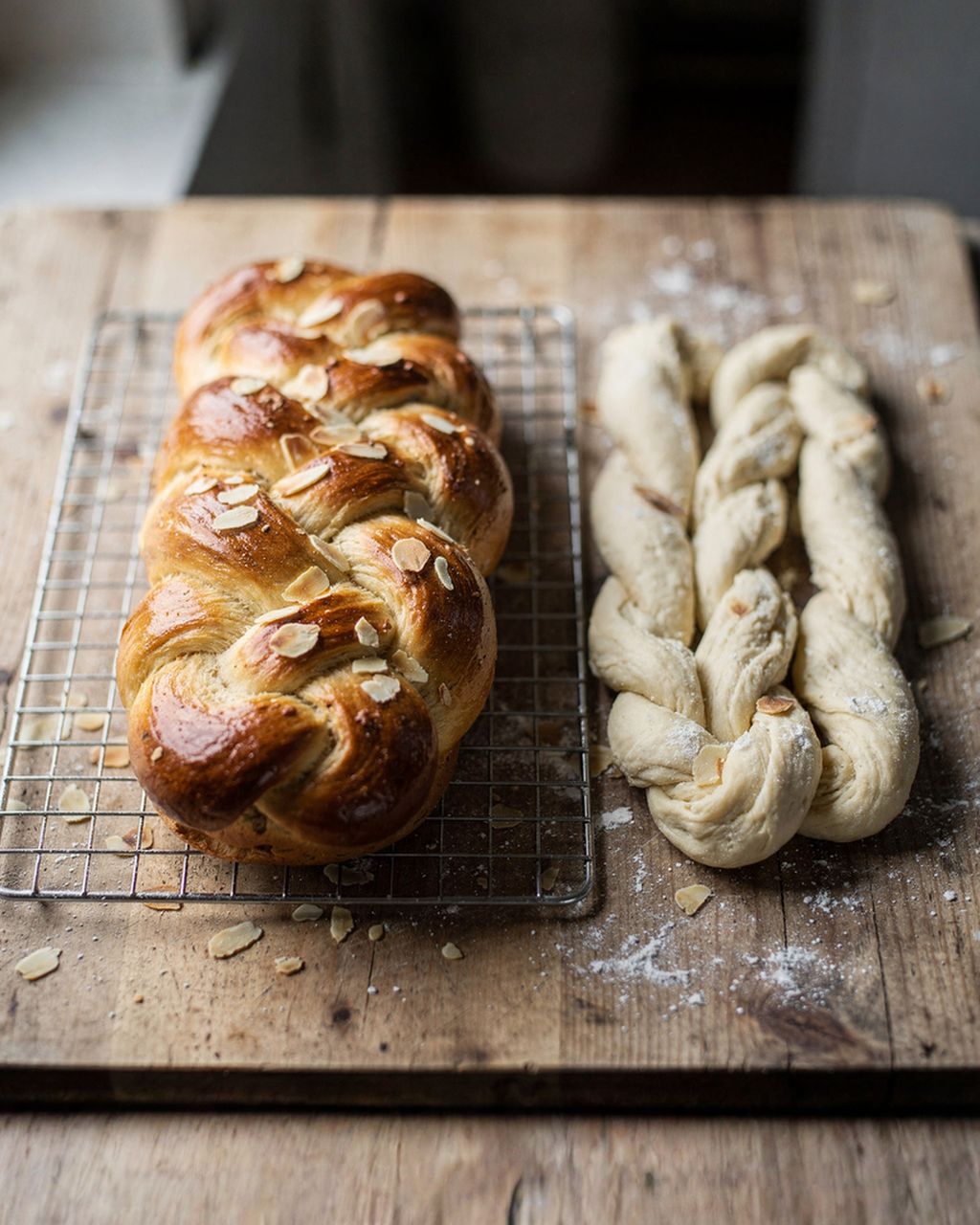
Sprinkle almonds on right after the second coat, while it's still wet — dried egg wash won't hold anything, and the flakes will just fall off the baked loaf. The wash isn't just there for colour here; it works as glue.
Flaked almonds — the classic choice, they stick best and toast up nicely.
Chopped almonds — more flavour, but the smaller pieces burn faster.
Pearl sugar — sprinkle this last, right on top of the almonds.
Keep in mind that the almonds will brown before the vánočka itself is done. Once they've got colour and the loaf still needs more time, loosely cover it with foil and finish baking underneath it.
Loosely cover it with foil and finish baking underneath it — the surface stops taking on more colour while the inside bakes through undisturbed. This is completely normal, not a mistake: the brushed surface picks up colour long before the centre of the loaf heats through.
What helps prevent this in the first place:
A stepped-down temperature. The first 10 minutes at 180°C (355°F), then drop to 160–170°C (320–340°F) and bake for another 30–40 minutes. A hot start gives colour and rise, while the lower finishing temperature heats the centre through gently.
Top-and-bottom heat instead of a fan oven. A fan dries out the surface and pushes browning faster than you'd like.
Vánočka is better placed in the lower third of the oven, further from the top heating element.
If your vánočka is cracking on the side instead of browning too much, the wash has nothing to do with it — it's almost always underproofed dough. We cover this in our piece on mazanec and cracks in yeasted dough.
There are four common mistakes: brushing once instead of twice, a wash that's too thick, skipping the folds between the strands, and sprinkling almonds onto a wash that's already dried. On top of those, there are two more mistakes with timing and brush pressure.
Only one coat, right before baking. It works, but the surface dries out during proofing and the colour ends up uneven.
Too thick a wash.An unbeaten yolk with no liquid added dries into lumps. Always thin it with a spoonful of milk or water.
Skipped folds.Pale streaks between the strands are the most common flaw in a baked vánočka.
Almonds on a dried wash. They won't stick.
Brushing twenty minutes before baking. It has time to dry out and loses its shine.
Pressing hard with the brush on risen dough. A deflated loaf won't puff back up.
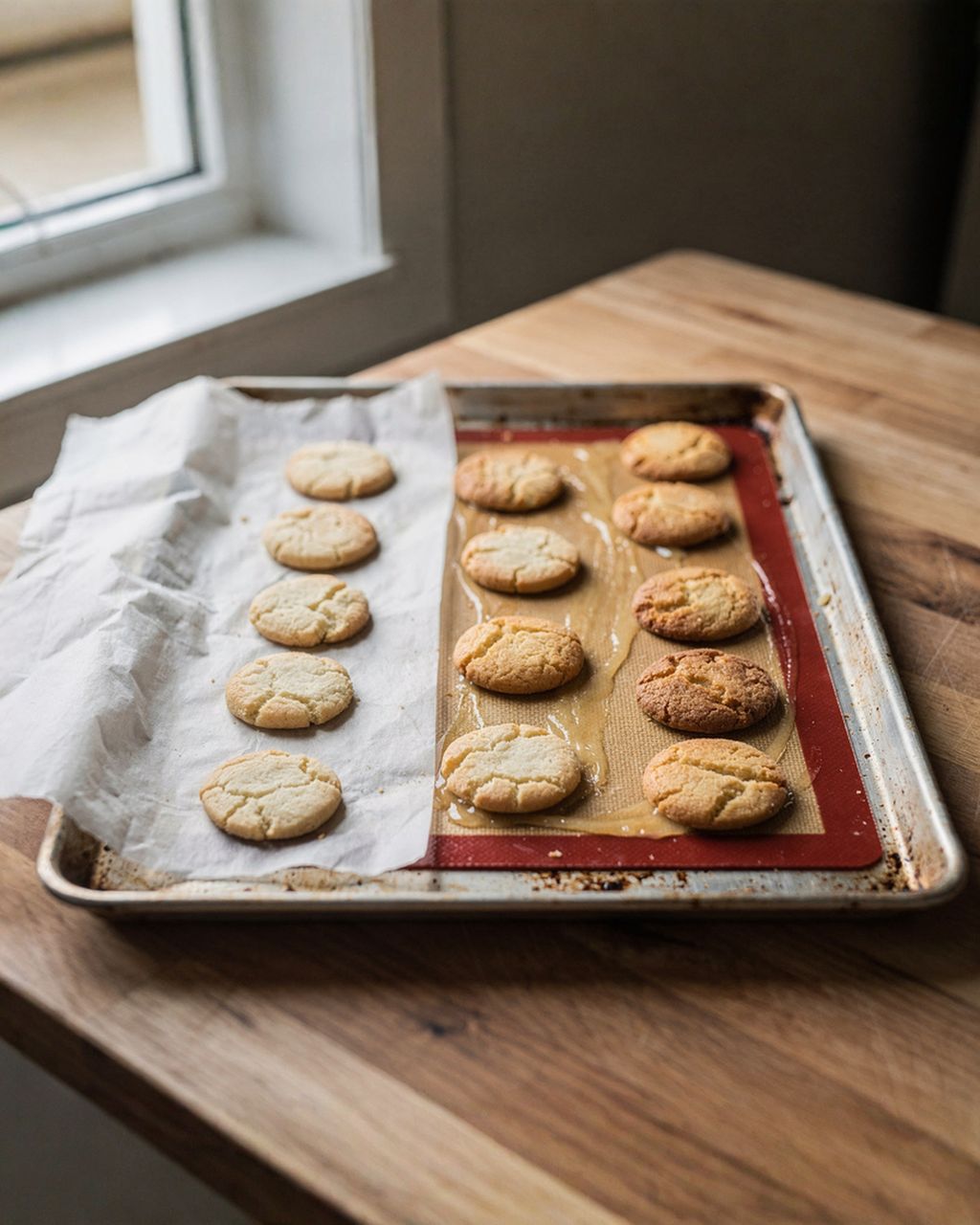
Egg yolk with milk and a double coat isn't a vánočka-only trick — it's a general rule for sweet yeasted dough. Mazanec uses practically the same dough and has the same cracking issues, making it the ideal place to practise the technique. With savoury bread rolls, you can see for yourself just how different a brushed surface looks compared to an unbrushed one, since you bake them as small individual pieces and can leave half the tray without any wash at all.
Easter classic: fragrant mazanec bread
Fragrant mazanec: the same yeasted dough, the same egg-and-milk wash
Yes, the beaten wash keeps in the fridge in a sealed container for about 24 hours. Let it come back to room temperature before use and stir it again with a fork — a cold wash is thicker and harder to spread evenly. If you added a pinch of salt, it'll actually turn noticeably runnier after sitting, which is perfectly fine.
Freeze it — egg whites freeze beautifully, and once thawed in the fridge and brought back to room temperature, they whip up almost exactly like fresh. Freeze it in a small container or in individual portions in an ice cube tray so you can pull out exactly the amount you need. Use the whites later for meringues, or brush them onto a different batch of baked goods for shine without the dark colour.
Not with raw egg, but as soon as it comes out of the oven you can brush it with melted butter or sugar syrup. It won't deepen the colour, but the surface will stay soft and gain some shine. Make the syrup from a spoonful of sugar and a spoonful of water, briefly boiled together, and brush it on while the loaf is still hot so it soaks in and sets quickly.
If it's frozen and unbaked, let it fully thaw and finish rising at room temperature first, then brush it — on cold dough the wash beads up into droplets instead of spreading into an even layer. For a partially pre-baked loaf (baked light and finished later), skip raw egg altogether: on a crust that's already set, raw egg spreads unevenly, beads into blotches, and won't bake into a smooth shine. Brush it with melted butter or milk with a pinch of sugar before finishing the bake instead.
You can, but the result will be noticeably paler and without shine. Milk alone only gives mild browning from lactose and milk proteins — it lacks the concentrated proteins and pigments in egg yolk that create that deep golden-brown colour. It works fine in a pinch, but it's not a real substitute — reach for cream or a plant-based milk with a splash of oil instead.
One recipe worth heating the oven for, one tip, and one deal from the shop. Nothing else.