Soft cinnamon rolls from brioche dough with frosting
Updated Sep 5, 2026
You can swap egg wash for unsweetened soy milk, cow's milk, a milk-or-plant-milk-and-syrup blend, aquafaba, melted butter, cream, or a cooked starch glaze. The trick is knowing exactly **what** you're replacing on the surface: protein gives colour, fat gives shine, and sugar gives that golden glow. Below you'll find gram-accurate ratios and clear guidance on which substitute belongs on yeasted dough, which on puff pastry, and which on bread.
You can replace egg wash with unsweetened soy milk, plant milk with syrup, cow's milk with sugar, aquafaba, melted butter, cream, or a cooked starch glaze. Here they all are with ratios for one baking tray (about 12 pieces, needing roughly 20–25 g of wash):
Unsweetened soy milk (a plant-based milk alternative) – 25 g on its own. Matte golden colour, almost no shine. A great all-rounder for sweet and savoury bakes alike.
Plant milk + syrup – 20 g milk + 4 g maple or agave syrup, i.e. 1 part syrup to 5 parts milk. Closest to that classic egg-wash shine. Sweet bakes only.
Cow's milk + sugar – 25 g milk + 3 g caster sugar. Good if you're avoiding egg but not dairy.
Aquafaba – 25 g chickpea brine, ideally reduced by half. The best shine for savoury bakes.
Melted butter or plant-based spread (margarine) – 15 g. Gives a soft, fragrant crust with little shine.
Whipping cream (31%) or an oat-based cooking cream alternative – 20 g. Rich colour and a gentle sheen, best for puff pastry.
Starch glaze – 4 g cornflour + 100 g water, simmered for 30 seconds. A glassy shine, perfect for bread and baguettes.
None of these will give you exactly the same result as a beaten egg yolk – that's a built-in combo of protein, fat and emulsifier all in one. Milk with syrup gets you closest for sweet bakes; reduced aquafaba is your best bet for savoury.
Note: "egg-free" here refers only to the wash itself. Butter, milk and cream on this list are egg substitutes, not vegan options – you're cooking vegan only when you choose the plant-based versions.
An egg wash does three jobs: protein gives colour, fat gives shine, and sugar gives that golden glow. The best substitute is the one that covers whichever job matters most to you.
Protein creates colour. In the oven it reacts with sugars in the dough (the Maillard reaction, which kicks in around 140°C/284°F), browning the surface faster and more evenly than bare dough would brown on its own. That's why protein content matters so much with plant milks: soy milk has roughly 3 g of protein per 100 ml, while oat and almond milk are usually under 1 g. That's why soy milk browns so much better.
Fat creates shine and softness. Egg yolk is about 27% fat – after baking, that fat stays on the surface as a thin film that reflects light. It also stops the surface from drying out and hardening.
Sugar creates golden colour and stickiness. On the surface it caramelises, adding a warm golden tone – which is why sweet washes darken faster than plain milk. And while warm, sugar is sticky, which is what makes poppy seeds, almonds or pearl sugar stick to brushed bakes.
The practical upshot: if all you want is colour, protein alone (soy milk) will do it. If you want shine, you need to add fat or sugar. Water on its own does neither – it just softens the surface.
Brushing on unsweetened soy milk alone, 25 g per tray, is the most reliable first choice – it gives an even golden-brown colour without shine and doesn't alter the flavour.
How to do it:
Use unsweetened milk. Sweetened versions will scorch on the surface before the bake is done.
Brush on a thin layer just before it goes into the oven.
For yeasted bakes, brush twice – once after shaping, and again after the final proof. Two thin coats give more colour than one thick one.
Oat, almond or rice milk will also work, but the result will be paler – they're low in protein and high in water. If oat milk is all you've got, add 4 g of syrup (see below) and let sugar do the colouring job instead of protein.
Cow's milk falls into the same category: 25 g of milk stirred with 3 g of sugar gives a lovely golden colour and a slight sheen.
A ratio of 1 part syrup to 5 parts liquid (4 g maple or agave syrup + 20 g soy milk or dairy milk) is the substitute that most closely resembles an egg wash – it delivers colour, shine and a lightly sweet, crisp crust all at once.
The syrup caramelises in the oven and stays on the surface as a thin, glossy film. The milk dilutes it so it doesn't turn sticky or run.
Maple syrup – neutral, versatile, your best all-round pick.
Agave syrup – lighter colour, slightly sweeter.
Malt syrup – darker, with a distinctly malty flavour. Excellent on pretzels and savoury bakes.
Honey – works just as well, as long as you're not cooking vegan.
One thing to watch out for: there's a lot of sugar sitting right on the surface, so a sweet wash darkens faster than an egg wash. For bakes over 30 minutes at 180°C/350°F, the surface can scorch before the bake is actually done.
Aquafaba – the liquid from a tin of chickpeas – is the closest substitute to egg white, since it contains dissolved proteins and carbohydrates from the chickpeas that form a glossy film on the surface. Use 25 g on its own, with no sweetener added.
Two tricks that make the difference between "looks a bit pale" and "looks bakery-bought":
Reduce it. The brine is quite watery. Simmer 50 g of aquafaba down to 25 g – it thickens up, clings to the dough, and gives a noticeably stronger shine. Let it cool before using.
Add fat. Whisk 20 g aquafaba with 2 g neutral oil using a fork. The oil supplies what egg yolk and egg white alone can't.
Aquafaba is the only substitute that delivers shine without adding sweetness, which makes it the obvious choice for savoury bakes: cheese straws, savoury pastries, filled pockets, and savoury strudels.
Fats replace the shine and softness that egg yolk provides, but they won't add colour – the surface stays lighter because there's no protein involved.
Melted butter or plant-based spread (margarine), 15 g. Let it cool slightly so it's not hot. Gives a fragrant, soft crust. Don't overdo it – a thick layer soaks in and leaves the base of the bake greasy. With margarine, check the fat content: regular margarine is 80–90% fat, three-quarter-fat margarine 60–62%, and half-fat margarine 39–41% – the less fat, the more water in the wash, and the weaker the effect.
Neutral oil, 10 g. The simplest choice for puff pastry: it won't glue the layers together and lets them rise beautifully.
Whipping cream (31%) or an oat-based cooking cream alternative, 20 g. A middle ground between fat and protein – gives a richer colour than oil alone plus a gentle sheen. For puff pastry, this is the best single-ingredient substitute.
If you want both fat and colour, combine them: 15 g cream + 3 g syrup.
For bread and rustic bakes, a cooked starch glaze is the best egg substitute: stir 4 g of cornflour into 100 g of cold water, bring to the boil, and simmer for 30 seconds until the mixture turns clear.
Apply it lukewarm, in a thin layer:
Before baking – the crust will be thinner and shinier.
Right after it comes out of the oven – the shine is stronger, and you can still press on sesame seeds, poppy seeds or coarse salt while the crust is hot.
This is the standard method for dark and rye bakes, where a sweet wash would clash with the flavour. It keeps in the fridge for three days, but turns gel-like – stir in a few drops of water before using.
The same logic applies to a post-bake syrup glaze: 15 g syrup stirred into 5 g hot water and brushed onto sweet bakes while they're still hot. There's no risk of scorching since the oven's already off, and it gives the strongest shine of any method here.
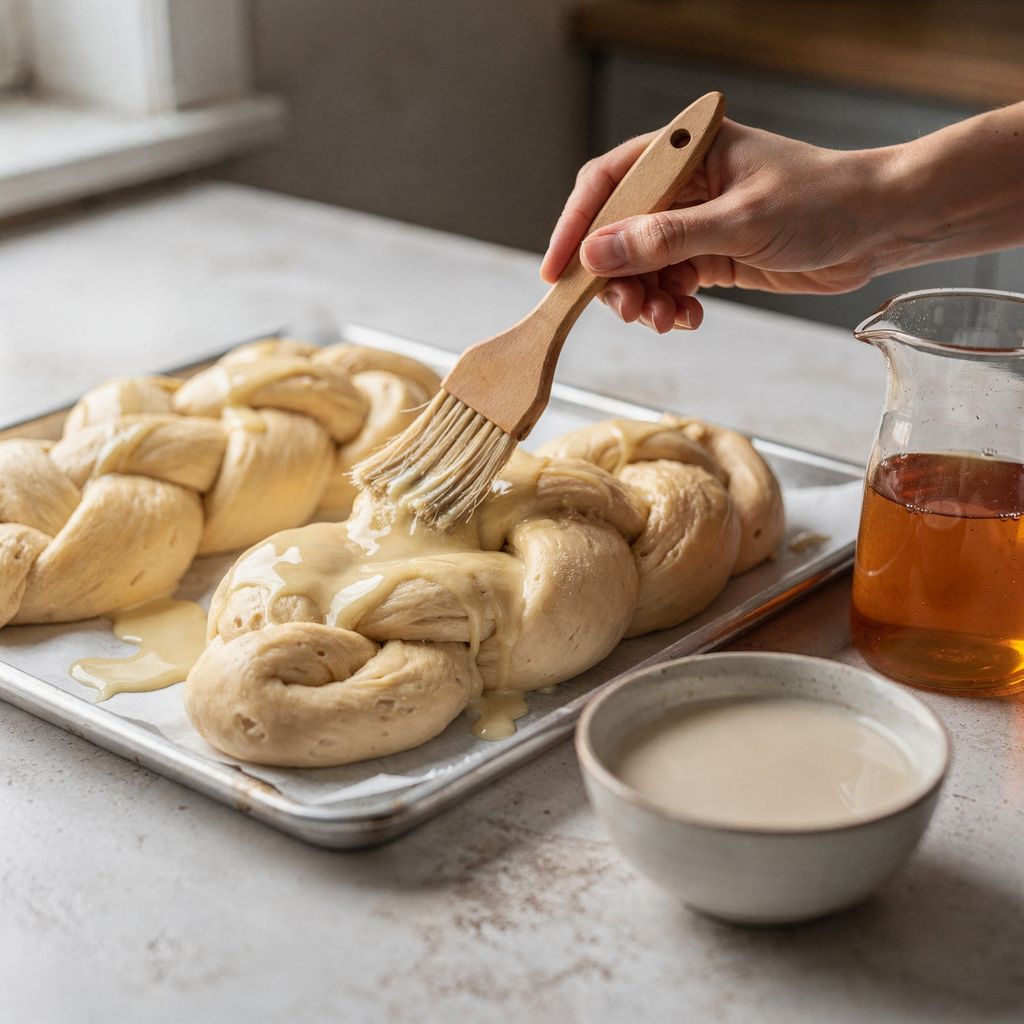
Brush egg-free bakes like this: a thin layer so nothing drips onto the tray, following the direction of the shape, twice for yeasted dough, with a silicone brush, and skipping the cut edges on puff pastry. A pale egg-free bake is usually a brushing mistake, not a substitute problem.
A thin layer, not a puddle. The wash should coat the surface, not sit in a pool on it. Wipe off any excess against the bowl's edge.
Don't let it drip onto the tray. With yeasted dough, wash that pools underneath glues the loaf to the tray and stops it rising properly.
Brush in the direction of the shape, not in circles – on braided bakes, go along the plait, not across it, so you don't smudge the shape.
For yeasted dough, brush twice: once after shaping, and again after the final proof, just before it goes into the oven.
A silicone brush gives a more even coat than a bristle one – substitutes are thinner than egg, and a bristle brush picks up more than you need.
Avoid the edges on puff pastry. Wash on a cut edge seals the layers together and stops the pastry from rising.
Use soy milk or milk with syrup on sweet yeasted bakes, cream or oil on puff pastry, aquafaba on savoury bakes, starch glaze on bread, and soy milk or milk with syrup again on biscuits. Details for each type below.
Brush sweet yeasted bakes with a mix of 20 g soy milk and 4 g maple syrup, applied twice. Buns, cakes, sweet rolls, festive braided breads and fruit loaves will all get a golden colour and a shine that lasts even after cooling.
On braided bakes like Mum's Christmas Braid or an Easter fruit loaf, brush carefully between the plaits – wash tends to pool there and leave dark patches after baking.
For almond flakes or pearl sugar to stick, you need a tacky surface: the syrup version holds toppings reliably, plain milk does not.
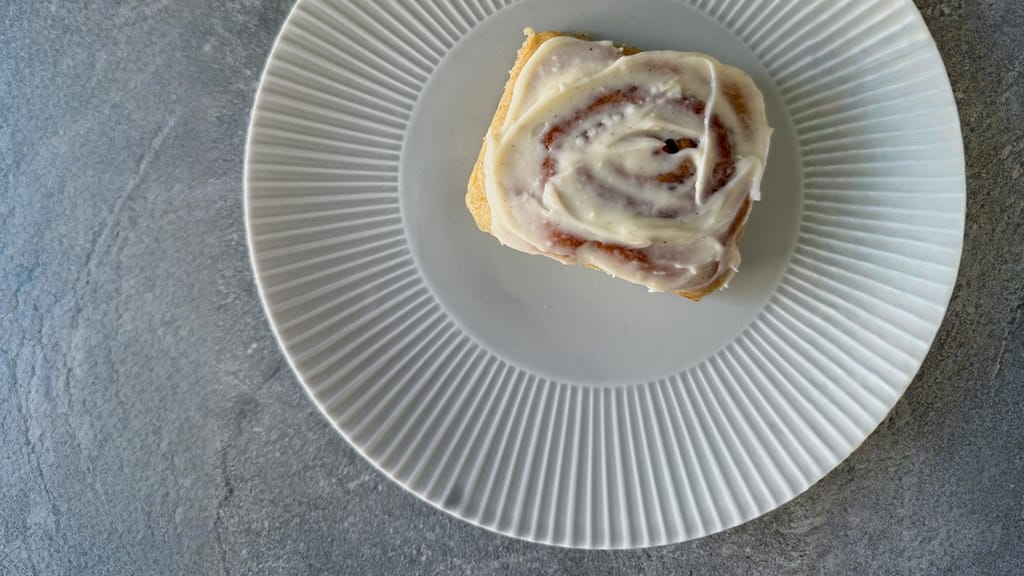
Soft cinnamon rolls from brioche dough with frosting
Soft cinnamon rolls made from brioche dough – a yeasted bake where soy milk with syrup works best
Brush puff pastry with 20 g whipping cream, or 10 g neutral oil. It mainly needs fat and as little water as possible – a watery wash softens the top layers and stops the pastry from rising.
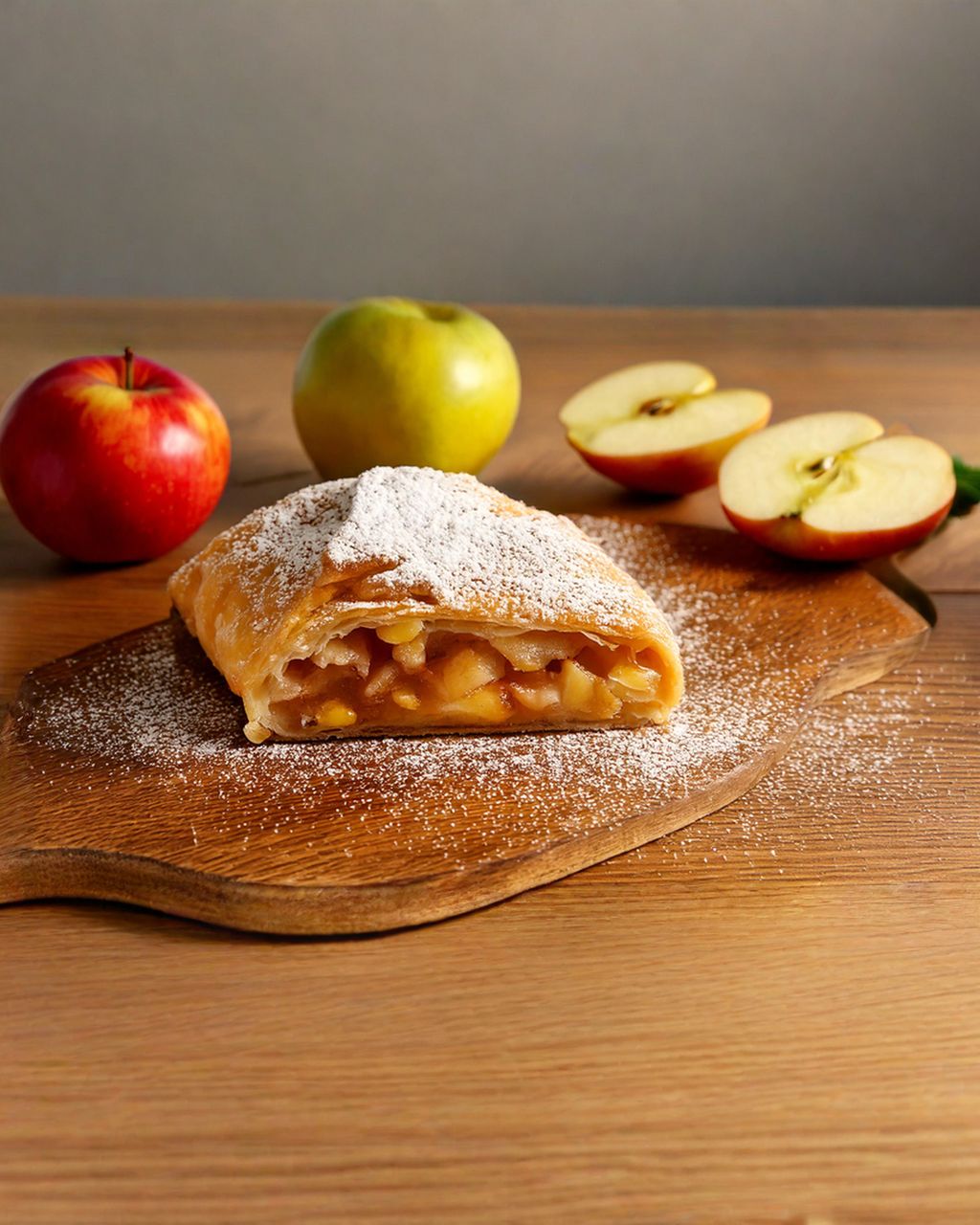
Brush only the top, never the cut edges. For sweet versions like apple strudel made with puff pastry, you can dust the still-warm surface with icing sugar after baking to replace the shine egg would have given.
For savoury versions (puff pastry pockets, cheese straws) brush with reduced aquafaba: it gives shine without added sweetness and holds sesame seeds, caraway or grated cheese in place.
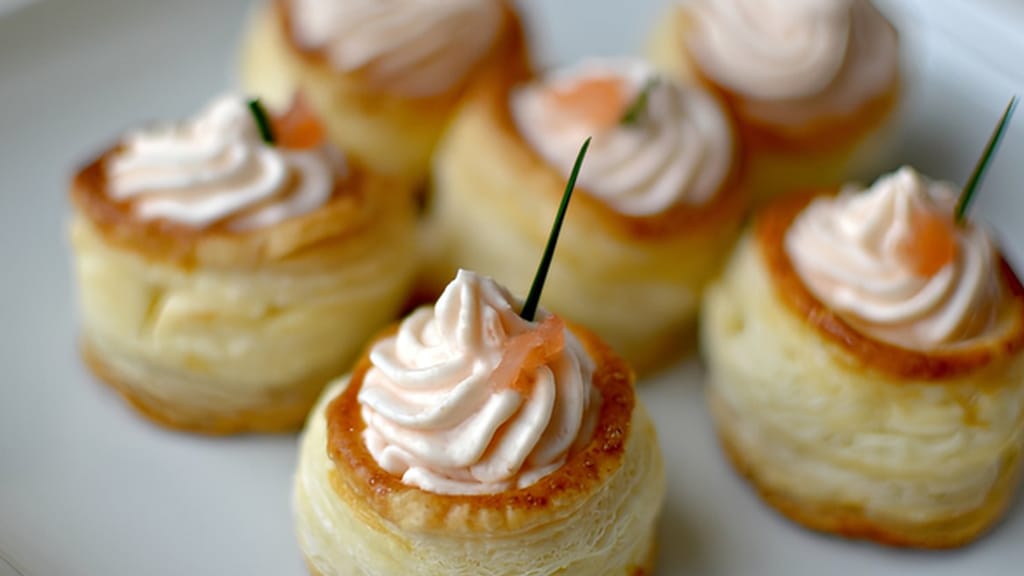
Puff pastry canapés
Puff pastry pockets – a savoury bake where aquafaba replaces egg with no change in flavour
Brush bread with a starch glaze (4 g starch + 100 g water), or leave it unbrushed entirely – both are correct.
With homemade bread, steam in the oven does most of the work, not the wash – the crust turns glassy on its own if you bake the first 15 minutes with a bowl of water or under a lid. Only add a starch glaze if you want a stronger shine or need to stick seeds on.
For pretzels and savoury rolls, reach for malt syrup diluted with milk at a ratio of 1 part syrup to 5 parts milk (4 g syrup + 20 g milk) – it gives a dark colour that plain milk simply can't match.
Brush biscuits and shortcrust pastry very thinly with a mix of 20 g soy milk or dairy milk and 4 g syrup. These bake quickly and at lower temperatures, so the sweet wash doesn't have time to scorch.
For lard biscuits and similar bakes, where the egg's main job is sticking on toppings, there's an even simpler swap: brush with just milk or soy milk and sprinkle on toppings right away, while the surface is still damp.
These don't work for brushing: plain water, sweetened plant milk, flax or chia "egg", and cold butter – here's why:
Plain water. Gives neither colour nor shine, just softens the surface and can leave yeasted bakes rubbery.
Sweetened plant milk. The sugars will scorch on the surface before the bake is done. Always choose the unsweetened version.
Flax or chia "egg". These work brilliantly as a binder inside the dough, but not for brushing – they leave visible dark specks of husk on the surface.
Cold butter or solid fat. You can't spread it in a thin layer, and it melts into greasy pools in the oven. Always melt it and let it cool to lukewarm first.
No – "egg-free" and "vegan" are two different things. If you're only skipping the egg, you can happily brush with cow's milk, cream or melted butter and get the closest colour match to egg. It only becomes vegan when you reach for soy milk, aquafaba, plant-based spread, or a starch glaze.
Almost always it's too little protein in the wash, or just a single coat. Swap oat or almond milk for unsweetened soy milk (it has roughly three times the protein), brush twice – once after shaping and again after the final rise – and add 4 g of syrup per 20 g of milk. The other common culprit is a wash that's too watery and simply evaporates in the oven.
Yes, but you need a tacky wash – one that contains sugar. A mix of 20 g soy milk and 4 g maple syrup holds toppings reliably; plant milk alone won't. Sprinkle straight away while the surface is still wet, and press gently with your palm.
You can mix the milk-and-syrup version or aquafaba and keep it in a sealed container in the fridge for up to three days – just stir it well before using. A cooked starch glaze also keeps for three days but will turn gel-like, so loosen it with a few drops of water to a thin-cream consistency. Melted butter is best made fresh each time.
Unsweetened soy milk, aquafaba and starch glaze don't change the flavour at all – the layer is so thin you won't taste it. Syrup-based versions add a light sweetness and caramel note, which works well on sweet bakes but can feel out of place on savoury ones. Malt syrup is the only one with a strong flavour of its own, though on pretzels and rolls that's exactly the effect you want.
Unbrushed bakes stay pale and matte, but more importantly they dry out faster – without that thin surface film, moisture escapes from the crust even after cooling. With yeasted buns and cakes the difference shows by the next day: brushed ones stay moist longer, unbrushed ones go stale from the crust inward sooner. If you've got nothing else to hand, even 10 g of melted butter brushed on right out of the oven helps – it won't add colour, but it will slow down drying. Store unbrushed bakes in a sealed container or wrapped in a tea towel, not loose on a cooling rack.
One recipe worth heating the oven for, one tip, and one deal from the shop. Nothing else.