Almond nut milk
Updated Aug 30, 2026
Vegetarian or vegan? The difference boils down to one sentence: vegetarians skip meat and fish but still eat eggs, dairy and honey — vegans skip all animal products, including those. The rest is about what that means at the stove: where the line gets blurry in practice, which animal ingredients you might miss on a label, and what actually replaces eggs, cream and butter so your food still holds together and tastes good.
Vegetarians don't eat meat, poultry or fish, but they commonly eat eggs, dairy and honey. Vegans skip those too, along with everything else of animal origin — gelatine, animal rennet in cheese, lard, meat stock.
In practice, the difference is easiest to see on a single plate:
Meat, fish, seafood— skipped by both vegetarians and vegans.
Eggs— usually fine for vegetarians, not for vegans.
Milk, cheese, yoghurt, butter, cream— usually fine for vegetarians, not for vegans.
Honey— usually fine for vegetarians, not for vegans.
Gelatine, rennet, lard, stock— off-limits for vegans; strictly speaking, vegetarians should avoid them too, but they often don't realise they're there.
And one more difference that doesn't show up on the plate: veganism is usually understood not as a diet but as a broader stance on life. The Vegan Society defines it as a way of living that seeks — as far as is practically possible — to exclude all forms of exploitation of animals for food, clothing or any other purpose. That's why veganism also extends to leather, wool and cosmetics, whereas vegetarianism tends to be defined mainly by what's on the plate.
Vegetarianism comes in three common varieties: lacto-vegetarian (dairy yes, eggs no), ovo-vegetarian (eggs yes, dairy no) and lacto-ovo vegetarian (both yes). Alongside these, people often mention pescetarian — but pescetarians eat fish and seafood, so that's not vegetarianism at all. The lacto-ovo variety is by far the most common — when someone says "I'm vegetarian", this is almost always what they mean.
A lacto-vegetarian eats milk, cheese, yoghurt and butter, but no eggs. A good fit would be a roasted vegetable salad with feta.
An ovo-vegetarian eats eggs but no dairy. In practice, the rarest of the three.
A lacto-ovo vegetarian eats both eggs and dairy. This is where classics like spinach and fresh cheese frittata belong.
And a related but non-vegetarian category: a pescetarian skips land-animal meat but eats fish and seafood. It's often lumped in with vegetarianism, but fish is meat — so pescetarianism doesn't actually count as vegetarian.
It's worth knowing that these labels aren't official categories — they're just shorthand to make things easier when talking to each other. When cooking for guests, one extra question — "do you eat eggs and cheese?" — saves you more trouble than guessing from a label.
Compared with vegetarians, vegans cut out five more things: eggs, milk and everything made from it, honey, gelatine, and animal-derived additives hidden in otherwise plant-based foods.
Eggs and milk are obvious. Honey is less obvious — it's a product made by bees, which is why it's excluded from a vegan diet; in baking, swap it for maple or agave syrup at roughly a 1:1 ratio, just keep in mind syrups are thinner, so cut back a spoonful or two of other liquid.
Gelatine is the most common sweet-treat snag: it's made from collagen from skin and bones, which rules out gummy sweets, mousse-style desserts, some yoghurts and marshmallows. The plant-based alternative is agar, made from seaweed — it sets firmer and needs to be boiled. Use roughly 2–3g of agar per 250ml of liquid (closer to 3g for acidic juices) and boil for 2–5 minutes; without a proper boil, agar won't dissolve and the dessert won't set.
The most common hidden animal ingredients are animal rennet in cheese, anchovies in Worcestershire sauce, gelatine, cochineal (E120), shellac (E904), and whey in bread and biscuits.
Rennet in cheese. Traditional Parmesan (Parmigiano-Reggiano) and many other protected cheeses are set using rennet from calves' stomachs, so strictly speaking they're not vegetarian. You can't tell from the name on ordinary cheese either — look for "microbial rennet" or "vegetarian rennet" on the label, or just ask at the counter.
Worcestershire sauce. Contains anchovies. It looks like an everyday condiment, but it has no place in vegetarian or vegan cooking — swap it for soy sauce with a splash of tamarind paste and a pinch of sugar.
Gelatine. Listed on ingredients simply as "gelatine" — don't bother looking for an E-number. Common in gummy sweets, mousse-style desserts, some yoghurts and whipped-cream fillings.
E120 (cochineal, carmine). A red dye made from dried cochineal insects. Found in sweets, drinks and yoghurts.
E904 (shellac). The shiny coating on sweets and some fruit, a resin from insect secretions.
Whey and milk powder. A standard ingredient in biscuits, bread and instant mixes — fine for vegetarians, not for vegans.
Vitamin D3. Unless labelled as vegan, it usually comes from lanolin in sheep's wool.
Golden rule: the things most likely to catch you out are the ones that don't look anything like animal food — sauces, dyes, coatings and baked goods.
Most recipes convert from vegetarian to vegan with three swaps: eggs for flaxseed or aquafaba, milk and cream for plant-based versions, butter for oil or plant-based fat. The tricky part is always function— you need to know whether the egg in a recipe is binding, leavening, or whipping.
Replace eggs with flaxseed (binding), aquafaba (whipping), apple purée or banana (leavening), and crumbled tofu with kala namak (egg-like flavour) — pick based on what the egg is doing in the recipe:
Binding (patties, fritters, dough): 1 tbsp ground flaxseed + 3 tbsp water, left to swell for 10 minutes = 1 egg. Chia works too.
Whipping into foam (meringues, mousses, mayonnaise): aquafaba, i.e. the liquid from a can of chickpeas. The standard conversion: 2 tbsp = 1 egg white (3 tbsp = 1 whole egg, 1 tbsp = 1 yolk), whip for 5–8 minutes to stiff peaks.
Leavening (cakes, muffins): 60g apple purée or half a mashed banana per egg, plus an extra pinch of baking soda.
Egg-like flavour and texture (scrambles, omelettes): tofu crumbled in a pan with turmeric and kala namak black salt, which has a sulphurous, egg-like aroma.
When you open a can of chickpeas, drain the liquid into a jar and use it for aquafaba — and roast the chickpeas themselves as crispy spiced chickpeas. Nothing gets wasted.
For savoury sauces, use unsweetened, neutral-tasting plant milk — soy and oat are the most reliable, while almond is thinner and more prone to splitting in a hot sauce. For creaminess, use coconut cream (20–25% fat) or plant milk thickened with starch.
Watch out for two things: plant milks split more easily in acidic environments (wine, lemon, tomatoes), so add them off direct heat and stir in any acid at the very end. And never use sweetened milk in a savoury dish — a hint of vanilla will ruin a mushroom sauce beyond saving.
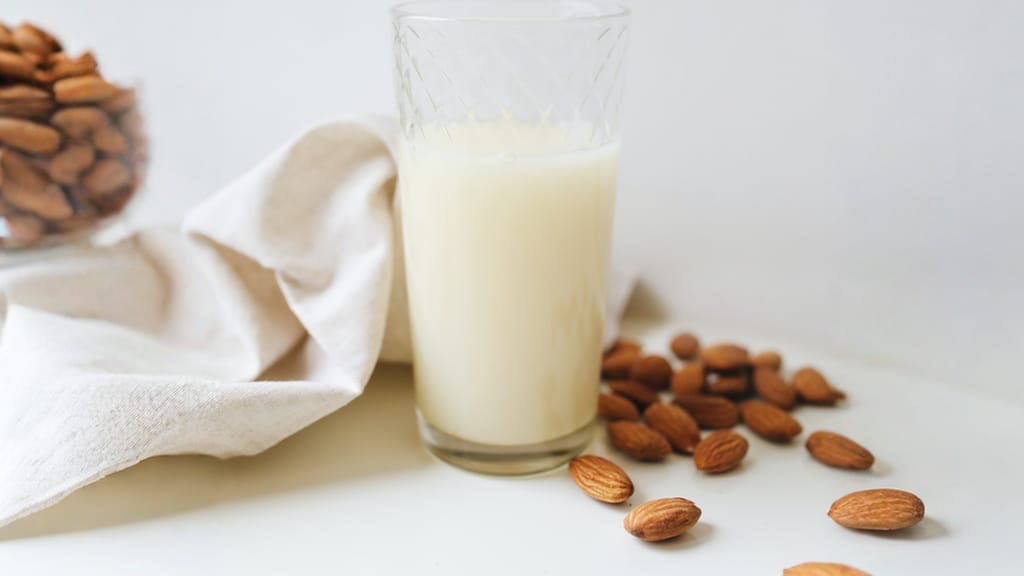
We covered cream substitutes in detail in our article on what to use instead of cream in a sauce. You can also make your own: almond nut milk is just nuts, water and a blender.
Almond nut milk
Homemade almond nut milk — a vegan milk substitute with no thickeners
For baking, swap butter for plant-based fat at a 1:1 ratio; for sautéing, use oil at roughly a 3:4 ratio (butter contains water, oil doesn't — so use a touch less). For shortcrust pastry you need a fat that's firm when cold, not oil, or the dough will turn into a puddle.
Cheese is trickier, because in food it does three jobs at once: salt, umami and melting. Split them up:
Salt and umami: nutritional yeast, 2–3 tbsp instead of grated Parmesan per portion of pasta.
Creaminess: cashews soaked for 4 hours in water, then blended with lemon and salt.
Melting: this is where plant-based substitutes fall shortest — rather than chasing the perfect meltable cheese, it's easier to pick a dish that doesn't need melted cheese in the first place.
Czech cuisine has more meat-free dishes than it gets credit for — legume, mushroom and flour-based dishes formed the backbone of fasting days and leaner times. Sour lentils, mushroom kuba, potato pancakes, plum dumplings, sweet buns, mushroom soup or cabbage with dumplings are all built on plant-based foundations.
The snag is almost always in the detail, not the main ingredient:
Lard used to fry onions for legumes and cabbage — swap for rapeseed oil, the flavour holds up.
Bacon in mushroom kuba — swap for extra dried mushrooms plus a spoonful of soy sauce for umami.
Meat stock in soups and sauces — swap for vegetable stock with a little dried mushroom.
Eggs in potato pancakes and stuffing — flaxseed, as above.
Sour lentils with a fried egg is a textbook example of how the two worlds diverge in a single step: with the egg, it's a lacto-ovo vegetarian dish; without the egg, and with lard swapped for oil, it's vegan — and it's still sour lentils either way.
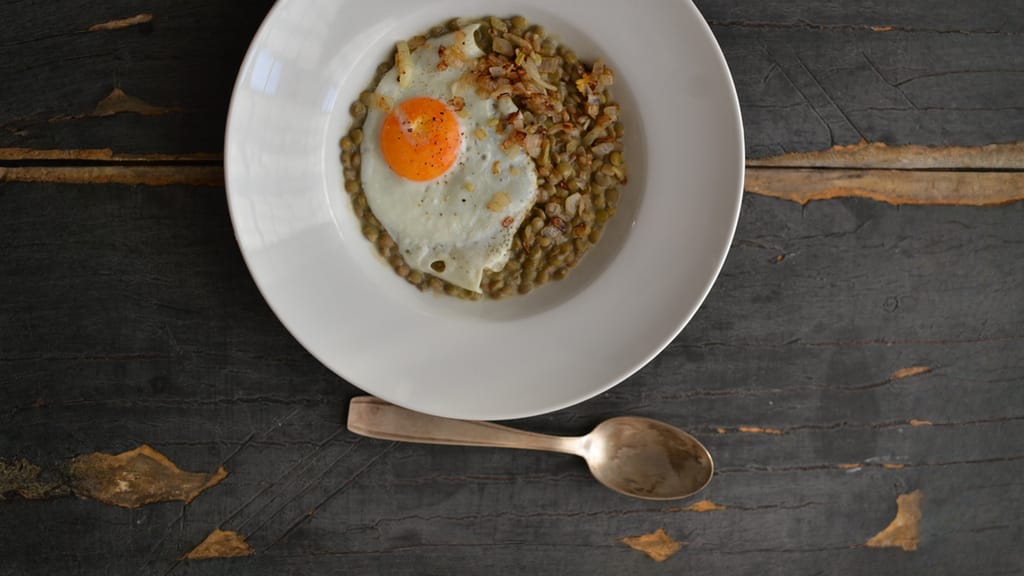
Sour lentils with a fried egg
Sour lentils with a fried egg — a Czech classic, vegetarian version
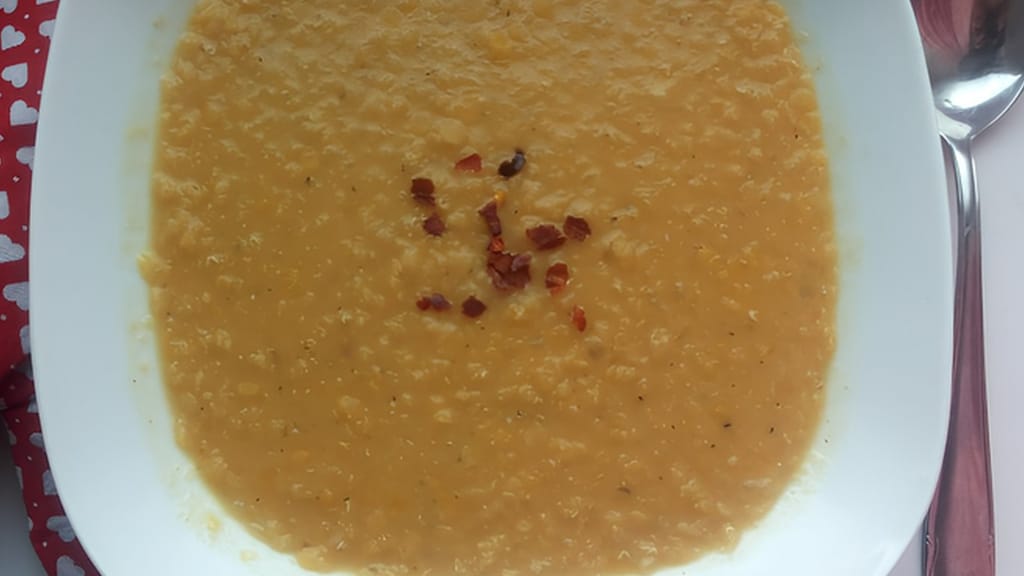
Red lentil soup with coconut milk and chilli
Red lentil soup with coconut milk and chilli — vegan with no substitutions needed
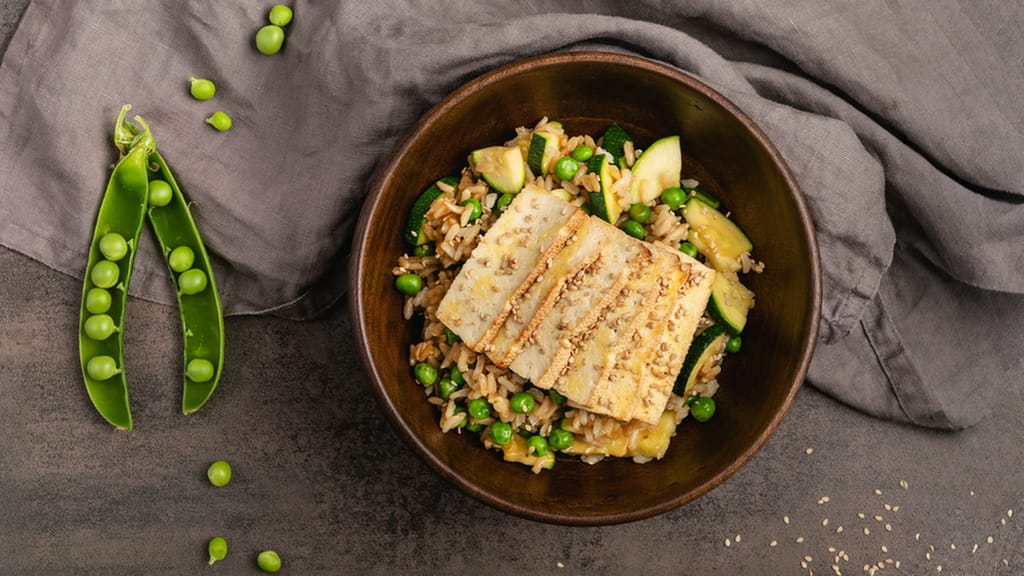
Tofu risotto with peas and zucchini
Tofu risotto with peas and courgette — how to work plant-based protein into a meal
The easiest way to cook for a vegetarian and a vegan at the same time is to build the dish on a vegan base and put cheese, yoghurt or eggs on the table separately. That way nobody has to cook two meals.
This works for any dish made up of separate components: couscous with chickpeas and roasted vegetables is vegan exactly as it is — feta, yoghurt dressing or an egg on top can be added by whoever wants them. The same goes for lentil salad or carrot hummus as part of a bigger spread.
A few basics worth knowing by heart:
Tofu should always be pressed for 20–30 minutes between tea towels with something heavy on top, or it'll steam in the pan instead of browning. Bake at 200°C for about 25 minutes until golden.
Legumes can be salted right from the soaking and cooking water — the skins soften more evenly and split less.
Chase umami with dried mushrooms, tomato paste, soy sauce and nutritional yeast — that's what's usually missing from a meat-free dish, not protein.
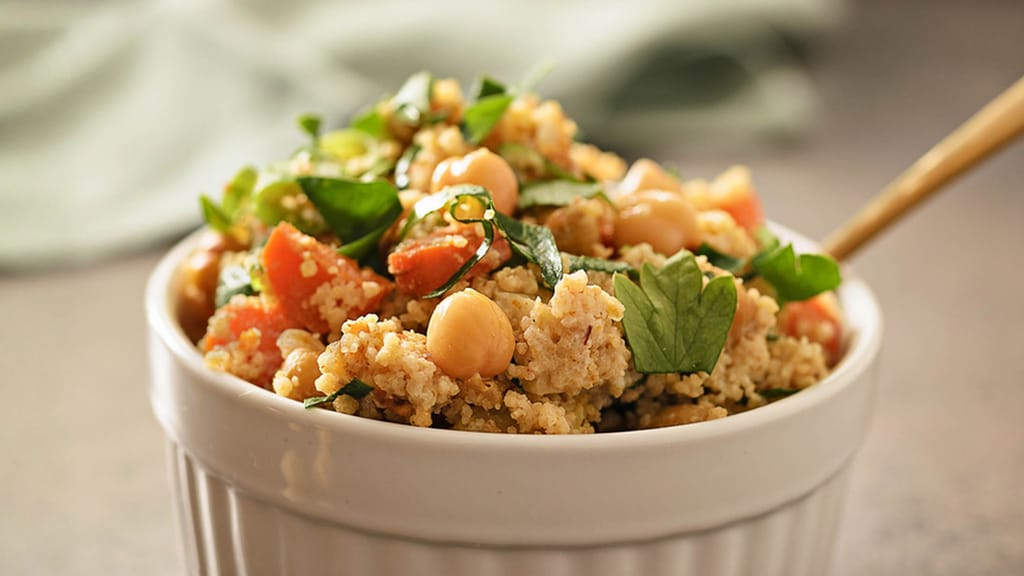
Couscous with chickpeas and roasted vegetables
Couscous with chickpeas and roasted vegetables — a vegan base everyone can build on
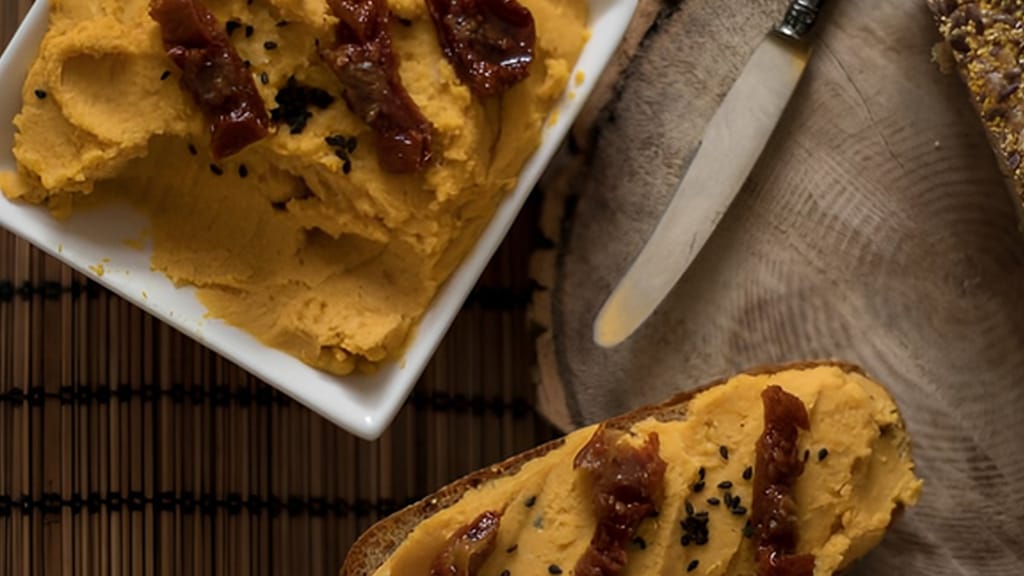
Carrot hummus
Carrot hummus — a vegan chickpea spread for the whole table
When planning a meat-free diet, keep six nutrients in mind: vitamin B12, iron, calcium, iodine, omega-3 and protein. The more food groups you cut from your diet, the more it pays off to plan ahead — and where to get each nutrient from is worth discussing with a doctor or nutrition therapist. This isn't about which diet is "better"; it's about where, on your plate, you now need to source what used to just show up on its own.
Vitamin B12 — found in eggs, dairy and fortified foods; on a fully plant-based diet, work this out with a specialist.
Iron — plant sources include legumes, leafy greens, poppy seeds, sesame and pumpkin seeds. Pair them with peppers, tomatoes or lemon in cooking: the acidity suits them in flavour too.
Calcium — fortified plant milks typically contain around 120mg per 100ml, similar to cow's milk. From food: poppy seeds, sesame and tahini, broccoli, kale.
Iodine — iodised salt; seaweed only occasionally and in moderation, since its iodine content varies widely.
Omega-3 — flaxseed, chia seeds and walnuts contain ALA; EPA and DHA can be topped up from microalgae.
Protein — in practice, this comes down to having legumes, tofu, tempeh or nuts in every meal, alternated through the day with grains.
And watch out for a trap almost every beginner falls into: "meat-free" doesn't mean "varied". A diet of white bread, chips and fried cheese is technically vegetarian — and also extremely monotonous.
Choose based on your motivation, not on which one sounds better: if your main concern is animals and farming, veganism is the more consistent choice; if you want to cut down on meat while keeping cheese, eggs and easy eating-out options, vegetarianism is easier to sustain day to day.
What tends to work better in practice than switching overnight:
Start with dishes, not bans. Find five meat-free meals you genuinely enjoy and cook them until you know them by heart. Only then add more.
Swap one thing at a time. Milk in your coffee first, then stock, then lard for frying onions. Each swap has its own quirks, and it's easier to sort them out one at a time.
Expect to cook oilier than you're used to for the first month. Plant-based meals tend to be lighter — add nuts, oil, avocado or tahini. Most people who "didn't enjoy" a meat-free diet were simply cooking it too dry.
Sort out lunch away from home before you actually need it. This is the most common reason people give up in the Czech Republic — not taste, but the Tuesday lunch break.
And you don't have to pick one for good. Plenty of people end up somewhere in between: vegan cooking at home, potato salad at Grandma's with no questions asked. Consistency is a value — but it's not the only one.
For children and during pregnancy, a plant-based diet needs to be planned differently than for an adult, and it calls for professional guidance — this isn't something an article can settle. Before switching a child's or a pregnant woman's diet to plant-based, talk it through with a paediatrician or nutrition therapist, not as a box-ticking exercise but to get an actual tailored plan.
A flexitarian eats meat but consciously cuts back, while a vegetarian doesn't eat meat at all — so flexitarianism isn't a form of vegetarianism. A reductarian is similar: they simply eat less meat than before, without fixed rules. This approach is far more common than strict vegetarianism, and for most households it's also easier to manage day to day, since it doesn't mean cooking two separate meals.
According to Czech surveys, roughly 2–4% of the population identify as vegetarian and about 0.5–1% as vegan — putting the Czech Republic among the European countries with a lower share of strict plant-based eaters. Far more common than strict vegetarianism is the trend of simply cutting back on meat: a significant share of people say they plan to eat less meat, not cut it out entirely — and this is most pronounced among the youngest age groups.
Your best bet is to ask about specific ingredients rather than a label — "is there stock, lard, butter or cream in this?" gets you a far more useful answer than "do you have anything vegan?". Common traps in Czech cooking include meat stock in soups, lard used to fry onions for lentil or cabbage dishes, butter in mashed potatoes, and eggs in potato pancakes. Safe bets tend to be side dishes and salads served separately, or cuisines that are naturally plant-based, like Indian, Middle Eastern or Vietnamese.
The building blocks of vegan cooking are among the cheapest foods around — legumes, grains, seasonal vegetables, potatoes. It only gets pricey if you lean on ready-made substitutes: plant-based cheeses, vegan deli slices and carton drinks usually cost more than their animal-based counterparts. If you cook dried lentils, chickpeas and beans yourself and treat substitutes as an extra rather than the foundation, a vegan diet ends up cheaper than a conventional one.
No — "vegetarian" means no meat, but the product can still commonly contain milk, whey, egg or honey. For vegan shopping, look for a "vegan" label or check the ingredients list and watch out for whey, milk powder, egg white, gelatine, E120 (cochineal), E904 (shellac), and vitamin D3 without a stated plant source. On top of that, these labels aren't legally standardised in the Czech Republic, so the ingredient list matters more than what's printed on the front.
One recipe worth heating the oven for, one tip, and one deal from the shop. Nothing else.