Almond nut milk
Lactose Allergy or Intolerance? How to Tell the Difference and Cook Dairy-Free
Updated Aug 30, 2026
There's no such thing as a "lactose allergy" — what almost everyone means by that is lactose intolerance, the inability to properly digest milk sugar. A genuine milk allergy is something else entirely: an immune reaction to casein and whey proteins. This isn't pedantry. It's the difference between still enjoying parmesan and butter, or having to strip even trace amounts of milk out of your kitchen. Here's how to tell the two apart, how much lactose most people can actually handle, where it hides when you least expect it, and what to swap in for milk, cream and yoghurt so your food still tastes the way it should.
There's no such thing as a lactose allergy. Lactose is a sugar, and sugar on its own doesn't trigger an immune response. Under that one label, two completely different things get lumped together:
Lactose intolerance is a digestive issue. Your gut doesn't produce enough of the enzyme lactase, so lactose doesn't get broken down into glucose and galactose — it passes into the large intestine, where bacteria ferment it into gases and acids. The result: bloating, cramps, gas, diarrhoea. Unpleasant, but not dangerous, and the amount is what matters.
Cow's milk protein allergy (CMPA) is an immune reaction to casein and whey proteins. It shows up beyond the gut too — as eczema, hives, swelling, breathing difficulties, and in the most severe cases, anaphylaxis. Here, even a trace amount matters.
An estimated 65% of the world's adult population can't fully digest lactose — according to a review by MedlinePlus Genetics (opens in a new tab). But the distribution is wildly uneven: around 10% of people in Northern Europe have lactose intolerance, compared with 85–100% among Indigenous populations of the Americas and parts of Asia. Cow's milk protein allergy, by contrast, is rare — it affects about 2–3% of infants and toddlers, and most children outgrow it.
Why does this distinction matter so much? Because with intolerance, you can probably still have parmesan, butter and aged cheese — you just watch your portion. With a milk protein allergy, neither is true — and lactose-free milk is still milk as far as your body's concerned.
Seasonal baking plans, tested recipes and kitchen tricks that save you time. Unsubscribe in one click.
Lactose intolerance shows up purely in the digestive system: bloating, rumbling, cramping in the lower abdomen, gas, and loose stools, usually 30 minutes to 2 hours after eating dairy. The bigger the dose, the sooner and stronger the symptoms.
What isn't a symptom of intolerance: rashes, hives, itching, a runny nose, coughing, or breathing trouble. Older articles often lump these in, but milk sugar doesn't irritate skin or lungs. If you get these symptoms after milk, it isn't lactose — it points to a reaction to milk protein and belongs with an allergist.
How bad the symptoms are varies even for the same person, and it's not "all in your head." What affects it:
The dose. A glass of milk on an empty stomach does more damage than the same milk stirred into porridge.
What the milk is in. Splitting a dose across a meal — into porridge, a sauce, or alongside a main course — tends to go down easier in practice than drinking the same amount in one go on an empty stomach.
The state of your gut. After a gut infection, or with untreated coeliac disease, tolerance temporarily drops.
Cow's milk protein allergy comes in two forms: fast-acting (IgE-mediated, onset within two hours) and delayed (non-IgE, onset over hours to days). The delayed form is the one most often mistaken for intolerance.
Fast-acting (IgE-mediated): sets in within minutes to two hours. Hives, swelling of the lips and eyelids, vomiting, wheezing, and in the most severe cases, anaphylaxis.
Delayed (non-IgE): sets in over hours to days. Worsening eczema, chronic diarrhoea, mucus or blood in an infant's stool, poor weight gain, stubborn reflux. This is the form that looks, from the outside, like simply "not agreeing with milk" — and without testing, it's impossible to tell apart from intolerance.
Only a doctor can give a real diagnosis: for lactose intolerance, most commonly via a hydrogen breath test; for a suspected allergy, via skin prick tests and specific IgE tests, or possibly a supervised food challenge. The one useful thing you can do yourself at home is keep a food diary for a week or two, noting the time you ate, how much dairy was involved, and when symptoms started. Bring that to your appointment and it becomes far more valuable.
The hydrogen breath test is the standard way to check for lactose intolerance: you drink a measured dose of lactose on an empty stomach, and your breath is tested for hydrogen every half hour over several hours. Undigested lactose ferments in the large intestine, and the hydrogen produced travels through the bloodstream to the lungs — a marked rise above baseline points to lactose malabsorption. It's non-invasive, but needs some prep: no legumes or high-fibre foods the day before, fasting that morning, and no smoking.
Besides the breath test, lactose intolerance can be assessed with a genetic test or a supervised elimination-and-reintroduction diet; IgG food intolerance tests have no diagnostic value.
A genetic test (checking a variant near the lactase gene) uses a blood sample or cheek swab to tell you whether you're genetically predisposed to a drop in lactase production in adulthood. It won't catch secondary intolerance caused by a gut infection or another bowel condition — and that's often exactly what's behind a sudden onset of symptoms.
Elimination and reintroduction means cutting out dairy for two to four weeks and then reintroducing it in a controlled way. It sounds simple, but it's hard to blind yourself to your own expectations, so you often end up confirming what you already believed. Do this with a doctor or dietitian, and above all only after testing — cutting out milk beforehand will skew the results of a breath test.
And here's what does nothing at all: IgG antibody food tests, sold as "food intolerance testing from a drop of blood." Allergy specialist bodies don't recommend them for diagnosing either food allergy or intolerance — IgG antibodies just show that you've eaten a food regularly, not that it's making you ill. You end up paying for a list of foods you never needed to cut out.
According to an EFSA opinion, the vast majority of people with impaired lactose digestion can tolerate up to 12g of lactose in a single dose with no symptoms, or only mild ones — that's roughly a glass of milk (250ml). Spread across a whole day, most people can manage 20–24g. EFSA also explicitly states that there's no single universal threshold: some people react to as little as 6g, while others can drink half a litre without any trouble.
Which gives us the single most useful rule in this whole article: the goal isn't zero — it's finding your own personal dose. Most people with intolerance never need to give up their morning coffee with milk or yoghurt at breakfast entirely — they just need to avoid having them both at once, on an empty stomach.
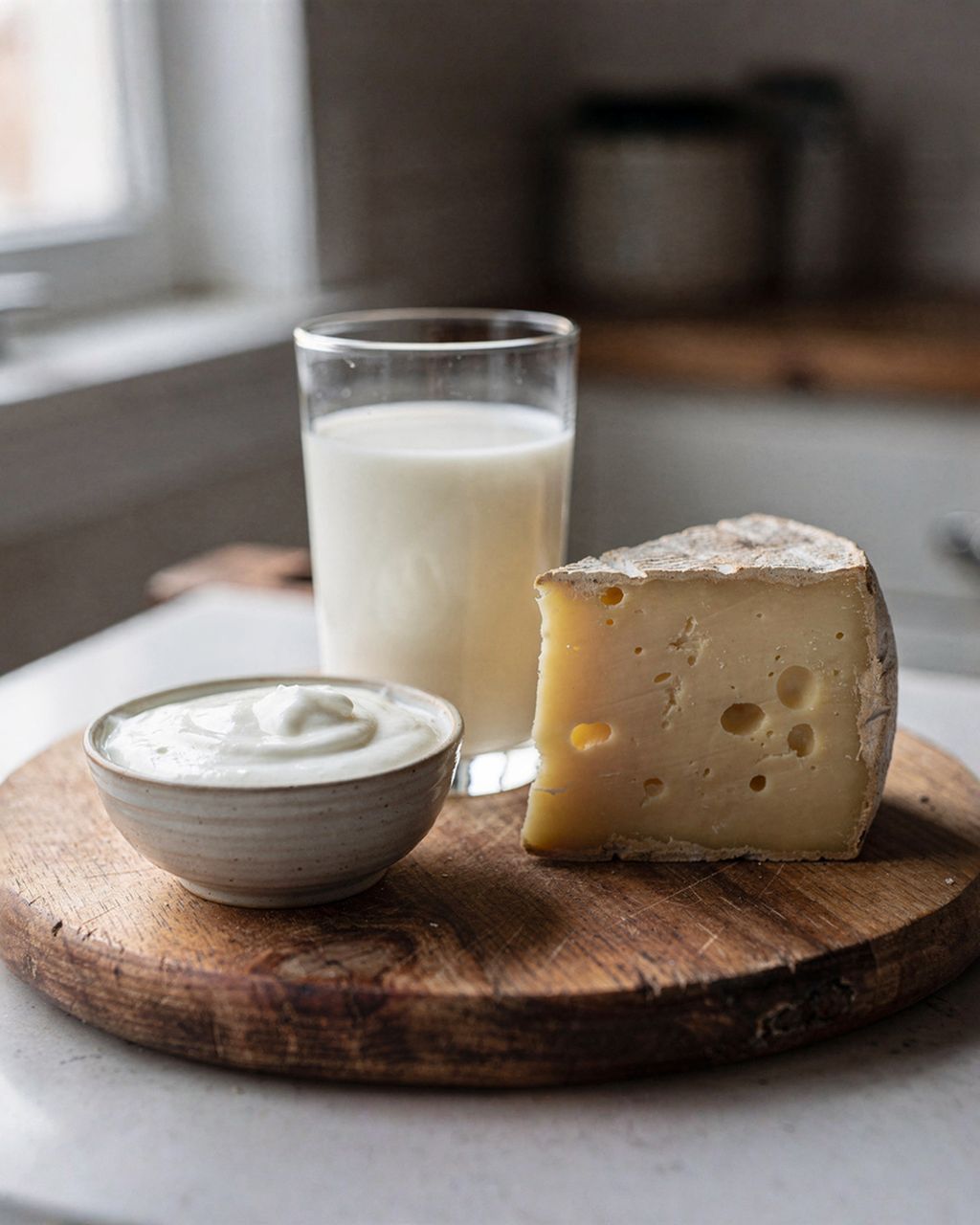
Hard aged cheeses, butter and ghee are practically lactose-free — most of the lactose drains off with the whey during production, and ageing breaks down what's left. Approximate lactose content per 100g:
Hard aged cheeses (Parmesan, Emmental, Gouda, Cheddar, aged Edam): under 0.1g. Ageing for around six months or more reliably finishes off any remaining lactose.
Butter: under 1g, usually around 0.1g. Ghee (clarified butter): trace amounts.
Fresh and soft cheeses: mozzarella and quark-style spreads around 0.5–2g, ricotta 1–5g — treat ricotta more like yoghurt than cheese when budgeting your dose.
Cottage cheese: around 3g.
Plain yoghurt and kefir: 4–5g. For yoghurt and fermented milk with at least 10⁸ CFU of live cultures (Lactobacillus delbrueckii subsp. bulgaricus and Streptococcus thermophilus) per gram, there's an authorised EU health claim: "Live cultures in yoghurt or fermented milk improve the digestion of lactose in the product for people who have difficulty digesting lactose."
Whipping cream: around 3g per 100ml.
Cow's milk: 4.7–5g per 100ml, so roughly 12g in a glass.
For a full breakdown, including why the numbers for the "same" cheese vary depending on how long it's aged, see our article on how much lactose is in milk, cheese and yoghurt.
The best substitute is whatever matches the job milk is doing in the recipe: carrying flavour, providing fat, or binding things together. Choose based on that — there's no one-size-fits-all substitute, and that's exactly why so many people end up disappointed with "the plant-based version."
Oat milk suits coffee and porridge, soy works in béchamel and puddings, tinned coconut milk is best for soups and curries, almond milk for smoothies, and cashew for creamy sauces. In more detail:
Oat milk is the most neutral-tasting and froths best, making it the first choice for coffee and porridge. In baking, though, it brings its own natural sweetness.
Soy milk is the only one with a protein content comparable to cow's milk (around 3g/100ml), so it's the best stand-in for béchamel, custard, and anywhere you need something to "set."
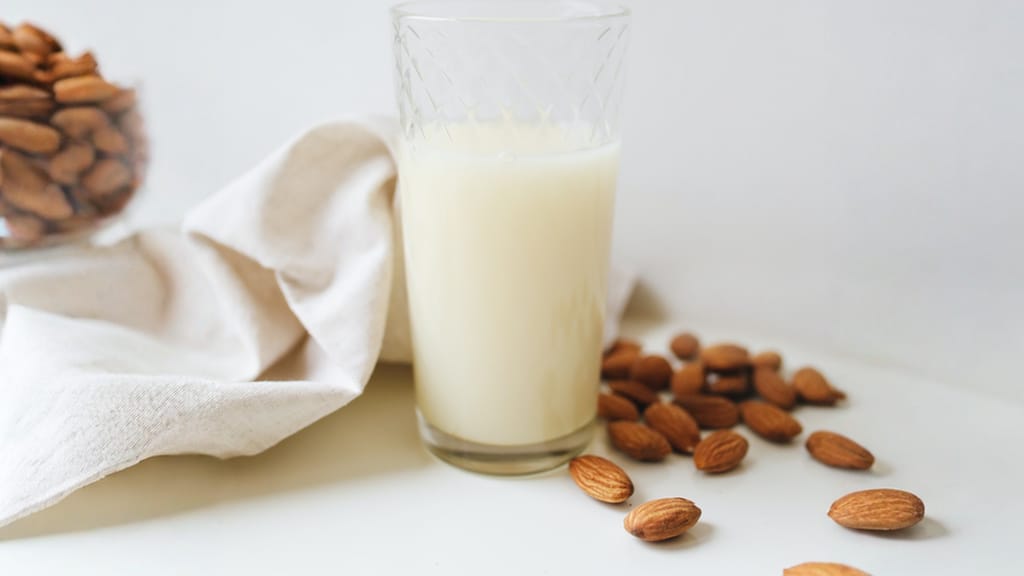
Almond milk is thin and lightly nutty — great in smoothies and desserts, but too weak anywhere you need real body.
Coconut milk (the tinned kind, not the carton drink) is rich and behaves like cream. Ideal for soups and curries, though its flavour comes through strongly.
Cashew milk is the creamiest of the nut milks and is least likely to split in acidic conditions.
Homemade versions have one advantage over shop-bought: you know exactly what's in them, with no added sugar or oils. But they have one drawback too — calcium, which we'll get to below.
Almond nut milk
Homemade almond milk: a dairy-free plant-based milk alternative
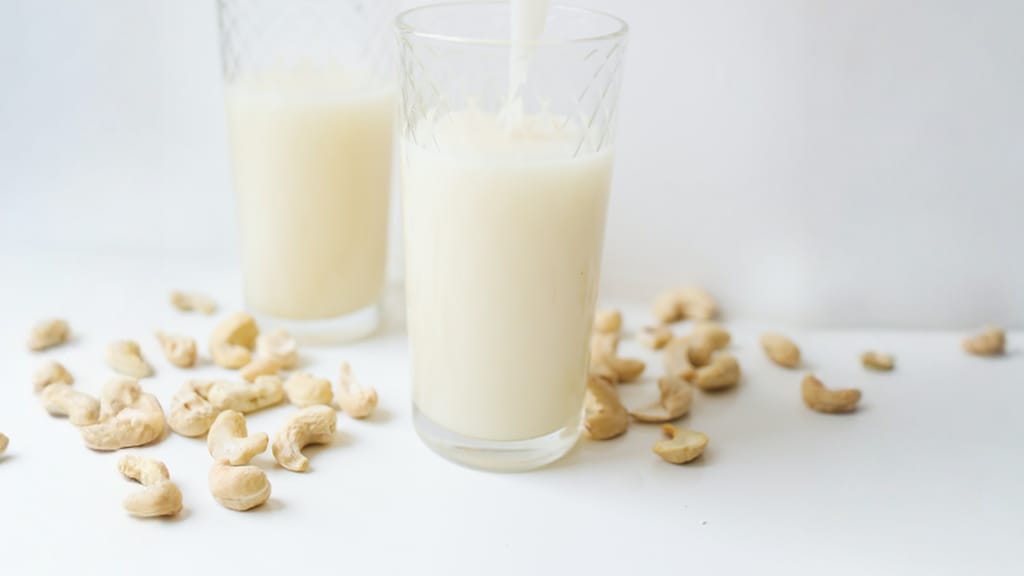
Cashew-coconut milk
Cashew-coconut milk: the creamiest plant-based drink for coffee and porridge
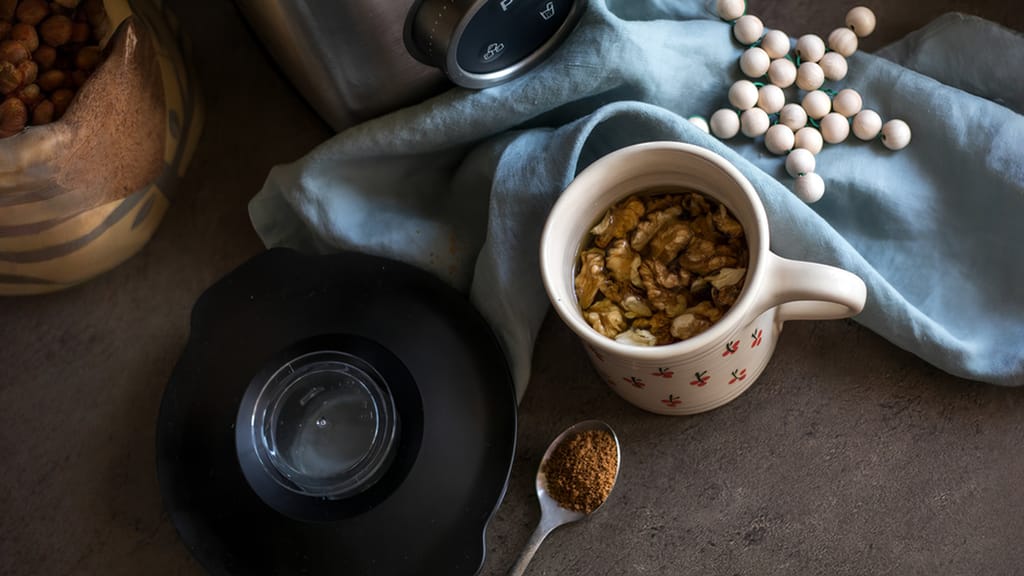
Walnut milk
Walnut milk: a bold dairy-free alternative for baking
The most reliable substitute for cream in soup is tinned coconut milk or blended cooked vegetables — potato, cauliflower or white beans blended into the stock give you creaminess without adding a drop of extra fat. For savoury dishes where you don't want a coconut flavour coming through, cashew cream works well: soak a handful of cashews for two hours, drain, and blend smooth with double the volume of water.
Two rules cover most of the ways this goes wrong: plant-based milks split in acidic or very hot conditions, so add them right at the end, off a hard boil, and take a tomato sauce off the heat before stirring it in. We cover more options, including starch-based thickeners, in our article on what to use instead of cream in sauces.
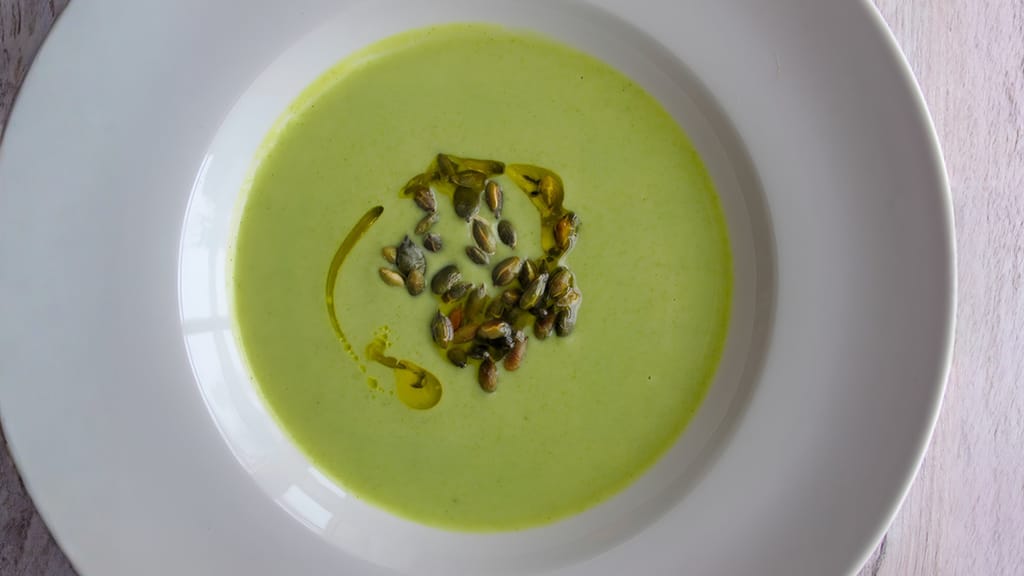
Creamy broccoli soup with coconut milk
Cream of broccoli soup with coconut milk: a creamy soup with no cream at all
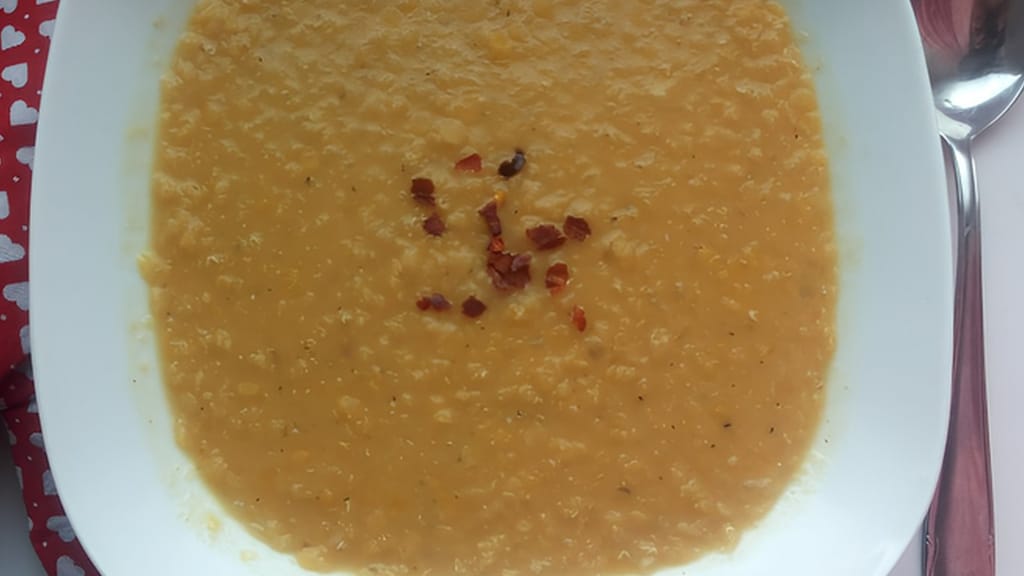
Red lentil soup with coconut milk and chilli
Red lentil soup with coconut milk: hearty and dairy-free
Coconut or soy yoghurt with live cultures is the best yoghurt substitute; for cheese, aim for the flavour rather than trying to imitate it; and for butter, swap in oil or a margarine with 80–90% fat. In more detail:
Yoghurt: with shop-bought versions, always check it actually contains live cultures — some are just thickened, flavoured coconut cream that merely resembles yoghurt. For tzatziki and dips, reach for soy yoghurt: it holds its shape and doesn't get drowned out by the garlic.
Cheese is the hardest one to crack. Shop-bought plant-based slices are mostly starch and coconut fat — they'll melt, but they won't bring any real flavour. The better approach is to chase the flavour rather than imitate the cheese itself: nutritional yeast with a bit of salt and olive oil over pasta, a ground almond-and-garlic crumb for gratins, marinated tofu in salads. A homemade fermented cashew cheese gets closest to the real thing, but it takes a few days.
Butter can be replaced in baking with rapeseed oil (around 80% of the volume of butter called for) or margarine, meaning a spreadable fat with 80–90% fat content. For crumbles and puff pastry you need a fat that's firm when cold, so low-fat spread (39–41% fat) won't work here — it has too much water, the dough will turn soft, and you won't get any lamination. Check the fat content on the label; that's what actually matters.
In baking, milk is usually the easiest ingredient to replace — it's mainly there as a liquid, so a 1:1 swap with a plant-based milk works almost every time. Just watch out for two things: using unsweetened milk in a recipe that relies on milk's natural sweetness, and buttermilk or soured milk, which reacts with baking soda. You can substitute buttermilk by stirring a tablespoon of lemon juice into 250ml of plant-based milk and letting it sit for ten minutes.
For mains, the easiest approach isn't hunting for substitutes at all — it's cooking cuisines that never used dairy in the first place. Southeast Asia, the Middle East and much of India are built on coconut milk, tahini and legumes.
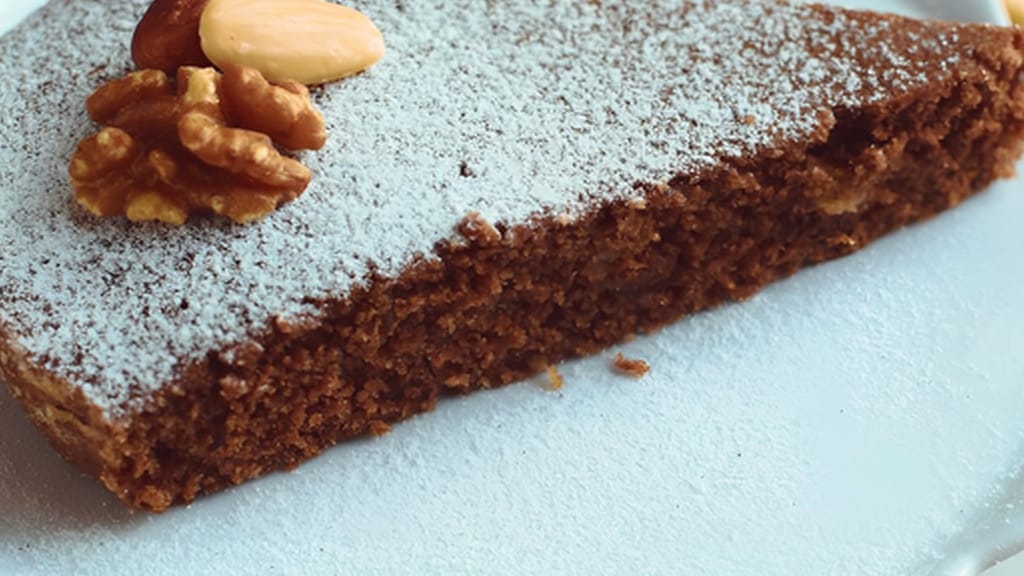
Lactose-free sheet pan gingerbread cake. quick and really good!
Dairy-free tray-baked gingerbread: soft, moist baking without milk or butter
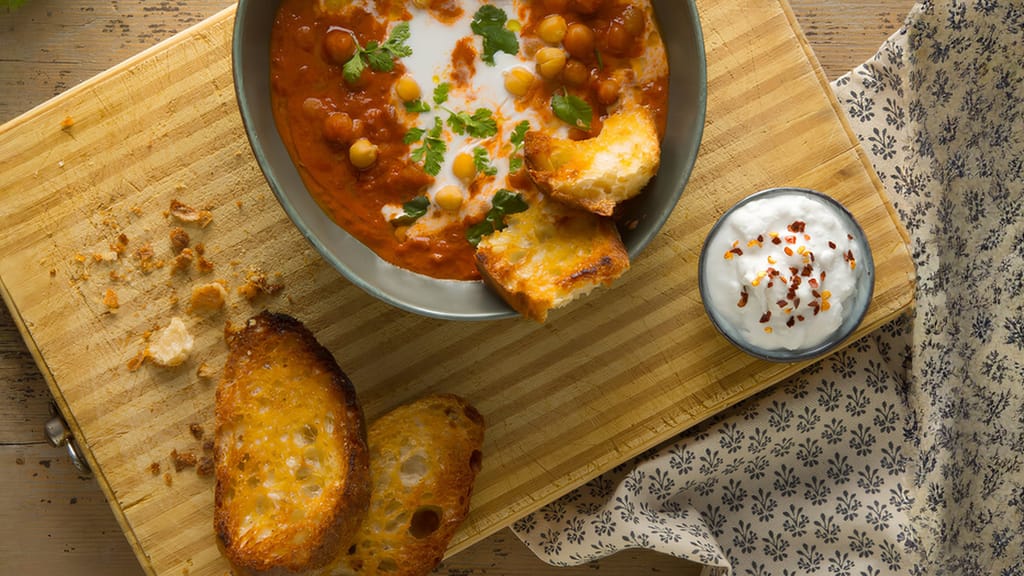
Chickpea curry with coconut cream and fresh apple juice
Chickpea curry with coconut cream: a main course that's naturally dairy-free
Lactose gets used as a cheap filler, flavour carrier and binder, which is why it turns up in places you'd never think to look for milk. The most common hiding spots:
Bread and packaged sliced loaves — milk powder for softness and a golden crust.
Instant soups, sauces and powdered stock — dried whey used as a flavour carrier.
Cold cuts, sausages and pâtés — casein as a binder, lactose as a filler.
Bottled dressings, ketchups and seasoning mixes.
Milk chocolate and some dark chocolate, cereal bars, powdered sweeteners.
Medication. Lactose is one of the most common tablet fillers. The amount is tiny and usually not an issue for intolerance, but for a milk protein allergy, it's worth checking with your pharmacist.
Reading a label takes ten seconds once you know what to look for. Milk is one of the 14 allergens the EU requires food labels to flag, so it must stand out in the ingredients list — in bold, capitals, or a different colour. Besides the word "milk," watch for: milk powder, whey, whey powder, casein, caseinate, lactose, cream, butter, ghee, quark/curd.
The phrase "may contain traces of milk" is a voluntary warning about cross-contamination during manufacturing. For lactose intolerance, it's practically meaningless — trace amounts couldn't add up to a 12g dose even by accident. For a milk protein allergy, on the other hand, it's crucial.
An adult needs roughly 1,000mg of calcium and 600 IU (15µg) of vitamin D a day, and you can get there without dairy — just not in the way it's usually recommended.
Spinach behaves very differently, both in flavour and in the kitchen, from the leafy greens you actually want here — and it contains less calcium than its reputation suggests. In dairy-free cooking, kale, broccoli and Chinese cabbage are the reliable go-tos: they braise, roast and bake, and you can easily fit them into your weekly rotation. Worth having in your basket:
Kale, broccoli, pak choi and Chinese cabbage — leafy greens that all work well in everyday cooking, though of these, only kale holds up as a real calcium source.
Fortified plant-based milks — usually fortified to around 120mg of calcium per 100ml, matching cow's milk. This applies only to fortified versions: homemade almond milk contains almost no calcium at all. And give the carton a shake before pouring — the calcium settles at the bottom.
Tofu set with a calcium salt (look for calcium sulphate on the label) — 200–350mg per 100g.
Tahini and sesame seeds, almonds, poppy seeds — poppy seeds are by far the richest source of the bunch, which is why a poppy seed cake is a better calcium source than you'd think.
Tinned sardines with bones — around 380mg per 100g.
Calcium-rich mineral water — some brands top 300mg per litre, which is about the laziest way there is to top up.
Vitamin D is a different story: there's barely any of it in most foods. The best sources are oily fish (a portion of salmon or mackerel covers a big chunk of your daily needs), followed by egg yolk, UV-exposed mushrooms and fortified drinks. Through a Central European winter, roughly October to March, the sun sits too low in the sky for your skin to produce meaningful vitamin D, so food or a supplement has to fill the gap. Whether — and how much — vitamin D you should supplement is a question for your doctor, not an internet forum.
The most reliable trick when eating out is to ask specific questions, not general ones. "Is this lactose-free?" tends to throw waiting staff off; "Does this have butter, cream or grated cheese in it?" gets you a straight answer.
High-risk items on a menu: cream soups, béchamel and anything gratinated, mashed or puréed potato, roux-based sauces, desserts, and anything "pan-fried in butter." Steak, grilled fish and risotto are usually manageable just by swapping out the finishing fat.
By cuisine: Italian and French cooking are built on butter and cream, so always ask there. Thai, Vietnamese, Indian and Levantine food are essentially dairy-free by design — coconut milk and tahini do the job cream would otherwise do.
If you have an allergy, flag it as an allergy, not a preference, and ask specifically about cross-contamination in the fryer or on the grill. If it's intolerance, on the other hand, don't overdo it — you can manage the dose yourself.
For travel, a chunk of hard aged cheese, nuts, and dark chocolate above 70% (which usually contains no milk) all travel well.
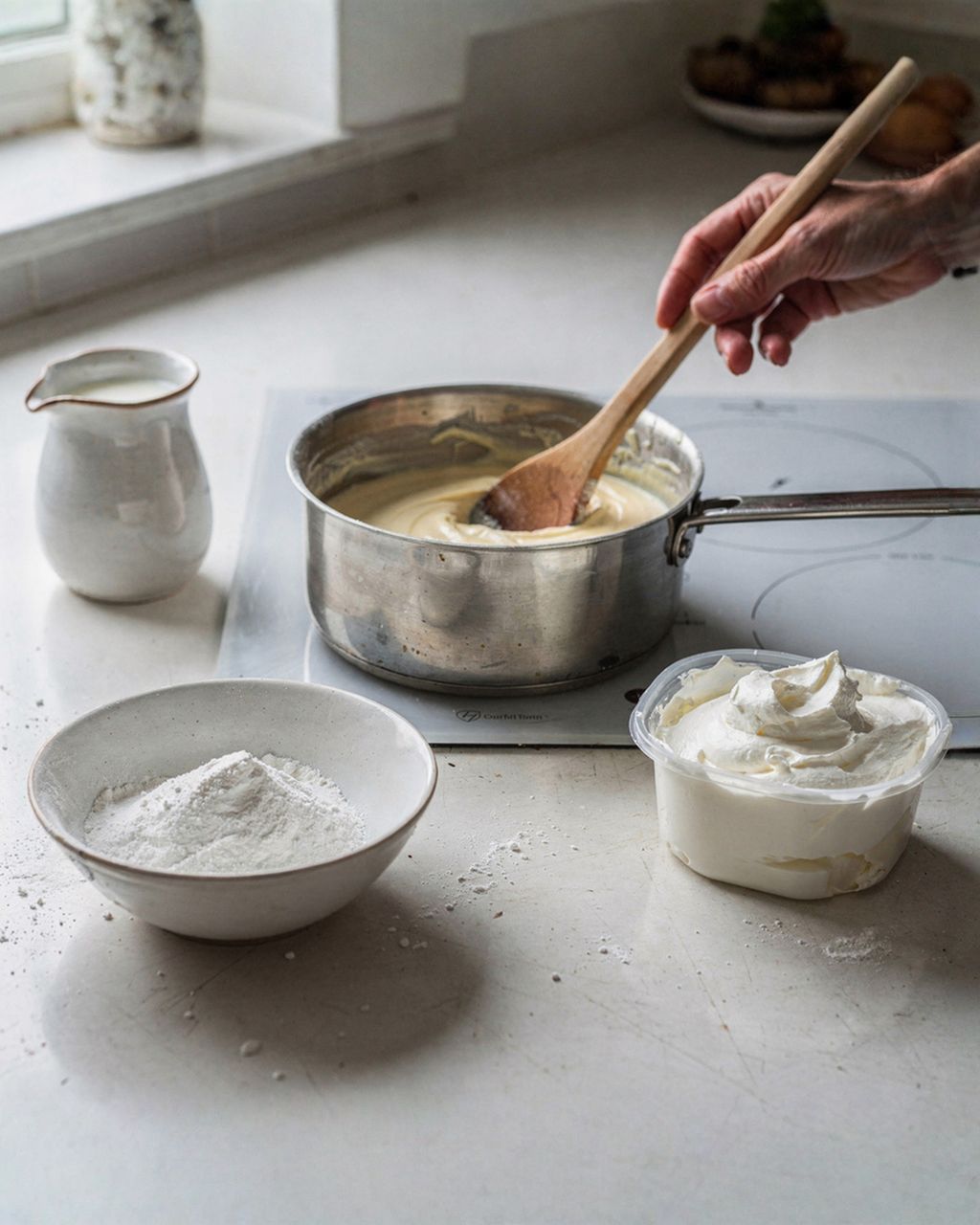
At home, it's worth mastering just one trick: béchamel made with soy milk. It solves half the classics — from gratins to lasagne.
And finally, the least technical tip of all: tell people before they start cooking, not after. Most hosts are happy to work around it — as long as they don't find out just as they're pulling gratin potatoes out of the oven.
Yes — and it's actually the most common pattern. In most people, lactase activity gradually declines from childhood through puberty, and the symptoms only become obvious in adulthood. The other common scenario is secondary intolerance triggered by a gut infection, antibiotics, or untreated coeliac disease — this type is usually temporary and tolerance often returns once the gut lining heals. If symptoms appear suddenly as an adult, that's worth a doctor's visit, not a reason to cut out dairy for good on a hunch.
Usually not. According to allergy literature, over 90% of people with a cow's milk allergy also react to goat's and sheep's milk, because the caseins in these animals are 80–90% similar in sequence and the immune system simply can't tell them apart. Around one in ten people with a milk allergy also reacts to beef. So goat's milk isn't a safe substitute — discuss any swap with an allergist first, and don't experiment at home.
Lactase enzyme supplements carry an EU-authorised health claim: "Lactase enzyme improves lactose digestion in individuals who have difficulty digesting lactose" — this applies to supplements with a minimum dose of 4,500 FCC units, taken with each lactose-containing meal. Tolerance varies from person to person, so it's worth discussing the role of lactose in your diet with a specialist. In practice, these tablets are a handy fix for exceptions — a wedding, a holiday, dinner out — not a substitute for sensibly planning your everyday diet. They do nothing for a milk protein allergy: the enzyme breaks down sugar, not protein.
Most children do outgrow it. Cow's milk protein allergy affects about 2–3% of infants and toddlers, and a large proportion of them are free of it by school age. When and how to reintroduce milk is something an allergist decides through a supervised food challenge — never something a parent should try at home, since the fast-acting IgE form can make home testing dangerous.
No — cutting out milk entirely won't bring your lactase enzyme back. It's a fixed trait, not a fitness level you can build back up by resting. So instead of aiming for zero, it's usually better to find your own personal tolerated dose — one you can comfortably cook and eat around, even away from home.
One recipe worth heating the oven for, one tip, and one deal from the shop. Nothing else.