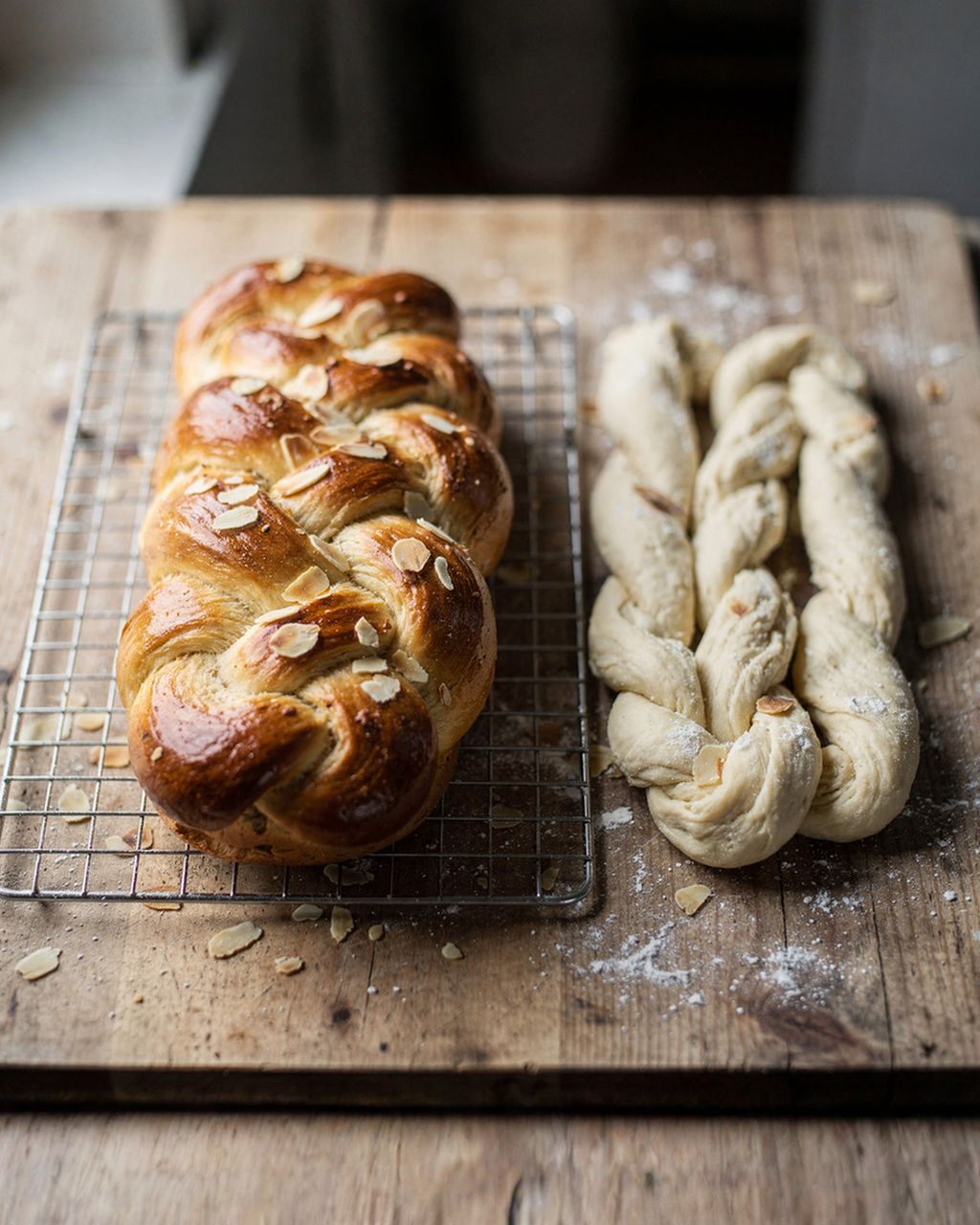
Mom's christmas braid
Vánočka Baked in a Bundt Pan: How to Bake It Through in the Pletenec Braid Pan
Updated Oct 17, 2026
Vánočka in a pan is simply the usual yeasted Christmas bread dough baked in a Bundt pan: no braiding, no spreading sideways, and thanks to the center tube it bakes more evenly than a loaf free-formed on a baking sheet. To keep the middle from staying raw, watch three things: put roughly 350–400 g of dough into the pan for every liter of capacity, let it rise to just a few centimeters below the rim, and bake at 170 °C (340 °F) until the inside reads 88–92 °C (190–198 °F). A pan with a braid pattern, such as the Nordic Ware Pletenec, also gives you the look of a braided vánočka without braiding a single strand.
Four types of pan suit vánočka: a cast aluminum Bundt pan, an enameled or sheet-metal Bundt pan, a silicone pan, and a loaf pan. Vánočka bakes best in a metal Bundt pan with a center tube and a capacity of 2–3 liters. The tube carries heat into the middle of the dough, so the center finishes baking before the crust darkens. Here's an honest comparison of the options:
Cast aluminum Bundt pan (Nordic Ware and similar) – conducts heat evenly, holds a sharp pattern, and the crust turns golden all the way around. The surest choice.
Enameled or sheet-metal Bundt pan, like Grandma's – works too, but it tends to be thinner, bakes less evenly, and the pattern is shallower. Grease it really thoroughly.
Silicone pan – the dough turns out easily, but the crust stays pale and soft, and the pan sags under the weight of the dough. We don't recommend it for vánočka.
Loaf pan (the Czech "biskupská" type) – a good fallback, but the vánočka comes out square-shaped and without a center tube the middle takes longer to bake. Allow 5–10 extra minutes.
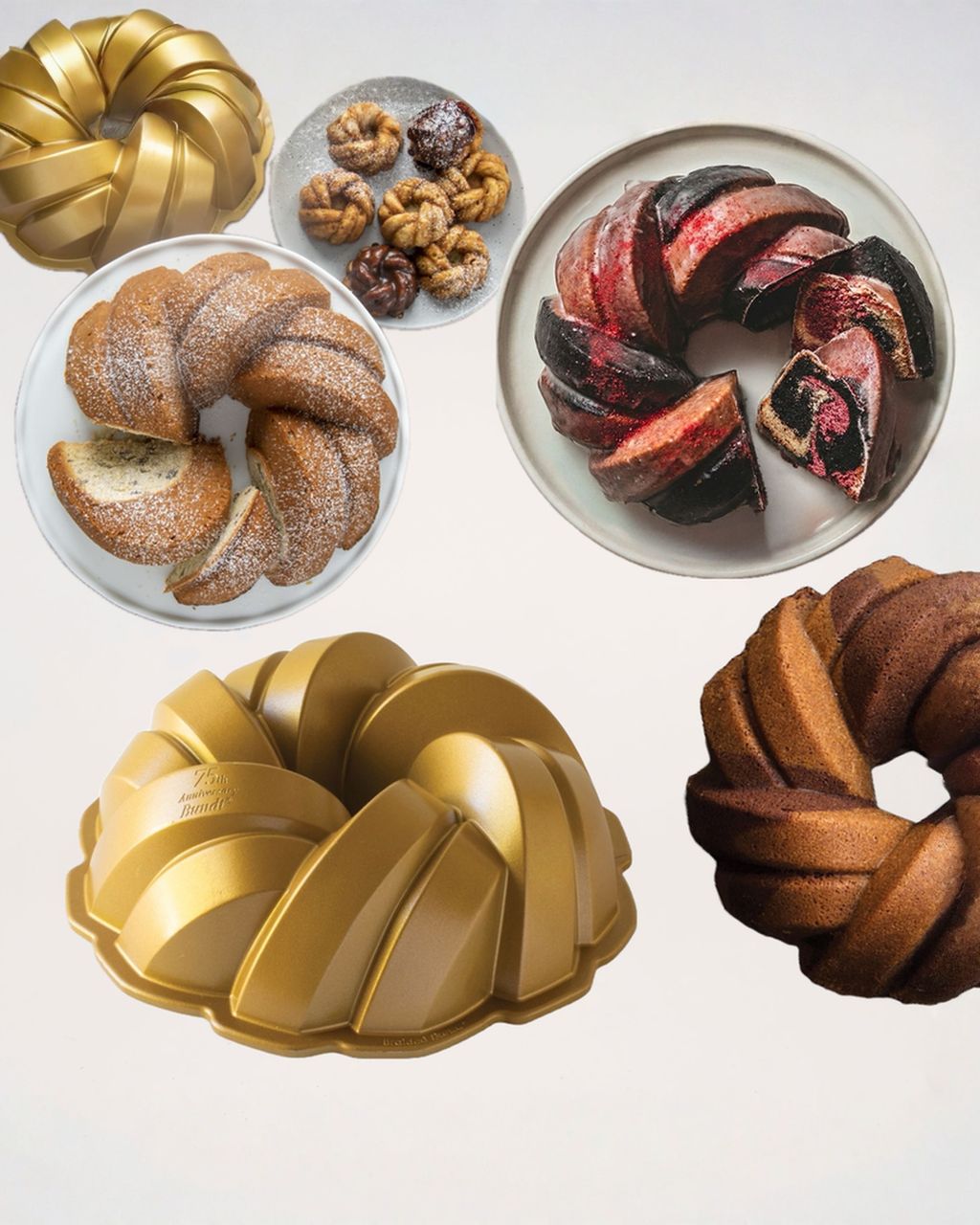
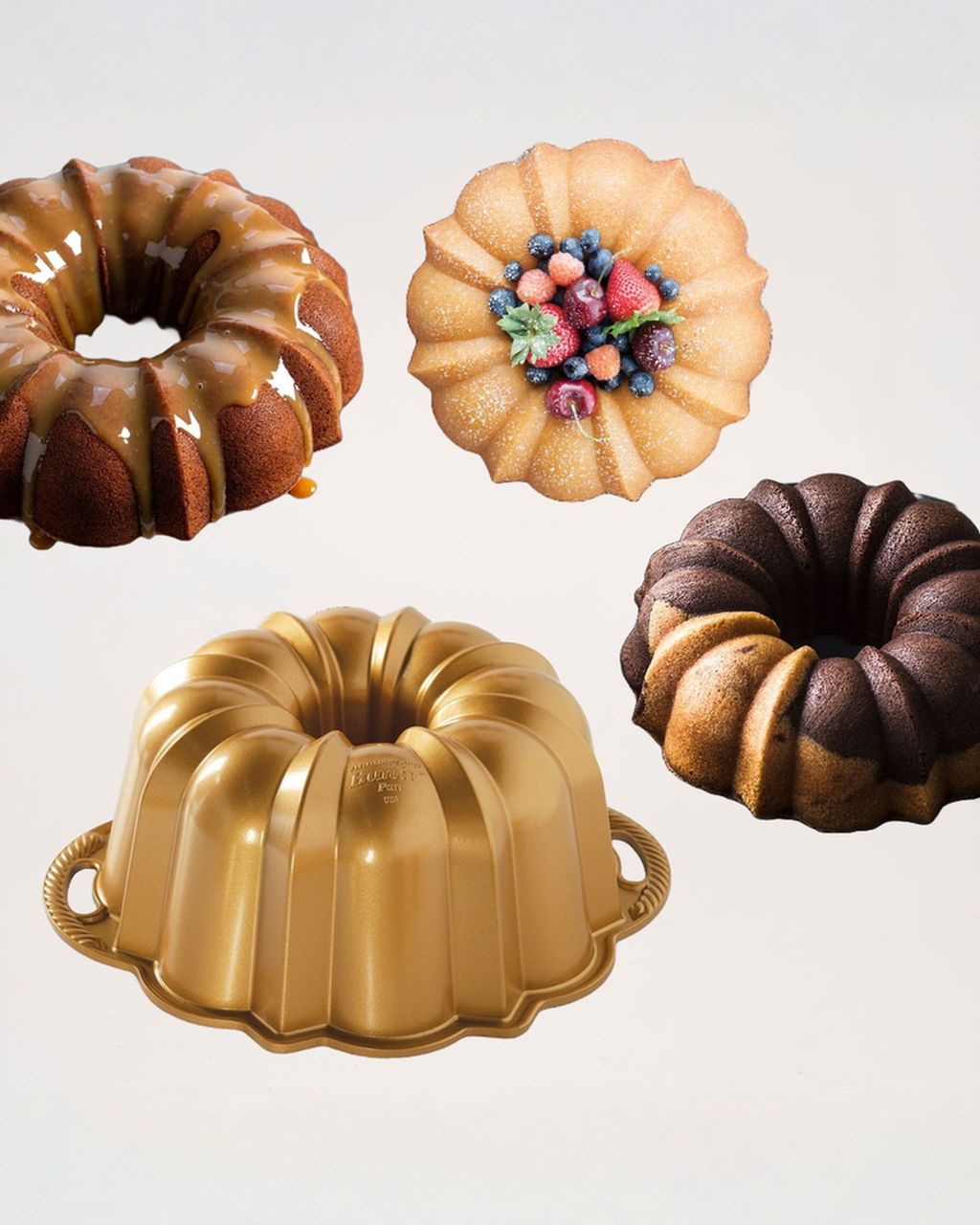
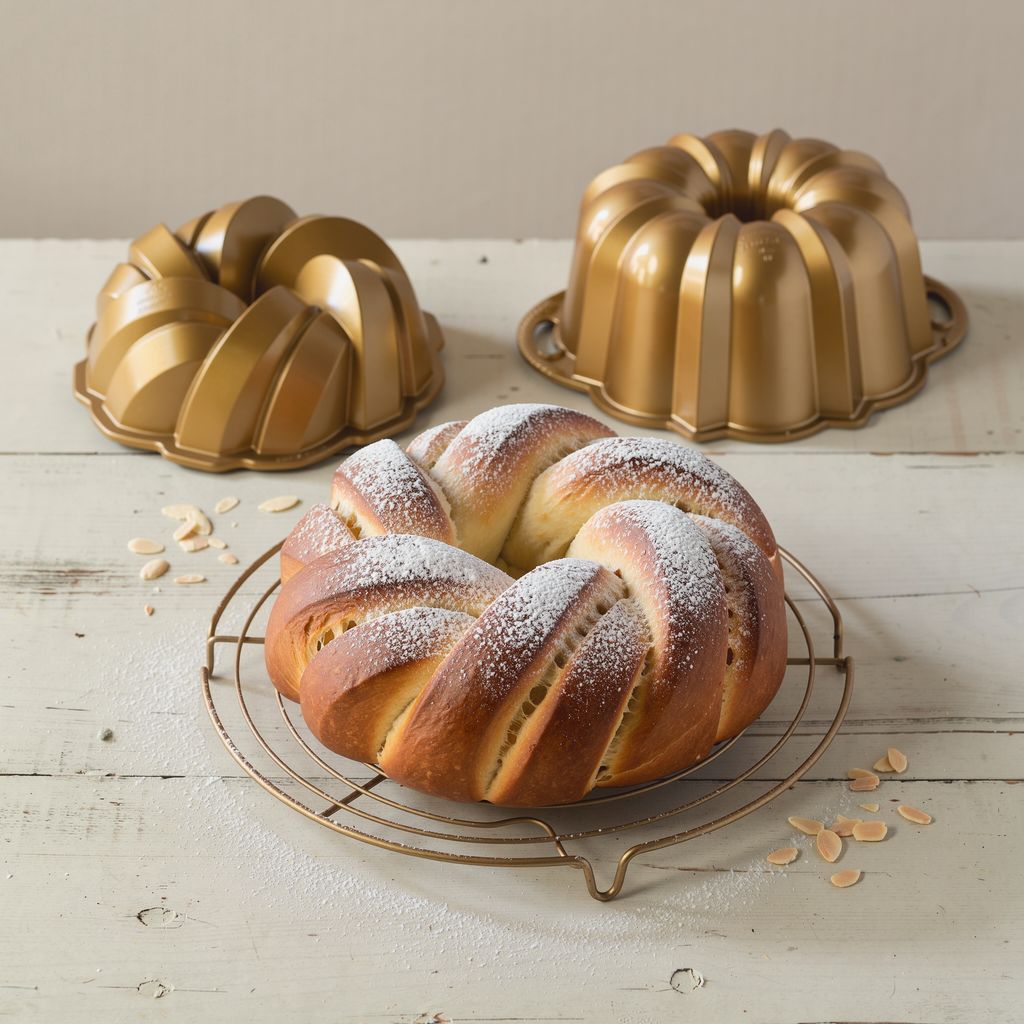
If you want your vánočka to look braided, reach for the Pletenec Bundt pan: it presses the pattern of three intertwined strands into the crust for you. For a smoother, classic ring, the Tradice Bundt pan will do the job. You'll find more shapes among the Bundt pans.
Plan on 350–400 g of raw dough per 1 liter of pan capacity. Before the final rise, the dough should come about halfway up the pan; after rising it should sit 1–2 cm below the rim, and in the oven it will reach the top.
Find your pan's capacity: set it on a scale, fill it with water to the brim, and weigh it. 1 g of water is 1 ml.
A 2.4 l pan → about 850–950 g of dough.
A 2.8 l pan → about 1–1.1 kg of dough. Large Nordic Ware pans, including the braid pan (the manufacturer lists it at 12 cups), usually have this capacity, but check it with water.
Dough made with 500 g of flour (with milk, butter, sugar, egg yolks and raisins) weighs roughly 1 kg, so it fills a large pan just right.
The most common mistake is an overfilled pan. The top of the dough (which becomes the bottom after turning out) spills over the rim and spreads, and worst of all, too much mass is left in the middle for the heat to bake through. If you have extra dough, it's better to bake a few small buns from it, for example as soft buchtičky with custard. For a detailed guide to scaling a recipe by pan capacity, see the article how much dough to put in a Bundt pan.
To shape vánočka for a pan, you form one smooth, tightly rolled rope and curl it into a ring – the pan provides the braided pattern, not you. The whole process takes five steps: grease and flour the pan, optionally sprinkle almonds into the grooves, roll out and tighten the rope, lay it in smooth side down, and join the ends.
Grease the pan with melted butter, using a brush to get into every groove, and dust it with plain flour, tapping out the excess. A spray of oil and flour works too. On pans with a fine pattern, this step is the most important of all.
You can sprinkle sliced almonds into the bottom of the grooves. The bottom of the pan becomes the top of the vánočka once it's turned out, so the almonds end up on top.
Roll the dough into a rope about as long as the circumference of the pan at half its height. Tighten the surface: fold the dough toward you and pull it taut so it's smooth.
Lay it in smooth side down, seam side up. Whatever lies on the bottom of the pan will be visible after turning out.
Join the ends and press them together so they don't come apart in the oven.
Work raisins and candied fruit inside the dough, not on the surface: any that touch the metal will stick and turn bitter. If you want a classic braided vánočka, bake it on a baking sheet – you'll find instructions in braiding vánočka step by step; don't put a braid into a patterned pan, because the pattern would blur it.
Let the vánočka rise in the pan for roughly 45–75 minutes at 24–26 °C (75–79 °F), until it climbs to 1–2 cm below the rim. Don't rely on the clock; go by the dough:
Finger test: gently press the dough with a floured finger. If the dent springs back slowly and only partway, it's ready. If it bounces right back, let it rise longer. If the dent stays and the dough deflates, it's overproofed.
Underproofed vánočka is dense and heavy, and the middle bakes poorly because it lacks the air that lets heat pass through.
Overproofed vánočka sinks in the oven, the pattern blurs, and the crust cracks.
Cover the pan with a kitchen towel or plastic wrap so the surface doesn't dry out. A dried-out skin won't stretch in the oven and the vánočka would crack; there's more on this in the article why vánočka cracks.
Bake vánočka in a pan at 170 °C (340 °F), top and bottom heat, for 40–50 minutes for about 1 kg of dough, in a preheated oven on a rack in the lower third. With a fan oven, bake at 160 °C (320 °F).
After 20–25 minutes, loosely cover the pan with foil once the visible side is golden. That way the crust won't burn while the center finishes baking.
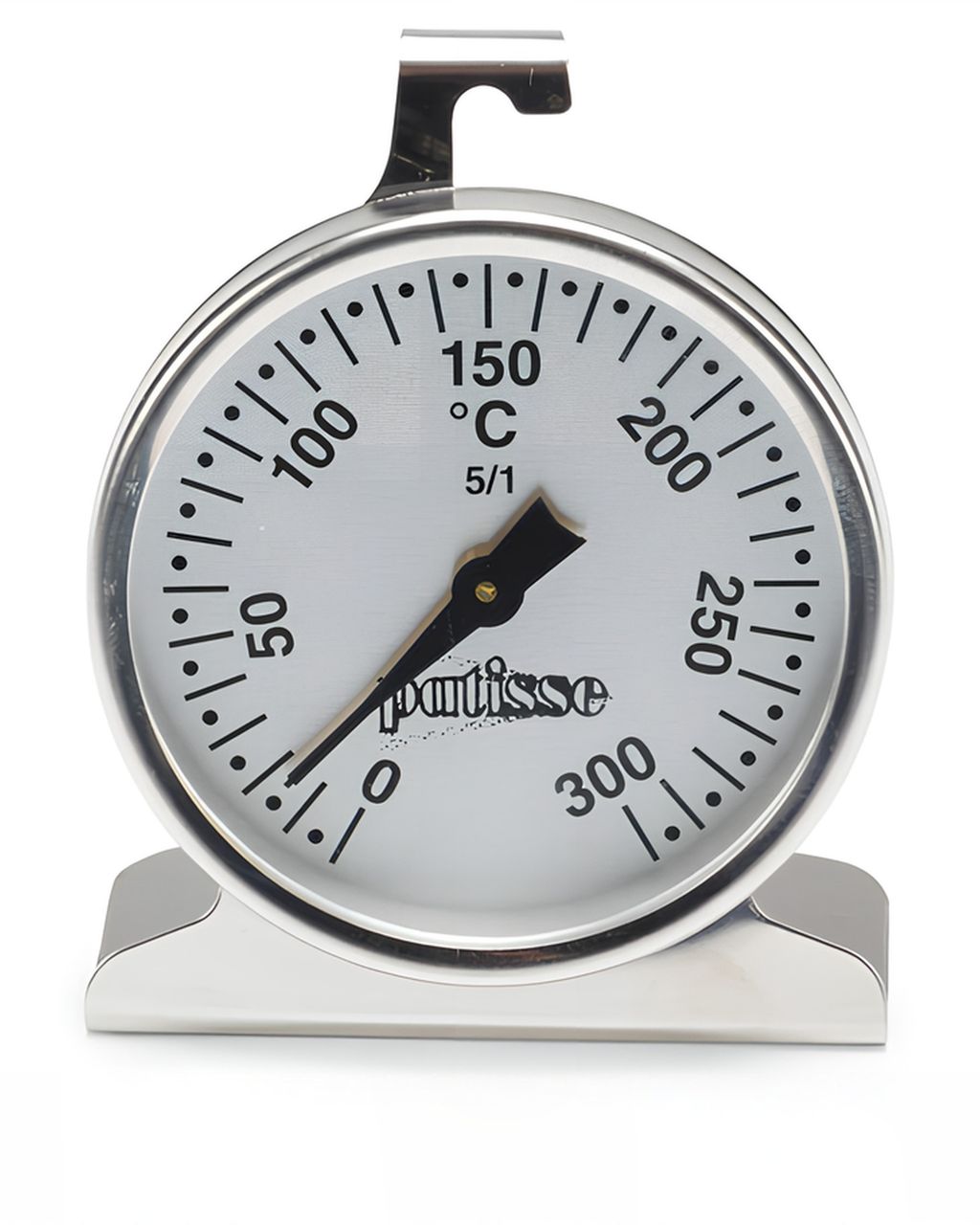
An inside temperature of 88–92 °C (190–198 °F) at the thickest point is the most reliable sign it's done. Sweet yeasted dough with butter and eggs is baked through at around 88 °C (190 °F); a higher temperature only dries it out.
Without a thermometer: a wooden skewer pushed all the way to the bottom comes out dry and the vánočka pulls slightly away from the sides of the pan.
A smaller pan (0.8–1.5 l) needs 30–40 minutes.
Dark pans of cast aluminum (and dark non-stick pans) bake faster than light-colored sheet-metal ones, so don't go above 170 °C (340 °F) with them. For a more general table of times by size, see the article how long to bake vánočka.
After baking, leave the vánočka in the pan for 10 minutes, then turn it out onto a wire rack. If you turn it out right away, the hot pattern can tear off. If you leave it in the pan longer, steam softens the crust and the vánočka sticks.
Pan-baked vánočka is usually raw in the middle for five reasons: too much dough for the pan's capacity, an oven that's too hot, underproofed dough, taking it out too early, and cutting it too soon. In detail:
Too much dough for the pan's capacity. Stick to 350–400 g per liter.
An oven that's too hot. At 190–200 °C (375–400 °F) the crust sets and darkens before the heat reaches the middle. Bake at 170 °C (340 °F) and for longer.
Underproofed dough. A dense mass conducts heat more slowly than a airy one.
Taking it out too early. A golden crust tells you nothing about the middle. What decides is the inside temperature or a skewer.
Cutting it too soon. Vánočka keeps setting after it comes out of the oven. If you slice it warm, the middle looks gummy even when it's fully baked. Let it cool for at least an hour.
If the problem lies in the dough itself (too much liquid or fat, weak flour), go through the basic ratios for yeasted dough.
Wrap pan-baked vánočka as a gift only once it has cooled completely: first in baking parchment, then in a kitchen towel or cellophane, and place it in a sturdy box. Warm, it would steam and turn damp. Thanks to the firm shape from the pan, it survives the journey in a box where a freely braided vánočka would get squashed – and from the Pletenec pan it also looks braided and is evenly golden all over.
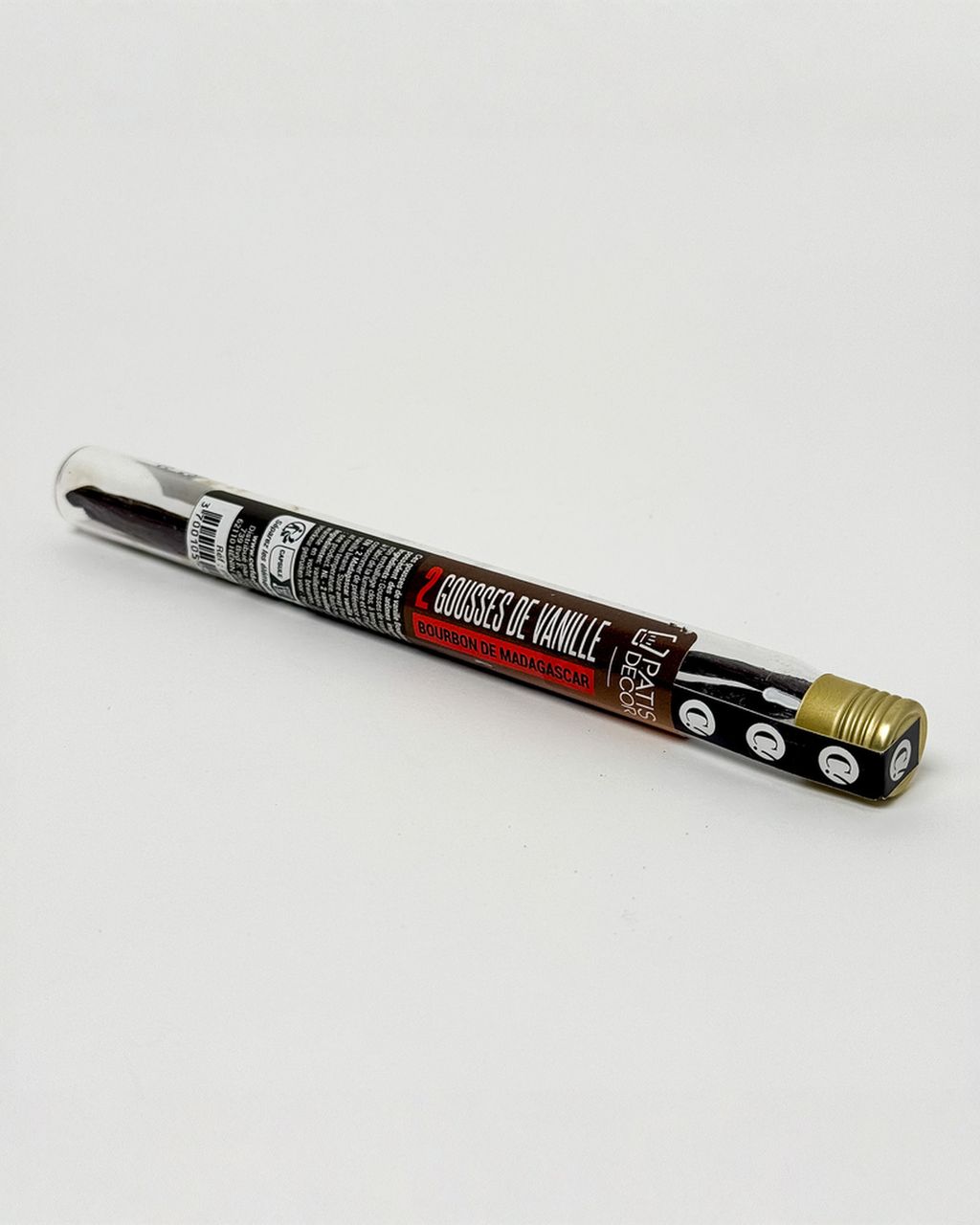
You can give the pan itself as a gift, too. Anyone who bakes will appreciate cast aluminum that lasts for decades, and in the Pletenec you can bake not only vánočka but also a plain Bundt cake, such as the quark Bundt cake "Dvěstěpadesátka", or a fragrant Easter mazanec. Madagascar Bourbon vanilla pods make a nice festive extra to go with the pan. The seeds from one pod are enough for a vánočka made with 500 g of flour; you'll find more on amounts in the article how much vanilla to put in vánočka.
Take the dough from Mum's Vánočka and, instead of braiding it, bake it in the pan following this guide.
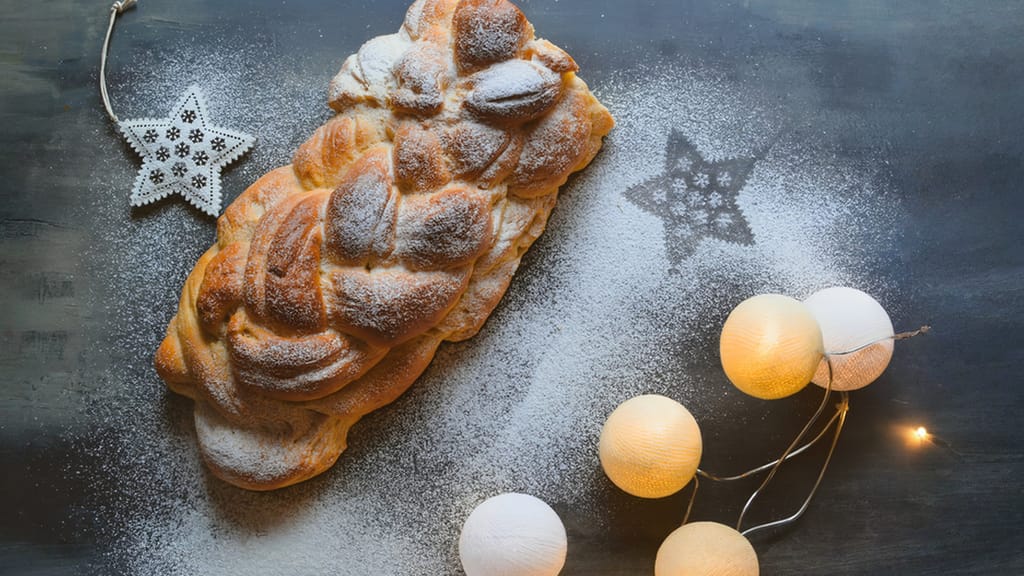
Mom's christmas braid
Mum's Vánočka: a dough you can bake in a pan, too
Yes, any classic vánočka dough works in a pan, you just don't braid it. Adjust the amount to the size of your pan (350–400 g of dough per liter). A very soft, buttery dough even works better in a pan than on a baking sheet, because the pan holds it in shape.
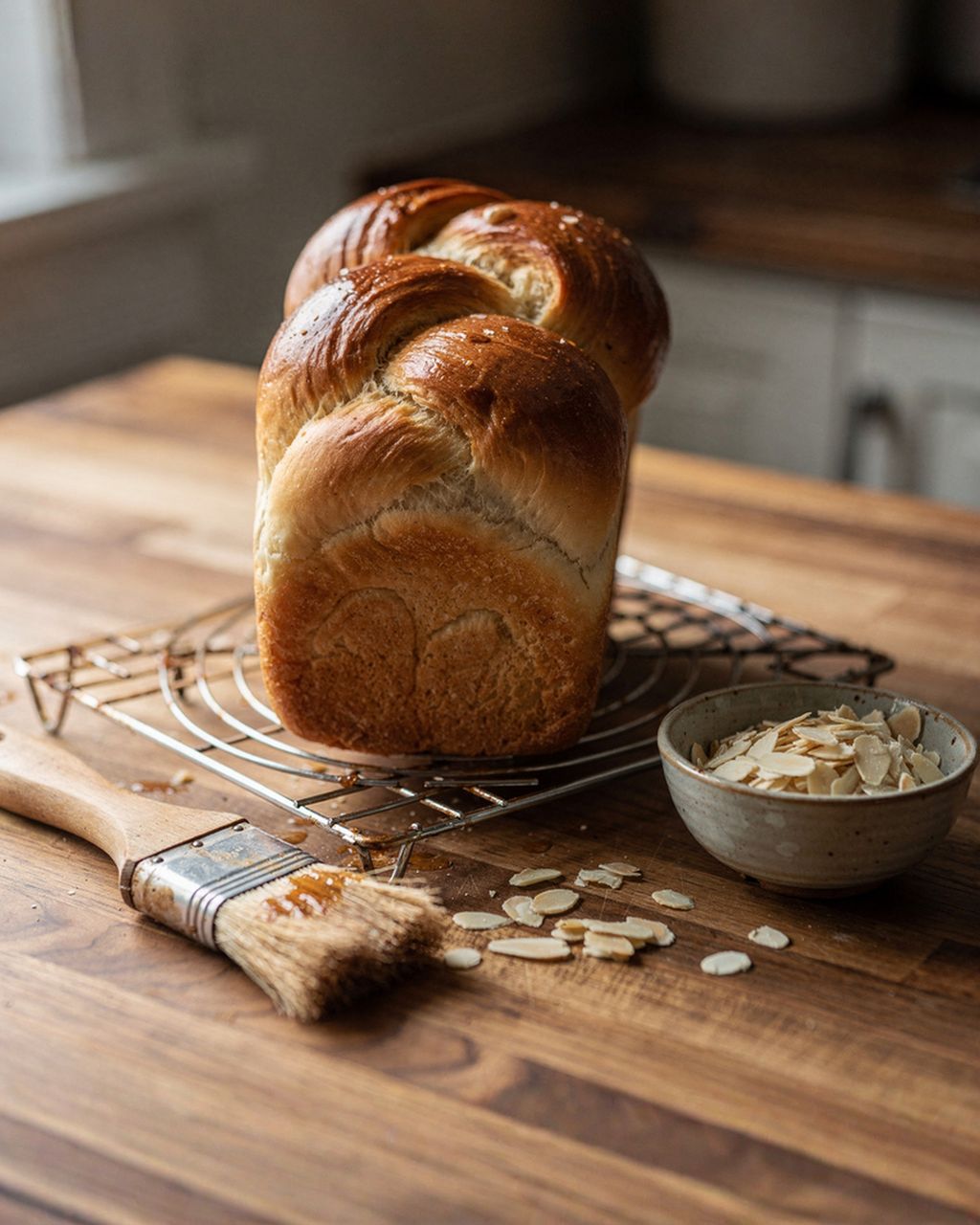
Brush pan-baked vánočka with melted butter only after turning it out, while it is still warm, and dust it with powdered sugar once it has cooled. Don't use an egg wash before baking, because the top of the dough in the pan becomes the bottom once it's turned out.
Turn the vánočka out after 10 minutes of cooling, in one decisive movement: set a wire rack on the pan, flip both at once, and lift the pan straight up. If it won't release, loosen the edges and the center tube with a thin wooden skewer or a plastic spatula, never a knife, which would scratch the pan's surface. Then stand the pan on a damp kitchen towel for a few minutes; the steam will loosen the dough from the metal. If a piece of the pattern breaks off, press it back on while the vánočka is still warm. Once you've brushed it with butter and dusted it with sugar, you won't be able to see it.
A cup-measure vánočka is one where the ingredients are measured by the cup instead of being weighed. It bakes in a pan exactly the same as a weighed one: what matters is the weight of the dough relative to the pan's capacity, not how you measured the ingredients. If you're not sure how much dough you have, weigh it.
Yes, wrap the cooled vánočka in plastic wrap or foil and freeze it for up to 2 months. Thaw it still wrapped at room temperature so the crust doesn't turn soggy from condensation. You can also leave the unbaked dough in the pan in the fridge overnight and let it finish rising in a warm place in the morning, just allow for a longer rise.
One recipe worth heating the oven for, one tip, and one deal from the shop. Nothing else.