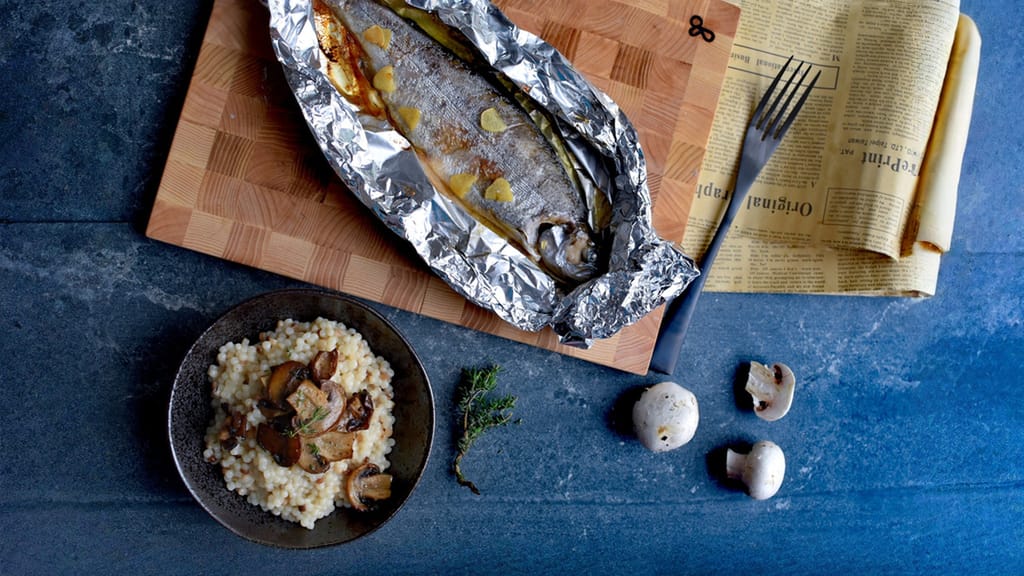
Trout baked in foil with butter and garlic
Trout Recipes: Oven-Baked, Pan-Fried in Butter, in Foil and a Boneless Christmas Eve Fish
Updated Nov 20, 2026
Trout recipes at home come down to three methods: whole trout in the oven, wrapped in foil with butter and garlic, or a fillet pan-fried in butter. Bake a whole trout at roughly 180–200 °C (350–400°F) for about 20–25 minutes. Cook a fillet skin side down for 3–4 minutes in a pan over medium heat, until the flesh turns opaque almost all the way up, then flip it just briefly. It's done when the flesh at its thickest point turns white, is no longer glassy and flakes easily off the bone with a fork. If you want to be certain, check the internal temperature: the US USDA/FSIS gives 63 °C (145°F) for fish. Without a thermometer, cook until the flesh stops looking glassy and starts to flake with a fork. Below you'll find methods for the oven, pan, foil and grill, what to do with a fillet, and how to serve trout on Christmas Eve so there isn't a single bone on the plate.
Use whole trout for the oven, foil and grill, and fillets for the pan and sauces. For most recipes a whole, gutted trout with the head on is enough, and that's exactly how you'll most often buy it. A whole fish is more forgiving: the bone and skin hold the flesh together and protect it from drying out, so it suits the oven, foil and grill. A fillet is quicker and has almost no bones, but it dries out after a minute of inattention.
Whole trout: one fish is usually around 250–350 g (9–12 oz) and makes a portion for one person. You'll find it here: whole trout.
Skin-on fillet: thin, quick, ideal for the pan. The skin crisps beautifully in fat and holds the flesh together: rainbow trout, skin-on fillet.
Smoked fillet: already cooked, so just warm it through in a sauce or serve it cold.
In Czechia, almost all the trout sold is rainbow trout. According to Czech fishing and university sources, it came here from North America in the second half of the 19th century and is now raised in trout farms across the country, so you can get it fresh all year.
One rule applies to every recipe below: don't rinse the trout, but dry it thoroughly with a paper towel, outside and inside the belly cavity. Wet skin won't brown, spatters in the pan, and in the oven the fish steams in its own vapor. Dry skin turns golden and crisp. You don't need to scale it: trout has tiny scales firmly embedded in the skin, and you won't notice them after cooking.
How to soften gingerbread that’s gone hard, when to fill Linzer cookies and how to tell the carp is done. One recipe and one tip a week. Unsubscribe in one click.
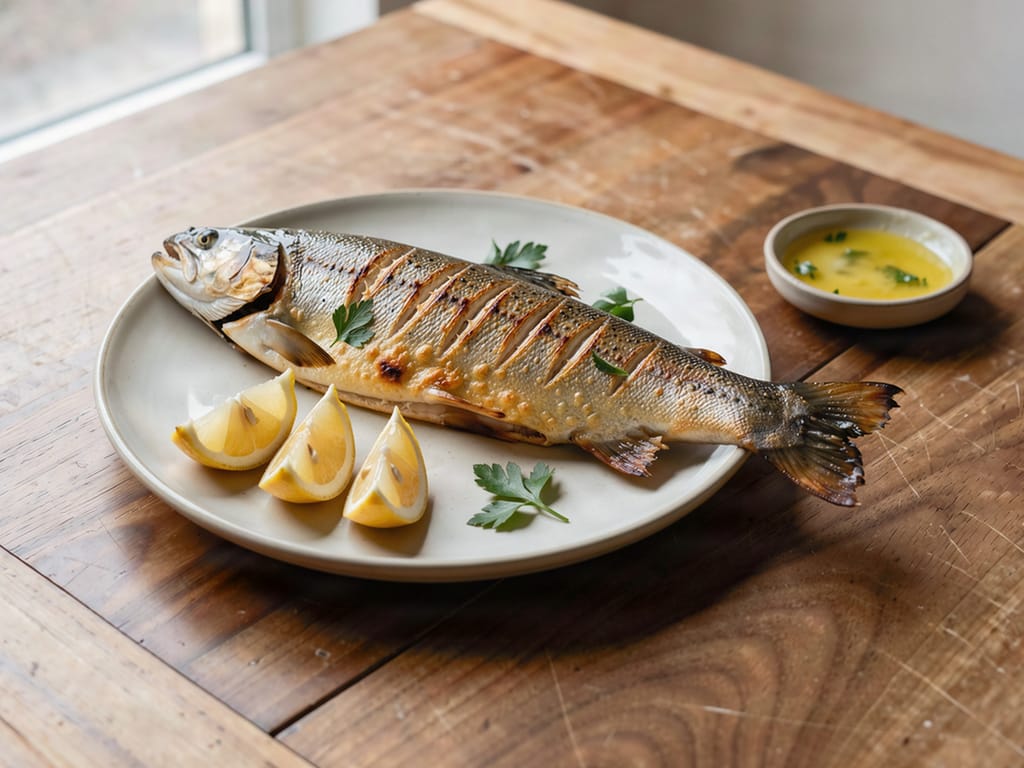
Oven-baked trout is the easiest fish you can cook: dry it, salt it, fill the belly with butter and herbs and put it on a baking sheet in a preheated oven. Lay the whole fish on a baking sheet lined with parchment paper or in a lightly greased baking dish, and season both sides and the cavity with salt and pepper. Put a pat of butter, a few lemon slices and a handful of herbs in the belly, and add a little more fat on top so the skin doesn't stick. Bake uncovered until the skin starts to bubble and the flesh by the backbone turns white. Halfway through, you can baste the fish with the pan juices, and the skin will turn more golden.
If the skin sticks to the pan, it's almost always because it wasn't dry or the pan wasn't greased. Parchment paper solves the problem completely.
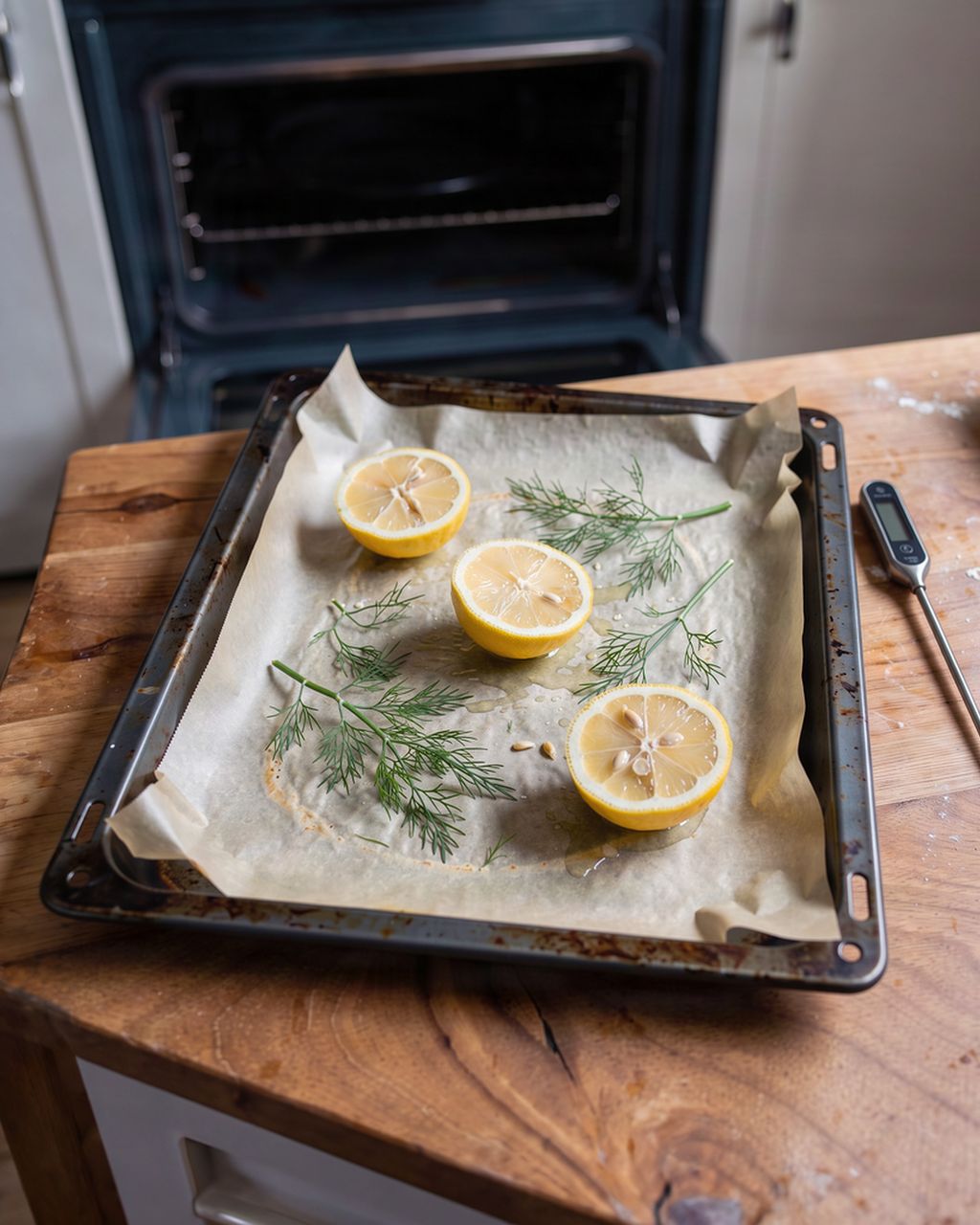
With trout, lemon belongs mainly inside the belly and then on the plate, not in a marinade hours ahead. Lemon slices placed in the cavity scent the flesh from the inside as it bakes without cooking it. If you left the fish sitting in lemon juice for a long time before baking, the acid would firm up the flesh and turn it white while still raw, and it tends to be drier once baked. So put two or three thin slices in the cavity, grate the zest on top just before baking, and squeeze the fresh juice over the finished fish.
Put herbs in the belly whole, and chop them only for the finished fish. Sturdy, fragrant herbs that stand up to heat suit the cavity: thyme and rosemary. Dill and parsley go into the belly only as whole sprigs with their stems. Add their chopped leaves, like chives, to the trout only after it comes out of the oven, or they'll turn black and bitter on the pan. A good trick is herb butter: work softened butter together with chopped herbs, salt and lemon zest, and put a bit in the belly and a bit on the finished fish.
Butter gives trout a nutty flavor and helps the skin turn golden. For baking and for the pan, unsalted butter is best, because you control the salt yourself and the fish can't end up over-salted. Put it in the belly in slices and scatter a few pieces on top. On the pan the butter melts, mixes with the juices from the fish and makes pan drippings you can baste the fish with as it bakes. Don't pour those drippings away: on the plate, they're the best sauce you can have with trout.
Vegetables on the same pan need a head start, because they take longer to cook than the fish. Cut carrots, parsley root, celeriac, onion or peppers into similar-sized pieces, toss them with oil and salt, and roast them alone until they start to soften. Only then lay the dried, seasoned trout among the vegetables and bake everything together until the fish is done and the vegetables are golden at the edges. Soft vegetables, such as zucchini or cherry tomatoes, go on the pan right along with the fish.
Potatoes take much longer to bake than trout, so put them in the oven first. Cut them into smaller, evenly sized pieces so they cook evenly, and bake until a knife slides in easily. Add the fish when the potatoes are almost tender, or cook it separately in a pan while the potatoes finish. You'll find that second approach below in the pan section, as trout in butter with foil-baked potatoes.
For a whole trout, a good temperature is 180–200 °C (350–400°F) and a rough time is about 20–25 minutes, depending on the size of the fish. Smaller fish around 250 g (9 oz) are often done sooner, while a large trout or several fish side by side on one pan take longer. A fillet needs much less time in the oven, often around ten minutes. Take the time only as a guide; what matters is how the fish looks inside.
If you want to bake precisely, you need to know the real oven temperature. Ovens often differ from the set value, and a separate oven thermometer shows you how many degrees there really are inside. For an overview of temperatures and times for all kinds of fish, from fillets to cod to a whole fish, see the article fish in the oven: what temperature and how long.
Trout is done when the flesh at its thickest point, by the backbone behind the head, turns white, loses its glassy sheen and comes easily off the bone with a fork. According to the US food safety agency USDA/FSIS, fish is safely cooked at an internal temperature of 63 °C (145°F). Insert an instant-read thermometer into the thickest part and take care that the tip doesn't touch the bone, or it will show an inaccurate reading.
Without a thermometer, go by these signs:
The flesh by the backbone is white and opaque, not pink and translucent.
The dorsal fin pulls easily out of the fish.
When you lift the flesh with a fork, it falls into flakes and comes away from the bone.
The eye is white and bulging.
Trout keeps cooking for a few minutes after it comes out of the oven, because heat moves from the surface inward. So don't bake it until completely dry: flesh that is just starting to flake at that moment is perfect.
Trout in foil cooks in its own juices and butter, so it won't dry out even if you leave it in the oven a little too long. The foil traps steam, the flesh steams and stays tender, and while the skin won't crisp, the flavor of butter and garlic reaches all the way to the bone. It's an ideal method for beginners and for times when you don't want to stand by the oven.
This is exactly what the recipe trout baked in foil with butter and garlic is built on: each fish gets its own packet with butter and garlic in the belly and on top, so it cooks in its own buttery juices.
A few things that matter with foil:
Seal the packet tightly, but leave a little room inside so the steam can circulate.
Shiny side in or out doesn't matter. What matters more is that the packet doesn't leak.
Want crisp skin? Open the packet for the last few minutes and let the fish finish uncovered.
Open the packet carefully and away from you, as hot steam will billow out.
Pour the juices left in the foil over the fish on the plate. It's a butter sauce you don't have to make at all.
Trout baked in foil with butter and garlic
Trout baked in foil with butter and garlic
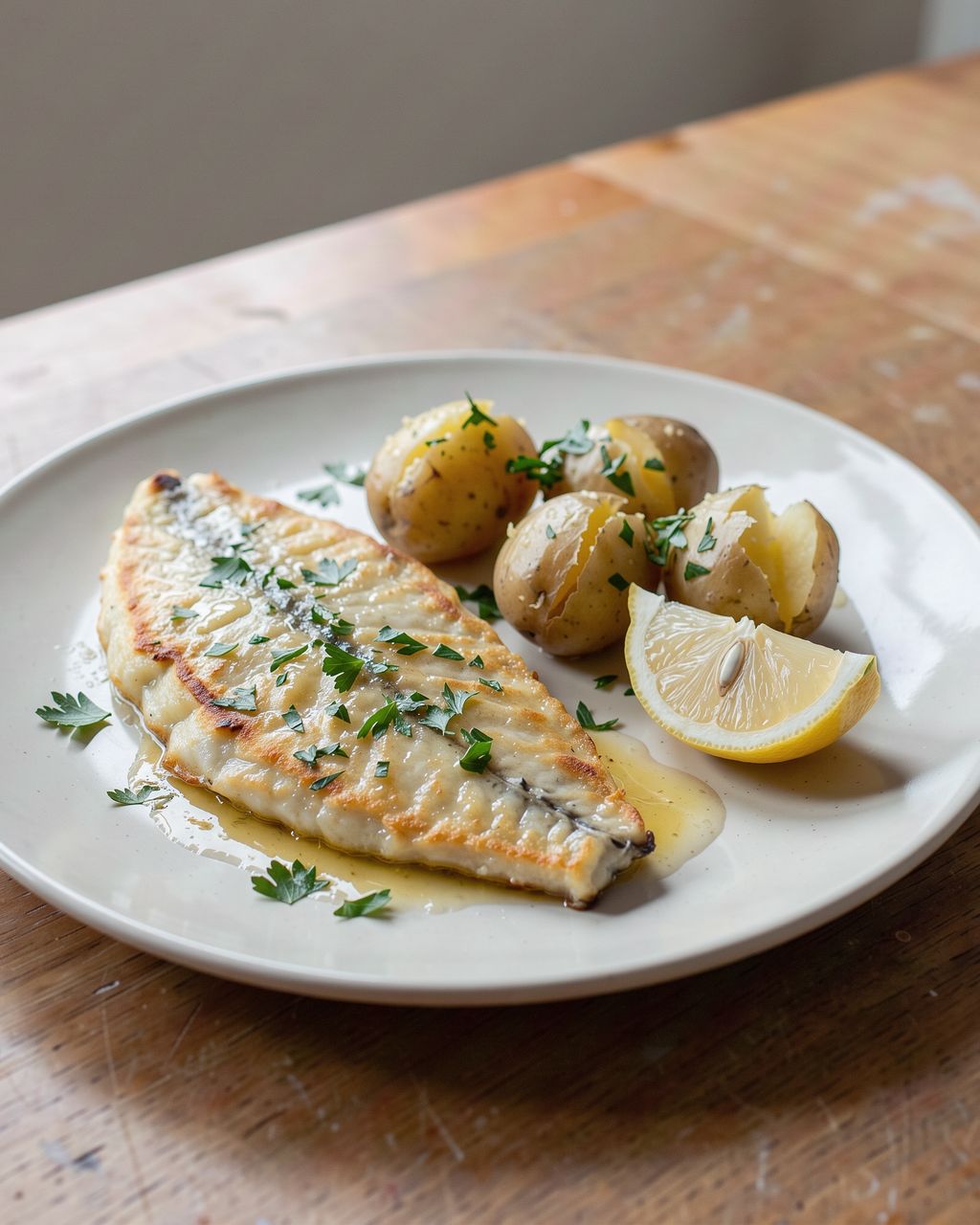
Pan-fried trout is ready in five minutes: salt a dried fillet, lay it skin side down in hot fat and leave it alone until the flesh turns opaque almost all the way up, then flip it just briefly. The most common mistake is moving the fish. The skin sticks to the pan at first and releases by itself once it has browned, so don't touch it for the first few minutes. The second mistake is a cold pan, where the fish releases water and starts to boil.
Butter on its own burns easily in a pan, because the milk solids in it brown and blacken before the fish is done. That's why cooks like to combine it with a splash of oil and add the butter mainly for flavor. If you want the full buttery aroma, add a bit of cold butter at the end and spoon it over the trout. The butter foams and turns golden, and the fish soaks up its nutty aroma.
Butter-fried trout with foil-baked potatoes is a classic Czech dinner that takes under an hour. It works because the two parts don't get in each other's way: the potatoes bake undisturbed in the oven while you quickly pan-fry the fillets in butter and olive oil, so everything is ready at the same time.
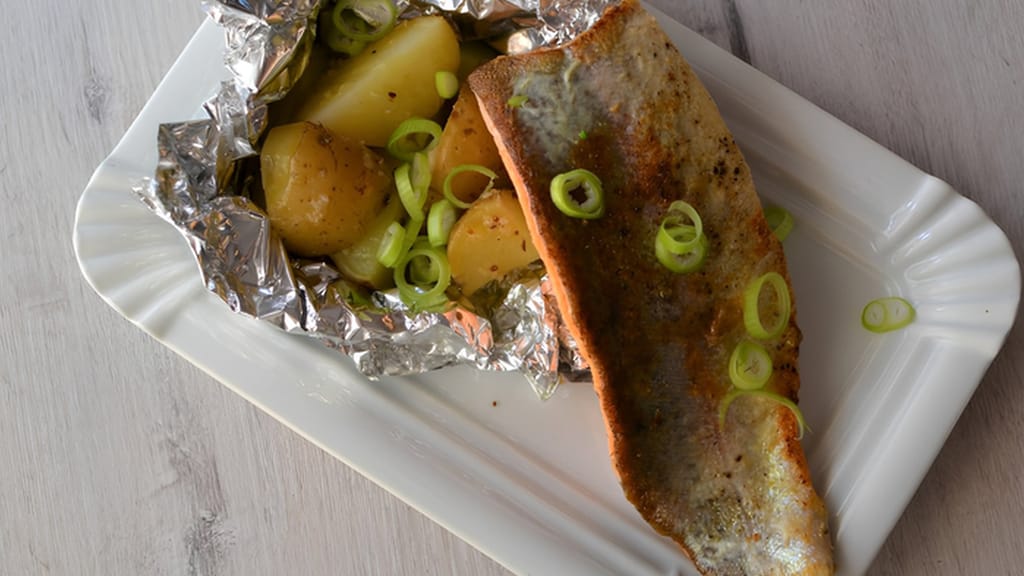
Butter-fried trout with foil-baked potatoes
Trout in butter with foil-baked potatoes
Trout with crispy Brussels sprouts, parsley root and hazelnuts is an autumn and winter plate ready in about half an hour. Brussels sprouts and parsley root seared over high heat give a bittersweet base, and hazelnuts bring the nutty flavor that goes best with trout.
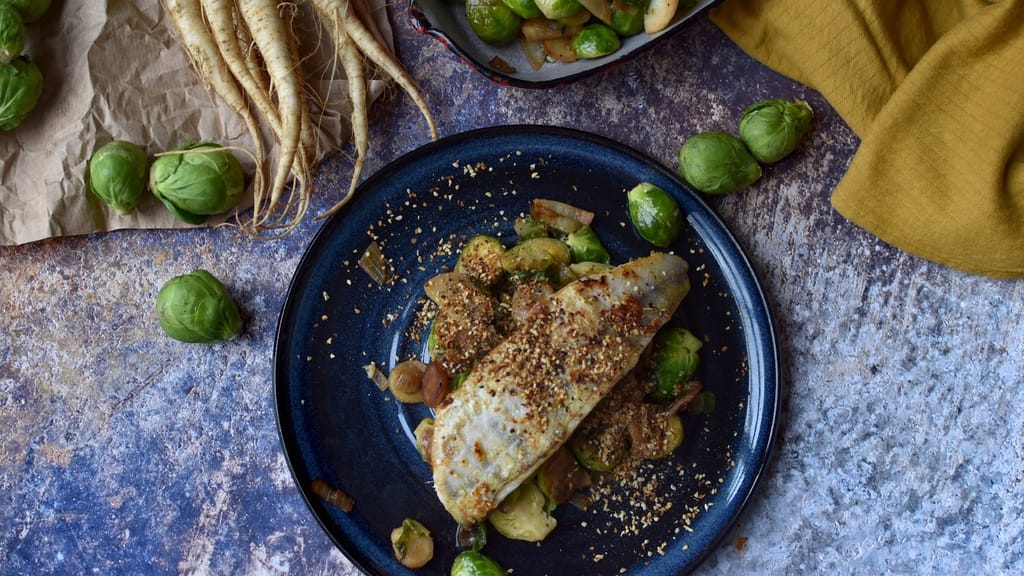
Trout with crispy brussels sprouts, parsley root and hazelnuts
Trout with crispy Brussels sprouts, parsley root and hazelnuts
Trout meunière (Czech "po mlynářsku") is a classic you can manage in one large pan: salt the whole dried fish, dredge it in all-purpose (plain) flour, shake off the excess and fry it in butter with a splash of oil until golden on both sides. The flour forms a thin crust that protects the flesh and crisps on the surface. A whole trout is thicker than a fillet, so fry it over medium heat and longer on each side, easily five to seven minutes depending on size. At the end add a pat of butter to the pan, let it foam, squeeze in lemon, toss in chopped parsley and spoon this sauce over the fish.
Trout fillet suits anywhere you don't want to deal with bones: in the pan, in a creamy sauce, or marinated for canapés. Before you put it in the pan, run your fingers along the middle of the flesh. You'll find a row of fine pin bones there, which are often left in when the fish is filleted. Pull them out with tweezers or your fingers, in the direction the bone runs, so you don't tear the flesh. In the pan, cook the fillet mainly from the skin side; the flesh is so thin that it cooks through largely from underneath.
If you'd like more fish fillet recipes, for example in batter or with a crust, have a look at the article fish fillet in butter, batter and with a crust.
Tuscan trout with sun-dried tomatoes and spinach is a creamy dinner in 22 minutes made with smoked trout fillets. Smoked fish is already cooked, so you only warm it through in the cream sauce, and the smoky flavor pairs beautifully with sun-dried tomatoes and Parmesan.
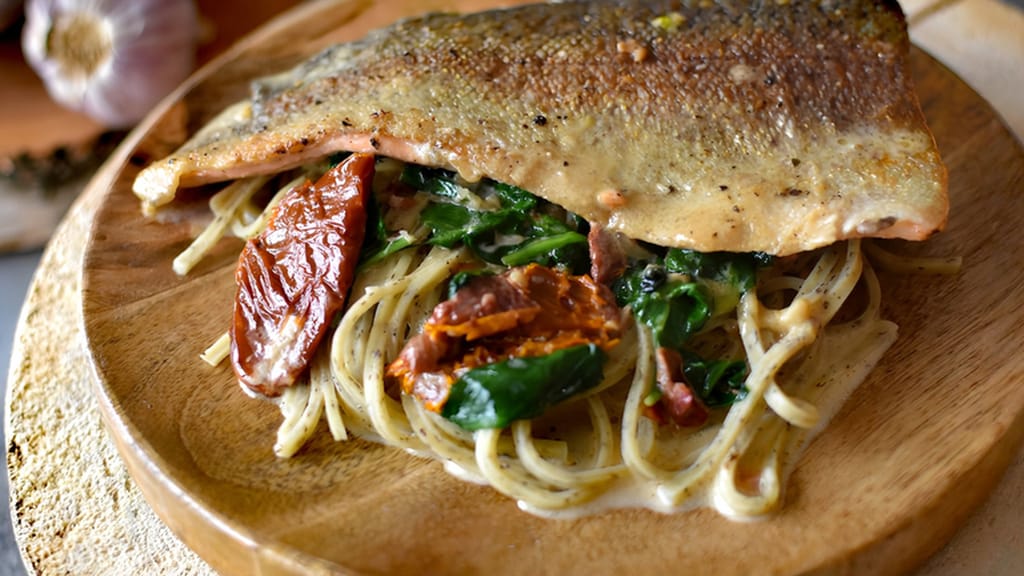
Tuscan-style trout with sun-dried tomatoes and spinach
Tuscan trout with sun-dried tomatoes and spinach, made with smoked fillets
Marinated trout isn't cooked, only cured in lemon, so use only fish sold as suitable for eating raw, or fish frozen to EU specifications. Lemon juice turns the flesh white and firms it, but it doesn't reliably destroy bacteria or parasites. EU Regulation No 853/2004, as amended by Regulation No 1276/2011, requires fish intended to be eaten raw or marinated to be frozen at −20 °C for at least 24 hours or at −35 °C for at least 15 hours. A typical home freezer at −18 °C doesn't meet these parameters, so the linked recipes advise freezing fish at home for at least 7 days at −20 °C or lower. Don't serve marinated trout to pregnant women, small children, older people or people with weakened immunity. It works as a starter or on a festive table.
Potato pancakes with trout are bite-sized canapés: crisp potato pancakes with sour cream and a slice of marinated trout, where warm and fried meets cold and fresh.
Savory dill crêpes with trout use the same lemon marinade, only you roll the fish with sour cream into dill crêpes and slice them into rounds, so you can make them ahead and they look festive on the table.
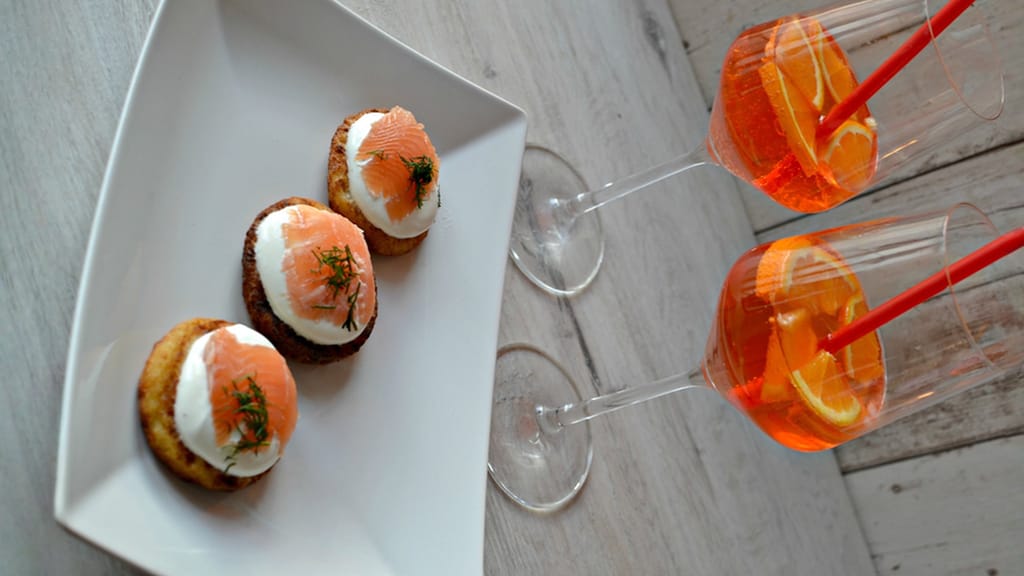
Potato pancakes with marinated trout
Potato pancakes with lemon-marinated trout
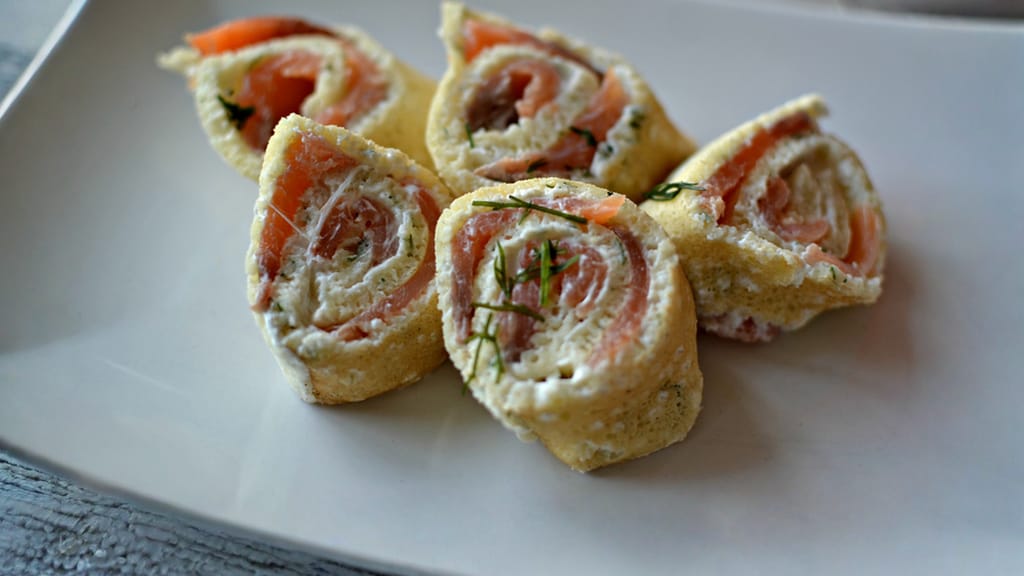
Savory dill crêpes with marinated trout
Savory dill crêpes with marinated trout
On the grill, trout is best whole, because the bone and skin hold it together and the flesh doesn't fall through the grate. The key is dry skin and a clean, hot, oiled grate: a wet fish sticks to the grate and tears when you turn it. Turn the fish only once, when the skin releases from the grate by itself. If you're afraid it will fall apart, use a fish grilling basket, which lets you flip the fish along with it.
Grilled trout with polenta and vegetables is a whole grilling dinner: fish from the grate, seared polenta cubes and vegetables from the pan. Make the polenta a day ahead, as it has to set overnight.
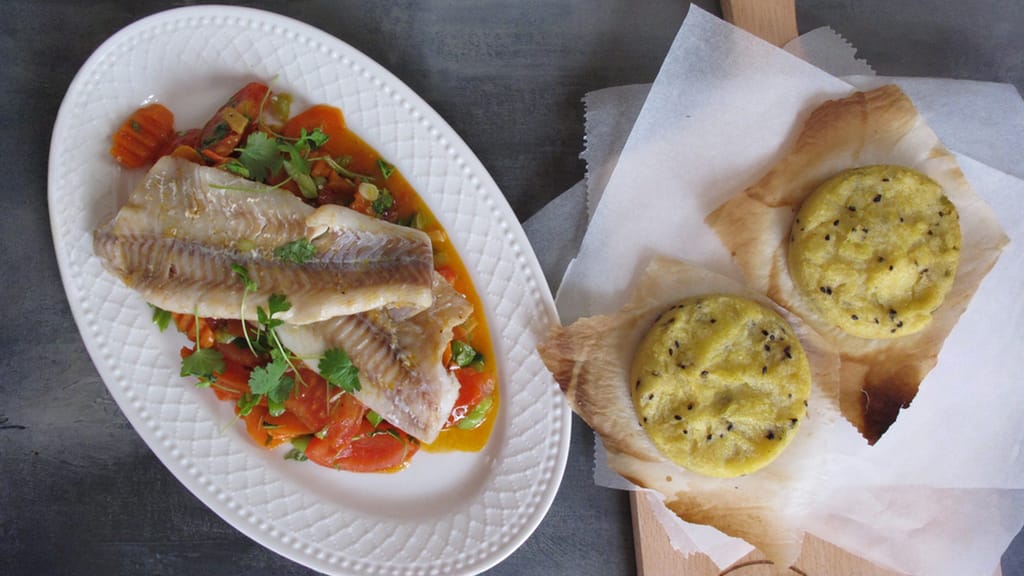
Grilled trout with polenta and vegetables
Grilled trout with polenta and vegetables
Trout has a delicate, slightly nutty flavor, so salt, butter, lemon and herbs are enough. Strong spices easily overpower it, so go easy. Tried-and-true combinations:
Butter, garlic, thyme: the basis for both oven and foil.
Lemon and dill: fresh, good for the pan and for marinated trout.
Caraway and garlic: a Czech classic for the grill.
Almonds or hazelnuts toasted in butter: a nutty flavor that goes best with trout.
Sun-dried tomatoes, cream and Parmesan: when you want a creamy sauce.
Sides for trout:
Boiled potatoes with butter and parsley: the simplest and most common choice.
Potatoes baked in their skins or in foil: done in the oven alongside the fish.
Mashed potatoes: smooth, they soak up the buttery drippings.
Tarhoňa (Czech egg barley), couscous or rice: when you want a side that takes up sauce.
Polenta: set and seared, for grilled fish.
Vegetables from the pan or baking sheet: Brussels sprouts, carrots, parsley root, zucchini.
Vegetable salad with lemon dressing: freshens up buttery fish.
With every side, put a lemon wedge on the plate. A drop of acid just before eating brightens the butter fat, and the trout tastes lighter.
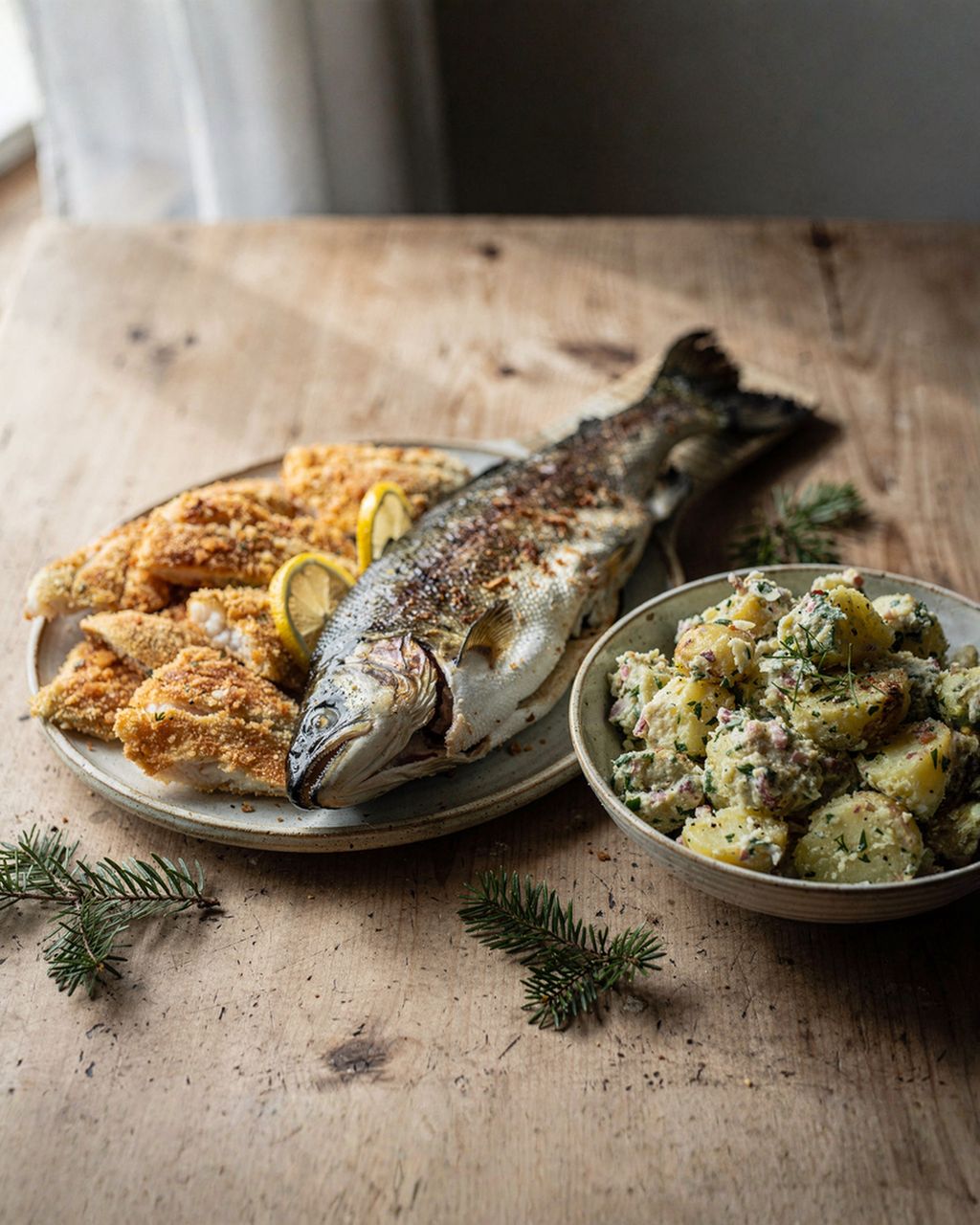
Trout is the easiest boneless fish for Christmas Eve: unlike carp, it has no branching fine bones in the flesh, and the whole skeleton can be lifted out of a baked fish in one piece. That's why it's chosen mainly by families with children and anyone who doesn't like carp or is bothered by its bones. It's one of the options also covered in the article what to serve instead of carp on Christmas Eve.
For the Christmas Eve table you have two routes:
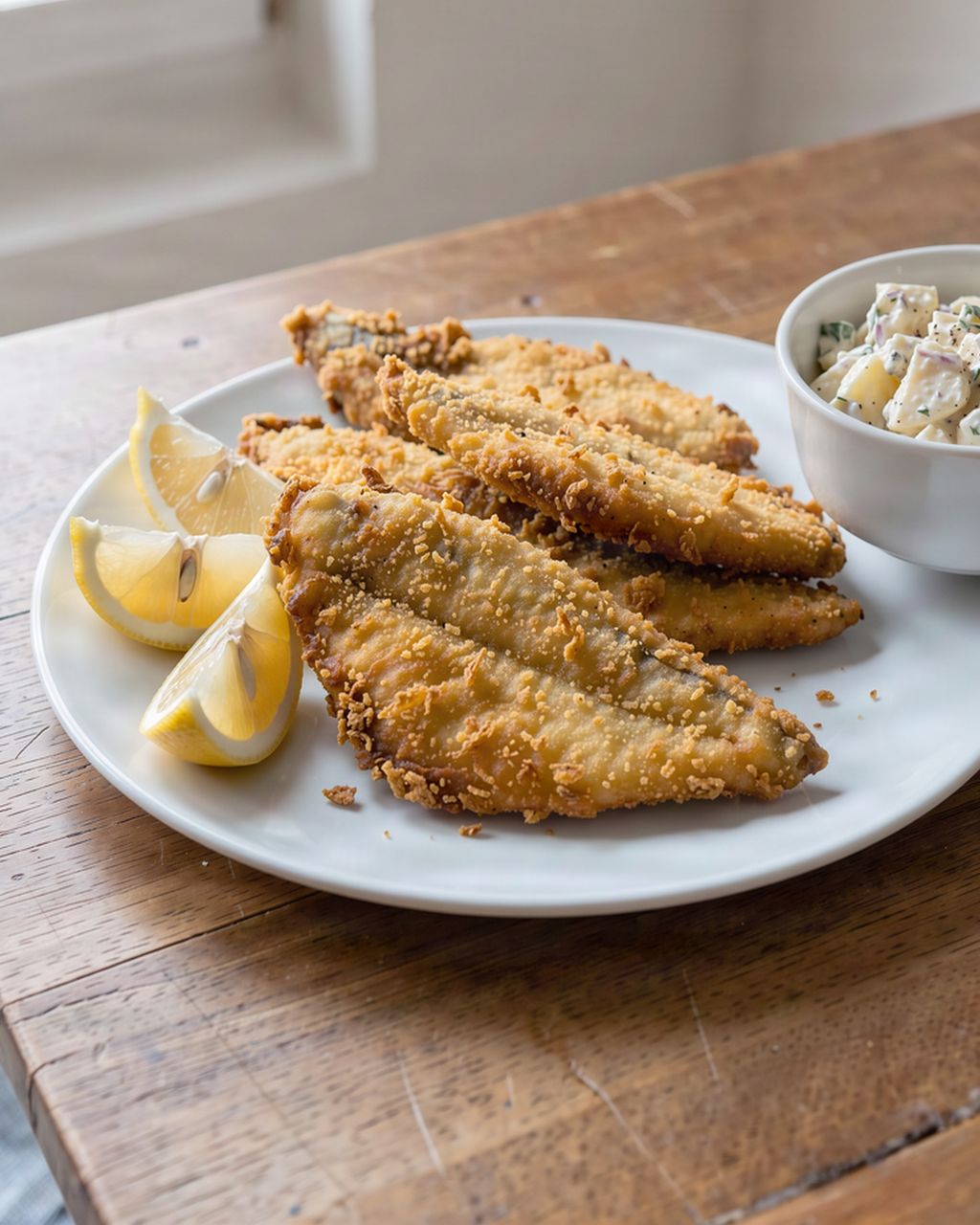
Fillets in butter or breaded. Carefully remove the pin bones from the fillets, dry them and pan-fry in butter, or coat them in flour, egg and breadcrumbs and fry like classic Christmas carp. A thin fillet fries in just a moment, so watch it to keep it from drying out.
A whole trout from the oven or foil, boned at the table. It looks festive, doesn't dry out and the bones come out in one motion, see the method below.
Potato salad goes well with both. If you're making it for the first time or looking for a lighter version, you'll find inspiration in the article salads to serve with schnitzel: potato, cucumber and cabbage.
Breaded trout is for everyone who wants a Christmas Eve fish "like carp," just without the bones. Remove the pin bones from skin-on fillets, dry them, salt them and coat them in turn in all-purpose (plain) flour, beaten egg and breadcrumbs, pressing the crumbs lightly onto the flesh. Fry them in oil or clarified butter heated to 160–170 °C (320–340°F), first on the flesh side, then on the skin side, 2–3 minutes per side, only until golden. Let the finished fillet drain on a paper towel and serve right away while the coating is crisp.
Baked trout can be deboned in a minute: you lift off the top flesh, pull out the backbone with its bones in one piece, and the bottom fillet stays clean on the plate. The method:
With a knife, run along the back from head to tail to cut the skin, and remove the dorsal fin.
Make a cut behind the head and in front of the tail, down to the backbone.
With the flat of the knife or a spoon, lift the top fillet and set it aside skin side down. The flesh comes away from the bones by itself.
Grasp the backbone at the tail and pull it toward the head. The whole skeleton with the head lifts out at once.
Check the bottom fillet with your fingers and pull out any loose bones from the belly area.
Spoon the pan drippings or melted butter over the finished fillets and serve with a lemon slice. Nobody then has to pick anything out on the plate.
Buy fresh trout as close to the holiday as possible, ideally a day or two ahead. The US USDA/FSIS gives 1–2 days in the fridge for fresh fish. If you want it from a pre-Christmas shop, freeze it right away. You'll find how to thaw it properly in the questions at the end of the article.
Leftover baked trout is great cold: pick it off the bones, mash it with a fork and you have the base of a fish spread. Just mix it with quark (tvaroh, a Czech fresh curd cheese) or sour cream, lemon zest, dill or chives and a little salt. On bread or potato pancakes it's a ready-made snack, and you'll find more ideas in the article spreads for bread: quark, egg and fish. Refrigerate baked trout in a sealed container no later than 2 hours after baking and eat it within 3–4 days, as the US USDA FSIS gives for leftovers.
In the freezer, trout keeps its best quality for roughly 2–3 months, which is what the US FoodSafety.gov gives for fattier fish; fattier fish goes rancid over time. It stays safe for longer. Wrap it as tightly as you can so air doesn't get to the flesh and dry it out, and write the date on the bag. The sooner you use it, the better the flavor and texture will be.
Thaw frozen trout in the fridge, a whole fish ideally overnight. If you're in a hurry, keep it in a sealed bag submerged in cold water, which USDA recommends changing every 30 minutes, and cook it right away. Don't thaw it on the counter at room temperature. Frozen fish releases more water, so pat it very dry before baking.
Plan on one whole trout per person, weighing roughly 250 to 350 g (9–12 oz). The grilled trout with polenta recipe uses 1.2 kg (2.6 lb) of whole fish for four servings, about 300 g per person. Fillets need less, since the head and bones are gone.
With convection, trout is usually baked 10 to 20 °C lower or for a few minutes less, because the circulating air transfers heat faster. The skin turns more golden and crisp. What always matters most, though, is whether the flesh by the backbone is white and coming away from the bone.
Baked trout can be reheated, but gently, or it dries out. Wrap it in foil with a bit of butter and warm it in the oven until it's hot all the way through (at least 70 °C / 158°F for 2 minutes); the microwave easily dries out and toughens the flesh. It's often better eaten cold, picked off the bones, for example as a fish spread.
One recipe worth heating the oven for, one tip, and one deal from the shop. Nothing else.