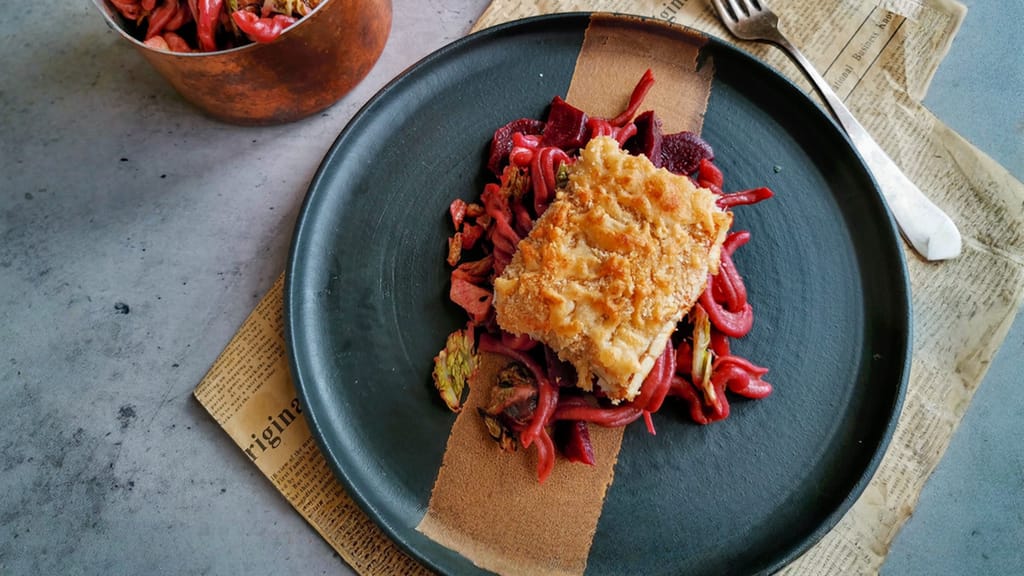
Fish fillets with a crispy crust
Baked Fish in the Oven: What Temperature for Fillets, Cod, Trout and Whole Fish
Updated Nov 17, 2026
Fish in the oven is timed by thickness, not by species: at 450°F (230°C), allow 10 minutes for every 1 inch (2.5 cm) at the thickest point. It's a rule of thumb from Fisheries and Oceans Canada (DFO), and it works for thin cod fillets just as well as for a whole trout. The fish is done when the flesh reaches 145°F (63°C) inside (USDA/FSIS), turns opaque and flakes easily. Below you'll find times for fillets, whole fish and tuna steaks, when to reach for aluminum foil, and how to keep fish from drying out.
Bake fish at 450°F (230°C) and allow 10 minutes for every 1 inch (2.5 cm) of thickness, measured at the thickest point as the fish lies on the pan. This "Canadian rule" was set out by Fisheries and Oceans Canada (DFO) and applies to fillets and whole fish alike. If you're baking fish straight from frozen, use the same rule but double the time: 20 minutes per 1 inch (2.5 cm). Per DFO, fish baked in foil or in a sauce needs about 5 minutes longer.
What the rule works out to in practice (450°F/230°C, fish straight from the fridge, no foil):
1 cm (thin Alaska pollock fillet, pangasius): about 4 minutes
1.5 cm (typical cod fillet): about 6 minutes
2.5 cm (thick cod loin, tuna steak): about 10 minutes
3–4 cm (whole trout, mackerel, perch): about 12–16 minutes
5–6 cm (larger pike, grass carp): about 20–24 minutes
The times are a guide; what counts is the internal temperature: 145°F (63°C) at the thickest point is the safe minimum for fish according to the USDA/FSIS. If you bake at a lower temperature, say 180–200°C (350–400°F) because of vegetables on the same pan, the fish needs more time. How much more is something an instant-read thermometer will tell you, not the clock.
Seasonal baking plans, tested recipes and kitchen tricks that save you time. Unsubscribe in one click.
Bake fillets hot and fast: at 450°F (230°C), a thin fillet is usually done in 4–6 minutes and a thicker cod loin in 8–10 minutes (DFO rule, 10 minutes per 1 inch/2.5 cm). Lean white fish has very little fat to protect it, so every extra minute dries it out.
Cod. It has large flakes that tend to fall apart once baked. Bake it on parchment paper rather than directly on the pan, and there's no need to turn it. Tuck the thin end of the fillet under so the whole piece is a similar thickness and cooks through all at once.
Alaska pollock. It's mostly sold frozen in thin slabs or blocks. Follow the manufacturer's instructions on the package: they're calculated for the specific thickness and for whether it's baked straight from frozen.
Pangasius. Imported pangasius is almost always frozen and waterlogged, and it releases that water as it bakes. Pat it thoroughly dry with a paper towel before baking, or it will end up simmering in its own juices on the pan.
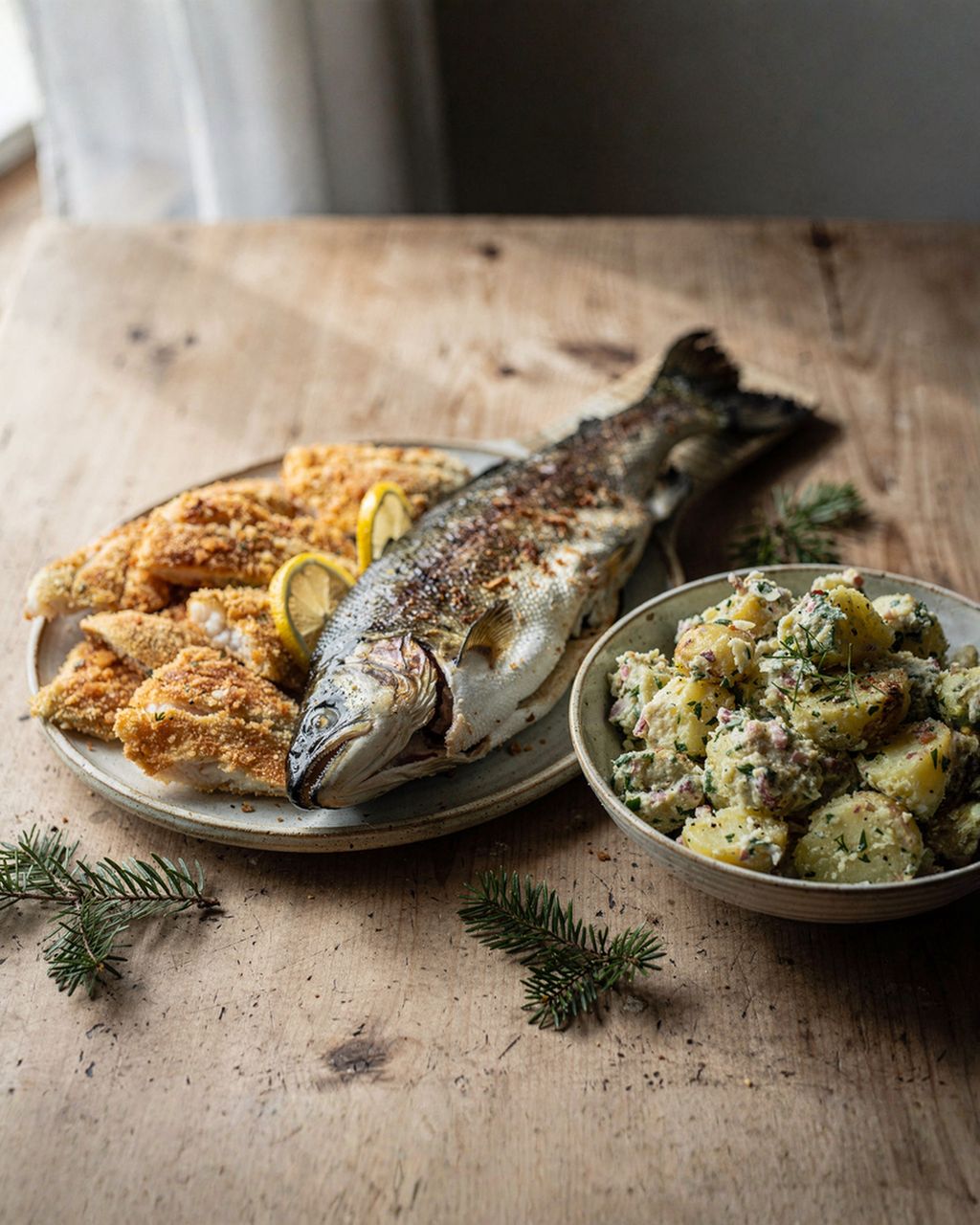
Brush the fillet with oil or melted butter, salt it just before baking (salt otherwise draws out water), and put a layer of fat or a crust on top to protect the flesh. Fish fillets with a crispy crust show how: an herbed breadcrumb layer traps the juices and keeps the fillet underneath moist.
Fish fillets with a crispy crust
Oven-baked fish fillets with a crispy crust
Measure a whole fish at its thickest point near the head and allow 10 minutes per 1 inch (2.5 cm) at 450°F (230°C) (DFO rule). Bones and skin slow the heat, so always check with a thermometer inserted just above the backbone: it must read 145°F (63°C) (USDA/FSIS).
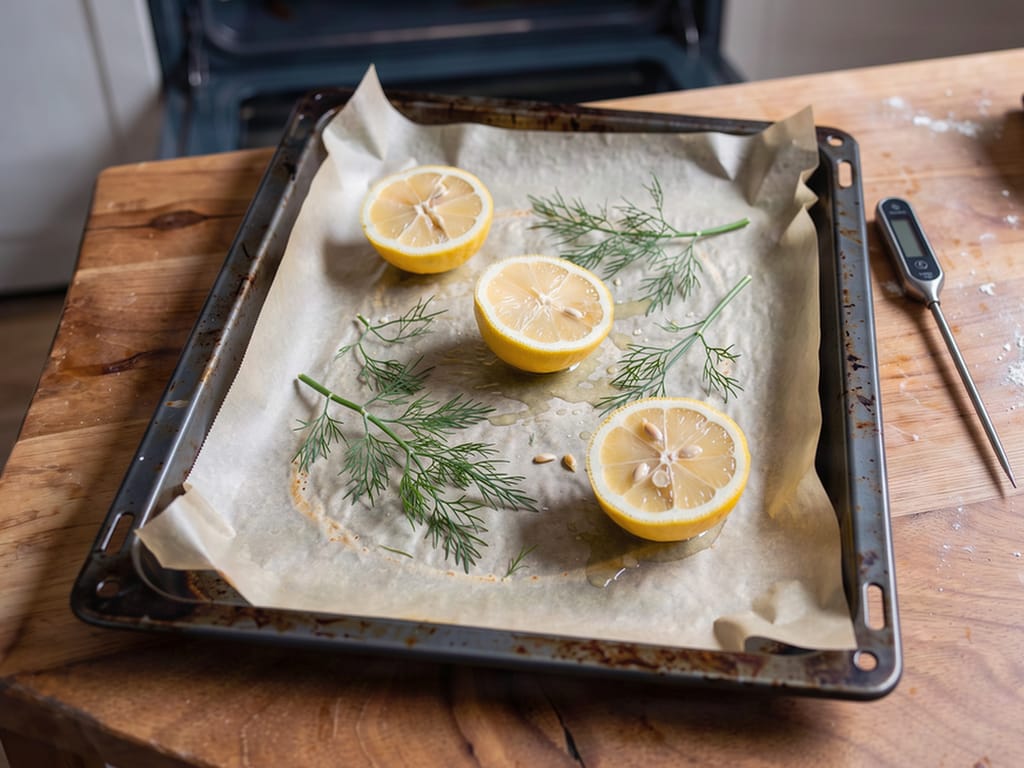
Trout (about 300 g, 3–4 cm): about 12–16 minutes. The skin is thin and crisps up nicely, so bake it uncovered. Put a lemon slice, garlic and dill in the belly.
Mackerel (3–4 cm): about 12–16 minutes. It's oily, so it can handle a few extra minutes. Score the skin two or three times crosswise so the fish doesn't curl in the oven.
Perch (3–4 cm): about 12–16 minutes. It has tough scales, so have it scaled at the market.
Pike (1.5–2 kg, 5–6 cm): about 20–24 minutes. The flesh is lean and dries out easily, so foil is useful here (add about 5 minutes), or brush it with butter and cover it with bacon.
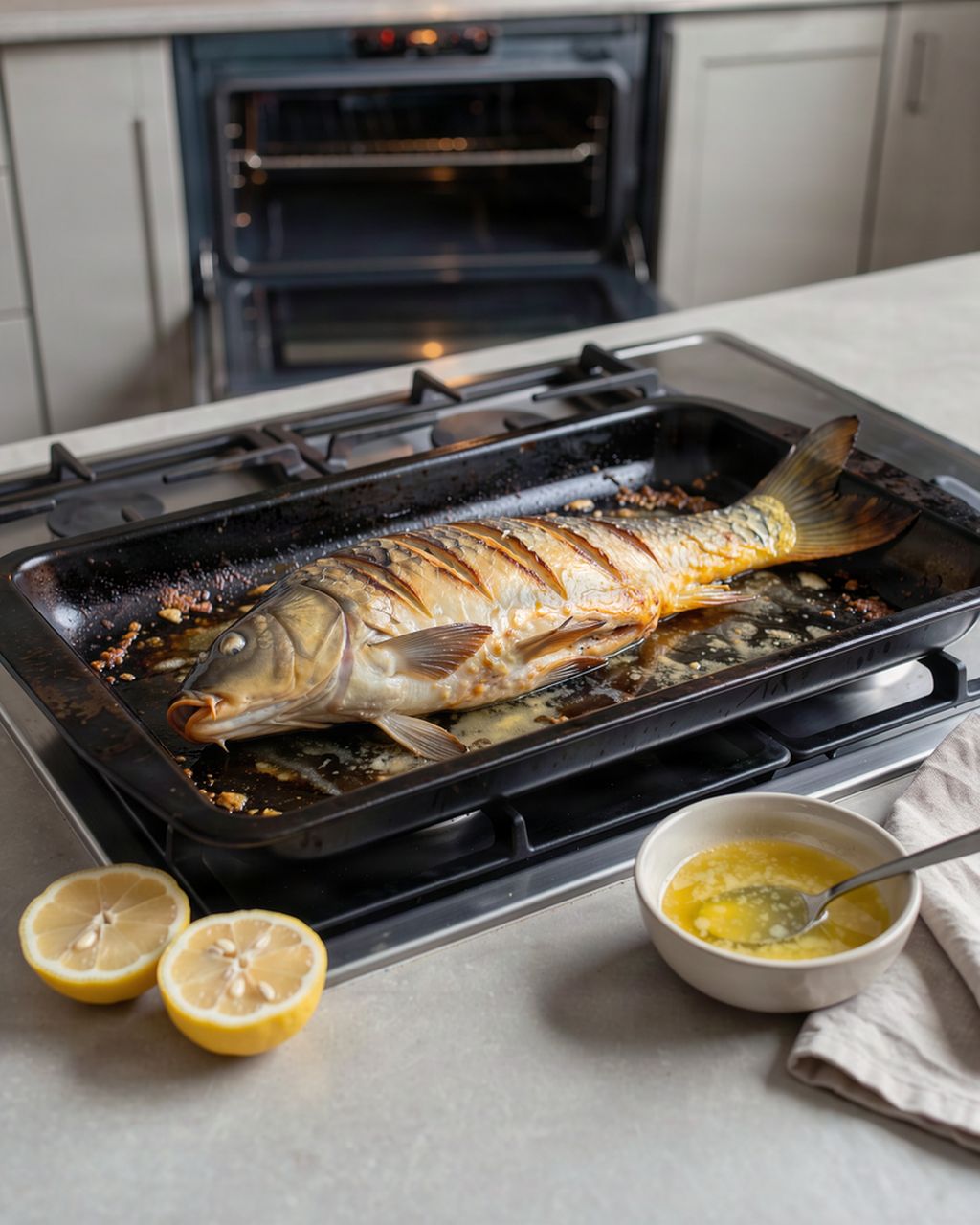
Grass carp (5–6 cm): about 20–24 minutes. Like common carp, it has small bones in the flesh, so score it closely before baking. The method is the same as in the article on how to bone and score a carp.
Sturgeon (6–8 cm): about 24–32 minutes. It's oily and firm, so it doesn't dry out easily, but because of its thickness it cooks through slowly.
The times are calculated from the DFO rule for the stated thickness, not measured for your oven. Always cook freshwater fish (pike, perch, grass carp) all the way through, whether they come from the wild or from a pond. They may carry parasite larvae. According to EFSA, an internal temperature of at least 60°C (140°F) for 1 minute kills most of them, so always cook them to 145°F (63°C). Don't leave any pink flesh by the bone.
Common carp follows the same physics, but portions and halves have their own times. You'll find them in the article how long to bake carp in the oven.
A tuna steak 2.5 cm (1 inch) thick is done in about 10 minutes at 450°F (230°C) (DFO rule), cooked through to 145°F (63°C) inside (USDA/FSIS). Yellowfin tuna steaks are lean and dense, so they dry out quickly when cooked through. That's why you should brush the steak with oil before baking and take it out as soon as the thermometer reads 145°F (63°C).
In a restaurant you'll get tuna that's pink inside. But that departs from the safe guidance; it isn't the norm. If you want a rare center, buy only tuna that the seller explicitly labels as suitable for eating raw. Under European Regulation (EC) No 853/2004, such fish generally has to be frozen beforehand, for example at −20°C (−4°F) for at least 24 hours, to kill any parasites. Tuna from an ordinary fish counter isn't intended for that.
A thicker steak is best seared quickly in a hot pan on both sides and finished in the oven. The same approach works for salmon, which has its own article: salmon in the oven and in a pan.
In foil (or parchment paper), fish steams in its own vapor; without it, fish roasts and crisps. Choose by the fish, not by habit:
Foil or parchment suits lean and large fish such as pike, whole cod or thick fillets, and anywhere you want vegetables, herbs and a splash of wine in the same packet. The fish doesn't dry out, but the skin stays soft and doesn't brown.
Uncovered is for oily fish with skin such as trout, mackerel or sturgeon. The fat protects them on its own and the skin bakes up crisp.
A combination: bake a large fish in foil and open it up for the last few minutes so the surface browns.
In foil, add about 5 minutes to the time from the DFO rule, just as for fish baked in a sauce. Heat is still carried mainly by steam, so go by the thermometer here too. Open the packet carefully, away from you, because the steam burns.
Fish is done when it reaches 145°F (63°C) at the thickest point (USDA/FSIS). Without a thermometer, the FDA says you can tell by this: the flesh is no longer translucent and flakes easily with a fork.
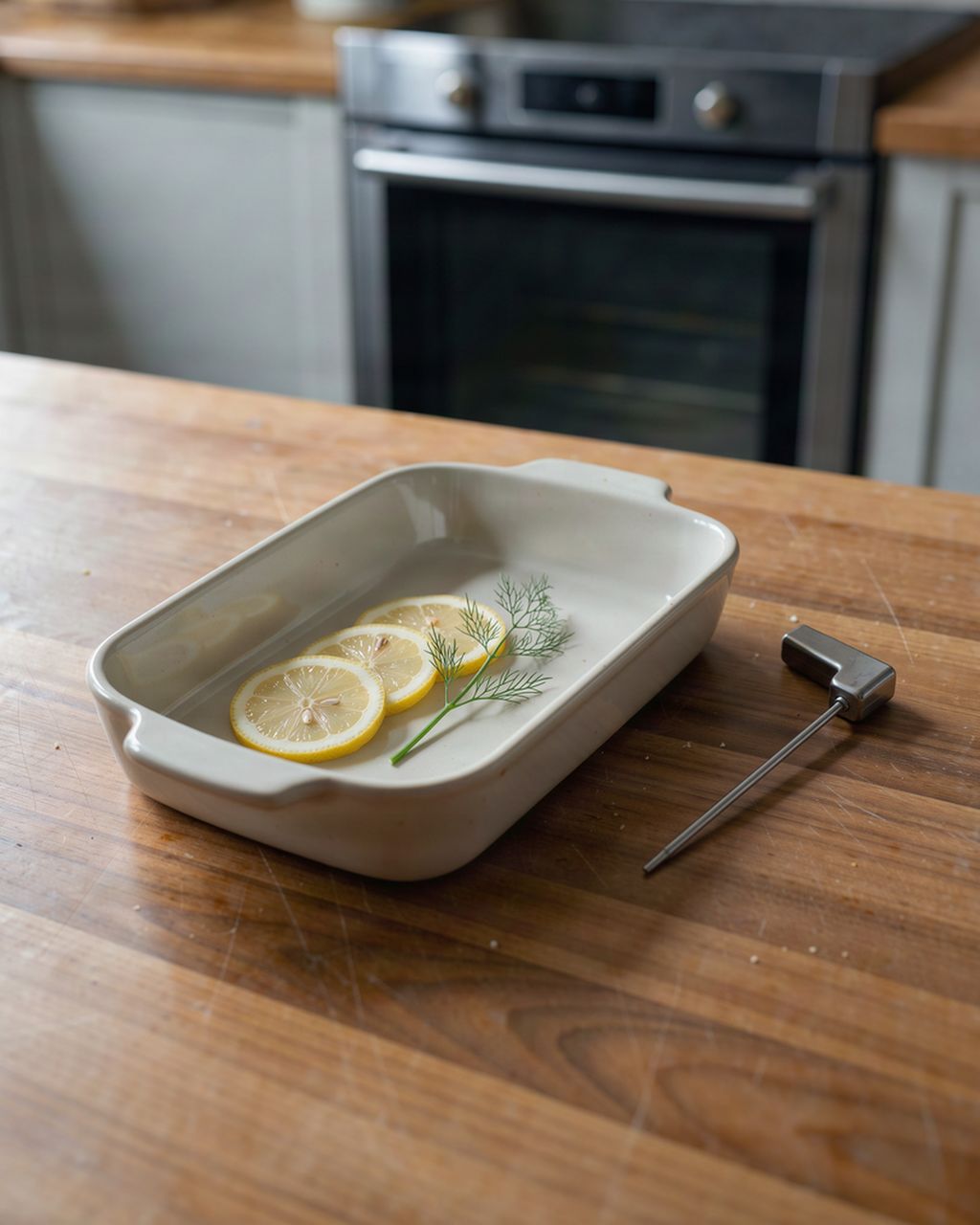
Thermometer: insert it from the side into the thickest point. In a whole fish, go just above the backbone but don't touch the bone, or the thermometer will give a false reading.
Fork test: insert it at the thickest point and give it a slight twist. Cooked flesh separates into flakes and is matte and opaque inside (white, or naturally pale pink for trout or salmon). If it still resists and looks glassy, return the fish to the oven.
With a whole fish, the dorsal fin pulls out easily and the flesh comes away from the backbone.
Fish from the oven keeps cooking for a while from its own heat. So take it out as soon as it reaches 145°F (63°C), and don't wait until it's "definitely done". That's the most common road to dry fish.
Dry fish is almost always overcooked fish. Lean flesh has no margin for error, so it dries out within minutes of reaching 145°F (63°C) (USDA/FSIS). Five things that help:
Take it out by thermometer, not by the clock. The times from the DFO rule are a starting point. Start checking a few minutes early.
Even out the thickness. Tuck the thin end of the fillet under, or it will dry out before the center is cooked.
Give the fish some fat. Oil, butter, a crust or a slice of bacon on lean pike. Fat slows evaporation and adds flavor.
Let it take the chill off. Fish straight from the fridge bakes unevenly: the edges dry out before the center warms through. Take it out just while the oven heats up, and never leave it at room temperature for more than 2 hours (USDA/FSIS).
Cover lean fish. Cod, pike and Alaska pollock stay juicy in foil or under a layer of vegetables.
Roasted potatoes go with almost any oven-baked fish. Roast the potatoes at 200–220°C (400–425°F) and add the fish 10–15 minutes before the end, depending on thickness.
Baked fish keeps in the fridge for 3–4 days (FoodSafety.gov). Cover leftover trout or cod and refrigerate it within 2 hours of baking at the latest (USDA/FSIS). The next day, it's a shame to reheat it in the oven, where it just keeps drying out. It's better to flake the fish cold into another dish:
or in place of smoked mackerel in potato salad with green beans and mackerel.
If you're wondering which fish can replace carp at Christmas, read about what to serve instead of carp on Christmas Eve.
Pat the cod dry with a paper towel, salt it just before it goes into the oven, and bake it on parchment paper rather than in a baking dish. Frozen cod releases a lot of water, so as the FDA advises, thaw it overnight in the fridge and then dry it thoroughly. Sitting in its own juices, cod ends up steaming rather than baking.
Frozen fillets can go straight into the oven, but allow double the time: under the Fisheries and Oceans Canada (DFO) rule, that's 20 minutes for every 1 inch (2.5 cm) of thickness at 450°F (230°C). For packaged frozen fish such as Alaska pollock, the manufacturer's instructions on the package take priority. The fillet is done at 145°F (63°C) inside (USDA/FSIS).
With convection, set the oven about 20°C (about 35°F) lower, so around 210°C (410°F), and use the rule of 10 minutes per 1 inch (2.5 cm) of thickness. The exact reduction varies by oven, so check the manufacturer's manual and start checking a few minutes early. The fish is done at 145°F (63°C) inside (USDA/FSIS).
Put the vegetables in the oven first, then add the cod fillet for the last 8–12 minutes at 400°F (200°C), depending on thickness. Vegetables need much more time than fish. At a lower temperature, cod takes a little longer than at 450°F (230°C), so take it out by thermometer at 145°F (63°C) (USDA/FSIS).
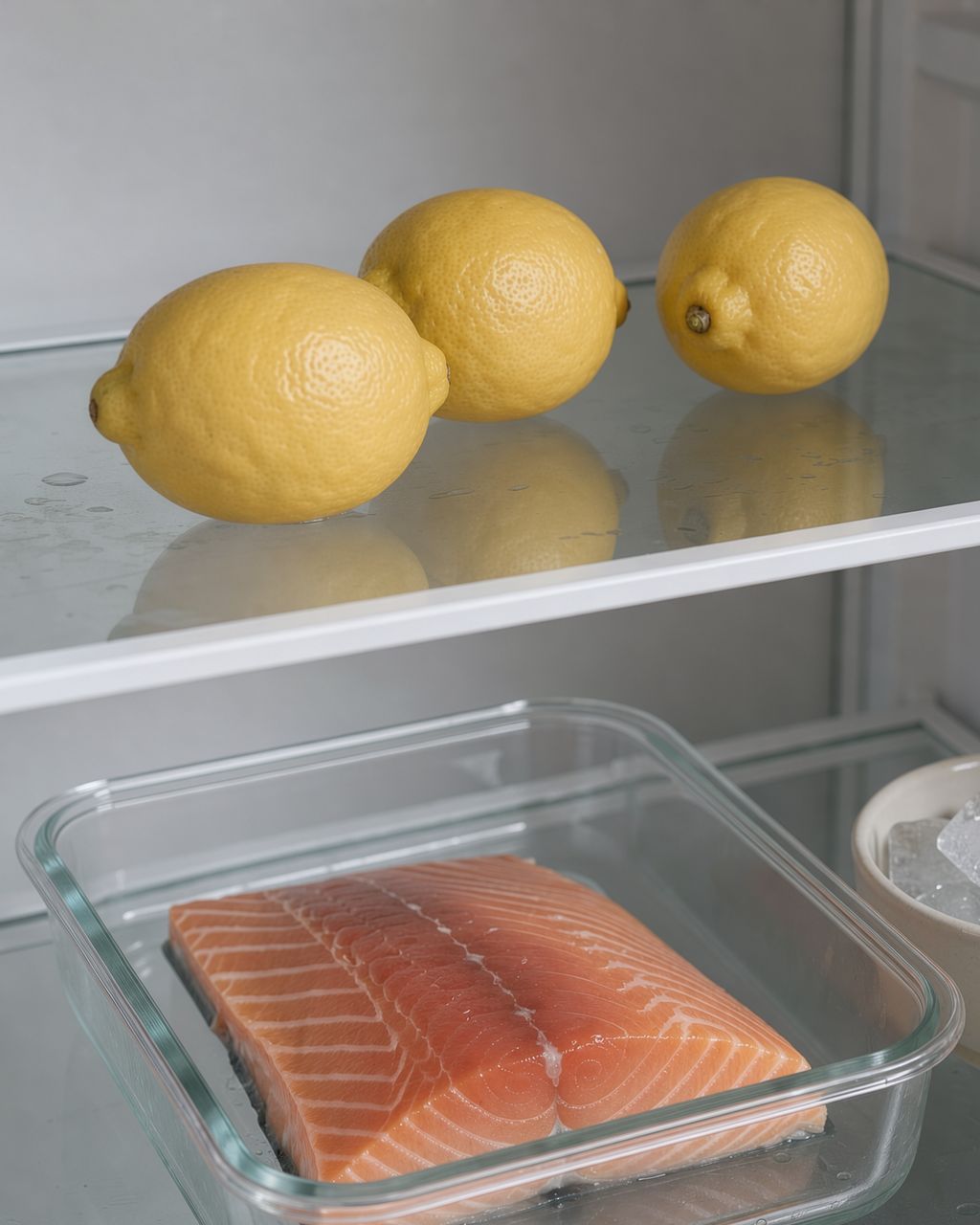
Fresh raw fish keeps in the fridge for 1–3 days (FoodSafety.gov), but ideally bake it within two days of buying it. If you won't get to it, freeze it. In the freezer, lean fish such as cod keeps 6–8 months, and fatty fish such as mackerel or salmon 2–3 months (the same applies to tuna). These are times for keeping quality.
One recipe worth heating the oven for, one tip, and one deal from the shop. Nothing else.