Can You Freeze Cheese? Edam, Parmesan, Hermelín, Blue Cheese, Quark and Mascarpone
Substitutes for Feta, Brynza, Cheddar and Parmesan: Swaps by Saltiness and Melt
Updated Nov 17, 2026
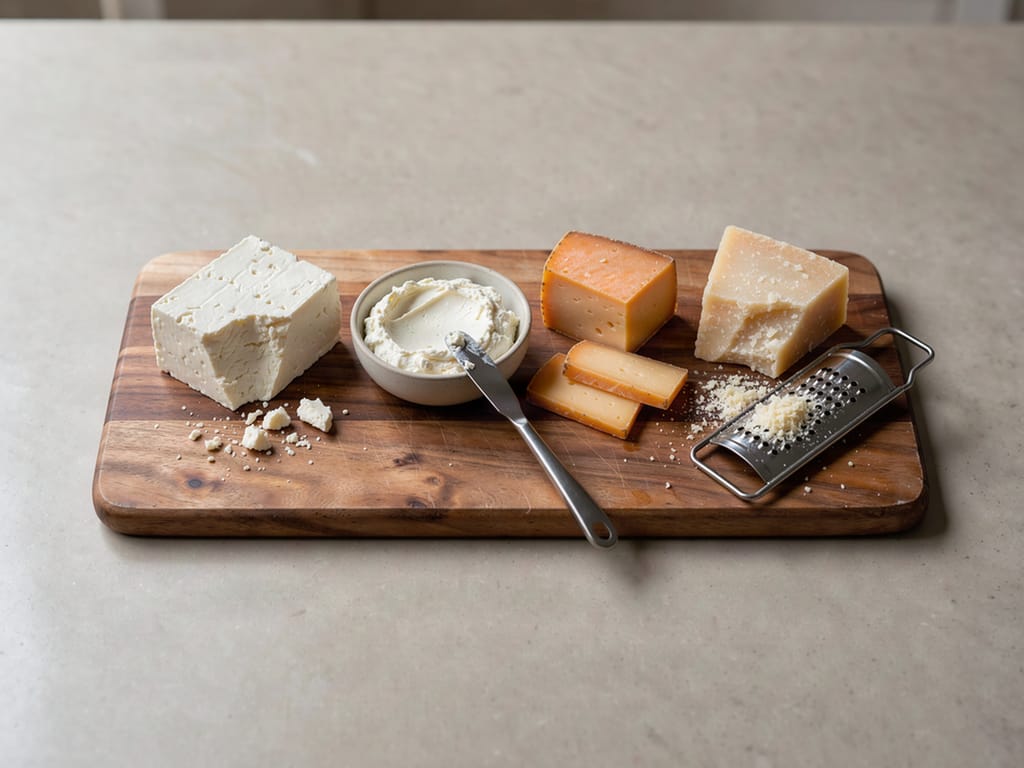
What can you use instead of feta? The closest match is balkánský sýr (a Czech brine-aged white cheese). For brynza in halušky, use quark (tvaroh, a Czech fresh curd cheese) mixed with balkánský sýr. For cheddar, use aged Edam or Gouda, and for Parmesan, grana padano or the Czech Gran Moravia. When choosing a substitute, ignore the name and look at three things: how salty the cheese is, whether it melts, and what its texture is like. They will also help you with a cheese you won't find listed here.
A good cheese substitute matches in three things: saltiness, melt and texture. Country of origin doesn't matter.
Saltiness. Feta, brynza, balkánský sýr and pecorino are distinctly salty, so they season the dish themselves. Quark, cottage cheese and young Edam are bland, so if you use them instead, you'll need to add salt.
Melt. Feta, balkánský sýr and halloumi only warm through and soften in the oven; they won't melt into a pool. Cheddar, Edam, Gouda and Emmental melt into a smooth, stretchy mass. So don't put feta in a sauce, and don't put Gouda in a salad.
Texture. Crumbly cheeses (feta, balkánský sýr, firm quark) can be sprinkled. Spreadable cheeses (brynza, fresh goat cheese) get stirred in. Hard, grainy cheeses (Parmesan, grana) are grated finely.
If a substitute matches in at least two of the three, the dish will turn out well. You can fix the rest with salt, acid or a little cream.
Seasonal baking plans, tested recipes and kitchen tricks that save you time. Unsubscribe in one click.
The best substitute for feta is balkánský sýr. It's a white cheese aged in brine, salty and crumbly, and like feta it doesn't melt in the oven. Bulgarian sirene belongs to the same family. In the Czech Republic these cheeses are usually made from cow's milk, so they taste milder and less sharp than real feta.
In the EU, feta is a protected designation of origin (PDO): only cheese from Greece, made from sheep's milk or a blend of sheep's milk with no more than 30% goat's milk, may be sold as feta. That blend gives feta its typical sharp, slightly gamey flavor. Cow's-milk "salad-type cheeses" may not use the name feta.
Substitutes by use:
In salads: balkánský sýr, sirene or aged goat cheese. If it's too salty, soak it in milk or cold water for 10–15 minutes. It works well in a roasted vegetable salad with feta and in a lentil salad with beets and feta.
In the oven and on the grill: halloumi or balkánský sýr. Halloumi holds its shape even in a pan and browns to golden, but it tastes milkier and has a more "squeaky" texture.
In spreads and fillings: firm quark with a little salt and lemon juice. This imitates the tang and saltiness of feta, though not its crumbliness.
For a milder flavor: ricotta salata, which is pressed, salted and aged ricotta. Fresh ricotta and mascarpone won't stand in for feta; they belong more in Italian desserts with ricotta and mascarpone.
Replace brynza with a mix of quark and balkánský sýr in roughly a 1:1 ratio. Mash it with a fork with a tablespoon or two of cream or milk until smooth and spreadable. The quark adds creaminess and a gentle tang, while the balkánský sýr adds saltiness and a sharper flavor.
Genuine Slovak brynza has protected geographical indication (PGI) status. According to its specification, more than half of it (by dry matter) must be sheep's lump cheese, which is why it is both so distinctive and so creamy. No cow's-milk cheese can fully replace it, but the mix above comes closest to it in halušky.
Tips to make it work:
For halušky, add the substitute to hot, drained halušky and stir right away. The heat melts it into a cream. If it's thick, add a spoonful of the halušky cooking water. Try it in brynza halušky with bacon.
For a stronger sheep's-milk flavor, use sheep's or goat's balkánský sýr instead of the cow's-milk kind, or add a little finely grated pecorino.
For a spread (liptovská), stir butter, ground sweet paprika, finely chopped onion and caraway into the quark and balkánský sýr mixture.
Don't heat it for long. Quark curdles with longer cooking and releases whey. So just stir brynza and its substitute in; don't boil them.
The best substitute for cheddar is aged Edam, Gouda or Emmental, semi-hard cheeses that melt nicely. Young Edam melts well but tastes bland. For cheddar's strong, slightly nutty flavor, reach for a more aged Gouda, Gruyère, or a blend of Edam with a little Parmesan.
The orange color of cheddar comes from the dye annatto (E160b), not from flavor. A pale substitute is therefore no problem. If you want the color, add a pinch of sweet paprika or turmeric to the sauce.
Substitutes by use:
In cheese sauce: aged Gouda, Edam or Gruyère. Grate the cheese finely, take the pot off the heat and add it by the handful. On direct heat the fat separates and the sauce turns grainy. You'll see this best in mac and cheese, American pasta with cheese.
For baking and toasties: Emmental or Gruyère, because they stretch and brown to golden. Gruyère is the traditional choice in croque monsieur, a baked ham-and-cheese sandwich.
In tortillas and quesadillas: Edam or pizza mozzarella (the dry kind, not the one in brine), even as a blend. It's good in a Mexican quesadilla with chorizo and potatoes.
In bakes and savory cookies: aged Edam. It has plenty of flavor and little water, so it won't make the dough soggy.
The best substitute for Parmesan is grana padano or the Czech Gran Moravia. Both are hard, grainy cheeses of the same type, and in risotto, on pasta or in pesto you'll barely notice a difference. According to its consortium, Parmigiano Reggiano ages at least 12 months, while grana padano, by comparison of the two consortia, ages at least 9. Grana is therefore a little milder and cheaper.
Other options:
Pecorino romano is made from sheep's milk and is saltier and sharper. Use about a third less and salt the dish less. Pecorino is the traditional choice for carbonara; see spaghetti carbonara, an Italian classic.
Very aged Edam or Gouda (at least six months old) can be grated and has a strong, slightly caramel flavor. It suits baking; in risotto it's a little greasier.
For risotto, grana or Gran Moravia is enough. You'll find an example in creamy risotto with turkey roulade, spinach and Gran Moravia cheese.
For pesto, use grana or pecorino. If you leave the cheese out entirely, add more nuts and salt, as in wild garlic pesto.
Always grate finely, ideally on a microplane-type grater. Finely grated cheese melts into the hot dish, while coarse pieces clump into strings.
Feta is replaced by balkánský sýr, brynza by quark with balkánský sýr, cheddar by Gouda or Edam, and Parmesan by grana padano. By use, the choices look like this:
Feta in salads: balkánský sýr, sirene, aged goat cheese
Feta in the oven and on the grill: halloumi, balkánský sýr
Brynza in halušky: quark + balkánský sýr 1:1, mixed with cream
Cheddar in sauce: aged Gouda, Edam, Gruyère
Cheddar for baking: Emmental, Gruyère, Edam
Parmesan for pasta and risotto: grana padano, Gran Moravia
Parmesan, when you want a sharper flavor: pecorino romano (use less)
Balkánský sýr is not feta. It's the same type of white cheese aged in brine, but in the Czech Republic it's usually made from cow's milk. Feta has protected designation of origin (PDO) status, so it must come from Greece and be made from sheep's milk, or sheep's milk with no more than 30% goat's milk. That makes balkánský sýr milder and less sharp. It still works very well as a feta substitute, especially in salads and in the oven.
The closest vegan substitute for feta is firm tofu, cubed and marinated in the fridge for at least a few hours in a salty marinade of lemon juice, olive oil and oregano. Feta is crumbly and salty: the tofu mimics the texture and the marinade supplies the flavor. It suits salads. In the oven, tofu only firms up and doesn't soften the way cheese does.
A vegetarian needs a hard cheese made with microbial or plant-based rennet. Parmigiano Reggiano and grana padano don't qualify, because their specifications require calf rennet. Look for "suitable for vegetarians" on the packaging, or check with the producer. Without cheese, nutritional yeast and toasted nuts give a similar salty, umami flavor.
You can mix the brynza substitute in advance and keep it in the fridge in a sealed container. Stir in the cream or milk only right before using, though, or the mixture will thin out and release whey. For how long it keeps, go by the use-by date on the quark, which is the more perishable of the two cheeses.
For a burger, a slice of Gouda, Edam or Emmental works best. Lay it on the patty for the last minute of cooking and cover with a lid so it melts in the steam. Sliced processed cheese melts the smoothest, but it has the mildest flavor. For a stronger flavor, reach for aged Gouda.
One recipe worth heating the oven for, one tip, and one deal from the shop. Nothing else.