Almond nut milk
Updated Aug 27, 2026
Lactose is milk sugar — a disaccharide made of glucose and galactose that forms only in the mammary glands of mammals. Cow's milk contains roughly 4.6–4.9 g per 100 ml, yogurt has 3–4 g, aged Parmesan has virtually none, and powdered milk packs over 40 g. That spread is the whole trick: "dairy product" doesn't automatically mean "high in lactose." Here's how much lactose different foods actually contain, why hard cheese and butter have almost none, where lactose hides outside the dairy aisle, and what "lactose-free" really means on a label.
Lactose is a sugar made of two molecules — glucose and galactose — joined by a bond that only one enzyme in the human body can break: lactase. It's produced exclusively in the mammary glands of mammals. No plant, no meat, no egg contains lactose, which is why "coconut milk" or "almond milk" can never actually contain any, by definition.
As sugars go, it's surprisingly mild. Lactose is only about a fifth to a third as sweet as regular table sugar — which is why milk tastes rich and creamy rather than sweet. This small detail also explains why lactose-free milk tastes sweeter (more on that below).
How much lactose is in milk from different mammals, in grams per 100 ml:
human breast milk: ~7 g – the highest lactose content of any mammalian milk
cow's milk: 4.6–4.9 g – full-fat and skimmed alike, since lactose sits in the watery part and doesn't leave with the fat
goat's milk: ~4.4 g (3.6–5.0 depending on breed) – goat's milk is not a low-lactose alternative, one of the most widespread myths out there
sheep's milk: ~5.0 g (4.7–5.4 depending on breed) – the highest lactose content among common farm milks
In an adult body, lactose doesn't do anything special that another sugar couldn't do: it splits into glucose and galactose and gets burned for energy. It's not essential — but milk also brings along protein, calcium, iodine, and vitamin B12 besides the lactose.
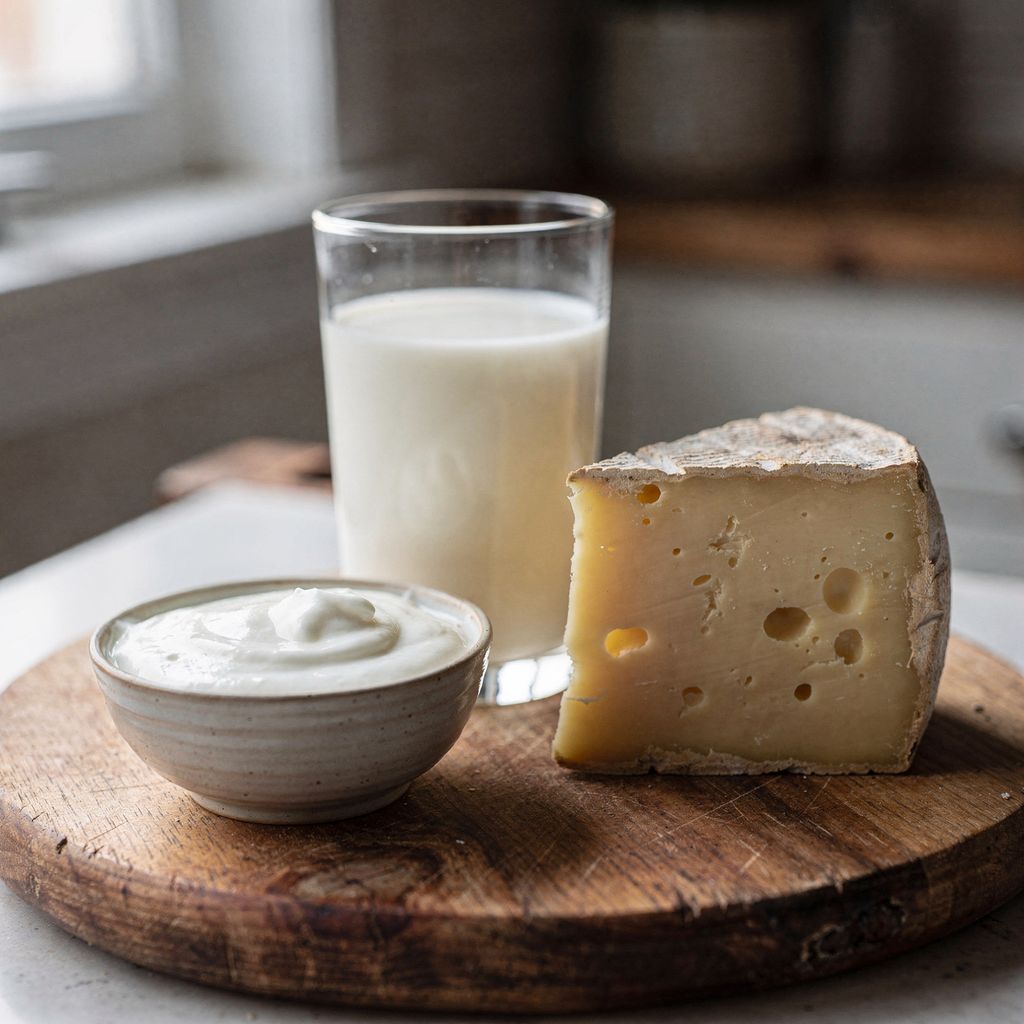
Powdered milk and powdered whey top the charts, with tens of grams of lactose per 100 g. At the bottom are butter, ghee, and aged hard cheeses, which stay under 0.1 g per 100 g. In between sit milk (4.6–4.9 g/100 ml), yogurt (3–4 g), cream and quark (2.5–4 g), and fresh cheeses (0.7–3.7 g).
The figures below are rough ranges pulled from food databases, not exact values for any specific tub or wedge — fresh cheeses and yogurts especially can vary threefold from brand to brand. The label has the final word; more and more manufacturers now list lactose content directly in or under the nutrition table.
Dried dairy products top the list by far: powdered whey at 60–75 g and powdered milk at 36–52 g per 100 g. Next come sweetened condensed milk, milk chocolate, ice cream, and plain milk itself.
Powdered whey: 60–75 g – the single most concentrated lactose source in any kitchen
Skimmed milk powder: 45–52 g, full-fat milk powder: 36–40 g
Sweetened condensed milk: 9–13 g
Milk chocolate: 5–10 g (white chocolate tends to run even higher, since it contains more milk solids)
Ice cream: 3–8 g
Cow's milk: 4.6–4.9 g/100 ml
Buttermilk: 3–5 g
This middle band covers cultured and fresh dairy: yogurt, kefir, quark, cream, and fresh cheeses run roughly 1–4 g of lactose per 100 g, since some sugar leaves with the whey and cultures consume the rest.
Plain yogurt: 3–4 g – live cultures use up some of the lactose right in the tub, which is why yogurt has less lactose than the milk it's made from
Greek strained yogurt: 2–3 g – draining off the whey takes lactose with it
Skyr: 2–4 g – varies quite a bit by brand, so check the label
Kefir: 2–4 g
Whipping cream and sour cream alike: 2.5–4 g
Quark: 2.5–4 g
Fresh cheeses: 0.7–3.7 g – mozzarella lowest, fromage frais/quark-style spreads highest; cottage cheese and ricotta fall in between
Aged and blue-veined cheeses, butter, and ghee are all essentially lactose-free — every one stays under 1 g per 100 g, and most sit well below 0.1 g.
Aged hard cheeses – Parmesan, Emmental, well-aged Cheddar, Gouda, and Edam after several months of ripening: under 0.1 g, down to practically zero for the longest-aged ones
Blue and soft-ripened cheeses – Roquefort-style blues, Camembert, Brie: under 0.1 g, essentially on par with hard cheeses
Butter: roughly 0.1–1 g depending on the source, typically around 0.6 g – in a 10 g pat on bread, that's only hundredths of a gram
Ghee (clarified butter): trace amounts – the watery part, along with its lactose, is removed during clarification
Products labeled "lactose-free": under 0.01 g
An aged hard cheese ends up under 0.1 g of lactose per 100 g because it loses lactose twice over: most of it drains away with the whey, and the dairy cultures consume the rest during ripening. Two rules govern this, and once you know them, you can roughly guess the lactose content of any dairy product without ever checking a table.
1. Lactose dissolves in water, not in fat. During cheesemaking, milk splits into curds (protein + fat) and whey (water + lactose). The whey drains away, taking most of the sugar with it. The same logic explains butter and ghee: the less watery liquid a product contains, the less lactose is left in it. That's why 33%-fat whipping cream has less lactose than milk — and why skimming the fat off milk does nothing to lower its lactose.
2. Bacteria eat it. Dairy cultures convert the leftover lactose into lactic acid — that's the tang you taste in yogurt and cheese. In hard cheeses, this is essentially finished within the first few weeks of ripening, so a fully aged Parmesan or Emmental genuinely has nothing left to offer in the way of lactose. Side note: those crunchy white specks in old Parmesan aren't leftover lactose or salt crystals — they're crystals of the amino acid tyrosine, formed as protein breaks down during long aging.
With yogurt, there's a third factor at play: live cultures themselves contain lactase, the enzyme that breaks down lactose. Fermentation uses up part of the lactose, so yogurt and kefir end up with less lactose than the milk they were made from. (There is an EU-approved health claim for live yogurt cultures — authorized by the European Commission under Regulation (EU) No 432/2012 based on EFSA's scientific opinion — but only products meeting the specified conditions of use may carry it, namely at least 10⁸ CFU of live Lactobacillus delbrueckii subsp. bulgaricus and Streptococcus thermophilus per gram.)
The enzyme lactase, found on the lining of the small intestine, breaks lactose down into glucose and galactose, which then pass into the bloodstream. When there isn't enough lactase, lactose travels through the small intestine intact and reaches the large intestine, where it draws in water osmotically and gets fermented by gut bacteria into gas and fatty acids. That's the source of the bloating, rumbling, cramping, and loose stools.
An important distinction: lactose malabsorption means your body can't break lactose down. Lactose intolerance means it actually causes you problems. These aren't the same thing — plenty of people with malabsorption have no symptoms at all.
A drop in lactase production after weaning is a normal condition worldwide, not a disorder — it affects roughly two-thirds of adults globally. It's noticeably rarer in Europe than in East Asia, though exact percentages vary a lot between sources. The lifelong ability to digest milk comes down to a variant in the regulatory region near the lactase gene, which spread across Europe alongside pastoral farming.
One caveat about the numbers: a published Czech genotyping study (Hubáček, 2017) found lactase non-persistence in 23.6% of Czechs and 73.3% of the Roma population sampled — the high figures that circulate online tend to reflect the second group rather than the general population. Neither sample was randomly drawn, so treat both numbers with some caution.
And dose matters. Per EFSA's opinion on lactose thresholds, most people with malabsorption can handle around 12 g of lactose in a single serving (about a glass of milk) without symptoms or with only mild ones, and more if the amount is spread out over the day. There's no single threshold that applies to everyone, though — sensitivity is individual, and some people react to as little as 6 g.
Lactose intolerance is an enzyme problem — you're short on lactase, and symptoms depend on the dose. A milk protein allergy is an immune reaction to casein and whey proteins, and even trace amounts can trigger it. Intolerance is unpleasant; an allergy can be life-threatening. In the kitchen, the two get mixed up dangerously often.
One practical takeaway worth remembering: lactose-free milk is not safe for someone with a milk protein allergy. Only the lactose has been removed — every protein is still there. For an allergy sufferer, the only real options are plant-based milk or specialized hydrolyzed formulas recommended by a doctor.
There's a third, rarer condition worth mentioning: galactosemia, an inherited disorder of galactose metabolism. It requires strict, medically supervised elimination of lactose and has nothing to do with intolerance.
Lactose gets added to foods as a cheap filler, a flavor carrier, and a browning aid — so you'll find it in places you'd never expect a dairy connection:
cured meats – ham, sausages, cold cuts, and spice blends, where powdered milk works as a filler and stabilizer
bread and sweet baked goods – rolls, biscuits, wafers, doughs, and fatty glazes
instant mixes – soups, sauces, instant mashed potato, dressings, bouillon seasoning
protein powders – whey concentrate has noticeably more than isolate
medications and supplements – lactose is the most common tablet filler
On labels, look for it not just as "lactose" but especially as milk powder, milk solids, whey, whey powder, buttermilk, or milk protein. Allergen labeling only helps halfway here: milk has to be highlighted in the ingredients, but that only flags the presence of milk protein, not the amount of lactose.
What lactose isn't, even though it sounds like it might be:
lactic acid (E270) and lactates (E325–E327) – these form through fermentation and turn up in sauerkraut, sourdough, and purely plant-based products alike
casein, lactalbumin, milk protein – these are proteins, not sugar; they're fine for lactose intolerance (but a major problem for a milk allergy)
coconut, almond, oat, and soy "milk" – plants simply can't make lactose
cocoa butter – despite the name, it has nothing to do with butter or milk
In Czech regulation, the thresholds come from Decree No. 54/2004 Coll., §22: a lactose-free food may contain no more than 0.01 g of lactose (10 mg) per 100 g or 100 ml as consumed, while a reduced-lactose food may contain no more than 1 g per 100 g. It's not a marketing flourish — it's a defined number. (Note: EU-wide labeling follows equivalent thresholds under EU food law.)
There are two ways to make it. Either the enzyme lactase is added to milk, which splits the lactose into glucose and galactose (the sugar itself stays in the milk, just in a different form — which is why the carbohydrate figure on the label doesn't change), or the lactose is filtered out using a membrane. Two things follow from this that you'll actually notice in the kitchen:
It tastes sweeter. Glucose and galactose are both noticeably sweeter than lactose, even in the same quantity.
It browns faster. Free glucose and galactose enter the Maillard reaction more readily than lactose does — studies on powdered whey point the same way. In béchamel, pancakes, caramel, and milk-based baking, dial back the heat or shorten the time, or the crust will darken faster than you expect.
Nutritionally, lactose-free milk is otherwise identical to regular milk: same protein, same calcium, same calories. If you digest lactose just fine, there's no reason to buy it — lower lactose content isn't a health benefit on its own, just a fix for people missing the enzyme.
Plant-based drinks don't all behave the same way — soy is the only one that swaps in for cow's milk one-to-one in baking and sauces, oat is best in coffee and porridge, almond suits smoothies and cereal, coconut works in curries and desserts, and rice milk is the sweetest and lightest of the bunch. Pick based on the job, not just the taste in the glass:
Soy – 3–3.5 g protein per 100 ml, on par with cow's milk. Holds up well in batters, puddings, and béchamel. It can curdle in hot, acidic coffee, so add it gradually or reach for a barista blend.
Oat – naturally sweeter, and thickens and froths beautifully when heated thanks to its beta-glucans. Protein sits around 1 g, so it won't add body to savory sauces.
Almond – thin and light, with under a gram of protein. Great in porridge and smoothies, not so much in a gratin.
Canned coconut milk – the fat in it won't curdle from boiling or acidity. Perfect for curries, soups, and desserts.
Rice – the sweetest and nutritionally thinnest option; free of soy, nuts, and gluten.
One big caveat: homemade plant milk isn't fortified. It has no calcium, vitamin D, or B12, so it can't nutritionally replace a glass of cow's milk — with store-bought versions, check whether they're fortified (usually around 120 mg calcium per 100 ml, similar to milk). Homemade wins on flavor, though, and on knowing exactly what went into it.
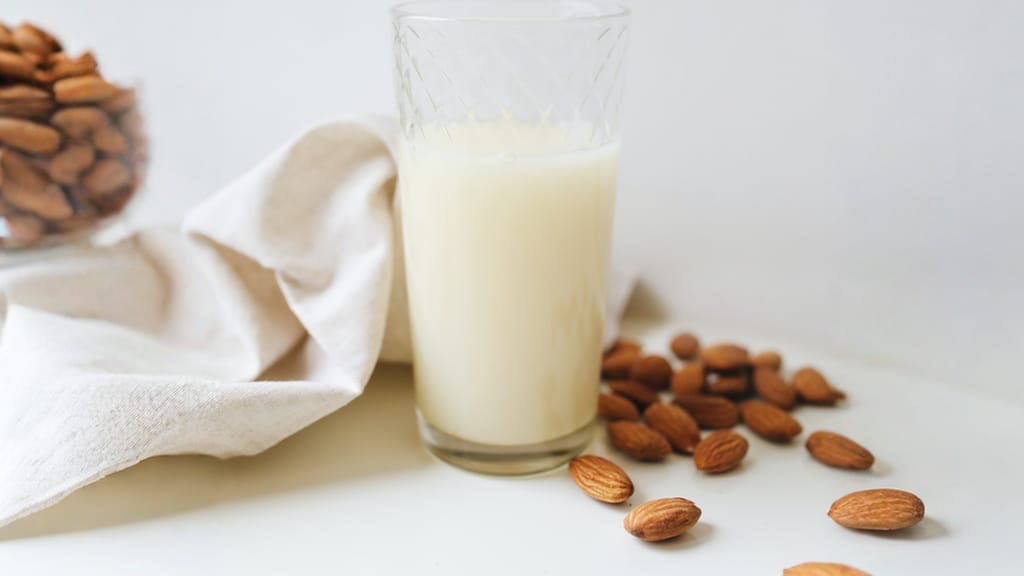
Almond nut milk
Homemade lactose-free almond milk – a gentle plant-based swap for porridge and smoothies
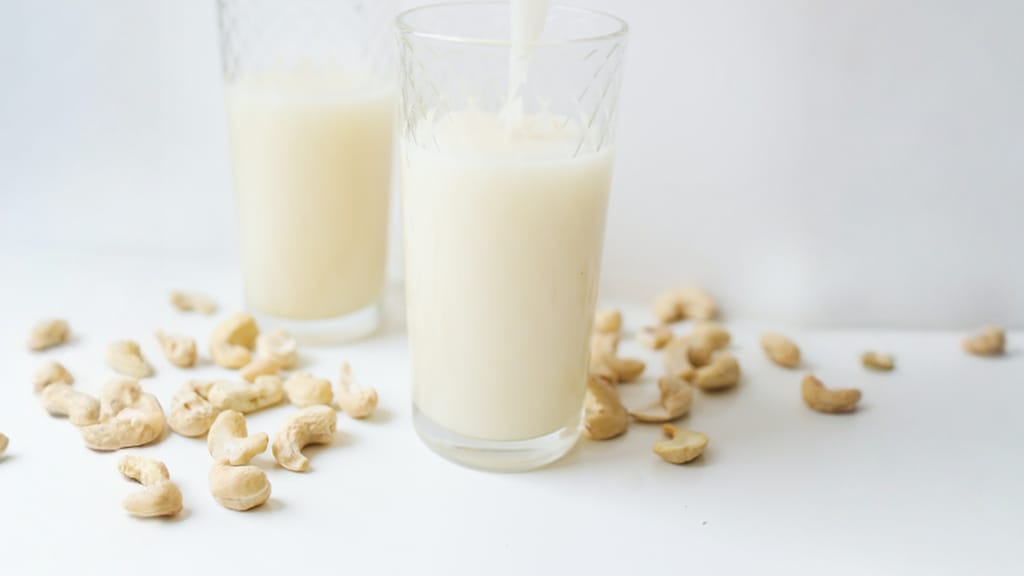
Cashew-coconut milk
Cashew-coconut milk: a creamy, lactose-free plant milk for coffee and desserts
Good news if you can't digest lactose: aged hard cheeses have next to no lactose (under 0.1 g per 100 g) while also being one of the richest everyday sources of calcium — Parmesan has around 1,200 mg per 100 g, versus about 120 mg in 100 ml of milk. The reference calcium intake shown on labels is 800 mg a day, so cutting out milk without replacing it elsewhere leaves a real gap in your diet.
Approximate calcium content per 100 g:
poppy seeds: ~1,400 mg – one of the densest calcium sources around, and a pantry staple in Czech cooking
Parmesan, Emmental: 1,000–1,200 mg (with under 0.1 g of lactose)
unhulled sesame seeds: ~900 mg
tahini: ~200–430 mg depending on whether it's made from hulled or unhulled seeds
sardines with bones: ~380 mg
tofu set with calcium salts: 200–350 mg (varies by brand — check the ingredients for calcium sulfate (E516) or calcium chloride (E509))
almonds: ~250 mg
broccoli, kale, pak choi: 45–150 mg – not much per gram, but easy to eat often and in large portions
fortified plant-based drinks: ~120 mg per 100 ml
Don't forget water: harder mineral waters can carry tens to hundreds of milligrams of calcium per liter, and it adds up over a day. The figure is usually printed right on the label.
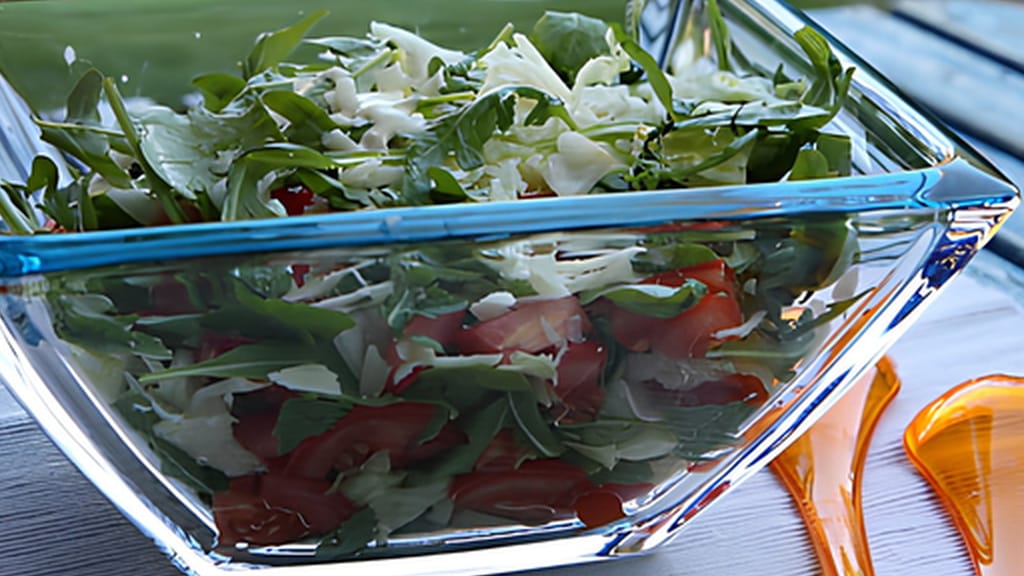
Arugula salad with tomatoes and parmesan
Arugula, tomato, and Parmesan salad – an aged cheese with under 0.1 g lactose and around 1,200 mg calcium per 100 g
You can lower the lactose in your cooking with four moves: reach for aged cheese instead of processed cheese, swap milk for cream or lactose-free milk (not skim), count lactose across the whole meal rather than per ingredient, and don't count on heat to break it down. In detail:
Reach for aged cheese instead of processed cheese. Processed cheese and cheese sauces are typically bulked up with milk solids, so they end up with more lactose than the hard cheese they're made from. For gratins, pasta, and cheese toast, grated aged cheese works better anyway — and melts more cleanly.
Swap milk for cream or lactose-free milk, not skim. Skimming the fat doesn't lower lactose by even a tenth of a gram; only removing the watery part does that.
Track the total for the meal, not just one ingredient. Milky coffee, a pot of yogurt, and a bit of milk chocolate are each small on their own, but together they can easily add up to over 15 g of lactose.
Don't count on cooking to get rid of it. Boiling, baking, or long simmering won't break lactose down — reducing a sauce actually concentrates it further.
In baked goods and desserts, the lactose per serving is often low even when the batter contains yogurt or milk, because a single pot of yogurt gets spread across a whole tray. A moist yogurt cake with fruit or a yogurt-dough pizza can work out to under a gram per slice — and they perform just as well with lactose-free yogurt, though the crust will brown a touch faster.
According to EFSA's opinion, most people with lactose malabsorption can handle roughly 12 g of lactose in a single serving without symptoms, or only mild ones — and more over a full day if it's spread across several servings. In practical terms: a glass of milk (250 ml) has 11–12 g, a pot of plain yogurt (150 g) has 4.5–6 g, a splash of milk in coffee (30 ml) has 1.4 g, a slice of aged Edam or Parmesan (30 g) has under 0.03 g, and a tablespoon of butter on toast (10 g) has about 0.07 g. There's no universal threshold, though — some people react to as little as 6 g, and the only way to find your own limit is to test it yourself, ideally after ruling out other causes with a doctor.
No, heat doesn't break lactose down. Scalded milk, a pound cake, or hot chocolate all contain just as much lactose as went into them, and if you reduce a sauce by boiling off water, the lactose actually becomes more concentrated. Lactose only goes down through three routes: fermentation (yogurt, kefir, cheese ripening), draining off whey (hard cheeses, strained yogurt), or adding the enzyme lactase to make a lactose-free product.
Usually not exactly — listing the precise lactose content isn't mandatory, so manufacturers who do it are doing so voluntarily, typically as an "of which lactose" line under carbohydrates. Your best clue is the ingredients list: if powdered milk, milk solids, or whey appear near the top, there's more lactose in the product than if they're near the bottom. A highlighted "milk" allergen simply flags the presence of milk protein — it says nothing about lactose content. Only two label claims come with defined numbers: "lactose-free" (no more than 0.01 g per 100 g) and "reduced lactose" (no more than 1 g per 100 g).
Yes, but it depends on the type of powder: whey protein concentrate (WPC) typically has a few grams of lactose per 100 g in WPC80, while lower-protein concentrates like WPC35 can have far more — easily 45–50 g. The number in the name is the giveaway. Isolate (WPI) usually stays under 1 g, and hydrolysate is even lower. So a standard 30 g scoop of WPC80 works out to roughly 1–2 g of lactose, while an isolate scoop is more like a fraction of a gram. Micellar casein and plant proteins (pea, rice, soy) contain no lactose at all.
Often, yes — lactose is the most common filler in tablets and capsules, and it's listed in the ingredients on the package leaflet. The amount per tablet, though, is usually just milligrams to tenths of a gram, well below what most people with malabsorption would even notice. If you take a lot of pills or you're highly sensitive, ask your pharmacist about a lactose-free version.
One recipe worth heating the oven for, one tip, and one deal from the shop. Nothing else.