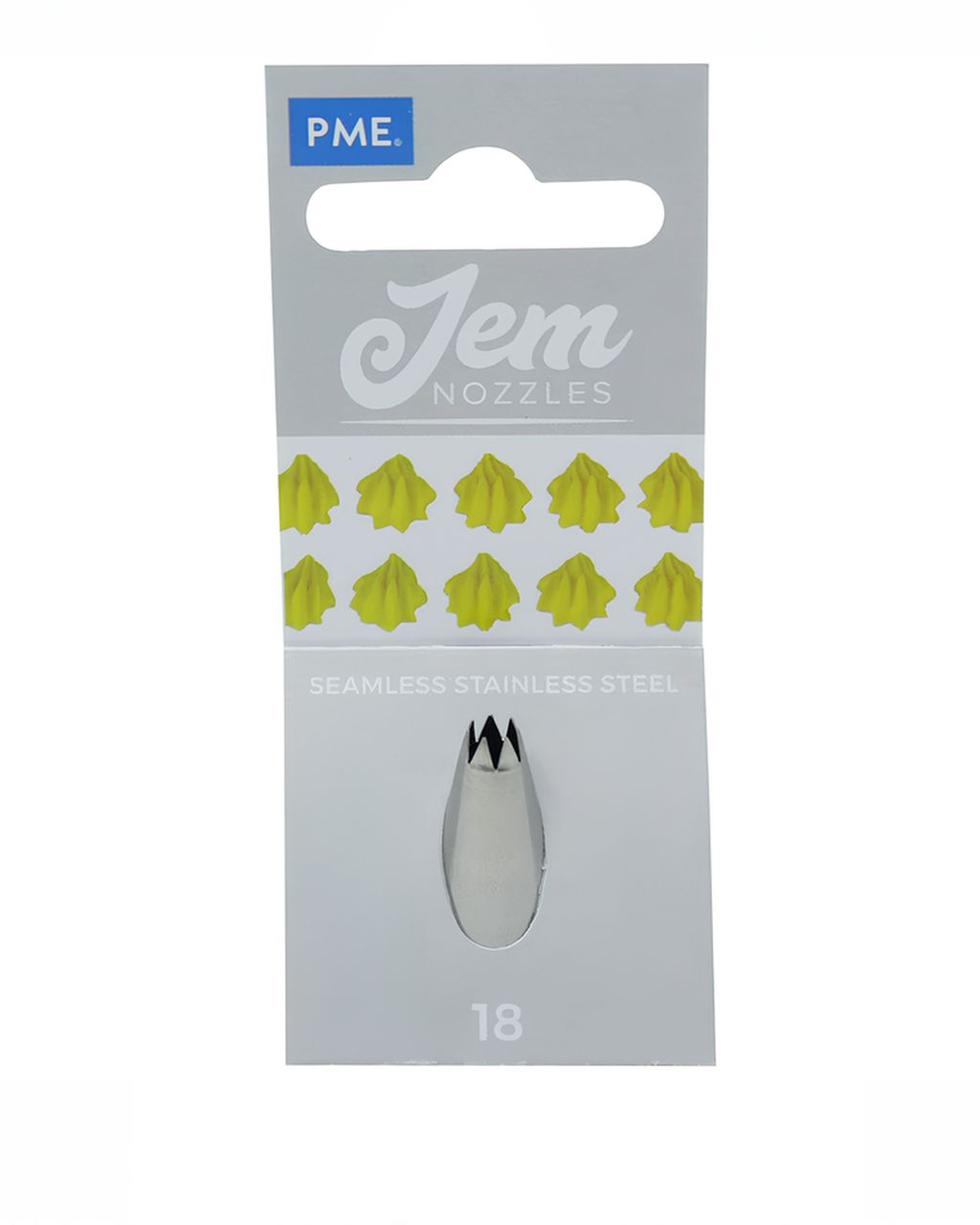
JEM Piping Tip – Open Star #18
Spritz Cookies Without a Cookie Press: How to Pipe Them So the Pattern Holds
Updated Nov 2, 2026
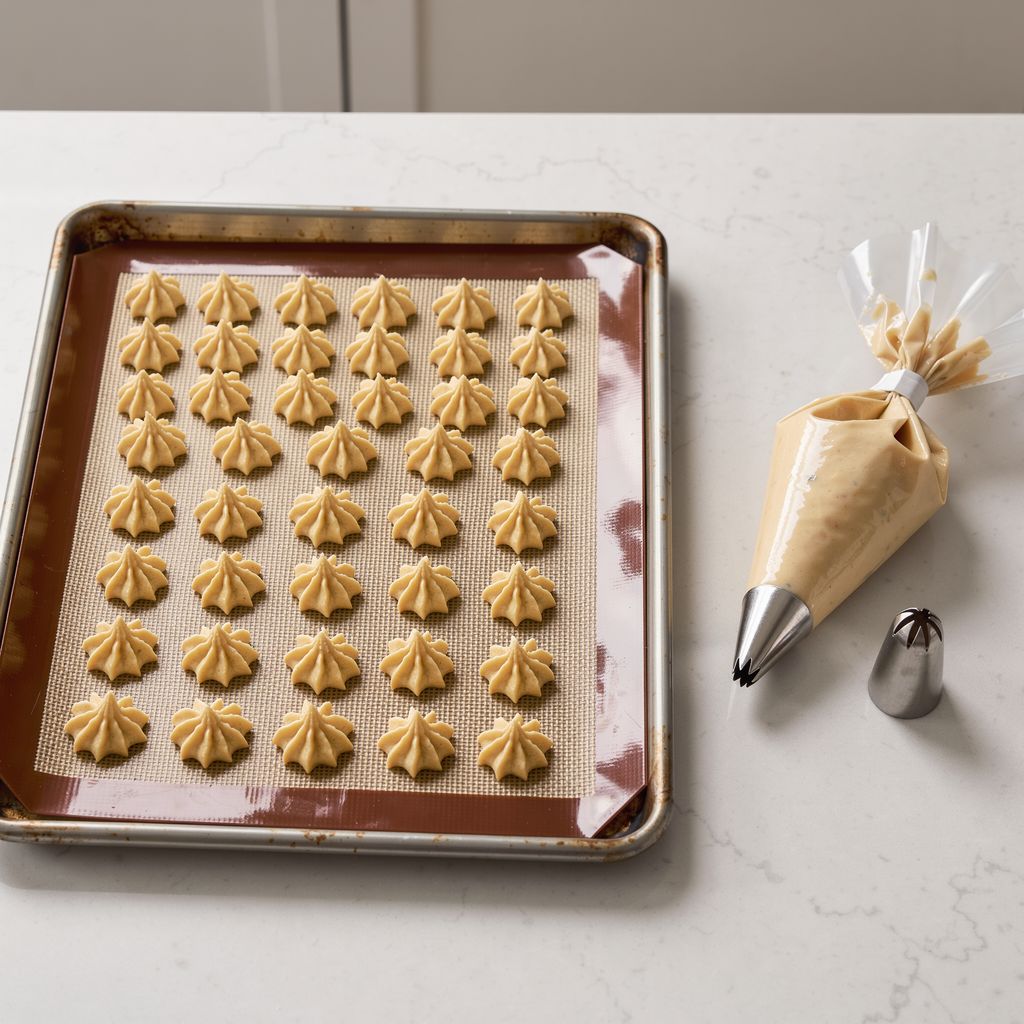
You can make spritz cookies without a cookie press, using a piping bag and a large open star tip. The dough has to be creamed and soft enough to push through, yet stiff enough to hold its ridges, and you chill the piped cookies before baking. Below you'll find which doughs can be piped (butter spritz, creamed shortbread), how to judge the consistency, which tip to use, what to pipe onto, and why the pattern spreads in the oven.
Yes: you can pipe spritz cookies without a cookie press, using a piping bag with a large star tip, and the ridges turn out just as well. A press forces the dough through a disc; a bag with a tip does the same thing, you just push with your hand.
A piping bag has one advantage over a press and two limitations:
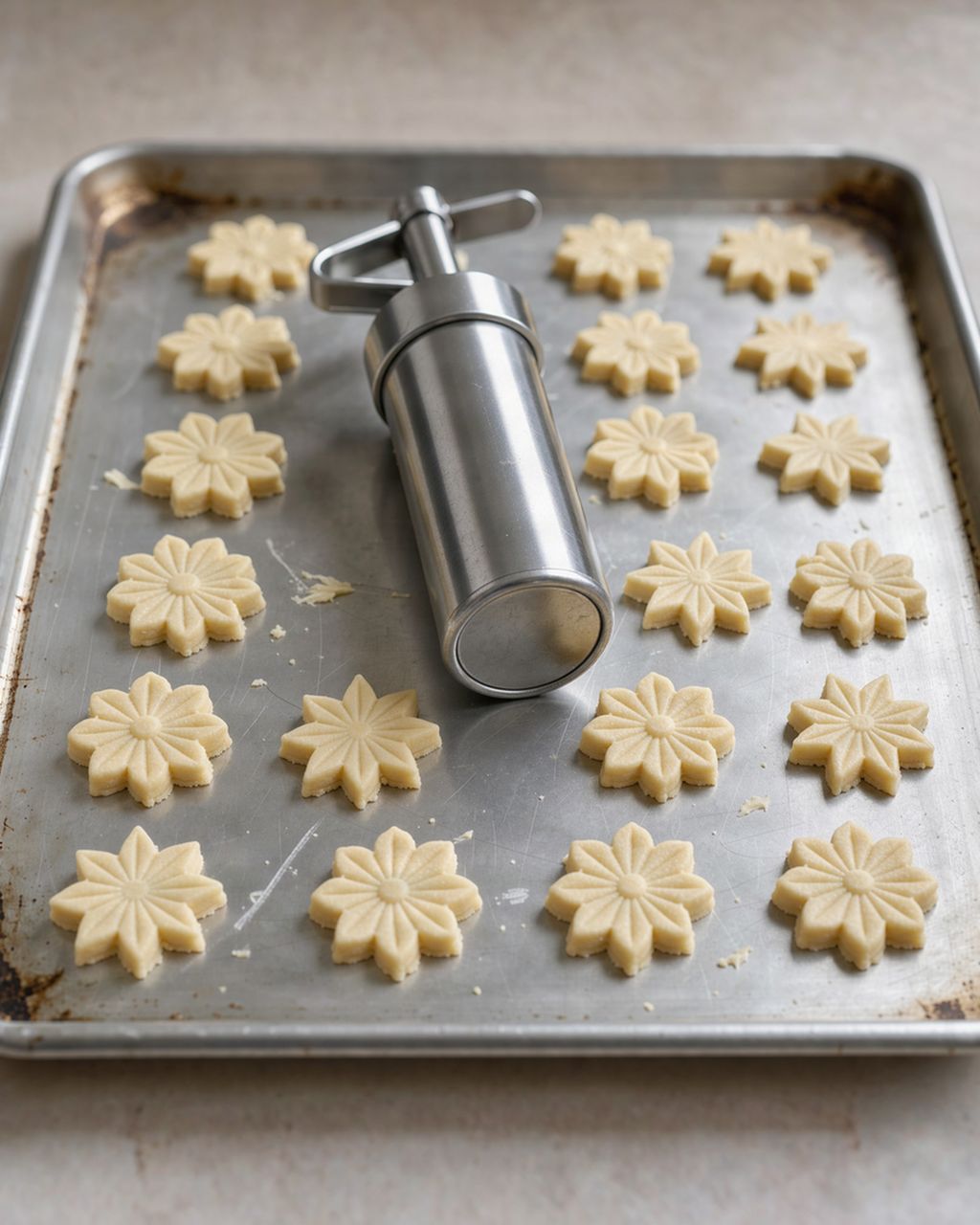
More shapes. A press mainly makes sticks and S-shapes. A bag also makes flowers, rosettes, wreaths and shells.
Limitation: softer dough. A press can handle stiffer dough, while a bag needs it a touch softer, so consistency is the main thing to get right (see below).
Limitation: hand strength. Creamed dough is dense, so pipe in smaller batches and use a sturdy bag.
If you do own a press and want lots of sticks, see our article on cookie dough for a cookie press.
Seasonal baking plans, tested recipes and kitchen tricks that save you time. Unsubscribe in one click.
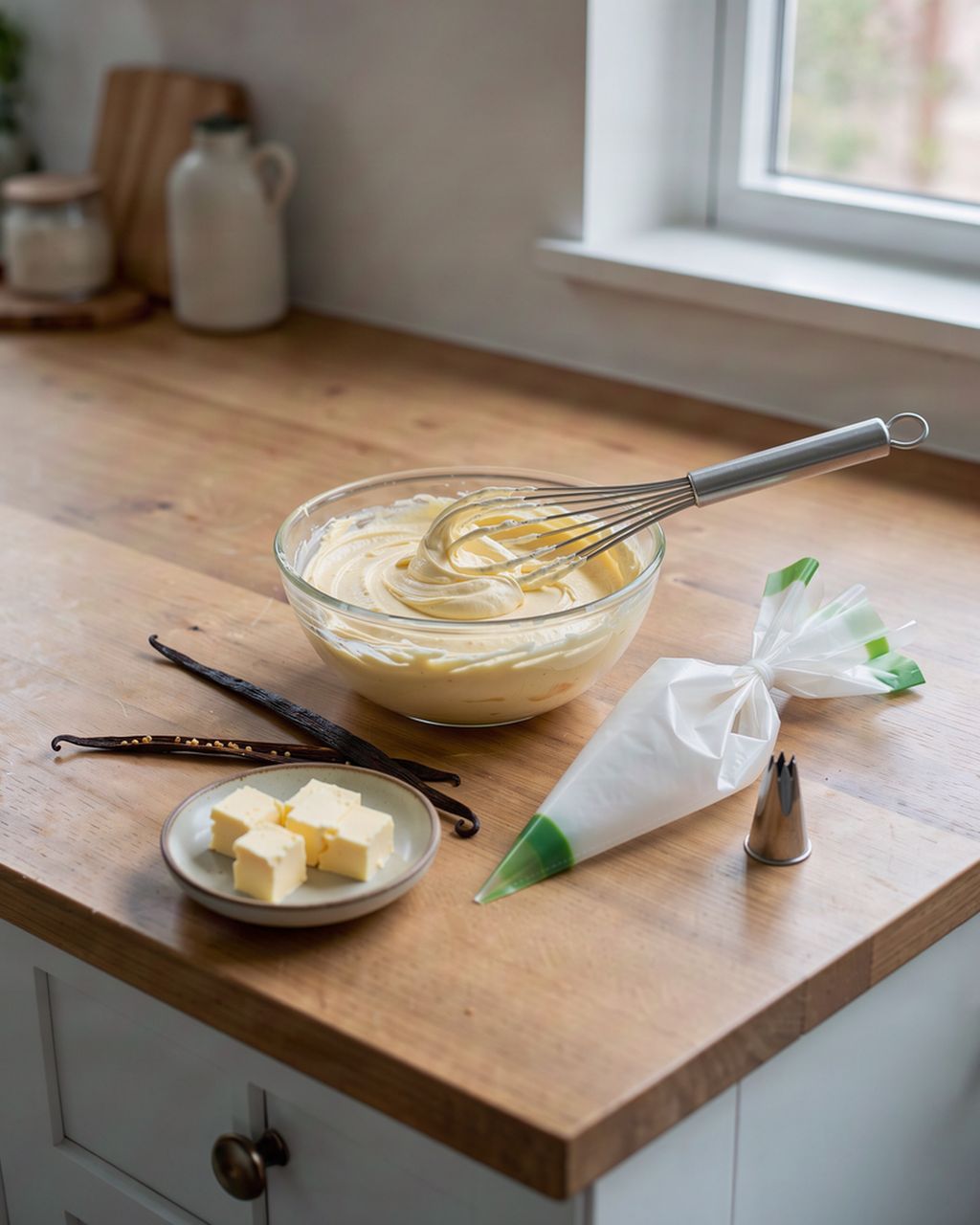
Only creamed dough can be piped: softened butter creamed with sugar, plus an egg white or egg and flour. Classic shortbread dough made by rubbing in cold butter is too stiff for a bag. That's why recipes use two names for almost the same thing:
Butter spritz cookies are a creamed butter dough with no raising agent. They hold their ridges and bake up tender and buttery.
Creamed shortbread is shortbread that's creamed instead of kneaded: the butter is softened, creamed with icing sugar, and an egg yolk or egg is added. The dough is softer and can be piped from a bag.
Kneaded shortbread (3 parts flour, 2 parts butter, 1 part sugar, made with cold butter) is rolled out and cut. Don't try piping it; it tears in the tip. For how to work with it, see 3:2:1 shortbread dough.
All three doughs have one thing in common: the butter makes them tender, so they need no baking powder, which would blur the pattern.
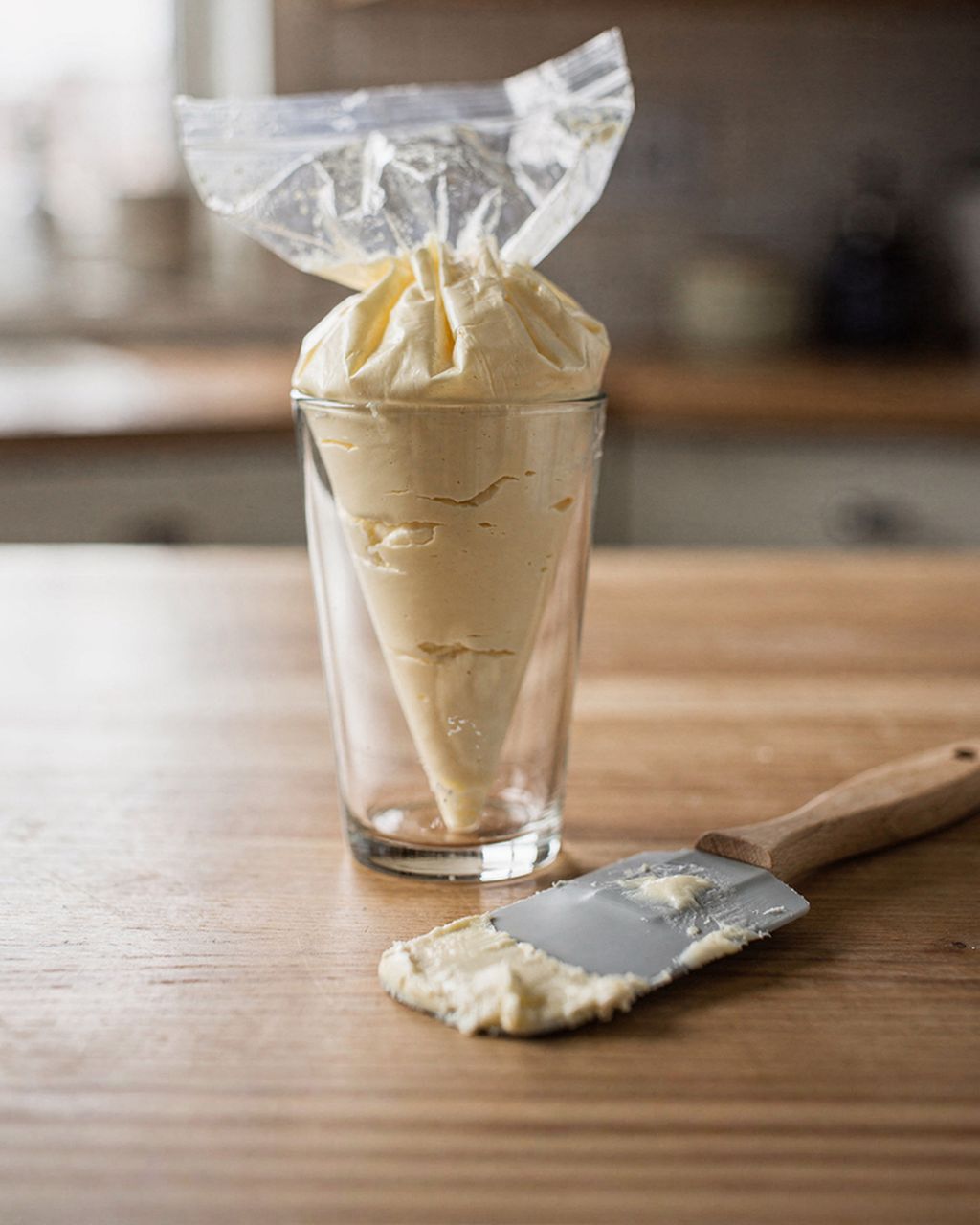
Good spritz dough has the consistency of thick frosting: you can push it through the tip with a firm squeeze of your whole palm, but the piped mound doesn't slump and the sharp edges of the ridges stay standing.
Quick test: pipe one flower onto a plate and leave it for a minute. If the edges round off and the flower spreads outward, the dough is too soft or too warm. If it tears, breaks in the tip or you can't push it through, it's too stiff.
What affects the consistency:
Butter temperature. The butter should be softened, around 18–20 °C (64–68 °F): a finger leaves a dent but doesn't sink in. Melted or greasy butter is the most common reason the pattern disappears.
Don't cream until fluffy. For creamed cake batters you want butter and sugar beaten light and airy. Not here: the air you whip in expands in the oven and smears the ridges. Just cream the butter and sugar until smooth, 1–2 minutes.
Icing sugar, not granulated. Icing sugar dissolves, so the dough is fine and the edges sharper. Granulated sugar makes the dough grainy and the cookies spread more.
No baking powder. A raising agent puffs the cookies up and blurs the pattern. Creamed cookies don't need it; the butter makes them tender.
Egg white or whole egg. The white gives a firmer, sharper shape; the yolk adds flavour but softens the dough. If your recipe uses a whole egg and the cookies spread, try just the white next time.
Adjust by the spoonful. Dough too soft → add 1 tablespoon of plain flour and mix it in. Too stiff → add 1 tablespoon of milk or lukewarm butter. Never chill the dough in the bowl before putting it in the bag: cold dough can't be piped and the bag will burst.
The butter-to-flour ratio in creamed cookies is usually about 1 : 1.2 to 1 : 1.4. More flour = holds its shape but is harder and tougher to pipe; less flour = more tender but spreads. The same rules apply to other butter doughs; we cover them in detail in why shortbread spreads when it bakes.
For spritz cookies, use a large open star tip (for sticks, S-shapes, wreaths and shells) or a drop flower tip, which makes a flower in a single squeeze. A small tip with narrow teeth is no match for dense dough: you push with all your might and the teeth clog.
An open star has straight, widely spaced teeth, so it makes deep, clear ridges. The JEM Open Star decorating tip #18 (opening about 6.5 mm) suits smaller sticks and S-shapes; for larger pieces, choose a wider star.
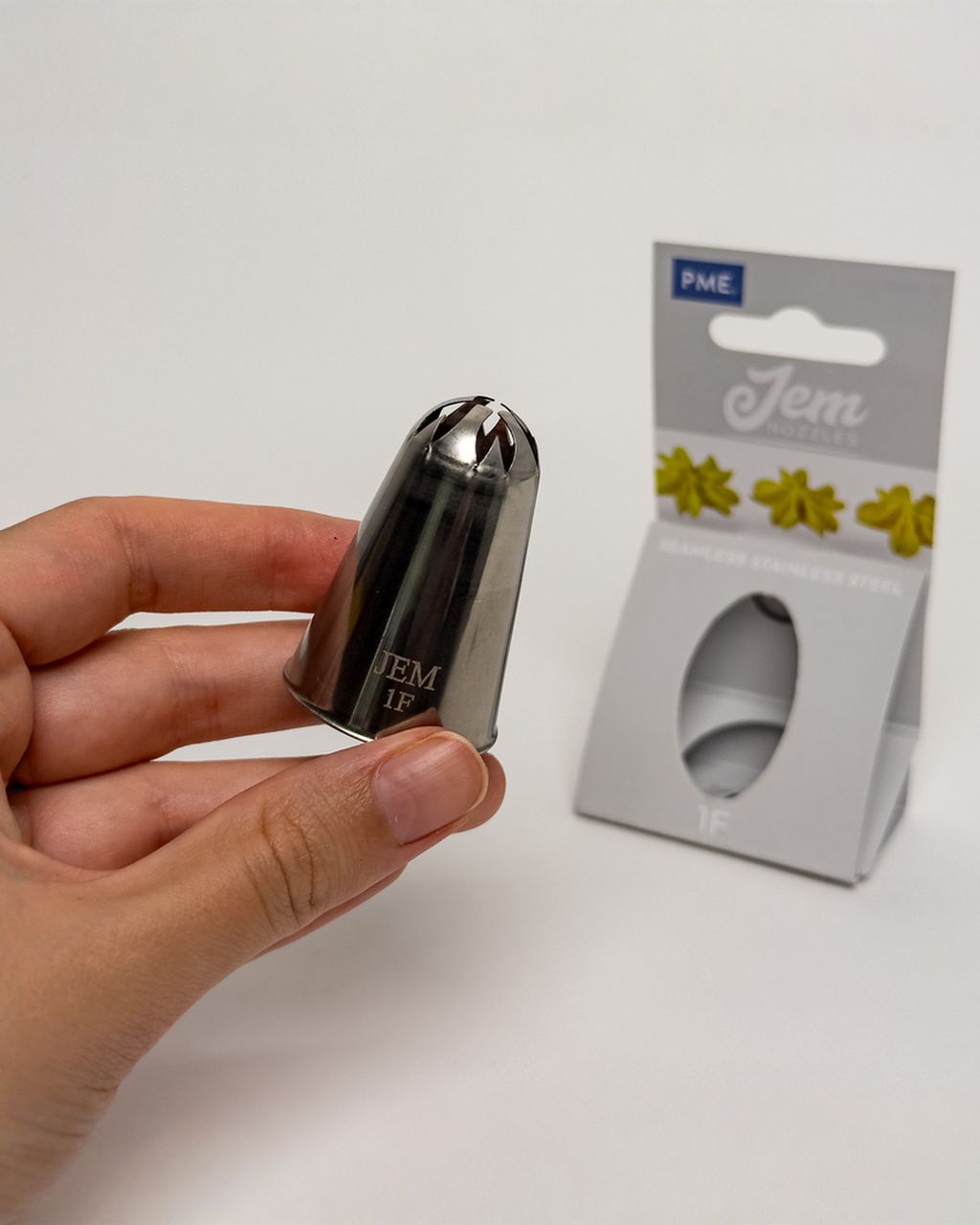
A drop flower tip has teeth curled inward: squeeze, give it a twist, and you get a flower that looks as if it came from a mould. The JEM Drop Flower #1F decorating tip (large flowers) makes big flowers that look the most like classic spritz.
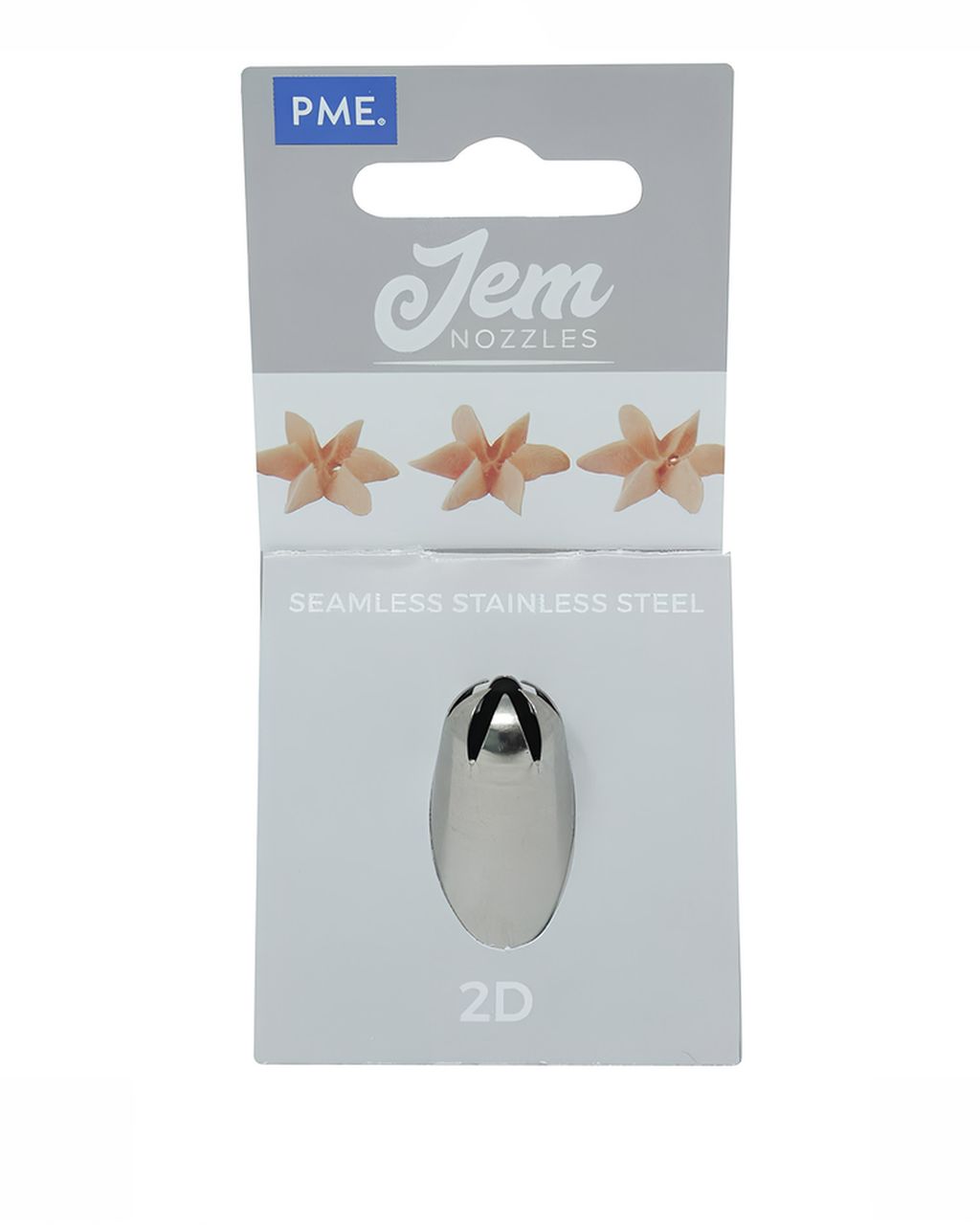
The JEM Drop Flower #2D decorating tip is a large closed star for dense rosettes. It makes finer, deeper grooves, but it's hard going with stiff dough. It suits softer creamed dough; with dense dough, reach for the #1F or #18 instead.
Metal, not plastic. A plastic tip can stretch under the pressure of dense dough, and the pattern loses its sharpness.
You'll find more shapes among the decorating tips. For how tips differ when working with cream, see Cake decorating tips: which one for what. The same shapes work with dough, but you need more force and a larger opening.
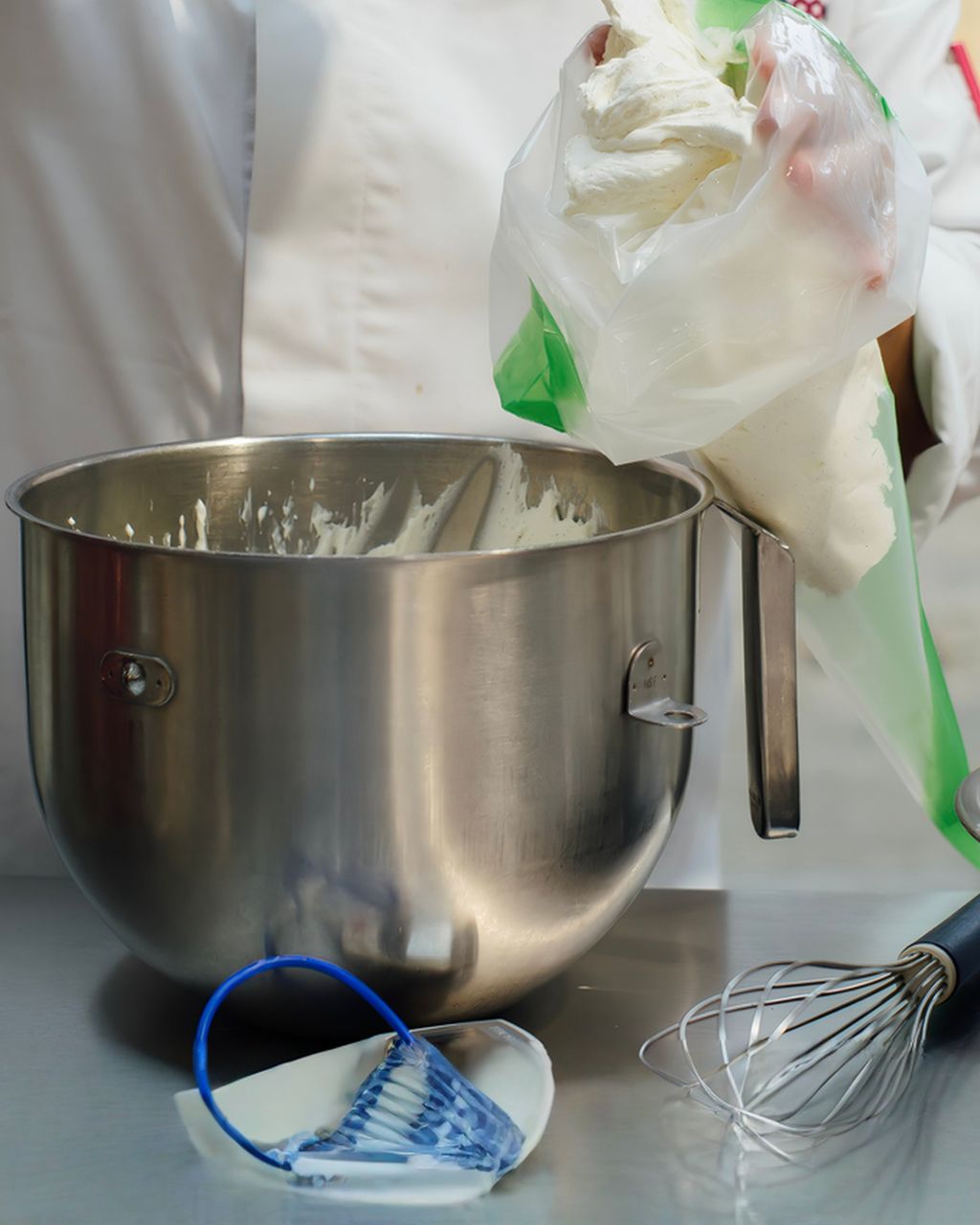
For spritz cookies, choose a large, sturdy piping bag — about 45 cm (18 in) — and fill it only halfway. A small bag needs constant refilling, and a thin disposable one splits at the seam.
Size: 46x26 cm piping bags leave enough room to twist the top and squeeze with your whole palm rather than your fingers.
Fill it halfway. A full bag is hard to control, and the dough softens from the heat of your hand. Two smaller batches are quicker than one giant one.
A cloth bag is sturdier and lasts longer, but it soaks up butter from the dough: after each bake, wash it in hot water with dish soap and let it dry completely, or it will turn rancid and smell. A disposable bag goes in the bin after use.
If the bag keeps splitting: put one disposable bag inside another. The double wall holds dense dough.
Cut the opening precisely. About two-thirds of the tip should stick out of the bag. If you cut too much off, the tip pops out just when you're pushing hardest.
Spritz cookies pipe best onto a silicone mat or a bare baking tray, because the dough grips them and stays put when you lift the tip away. Parchment paper slides around with the dough, and the flower gets pulled off with it.
The comparison, plainly:
Parchment paper — slippery, the dough doesn't stick and comes away with the tip. Stuck down at the corners with a dab of dough it helps a little, but it's still the worst choice for flowers.
A bare, ungreased tray — the traditional choice for spritz cookies, and the dough grips very well. You just have to lift the cookies off carefully after baking and wash the tray.
A smooth silicone mat — the dough grips, the cookies release on their own, and it washes easily.
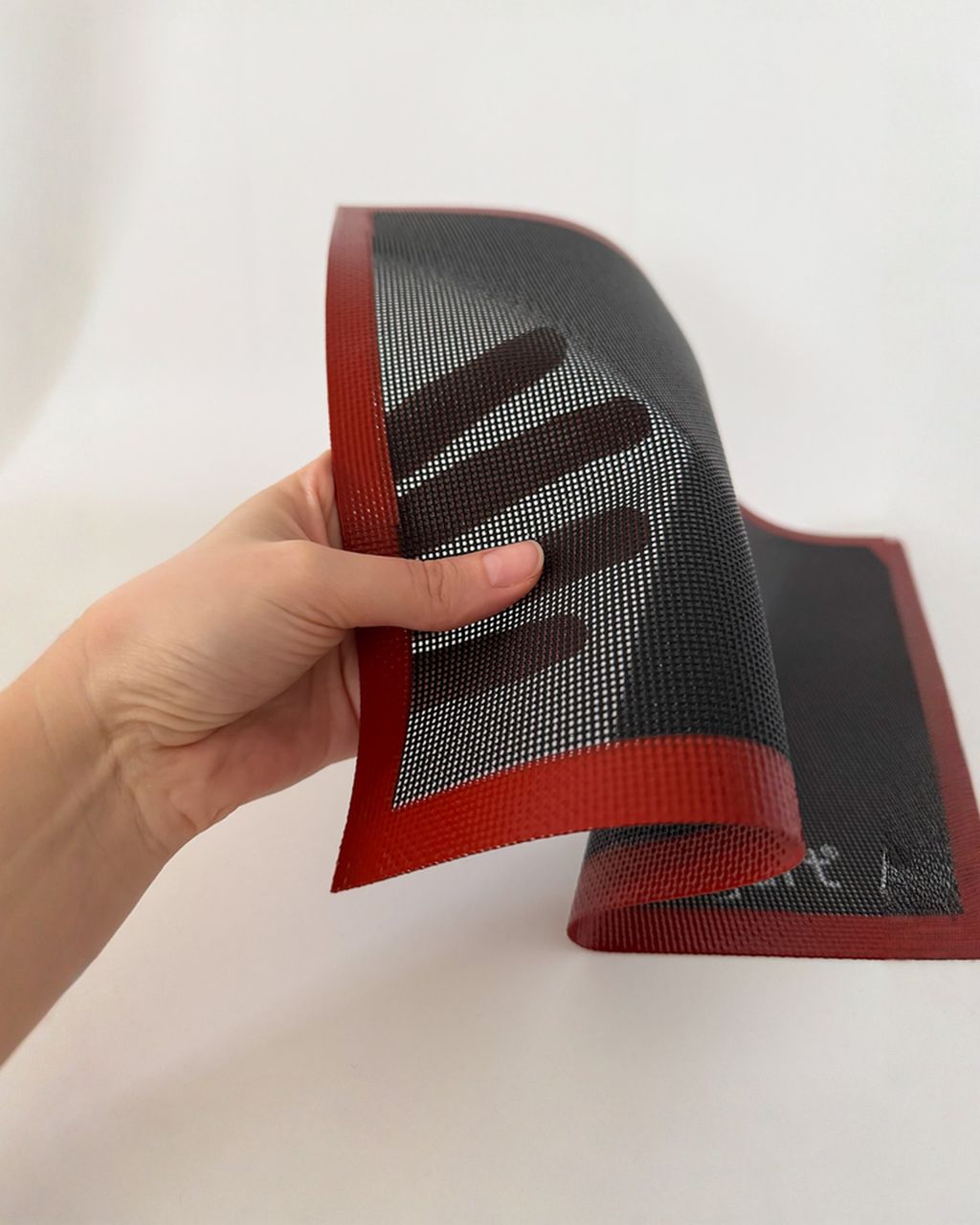
A perforated silicone mat — grips the dough just like a smooth one, and thanks to its tiny holes, hot air also reaches the underside: the bottoms bake evenly and stay crisp instead of overbaking. A perforated silicone baking mat pays off when you bake tray after tray.
Don't grease the tray. No butter or oil belongs under the dough — the flower would slide and melt in the oven. The butter in the dough is enough to let the cookies release.
Pipe spritz cookies with the bag held straight up and down over the tray, with the tip about 1 cm above the mat, and at the end release the pressure first, and only then lift the tip away. If you pull before releasing, you tear off the peak and distort the cookie.
Flowers (drop flower tip): squeeze, let the dough spread to about 3 cm wide, release, and lift straight up. A quarter-turn of the wrist as you go gives a swirled flower.
Sticks and S-shapes (open star): hold the tip at a 45° angle and pipe in one smooth stroke, 5–6 cm long.
Wreaths: pipe a circle about 4 cm across, finish by crossing over the start, and release the pressure.
Spacing: leave 2–3 cm between pieces. Good creamed cookies don't spread much, but a bit of room helps the air circulate.
Same size = same bake. Small pieces burn before large ones are done. Draw circles on paper and slide it under a transparent mat, or count "one-two" with every squeeze.
The dough in the bag softens from the heat of your hand. When the ridges start to lose their edges, set that bag aside for 5 minutes and pick up a second one.
Put the piped cookies in the freezer for 15 minutes or the fridge for 30 minutes, because firm butter melts later in the oven — by which point the dough has started to set and the ridges stay sharp. Warm butter spreads before the dough can set, and the pattern disappears.
So the order is the opposite of what you'd expect: pipe warm, bake cold. You chill the dough only once it's piped onto the tray, never beforehand in the bowl.
In practice:
Pipe straight onto a mat or tray that fits in your freezer. While one tray chills, pipe the next.
Put the cookies into a preheated oven straight from the freezer. Don't wait for them to warm up on the counter.
Bake at 170–180 °C (340–355 °F) for about 10–12 minutes, until the edges turn lightly golden. For a fan oven, go 10 °C lower. Dark brown edges mean a bitter taste.
Leave the cookies on the tray for 5 minutes to firm up, then move them to a rack. Warm, they're very fragile and break.
The pattern almost always disappears for one of three reasons: the dough was warm, it had too much air in it, or it contains a raising agent. For a quick diagnosis:
Flowers spread into flat discs → the butter was too soft, or the piped cookies weren't chilled. Put the next tray in the freezer for 15 minutes.
Ridges are shallow and rounded → the dough is too soft. Mix in 1–2 tablespoons of plain flour.
Cookies puffy, with bubbles → the butter and sugar were creamed too long, or the recipe contains baking powder.
The dough won't push out, the bag splits → the dough is too stiff or too cold. Let it sit at room temperature for a while, or mix in a tablespoon of milk.
The dough tears in the tip and the pattern looks ragged → it's too dry or has large pieces of nuts. Grind nuts for piped dough finely, in short pulses so they don't release oil.
Dark bottoms, pale tops → the tray is too low in the oven, or you're baking on a dark tray. Move it up a shelf, or use a perforated mat.
For chocolate, nut or two-tone spritz cookies, swap out part of the flour in the basic creamed dough rather than adding something extra — otherwise the consistency changes and the pattern spreads.
Chocolate: replace 20–30 g of the flour with the same weight of cocoa. Cocoa absorbs more liquid, so the dough may need a tablespoon of milk.
Nut or almond: replace 50–80 g of the flour with finely ground nuts. Don't add more; the fat in the nuts softens the dough.
Two-tone: fill one bag with light and chocolate dough side by side (each on one side). The flowers come out marbled.
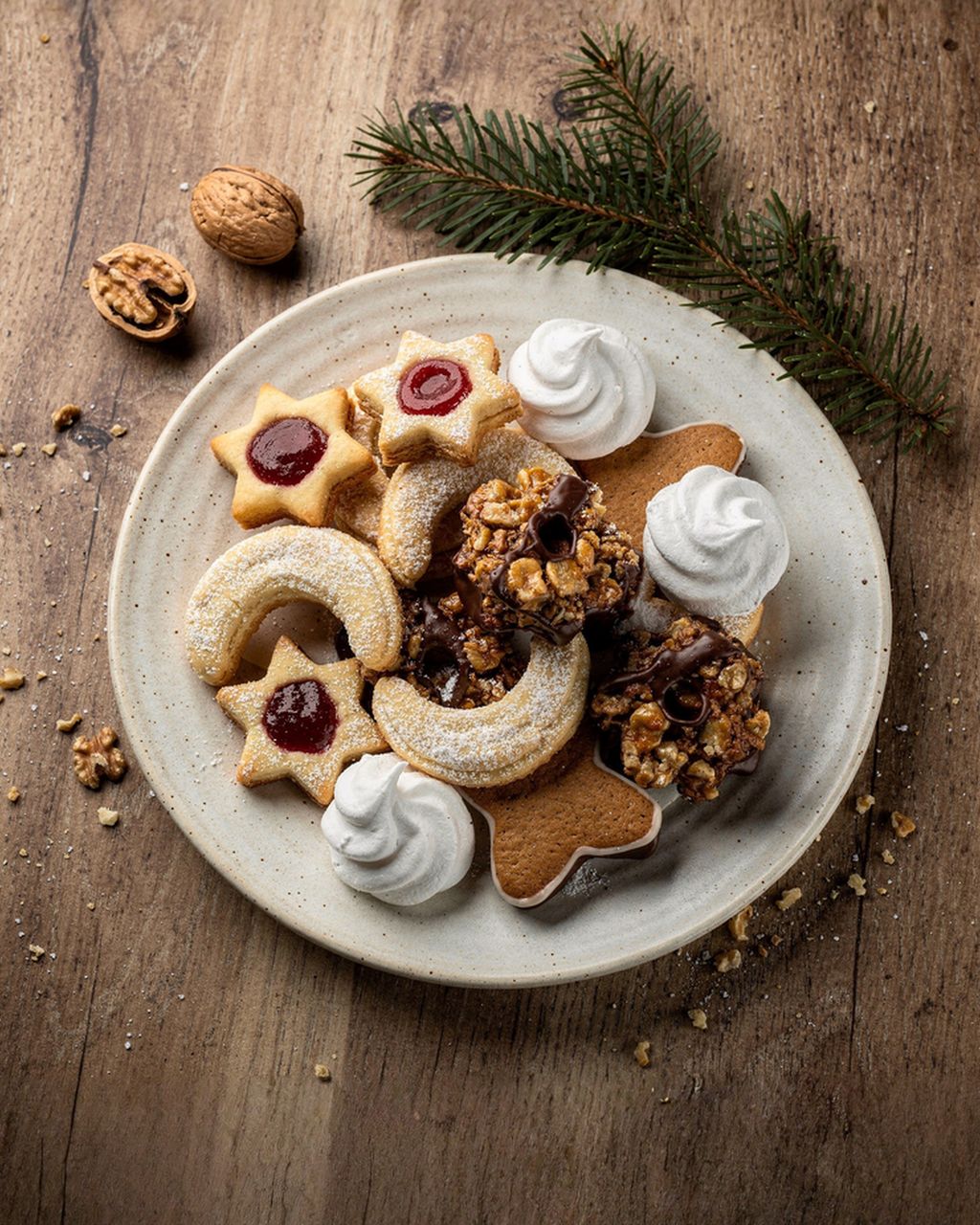
Finishing: dip the bottoms in melted chocolate, or sandwich two flowers with jam. Decorate only once they've cooled completely. For how to get chocolate glossy and not smeary, see dipping cookies in chocolate.
You can pipe spritz cookies from a bag with no tip, but they'll come out smooth, without ridges. A bag with the end snipped off gives you plain sticks or mounds. You can still rescue sticks by running a fork along their length to make grooves, but you can't make a flower shape without a star tip.
Spritz cookies keep for 3–4 weeks in a well-sealed tin in a cool place. Plain creamed cookies don't soften over time; ones sandwiched with jam do. Don't store them with cookies that are meant to soften or with filled cookies: they'll take on moisture from them and lose their crunch. Layer chocolate-dipped cookies between sheets of paper.
You can make the dough a day ahead, but let it soften at room temperature for 30–60 minutes before piping. Straight from the fridge it can't be piped. It's better to pipe the cookies right away and freeze the whole tray. Then pack the pieces into a box and bake them straight from frozen, adding just 1–2 minutes.
Yes, you can make spritz cookies without eggs or from a gluten-free flour blend: replace the egg with 2–3 tablespoons of milk or cream. Egg-free dough will be only slightly more delicate. Gluten-free flour blends hold a pattern less well because the dough lacks elasticity; expect shallower ridges and always chill the cookies before baking.
Hard spritz cookies usually have too much flour or are overbaked. Add only as much flour as the dough needs to hold its shape, and take the cookies out as soon as the edges turn lightly golden. Mixing for a long time after adding the flour also makes them tough, so just fold the flour in briefly.
One recipe worth heating the oven for, one tip, and one deal from the shop. Nothing else.