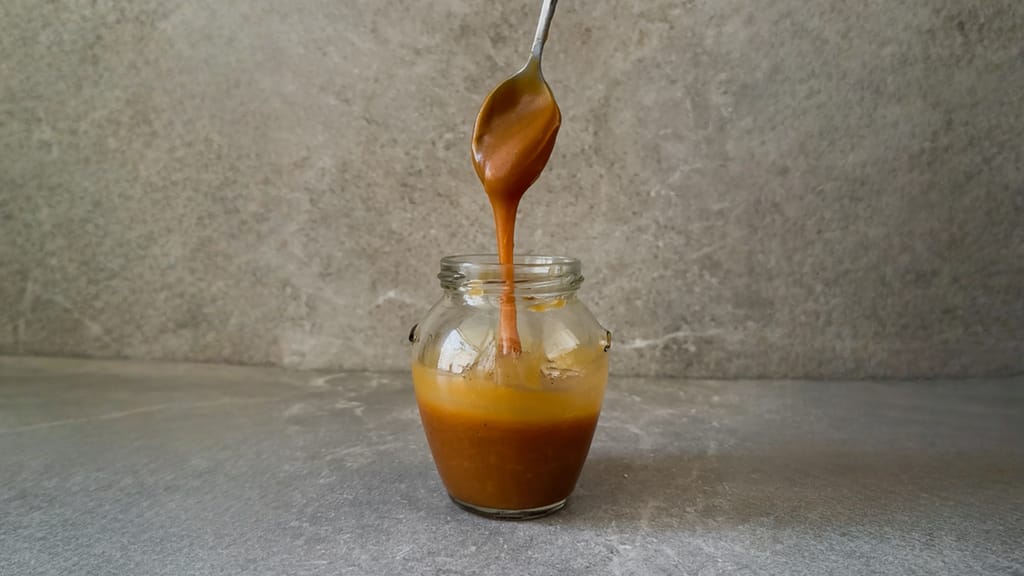
Homemade caramel sauce with just 4 ingredients
Spanish Desserts: Churros, Flan, Turrón & Their Best Flavour Pairings
Updated Aug 23, 2026
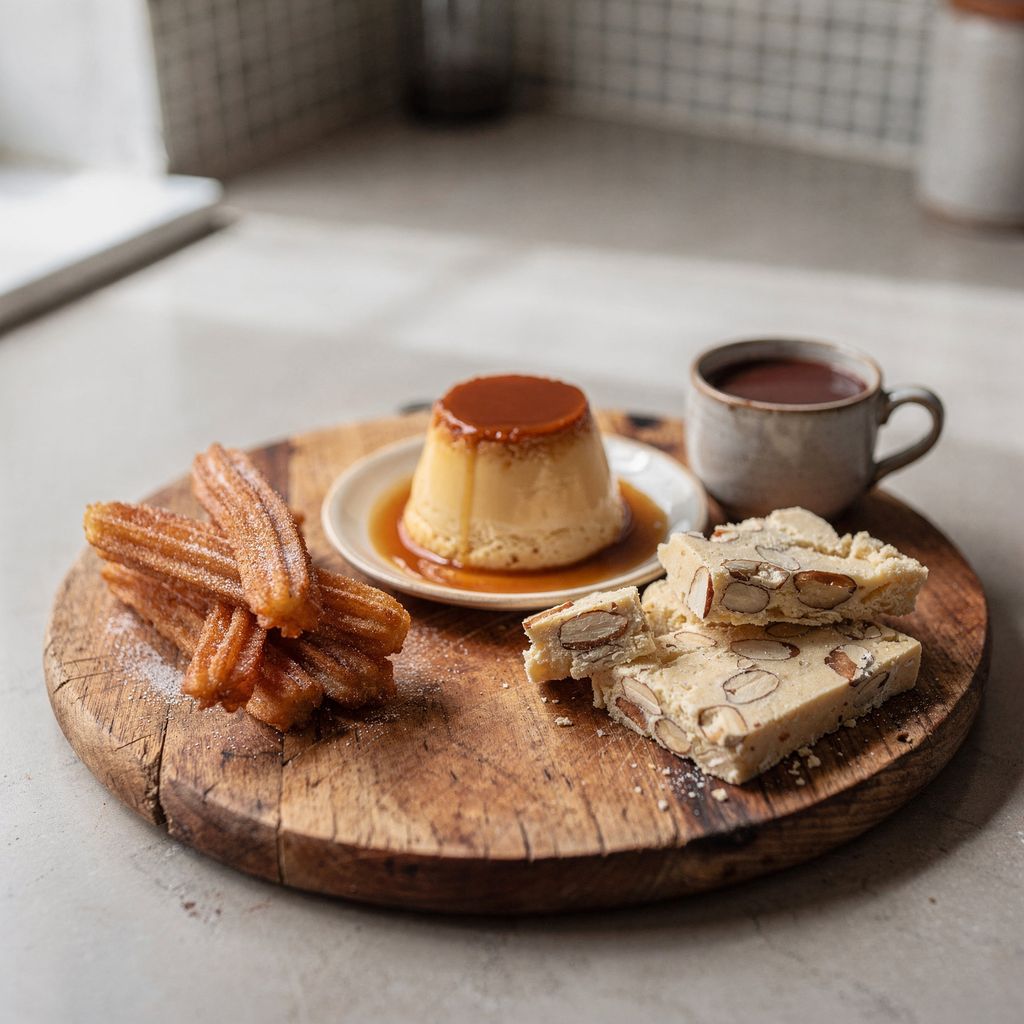
Spanish desserts are built on three flavours: bitter chocolate, dark caramel, and honey with almonds. Churros get dunked into thick, bitter chocolate; flan lives or dies by the colour of its caramel; turrón rests on honey and toasted almonds. Once you understand why these pairings work, you'll stop just copying them and start building your own. That's exactly what this article is about: what goes with which dessert, in what ratio, and why.
The best pairings for Spanish desserts are bitter chocolate with churros, dark caramel with flan, salt and dried figs with turrón, lemon zest with crema catalana, and anise with almond pastries. These combinations show up again and again across Spain's regions:
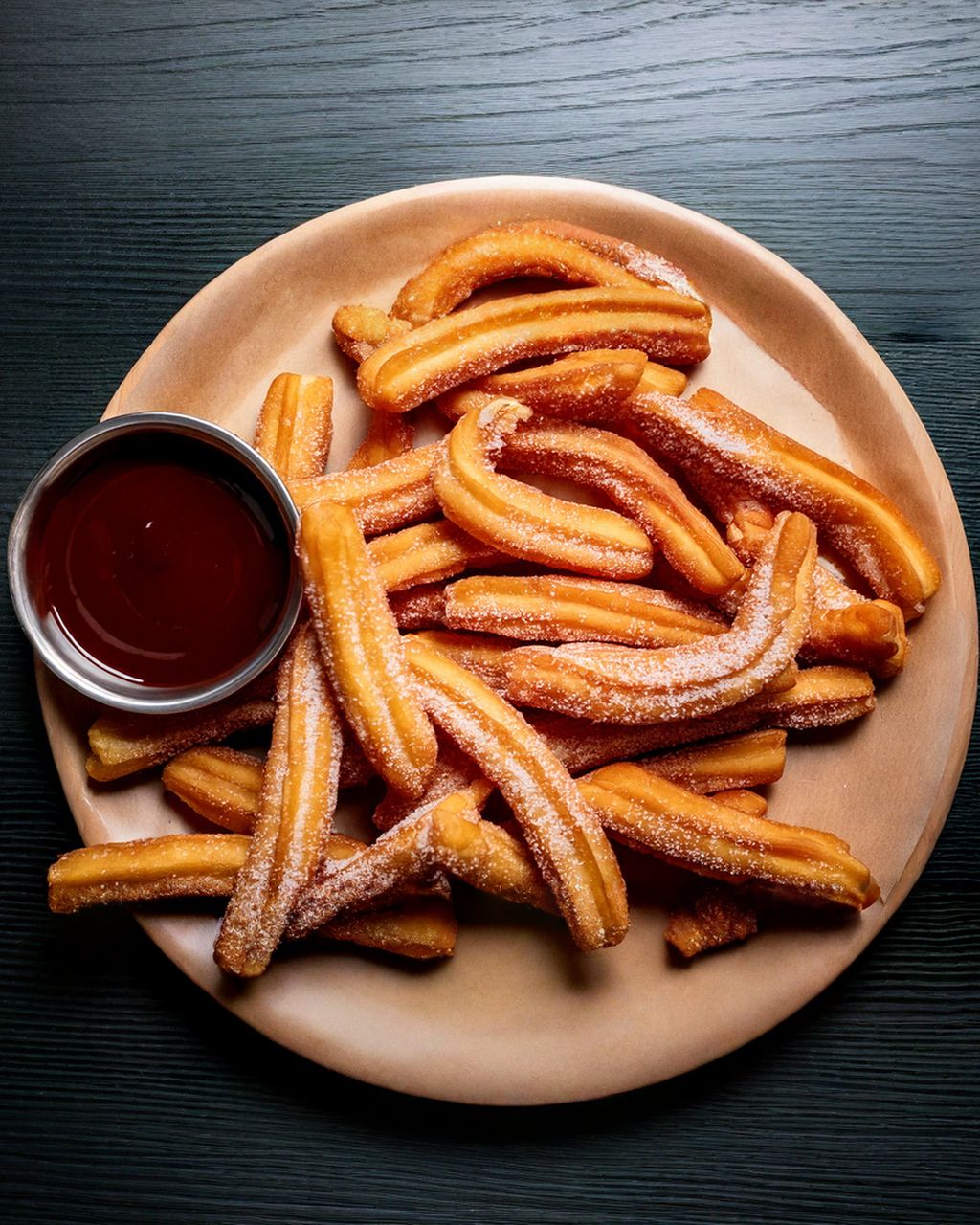
Churros + thick, bitter hot chocolate (60–70%) — the bitterness and warmth cut through the richness of the fried dough.
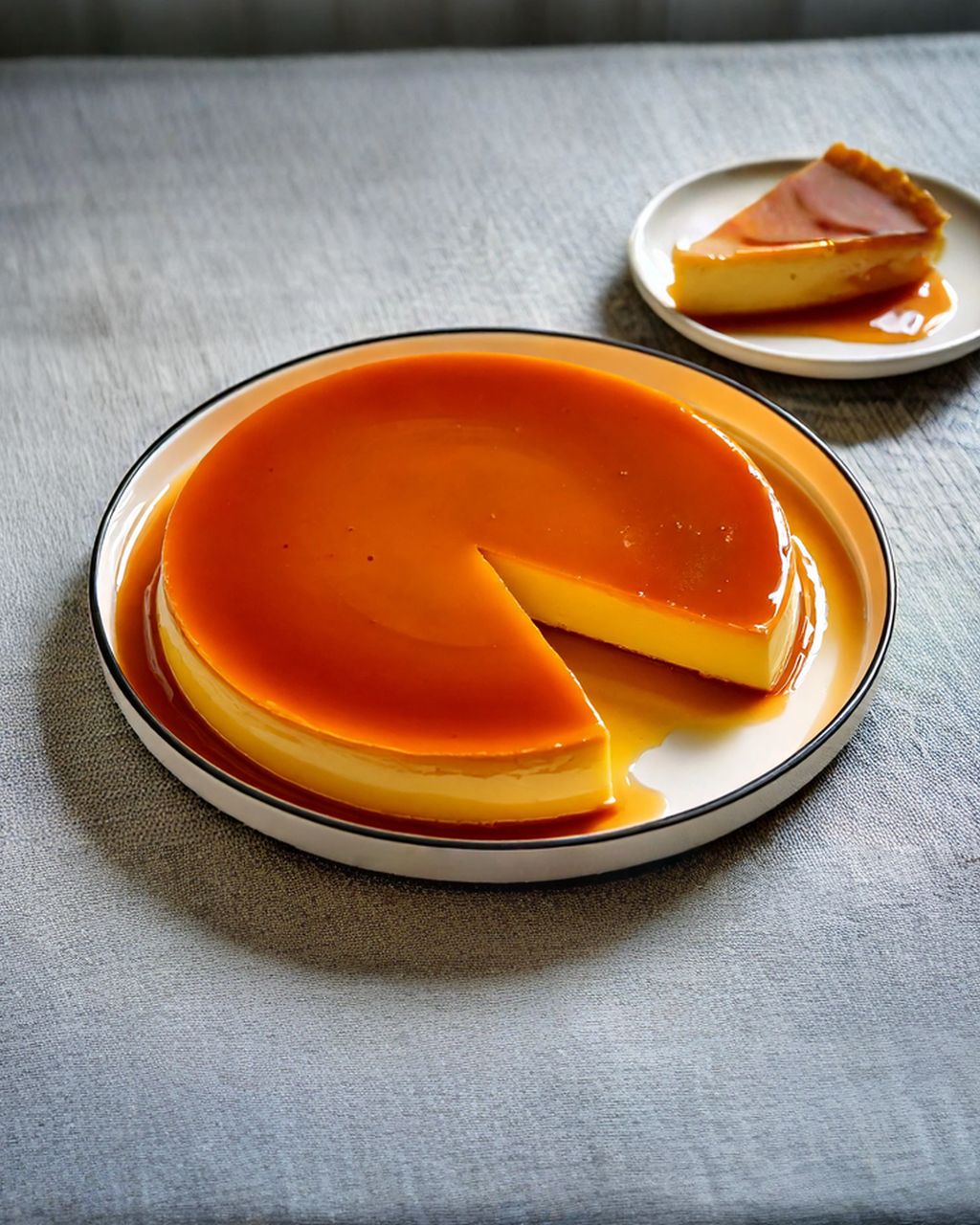
Flan + dark caramel + citrus zest — a slightly bitter caramel keeps the pudding's sweetness in check.
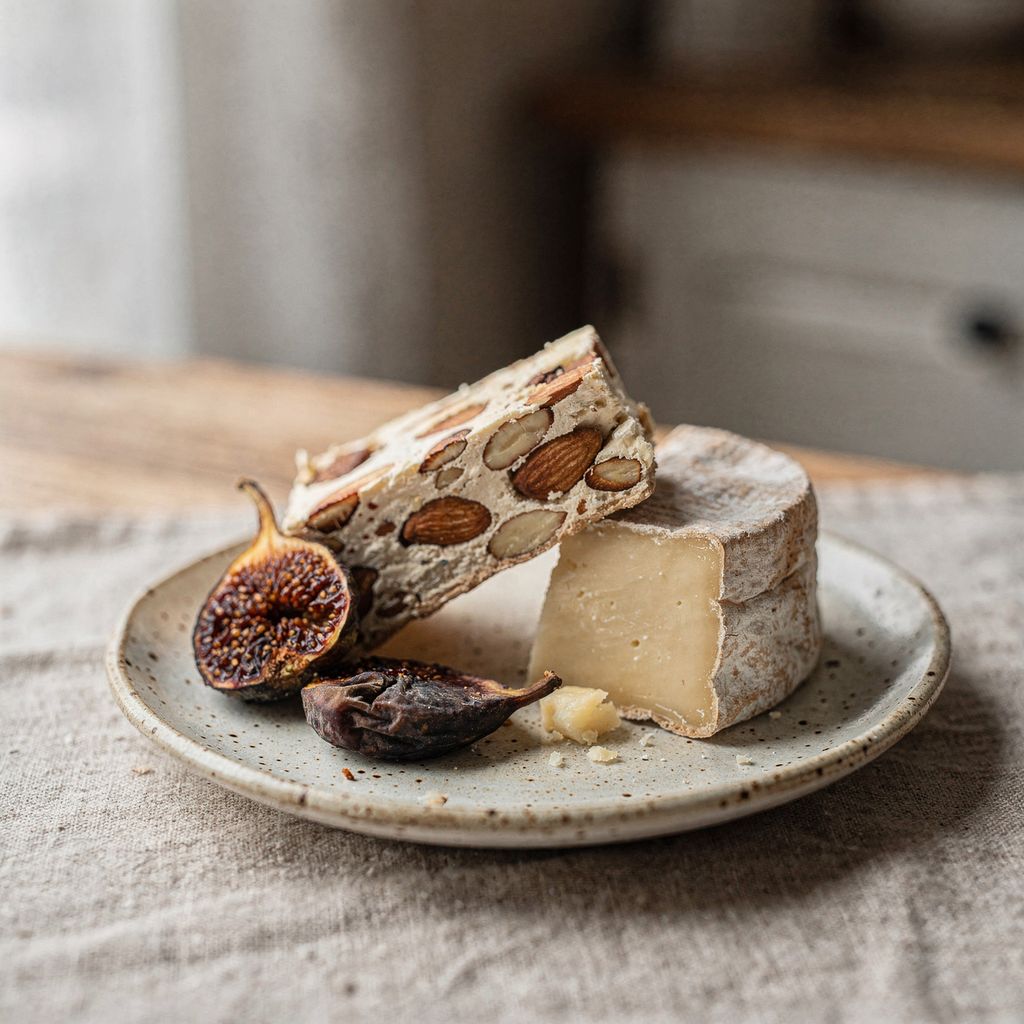
Turrón + salty sheep's cheese or dried figs — salt and fat break up the honeyed sweetness.
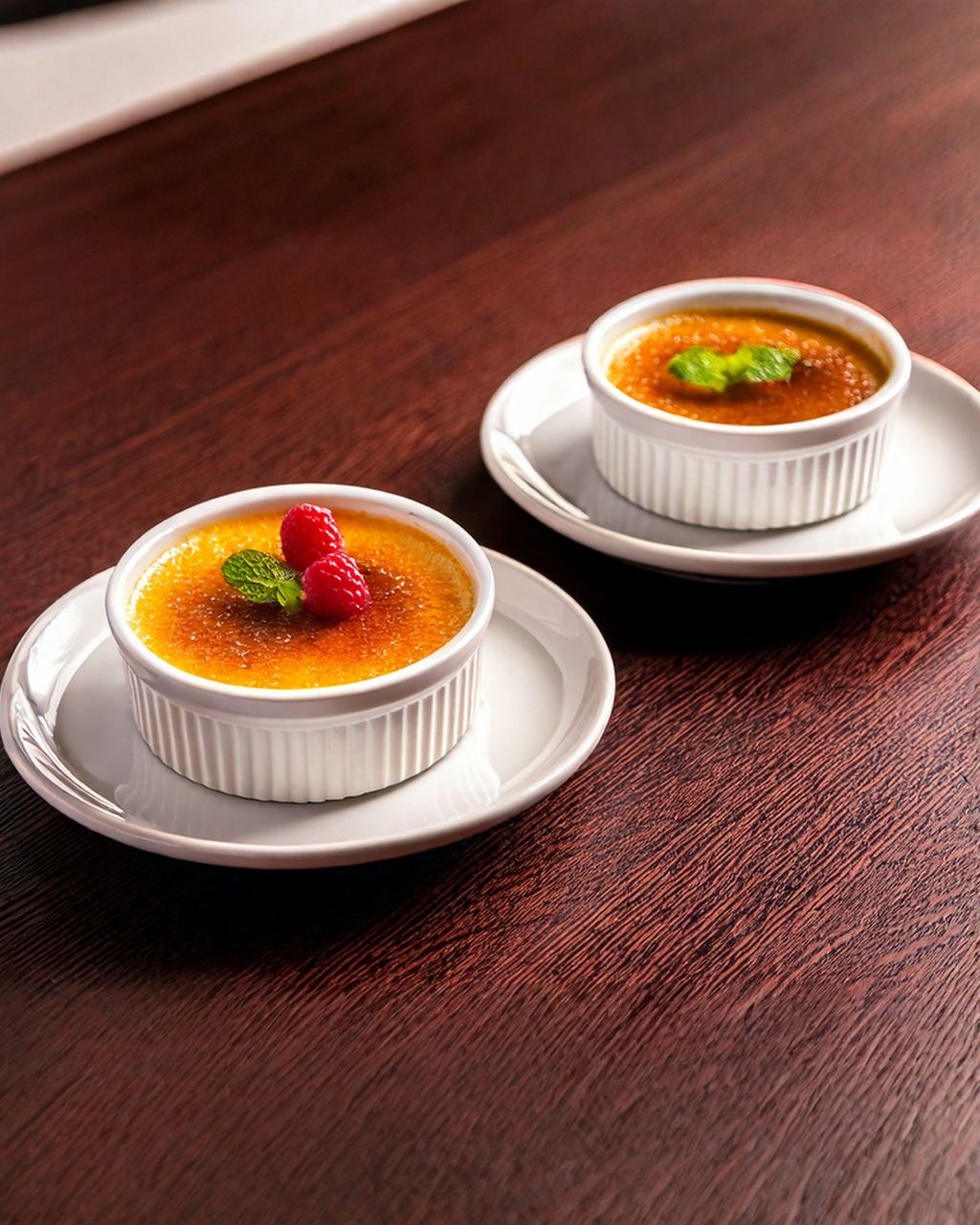
Crema catalana + lemon zest and cinnamon — acidity and spice stand in for vanilla.
Almond pastries + anise and sweet wine — almonds and anise share the same aromatic notes.
There's one principle behind all of this: Spanish baking doesn't balance sweetness with cream, it balances it with bitterness, acidity and salt. Cocoa and dark caramel bring bitter edges, lemon and orange zest bring bright acidity, a pinch of salt or a slice of manchego brings savouriness. That's why citrus zest works with almost every one of these desserts — and whipped cream almost never does.
In Spain, churros are served with hot chocolate because a thick, bitter chocolate offsets both the fat and the sweetness of the fried dough — and it's meant to be a dip, not a drink. Spanish chocolate a la taza is so thick a churro can stand up in it.
How to get it right:
Ratio: roughly 100g dark chocolate (60–70%) to 200ml milk. For the classic thick texture, stir in 1 teaspoon of cornflour mixed with a little cold milk.
Chocolate: milk or white chocolate taste nice enough, but sweet against sweet gives you no contrast. If you do use milk chocolate, add a pinch of salt.
A twist: a pinch of chilli, or a strip of orange zest simmered in the milk and removed before serving.
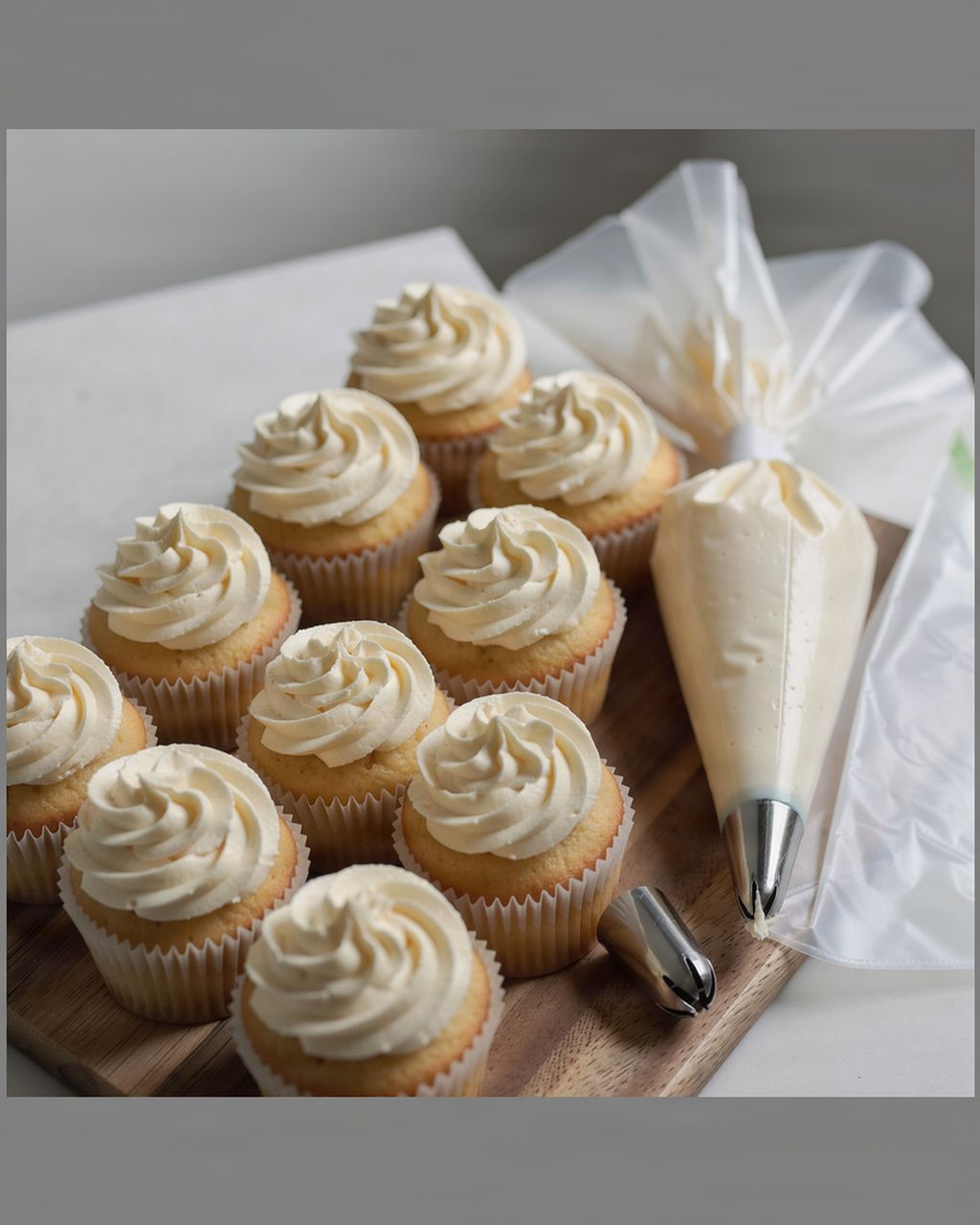
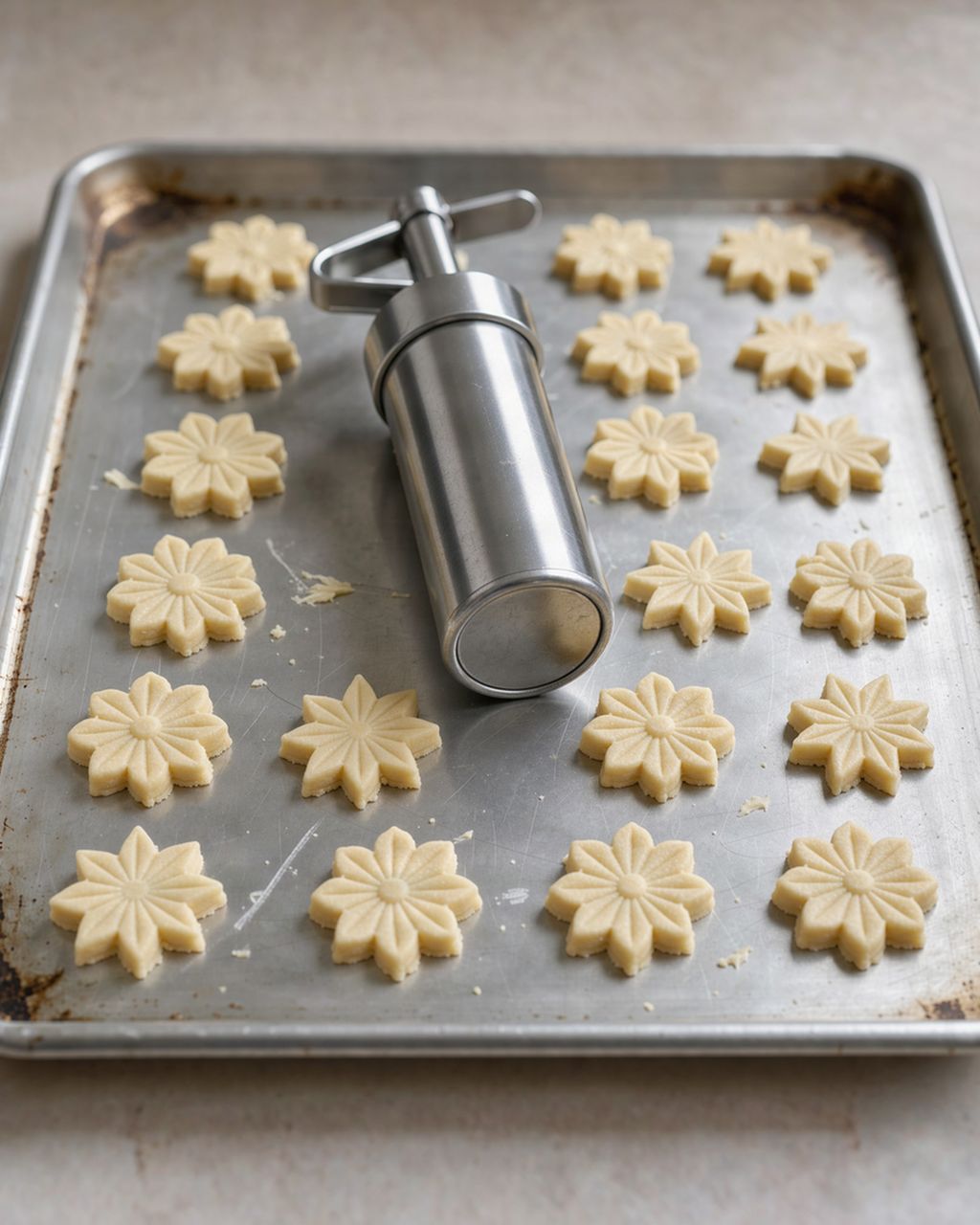
Two things matter most for the churros themselves. Oil temperature of 170–180°C (340–355°F) — any lower and they soak up too much fat, any higher and the outside burns before the centre cooks through. And the star-shaped nozzle: the ridges aren't decorative, they increase the surface area and let steam escape, so the churro doesn't split open in the oil. The dough is also mixed with boiling water, which scalds the flour and cooks out its raw taste.
A small regional note: what's called churros in Madrid is thin and crisp, often coiled into a loop. The thick, soft porras are a different pastry altogether — their dough contains baking powder, making them fluffier and almost spongy.
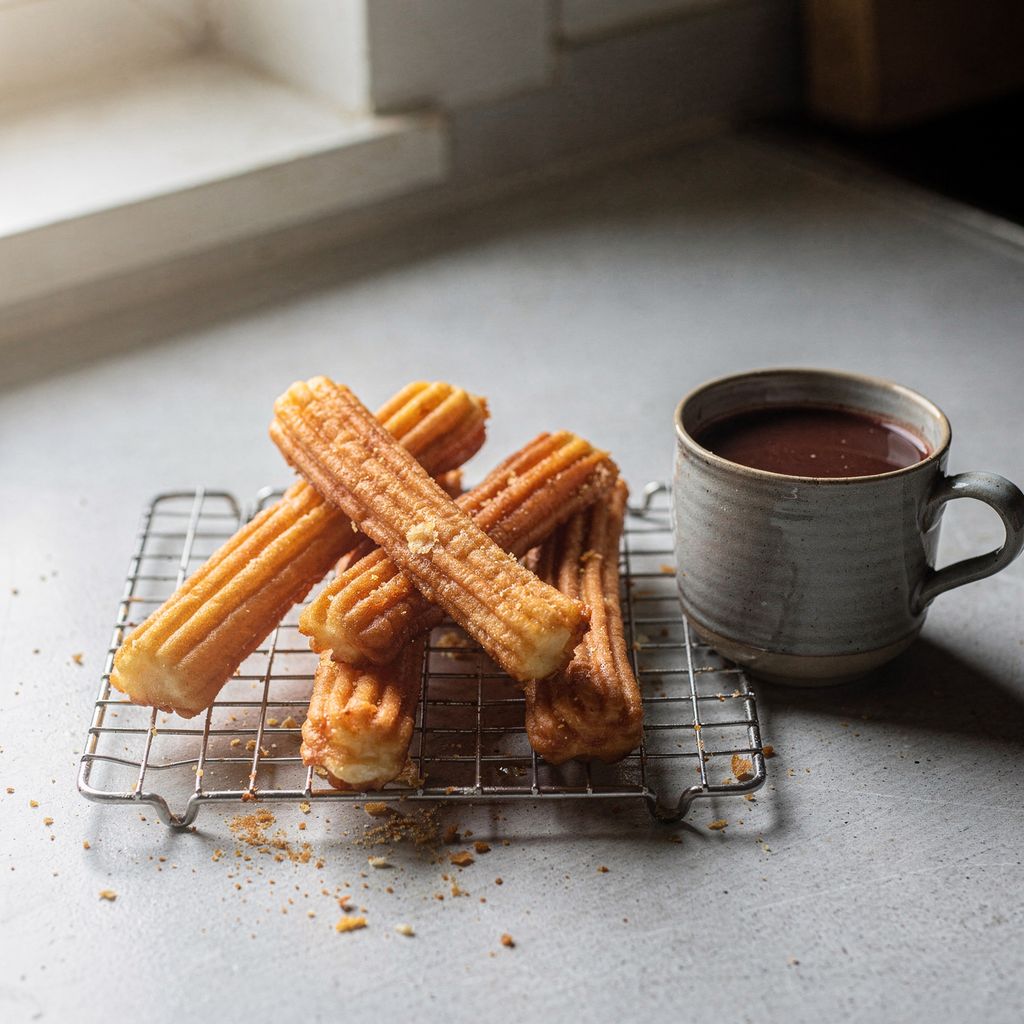
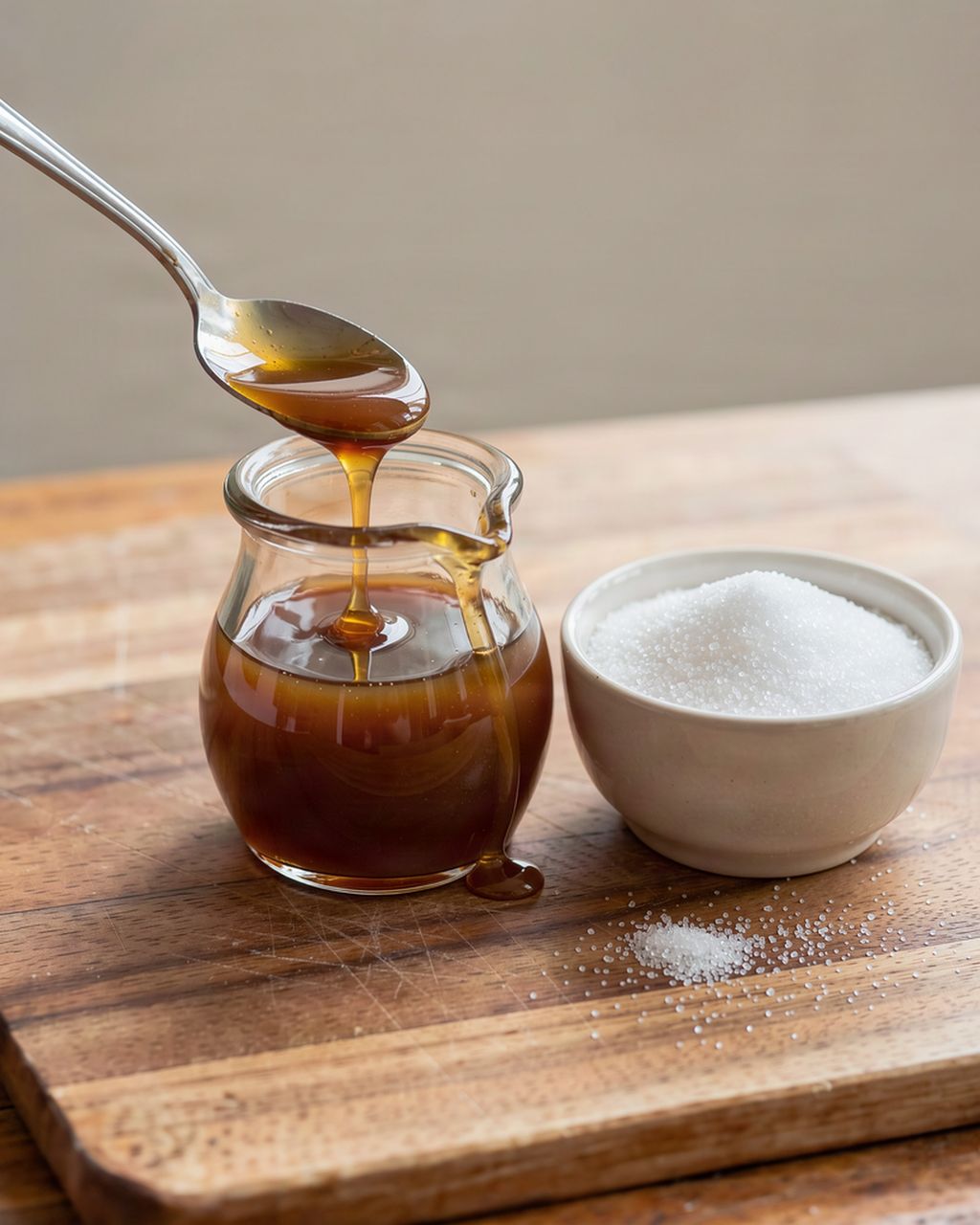
Homemade caramel sauce with just 4 ingredients
Homemade caramel sauce as a second dip for churros
Flan needs a caramel cooked to a deep amber colour — a pale caramel is just sweet, and it flattens the whole dessert. Let the sugar go up to 170–180°C (340–355°F), when it starts to smoke faintly and smell of toasted nuts. A few seconds further, though, and it tips into burnt bitterness, so don't walk away from the pan.
The rest is all about gentle heat:
A water bath is non-negotiable. It keeps the edges below boiling point so the egg protein doesn't curdle.
Oven at 150–160°C (300–320°F). If the finished flan has little bubbles or a set ring around the edge, it baked too hot.
Judge doneness by movement, not time. Nudge the tin and the centre should still wobble like jelly; a firm centre means it's overcooked. Inside, that's roughly 75°C (167°F).
Chill for at least 4 hours, ideally overnight — the caramel will melt down into a liquid sauce during that time, which flows over the pudding once you turn it out.
Flavour-wise, flan can take more than you'd think. Orange zest simmered in the milk adds freshness, swapping some of the milk for coconut milk gives it a creamier texture, and cinnamon or cardamom turn it into a winter dessert. For the full step-by-step method, see Flan: a silky caramel pudding, step by step.
Unlike flan, crema catalana is not baked — it's cooked on the stovetop, thickened with cornflour, and made with milk rather than cream. That's what makes it lighter than French crème brûlée, and why you can make it in twenty minutes with no oven and no water bath.
Its signature flavour is unmistakable: lemon zest and a whole cinnamon stick, infused in the milk. Not vanilla — that belongs more to flan. Peel the zest without any white pith, which is bitter, and let the milk sit with the spices for fifteen minutes off the heat before straining it into the egg yolks.
The sugar crust is only torched right before serving. Traditionally it's done with a heated iron, but a kitchen blowtorch works just as well at home. Under an oven grill, the custard underneath has time to warm through and loses the contrast between the cold cream and the hot, brittle shell — which is really the whole point.
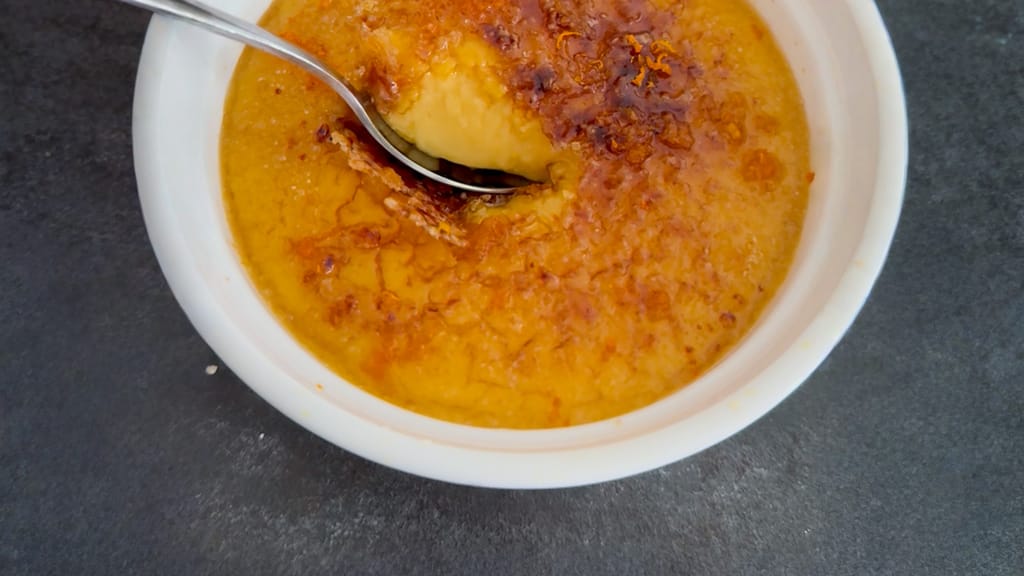
Crema catalana with orange zest and cinnamon
Crema catalana with orange zest and cinnamon — a Spanish custard with no baking required
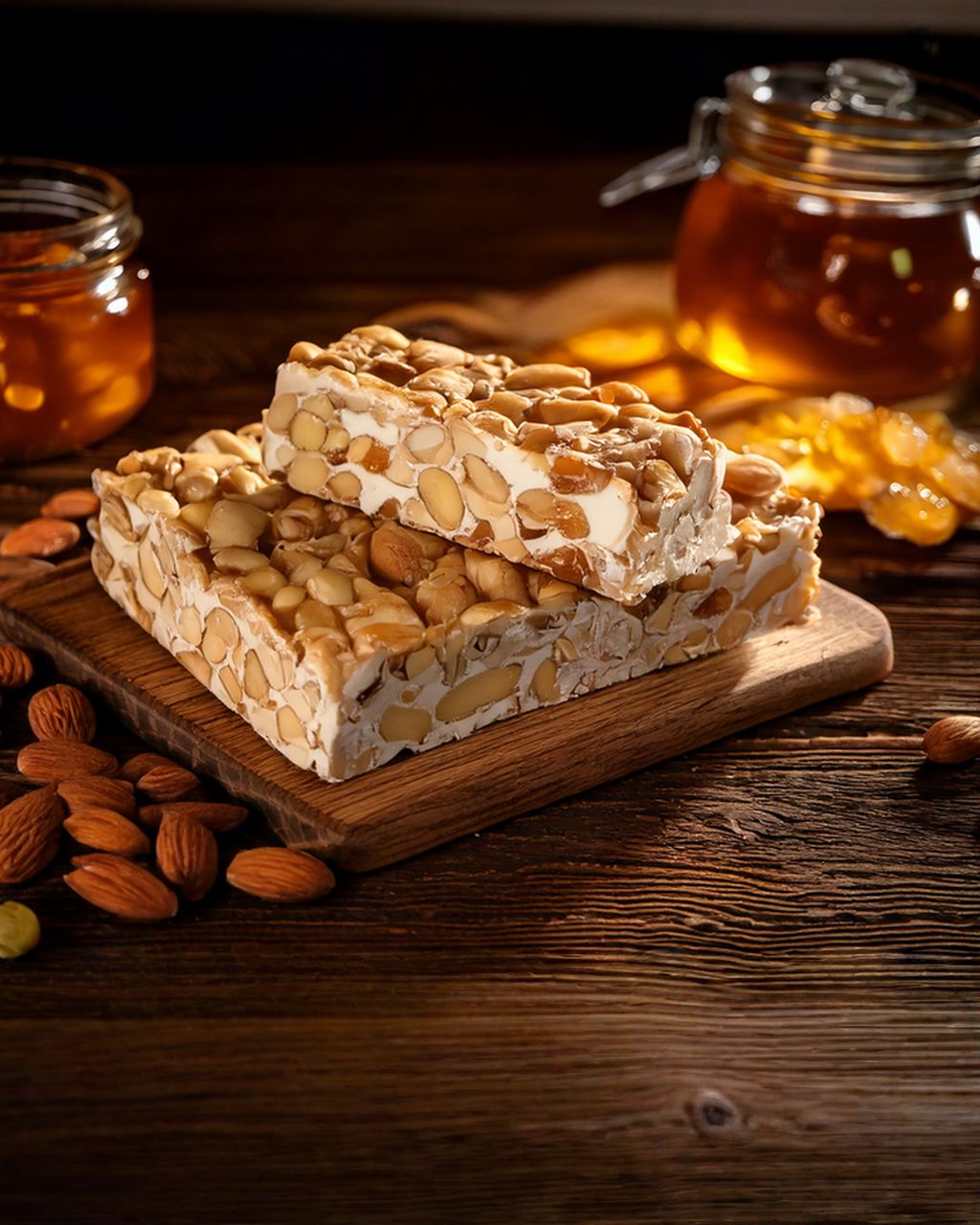
Turrón is an almond nougat made from honey, sugar and egg white, and it comes in two main types. Under the rules of its protected geographical indication, turrón de Jijona must contain at least 52% almonds and turrón de Alicante at least 42%, with both requiring a minimum of 10% honey.
Turrón duro (Alicante) — whole roasted almonds set in honey syrup, hard and crunchy, traditionally sandwiched between two sheets of wafer.
Turrón blando (Jijona) — almonds ground into a paste, giving a soft, richer texture that melts on the tongue.
Each type calls for something different. Hard turrón can handle a sharp contrast: a wedge of manchego, dried figs, a handful of salted almonds. The salt and fat in the cheese cut through the honeyed sweetness and turn a single bite into a fully rounded plate. Soft turrón is already creamy on its own, so it pairs better with something fresh — pear slices, fresh figs, orange segments. And with either, a glass of sweet Pedro Ximénez sherry or moscatel; pairing sweet wine with a sweet dessert only works if the wine is sweeter than the dessert itself.
Turrón is genuinely tricky to make at home — it needs a precisely controlled honey syrup. The closest thing you can pull off in a home kitchen is French white nougat, montélimar: same technique of honey and whipped egg white, just a different country of origin.
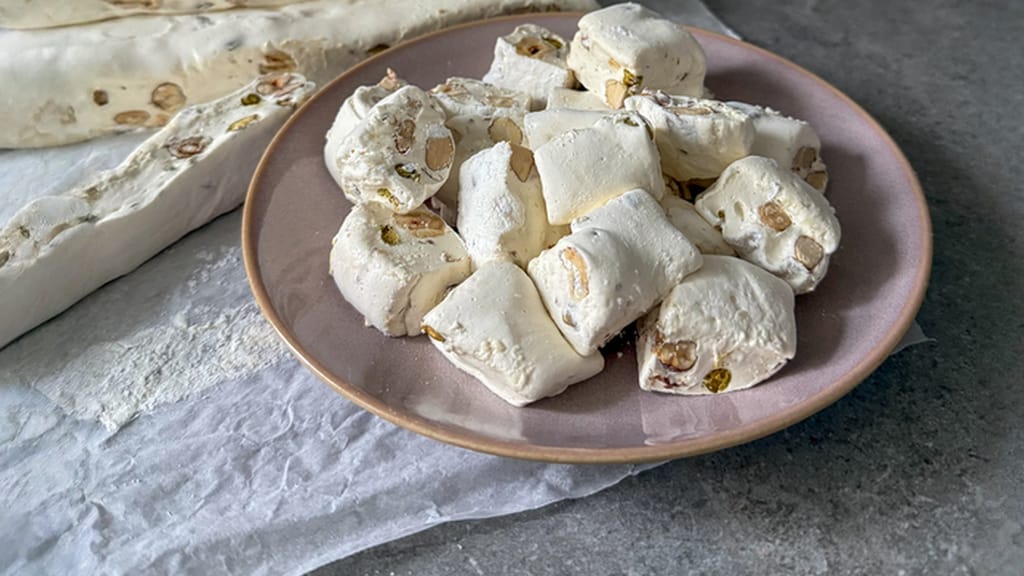
Montélimar nougat – homemade white nougat with honey and nuts
Montélimar: homemade white nougat with honey and nuts, the closest relative to soft turrón
Spanish sweets follow their own calendar, and most of them aren't eaten year-round:
Churros — year-round, for breakfast or an afternoon merienda. Traditionally also eaten in the early hours of 1 January.
Turrón — December and Christmas. Outside that season, you'll barely find it in Spain.
Roscón de Reyes — 6 January, Three Kings' Day. A candied-fruit ring cake with a hidden figurine baked inside.
Tarta de Santiago — 25 July, the feast of St James in Galicia. A flourless almond cake with a sugar cross dusted on top.
Crema catalana — year-round, though in Catalonia it's especially popular on 19 March for St Joseph's Day, when it's known as crema de Sant Josep.
Flan — year-round, a classic fixture on set lunch menus.
If you'd rather start somewhere other than churros, roscón is a rewarding place to begin: it's a sweet yeasted dough that, with its orange blossom and zest, behaves much like our own festive breads.
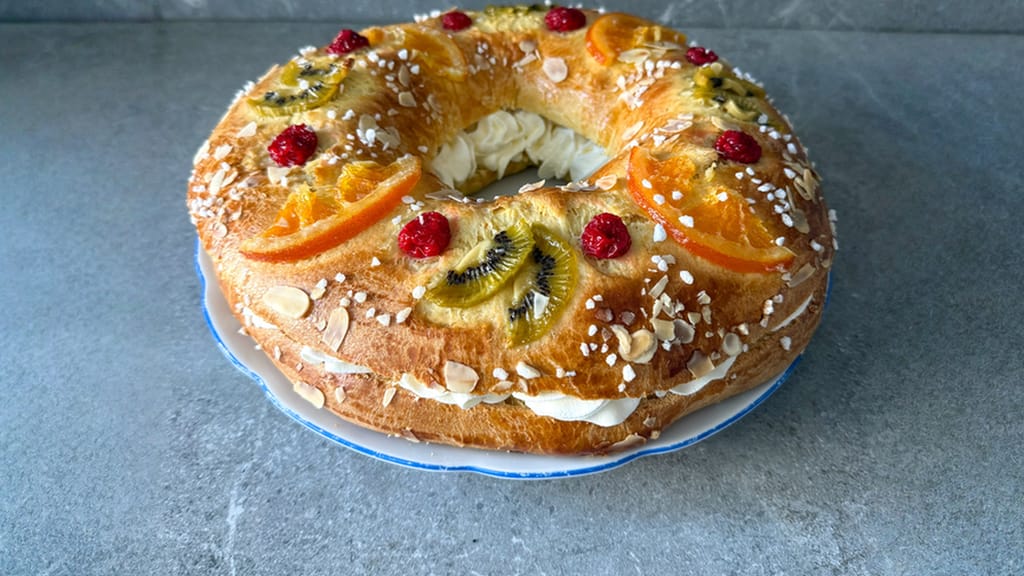
Roscón de reyes: spanish three kings' cake with candied fruit
Roscón de Reyes: Spain's Three Kings' cake with candied fruit
You'll find detailed methods for churros, flan, crema catalana and roscón de Reyes in the separate articles below — covering everything from getting the chocolate's thickness right to the water bath to proving the ring cake. This article is about which flavours to pair; those articles cover the technique itself.
Crema catalana is by far the simplest — it cooks on the stovetop in about twenty minutes, with no oven and no water bath required. Flan comes next, where the only tricky part is the caramel. Churros and turrón are the hardest: both hinge on getting a precise temperature right, the oil for churros and the honey syrup for turrón.
Keep turrón in a sealed container at room temperature, somewhere dry and dark — never in the fridge. Cold and moisture cause the sugar on the surface to soften, and hard turrón loses its crunch. An unopened bar keeps for months; once opened, eat it within about two weeks and wrap it in cling film in between so the almond fat doesn't turn rancid.
Yes — flan actually benefits from being made a day in advance, as the chilling time only improves it. Let it cool in the mould, cover with cling film stretched over the rim (so it doesn't pick up fridge odours), and it'll keep like that for up to three days. Only turn it out just before serving, otherwise the caramel sauce pools at the bottom of the plate and the top dries out. If the mould won't release, dip it in hot water for ten seconds.
Spanish desserts call for a sweet wine that's sweeter than the dessert itself — otherwise it ends up tasting sour by comparison. The classics are Pedro Ximénez sherry with turrón and almond pastries, or moscatel with flan. Churros are traditionally paired with thick hot chocolate or café con leche, while crema catalana needs nothing more than an espresso.
Flan, crema catalana and tarta de Santiago are all naturally gluten-free, with the cake relying on nothing more than ground almonds, eggs and sugar. Turrón needs a closer look: the soft version is usually gluten-free, but hard turrón de Alicante is traditionally layered between sheets of wheat-flour wafer. Churros, on the other hand, are always made from wheat dough. Always check the label on store-bought sweets to be sure.
One recipe worth heating the oven for, one tip, and one deal from the shop. Nothing else.