Homemade caramel sauce with just 4 ingredients

Updated Jul 18, 2026
Authentic churros are crispy on the outside, soft on the inside, and made for dunking in thick hot chocolate — and making them at home is easier than you'd think. The secret isn't fancy ingredients, but three things: boiling water in the dough, a star-shaped piping tip for those signature ridges, and oil heated to exactly 180°C (350°F). This guide walks you through the dough, the frying, and the chocolate dip — plus the most common mistakes to avoid.
Churros are a fried Spanish pastry made from a thick dough of flour, water and salt, piped through a star-shaped nozzle and rolled in cinnamon sugar. Those characteristic ridges aren't just decorative: they come from pushing thick dough through a star-shaped (rather than round) tip, and they hold their sharp edges thanks to the boiling water in the dough — it partially gelatinises the starch, so the shape doesn't slump after piping. The ridges also serve a practical purpose: they increase the surface area, so the churros fry up crispier, and the grooves are perfect for holding onto the cinnamon sugar. Traditionally they're dipped in thick hot chocolate — in Spain, churros con chocolate is eaten for breakfast just as often as a late-night snack.
Where exactly they came from isn't entirely clear. According to the most popular legend, they were invented by Spanish shepherds in the mountains: without access to fresh bread, they fried up sticks of the same simple dough instead. The name and shape are said to come from the churra breed of sheep — their curved, ridged horns resemble the star-shaped profile of churros.
Food historians, however, point to older roots. Recipes for fried dough similar to churros appear in Arab-Andalusian cookbooks (related to the sweet treat zulabiya), tracing a path back to Moorish Spain. The popular story that churros were brought over by Portuguese sailors from China (based on the fried dough sticks youtiao) is more myth than fact — Spanish recipes are documented well before that contact could have even happened.
The habit of dunking churros in chocolate is more recent: thick hot chocolate only became popular in Spain after cacao arrived from Aztec America. You can read more about the origins of churros and other Spanish sweets in our article on where churros and other Spanish desserts come from.
For authentic churros, you only need four ingredients: plain flour, water, salt and oil for frying. On top of that comes cinnamon sugar, plus chocolate for dipping.
Plain wheat flour — the backbone of the dough. Forget the myth that Italian "00" flour is the secret; traditional churrerías use plain everyday flour. If you want firmer, more defined ridges, swap 2–3 tablespoons for bread flour (which is stronger).
Water in roughly a 1:1 ratio to the flour by volume. The key is that it must be boiling — hot water partially gelatinises the starch, which is exactly what lets the dough hold its sharp ridges once piped.
Salt — just a pinch, to bring out the flavour.
A high-smoke-point oil for frying — sunflower or rapeseed oil work well. Neutral in flavour and stable at 180°C.
Sugar + ground cinnamon for coating. Classically granulated sugar; adjust the cinnamon to taste.
Egg (optional) — not traditional, but one egg in the dough gives a softer, fluffier centre (closer to a choux-style dough). Real churros don't need vanilla, but a few drops won't offend anyone.
Basic churros dough comes together in ten minutes: take boiling water with salt and oil off the heat, stir in the flour all at once, and work it into a smooth dough. Then pipe it straight into hot oil using a star-shaped tip.
For one batch (about 4 servings):
250 ml water
1 tablespoon oil
½ teaspoon salt
250 g plain flour
1 egg (optional)
Boil the base. Bring the water, oil and salt to a boil in a saucepan.
Stir in the flour all at once. Take the pan off the heat and tip in all the flour in one go. Stir briskly with a wooden spoon until the dough comes together into a smooth, lump-free ball.
Knead briefly and let it cool. Keep stirring for another minute to let the starch fully bind, then let the dough cool for 5–10 minutes until lukewarm. If you're adding an egg, whisk it in now, once the dough has cooled — it would curdle if added while still hot.
Fill a piping bag fitted with a star tip. It's the star-shaped (not round) nozzle that creates the ridges, which hold the sugar and give that crunch. No piping tip on hand? A sturdy bag with a star-shaped snip cut into the corner will do the job.
Pipe straight into the oil. Snip off 10–15 cm lengths with scissors directly over the pot.
Consistency check: the dough should be smooth and pipeable, not runny. If it's too thick, loosen it with a splash of water; if too thin, stir in a spoonful of flour — always adjusting a little at a time.
Fry churros in oil heated to 180°C (350°F) for about 2–4 minutes until golden, turning them as they cook. Too low a temperature makes churros greasy and soggy; too high burns the outside while leaving the centre raw. No thermometer? Test the oil with the tip of a wooden spoon — you should see a steady veil of small bubbles forming around it.
Don't overcrowd the pot. Fry in smaller batches; too much dough at once drops the oil temperature and the churros end up soggy.
Turn them. Since they're round, there are no real "sides" — turn the sticks a few times as they fry so they brown evenly all over.
Drain and coat immediately. Lift the finished churros onto paper towels and roll them in cinnamon sugar while still warm — once they've cooled, the sugar won't stick.
A golden colour and an audible crunch are your cue that they're ready. Pale churros mean a raw centre; dark brown means they've gone too far.
True Spanish dipping chocolate is thick — more like a runny pudding than a glaze, so it clings to the churros. You make it from just three things: good-quality dark chocolate, cream (or milk) and a pinch of salt; adjust the thickness with a touch of cornstarch.
200 g dark chocolate (60–70% cocoa)
200 ml whipping cream or full-fat milk
1–2 tablespoons sugar
pinch of salt
½ teaspoon cinnamon or a pinch of chilli (optional)
1 teaspoon cornstarch to thicken (optional)
Finely chop the chocolate.
Heat the cream with the sugar and salt until just below boiling (it should steam gently, not boil). If using cornstarch, mix it first with a few tablespoons of cold milk, then stir it in.
Take the pan off the heat, add the chocolate, and stir until smooth and glossy. Simmer briefly to thicken.
The type of chocolate really matters here — dark chocolate gives an intense, not-too-sweet sauce that balances the sweetness of the churros. If you're torn between dark, milk and white chocolate, check out our guide on the differences between dark, milk and white chocolate. Leftover sauce keeps in the fridge for 2–3 days — just warm it gently before serving again.
Churros taste best straight out of the fryer, warm and crispy, with a bowl of thick chocolate for dipping alongside. Arrange them in a circle, stand them up in a glass, or serve them in a paper cone, market-stall style.
Variations worth trying:
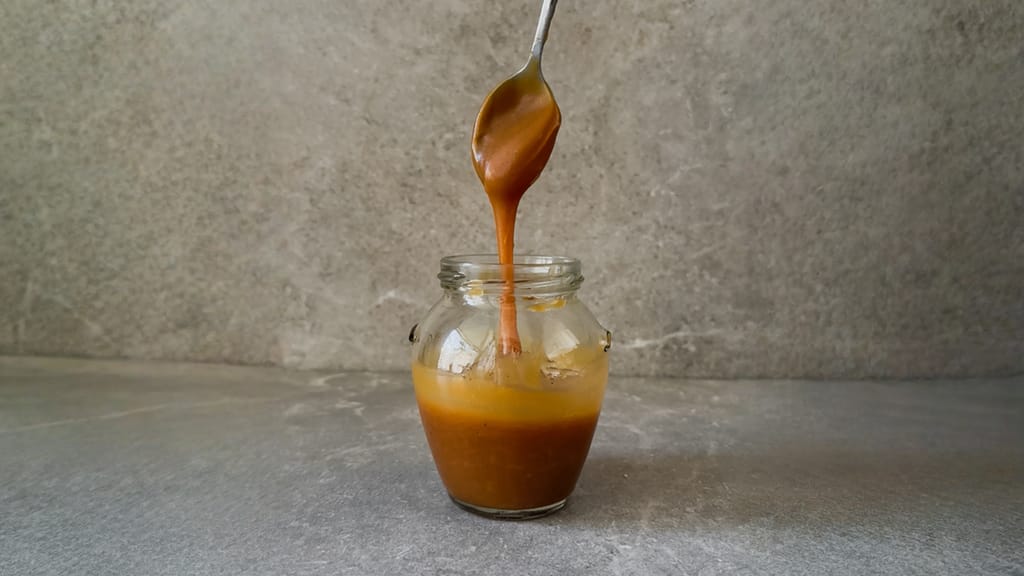
Caramel instead of chocolate — a thick, slightly bitter-sweet dip (recipe below).
Fruit sauce (raspberry, strawberry) — the tartness of the fruit nicely cuts through the sweetness of the fried dough.
Filled churros — Mexican-style, filled with dulce de leche or chocolate piped into the cooled sticks.
Spiced sugar — add a pinch of cardamom or ground vanilla to the cinnamon sugar for a different aroma.
Homemade caramel sauce with just 4 ingredients
Homemade 4-ingredient caramel sauce — a rich alternative to chocolate for dipping churros
Churros most often go wrong for four reasons: oil that's too cold, dough that's too thin, a round piping tip, and an overcrowded pot. Here's what to avoid:
Greasy, heavy churros — the oil was too cold. Keep it at 180°C and let it come back up to temperature between batches.
Smooth sticks with no ridges — you used a round tip or cold water in the dough. Ridges come from the star tip plus boiling water.
Raw centre, dark outside — the oil was too hot, or the sticks were piped too thick. Lower the heat and pipe them thinner.
Churros "exploding" and spattering while frying — there were air pockets in the dough, or it was too wet. Work the dough thoroughly and pipe it in one smooth, continuous motion.
Yes, you can make churros in an air fryer, though they won't be quite as crispy as deep-fried ones. Brush the piped sticks with oil and cook at 190–200°C (375–400°F) for about 8–12 minutes until golden, flipping halfway through. Expect a drier centre and less pronounced ridges than you'd get from classic deep-frying.
Churros are best fresh, since they lose their crunch quickly once the sugar and moisture start softening them. If you need to store them, let them cool completely, keep them plain (without the sugar coating) in a paper bag rather than a sealed container (which traps steam and makes them soggy), then reheat in the oven at 180°C (350°F) for a few minutes the next day — only coat them in sugar right before serving.
Yes — you can freeze the raw piped churros and fry them straight from frozen. Pipe the sticks onto a baking-paper-lined tray, freeze until firm, then transfer to a bag and store for up to a month; fry them unthawed, adding about a minute to the frying time. Don't fry churros ahead of time, though — they'll go stale and lose their crispness.
Yes, churros can be made gluten-free, but the dough behaves differently and tends to tear more easily. Swap the flour for a good gluten-free plain flour blend with xanthan gum (which helps hold the dough together), and expect softer, less defined ridges; fry for slightly less time. Classic Spanish churros, though, are made with wheat flour and do contain gluten.
One recipe worth heating the oven for, one tip, and one deal from the shop. Nothing else.