Homemade caramel sauce with just 4 ingredients

Updated Jul 19, 2026
Flan is a silky-smooth custard made from eggs, milk and sugar, baked in a water bath and turned out onto a plate so its own liquid caramel cascades over the top. It sounds like a job for a pastry chef, but really there are just two things to nail: cooking a clean, amber caramel and keeping air out of the custard. You can absolutely do both. Below you'll find exact temperatures, ingredient ratios and tricks for avoiding air bubbles, overbaking and bitter caramel — plus a few flan variations to surprise your guests with.
Flan is a sweet egg custard made from eggs, milk and sugar, baked in a water bath and turned out onto a plate so it's draped in its own caramel. At its core, it's just custard topped with liquid caramel glaze — nothing more. The texture should be dense yet silky, with a clean slice and no holes.
So you don't get lost among its close relatives, here's how they differ:
Flan (flan de leche) — often made with evaporated and condensed milk, which makes it sweeter and richer. It's baked and turned out, with liquid caramel on top.
Crème caramel — the French version, made with just milk or cream, eggs and sugar; lighter and less sweet.
Crème brûlée — a cream-based custard that isn't turned out; the sugar on top is torched into a crisp crust right before serving.
Flan's roots trace back to ancient Rome — culinary historians say the Romans baked a flat egg dish called flado (which gave the dessert its name), sweetened with honey. It travelled through Spain, where caramel was added, and from there spread across Latin America. In the Philippines it evolved into the denser leche flan, made with a higher proportion of egg yolks. One dessert, centuries of cultural exchange.
Classic flan needs just five ingredients: eggs, milk, sugar, a pinch of salt and vanilla. A tried-and-tested ratio is roughly 4 whole eggs (or 3 eggs plus 2 yolks) to 500 ml of milk and 100 g of sugar for the custard, plus another 100 g of sugar separately for the caramel.
Eggs give flan its structure — the more yolks you use, the denser and richer the custard (this is exactly how Filipino leche flan gets its signature richness). Reach for the freshest eggs you can find; we cover how to tell freshness and how to store eggs properly in a separate article.
Milk or cream? Full-fat milk is the classic choice. Swap in some cream for a richer custard, or use coconut milk for a dairy-free version.
Sugar. White granulated sugar gives a clean, classic amber caramel. Cane sugar tastes more deeply caramelised but darkens faster — keep an even closer eye on it.
Vanilla and salt. Real vanilla and a pinch of salt bring out depth of flavour; without them, flan tastes flat and one-note.
This is where quality really shows: fresh eggs and honest, good milk are what separate a great flan from a rubbery one. This is not the place to cut corners.
A silky-smooth flan comes down to three things: keeping air out of the custard, baking it slowly in a water bath, and chilling it thoroughly. Here's the step-by-step method:
Stir, don't whisk. Combine eggs and sugar gently with a whisk, just until the sugar dissolves. Vigorous whisking beats air into the mixture, and that air turns into bubbles in the oven.
Temper the milk. Pour warm milk into the eggs gradually, stirring constantly, so the eggs don't scramble.
Strain the custard. Pour the mixture through a fine sieve straight into the baking dish — this catches the chalazae, foam and any lumps. It's the fastest route to a perfectly smooth slice.
Water bath. Set the dish inside a deeper roasting tray and pour hot (not boiling) water halfway up the sides of the dish. The water bath keeps the custard's temperature gentle and even, so the egg proteins set slowly — the custard won't turn rubbery or crack. This is exactly where that signature silkiness comes from.
Bake at 150–160°C (300–320°F) for roughly 45–60 minutes. It's done when the edges are set and the centre still wobbles slightly like jelly — it will firm up further as it cools.
Chill it. Let it cool to room temperature, then chill for at least 4 hours in the fridge, ideally overnight. Chilling firms up the texture and deepens the flavour.
The two most common mistakes: too high a temperature (which causes bubbles and holes) and overbaking (the surface turns porous and the custard starts tasting eggy). Once the centre stops wobbling, it's time to pull it from the oven.

Perfect caramel is clear, amber and bittersweet — never burnt. Melt the sugar, wait for that amber colour, then pour it straight into the dish, where it sets within a minute. There are two methods:
Dry method: scatter an even layer of sugar into a heavy-bottomed pan and set it over medium heat. Don't stir until the sugar starts to melt — just tilt the pan from side to side. Stirring too early will make it crystallise.
Wet method: add a splash of water to the sugar and let it dissolve before it starts to bubble and colour. It's more forgiving for beginners, since there's less risk of it burning too quickly.
Getting the colour right is the key. The ideal temperature is 170–180°C (340–355°F); without a thermometer, go by eye — once the caramel has a deep amber hue, you're there. A few seconds longer and it turns bitter. A few drops of lemon juice or a pinch of salt added while cooking helps prevent crystallisation.
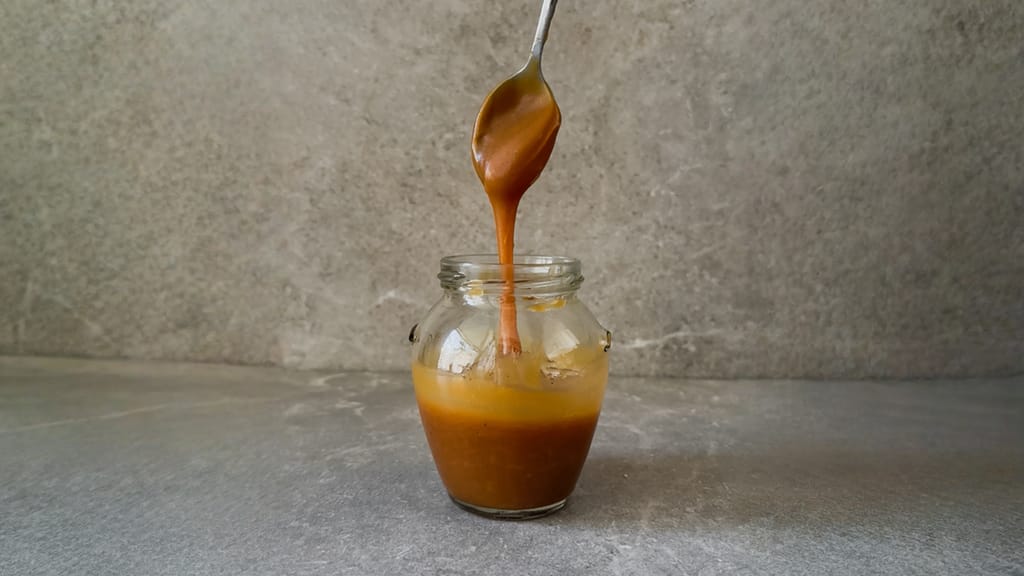
Homemade caramel sauce with just 4 ingredients
Don't want to cook caramel straight into the dish? Try our 4-ingredient homemade caramel sauce instead and pour it over the flan once it's plated.
Flan takes well to plenty of variations — the most popular are coconut, chocolate, coffee and Filipino leche flan, plus regional twists with cinnamon, orange zest or rum. The base ratio stays the same; only the flavour changes:
Coconut flan. Swap some of the milk for coconut milk. The result is creamy, tropical and dairy-free.
Chocolate flan. Melt good-quality dark chocolate into the warm milk — it deepens both the colour and the flavour. Finish with grated chocolate or a dusting of cocoa.
Regional versions. In Spain, cinnamon or orange zest is often added; in Mexico, the custard tends to be sweeter thanks to condensed milk. Filipino leche flan relies on extra egg yolks and is the densest of all.
Experiments. A splash of rum, fresh mint leaves, coffee extract. Fresh strawberries or raspberries make a lovely accompaniment — their colour and freshness cut through the sweet caramel.

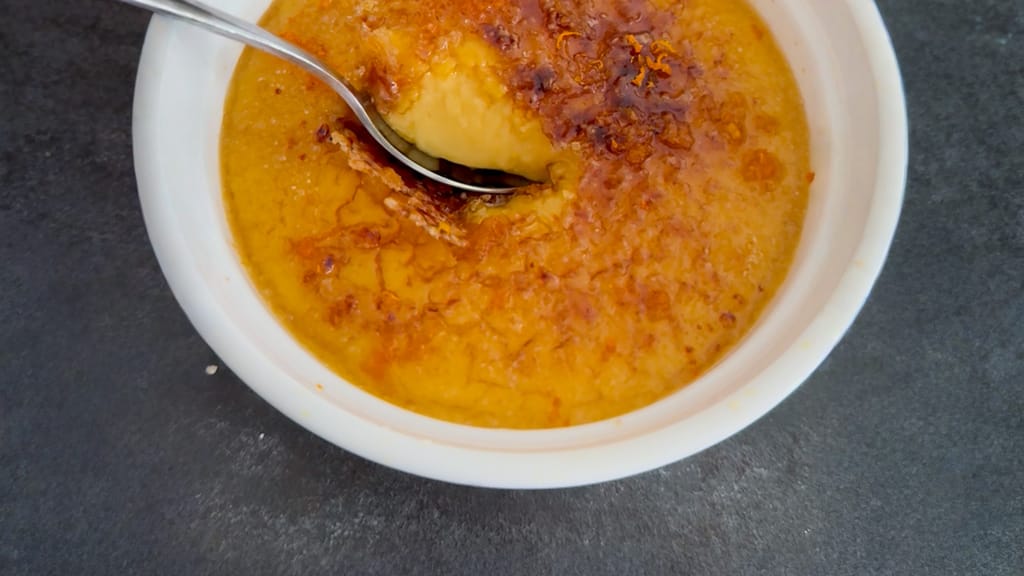
Crema catalana with orange zest and cinnamon
Do you love this family of egg-based desserts? Try its cousin, crema catalana, flavoured with orange zest and cinnamon.
Serve flan chilled and turned out: run a thin knife around the edge of the dish, place a plate on top, flip quickly, and let the liquid caramel cascade over the custard. Store covered in the fridge for up to 3 days.
Serving. Let flan shine in its simplicity. If you want to dress it up, add fresh berries (strawberries, raspberries, blueberries) for freshness and colour, a spoonful of whipped cream for textural contrast, or grated chocolate.
Storing. Keep flan in an airtight container or cover it tightly with plastic wrap — this stops it drying out and picking up fridge odours.
Before serving. Take it out of the fridge 15–20 minutes ahead of time; flan served too cold has a muted flavour. Avoid freezing and thawing it repeatedly, as the texture will turn grainy.
The little details make all the difference: a well-chilled, cleanly turned-out flan draped in its own caramel looks straight out of a pâtisserie — and tastes just as good the next day as it did fresh.
Yes, classic flan is naturally gluten-free — it's made from just eggs, milk, sugar, salt and vanilla, with no flour at all. Just double-check any flavourings or toppings you add; the custard and caramel themselves contain no gluten.
Freezing flan isn't a good idea — once thawed, the custard weeps water and the texture turns grainy. Instead, make it 1–2 days ahead and chill it in the fridge; the flavour actually improves as it sits.
Most likely it was underbaked or didn't get enough time to chill. The centre should still wobble slightly when you take it out of the oven, but shouldn't be liquid — it firms up properly only after at least 4 hours (ideally overnight) in the fridge. Adding a few extra egg yolks to the recipe helps too.
Flan is baked in a water bath and turned out of its dish, so the liquid caramel runs over it. Crème brûlée is served straight from its ramekin, and the sugar on top is torched into a crisp crust just before serving; it's also made with cream, so it's richer and denser than milk-based flan.
Yes, flan works well steamed or in a pressure cooker too. Cover the dish with foil so condensation doesn't drip onto the custard, then steam for roughly 30–40 minutes, until the centre just holds its shape. The result is every bit as silky as an oven water bath version.
One recipe worth heating the oven for, one tip, and one deal from the shop. Nothing else.