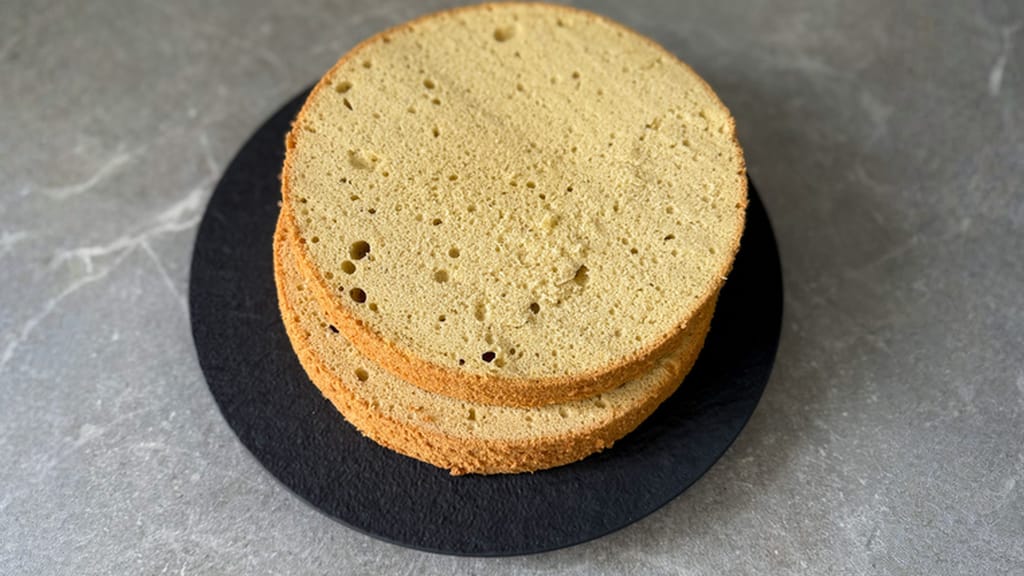
Light and airy génoise sponge cake
Why Cakes Dome in the Middle (and How to Bake a Flat Cake)
Updated Oct 4, 2026
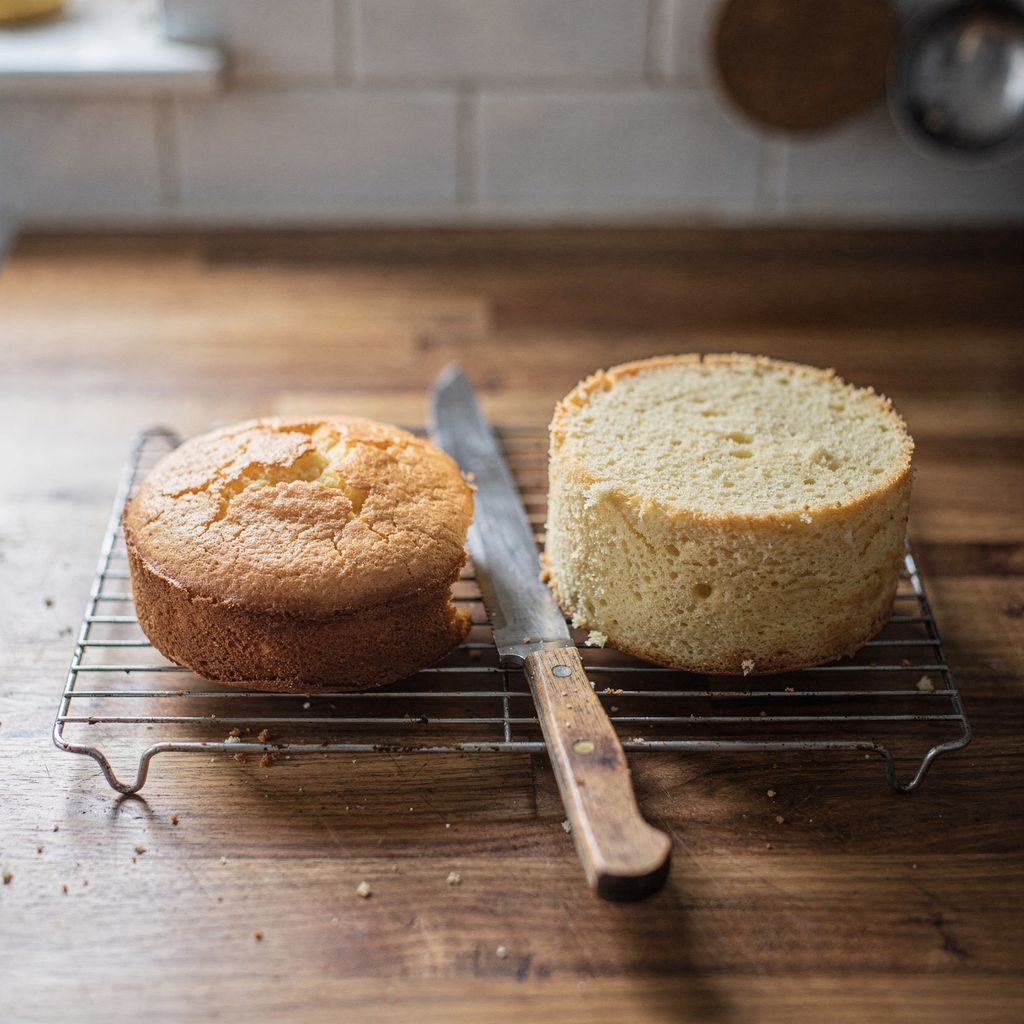
A cake domes because the edges of the batter firm up before the centre does: the still-liquid middle has nowhere to go but up. The usual culprits are an oven running too hot, followed by an overfilled or dark-coloured pan, and too much raising agent. Below you'll find exactly what's happening in the oven, how to bake a flat cake without trimming it, and what to do if you're already stuck with a dome.
A cake domes because heat travels from the pan's walls inward: the edges set and firm up first, while the centre is still liquid and keeps rising. The firm edge acts like a wall. Gas from baking powder or whipped eggs keeps expanding, but it can no longer push outward, so it pushes the centre upward instead. The result is a dome, often with a crack on top.
Metal pans conduct heat fast, so the batter near the walls heats up much sooner than the batter in the middle. The bigger the gap between how fast the edges bake and how fast the centre bakes, the taller the dome. So everything that helps you bake a flat cake essentially does one of two things: it slows down the edges, or it speeds up the centre.
The usual culprits are an oven that's too hot, an overfilled or too-small pan, a dark pan, too much raising agent, overmixed batter, and baking one tall cake instead of several thinner layers. Usually several of these happen at once.
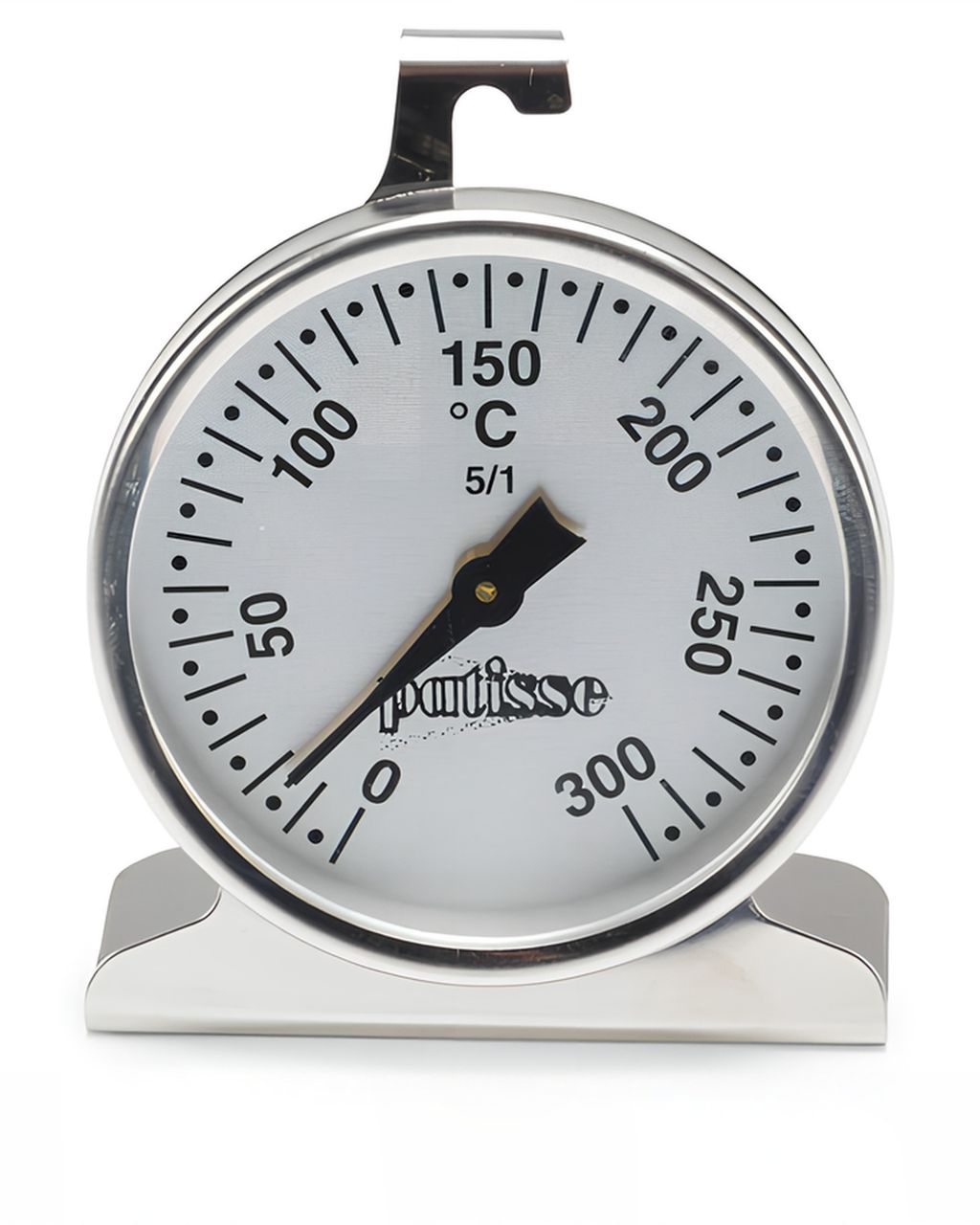
Your oven runs hotter than it says. Home ovens routinely drift from their set temperature — according to oven-thermometer makers like ThermoWorks, by as much as 15–30°C (27–54°F). At 200°C (390°F) instead of 180°C (355°F), the edges firm up within minutes.
The pan is too small or too full. Batter deeper than roughly 4cm (1.5in) bakes through slowly in the middle. Fill the pan no more than two-thirds full.
The pan is dark-coloured. Dark metal and non-stick coatings absorb more radiant heat than light stainless steel or aluminium, so the edges bake faster.
Too much baking powder or soda. More gas means more pressure pushing up the centre. Adding extra raising agent "just in case" never pays off — if anything, the cake is more likely to sink afterwards.
Overmixed batter. Mixing fast and long once the flour goes in develops gluten. The batter becomes stretchier and holds gas like a balloon, so the centre rises into a peak.
One tall cake instead of several thinner layers. A deep pan that you later slice into three layers will almost always dome. In a shallow layer, heat reaches the centre before the edges have time to set.
To bake a flat cake: lower the temperature to 160–170°C (320–340°F), wrap the pan in a damp strip of cloth, fill it only two-thirds full, push the batter towards the edges, and don't overmix it. Ideally, bake two or three thinner layers instead of one tall cake. Just two or three of these tweaks will shrink the dome down to a few millimetres.
Lower the temperature by 10–20°C (18–36°F). Instead of 180°C (355°F), bake at 160–170°C (320–340°F) and expect the cake to need 10–15 minutes longer in the oven. Slower baking gives the centre time to catch up with the edges. But first, check with an oven thermometer how hot your oven actually runs.
Wrap the pan in a damp strip of cloth. Cut a strip from an old cotton tea towel as wide as the pan is tall, soak it, wring it out so it doesn't drip, and wrap it around the outside of the pan. Secure it with foil or a pin. As long as the strip stays damp, the evaporating water keeps the pan wall at around 100°C (212°F), so the edges bake more slowly — at roughly the same pace as the centre. Shop-bought baking strips for even cake layers work on exactly the same principle.
Fill the pan only two-thirds full, with batter no deeper than 3–4cm (1.2–1.6in). If you've got more batter than that, use a bigger pan or bake a second layer.
Push the batter towards the edges. Use a spatula to make a shallow dip in the centre and nudge the batter out towards the pan's edges. Since the centre rises more anyway, this evens things out.
Fold in the flour only briefly. Use a spatula or the lowest mixer speed, just until the dry flour disappears. Overmixed batter traps gas like elastic.
Weigh your baking powder, or measure it with a levelled spoon. Stick to the recipe. A heaped spoonful adds far more than the recipe allows for.
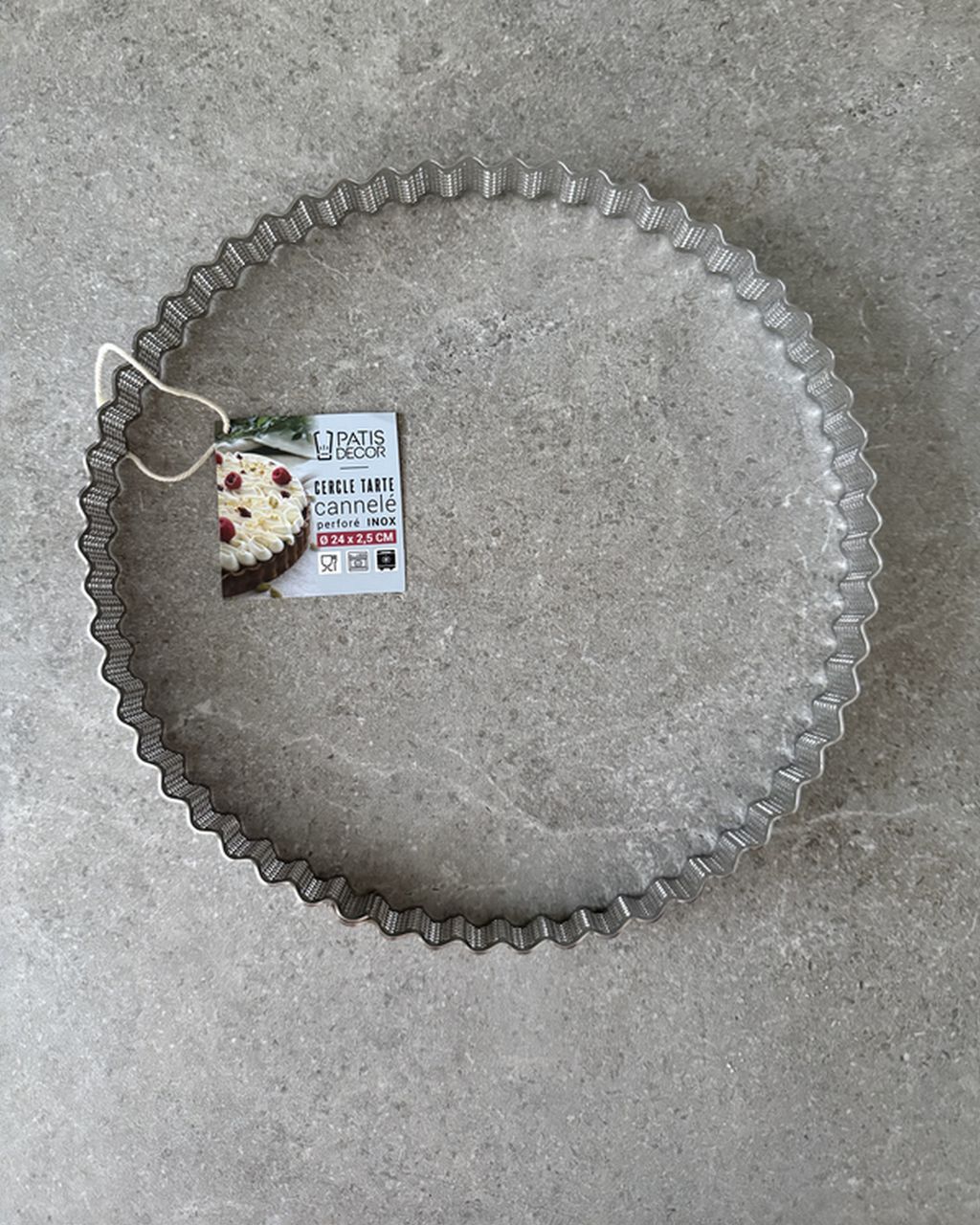
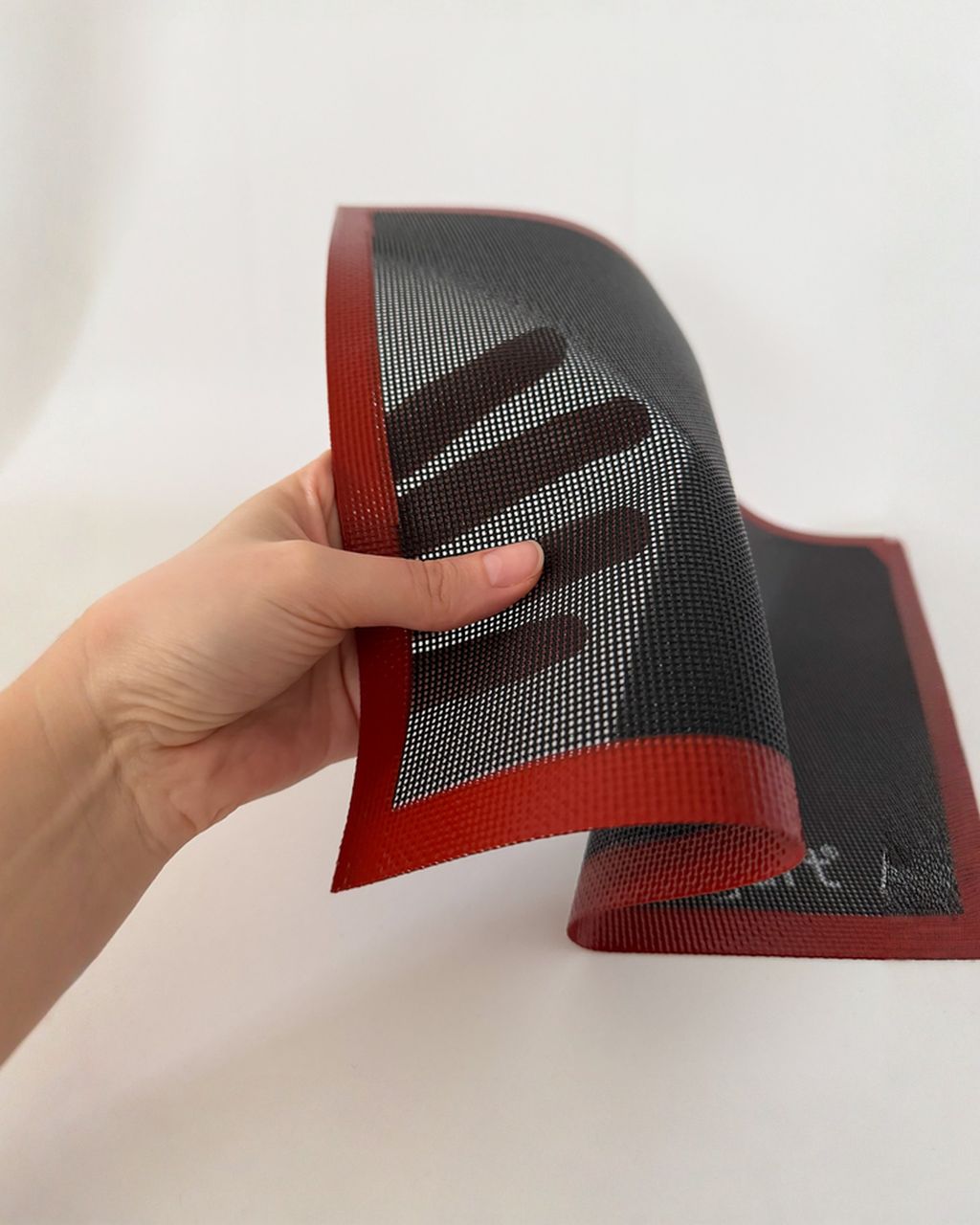
Bake thinner layers. Two or three layers 1.5–2cm (0.6–0.8in) tall come out flatter than one tall cake, and you won't need to trim them. Set a stainless steel cake ring on a perforated baking mat and spread the batter inside it. The holes let steam escape and heat distribute evenly. Browse cake rings and perforated baking mats to pick one.
Place the pan in the centre of the oven and don't open the door for the first 20 minutes. A sudden drop in temperature can cause the centre to sink, even if the edges have baked correctly.
Light and airy génoise sponge cake
Light, airy Génoise sponge: a great cake to practise baking flat on
A gentle dome of 3–5mm is completely normal, and for a Bundt cake, pound cake, or muffins it's even desirable. It's only a problem for a cake you plan to stack into layers or coat with frosting.
Bundt cakes and pound cakes: a domed top with a crack is typical here, and nobody trims it off. A Bundt cake also gets turned upside down after baking, so the dome ends up at the bottom as the base.
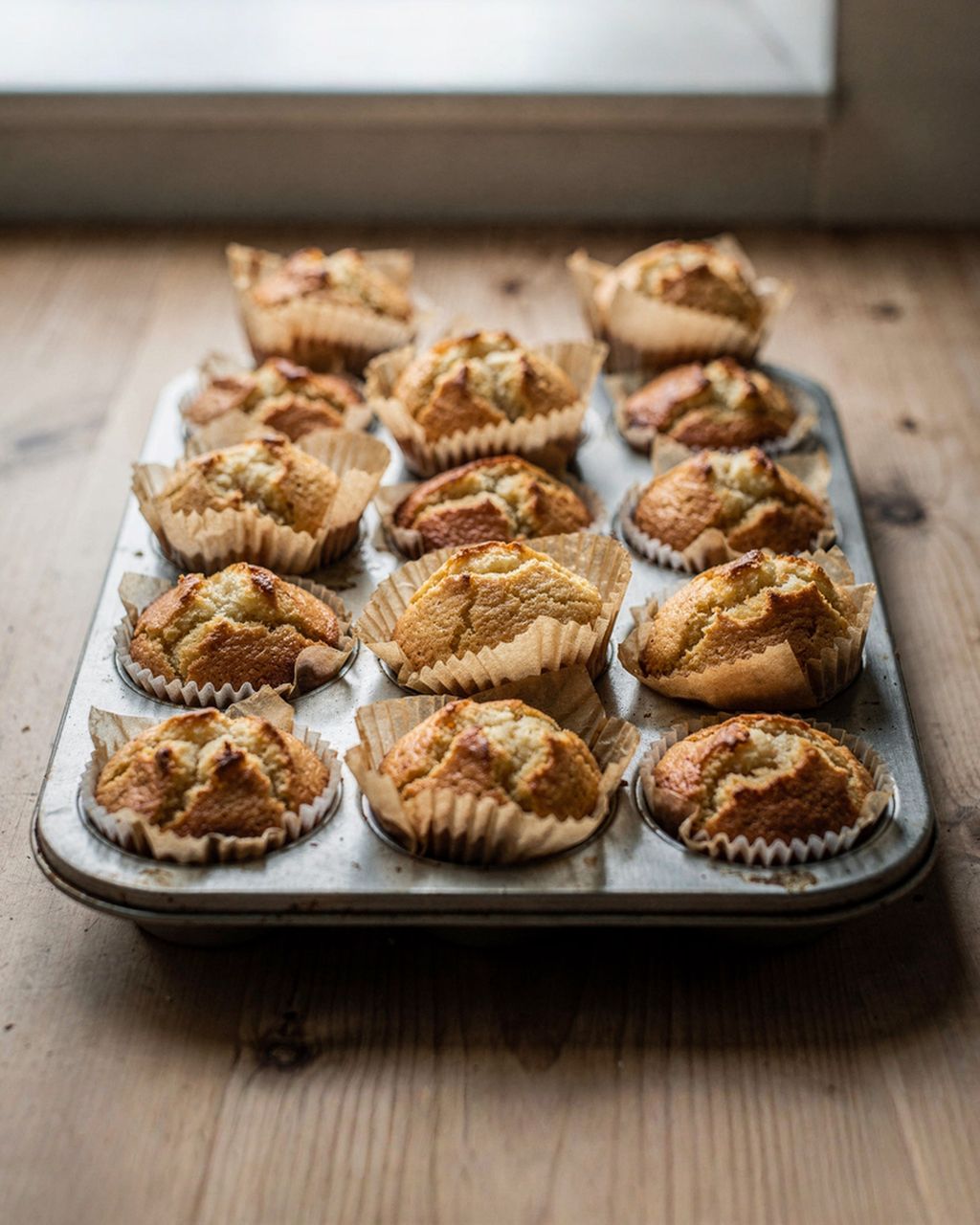
Muffins and cupcakes: here, a dome is actually what you want. For a nicely rounded top, bake briefly at a higher temperature — exactly the opposite approach to a flat cake. Read more in Why muffins don't rise and have no dome.
Layer cakes and frosted cakes: here you want it flat. Every millimetre of dome multiplies up through the layers and tips the finished cake off balance at the top.
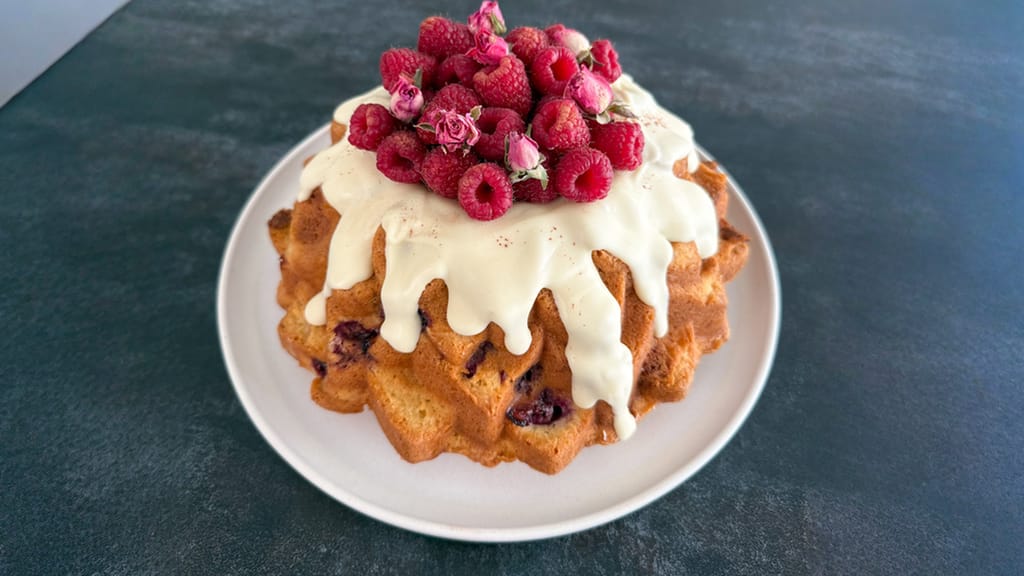
Raspberry bundt cake with white chocolate and sour cream
Raspberry and white chocolate Bundt cake: here, the cracked dome is part of the charm
To fix a domed cake, let it cool completely, wrap it in foil and chill it in the fridge for a few hours, then trim it level with a long serrated knife at the height of the edge. A chilled cake won't crumble, and the cut comes out straight.
Trim level with the edge. Hold the knife horizontal, slowly turn the cake, and cut with a sawing motion from the outside towards the centre. Don't try to cut straight across in one go.
Use the bottom as the top. Flip the top layer so the cut side faces down. The bottom of the cake, shaped by the pan, is flat and smooth, so frosting spreads onto it easily.
Press down a small dome right out of the oven. With moist, buttery sponges, gently pressing the top with a clean tea towel straight after baking can help. This won't work on a dome taller than a centimetre, and with a whisked sponge it will knock out the air you worked so hard to whip in.
A cake that domes and then sinks almost always has too much baking powder, or it was pulled out of the oven underbaked. The gas puffs up the centre more than the batter's structure can support, and once the cake cools, the bubbles collapse. It helps to weigh your raising agent precisely and leave the oven door shut for the first 20 minutes.
A cake domes unevenly when the oven bakes unevenly. One side sits closer to the heating element or fan and bakes faster. Centre the pan exactly in the middle of the rack, and if the problem persists, rotate it 180° halfway through baking. Turn it quickly, and only once the batter has firmed up, otherwise it will sink.
For a tall cake, conventional top-and-bottom heat is more reliable, since a fan oven bakes the edges more aggressively. If you do use the fan setting, set it 15–20°C (27–36°F) lower than a recipe written for conventional heat. Shallow layers baked in a ring, on the other hand, work fine with a fan oven.
Yes. A metal heating core set upright in the middle of the pan, or a flower nail (used for piping buttercream flowers) pushed in point-down, carries oven heat straight into the centre of the batter. The centre then bakes sooner and catches up with the edges. This is especially worth doing for pans roughly 23cm (9in) or wider, or deeper than 7cm (2.75in).
Crumble the trimmed dome with a bit of frosting to make cake pops, layer it into a glass with cream and fruit as a quick trifle-style dessert, or dry it out in the oven at 120°C (250°F) and use it as crumb topping for a cake. Wrapped well, it keeps in the freezer for about a month.
One recipe worth heating the oven for, one tip, and one deal from the shop. Nothing else.