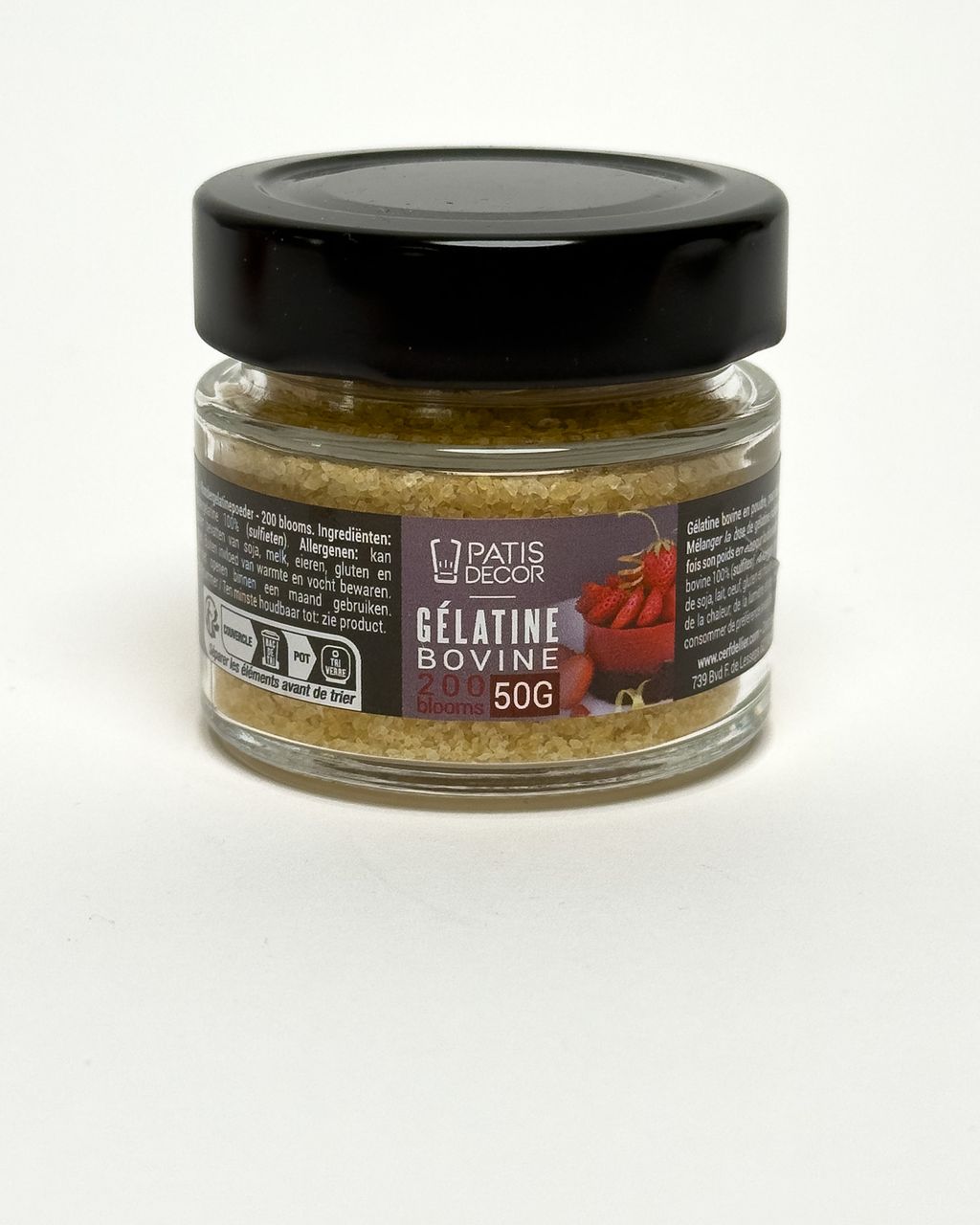
Beef Gelatin Powder 200 Bloom
Broken Glass Jello: Colorful Gelatin Cubes in Creamy Milk Jello That Slices Cleanly
Updated Oct 15, 2026
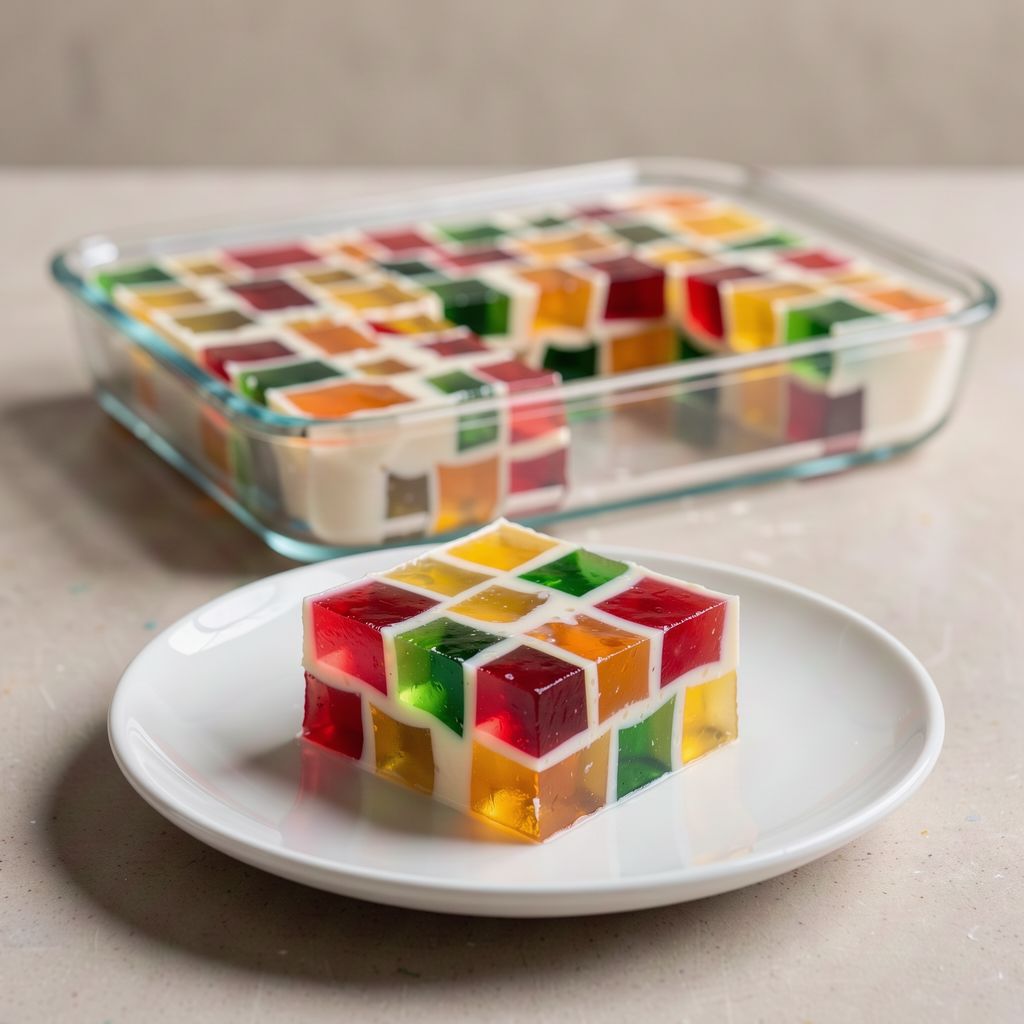
Broken glass jello (also called stained glass jello) is a dessert of firm, colorful gelatin cubes set in a creamy milk jello made with sweetened condensed milk. Once it's set, you slice it and every piece shows a colorful mosaic. For it to slice cleanly and keep the colors from bleeding, three things have to be right: the cubes need more gelatin than ordinary jello (about 4%), the milk layer needs about 2%, and you pour it over the cubes cooled, at 30°C (86°F) at most. Here are the ratios, the method, and what most often goes wrong.
Broken glass jello (in Czech, mozaikové želé, "mosaic jelly") is a dessert made from two kinds of jello: firm colorful cubes and a milk jello that binds them into a single block. You make the cubes and let them set separately, cut them up, scatter them into a mold, and pour the milky mixture over them. Once it's chilled, you turn it out and slice it like a cake.
The milk layer is a close relative of panna cotta. It's just firmer, thanks to more gelatin and sweetened condensed milk, so it holds its shape even when cut. If you'd like a creamier dessert to eat with a spoon, go for a classic Italian panna cotta instead.
For a 20 × 20 cm (8 × 8 in, about 1.7 l) pan you need roughly 50 g of 200 Bloom powdered gelatin: 4 × 8 g for the cubes and 18 g for the milk layer. Each layer has a different job, so each has a different ratio:
Colored cubes: 4% gelatin. That's 8 g of gelatin per 200 ml of liquid. The cubes have to be firm so they don't crumble when cut and can withstand being covered with the milk mixture. Ordinary spoonable jello has only 1.5–2%.
Milk layer: about 2% gelatin. That's 18 g of gelatin for 397 g of sweetened condensed milk and 500 ml of liquid. It holds a clean cut but still feels smooth and creamy in the mouth.
These ratios are for gelatin with a strength of 200 Bloom, for example our 200 Bloom powdered beef gelatin (Patisdécor). Gelatin with a different Bloom number sets with a different strength. Sheet gelatin also varies from brand to brand. To learn how to convert the grams, see Bloom gelatin: what the Bloom number means.
For broken glass jello, pure gelatin is the safest choice: you set the firmness yourself, and one gelatin works for both layers.
200 Bloom powdered gelatin. You can weigh out exact grams, it dissolves quickly, and the result is the same every time. Beef gelatin has no off smell and suits people who don't eat pork.
Sheet gelatin. It works just as well, but sheets of different grades weigh 1.7–3.3 g each (weaker gelatin has a heavier sheet). Convert by weight and Bloom, not by the number of sheets.
Boxed supermarket jello. The color and flavor are ready-made, but it's mostly sugar and has too little gelatin for cubes. If you use it, make it with only half the water in the package directions, or add 4–5 g of gelatin per packet. Otherwise the cubes will dissolve when you pour the milk layer over them.
Agar. This is the plant-based option, but it behaves differently: it sets at around 35–40°C (95–104°F) and melts only at around 85°C (185°F). Agar cubes therefore survive the pour without trouble, but you have to pour the milk layer warm, before it starts to set. The texture is more brittle and breaks more easily, and it isn't as smooth. We have a separate article on the differences between setting agents: Types of gelling agents: pectin, agar, and gelatin.
You'll find everything that sets desserts, from gelatin to pectin, in our gelling agents and binders category.
You can color the cubes with juice, a flavoring paste, or gel food coloring. Flavoring paste works best for taste, and gel coloring for a vivid shade.
Fruit juice or syrup. The flavor is natural, but the colors tend to be dull and turn brownish (strawberry, raspberry, sour cherry). Replace part of the water with juice, and you can reduce the sugar.
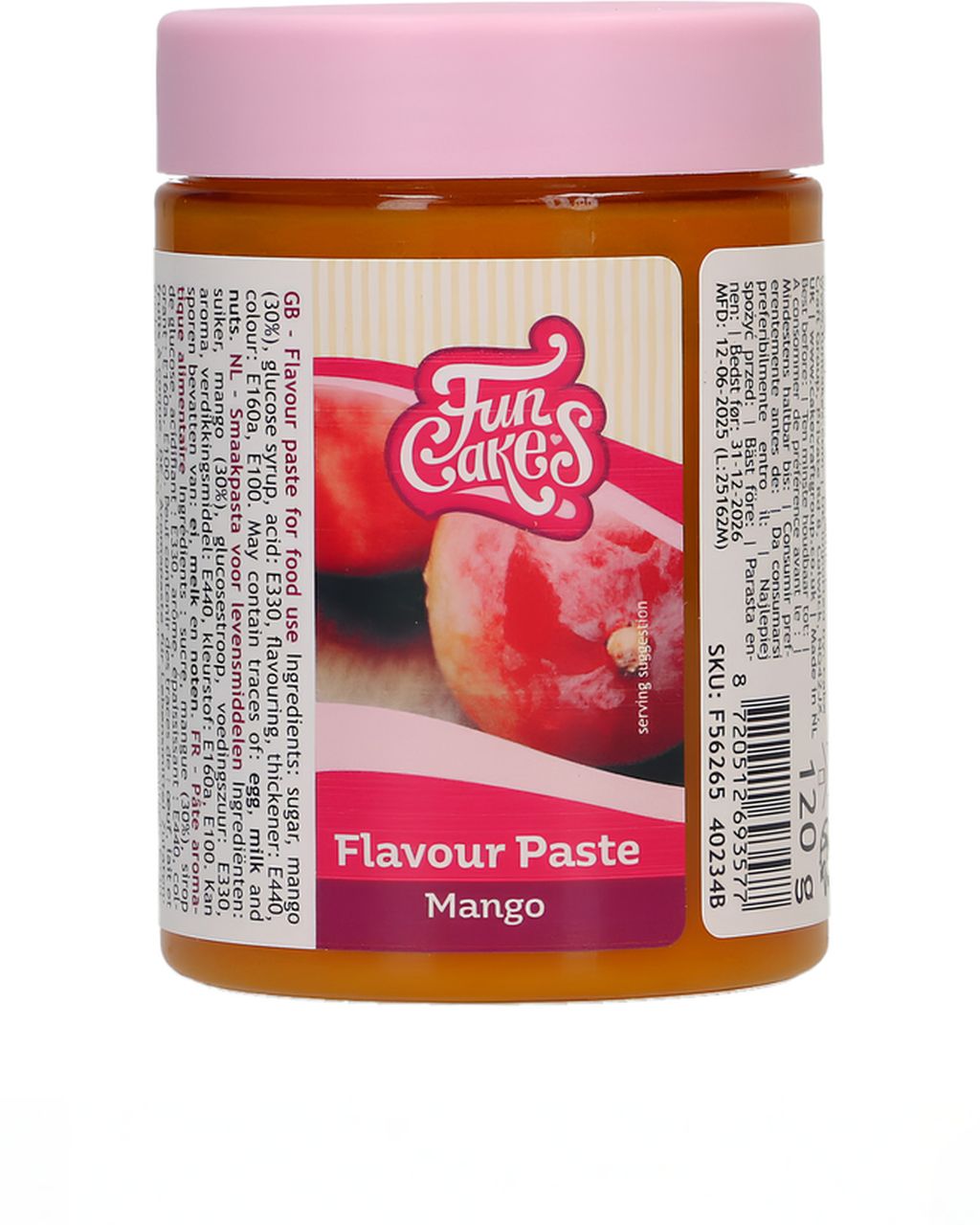
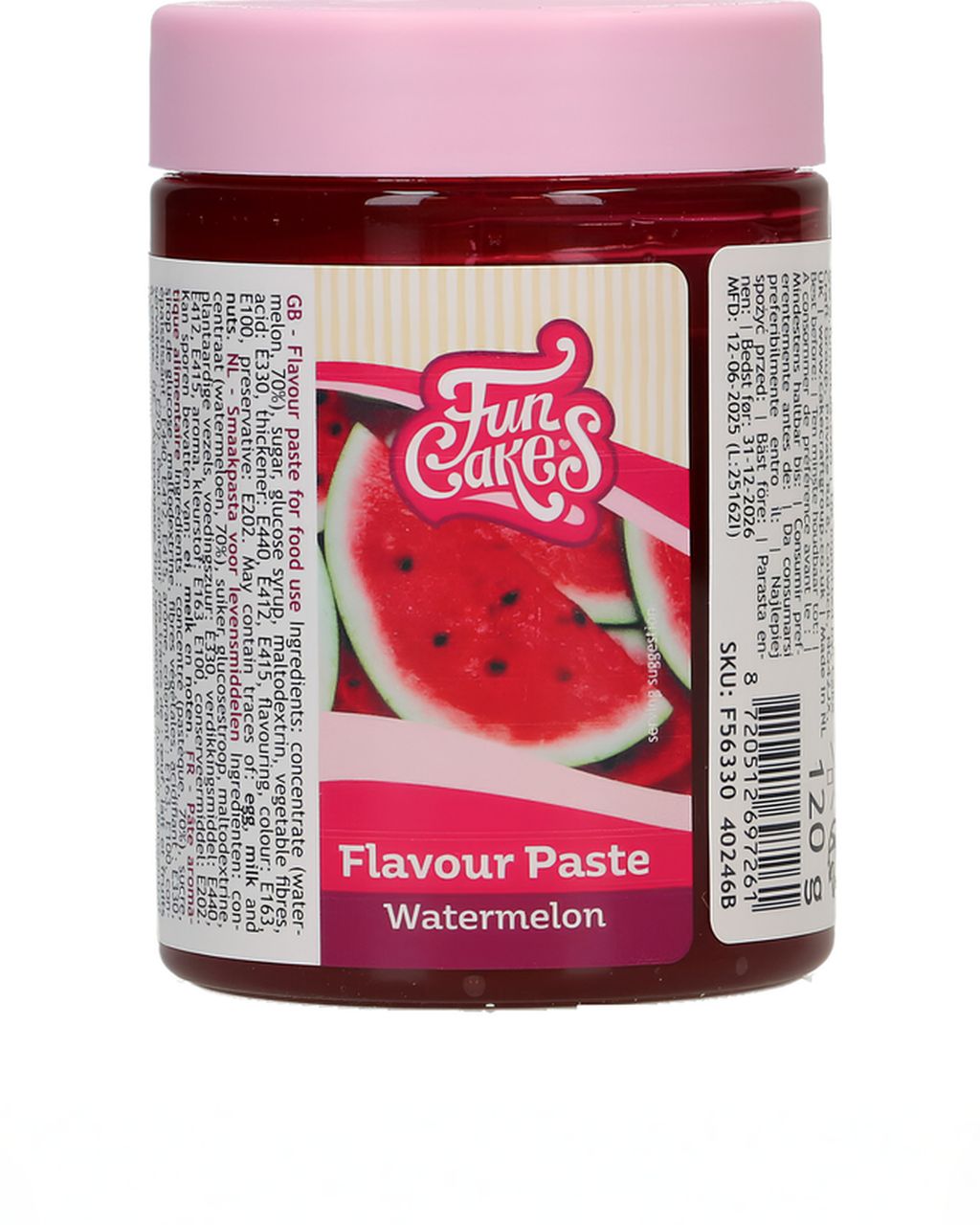
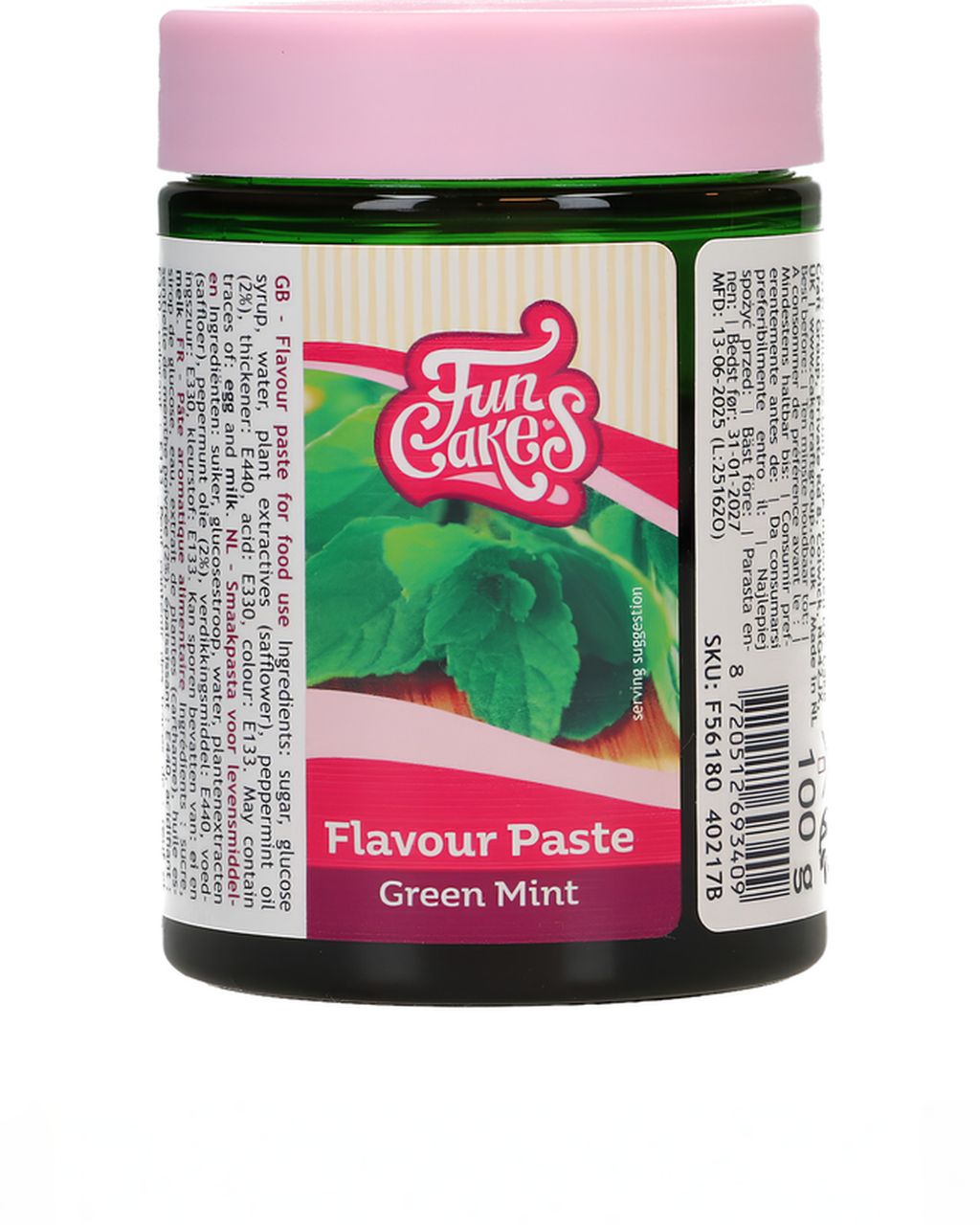
FunCakes flavoring pastes (such as mango, melon, or mint) give the cubes a distinct flavor and a light tint at the same time. Start with a teaspoon, about 5–8 g per 200 ml, taste, and add more if needed. The advantage is that every color tastes different, so the mosaic isn't just for show.
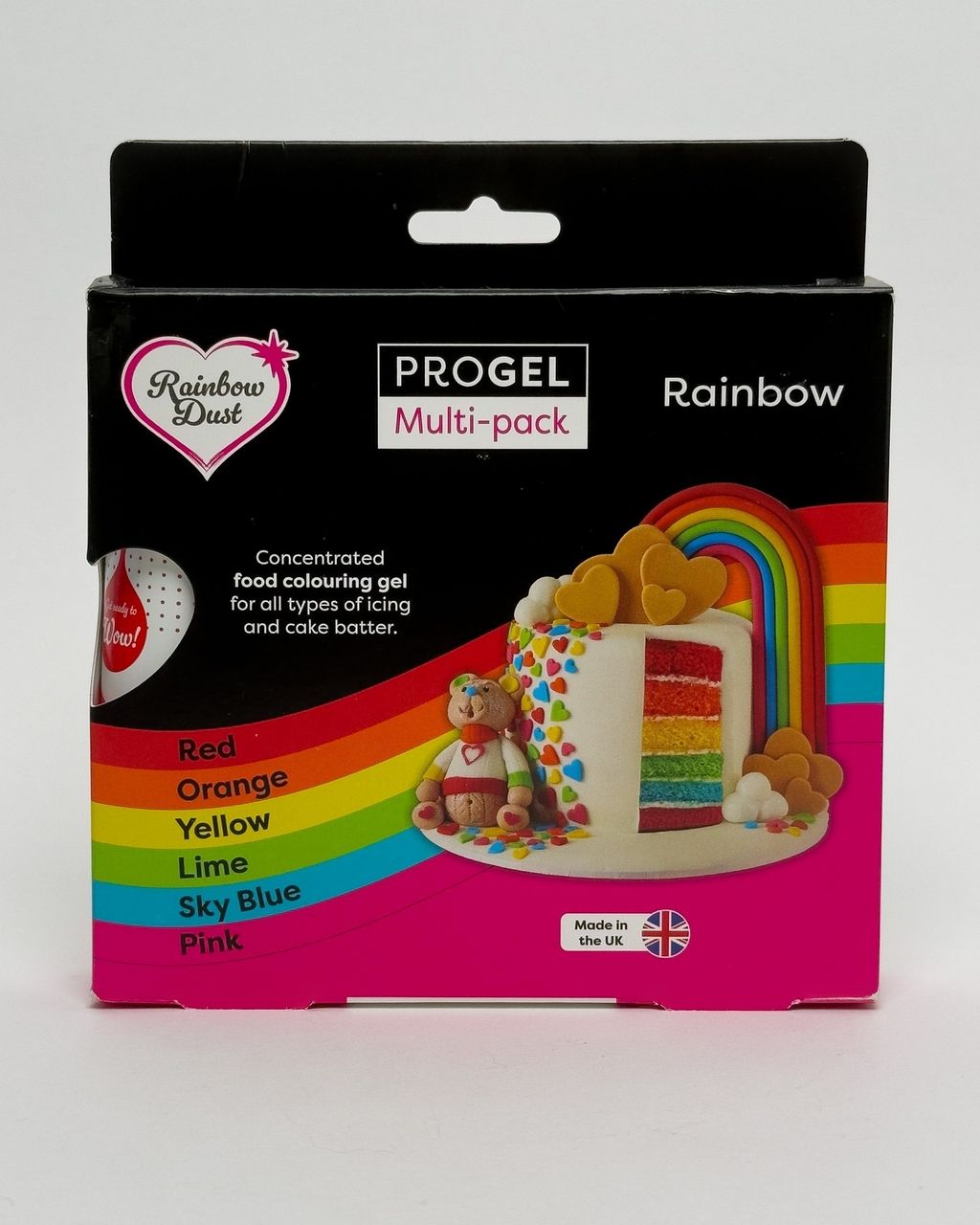
ProGel gel colors give a vivid shade even in completely clear jello. A toothpick tip up to 2 drops per 200 ml is enough. Clear jello intensifies the color, so add it a little at a time. For four to six colors, the ProGel rainbow set is worth it.
Tip: Make one batch of cubes completely clear or just pale yellow. Among the vivid colors, the mosaic then looks like stained glass rather than a colorful jumble.
The whole process takes about 30 minutes of hands-on work and at least 8 hours of chilling (4 hours for the cubes, 4–6 hours for the finished dessert). It's best to make it a day ahead.
Cubes (4 colors). For each color, sprinkle 8 g of gelatin over 40 ml of cold water and let it bloom for 5–10 minutes. Heat 160 ml of water with 25–30 g of sugar to 60–70°C (140–158°F), stir in the bloomed gelatin, and don't boil it. Add the paste or coloring.
Setting. Pour each color into a small bowl or mold (about 10 × 10 cm) to make a layer about 2 cm thick. Refrigerate for 3–4 hours, until the jello is firm and springy.
Cutting the cubes. With a knife dipped in warm water, cut the jello into 1.5–2 cm cubes. Turn them out and chill them in the fridge a little longer, as cold cubes withstand the pour better.
Milk layer. Let 18 g of gelatin bloom in 100 ml of cold water. Heat 400 ml of whole milk to 60–70°C (140–158°F), stir in the gelatin, then 397 g of sweetened condensed milk and the vanilla.
Cooling. Let the milk mixture cool to 25–30°C (77–86°F). An ice-water bath is faster, as long as you keep stirring. The mixture should feel lukewarm to the touch and be just starting to thicken.
Assembly. Lightly grease the mold with neutral oil, add the cubes, and mix up the colors. Pour the milk mixture over them and tap the mold on the counter to bring up any bubbles.
Setting. Cover and refrigerate for 4–6 hours, ideally overnight.
Dip the mold in warm water (about 40°C / 104°F) for 5–10 seconds, cover it with a plate, and flip it over. Slice with a knife warmed in hot water and wiped dry, and reheat and wipe it again after every cut. This keeps the edges sharp and stops the colors from smearing.
Mold: A square 20 × 20 cm mold gives neat, even slices. In a round Bundt pan, broken glass jello makes an eye-catching ring. For more ideas, see What to bake in a Bundt pan besides Bundt cake.
Serving size: A 20 × 20 cm mold makes 16 pieces of 5 × 5 cm.
Serving: Serve straight from the fridge. Gelatin jello softens at room temperature, so it should stay on the table for 1–2 hours at most, less in summer.
It's almost always down to temperature or too little gelatin. The symptom tells you what went wrong:
Color bleeds into the white: The milk mixture was too warm, or the cubes weren't chilled enough. Next time, pour at 25–30°C (77–86°F).
Cubes crumble or tear: There wasn't enough gelatin in the cubes, or they hadn't set enough. Stick to 4% and 3–4 hours in the fridge.
The dessert slumps when you cut it: The milk layer has too little gelatin or wasn't chilled long enough. Leave it overnight.
The jello didn't set at all: Most often it contained fresh fruit with enzymes (pineapple, kiwi, papaya, figs), or there was too little gelatin. Only dissolve the gelatin, never boil it, because long boiling weakens it.
There's a layer without cubes at the bottom: The cubes floated to the top. Pour the milk mixture over them once it starts to thicken, or first pour a thin layer, let it set just slightly, place the cubes in it, and then add the rest.
You can make broken glass jello in four variations: in shades of a single color, with a yogurt or cream white layer, in glasses, and with alcohol for adults. The basic gelatin ratios stay the same unless stated otherwise.
One-color elegance: Cubes in just two shades of one color, such as pink and raspberry, in white jello.
Yogurt or cream white layer: Replace part of the milk with plain yogurt or whipping cream. It turns out fresher and less sweet. Keep the gelatin at 2%.
Layers in a glass: You can pour the cubes and milk mixture straight into glasses. Then 1.5% gelatin in the milk layer is enough, since you aren't slicing anything. You'll find more ideas in Christmas desserts in a glass.
For adults: You can add liqueur to the cubes. Alcohol makes gelatin set less well, though, so to find out how much to add, read New Year's Eve jello shots.
We also have jello combined with cream in our recipe for strawberry panna cotta with mint jello.
Broken glass jello keeps covered in the fridge for 3–4 days. Because it contains milk and condensed milk, store it below 5°C (41°F) and cover it with plastic wrap, or it will absorb fridge odors and the surface will dry out.
Freezing broken glass jello isn't worth it. After thawing, the gelatin gel releases water, the cubes turn rubbery, and the milk layer turns grainy. It's better to make it a day ahead and keep it in the fridge.
You can add most fresh fruit to broken glass jello, but not fresh pineapple, kiwi, papaya, or figs. They contain enzymes that break down gelatin, so the jello around them won't set. Canned or briefly cooked, these fruits work fine.
Yes, you can make broken glass jello without condensed milk. Replace the white layer with milk and cream or with yogurt, sweetened with about 80–100 g sugar per 900 ml. Keep the gelatin at 2%. The result is less sweet and fresher, just a little less opaquely white.
Broken glass jello made with gelatin isn't vegetarian, because gelatin is made from animal collagen (beef or pork). You can make a vegetarian version with agar in both layers. Expect a more brittle texture, and pour the milk layer while it's still warm, because agar starts to set at around 35–40°C (95–104°F).
One recipe worth heating the oven for, one tip, and one deal from the shop. Nothing else.