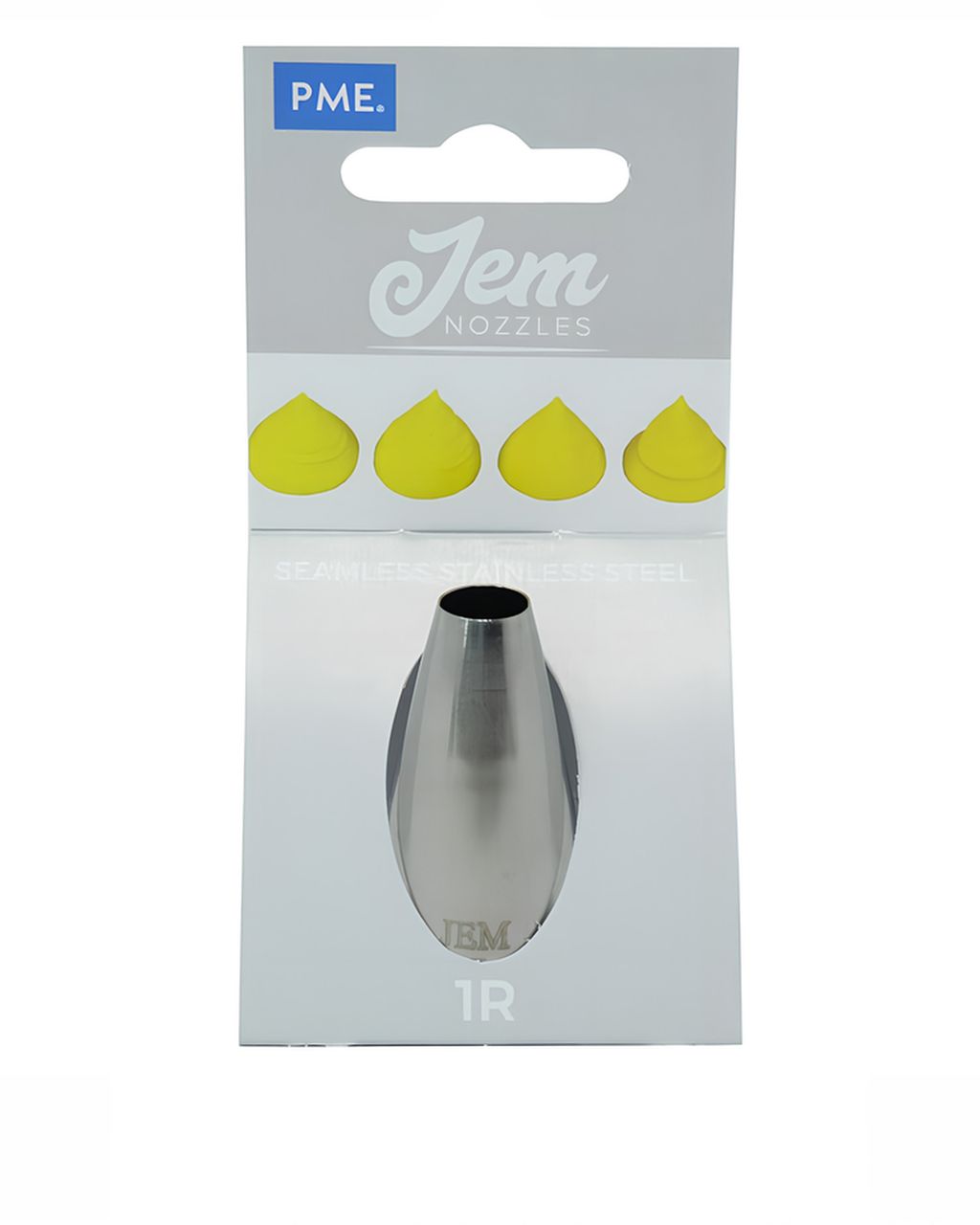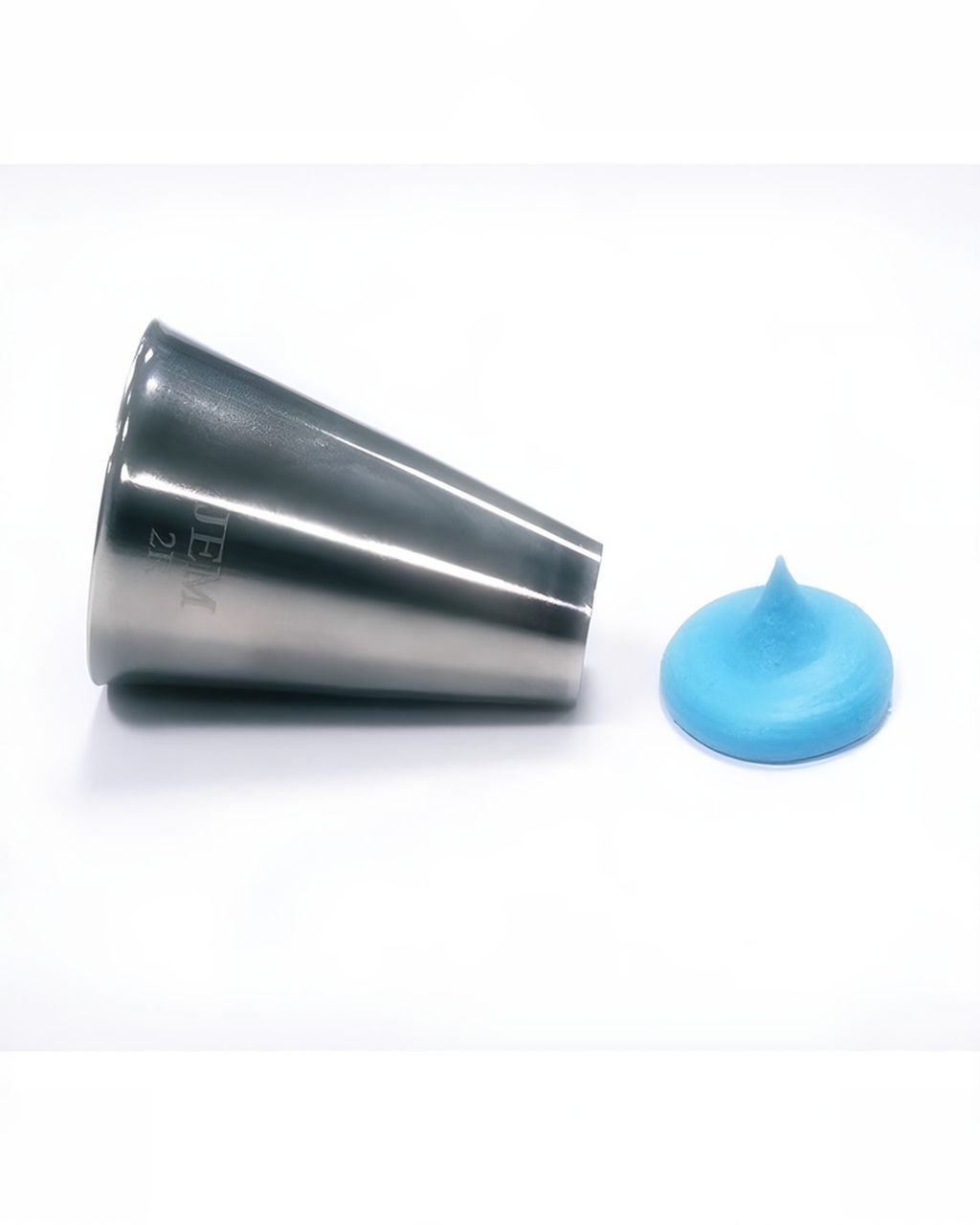
JEM Piping Tip – Savoy Round #2R (Medium)
Cream Dam: How to Fill a Cake Without the Filling Leaking Out
Updated Oct 8, 2026
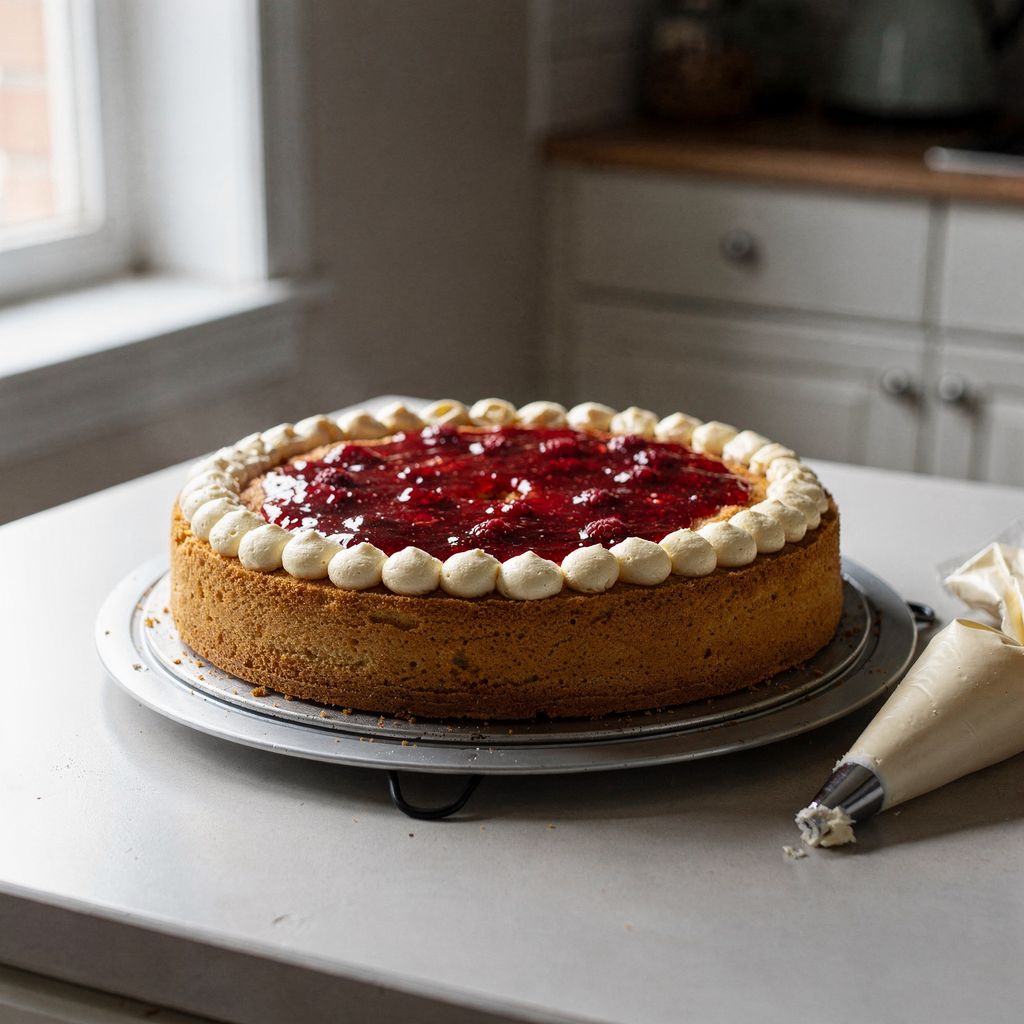
A cream dam is a ring of firm frosting piped around the edge of a cake layer, with soft filling — jam, curd, caramel, or fruit — poured into the middle. The dam holds the filling in place even once you set another layer on top. Without it, the soft filling gets squeezed outward under the weight of the layers, seeps into the final coat of frosting, and bulges out as an ugly ridge on the side of the cake. Here's what frosting and piping tip to use for a dam, how tall it should be, how much filling to add, and what to do if the cake bulges anyway.
You need a cream dam whenever your filling is softer than the frosting you'll use to cover the cake. It's a ring of firm frosting, roughly 1 cm tall and 1 cm wide, piped around the edge of the cake layer that acts as a barrier — the filling stays inside, and the frosting on the sides stays clean.
A dam is especially useful for these fillings:
jam, preserves, and fruit compote
lemon or passion fruit curd
caramel and salted caramel as a cake filling
fresh fruit cut into pieces
softer frostings like pastry cream or whipped cream stabilized with gelatin or mascarpone
If you're filling the cake with the same firm frosting you'll use to cover it (buttercream or ganache, for example), you don't need a dam — the filling and the dam are one and the same.
Use the firmest frosting you have on hand for the dam — usually the same one you're using to cover the cake, just a little stiffer. The dam has to support the weight of the next layer, so a loose, runny frosting won't do the job.
Buttercream (American, Swiss, or pastry cream–based) — the most reliable choice. Thicken it with a few extra tablespoons of powdered sugar for the dam. It pipes best at 18–21 °C (64–70°F): colder and it cracks, warmer and it slumps. If your buttercream turns greasy or curdles, check out how to whip buttercream so it doesn't turn greasy.
Ganache — dark chocolate and cream in a 2:1 ratio, left to set until it's the consistency of soft peanut butter. It holds extremely well and pairs nicely with fruit fillings.
Mascarpone frosting — works if it's well chilled and whipped until stiff. It's borderline for taller cakes.
Plain whipped cream — not suited for a dam. It compresses under the weight of the layer above and starts weeping water once it meets a moist filling.
A note on color: once the cake is sliced, the dam shows up as a thin ring at the edge of each layer. If it's made from the same frosting as the cake's coating, it'll blend right in.
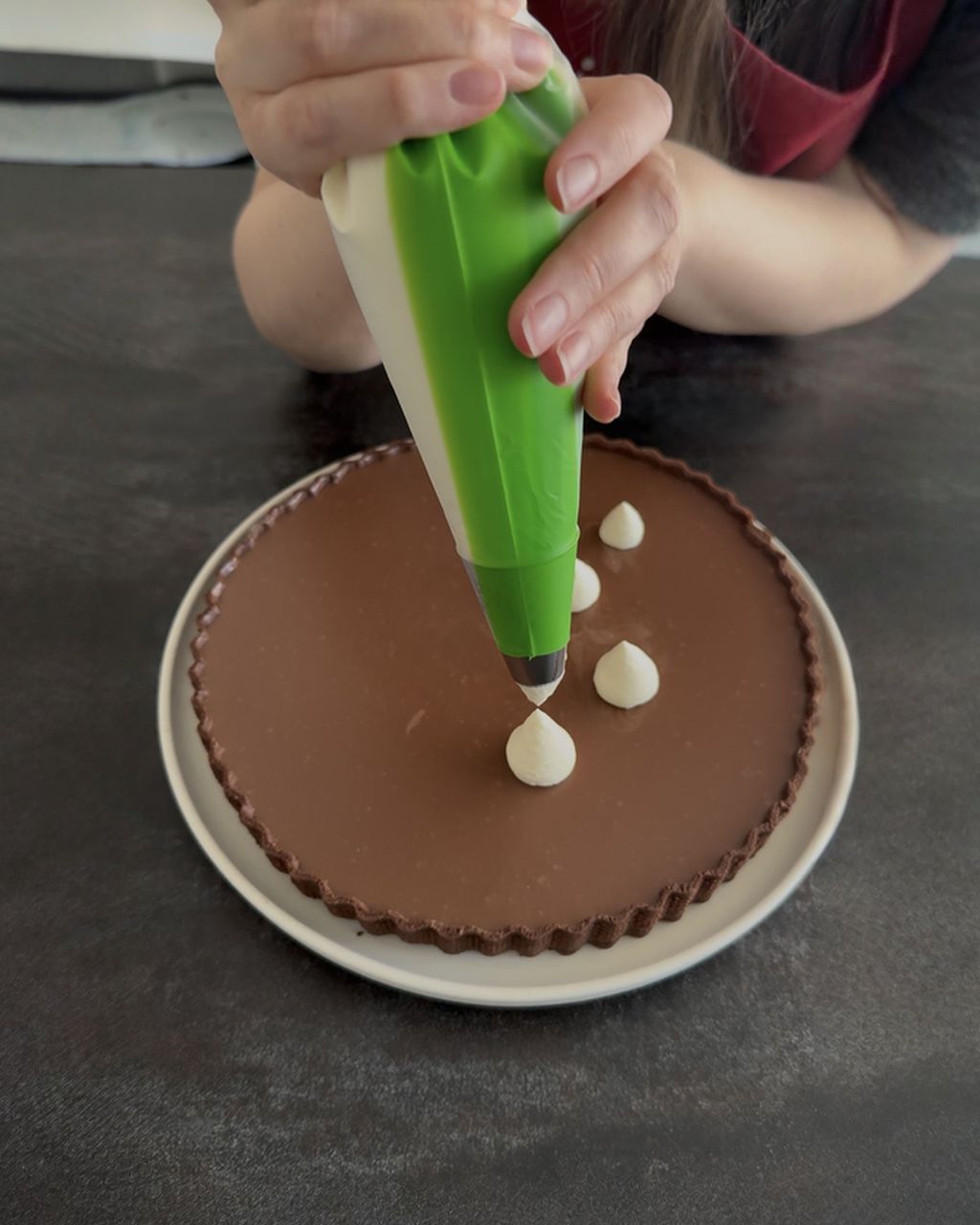
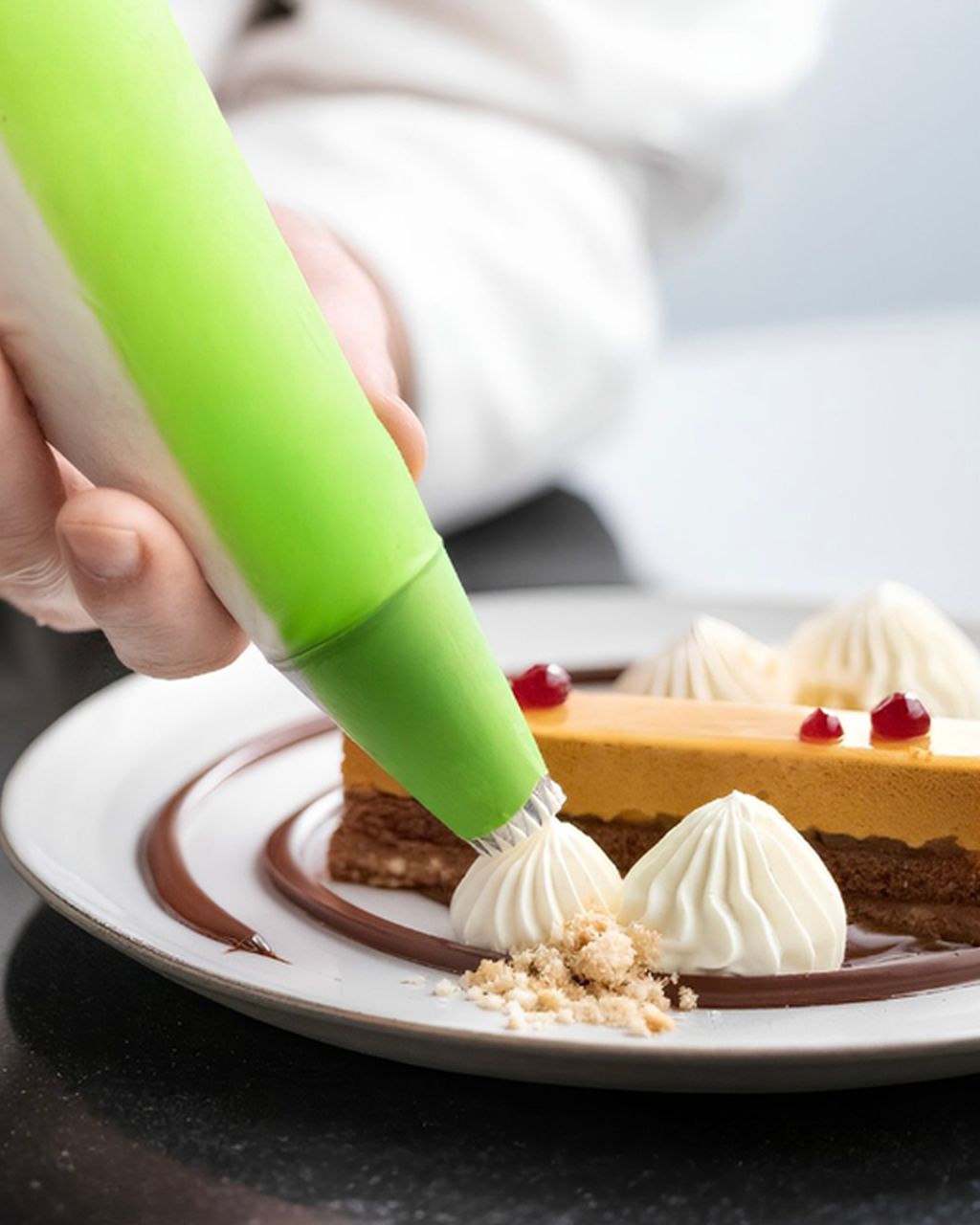
A round tip with roughly a 1 cm opening and a sturdy piping bag are all you need for a cream dam. A round tip gives you a smooth, ridge-free cylinder of frosting with no grooves the filling could squeeze through — a star tip makes no sense here.
Large round Savoy tips work well — they're wide with no narrow neck, so even thick frosting pipes easily and the ring comes out continuous. Before you use a tip for the first time, measure the opening with a ruler: for a dam, you want around 1 cm. A smaller opening gives a thin ring that won't hold the filling in, while a wider one makes it harder to pipe an even height. Narrower round tips are better suited to small cakes and more delicate detail work.
You'll also need a piping bag big enough to hold all the frosting for the whole cake at once — for a 20 cm cake, go for a bag that's 30–36 cm long; a smaller bag means constant refilling, and the frosting will warm up in your hands. Disposable bags are hygienic and save you from washing greasy frosting out of them, while fabric bags last for years. We cover the differences in piping bags: disposable or fabric, and what size to choose, and you'll find the full range in our piping bags and tips category.
Don't have a tip? Snip the corner off a piping bag so the opening is about 1 cm. It works, just know the edge of the ring will be less even, and the bag can split if you squeeze too hard.
The process is: level the layers, pipe the dam a little way in from the edge, chill it, pour in the filling below the top of the dam, add the next layer, and chill the whole cake before covering it. Here's the breakdown:
Level the layers. Trim off any domed top so each layer is flat. On an uneven layer, the filling runs toward the lower edge and the dam cracks there. For flat, sturdy layers, a light Génoise sponge works well.
Spread a thin layer of frosting. Apply 1–2 mm of frosting to the dry cake layer. It seals in crumbs and stops the layer from soaking up the moist filling.
Pipe the dam. Hold the bag upright, with the tip about 1 cm above the layer, and trace it around the edge, roughly 0.5 cm in from the rim. Apply even pressure and connect the end back to the start without a gap — that join is the spot where filling escapes most often. A turntable makes this job much easier.
Chill the dam for 10–15 minutes in the fridge. A firm dam won't give way once you add the filling.
Pour in the filling. Spread it so it sits 2–3 mm below the top of the dam. Filling level with the dam will spill over once you add the next layer.
Add the next layer and press down gently with a flat palm — not your fingertips, which leave dents. Repeat for any remaining layers.
Chill the whole cake for 30–60 minutes before applying a thin crumb coat to trap any loose crumbs, then chill again and finish with the final layer of frosting.
The dam should sit 2–3 mm taller than the filling — in practice, that means a dam around 1 cm tall with 5–8 mm of filling. A thicker layer of soft filling tends to be unstable, and the cake slumps once it's sliced.
Rough quantities for a 20 cm cake with one layer of filling:
dam: roughly 50–70 g of frosting
filling: roughly 120–180 g (jam, curd, or caramel)
fresh fruit: a single layer of pieces, with gaps filled in with frosting or jam
For wetter fruit fillings, it helps to thicken the filling slightly (by reducing it or adding a bit of starch) — the less free juice there is, the less pressure on the dam. If you want a completely firm fruit layer, consider a fruit jelly layer for cakes that won't soak into the sponge.
A cake bulges when the layers settle under their own weight and push the filling and dam outward — most often in a cake that was covered right after filling. That shows up on the side as a bulging ring or a crack in the final coat of frosting.
The most common causes, and how to fix them:
The cake didn't get time to settle. Chill the filled cake for at least 30 minutes (ideally with a light flat weight on top, like a plate) before you start covering it.
Too much filling. Filling piled above the top of the dam gets pushed out once the next layer goes on. Stick to 5–8 mm.
A soft dam. The frosting was too warm or too loose. Thicken it, or chill the dam before filling.
A gap in the dam. The filling will always find the one spot where the ring didn't quite connect.
Temperature and air. A cake moving from the fridge into a warm room can expand slightly. Let it come to temperature gradually before serving, and keep it out of direct sunlight.
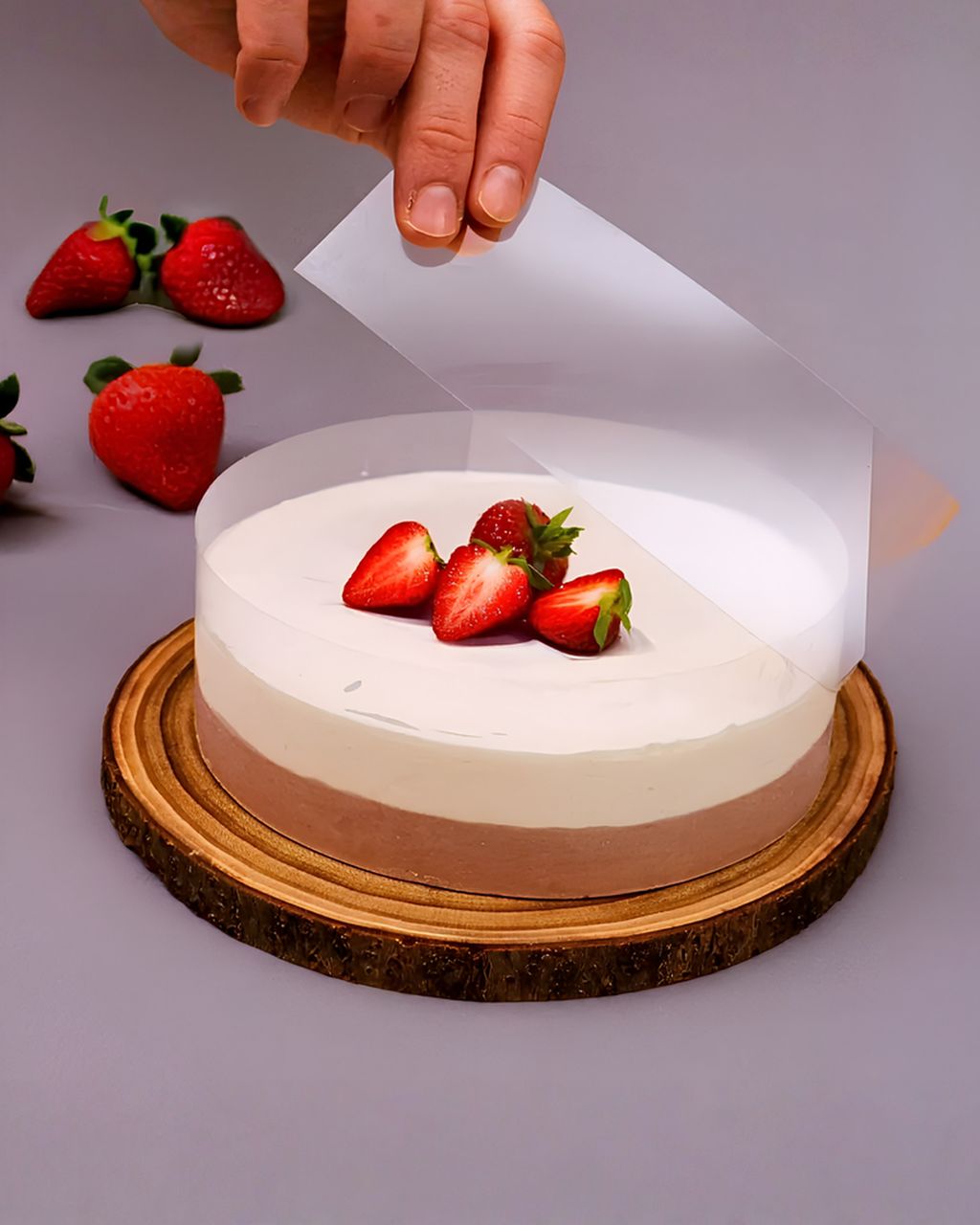
You have three options: a cream dam, a cake collar with acetate strip, or filling without a dam at all. For most home bakes, a cream dam is enough; a collar with acetate strip is worth it for very soft fillings, and filling without a dam only works with a firm filling.
Cream dam — all you need is a piping bag and tip, and it works on any cake. Limitation: soft fillings need a reasonable thickness, and the cake has to settle before you cover it.
Cake collar + acetate strip — the layer is assembled inside an adjustable collar lined with acetate strip, and the whole cake sets in the fridge. This holds even mousse, jelly, or very soft fillings, and the sides come out smooth once the strip is peeled away. You'll need a collar and acetate strip as tall as the cake, usually 8–10 cm — a narrower strip (like 35 mm) won't cover a full-size cake, and is better suited to smaller cakes and dessert glasses. Adjustable cake collars aren't something we stock, but you can find them at general baking suppliers. We cover how to work with the strip in acetate cake strip: what it's for and how to build a cake with it, and the full method with gelatin in mousse cake step by step.
Filling without a dam — only works when the filling is just as firm as the frosting on the surface (buttercream, set ganache).
A dam and a collar can also be combined: a dam inside a collar with acetate strip is the safest route for a cake with a runnier curd or caramel filling.
For a light whipped-cream cake, make the dam from whipped cream stabilized with gelatin or mascarpone, or from a thin ring of buttercream. For 250 ml of cream, about 1 teaspoon of gelatin dissolved in a little water and folded into semi-stiff whipped cream is enough, or use 100–150 g of chilled mascarpone whipped together with the cream until stiff. Chill the dam for at least 15 minutes after piping it, and keep the filling on the thicker side so its juices don't weigh down the cream.
A cake filled with a cream dam will keep in the fridge for roughly 1–2 days. With jam, curd, or caramel, you can fill it a day ahead without any worries; with fresh fruit, it's best to fill the cake on the day you're serving it, or the evening before at the latest, since fruit releases juice and softens the cake layers.
If the filling leaks out past the cream dam, put the cake in the fridge for 20–30 minutes to let the filling firm up, then scrape it off the side with a spatula and fill the gap with frosting. Only after that should you apply the first thin crumb coat, chill the cake again, and then finish with the final layer of frosting.
Yes, a cake with a buttercream dam and a jam or curd filling can be frozen for a few weeks if it's well wrapped in plastic. Fresh fruit turns watery once thawed, so don't use it in a cake you plan to freeze. Thaw it slowly in the fridge overnight.
To fill a cake with several different fillings, pipe a cream dam onto each layer separately and seal every filling inside its own ring. Put the heaviest, wettest filling (such as fruit) in the bottom layer, lighter curd or caramel higher up, and chill the cake briefly between layers so the fillings don't mix. You can also keep individual fillings separate by piping a thin layer of frosting inside one ring and spreading jam over it, so the flavors don't bleed into each other.
One recipe worth heating the oven for, one tip, and one deal from the shop. Nothing else.