How to Roast Venison So It Isn't Dry: Deer, Wild Boar and Hare
Juniper Berries in Cooking: Flavor, How Many to Use and How to Crush Them
Updated Nov 20, 2026
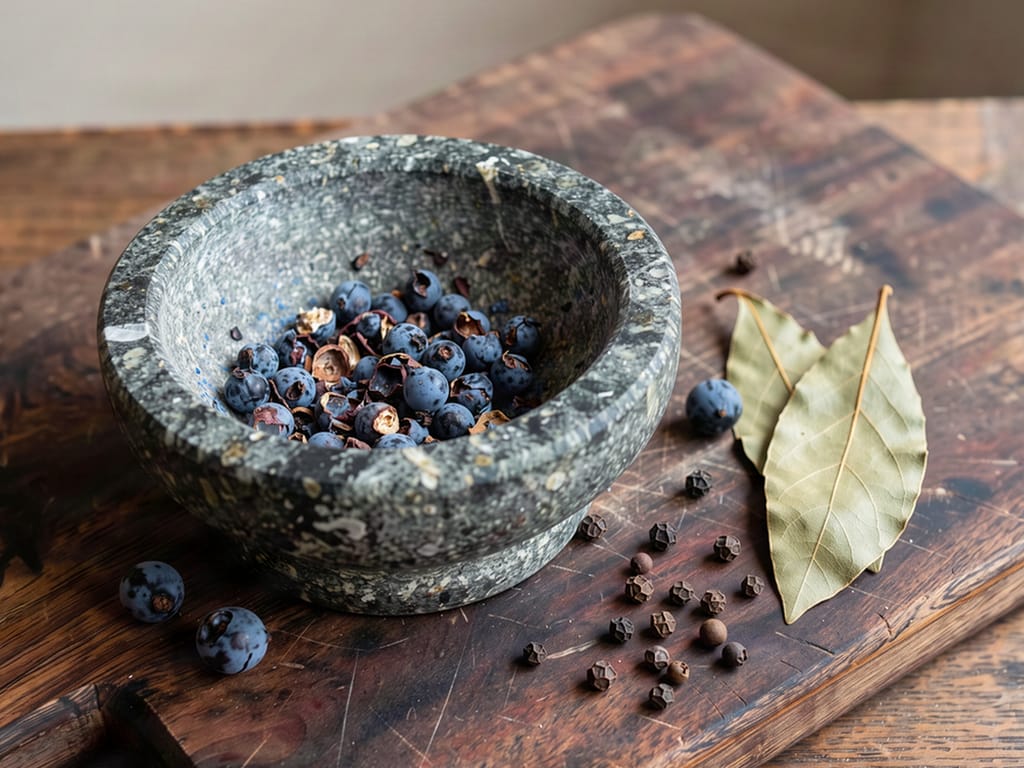
Juniper berries taste piney, resinous and lightly citrusy, the same aroma you know from gin, and in Czech cooking they go into game, marinated beef for svíčková and sauerkraut. Use only a few, usually 3 to 6 lightly crushed berries for a pot of sauerkraut and around 5 to 10 for a kilo of game, and crush them just before use so the oils come out. Cook only with culinary juniper berries from common juniper, bought as a spice, and never pick berries from garden junipers.
Juniper berries are not true berries. They are the small female seed cones of the juniper shrub, with soft, fleshy scales that have fused into a round berry shape. The spice comes from common juniper (Juniperus communis), an evergreen shrub that grows wild across Europe, North America and northern Asia.
The berries ripen slowly, over about 18 months in common juniper, turning from green to a dusty blue-black. That is why one shrub often carries green and ripe berries at the same time. Only the ripe, dark berries are dried and sold as a spice.
In Czech the shrub is jalovec, and cooks usually use the same word for the berries. Juniper is also the defining botanical of gin; the word gin is a shortened form of genever, from the Dutch jenever (or French genièvre), meaning juniper.
Recipe of the week, one tip that saves you time and one deal from the shop. Unsubscribe in one click.
The next issue goes out on Thursday, November 26.
Bite a dried juniper berry and you get pine forest first, then something sweet and resinous, then a faintly citrus, slightly bitter finish. Cooked into a sauce or braise, it softens into a woodsy background note that makes rich meat taste fresher.
Much of that pine character comes from alpha-pinene, the same compound behind the smell of pine needles. The European Medicines Agency's assessment of juniper lists it as the largest single component of the berry's essential oil.
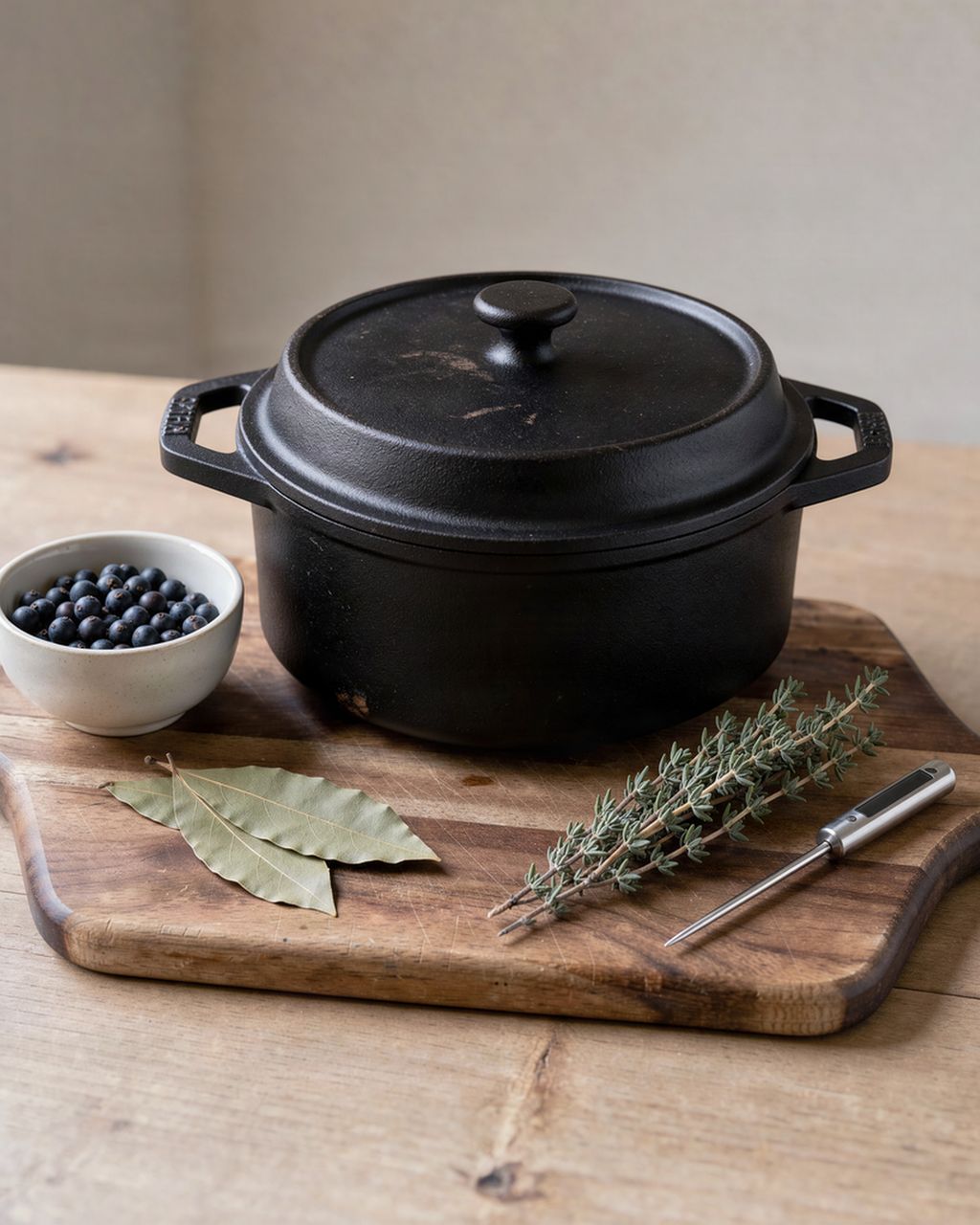
Juniper pairs naturally with the other Central European pickling spices: bay leaf, allspice, black peppercorns and thyme. It also likes red wine, garlic, onion, smoked bacon and cabbage.
Game. Venison, wild boar and hare are the classic home of juniper in Czech kitchens. Dishes cooked na divoko (game-style) use juniper, bay, allspice and pepper, often in a vinegar or red wine marinade, even when the meat is beef or pork. Our guide to roasting venison covers the marinades and times by cut.
Svíčková marinade. Svíčková (beef sirloin in cream sauce) starts with beef and root vegetables marinated with bay leaf, allspice and peppercorns. Juniper is optional: cooks who like a hint of game flavor add a few berries. If yours comes out too sharp, see why svíčková sauce turns sour.
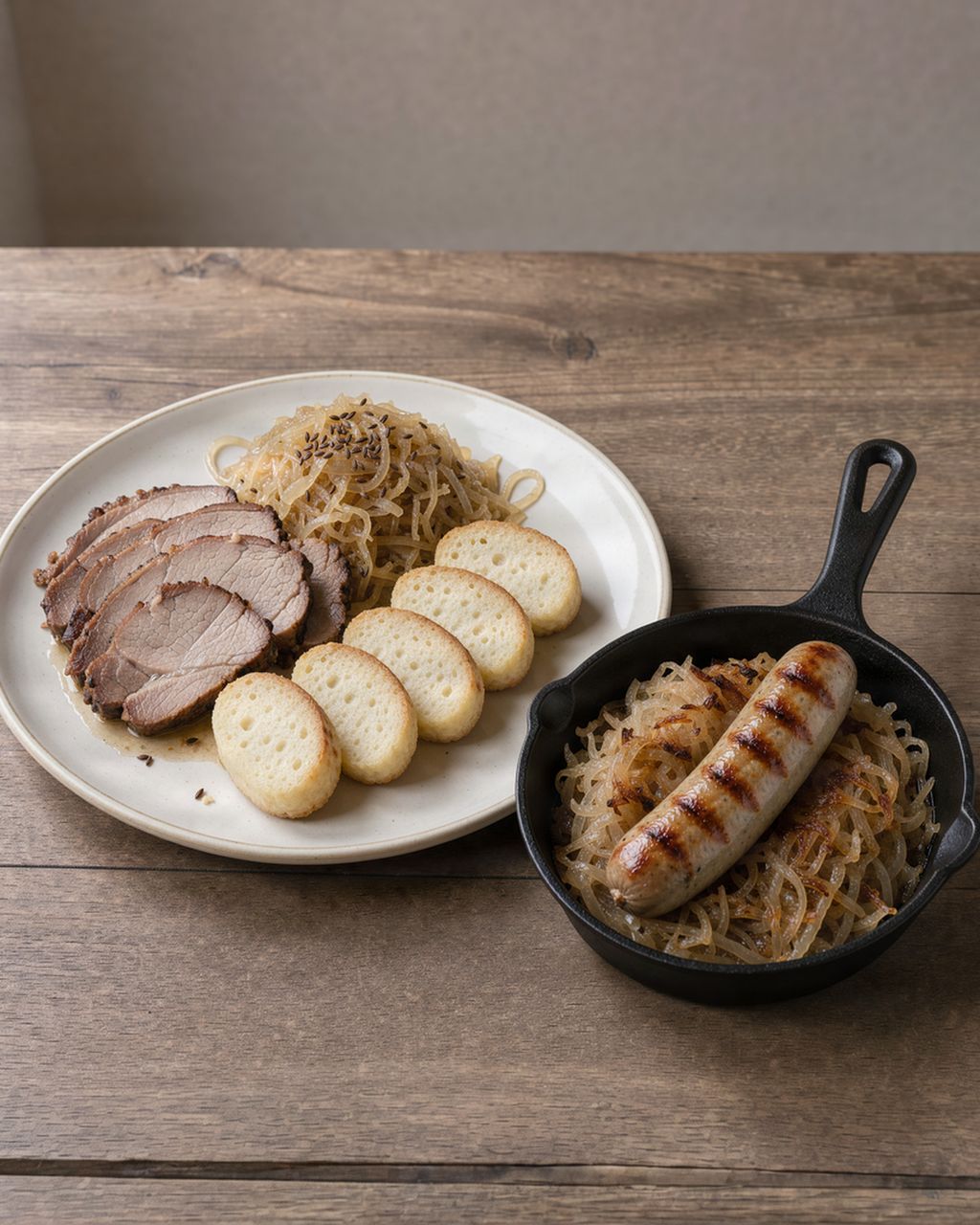
Sauerkraut. Some Czech cooks add a few berries to braised sauerkraut alongside caraway, or to cabbage while it ferments. See our guides to braised cabbage and homemade sauerkraut.
Neighboring cuisines use it the same way: German sauerbraten and braised Sauerkraut, Alsatian choucroute garnie, and Polish and Austrian game dishes.
Whenever a marinade sits overnight or for a few days, it sits covered, in the fridge.
Juniper is strong, and too much makes food taste medicinal or like a glass of gin. These are the amounts we start with in our own cooking. They are rules of thumb, not fixed measures:
Braised sauerkraut or cabbage (about 500 g / 1 lb): 3 to 6 berries.
Svíčková marinade (about 1 kg / 2.2 lb beef): 2 to 4 berries, if you use them at all.
Game marinade or rub (about 1 kg / 2.2 lb meat): 5 to 10 berries.
Game goulash or ragout (about 1 kg / 2.2 lb meat): 6 to 10 berries.
If you have never cooked with juniper, start at the low end. Dried berries vary a lot in strength, and fresher ones are noticeably more aromatic.
Crush juniper just before you use it. The aroma sits in oil inside the berry, and a whole dried berry releases very little of it.
Flat of a knife: lay the berries on a board, press down with the flat of a large knife until they crack. This is enough for marinades and braises.
Mortar and pestle: crush them roughly with the peppercorns and allspice for a rub. Grind finer for a sauce you won't strain.
Spice grinder: fine for larger batches, but grind only what you need. Ground juniper loses its aroma fast.
Cracked berries can be strained out of a sauce or simply eaten. Whole berries left in a dish are bitter to bite into, so crack them or fish them out before serving.
No. Common juniper (Juniperus communis) is the species sold as a spice and used for gin. A few other species are used as food in their home regions, but some junipers are toxic. The best documented is savin juniper (Juniperus sabina), which is grown as an ornamental and is poisonous in all its parts.
The practical rule is simple: if it didn't come from a spice jar or a reputable spice seller, don't cook with it. That includes the junipers planted around houses, parking lots and parks, which are often cultivars of other species.
Many supermarkets sell dried juniper berries in the spice aisle, and German, Polish and other Eastern European delis or online spice sellers stock them in bigger bags. Good berries are dark blue to black, a little soft, and smell strongly of pine when you squeeze one. Pale, rock-hard berries with little smell are old and will add bitterness rather than aroma.
Keep them whole until you need them. For how to keep spices fragrant, see our guide to storing spices.
Juniper berries taste piney and resinous, with a bittersweet, slightly citrusy finish. It is the main flavor of gin, and in food it gives game and sauerkraut a fresh, woodsy note.
Use only a few: about 3 to 6 lightly crushed berries for a pot of braised sauerkraut and about 5 to 10 for a kilo (2.2 lb) of game. These are our kitchen rules of thumb, so start low and add more next time if you want it stronger.
Yes, crush them lightly just before using them, with the flat of a knife or in a mortar. Crushing cracks the skin so the aromatic oils reach the dish; whole berries give much less flavor.
No, do not cook with berries picked from garden or park junipers. Some juniper species are toxic, and the Berlin Museum of Natural History describes savin juniper, a common ornamental, as highly poisonous in all parts; buy culinary juniper berries as a spice instead.
There is no exact substitute, but a little gin in a marinade or a sprig of rosemary with a bay leaf gives a similar piney note. In sauerkraut you can simply leave juniper out and rely on caraway and bay.
One recipe worth heating the oven for, one tip, and one deal from the shop. Nothing else.