Czech vs German Sauerkraut: Zelí, Sauerkraut and Polish Kapusta Compared
Caraway Seeds: What They Taste Like, Caraway vs Cumin, and Substitutes
Updated Nov 18, 2026
Caraway seeds are the small, curved, ridged fruits of Carum carvi, a plant in the carrot family, with a warm, slightly sweet, anise-like and faintly peppery flavor. They are not the same as cumin, which is earthier and smokier, and in Czech kitchens caraway is everywhere: rye bread, sauerkraut, roast pork, goulash and boiled potatoes. If you've run out, dill seed is the closest swap, with fennel seed a good second.
Caraway (Carum carvi) is a plant in the Apiaceae family, the same family as carrots, dill, fennel and cumin. What we call the seed is botanically half of a small dried fruit: brown, about the size of a grain of rice, crescent-shaped, with pale ribs running along it.
In Czech it is kmín, and in German Kümmel. Be careful with the German word: Kreuzkümmel is cumin, not caraway. The Czech for cumin is římský kmín (Roman caraway). Those two near-identical names are why so many translated recipes get the spice wrong.
Caraway's aroma comes from its essential oil. The European Medicines Agency's assessment of caraway fruit gives carvone (about 50–65%) and limonene (up to 45%) as the main components. Carvone is the compound behind caraway's typical smell.
Recipe of the week, one tip that saves you time and one deal from the shop. Unsubscribe in one click.
The next issue goes out on Thursday, November 26.
Whole caraway tastes warm and slightly sweet, with an anise-like note, a faint mintiness and a gentle bitterness at the end. When you bite a seed in a slice of rye bread, it is sharp and aromatic. Cooked into a long braise, it softens and blends into the background.
Toasting the seeds in a dry pan for a minute, until fragrant, makes them nuttier. Grinding them releases the oil fast, so ground caraway is stronger at first but fades sooner in the jar.
These four get mixed up because the seeds look alike and the names overlap.
Caraway (Carum carvi): curved, brown, ridged. Sweet, anise-like, slightly minty. The spice of rye bread and sauerkraut.
Cumin (Cuminum cyminum): straighter, paler, a little hairy. Earthy, warm and smoky. The backbone of chili, Mexican, Indian and Middle Eastern spice mixes. See cumin.
Fennel seed (Foeniculum vulgare): larger, greenish, plumper. Sweeter and more clearly licorice-like than caraway. Common in Italian sausage. See fennel seeds.
Nigella (Nigella sativa): small, matte black, angular. Oniony, peppery and slightly bitter. Sold as black seed, kalonji, black cumin or even black caraway, but it comes from the buttercup family and is not related to either caraway or cumin.
Cumin is the one people most often reach for by mistake. In goulash it gives a Tex-Mex note that doesn't belong. If a European recipe says caraway, use caraway, not cumin.
Caraway is one of the defining spices of Czech food. You will find it in:
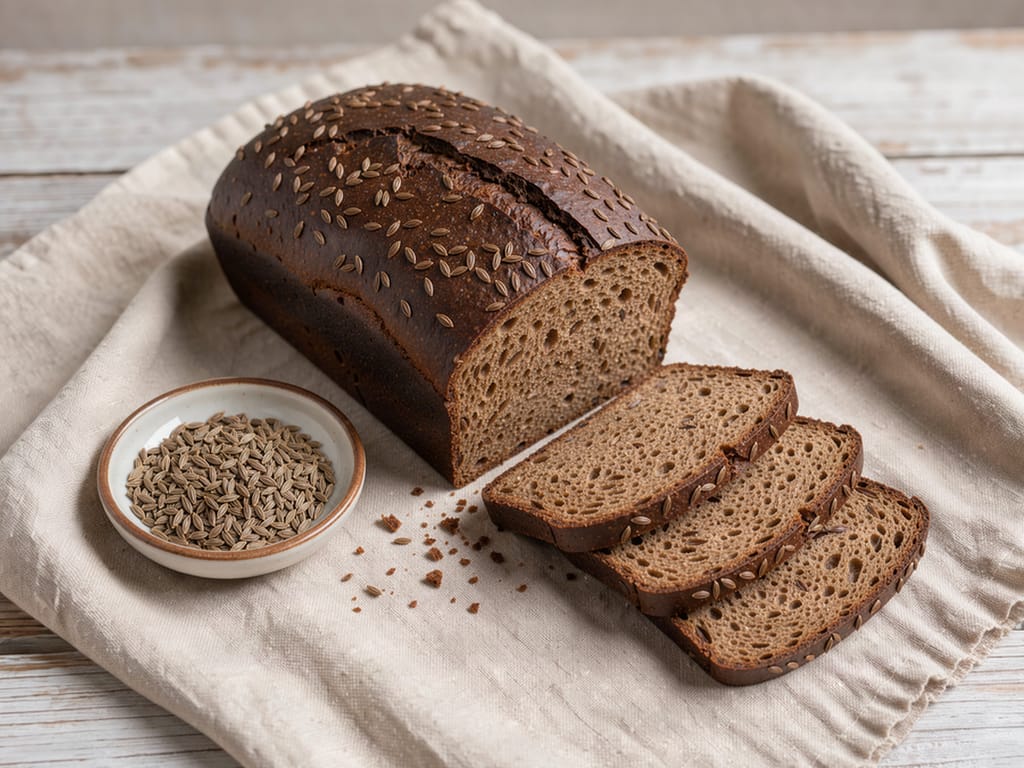
Rye bread. Czech chléb (rye-wheat sourdough bread) usually has caraway in the dough, and small rye-wheat rolls like the dalamánek are usually topped with caraway and salt (the name is thought to be a Prague corruption of the French pain d'Allemagne, German bread).
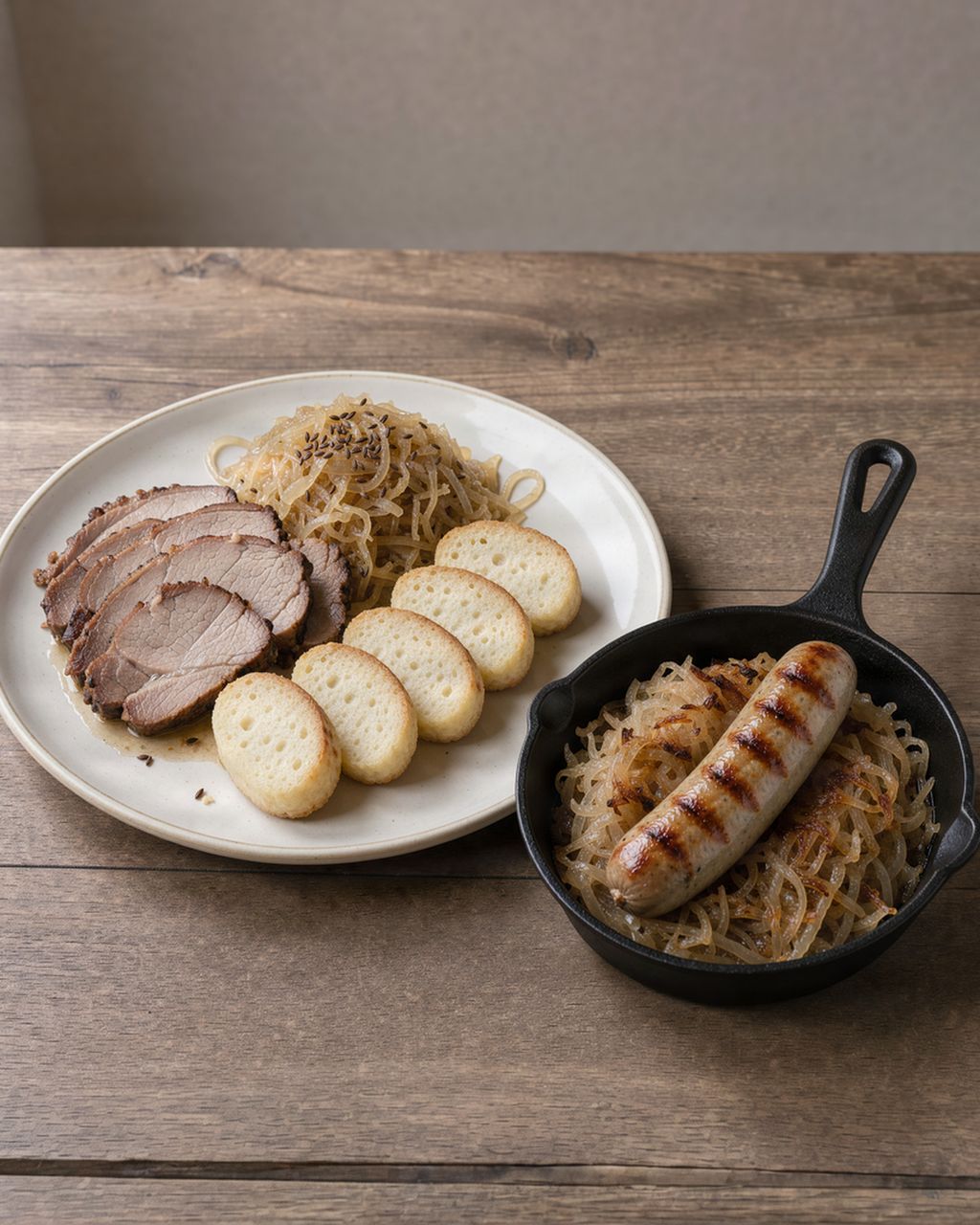
Sauerkraut. Braised sauerkraut (zelí) served with roast pork and dumplings is seasoned with caraway, often with onion and a little sugar.
Roast pork. Vepřová pečeně is rubbed with salt, crushed garlic and plenty of whole caraway before roasting. Our guide to roast pork temperatures covers the cuts.
Goulash. Czech guláš (a thick beef stew with onion and paprika) usually gets ground caraway along with marjoram and paprika.
Potatoes. Kmínové brambory are boiled potatoes with caraway in the water or tossed on top with butter.
Soup. Kmínová polévka (caraway soup) is a plain old-fashioned broth thickened with a little flour and full of caraway, served with croutons.
Czech cooks use it whole in breads and roasts and ground in stews and sauerkraut, where whole seeds can feel gritty.
No substitute is identical, but the right one depends on the dish.
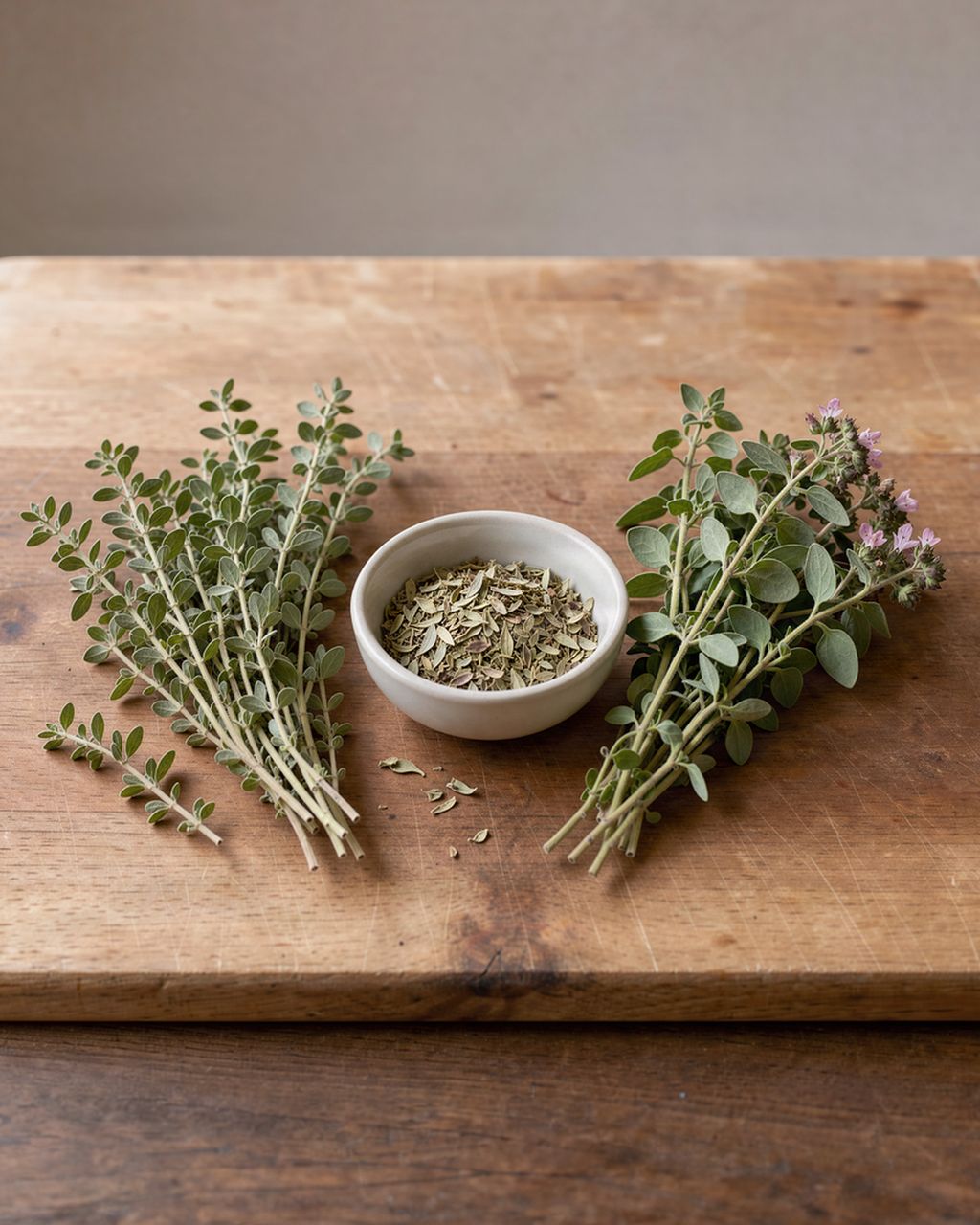
Dill seed is the closest overall. Dill seed oil is also rich in carvone, so it smells similar. Use it one for one. It is a little grassier.
Fennel seed is sweeter and more licorice-like. Use about ¾ of the amount.
Anise seed is much stronger and sweeter. Use about ½ the amount, and only in breads or baking.
By dish:
Rye bread: dill seed one for one, or fennel seed at ¾. Rye flour itself carries a lot of the familiar flavor.
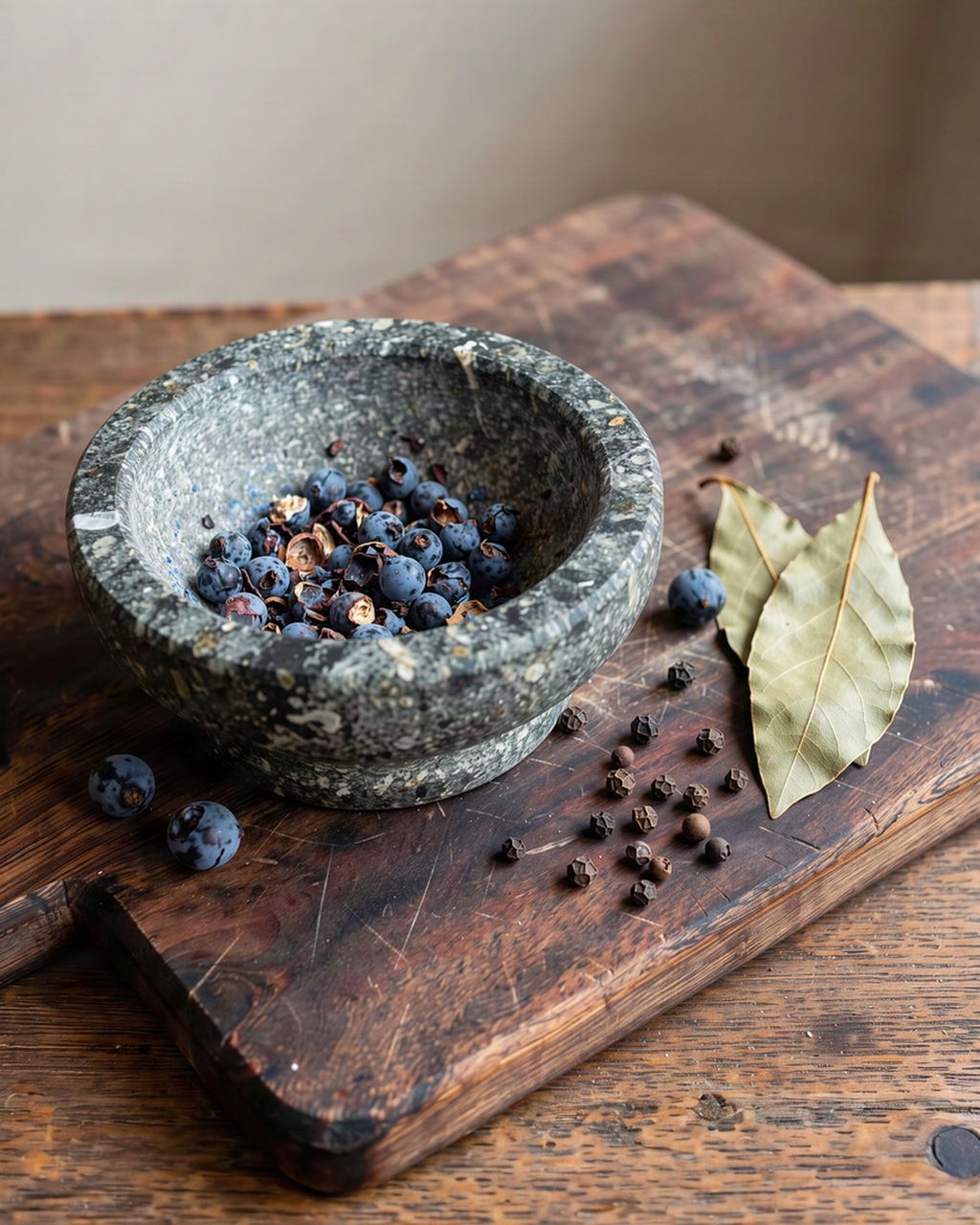
Sauerkraut: dill seed one for one. A couple of crushed juniper berries also suit sauerkraut, though they taste piney rather than like caraway.
Roast pork: fennel seed at ¾, crushed, with the garlic. It is the classic Italian pairing for pork and tastes at home here.
Goulash: ground dill seed or ground fennel at ¾. Or leave it out: goulash is still good on paprika, onion and marjoram alone.
Potatoes: dill seed, or fresh dill at the end.
Avoid cumin and nigella as substitutes. Both change the dish rather than stand in for caraway.
Most US supermarkets stock whole caraway in the spice aisle, sometimes labeled caraway seed. Ground caraway is less common; a spice grinder or mortar turns whole seeds into powder in seconds. Eastern European, German and Polish delis sell it in bigger bags, which is cheaper if you bake rye bread often.
For how to keep it fragrant, see our guide to storing spices. Whole seeds hold their aroma noticeably longer than ground ones.
No, caraway and cumin are different plants with different flavors. Caraway is sweet, anise-like and slightly minty, while cumin is earthy, warm and smoky, so one does not replace the other well.
Dill seed is the best substitute for caraway, because both get much of their aroma from the same compound, carvone. Use it one for one; fennel seed also works at about three quarters of the amount.
Caraway tastes warm, slightly sweet and a little bitter, with notes of anise and a faint minty, peppery edge. It is the flavor most people know from the seeds in deli rye bread.
Nigella seeds are sometimes sold as black caraway or black cumin, but they come from an unrelated plant, Nigella sativa. They taste oniony and peppery and do not substitute for true caraway.
Yes, use about three quarters of the amount of ground caraway in place of whole seeds. Ground caraway spreads its flavor more evenly, which is why Czech cooks often grind it for goulash and sauerkraut.
One recipe worth heating the oven for, one tip, and one deal from the shop. Nothing else.