Knedlo Vepřo Zelo Explained: Czech Roast Pork, Dumplings and Cabbage
Czech vs German Sauerkraut: Zelí, Sauerkraut and Polish Kapusta Compared
Updated Nov 20, 2026
Czech zelí, the side dish served with roast pork and dumplings, is cabbage stewed with onion, lard and caraway and balanced sweet and sour with sugar and vinegar, while German Sauerkraut is usually simmered more simply, often with juniper, bay, wine or apple, and served with sausages or smoked pork. The fermented cabbage can be the same; the difference is how it is cooked and seasoned. Polish kapusta sits between the two, from roux-thickened kapusta zasmażana to the long-cooked meat stew bigos.
All three start from white cabbage, very often fermented. What changes is the seasoning, the fat and how sweet the cook makes it.
Czech zelí (side dish): stewed with onion fried in lard, plenty of caraway, sugar and vinegar, often thickened a little. Sweet-sour, soft and glossy. Served with roast pork and bread dumplings.
German Sauerkraut: simmered with onion and fat, often with juniper, bay, white wine, broth or apple. More sour and less sweet, usually not thickened. Served with sausages, smoked pork chops and ham hock.
Polish kapusta: sauerkraut fried with bacon and onion and thickened with a roux (kapusta zasmażana), or cooked for hours with several meats and mushrooms into bigos.
When an American recipe says kraut, it usually means sauerkraut straight from the jar, warmed or raw, as on a hot dog or a Reuben.
Seasonal baking plans, tested recipes and kitchen tricks that save you time. Unsubscribe in one click.
Zelí just means cabbage, but on a Czech plate it means stewed cabbage, dušené zelí. It comes in two kinds:
From sauerkraut (kysané zelí): the classic partner for roast pork. Sour, mellowed with onion and sugar.
From fresh white cabbage (sometimes called sladké zelí, sweet cabbage): shredded raw cabbage stewed until soft, then seasoned with vinegar and sugar to taste sweet-sour.
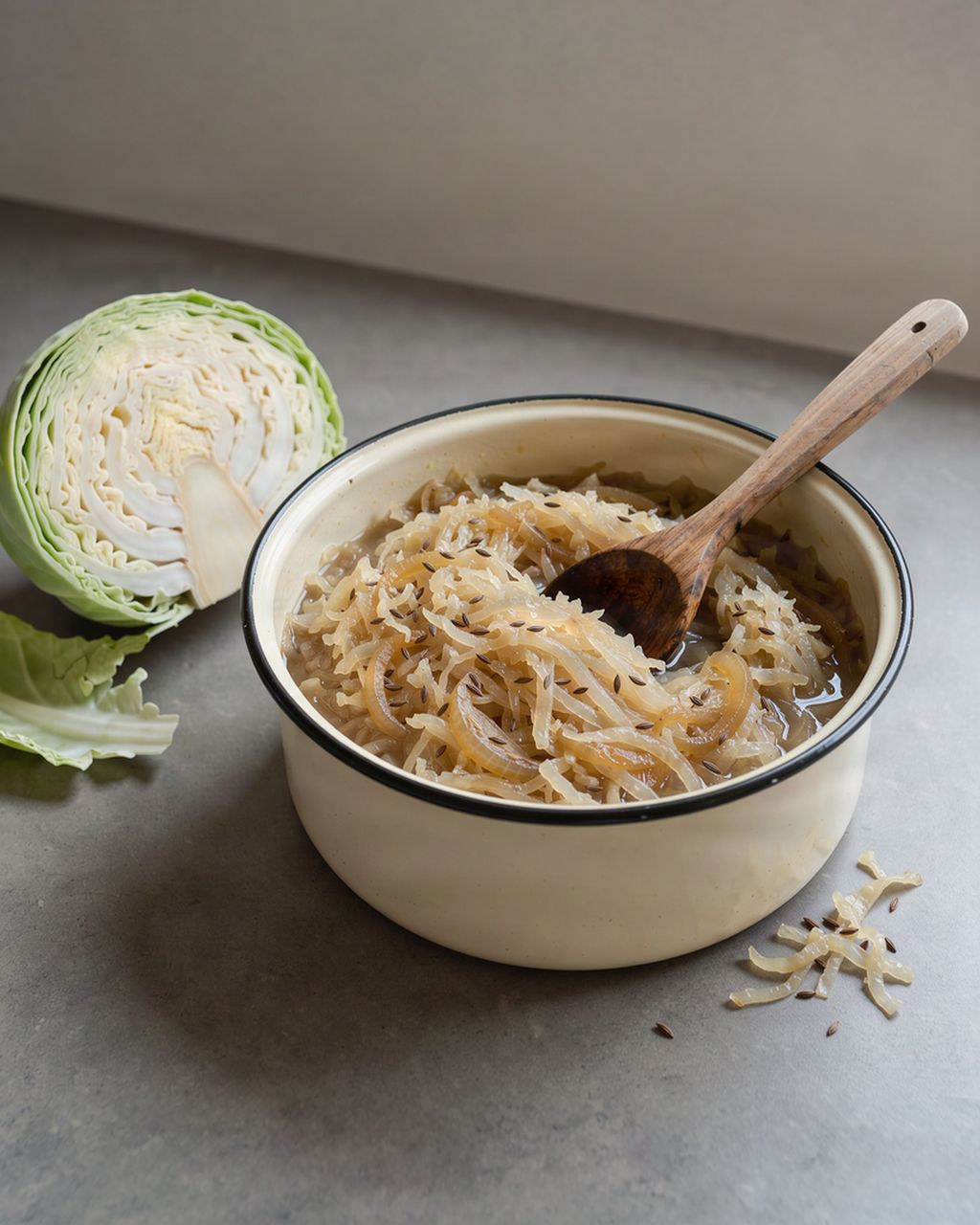
The method is the same outline in most Czech kitchens. Fry chopped onion in lard until golden, stir in caraway seeds, add the cabbage and a splash of water, and stew it covered until soft. Then season with sugar, salt and vinegar until it tastes balanced, and often thicken it lightly with a little flour or grated raw potato. Our guide to braised cabbage has amounts and times for jarred, bagged and fresh cabbage.
The result should be soft but not mushy, glossy from the fat, and neither sharply sour nor candy-sweet. Like goulash, it is often better reheated the next day.
German home cooks also braise their Sauerkraut, but the seasoning leans another way. Typical additions are onion, a little fat or bacon, juniper berries, bay leaf, sometimes caraway, and a splash of white wine or broth. Grated apple brings sweetness instead of sugar in many versions. It is simmered until the flavors blend and usually served unthickened and noticeably sourer than Czech zelí.
It goes with sausages such as bratwurst, with Kassler (cured, smoked pork loin) and with ham hock. Across the border in Alsace, choucroute garnie piles sauerkraut cooked with juniper and wine under a selection of sausages and cured pork.
Germans also eat Sauerkraut raw, in salads and straight from the jar.
Kapusta is Polish for cabbage, and kapusta kiszona is sauerkraut. Two cooked dishes are the ones you will meet most:
Kapusta zasmażana: sauerkraut fried with bacon and onion and thickened with a light roux, sometimes finished with dill. It is the closest Polish cousin to Czech zelí, but smokier and less sweet.
Bigos: often called hunter's stew. Sauerkraut, often with fresh cabbage, cooked slowly with several kinds of meat and sausage, mushrooms and sometimes prunes or tomato. It is a main course, not a side, and recipes vary widely by family and region.
Raw sauerkraut is crunchy, sharply sour and salty. In Czech homes it is eaten as a quick salad, sometimes with grated apple, onion or carrot and a drop of oil, or just picked from the jar.
Stewed sauerkraut is soft, mellow and rounder. Cooking takes the edge off the sourness, the onion and fat carry the caraway, and sugar turns it sweet-sour. That is the version Czechs mean by zelí on a plate.
If your sauerkraut is very sour or salty, rinse it briefly before stewing. If not, keep the brine: it carries flavor, and you can add a spoonful back if the finished dish tastes flat.
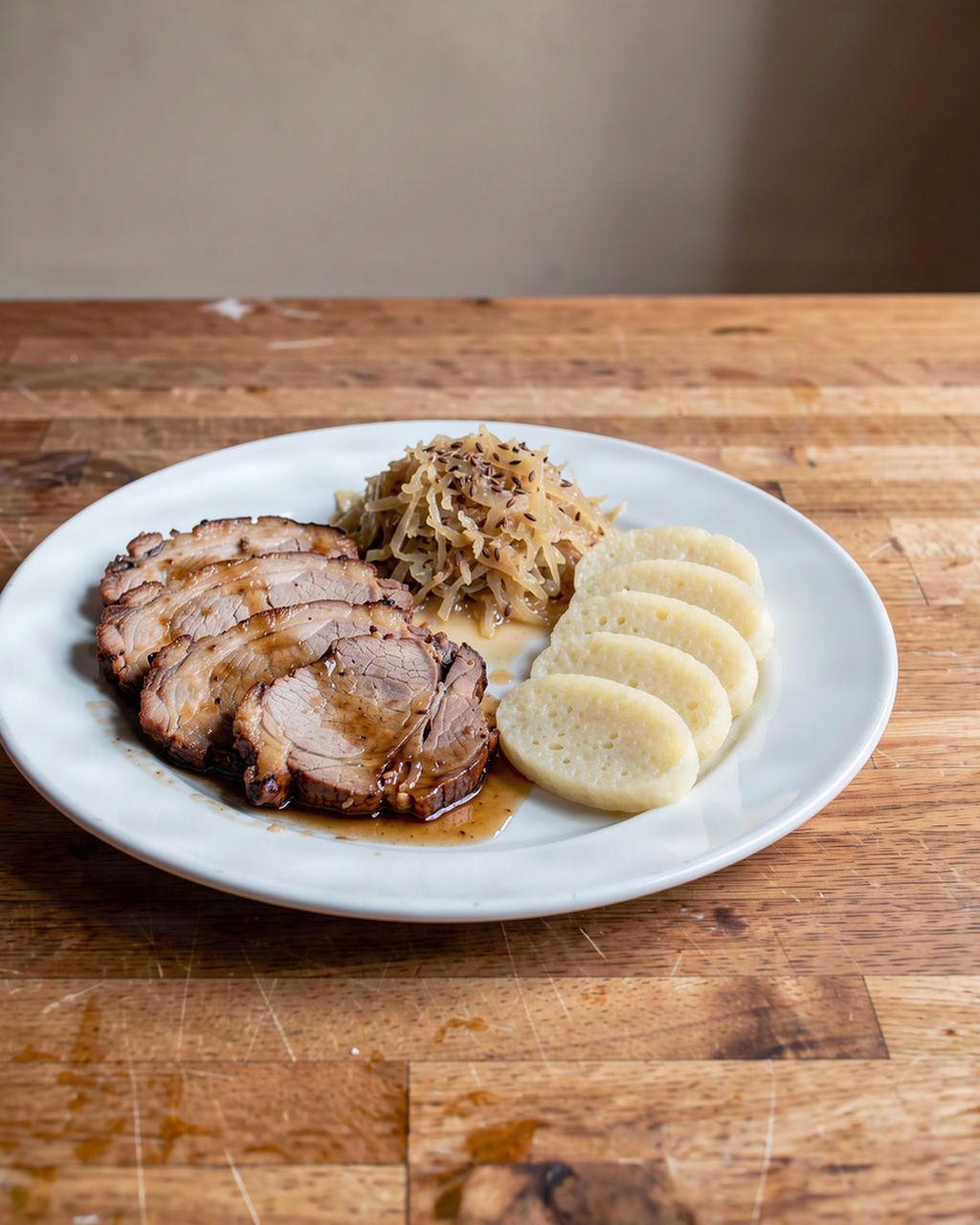
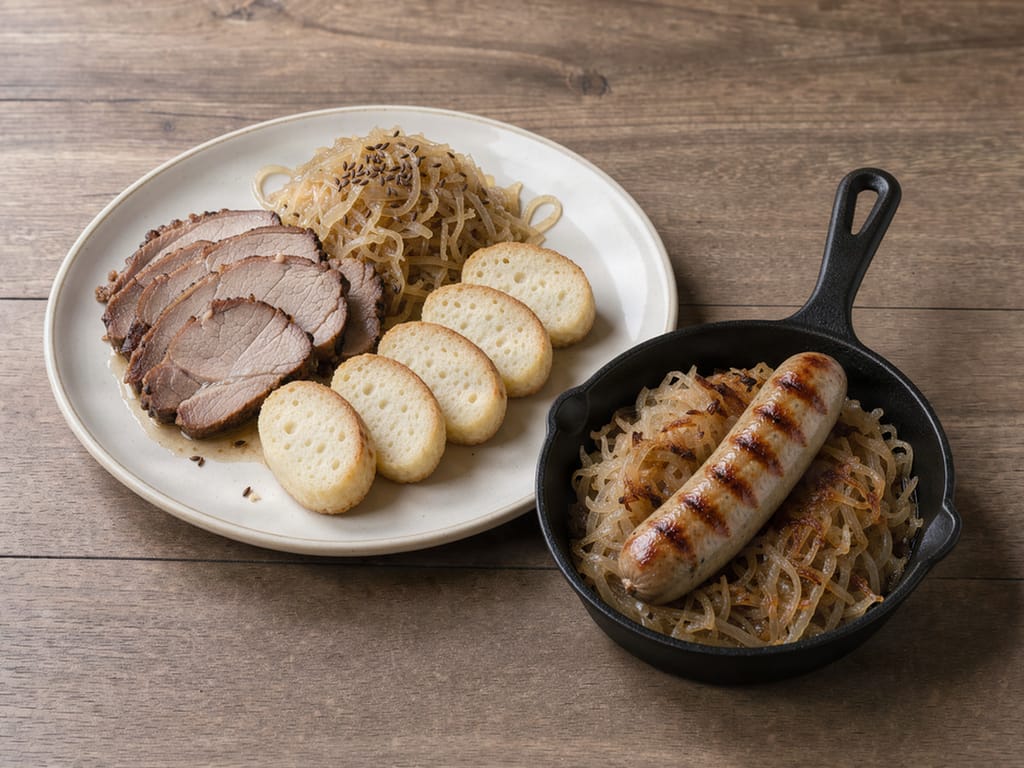
Vepřo knedlo zelo (roast pork, dumplings and cabbage): the Sunday-lunch classic. Pork shoulder or neck rubbed with garlic and caraway, sliced bread dumplings and stewed sauerkraut, with the meat juices poured over. See our guide to roast pork.
Roast duck and goose: served with white or red cabbage and dumplings, especially around St Martin's Day in November. See our St Martin's Day menu.
Smoked meat and sausages: a Czech plate of uzené (smoked pork) with cabbage and potato dumplings or mashed potatoes.
Sauerkraut also stars in two Czech dishes of its own: segedínský guláš (Szegedin goulash, which despite the name has nothing to do with the city of Szeged; the name is thought to be a mishearing of the Hungarian Székely goulash), a pork and sauerkraut stew finished with sour cream, and zelňačka, a sour sauerkraut soup.
Many Czech families still ferment their own cabbage in crocks every autumn. If you want to try it, our guide to homemade sauerkraut covers salt, temperature and how to tell when it is ready.
In the US and UK you will find two kinds in shops: refrigerated sauerkraut in bags or jars, and shelf-stable jars or cans. Either works for stewed Czech zelí. Refrigerated kraut is usually crunchier and fresher-tasting; shelf-stable kraut is softer and needs less cooking. German, Polish and Eastern European delis often sell sauerkraut in brine by weight, the closest thing to Czech kysané zelí.
The main difference is the cooking: Czech zelí is stewed with onion, lard and caraway and balanced sweet and sour with sugar and vinegar, often lightly thickened, while German Sauerkraut is usually simmered with juniper, bay, wine or apple and served less sweet. The fermented cabbage itself can be the same.
No, Czech zelí can be made from sauerkraut (kysané zelí) or from fresh white cabbage stewed until soft and seasoned with vinegar and sugar. Both are served with roast pork and dumplings, and both are called zelí on a menu.
Czech cooks add sugar, and often fried onion, to stewed sauerkraut to soften its sourness into a sweet-sour balance. The amount is a matter of taste and family habit, and you adjust it at the end of cooking.
Kapusta is Polish for cabbage, and in cooking it usually means sauerkraut (kapusta kiszona) or dishes made from it. Kapusta zasmażana is sauerkraut fried with bacon and thickened with a roux, and bigos is a long-cooked stew of cabbage and several meats.
Yes, sauerkraut is eaten raw in salads and straight from the jar in Czech, German and Polish homes. The Czech side dish for roast pork, though, is always the cooked, stewed version.
One recipe worth heating the oven for, one tip, and one deal from the shop. Nothing else.