Homemade gingerbread spice mix
How to Store Spices So They Keep Their Aroma
Updated Sep 17, 2026
Spices hold onto their aroma longest in an airtight, opaque container, kept somewhere dry and dark below 20°C, as far from the stove and sink as possible — and whenever you can, whole rather than ground. Flavour isn't carried by the powder itself but by the essential oils inside it: volatile aromatic compounds that evaporate with heat, break down in light, and get ruined by moisture. Everything below is really just a defence against those four things: heat, light, air and moisture.
Four things strip spices of their fragrance: heat, light, air and moisture. They work together, and the damage is permanent — once essential oils evaporate or oxidise, they don't come back.
Heat. Essential oils are volatile, so they evaporate even at normal room temperature — just slowly. A rough rule of chemical kinetics applies: every +10°C roughly doubles the rate of degradation. Spice stored above the stove at 30°C ages many times faster than spice kept in a drawer at 18°C.
Light. Light in general — not just UV, but ordinary daylight and artificial light too — breaks down both colour and essential oils. The most sensitive are ground paprika, turmeric and dried herbs — paprika left on a windowsill can fade within a few months.
Air. Oxygen oxidises aromatic compounds and the fats in seeds. A large jar that's half empty is worse than a small one that's full: more air per gram of spice.
Moisture. Spices are hygroscopic — they draw moisture to themselves. The result is clumping, caked powder and, in the worst case, mould. Steam from the stove or dishwasher does just as much damage as an actual drop of water.
Grinding speeds all of this up. Grinding breaks open the cell walls and exposes all the essential oils to air at once — that's why ground pepper turns to grey dust within a year, while whole peppercorns are still fragrant.
The ideal spot is a closed cupboard or drawer in a dry part of the kitchen, at 15–20°C, out of direct light, and at least a metre from the stove, oven and dishwasher. In practice, that comes down to five rules:
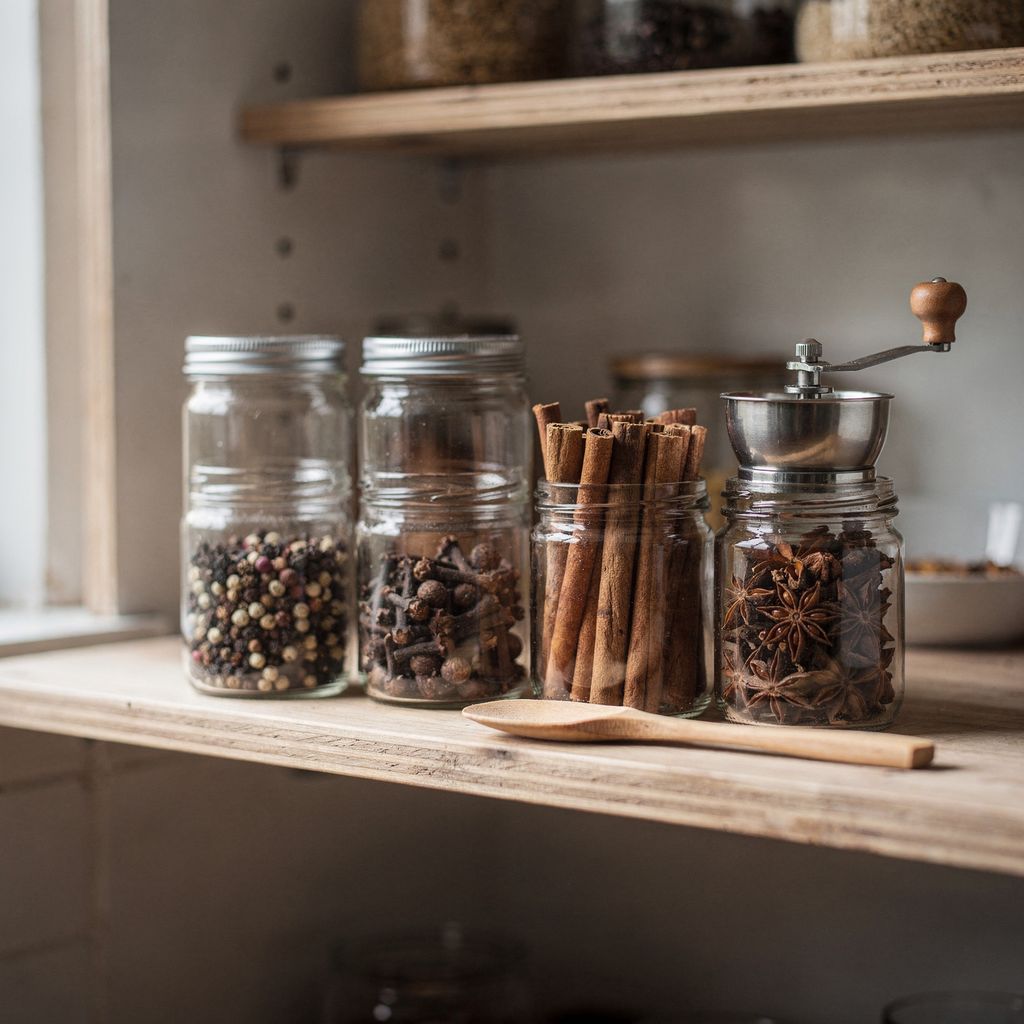
An airtight container with a proper seal. Glass or metal with a screw-top lid or clip. Glass isn't bothered by harsh essential oils and won't hold onto smells; a paper bag with the corner folded over is about the worst option you could pick.
Darkness, or at least tinted glass. Clear jars on an open shelf look lovely, but they're basically sunbathing. Either tuck them into a cupboard or switch to opaque containers.
Size the container to how much you actually use. Buy smaller amounts more often. A kilo bag of ground paprika makes no sense for a household — you'll throw out half of it faded and dull.
Keep well away from heat and steam. A shelf above the stove, a cupboard next to the oven, a windowsill over a radiator, and the space by the dishwasher are the four most common places spices go to die.
Never sprinkle straight over a pot. Never shake spice directly from the jar into simmering food — steam rises straight into the jar and the moisture stays there. Tip a pinch into your hand or a spoon first, away from the stove.
It's also worth storing whole spices in a screw-top glass jar labelled with the purchase date. Two years from now, you won't remember whether those cloves are from last year or the year before.
Above the stove, heat and steam destroy them; in the fridge, it's condensation. Both end the same way: caked, damp spice with no aroma left.
The shelf above the stove is the most tempting and the worst spot in the whole kitchen. While you're cooking, it runs noticeably hotter than the rest of the kitchen, and water vapour from the pots rises straight up into it. After a few months, you can tell spice has been kept there because the cupboard smells stronger than the spice itself.
The fridge is a condensation trap. Every time you take a cold jar out into a warm kitchen, water condenses on the spice and under the lid. After a few cycles you end up with clumps and the perfect breeding ground for mould. The exception: if your home consistently runs above 25°C and humid, ground paprika, chilli and cayenne actually last longer in the fridge — they contain fats that turn rancid in heat. But stick to two rules if you do this: use a well-sealed container, and let it sit at room temperature for 20–30 minutes before opening so water doesn't condense inside.
The figures below mark the window of peak flavour, not the point where a spice becomes unusable: whole spices are at their best for roughly 3–4 years, ground spices for 1–2 years, and dried herbs for 6–12 months. After that they're still usable — the flavour just fades gradually. This isn't a safety issue: dry spices don't spoil in a way that can make you ill.
Whole seeds and pods (peppercorns, coriander, cumin, mustard, allspice, cloves, star anise, cinnamon bark, cardamom): 3–4 years at peak quality; standard reference tables list around 4 years as the usable window.
Ground spices (ground pepper, coriander, ginger, nutmeg): 1–2 years at peak quality; standard reference tables list 2–3 years as usable.
Store-bought spice blends (gingerbread spice, curry powder, BBQ rubs): treat these like ground spices — they're dried and packaged for a long shelf life. Homemade blends ground from whole ingredients stay at their best for a noticeably shorter time, roughly a few months (more on this below).
Ground paprika, chilli, turmeric: colour and aroma peak for about 6–12 months, after which they're still usable, just increasingly pale. Colourful spices fade the fastest.
Dried leafy herbs (basil, oregano, parsley, marjoram): at their best for roughly 6–12 months, still usable after that as the flavour gradually fades. Thin leaves and low fat content mean the essential oils leave first.
Higher-fat seeds (poppy, sesame, flaxseed): roughly 6 months in a jar, longer in the freezer — the fat turns rancid before the aroma actually disappears.
The use-by date on the packet is mostly a rough guide. Badly stored cinnamon is flat and lifeless within a year; well-stored whole peppercorns can still make your nose tingle after three years. Trust your nose, not the label.
Buy whole and grind small amounts right before cooking — it's the single biggest thing you can do for flavour. A whole seed keeps its essential oils sealed inside the cell walls; once ground, they start evaporating within hours and days, not years.
In practice: a pepper mill, a small hand coffee grinder set aside just for spices, or a mortar and pestle. You were going to grind it anyway — just do it a minute later.
Worth buying whole: pepper, coriander, cumin, nutmeg, cloves, cardamom, star anise, allspice, fennel. Worth buying ground, because you're unlikely to grind it properly at home anyway: paprika, cinnamon from bark (unless you have a powerful grinder), turmeric, ginger.
Briefly toasting spices in a dry pan intensifies their aroma, because the heat drives off residual moisture and forces the essential oils out of the cells.
Dry pan, medium heat, 30–90 seconds. Keep whole seeds moving constantly. Judge when they're done by smell: once the kitchen smells like spice, they're ready.
Don't rely on colour. With cumin or coriander, the gap between toasted and burnt is a matter of seconds, and burnt spice stays bitter for good.
Let it cool before grinding. Warm seeds smear and stick inside the grinder.
Toast ground spices in fat, not dry. A few dozen seconds over medium heat in oil or butter at the start of cooking: essential oils are fat-soluble, so they spread through the whole dish. The fat also moderates the temperature, so the powder is less likely to burn.
Toasting is worth doing for spices that still have some aroma left. Toasting a spice that's already lost its fragrance won't bring it back — the essential oils simply aren't there anymore.
Fresh spice smells strong and immediate — if you have to hunt for the aroma, it won't add anything to your food. Open the jar, rub a pinch between your fingers, and take a sniff. This test is more reliable than any date on the label.
Other signs a spice is past its flavour prime:
Paprika has turned grey or brown instead of bright red, turmeric looks pale yellow, dried herbs have gone greyish-green.
The taste is dusty and bitter, with no character of its own left.
You need to double the amount just to notice it in the dish.
Spice in this state isn't dangerous — just pointless. Throw it out and buy a smaller amount next time.
Domácí kořenicí směs si drží aroma orientačně pár měsíců — počítej spíš s půl rokem než s rokem. Je to kratší doba než u jednotlivých celých koření, protože při míchání všechny suroviny rozemeleš najednou a vystavíš je vzduchu. Dělej proto menší dávky a piš na dózu datum namíchání.
Pár zásad, které u směsí rozhodují:
Melej suroviny za studena a nech je před uzavřením vychladnout — teplý prášek do dózy pustí páru.
Směs s cukrem, solí nebo sušeným česnekem a cibulí slehne rychleji: tyhle složky táhnou vlhkost. Použij dobře těsnící dózu a měj ji dál od sporáku.
Sypké směsi rozmíchej těsně před použitím — těžší složky sedají dolů.
Když si sušíš vlastní bylinky, suš je při 35–40 °C, dokud se list nedrolí (v sušičce zhruba 4–8 hodin podle druhu). Čím vyšší teplota, tím víc silic se ztratí — nad 40 °C jde pokles rychle nahoru, bylinky z horké trouby jsou křupavé, ale nevoní. Suš doschna: jakákoli zbylá vlhkost ve sklenici je pozvánka pro plíseň.
Nejlepší test toho, jestli máš koření v pořádku, je ostatně uvařit něco, kde je ho slyšet — perníkové koření namíchané z čerstvě umletých surovin voní úplně jinak než sáček z loňska.
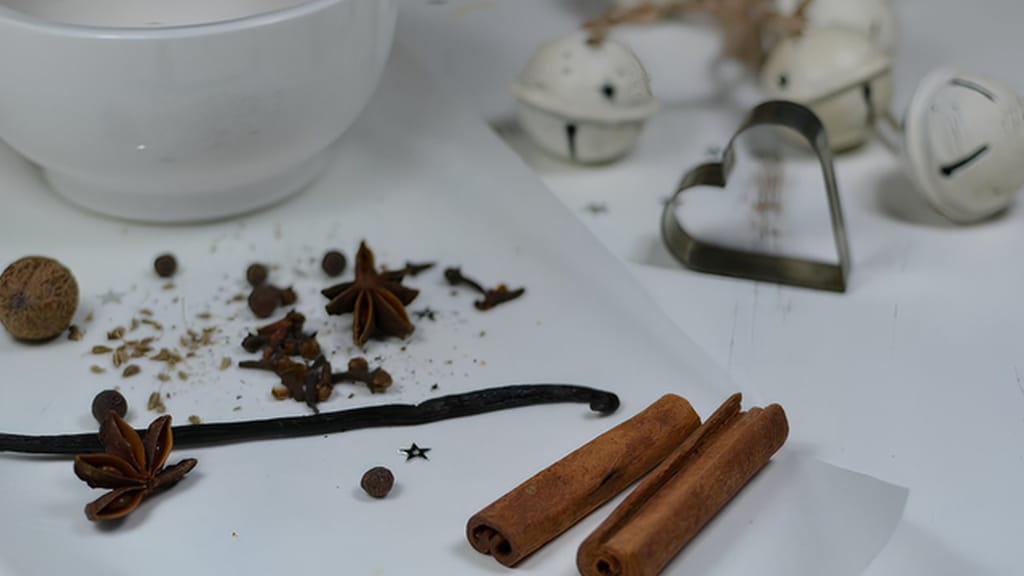
Homemade gingerbread spice mix
Domácí perníkové koření: čerstvě umletá směs, která vydrží voňavá pár měsíců
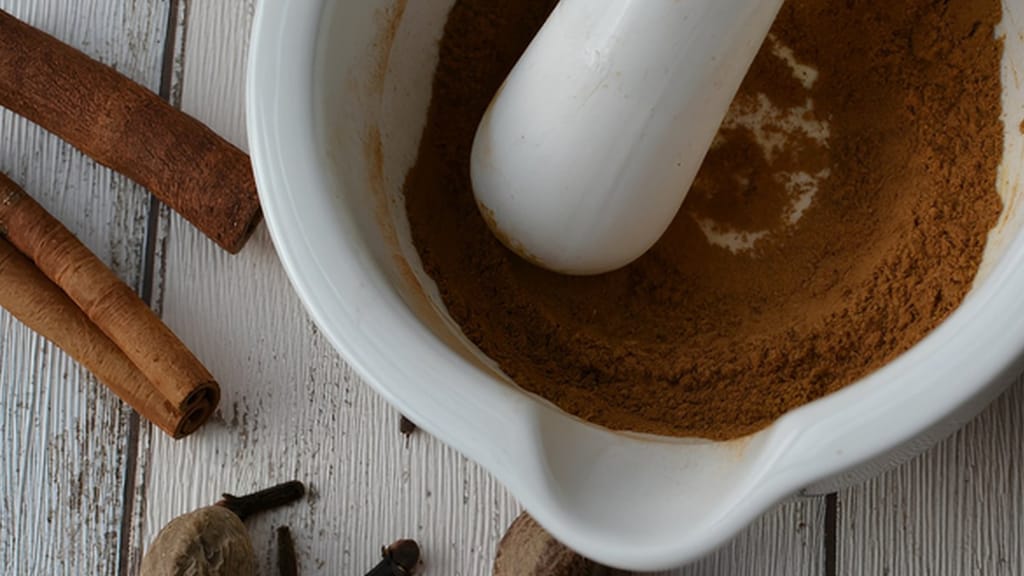
Pumpkin spice – fragrant pumpkin spice blend
Pumpkin spice: dýňové koření z celých surovin umletých těsně před smícháním
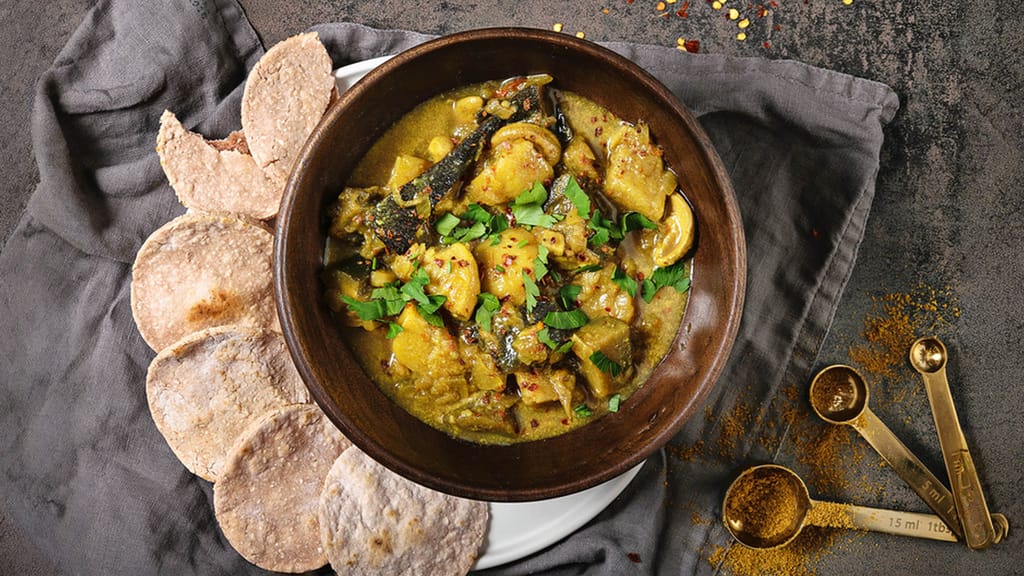
Vegetable curry with cashews
Zeleninové curry s kešu ořechy: ukázka, proč se koření praží v tuku
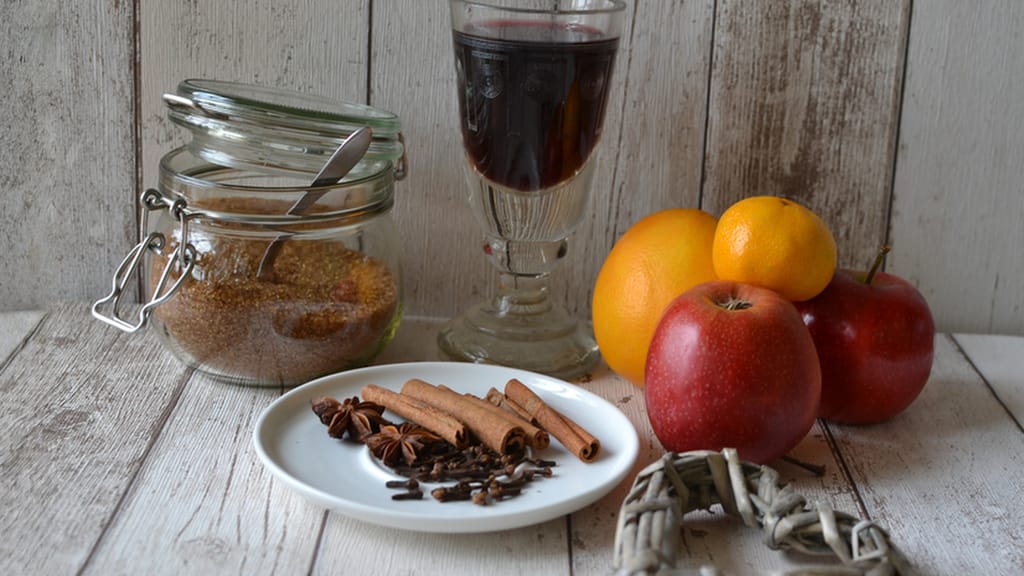
Flo's mulled wine syrup
Sirup na svařené víno: celý hřebíček, skořice a badyán naplno využité
Pětiminutový úklid dvakrát ročně udělá víc než jakákoli dóza:
Vysyp všechno z police a přivoň si ke každé dóze. Co nevoní, ven.
Napiš na dózy datum nákupu nebo namíchání lihovým fixem.
Přesyp koření z papírových sáčků do skleniček s těsnícím víčkem.
Přesuň celou polici pryč od sporáku, trouby a myčky, když tam ještě je.
Dokup jen to, co reálně za půl roku spotřebuješ — v nejmenším balení, které seženeš.
Spices clump because they're hygroscopic — they pull moisture straight out of the air. The usual culprits in a kitchen are steam from the stove or dishwasher, sprinkling spice straight over a pot, a damp spoon dipped into the jar, and condensation after taking a jar out of the fridge. Blends with salt, sugar, or dried garlic or onion clump fastest. Dry clumps can simply be broken up and the spice is still fine to use; but if you find a stuck-together mass with a musty smell, throw out the whole jar.
Only put whole spices and higher-fat seeds (poppy, sesame, flax) in the freezer — never ground spices you use day to day, since the powder suffers from condensation every time you take it out. The freezer does have one clear use, though: leave a new bag or jar in the freezer at −18°C for at least 4 days (a week for larger packs) — this reliably kills off any pantry moth eggs or larvae that can hitch a ride in dry goods straight from the shop. After taking it out, keep the container sealed until it reaches room temperature, so water doesn't condense inside.
Under the same conditions, it's pretty much a wash — what matters is the seal, not the material. Tins have the edge of blocking out light completely, so they're fine even on an open shelf; glass is inert and won't absorb chilli or curry smells, but it needs to live in the dark or be tinted. What to avoid: plastic (it soaks up aromas and slowly leaches them back into whatever you store next), bare aluminium or steel containers with no inner lining for salty or acidic blends, and any lid without a rubber or silicone seal.
The best approach is not to store it at all — grind pepper straight over the food and don't stockpile it. If you do have leftover ground pepper, tip it into a small, well-sealed jar, keep it away from light and the stove, and use it up quickly, within a few weeks at most — after that, mostly just the heat remains, not the flavour. Don't treat the pepper mill itself as a storage container: its mechanism isn't airtight, so air and moisture creep into the reserve inside — only load it with as much as you'll actually grind through in a few weeks.
One recipe worth heating the oven for, one tip, and one deal from the shop. Nothing else.