Why Is My Dutch Oven Burning on the Bottom? Stews, Sauces and Bread
How to Caramelize Onions: Time, Heat and Why They Burn
Updated Nov 21, 2026
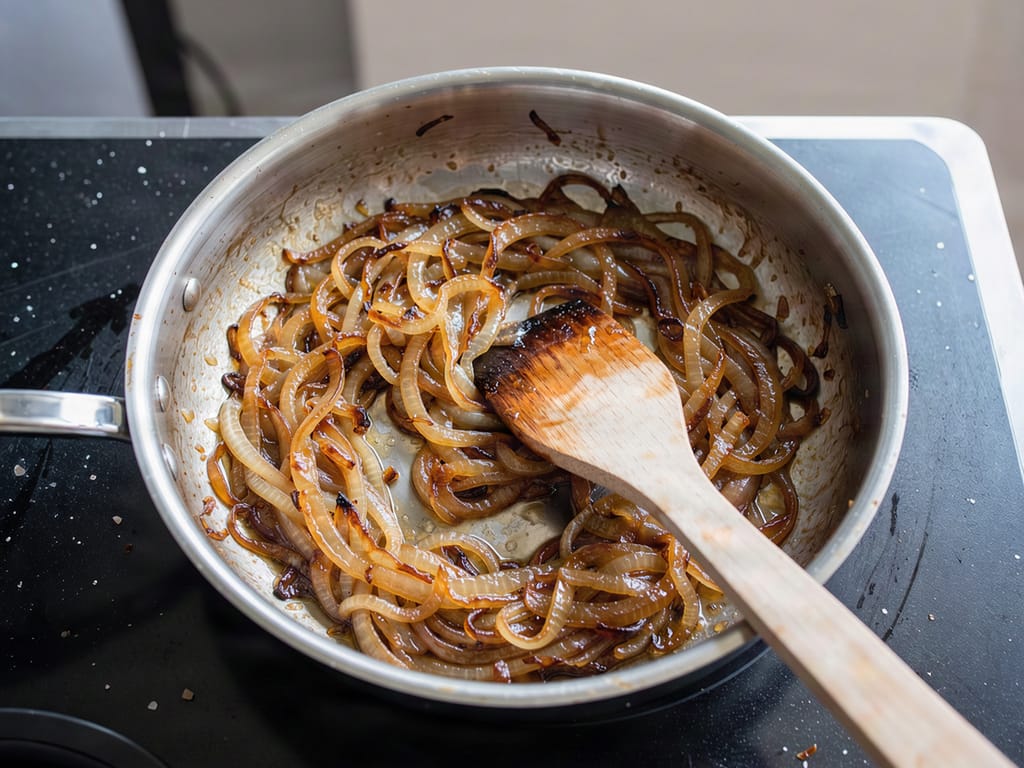
To caramelize onions, cook thinly sliced onions slowly in butter or oil over medium-low heat, stirring now and then, for about 45 minutes to an hour, until they are soft, sticky and deep brown. They burn when the heat is too high, and they stay pale when the pan is crowded or the lid is on. Sugar isn't needed, and baking soda speeds things up at a cost.
Caramelized onions take time rather than skill. The outline:
Slice the onions thinly and evenly, from root to tip. Even slices cook at the same pace.
Use a wide, heavy pan and enough fat to coat the base, butter, oil or a mix.
Start on medium heat until the onions soften and collapse, stirring often. A pinch of salt helps draw out their water.
Turn it down to medium-low and cook, stirring every few minutes, as they go from pale gold to amber to deep brown.
Deglaze when the pan browns. Whenever a brown layer builds on the base, add a splash of water, stock or wine and scrape it up. That brown layer is flavor.
Stop when they are soft, sticky and evenly brown, the color of milky coffee to chocolate, depending on use.
The pile shrinks dramatically, so start with far more onions than you think you need.
About 45 minutes to an hour for a normal panful, and longer for a big batch. That is the honest answer, and many recipes understate it.
In the first part, the onions release water and soften. Browning only really starts once most of that water has gone. After that, the slow part builds the deep, sweet flavor. Rushing it on high heat browns the outside while the inside is still crisp, and burns the sugars on the pan.
For a weeknight, partly cooked "golden" onions after 20 minutes are fine in many dishes. Just don't expect the jammy texture of the slow version.
The heat is too high. You want a gentle sizzle, not a roar. If the edges blacken while the middle is pale, turn it down.
The pan is thin. Thin pans have hot spots. A heavy stainless steel, enameled or cast-iron pan spreads heat evenly.
Too few onions for the pan. A thin layer dries out and scorches. Fill the base well.
You didn't deglaze. The brown film on the pan burns if you leave it. A splash of water lifts it back into the onions.
Added sugar. It browns, and burns, faster than the onions do.
A few dark edges are fine. If the onions taste bitter or acrid, they have burned, and it's better to start again than to cover it up.
The pan is crowded. A deep pile steams in its own water. Use a wider pan or split the batch.
The lid is on. A lid traps steam, so the onions stew. Cooking covered for the first few minutes to soften them is fine, then take it off.
The heat is too low to drive off the water. Medium-low means steady sizzling, not silence.
Not enough time. Browning starts late. Keep going.
A nonstick pan. Nonstick pans build little brown film to deglaze, so the onions color slowly. Stainless steel gives you more of it.
Why do caramelized onions sometimes turn to mush? Very thin slices, a lid kept on too long, or baking soda all soften them a lot. Slice a little thicker if you want strands that hold their shape.
Sugar is not needed. Onions brown on their own natural sugars. A pinch makes them sweeter and darker faster, but also easier to burn and less savory.
Baking soda works. A very small pinch makes the onions less acidic, which speeds browning a lot. The cost is texture: they turn soft and mushy, and too much tastes soapy. It suits onions that will be blended into a soup or sauce, not ones you want in strands on a burger.
Water is the best shortcut. Cook on slightly higher heat and add a few tablespoons of water whenever the pan starts to darken. You get deep color sooner without burning.
The oven or slow cooker also works for big batches, because the gentle heat is hard to burn. They take longer, and the onions brown less than in a pan unless you finish them on the stove.
Red or white onions caramelize fine. Red ones turn darker and a little sweeter; white ones are milder. Yellow onions are the all-rounder.
Burgers, hot dogs and sandwiches. Thicker slices, cooked until soft and brown but not jammy, hold together best.
French onion soup, which needs them very dark. Our guide to French recipes includes it.
Gravies, sauces and dips, where the softer baking-soda version works well.
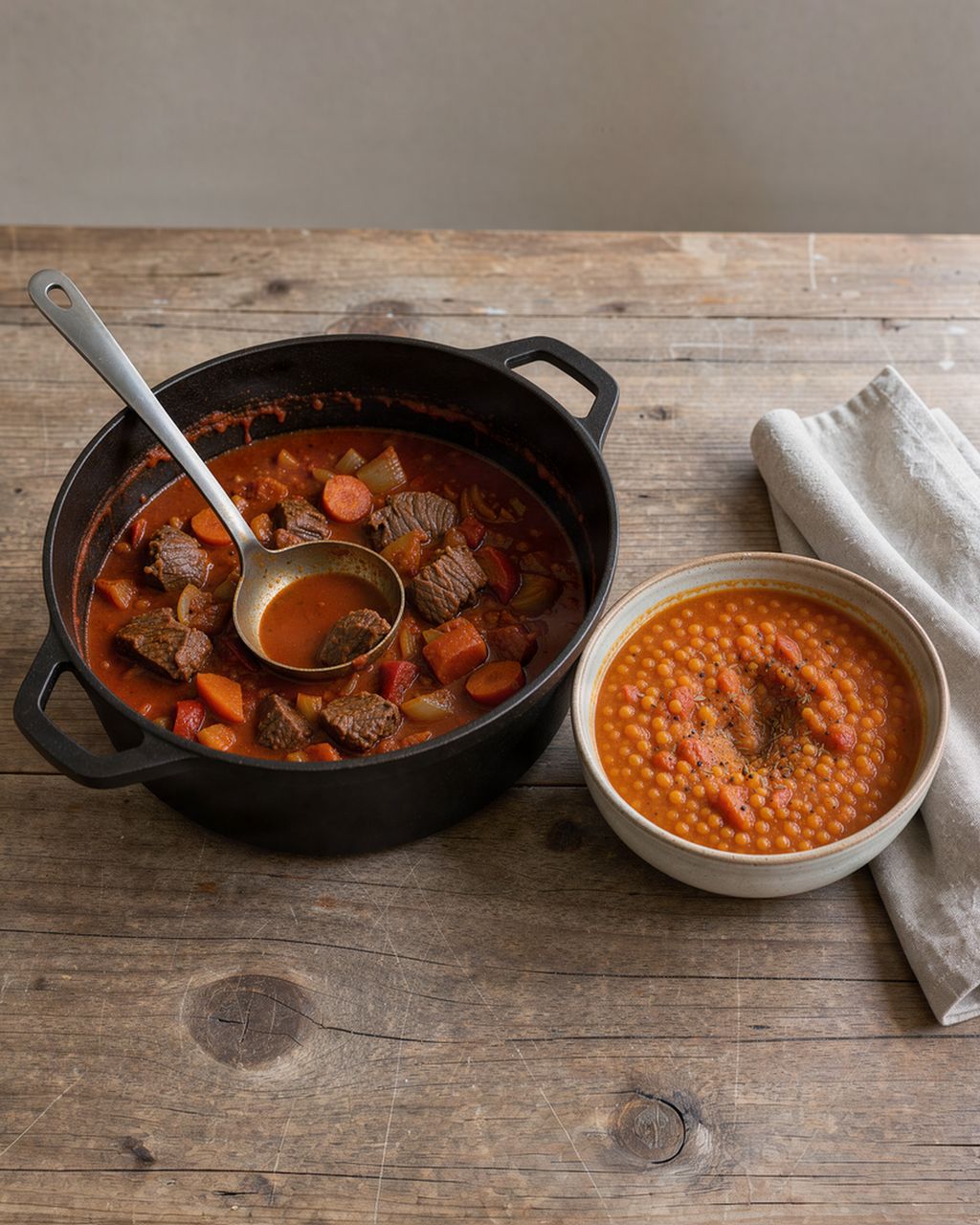
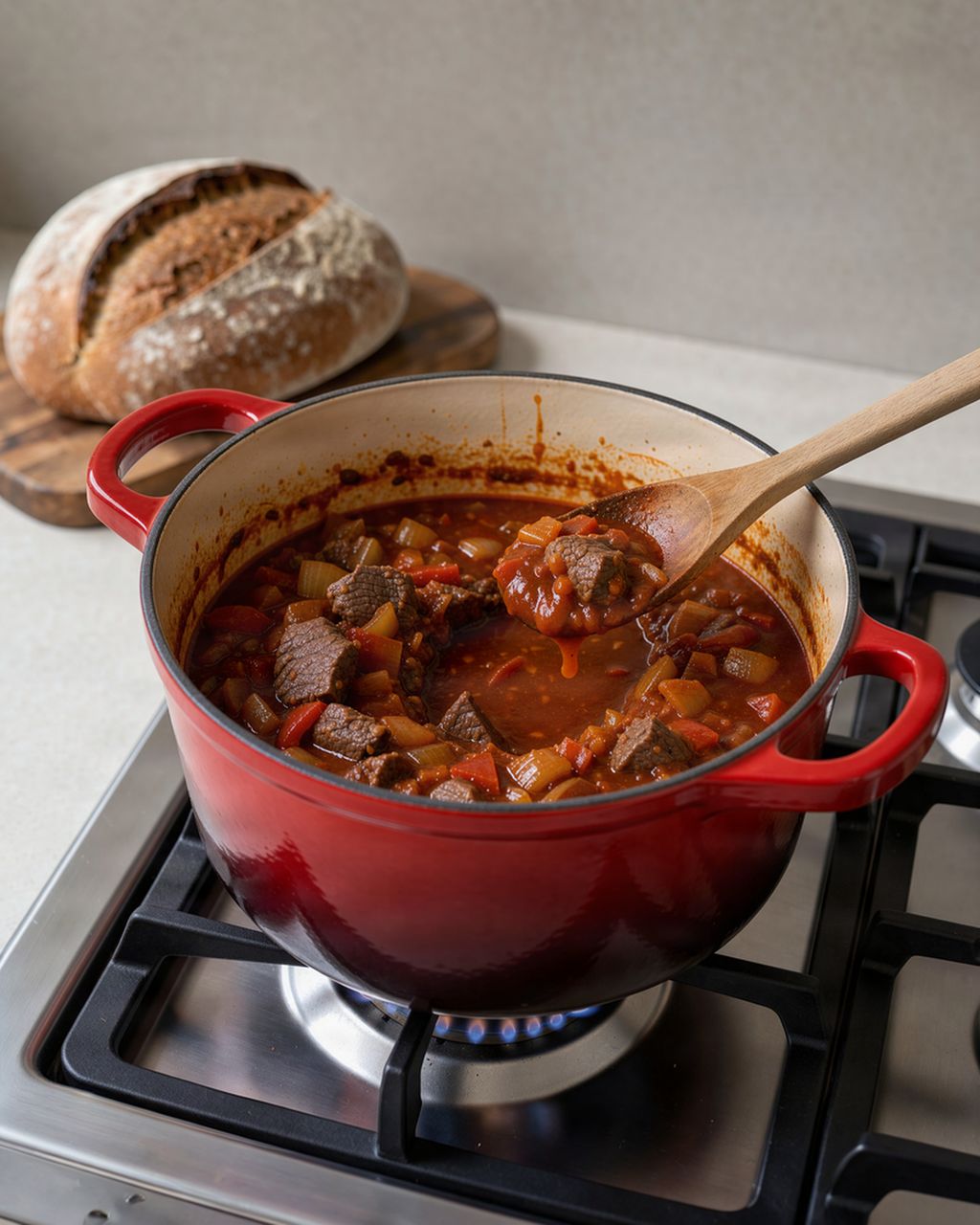
Czech cooking. We start guláš (goulash) by browning a lot of onion slowly, which gives the sauce its color and body. Our goulash recipe shows how much. Pan-fried onions also go on liver, as in our guide to cooking liver.
Recipe of the week, one tip that saves you time and one deal from the shop. Unsubscribe in one click.
The next issue goes out on Thursday, November 26.
Caramelized onions are cooked food, so treat them like leftovers. USDA FSIS advises cooling leftovers quickly in shallow containers, refrigerating cooked food within 2 hours (1 hour above 32 °C / 90 °F) and eating leftovers within 3 to 4 days. Spread them in a shallow container so they cool quickly, then keep them closed, in the fridge.
They also freeze well. Spoon cooled onions into an ice cube tray or small portions, freeze, then move them into a sealed freezer bag. When you reheat them on their own, USDA FSIS advises bringing leftovers to 74 °C (165 °F), checked with a food thermometer.
For raw onions, see our guide to storing garlic and onions.
Usually 45 minutes to an hour over medium-low heat, sometimes longer for a big batch. Recipes that promise 10 minutes give you browned onions, not soft, jammy caramelized ones.
The heat is too high or the pan too thin. Turn the heat down, stir more often, and add a splash of water to lift the browned bits off the pan before they scorch.
No. Onions have enough natural sugar to brown on their own. A pinch of sugar speeds browning a little but makes them sweeter and easier to burn.
Use slightly higher heat and add a splash of water whenever the pan starts to brown, then scrape it up. A tiny pinch of baking soda speeds browning too, but makes the onions softer and mushier.
Yes. Red onions caramelize the same way, but they turn a darker, purplish brown and taste a little sweeter. Yellow onions are the classic choice.
Yes. Cool them, then freeze them in small portions, for example in an ice cube tray, and move the cubes into a sealed freezer bag. They go straight into soups, sauces and gravies.
One recipe worth heating the oven for, one tip, and one deal from the shop. Nothing else.