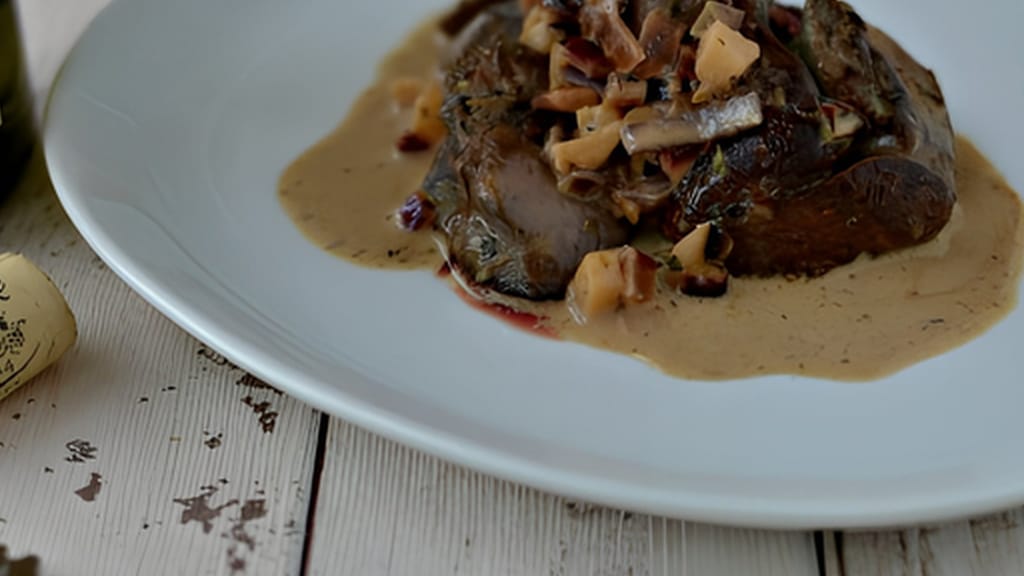
Chicken livers with marjoram
How to Cook Liver So It Isn't Tough: Boiled and Pan-Fried with Onions
Updated Nov 18, 2026
Liver turns tough almost every time for the same reason: it was cooked too long. Unlike beef for goulash, it has nothing in it that softens with longer cooking, so it is cooked quickly over fairly high heat and salted only at the end. Chicken liver, though, must be cooked all the way through. Here's how to cook chicken and pork liver and kidneys, how to tell when they're done, and how to freeze raw liver.
In a hot pan, whole chicken livers are done in about 4–6 minutes (2–3 minutes per side), halved ones in 3–4 minutes. Slices of pork liver about 1 cm (½ in) thick need 2–3 minutes per side. Every extra minute only dries them out. The times are just a guide, though, since a lot depends on the size of the pieces and on the pan. The reliable way to tell they're done is the internal temperature:
Chicken (and turkey) liver: 74 °C (165 °F) in the center. This is the US USDA/FSIS recommendation, because bacteria can be inside the liver, not just on the surface.
Pork liver and kidneys: aim for at least 71 °C (160 °F) in the center. Pork liver can also carry the hepatitis E virus, though. According to the Czech National Institute of Public Health (SZÚ, hepatitis E leaflet, 2024), it is reliably destroyed only by heating above 71 °C in all parts for at least 20 minutes, and freezing does not destroy it. Quickly pan-frying to 71 °C does not meet this SZÚ condition. If you want full certainty, choose a braising recipe, such as braised pork liver with apples, or braise the pan-fried liver for another 20 minutes under a lid. Braising makes pork liver firmer than quick frying, but the sauce and onions, or apples, make up for that. Even briefly fried pork liver should always be cooked through, and you should check it with a thermometer. Small children, older people and people with weakened immunity should eat pork liver only if it's braised for a long time or served in a sauce. Pregnant women are advised against liver and pâté altogether, because of the high vitamin A content and, with pâté, the risk of listeria. You'll find more in the ingredient profile pork liver.
What this means in the kitchen: cut the liver into evenly sized pieces so they're all done at the same time, cook in a well-heated pan and check the temperature in the largest piece. As soon as it reaches that temperature, take the pan off the heat.
Seasonal baking plans, tested recipes and kitchen tricks that save you time. Unsubscribe in one click.
Tough liver is overcooked liver. Muscle meat for goulash contains collagen, which dissolves with long braising. That's why tough goulash is fixed by simmering it longer (more in the article why goulash is tough and the meat won't soften). Liver has almost no collagen. Its proteins just tighten with heat and squeeze out juice, so the liver goes hard, grainy and shrivels.
With liver, the opposite of goulash applies: if it's tough, cooking longer won't help and will only make it worse. The most common mistakes:
Too long in the pan, because you're waiting for it to "brown on the inside too".
Too much liver at once. The pan cools down, the liver releases juice and boils instead of searing.
Salting at the start (see the next section).
Reheating. Once cooked, every further reheating dries the liver out.
Salt liver only at the end, ideally on the plate or just before you take the pan off the heat. Salt on the raw surface draws out juice, which simmers in the pan and the liver stews in it instead of searing quickly. The result tends to be grayer and drier.
You can add other seasonings earlier: pepper, marjoram, thyme or a little mustard. A splash of vinegar or wine at the end freshens liver nicely, but add it only to the cooked liver, because acid on raw liver just speeds up its toughening.
Milk won't make liver tender, it only mellows the flavor. It makes sense mainly for stronger-tasting liver: pork, beef or lamb, and especially if liver usually tastes "too liver-y" to you.
With fresh chicken liver, milk does almost nothing, since it has a mild flavor naturally. Tenderness is decided in the pan anyway, not in the bowl. If you do soak it, keep the liver in milk in the fridge, not on the counter, and then discard the milk. Milk that has soaked raw liver doesn't belong in the sauce.
Cook the onions and liver separately and combine them only at the end. Onions need long, gentle heat to turn golden and sweet. Liver needs a short time in a properly hot pan. If you put them in the pan together, the onions won't caramelize in time, or the liver will overcook.
Onions: cut into half rings and fry slowly in lard or oil for 10–15 minutes, until golden and soft. Then set aside.
Liver: trim off the membranes and veins. Cut larger pork liver into slices about 1 cm (½ in) thick or into strips, and leave chicken liver whole or halve it. Pat dry with a paper towel, because a dry surface sears and a wet one boils.
Fry in small batches in a hot pan, leave them undisturbed for a moment to take on color, then turn. Pork liver slices take 2–3 minutes per side, whole chicken livers 4–6 minutes in total. With pork liver, such a short frying time doesn't reliably destroy the hepatitis E virus. If you want full certainty, after frying braise it with the onions and a little broth for another 20 minutes under a lid. It will be firmer than just fried, but the sauce and onions, or apples, make up for that.
Return the onions, add marjoram and pepper, and if needed add a splash of water or broth and scrape up the browned bits from the bottom. Check the temperature inside the largest piece.
Salt and serve right away. Best with rice, boiled potatoes or bread.
A tried-and-tested method is in the recipe poultry liver with marjoram. If you want pork liver in a sweeter sauce, try braised pork liver with apples. The apples do the same job as caramelized onions, balancing the liver's bitterness with sweetness.
Chicken livers with marjoram
Poultry liver with marjoram: a classic with onions
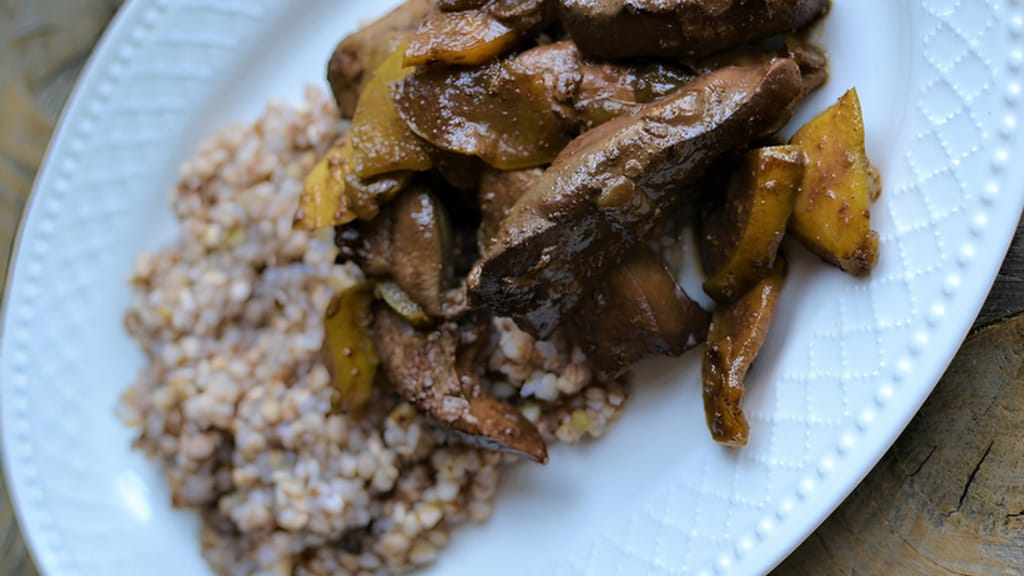
Braised pork liver with juicy apples
Braised pork liver with apples: tender liver in a sweeter sauce
Cook liver in water that only barely simmers, never at a rolling boil. Whole chicken livers are done in about 8–10 minutes; pieces of pork liver about 3 cm (1 in) in size should simmer gently for at least 20 minutes because of hepatitis E. A rolling boil tightens the surface proteins as fast as an overheated pan, and the liver ends up rubbery outside and crumbly inside. Boiled liver suits pâté, stuffing, liver dumplings, or anywhere you want a mild flavor without a seared crust.
Add an onion, bay leaf, a few peppercorns and allspice berries to the water. Add salt only at the end, or not at all if the liver is going into a pâté you'll season afterward.
Cook chicken liver only until it reaches a safe internal temperature (see above), and take it out right away. Let pork liver simmer gently for at least 20 minutes. If you leave it to finish in the broth, it keeps cooking.
The same goes for chicken liver pâté. According to the UK Health Protection Agency, in 2010 most campylobacteriosis outbreaks reported from catering settings (11 of 15) were linked to pâté or parfait made from poultry liver. The UK's FSA therefore warned that briefly searing the liver isn't enough.
We don't have a recipe for liver dumplings for soup or homemade pâté on Yumsto yet, but we're working on them.
Only a temperature reading in the center is reliable. Chicken liver needs 74 °C (165 °F) (USDA/FSIS), pork liver and kidneys at least 71 °C (160 °F). For pork liver, though, that is only the minimum, not protection against hepatitis E. That comes only with longer braising (see above). You can't judge doneness by color: chicken liver can stay pink even after reaching a safe temperature, and the other way round. Always cook pork liver so that no pink remains inside. Insert the thermometer from the side into the thickest piece.
Without a thermometer, these signs can help, but treat them as a rough guide only:
The cut surface shows how far it's cooked, not whether it's safe: evenly light brown to gray-brown means done, while a glossy dark red layer in the middle means it needs a little longer.
The juice that runs out when you cut into it is clear or brownish, not bloody.
To the touch it's springy, and a piece bounces back when pressed. Soft like raw means underdone, hard as rubber means overcooked.
If chicken liver isn't done, put it back for a moment. It's better to overcook it a little than to leave it raw.
Cook kidneys either very quickly, 3–4 minutes in a hot pan, or long and slow, about an hour to an hour and a half of braising. Nothing in between. Briefly fried, they stay juicy, and long braising makes them tender again. But cooked "a bit longer", say 15–30 minutes, they turn rubbery. Before you start cooking them, they need one more step that liver doesn't: you have to clean them thoroughly.
Halve them lengthwise and use a sharp knife to cut out the white core: the fat and tubes in the middle. That's where the typical smell comes from.
Soak them in cold water and change the water a few times until it stays clear. Soak them in the fridge. Some people add a little vinegar or milk to the water, and both mellow the flavor further.
Pat dry and slice about 0.5 cm (¼ in) thick.
Then choose one of two methods:
Kidneys with onions: prepare exactly like liver: first the onions separately, then the kidneys in small batches in a hot pan for 3–4 minutes in total, and finally combine, season and salt. They're done when they reach at least 71 °C (160 °F) inside.
Braised kidneys (for example in cream sauce or with mushrooms): let them simmer gently under a lid for an hour to an hour and a half. After an hour, start testing with a fork: they're done when it slides in easily.
We don't have a recipe for kidneys with onions or braised kidneys in cream sauce on Yumsto yet, but we're working on them.
Yes, raw liver and kidneys can be frozen without any problem. It's best to do it on the day you buy them. According to USDA/FSIS:
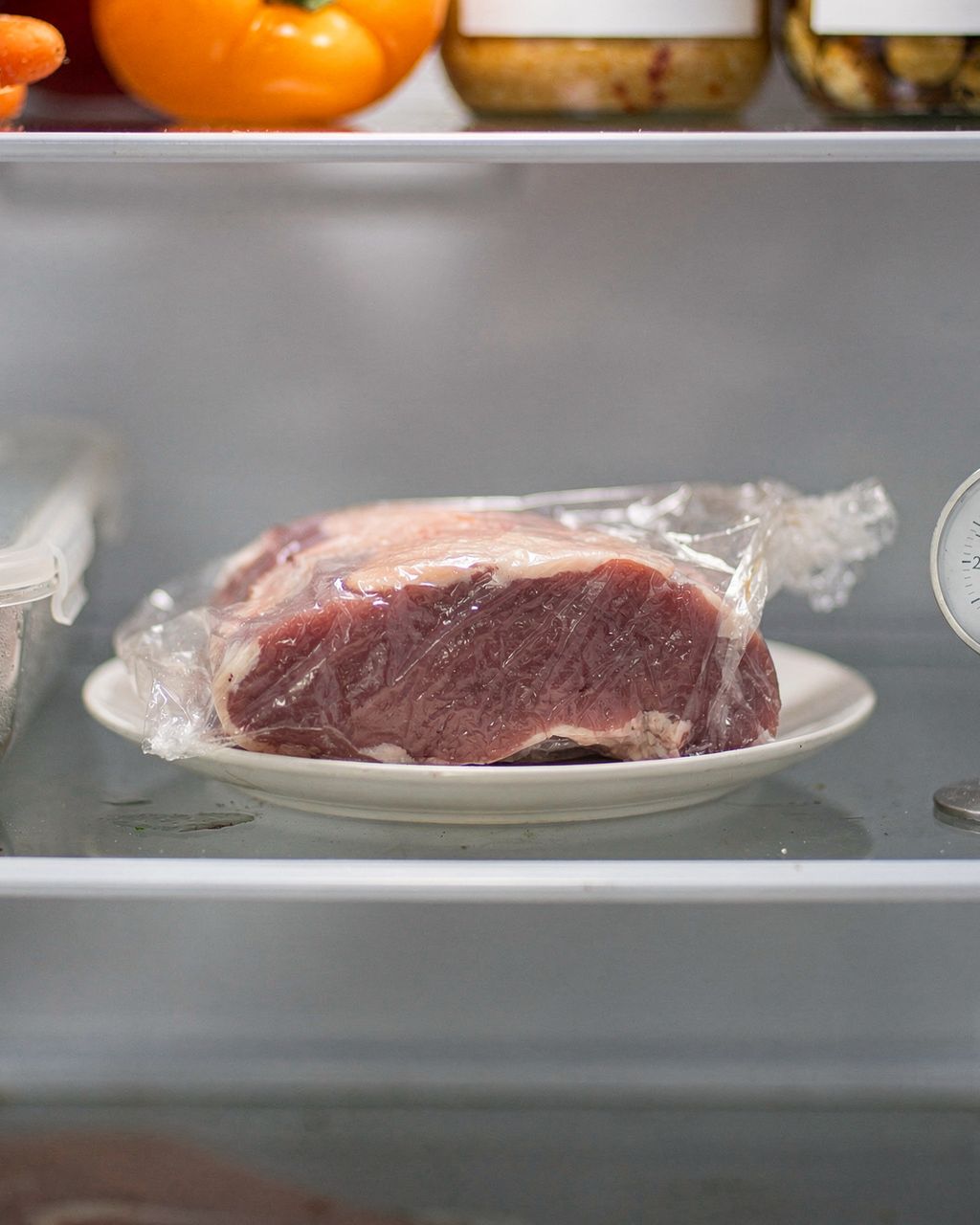
Fridge (up to 4 °C / 40 °F): raw liver, kidneys and other offal keep 1–2 days. That's less than regular meat, so if you won't be cooking them right away, freeze them. Chicken muscle meat has its own time limits, which you'll find in the article how long chicken keeps in the fridge.
Freezer (−18 °C / 0 °F): offal keeps its quality for 3–4 months. It's safe even after that, because freezing stops bacteria from multiplying. It doesn't kill them, though, and they wake up again after thawing.
Room temperature: don't leave raw liver on the counter for more than 2 hours, including while thawing.
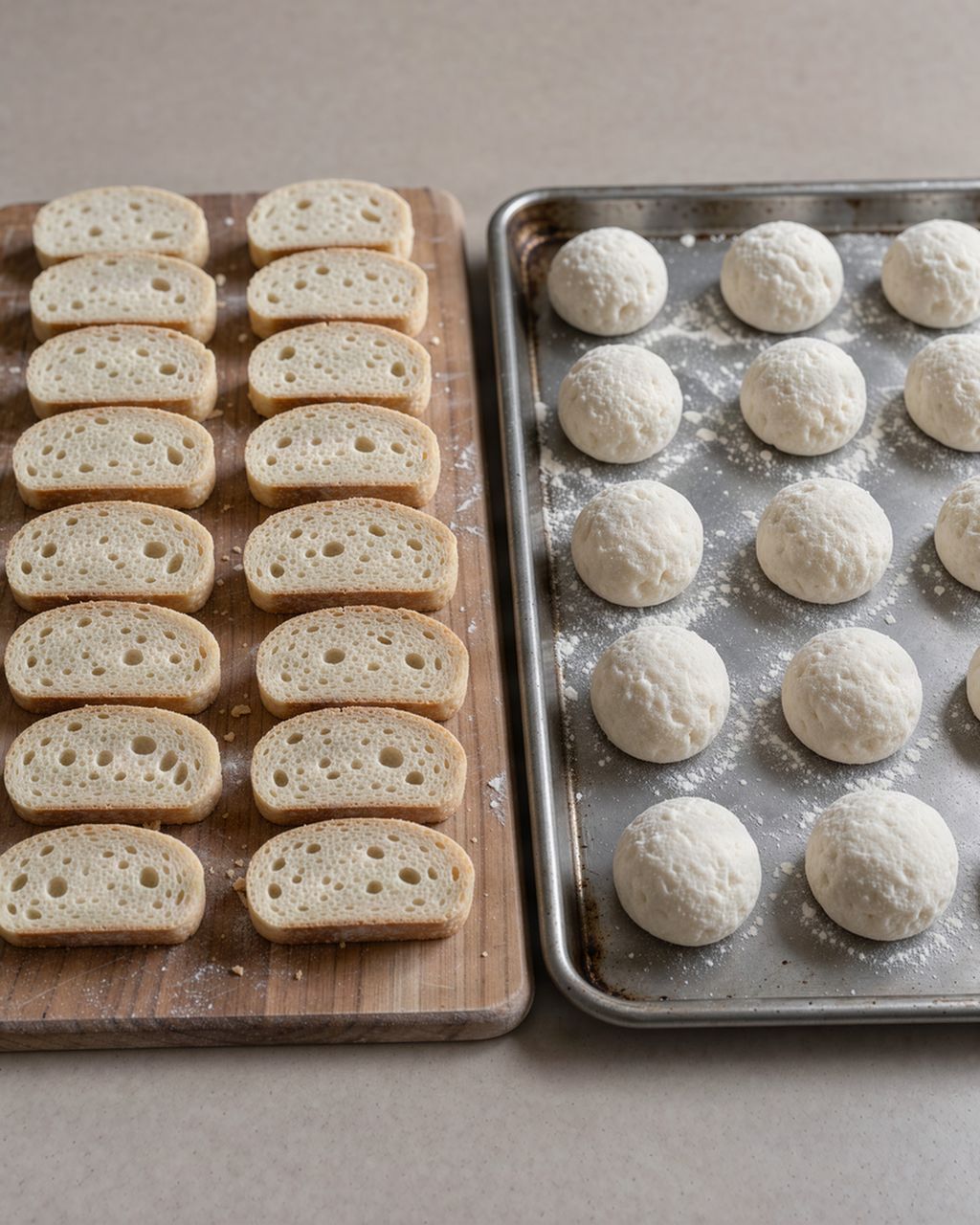
How to freeze it: clean it, pat dry and divide into portions for one meal. Spread chicken livers side by side on a tray or plate, freeze until solid, and only then tip them into a bag. They won't stick together in one lump, and you can take out as many as you need. Press the air out of the bag and write the date on it.
Thaw in the fridge overnight and then cook within 1–2 days (USDA/FSIS). Drain and pat dry thoroughly before cooking, because thawed liver releases more water and would otherwise stew in the pan. Thawed liver tends to be a bit softer and more delicate, but that doesn't matter for pâté or liver with onions.
Bitterness in liver usually comes from leftover bile or from overcooking. If a bit of greenish bile tissue is left on the liver, the whole dish turns bitter, so always trim it off carefully. Overcooked liver also turns tough and develops a sharper, metallic taste. Chicken liver is best fried briefly; pork liver, however, must always be cooked through, or alternatively braised. The sweetness of golden-browned onions or apples balances out any bitterness.
Yes, but it only takes a moment: remove the white membranes, fatty veins and any greenish spots left by bile. Then pat the liver dry with a paper towel. Clean, dry liver sears evenly in the pan, doesn't shrink and doesn't turn bitter. Don't rinse it under running water before cooking, because the splashes spread bacteria from the liver around your kitchen.
According to USDA/FSIS, raw liver thawed in the fridge can be refrozen without cooking it first. Expect it to be wetter and softer, though. Don't refreeze liver thawed on the counter or in water; cook it first. Cooked liver with onions can be frozen.
You can make cooked liver and kidneys ahead, but every reheating dries them out and firms them up a little. According to USDA/FSIS they keep 3–4 days in the fridge. Reheat them briefly over low heat with a little water or broth, only until warmed through. If you want to cook ahead, braised kidneys in sauce are a better choice than briefly pan-fried liver.
One recipe worth heating the oven for, one tip, and one deal from the shop. Nothing else.