Why Is My Sauce Watery? How to Reduce or Thicken It Properly
Why Is My Stew Watery? How to Thicken a Thin, Runny Stew
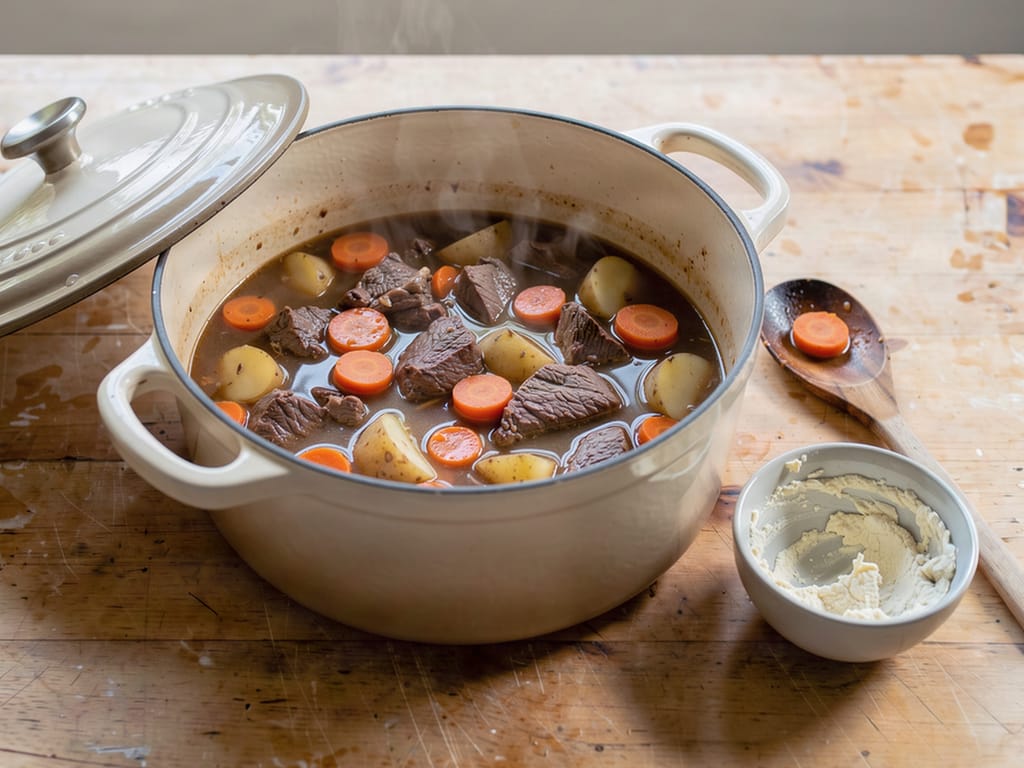
Updated Nov 21, 2026
Stew is usually watery because it started with too much liquid, cooked with the lid on so nothing evaporated, or vegetables and frozen meat released more water than expected. Slow cookers make it worse because they barely evaporate anything. Simmer it uncovered to reduce it, or thicken it with flour, cornstarch or mashed potato.
A stew is meat and vegetables cooked slowly in a little liquid. It thickens in three ways: water evaporates, starch (from flour, potatoes or a thickener) binds the rest, and gelatin from the meat gives it body. Watery stew means one of those didn't happen.
The usual causes:
Too much liquid at the start. The meat and vegetables should be only just covered. They release juice of their own as they cook.
The lid stayed on the whole time. Almost nothing evaporates under a tight lid.
Watery vegetables. Mushrooms, zucchini, tomatoes, celery and onions release a lot of liquid.
Frozen meat or vegetables added straight to the pot bring their ice with them.
Meat that wasn't browned or floured. Browning in batches drives off surface moisture; flour on the meat thickens the liquid as it cooks.
A slow cooker. It is sealed and runs gently, so liquid hardly reduces at all.
Lean meat. Cuts with little connective tissue add little gelatin, so the liquid stays thin.
If the stew tastes a little weak as well as thin, reducing it is the best fix. It concentrates the flavor while it thickens.
Take the lid off and keep the stew at a steady simmer.
Stir and scrape the bottom now and then; a thickening stew catches more easily.
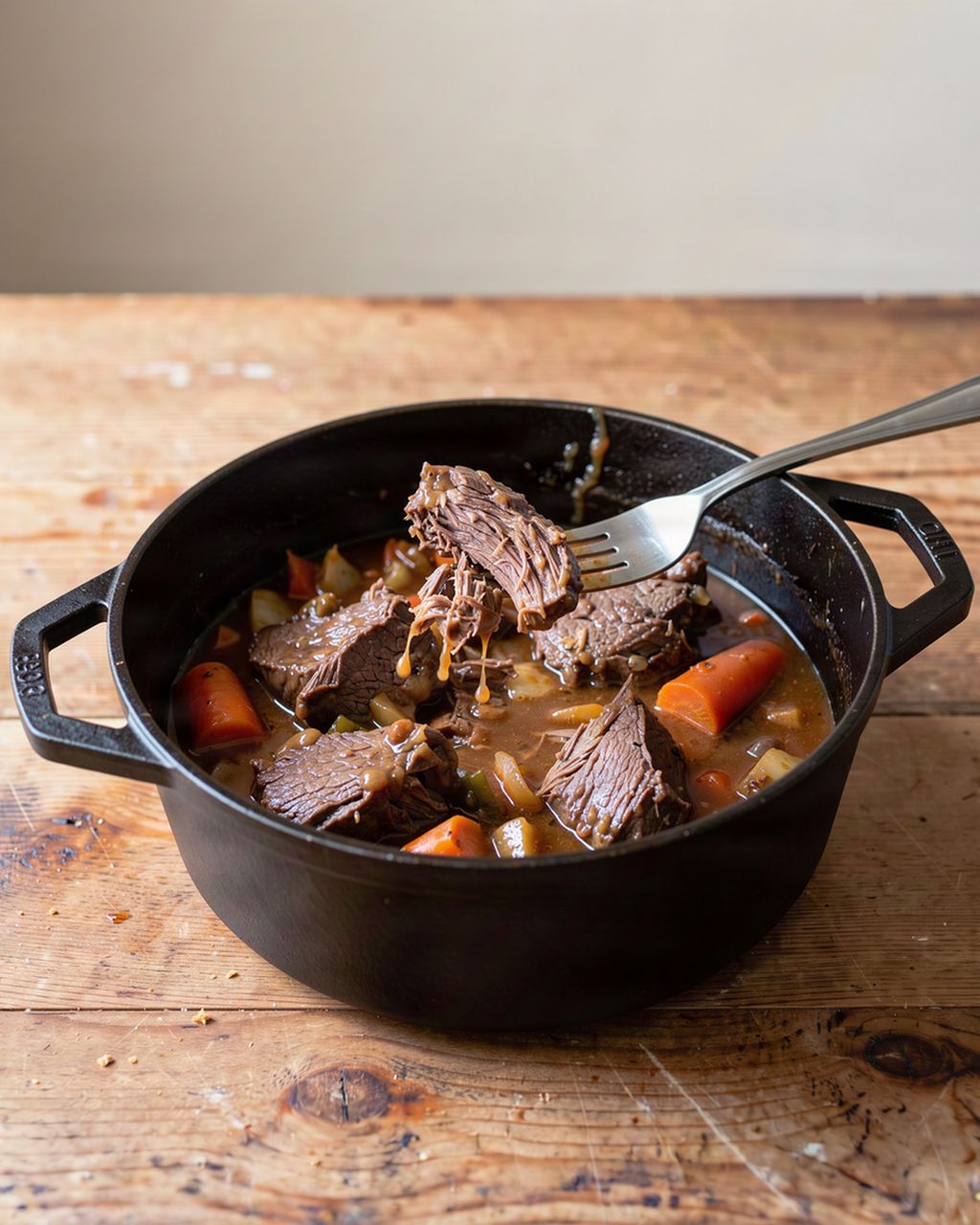
If the meat is already tender, lift it and the vegetables out with a slotted spoon, boil the liquid down on its own in a wide pan, then put everything back. That way the meat doesn't overcook and fall to shreds.
Taste as it reduces. Salt concentrates too, so season at the end.
If the stew already tastes right, thicken the liquid instead:
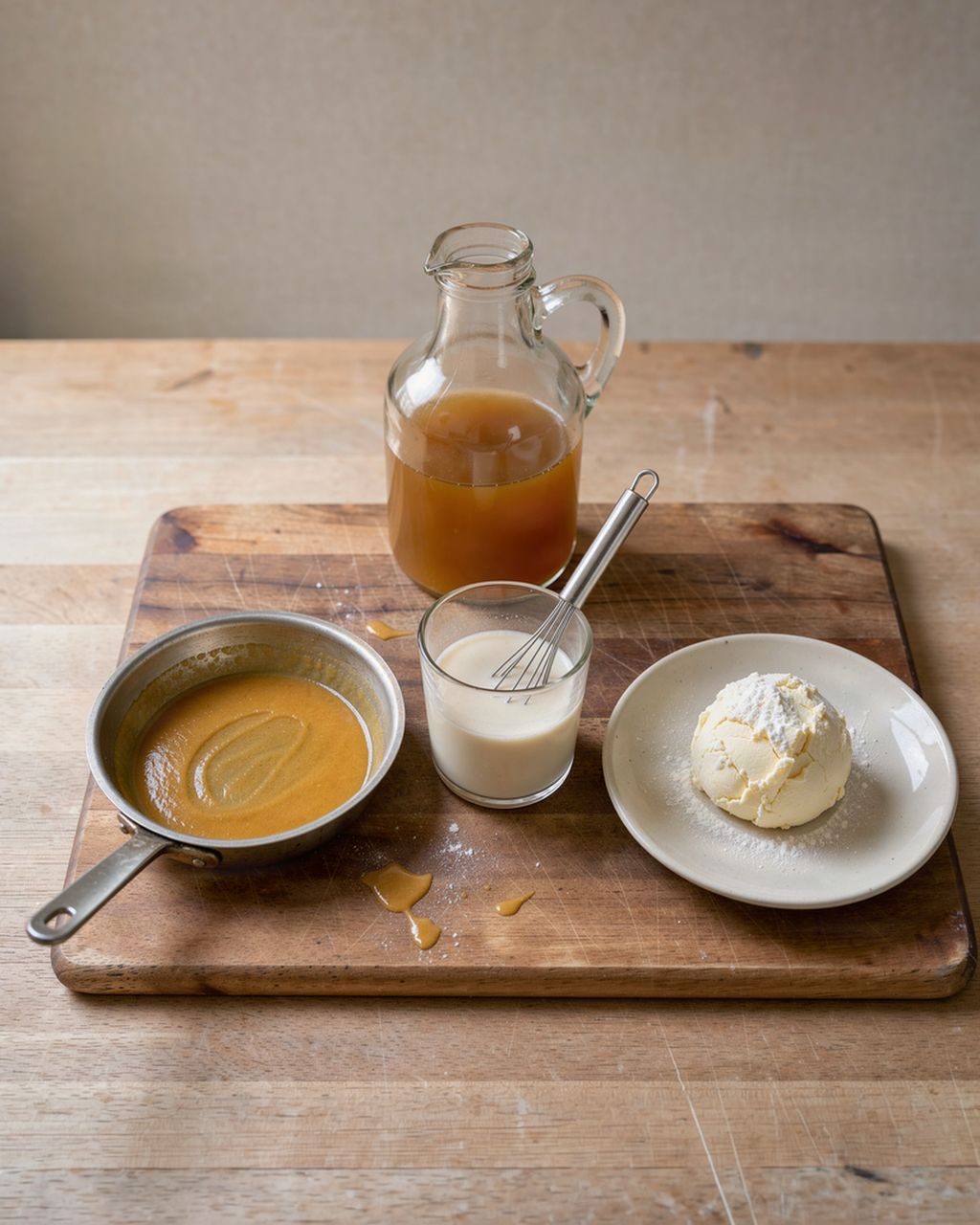
Beurre manié: knead equal parts soft butter and flour into a paste, then whisk in small pieces into the simmering stew. Let it simmer for several minutes so the flour loses its raw taste.
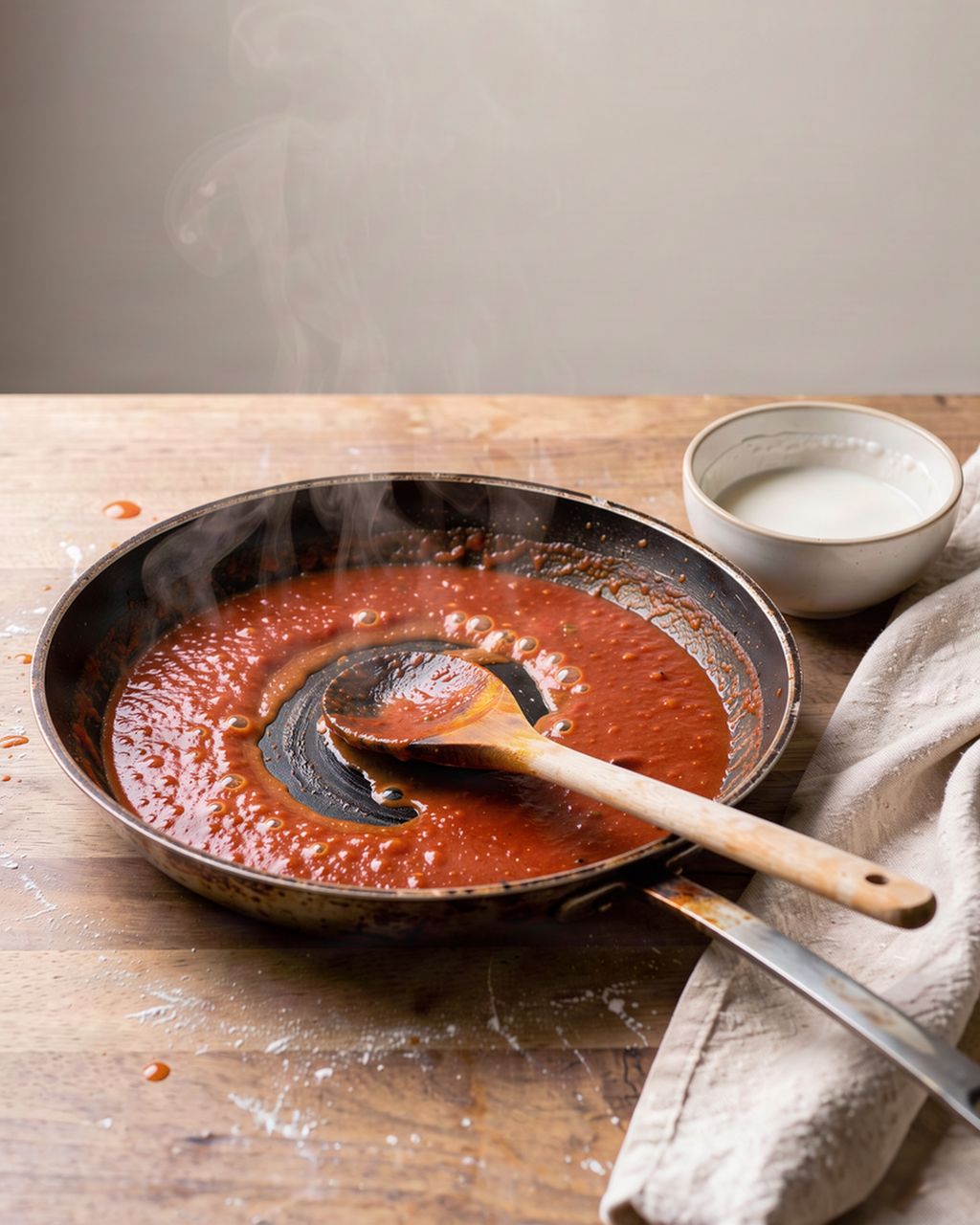
Cornstarch or potato starch slurry: mix with cold water first, stir into the stew, and bring it back to a simmer. Cornstarch only thickens fully once the liquid comes to a simmer or gentle boil, about 95 °C (203 °F).
Roux: cook flour in butter or fat in a separate pan, ladle in some stew liquid, whisk smooth, then stir it back in.
Mash some of what's there: crush a few potatoes, beans or chunks of root vegetable against the side of the pot and stir them in.
Tomato paste: a spoonful, fried briefly in a little fat first, adds body and color to beef and goulash-style stews.
Our guide to roux vs cornstarch slurry vs beurre manié gives amounts per liter.
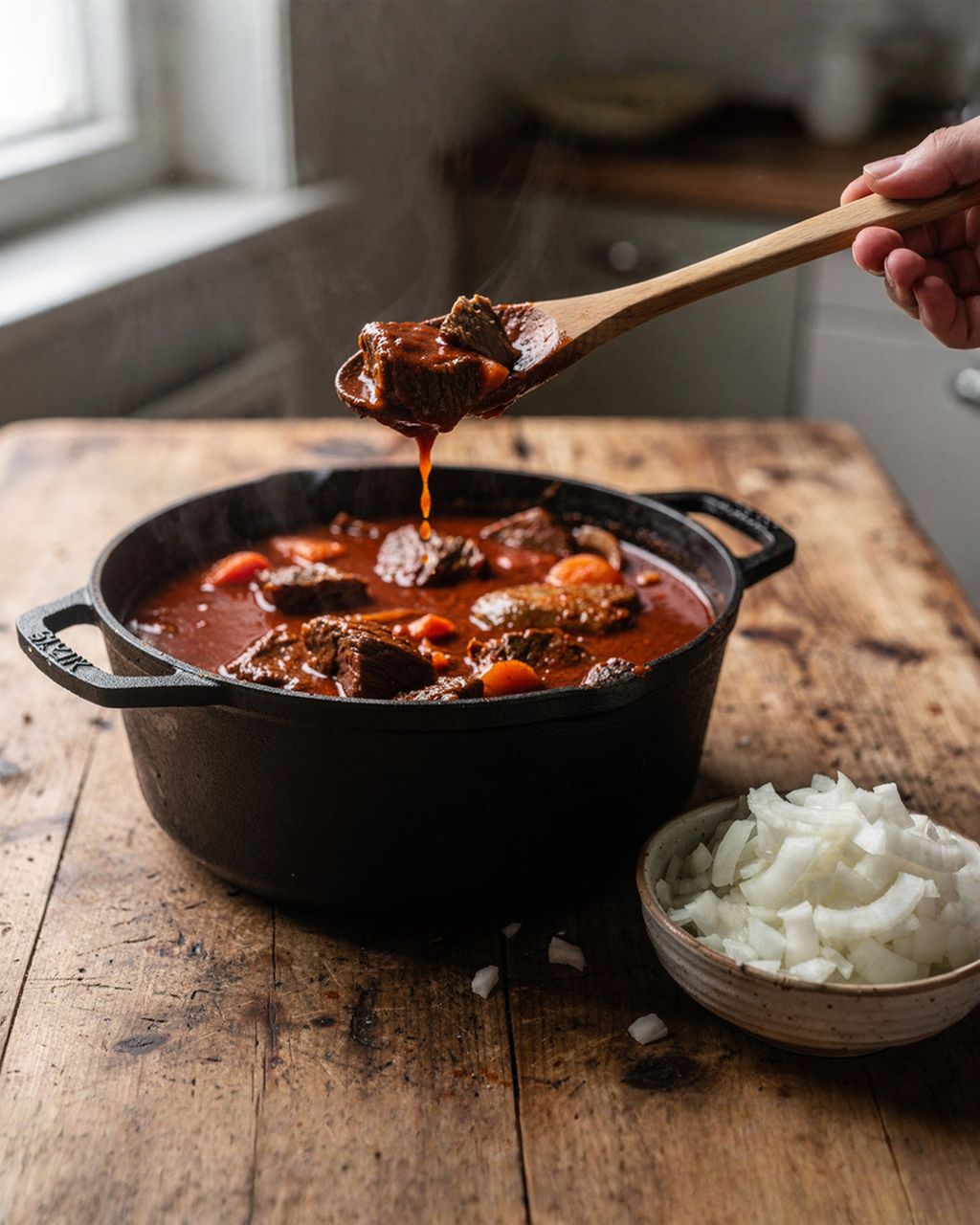
Czech guláš (beef stew with onions and paprika) is thick, glossy and spoonable, and it is the stew we know best. Most of its body comes from onions: a large amount, cooked down slowly until they almost melt into the sauce. Long cooking of a collagen-rich cut such as beef shin adds gelatin. Many cooks then finish it with a little flour, and some with grated raw potato or bread.
If your goulash is thin, our guide to thickening goulash gives nine methods with amounts per liter. For the right cut, see cuts of beef.
Sealed cookers lose almost no liquid. A recipe written for an open pot on the stove comes out much thinner.
Use less liquid. Start with roughly enough to come partway up the ingredients rather than cover them; the meat and vegetables will add more.
Coat the meat in flour before browning it, so the liquid thickens as it cooks.
Thicken at the end on the stove. Pour off the cooking liquid into a wide pan, reduce it or thicken it, then pour it back over the meat.
Pressure cooker: after releasing the pressure, simmer with the lid off for a few minutes, or use the sauté setting to reduce.
Our guide to goulash in a pressure cooker, slow cooker or oven shows how much liquid each method needs.
Start with less liquid than you think, and add more only if it gets dry.
Pat meat dry, flour it lightly and brown it in batches, so it sears instead of steaming.
Brown watery vegetables such as mushrooms separately, until their liquid has gone.
Thaw frozen meat in the fridge before cooking, and drain it.
Pick a cut with connective tissue, such as beef shin, chuck or cheek.
Take the lid off or set it ajar for the last part of cooking.
Recipe of the week, one tip that saves you time and one deal from the shop. Unsubscribe in one click.
The next issue goes out on Thursday, November 26.
Yes. Tossing the meat in a little flour before browning it is one of the simplest ways to make sure stew won't end up watery.
The flour browns with the meat, adding flavor and color.
It then dissolves into the liquid as the stew cooks, thickening it gradually, with no lumps.
Use only a light coating. Shake off the excess, or the flour will burn in the pan before the meat is browned.
Brown the floured meat in small batches. A crowded pan fills with steam, the flour turns pasty, and the meat stews in its own juice instead of searing.
If you prefer not to use wheat flour, potato starch or cornstarch can be stirred in at the end instead; remember they need to come back to a simmer to thicken.
Stew is watery when there is more liquid than it can reduce or bind: too much stock at the start, a lid kept on the whole time, or watery vegetables and frozen meat. Take the lid off and simmer it, or thicken it with flour, cornstarch or mashed potato.
Simmer the stew uncovered so the liquid reduces, then if it is still thin whisk in a little beurre manié (butter and flour kneaded together) or a cornstarch slurry and bring it back to a simmer. Mashing a few potatoes or some of the vegetables into the liquid also works.
Slow cookers barely let any liquid evaporate, and the meat and vegetables still release their juices, so the stew ends up thinner than the same recipe on the stove. Use less liquid, then thicken the cooking liquid in a pan on the stove at the end.
Cook stew mostly with the lid on so the meat braises gently, then take the lid off or set it ajar for the last part of cooking so the liquid reduces. If the stew already looks thin halfway through, leave the lid off sooner.
Yes, stew thickens as it cools, especially if it contains flour, potatoes or gelatin from bony cuts such as shin. Stew made the day before is noticeably thicker when reheated. Judge the thickness while it is hot.
A cornstarch-thickened stew can weep liquid after a night in the fridge, and potatoes and vegetables keep releasing juice. Reheat it until it comes to a rolling boil, as USDA FSIS advises for soups, sauces and leftovers, then simmer it a little longer or add a small amount of fresh thickener.
One recipe worth heating the oven for, one tip, and one deal from the shop. Nothing else.