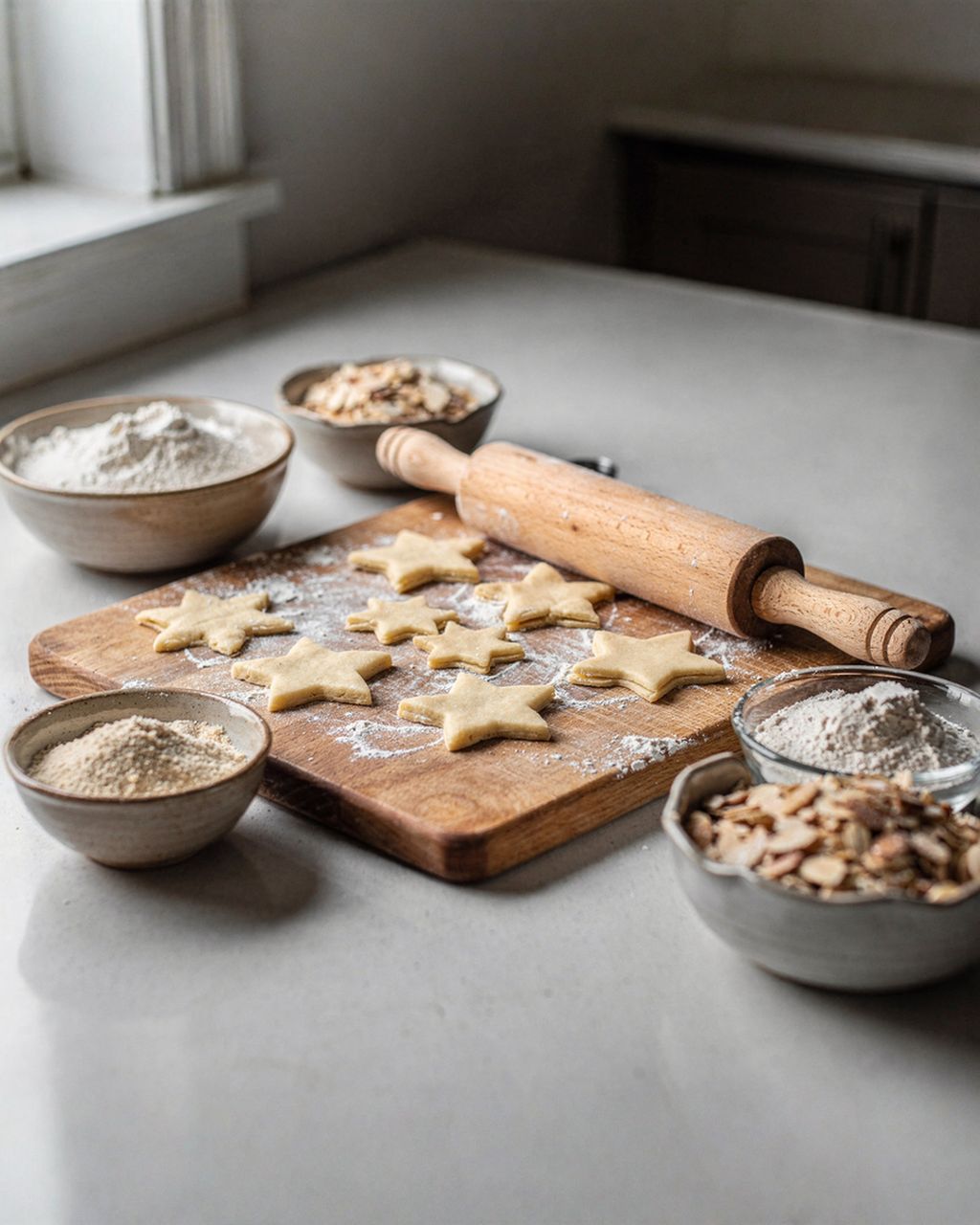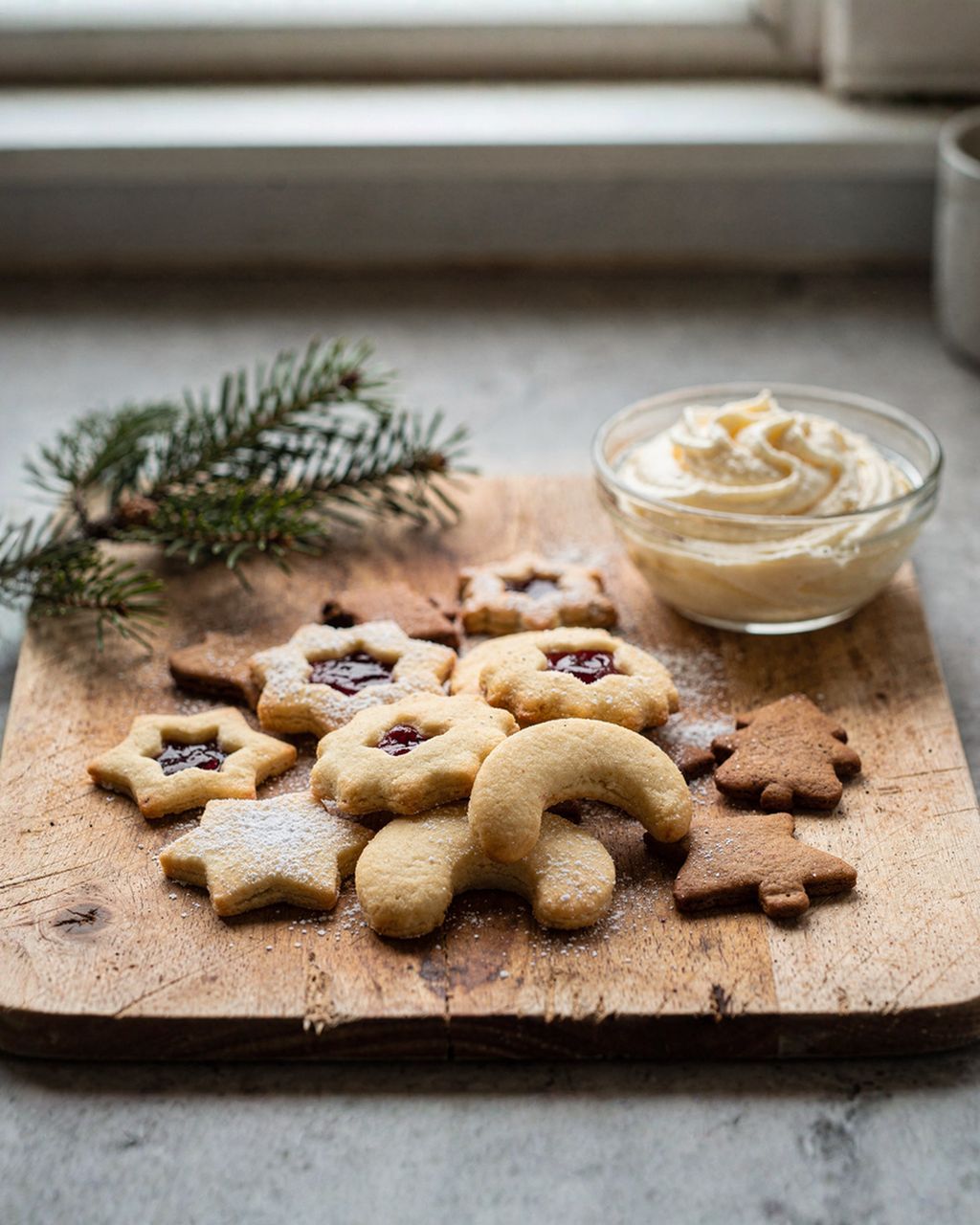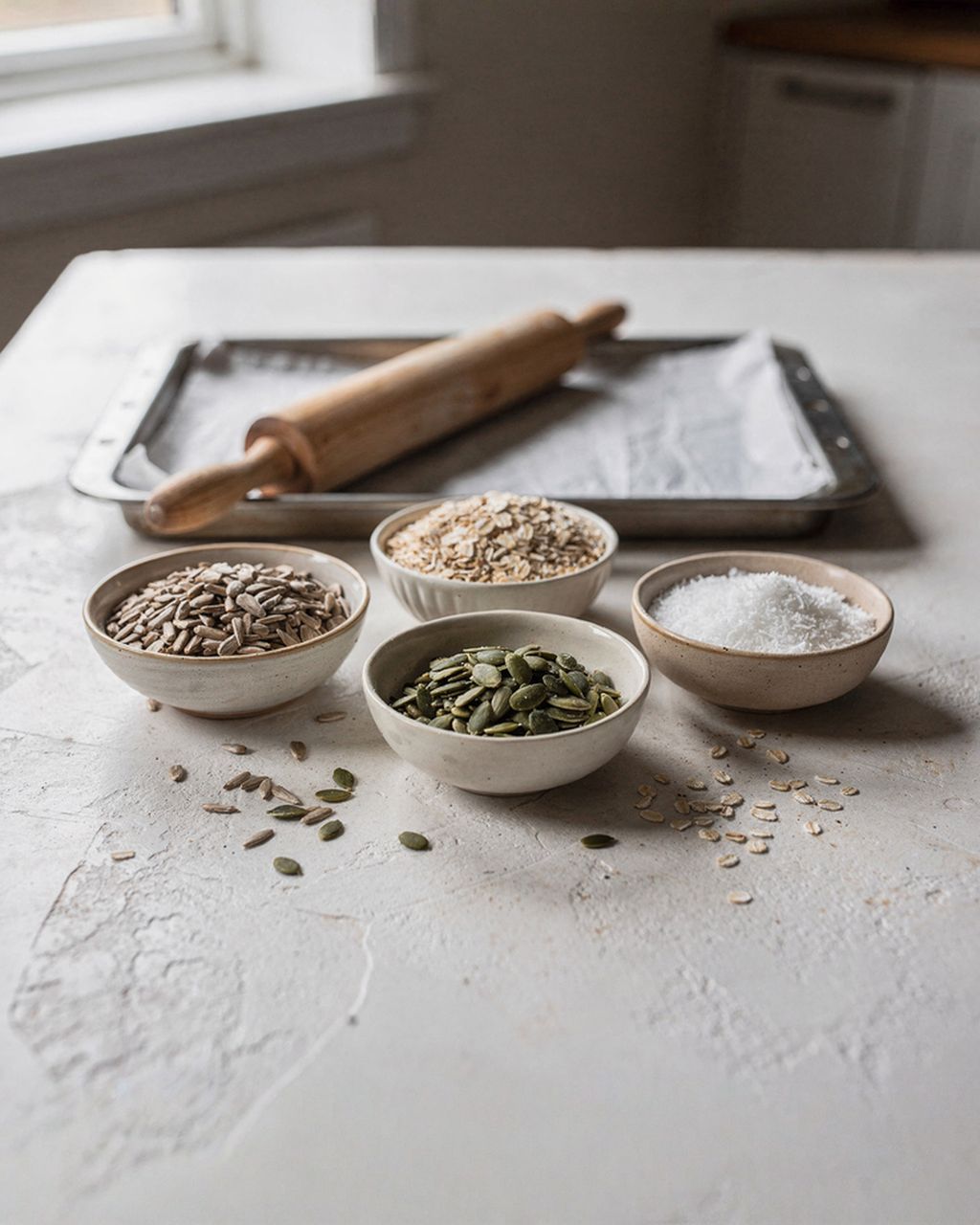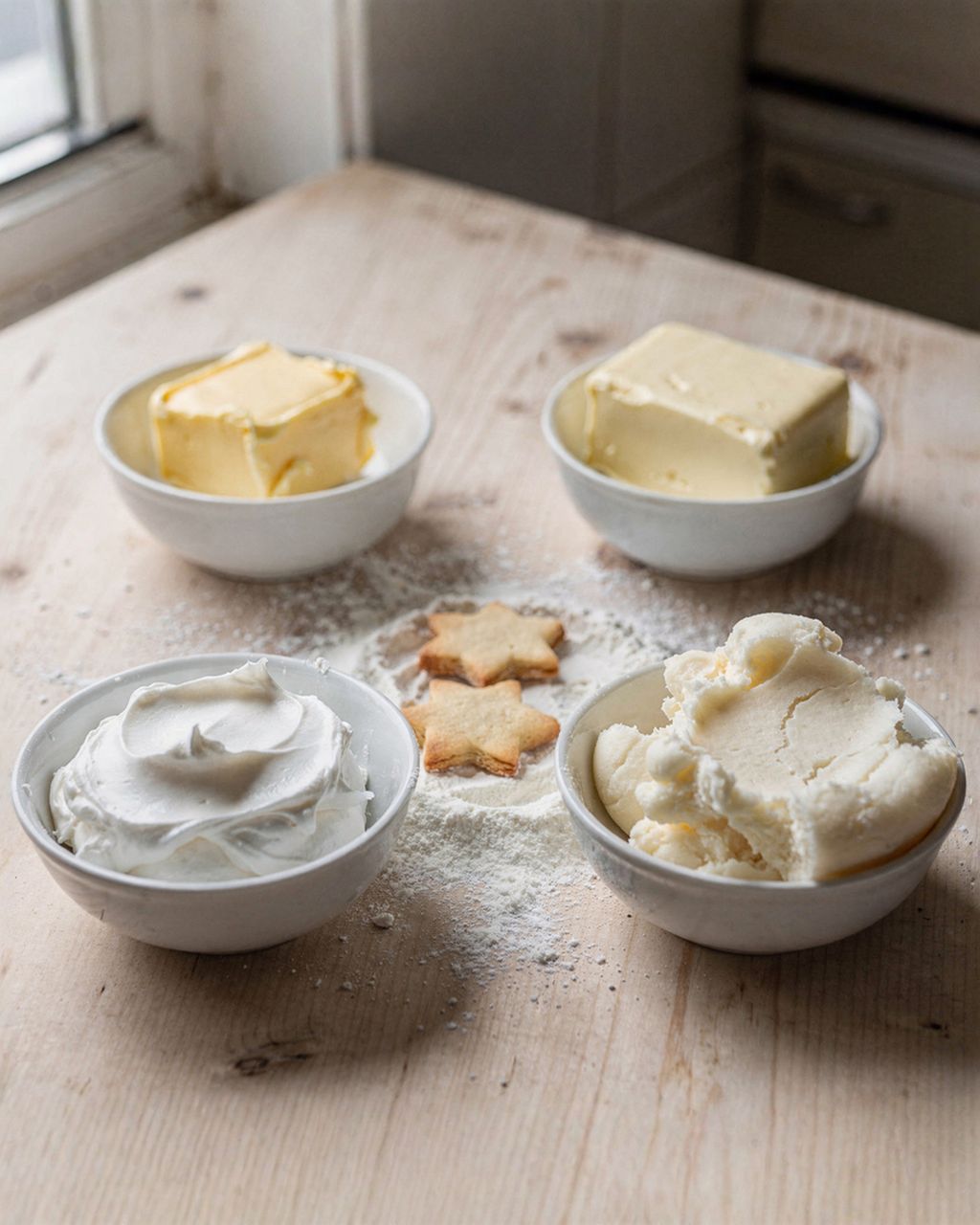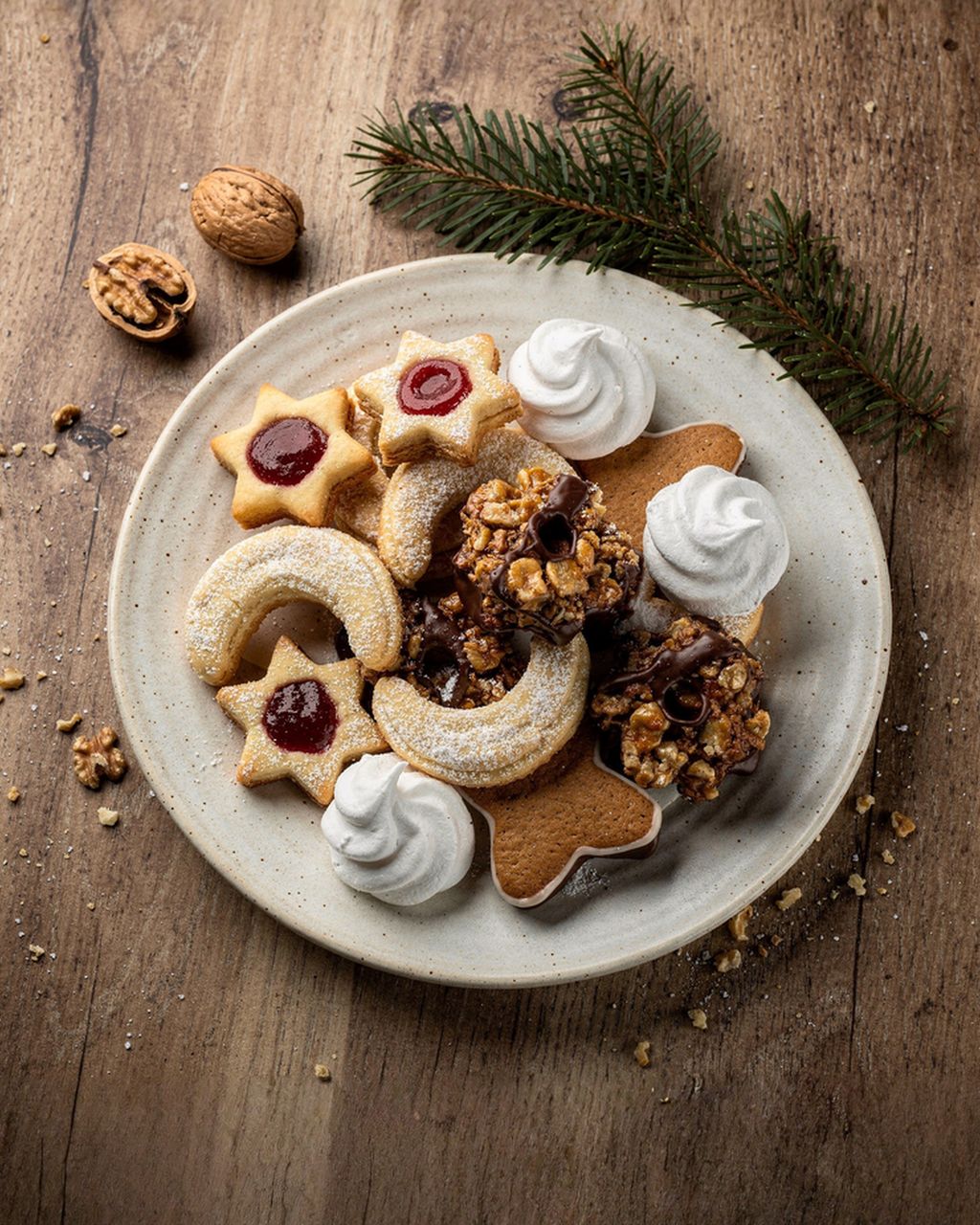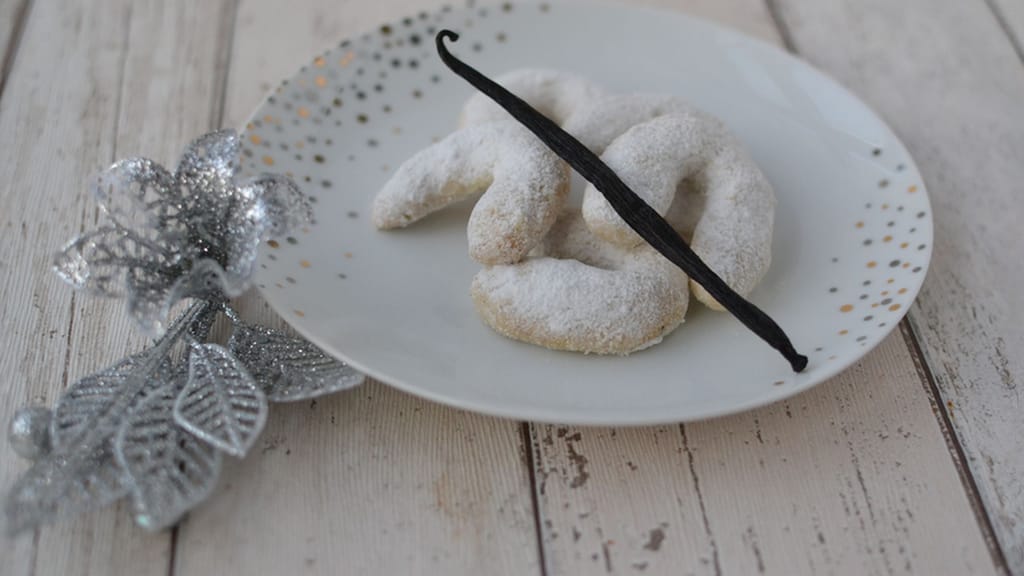
The best christmas cookies? vanilla crescents, of course!
Gluten-Free, Dairy-Free, Egg-Free and Flourless Christmas Cookies: What Works and What to Swap
Updated Nov 19, 2026
You can bake Christmas cookies that are gluten-free, dairy-free, egg-free, flourless or sweetened only with fruit. You just can't take any classic and swap one ingredient for another. Some cookies already did without these ingredients in grandma's day: coconut meringues have no flour, snow meringues have neither flour nor fat, and sádláky (Czech lard cookies) need no butter. Others need a well-thought-out substitute, because gluten, butter or eggs hold their structure together. Here's an overview of which cookies work in which version, what to swap, what temperature to bake at and how to store them so they last until Christmas Eve.
Flourless by nature are coconut and snow meringues; egg-free are most no-bake cookies and easily the vanilla crescents too; butter-free are sádláky (Czech lard cookies); gluten-free crescents, linecké (Czech Linzer-style jam cookies) and perníčky (Czech gingerbread cookies) work with a flour substitute; and you can sweeten no-bake date balls with fruit only. Gluten is the most work in delicate, cut-out doughs, and sugar in meringue. A quick overview of the classics:
Vanilla crescents – gluten-free works well (rice flour + starch + ground almonds), egg-free is easy (leave out the yolk or replace it with a spoonful of water), dairy-free with a plant-based baking stick, nut-free only with a substitute for the almonds.
Linecké – gluten-free is possible, but they need a rest in the cold and rolling out between sheets of paper; egg-free is easy (leave out the egg and replace it with 2 tablespoons of plant-based milk); dairy-free with a good-quality plant-based fat.
Perníčky – gluten-free works, though they tend to crumble; egg-free and dairy-free are no big problem; sugar-free and honey-free are not, since those are what they're made of.
Coconut meringues – already flourless, gluten-free, dairy-free and nut-free; not egg-free or sugar-free, since egg white with sugar holds them together.
Snow meringues – already flourless, fat-free, dairy-free and gluten-free; egg-free with aquafaba; they won't work without sugar.
Almond rounds made with almond flour – already gluten-free and free of wheat flour; they can't be nut-free by definition.
Sádláky – already butter-free and dairy-free (made with pork lard); gluten-free is difficult, as the dough tears.
Date balls – sweetened only with dates, gluten-free, dairy-free and egg-free, and no baking needed.
If you'd like to see first how the classics differ from one another, have a look at the types of Christmas cookies and what sets them apart. Below we go through the restrictions one by one.
How to soften gingerbread that’s gone hard, when to fill Linzer cookies and how to tell the carp is done. One recipe and one tip a week. Unsubscribe in one click.
Gluten-free cookies rest on three things: the right blend of flours and starches, a cold dough and a clean kitchen. In wheat dough, gluten works as an elastic network, so without it the dough tears and crumbles more easily and dries out faster after baking. This shows most in cut-out cookies and least in balls and meringues.
For a delicate, crumbly dough, fine rice flour combined with starch works best. As a starting ratio, remember roughly 2 parts rice flour to 1 part starch (corn, potato or tapioca). The starch gives tenderness and fineness, the rice flour gives body. If you want a nutty flavor, replace a quarter of the blend with ground almonds or almond flour. The fat in the almonds binds the dough and keeps the cookies soft for longer.
Rice flour – neutral, the base of the blend; coarsely ground it feels gritty in the mouth, so buy the finest you can find.
Corn and potato starch – tenderness and a pale color; on their own they would fall apart.
Buckwheat flour – strong, slightly sweet, suits perníčky and nut cookies, less so linecké.
Almond flour – adds fat and flavor, but it isn't a 1:1 swap, and the dough made with it tends to be softer.
Binder – a teaspoon of xanthan gum or psyllium per roughly 250 g of blend helps the dough not tear when you roll it out.
The exact ratios for individual types of cookies, including how much starch goes where, are covered in the article what to use instead of flour in gluten-free cookies. Ready-made gluten-free baking blends are a convenient shortcut. Just read the ingredients: some already contain a binder, and in that case you wouldn't add another.
Only rolled oats and oat flour labeled "gluten-free" belong in gluten-free cookies. Ordinary oats commonly come into contact with wheat, rye and barley during harvest, transport and milling. Under Commission Regulation (EU) No 828/2014, a food may carry the "gluten-free" label only if it contains at most 20 mg of gluten per kilogram, and the oats in it must be specially grown and processed to avoid contamination. Oats without this label are therefore not safe for someone with celiac disease, even though oats themselves aren't wheat.
Even certified oats, though, are not tolerated by some people with celiac disease. If you're baking for a particular person, ask them in advance whether they eat oats. It will save you a tray of balls nobody tastes.
Gluten-free vanilla crescents are the most rewarding place to start, because ground almonds or nuts carry much of the structure. Replace the wheat flour in the classic vanilla crescent recipe with a blend of rice flour and starch, wrap the dough and chill it for at least 30 minutes. Bake at 170°C (340°F) for roughly 10–12 minutes, only until the tips are light golden, and roll them in powdered sugar with vanilla while still warm. Once cooled they are fragile and while warm they fall apart, so handle them gently.
Gluten-free linecké needs cold and patience. Knead the dough from the classic crumbly linecké with a gluten-free blend and binder, chill it for at least an hour and roll it out between two sheets of parchment paper to 3 mm. Put the cut-out rounds in the freezer for 10 minutes, then bake at 170°C (340°F) for 8–10 minutes, until the edges just start to turn golden. Sandwich them together only the next day, when they are firmer.
Gluten-free perníčky crumble because honey dough without gluten has nothing to hold it. Start from the soft honey perníčky, swap the flour for a gluten-free blend with binder, let the dough rest overnight and bake only briefly so they stay soft. Why they crumble and how to fix it we cover separately in gluten-free perníčky: why they crumble.
The best christmas cookies? vanilla crescents, of course!
Vanilla crescents: the classic recipe you can turn into a gluten-free version with rice flour and starch
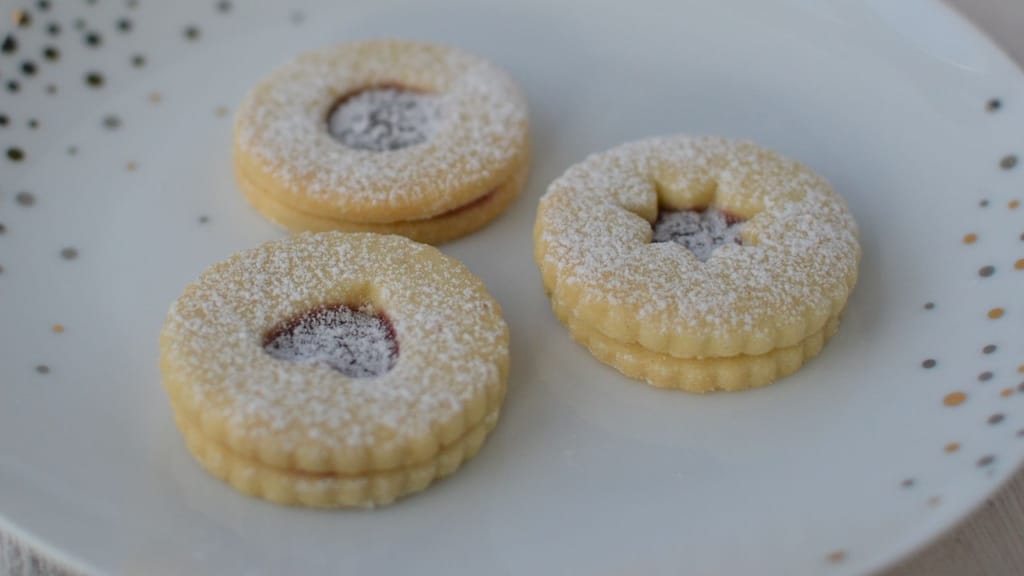
Classic christmas cookies: delicate linzer cookies
Crumbly linecké cookies: the base for linecké that are gluten-free, egg-free and butter-free
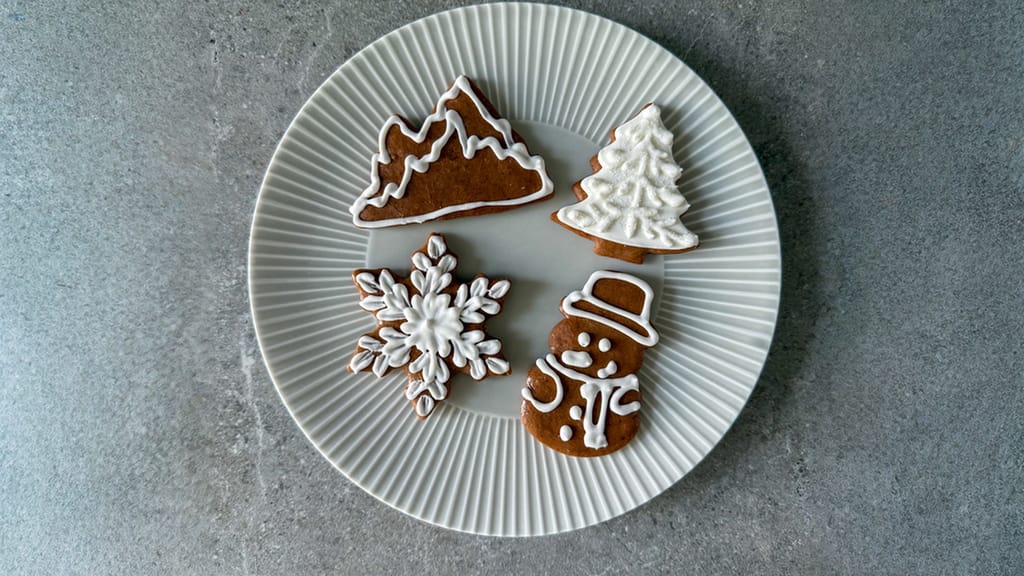
Soft honey gingerbread cookies that never go hard
Soft honey perníčky: the starting recipe for gluten-free and egg-free perníčky
The best replacement for butter in cookies is a plant-based baking stick with a high fat content, lard or, in some types, coconut fat. First, though, be clear about who you're baking for, because lactose-free and dairy-free are not the same thing.
Lactose-free (lactose intolerance): lactose-free butter is enough, replaces ordinary butter 1:1 and the cookies taste the same. The milk proteins stay in it.
Dairy-free (cow's milk protein allergy, vegans): lactose-free butter isn't enough, you need a fat with no dairy component at all.
What to use instead of butter, by type of cookie:
Baking margarine in a block (80–90% fat) – the most versatile choice for linecké, crescents and cut-outs. Check the fat content on the package, ideally around 80%. Soft spreadable fats with reduced fat (three-quarter-fat or half-fat margarine) contain more water and the dough runs. Watch the ingredients, as some contain whey or milk fat.
Pork lard – traditional and crumbly. It's the basis of sádláky, our grandmothers' lard cookies, just make sure the filling isn't made with butter or quark either.
Coconut fat – solid at room temperature, but it melts at around 24°C (75°F), so dough made with it softens quickly in your hand. Work with it chilled, and choose refined where you don't want a coconut flavor.
Oil – only for perníčky and some no-bake cookies. It doesn't belong in crumbly dough, where the cookies would turn out hard and greasy.
What this does to tenderness and when each substitute wins is covered in detail in what to use instead of butter in cookies.
Milk hides elsewhere too: in chocolate coatings, in milk chocolate, in caramel, in cream fillings. For dairy-free cookies, explicitly choose dark chocolate, not coating, and one whose ingredients list only cocoa mass, cocoa butter and sugar. Instead of cream in ganache, use full-fat coconut milk.
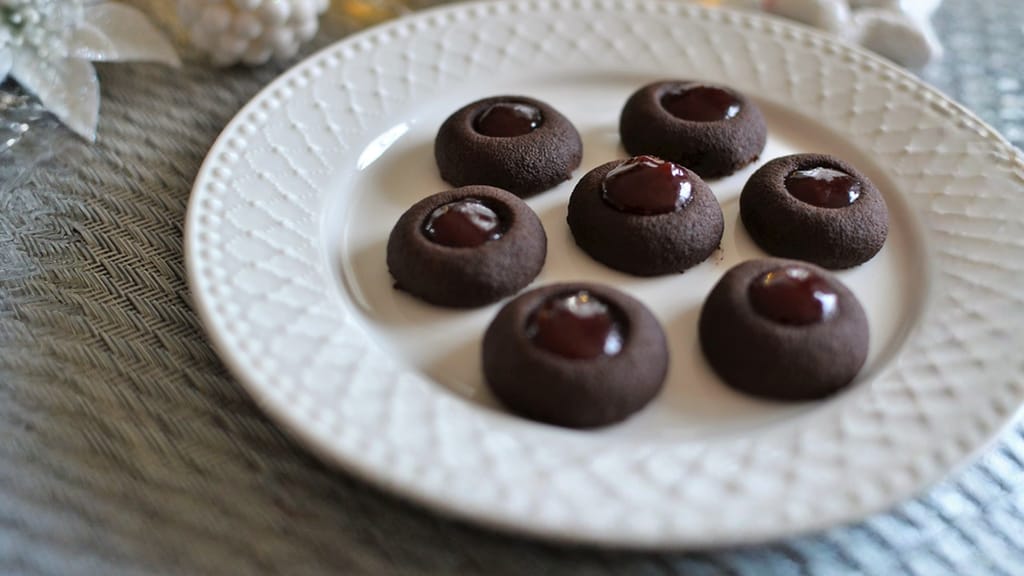
Sádláky – czech lard cookies, a traditional christmas treat
Sádláky: traditional butter-free cookies made from a pork lard dough
Most crumbly cookies you can make egg-free without any substitute. Vanilla crescents and many linecké doughs don't need egg at all, or only a yolk for binding, which you replace with a spoonful of plant-based milk or water. Eggs are genuinely missed only where they create the structure: in meringues, sponge doughs and some nut mixtures.
Yolk in a crumbly dough – leave it out and add 1 tablespoon of cold water or plant-based milk per yolk.
Egg in perníčky – replace with roughly 50 g (3 tablespoons) of applesauce or a flax "egg" (1 tablespoon of ground flax + 3 tablespoons of water, left to stand for 10 minutes).
Egg-white glaze – plant-based milk with a drop of syrup gives shine.
Whipped egg white foam – aquafaba, that is, the liquid from a can of chickpeas.
Aquafaba meringues are the most impressive egg-free cookie. Chilled chickpea liquid is whipped with a pinch of cream of tartar, which stabilizes the foam, and the sugar is added gradually, just as with egg whites: for 100 g of chilled liquid, 100–150 g of sugar. They are dried like snow meringues, at 90–100°C (195–210°F) for roughly 1.5–2 hours, and then left to cool in the oven. They are more delicate and more sensitive to moisture than egg-white ones, so store them airtight right away.
For a fully vegan cookie selection, including what to use instead of honey and which classics work without butter and eggs at the same time, see the article vegan Christmas cookies.
Cookies without grain flour rest on one of three bases: ground nuts or almonds bound with egg white, shredded coconut in egg-white foam, or just foam with sugar. All three are free of wheat flour and, if you watch the other ingredients, of gluten too. The difference is in temperature: nut mixtures are baked, coconut ones are baked gently, and meringues are more dried than baked.
Almond rounds are the simplest nut cookie without grain flour: instead of flour, almond flour and powdered sugar in roughly a 2:1 ratio, bound with egg white. Here the structure is carried not by gluten but by almond fat and protein, which is why the rounds are baked only briefly, at 160°C (320°F) for roughly 10–12 minutes, until light golden on the bottom. They stay slightly soft in the middle, as they should; they firm up once cooled.
Almond flour is finely ground and often partly defatted, while ground almonds are coarser and oilier. Both work, but with ground almonds the round will be more rustic and spread more. You can flavor the mixture with lemon zest, cocoa or a drop of rum.
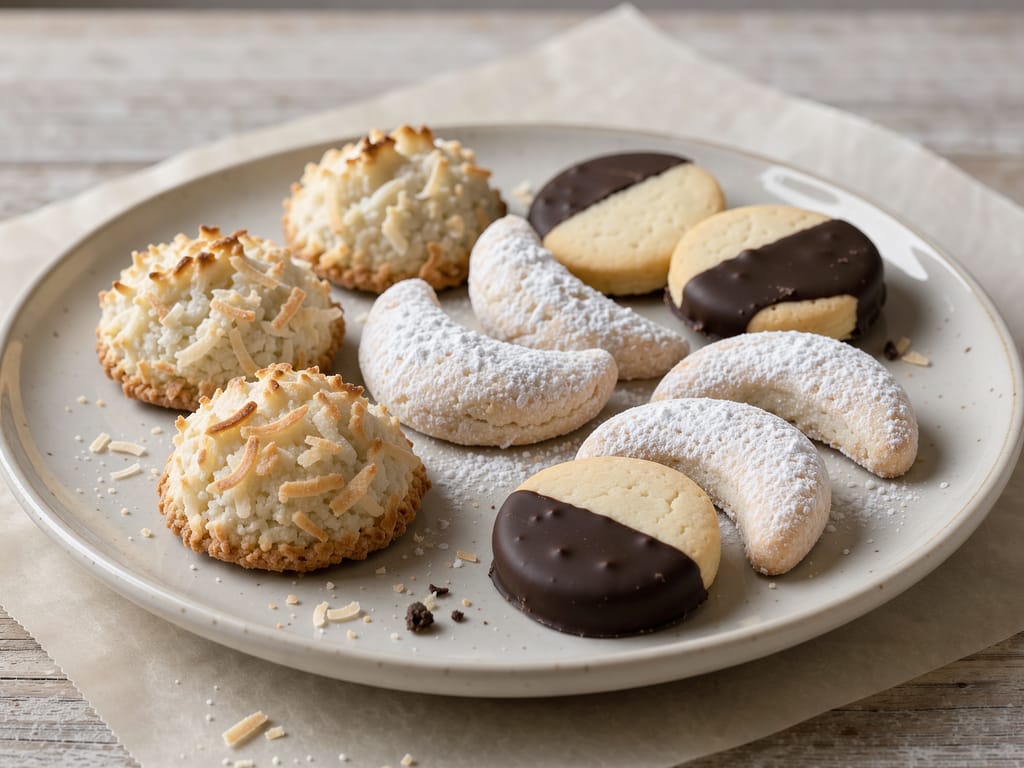
Coconut meringues are flourless, gluten-free, dairy-free and nut-free all at once, which is why they are often the easiest pieces on the plate for a guest with several restrictions (though not for someone with an egg allergy). The flour is replaced by shredded coconut, held together by firm egg-white foam with sugar. They are baked gently, at 140–150°C (285–300°F) for roughly 15–20 minutes, only until the tips turn golden. Inside they should stay soft; if you let them go golden all over, they'll be dry.
A version where sweetened condensed milk binds the coconut instead of foam contains milk and doesn't belong in lactose-free cookies.
Snow meringues are just egg white and sugar, so they are flourless, fat-free and dairy-free. The key ratio: twice the weight of the whites in sugar, whipped in gradually until the mixture is glossy and doesn't feel gritty between your fingers. Meringues are dried rather than baked, at 90–100°C (195–210°F) for roughly 1.5–2 hours, and then left to cool in the oven.
The low temperature matters: at a higher one the meringues turn yellow and crack, hardening on the outside but staying sticky inside. The most common mistake is a greasy bowl or a drop of yolk in the whites, in which case the foam won't set at all. If you want a foam without raw eggs for a cream that isn't baked, reach for pasteurized egg white from a carton or for dried egg white. We write about the risks of raw eggs in no-bake creams in the article raw eggs in cookies and creams.
Nut-free cookies mean leaving out even what isn't obviously a nut: almond flour, marzipan, nougat and praline creams. From an allergen point of view, almonds are a nut. EU Regulation No 1169/2011 lists them among the tree nuts in its list of allergens that must be declared, together with hazelnuts, walnuts, cashews, pecans, Brazil nuts, pistachios and macadamia nuts. Peanuts have their own entry on that list. Coconut isn't in that list, which is why coconut meringues are often the first choice, but for someone with an allergy, their doctor and their own experience always decide.
What to use instead of nuts (sunflower and pumpkin seeds, coconut, rolled oats, cookie crumbs) and in what ratio is covered in detail in the article nut-free cookies, so we won't repeat it here. For this overview, remember one thing: if you're baking gluten-free and nut-free at the same time, you can't lean on almond flour, so coconut and fine rice flour with starch pay off.
Cookies sweetened with fruit are the kind where you add no sugar, honey or syrup, and the sweetness comes from dates, dried apricots, figs or raisins. Why we don't call them "no added sugar": under Regulation (EC) No 1924/2006, a food may carry the claim "no added sugars" only if it contains no added sugars or any other food used for its sweetening properties. Dates added to sweeten count there. The claim "sugar-free" then, under the same regulation, means at most 0.5 g of sugars per 100 g, and no dried fruit meets that.
You bake with it differently than with sugar. Sugar in dough is not only a sweetener: it gives tenderness, browns, dries and holds the shape of meringue. That's why snow and coconut meringues can't be made without sugar, and crumbly cut-out cookies without sugar are more of a rusk. The best types are those where the fruit paste also glues things together: balls, bars, stuffed dates.
Dates – the sweetest and stickiest. Soak dried ones in hot water for 10 minutes, then blend into a paste.
Dried apricots – tangier, giving a strong flavor; best combined with dates.
Figs – sweet, with seeds that crunch.
Raisins – sweet, but in balls they're hard to blend smooth.
Date balls are the most reliable cookie sweetened only with fruit, and they need no baking. The principle is simple: blend softened dates and shredded coconut (or ground almonds, if nuts are no problem) in roughly a 2:1 ratio until the mixture sticks together, and leave the balls to firm up in the fridge. Cocoa, a pinch of salt, a drop of rum or orange zest make them more Christmassy.
Cocoa balls made with oats and dates work similarly. If you want them gluten-free, use oats labeled gluten-free, and if you want them sweetened only with dates, check that no honey or syrup has crept in. The recipe contains peanut butter, so leave it out for someone with a peanut allergy.
Coconut date stars are the same mixture with a larger share of coconut, roughly 1:1, rolled out and cut. Don't bake them, as the date sugar would quickly turn bitter on the baking sheet, just let them firm up in the fridge overnight. If you dip them in dark chocolate, they are no longer sweetened only with dates.
Homemade date syrup is handy when you need date sweetness in liquid form, for example in perníčky dough. On the plate, though, it is still a sweetener, just one made from fruit.
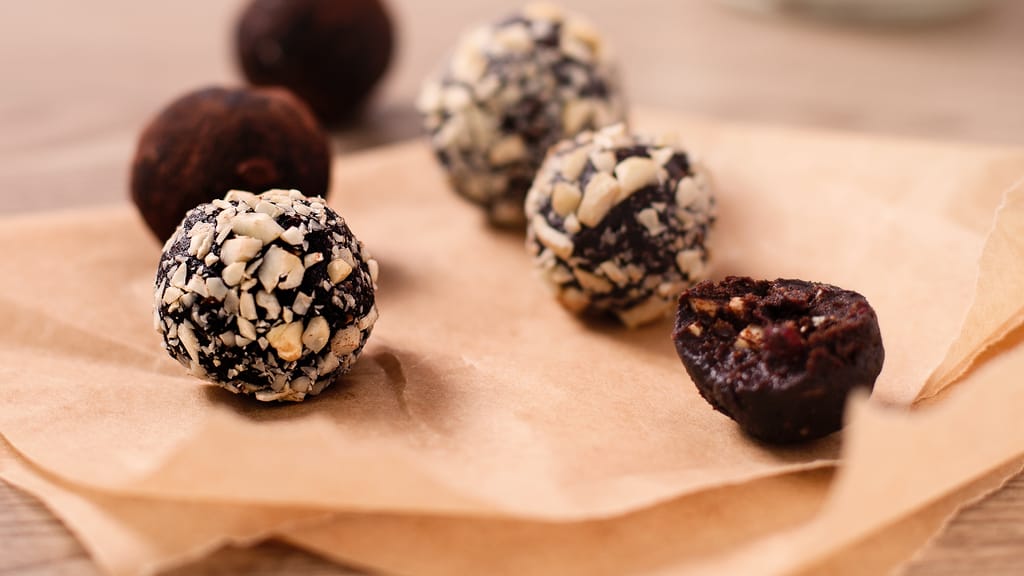
Cocoa date & oat balls
Cocoa balls made with oats and dates: no-bake cookies sweetened with dates
Cookies sweetened with fruit are not automatically suitable for people with diabetes, because dates and dried fruit contain a lot of sugar; what is suitable for a particular person with diabetes is something to discuss with their diabetologist or nutrition therapist. From a kitchen point of view the same holds for all cookies: dates, figs and raisins are not free of sugar, and the sweetness in them is still sugar. According to the USDA nutrient database, dried dates are roughly two-thirds sugars. Cookies sweetened with fruit are therefore not sugar-free cookies, nor cookies you could eat without limits.
What you can do is bake for a person with diabetes after talking to them: ask what their doctor recommended, bake smaller pieces and write on the container what's in the cookies. A clear description of the ingredients helps more than a "for diabetics" sticker, which you'd better not put on your cookies.
Store gluten-free, dairy-free and egg-free cookies in separate, airtight, labeled containers, in a cool place and apart from other cookies. Separate storage isn't just about flavor: a single wheat crescent in a container of gluten-free ones is enough to make them inedible for someone with celiac disease.
Label the containers. Write on the lid what the cookies lack and what is in them ("gluten-free, contains almonds"). At the table it saves questions and mistakes.
Keep crisp and soft apart. Meringues and linecké lose their crispness next to soft perníčky and date balls, which release moisture.
Gluten-free cookies dry out faster. Without gluten they hold less moisture, so bake them 1–2 weeks ahead rather than a month. The freezer suits longer storage: pack baked, cooled cookies into a container and freeze them; they keep in the freezer for roughly a month or two and are thawed in the closed container so moisture doesn't condense on them.
Keep cookies made with plant-based or coconut fat cool. Coconut fat softens even at room temperature, and in a warm room glued-together linecké will slide apart.
Meringues must stay dry. Snow, coconut and especially aquafaba meringues draw in moisture and go soft; a paper box isn't enough for them.
Date balls go in the fridge. The moist date mixture keeps for a shorter time than dry cookies, so keep it in a closed container in the fridge and eat it within a week or two.
If you're bringing gluten-free or nut-free cookies to someone as a gift, add a note with the ingredients. How to pack cookies so they don't break or go soft on the way is covered in the article how to pack cookies as a gift. And if a guest at the Christmas Eve table doesn't eat even carp, you'll find inspiration in the article what to serve instead of carp on Christmas Eve.
A "may contain traces" warning means the manufacturer can't rule out accidental contact with an allergen during production, so for someone with celiac disease or an allergy such an ingredient is a risk. It is a voluntary warning, its wording isn't standardized across the EU, and its absence doesn't guarantee that the ingredient is free of the allergen. For someone with celiac disease, what counts is the "gluten-free" label, which under Regulation (EU) No 828/2014 means at most 20 mg of gluten per kilogram. With nuts, it pays to ask the person with the allergy which ingredients carrying this warning they use.
Egg-free in the recipe doesn't yet mean egg-free on the plate, so for someone with an allergy, check the ingredients of ready-made products and your kitchen too. Eggs hide in cookie crumbs, some chocolate coatings, decorations and ready-made baking mixes. Also avoid egg-white glazes and shared baking sheets with egg-based cookies, and leave it to the person with the allergy and their doctor to decide what is safe for them to eat.
Both snow and coconut meringues can be frozen, but only in an airtight container, and you have to thaw them closed, otherwise moisture condenses on them and they turn soft. Mostly it isn't even necessary: dry meringues keep for roughly two to three weeks in a well-sealed container in a dry place. Aquafaba meringues are more sensitive to moisture, so it's better to bake those only a few days before Christmas.
No. Ghee is clarified butter made from milk, so it doesn't belong in cookies for someone with a cow's milk protein allergy. Reach instead for a dairy-free baking stick of plant-based fat, lard or coconut fat.
In some cookies you can, but in snow and coconut meringues a sugar substitute doesn't work. Erythritol doesn't caramelize, so cookies made with it don't turn golden and often have a cooling aftertaste, while stevia adds sweetness without bulk, so the dough loses its structure. Sweeteners behave best in no-bake cookies, where the sugar doesn't have to build anything; in perníčky (Czech gingerbread cookies) they can replace only part of the sugar, because honey gives them softness and flavor. If you're baking for someone with diabetes because of a sweetener, talk to them and their doctor about what suits them.
Buckwheat flour on its own suits mainly perníčky and dark nut cookies; in linecké (Czech Linzer-style jam cookies) and crescents it is too strong in flavor and too heavy. It's better to replace roughly a quarter to a third of the gluten-free blend with buckwheat and leave the rest as fine rice flour with starch. Buckwheat is naturally gluten-free, but as with oats, buy the kind labeled gluten-free, because it may be processed on the same lines as wheat.
One recipe worth heating the oven for, one tip, and one deal from the shop. Nothing else.