Divine homemade mayonnaise
Emulsions in Cooking: What They Are, Examples, Emulsifiers and How to Whisk One at Home

Updated Oct 24, 2026
An emulsion is a mixture of two liquids that don't normally blend, most often oil and water, with one dispersed through the other as tiny droplets. In the kitchen, it's the trick that brings fat and water together into one creamy mixture. It's behind mayonnaise, vinaigrette, hollandaise, ganache and buttercream, and even plain milk. To hold together, an emulsion needs two things: enough energy from whisking, and an emulsifier. Once you understand how an emulsion works, your mayonnaise stops splitting, your ganache stops turning greasy, and you can start tweaking sauces to your own taste.
An emulsion is a mixture of two liquids that don't normally blend, most often fat and water, with one dispersed through the other as millions of tiny droplets. That's why it looks creamy and holds together, even though oil and water would normally separate right away.
It won't stay that way without help, though. To keep the droplets from merging again and the emulsion from breaking, you need two things: energy (stirring or whisking breaks the liquid into droplets) and an emulsifier (a substance that coats the droplets and keeps them apart). Mayonnaise, vinaigrette, hollandaise and creamy salad dressings are all emulsions.
Emulsions aren't just a cooking specialty, either. It's a general physical phenomenon: face cream is an emulsion, and so is the milk you pour into your coffee. But the kitchen is where you work with them most often, and where they most often break.
An emulsion forms when energy (whisking, blending, shaking) breaks one liquid into tiny droplets and an emulsifier then keeps them apart. The smaller and more numerous the droplets, the thicker and more stable the mixture. In a good mayonnaise, the oil droplets are only a few micrometers across, which is why it's opaque and holds its shape.
Whisking alone only holds an emulsion for a short while. As soon as you stop, the droplets start merging again and the oil rises to the top. Only an emulsifier fixes that for good. Thickness helps too: the thicker the continuous phase (thanks to sugar, starch or gelatin, for example), the more slowly the droplets move and merge.
Emulsions are classified by what floats in what. Oil in water (O/W) has fat droplets dispersed in a water-based phase. Mayonnaise, hollandaise and milk belong here. Water in oil (W/O) is the opposite: water droplets float in fat, as in butter or margarine. Most of the sauces you whisk up at home are oil-in-water.
You can tell them apart by how they behave: an O/W emulsion can be thinned with water and feels fresh on the tongue, while a W/O emulsion is thinned with fat, feels greasier and softens with heat like butter. Here's a curiosity: if you whip cream for too long, the emulsion flips. O/W (cream) turns into W/O (butter) and the buttermilk separates out.
Seasonal baking plans, tested recipes and kitchen tricks that save you time. Unsubscribe in one click.
You have emulsions in your fridge and pantry every day: milk, cream, butter, mayonnaise, vinaigrette, hollandaise, ganache, buttercream and (with a small caveat) chocolate. Here's what floats in what:
Milk: O/W. Droplets of milk fat (roughly 3.5%) in water, held in place by a coating of milk proteins and phospholipids. Homogenization makes the droplets smaller so the cream doesn't rise to the top.
Cream: O/W. The same as milk, only with much more fat (from 10% to over 35%). For whipping, you need whipping cream, meaning at least 30%, ideally 33%.
Butter: W/O. Around 80% fat, with droplets of water (about 16%) dispersed in it. That's why it "falls apart" into clear fat and milky water when it melts.
Mayonnaise: O/W. Typically 70–80% oil with a small amount of water phase from the yolk and vinegar. It's one of the thickest emulsions you can make at home.
Vinaigrette: O/W, but unstable. Oil and vinegar only combine for a few minutes unless you add mustard.
Hollandaise: O/W, warm. Melted butter in egg yolks with a little water or lemon juice.
Ganache: O/W. Cocoa butter and milk fat dispersed in the water from the cream, plus solid particles of cocoa and sugar.
Buttercream: W/O. A water-based ingredient (syrup, pudding, meringue) is worked into whipped butter, and the butter stays the continuous phase.
Chocolate: technically more of a suspension, with solid particles of sugar and cocoa in cocoa butter and almost no water. Even so, manufacturers add lecithin to it as an emulsifier so it flows better.
The difference is how long the mixture stays together. A stable emulsion stays creamy for hours or even weeks (mayonnaise, aioli), while an unstable one separates within minutes and has to be whisked again before serving (a classic oil-and-vinegar vinaigrette). What decides it is mainly the presence of an emulsifier, and then droplet size, thickness and temperature.
A stable emulsion contains enough emulsifier for the droplets to stay dispersed even after it's been left to sit. The textbook example is mayonnaise: the egg yolk acts as a natural emulsifier thanks to lecithin and proteins, which is why it stays thick and together for several days in the fridge. Physically it would last longer, but for safety reasons homemade mayonnaise made with raw egg keeps for only 2–3 days (more on that below). Aioli and a well-made hollandaise hold up in a similar way, although hollandaise only while warm.
An unstable emulsion relies only on mechanical whisking, and without a strong emulsifier it quickly splits into oil and vinegar. A simple vinaigrette is the typical case. Adding a teaspoon of mustard makes the bond last much longer, because mustard acts as an emulsifier, and a teaspoon of honey also thickens the water phase so the oil separates more slowly. A tried-and-tested ratio is roughly 3 parts oil to 1 part vinegar (for example 90 ml oil, 30 ml vinegar, 1 teaspoon mustard, salt). It combines best in a jar with a lid: shake it hard for 20 seconds. Before you pour it over a salad, always shake it once more.
An emulsifier is a substance whose molecules have two ends: one that likes water (hydrophilic) and one that likes fat (lipophilic). It settles right at the boundary between oil and water, coats each droplet and lowers the surface tension, so the droplets can't merge again. That's the whole secret of a creamy, stable sauce.
In a home kitchen, natural emulsifiers are all you need:
Egg yolk: contains lecithin (and lipoproteins), the strongest common emulsifier. It's the base of mayonnaise and hollandaise. One yolk reliably holds 150–200 ml of oil.
Mustard: mucilage and proteins from the mustard seed hold vinaigrette and mayonnaise together. 1 teaspoon is enough for a dressing.
Honey: it isn't a true emulsifier. It mostly thickens the water phase, so the oil droplets merge more slowly. It stabilizes gently and rounds out a dressing.
Cream and milk proteins: casein and whey proteins coat the fat droplets. That's why a spoonful of cream rescues a butter sauce, and why ganache holds together.
Aquafaba (chickpea liquid): a plant-based replacement for the yolk in vegan mayonnaise.
Industrial emulsifiers do the same job as egg yolk, just in shelf-stable products. On labels you'll find them under these designations (names follow the EU list of food additives, Regulation (EC) No 1333/2008):
E 322: Lecithins. Most often from soy or sunflower, found in chocolate, coatings, margarines and cookies. If they come from soy, soy must be highlighted on the packaging as an allergen.
E 471: Mono- and diglycerides of fatty acids. Typically in baked goods, ice cream, spray whipped cream and spreadable fats (margarines); they maintain structure and smoothness.
E 432–E 436: Polysorbates. Mainly in ice creams and dressings.
You don't need them at home. Egg yolk, mustard and cream can handle everything you'll make in the kitchen.
Mayonnaise is the best way to get a feel for emulsions: all you need is an egg, mustard, vinegar or lemon, oil and a pinch of salt. The key is to add the oil slowly. While the emulsion is still thin, it can only take a thin trickle, or it will split.
Into a tall, narrow container (only slightly wider than the head of your stick blender), put a whole room-temperature egg, a teaspoon of mustard, a pinch of salt and a tablespoon of vinegar or lemon juice.
Pour in 250 ml of neutral oil and let it settle for a moment. Rest the stick blender on the bottom of the container, switch it on and hold it down until a thick white emulsion forms around it (about 10–15 seconds).
Only then slowly lift the blender so it works in the rest of the oil. Season to taste and you're done.
Why a narrow container? In a wide bowl, the blades don't catch the yolk at the bottom and the oil reaches it too quickly. In a narrow container, the emulsion forms from the bottom up and gradually draws in the oil on its own.
You can also do it with a hand whisk, but then start by whisking only the yolk and add the oil literally drop by drop until it thickens, and only then in a thin stream. Fine-tune the flavor with vinegar, lemon or herbs such as dill or chives. For a milder note, try replacing part of the oil with olive oil.
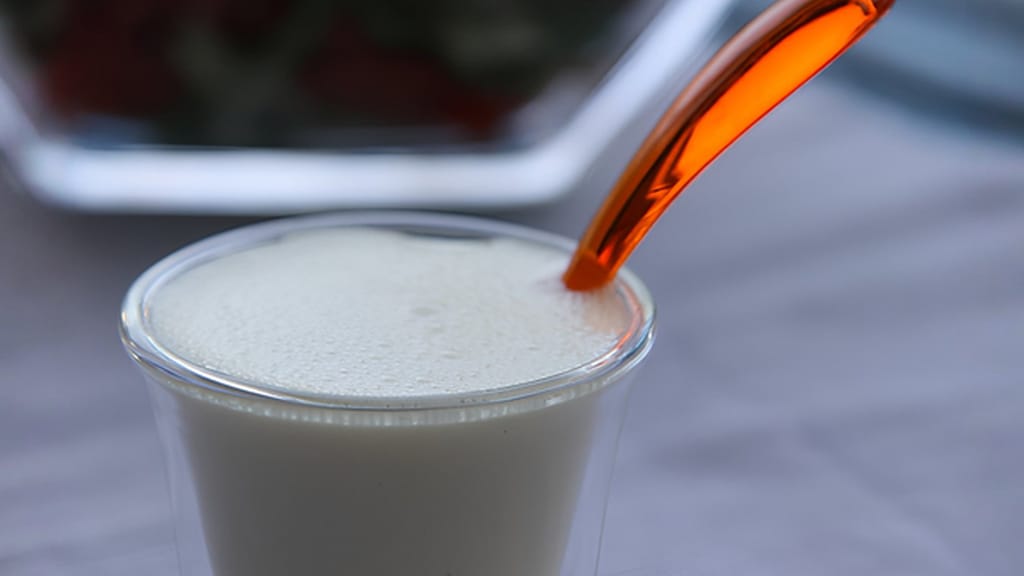
Divine homemade mayonnaise
Divine homemade mayonnaise: a classic stable emulsion of yolk and oil
An emulsion splits (the oil separates and floats to the top) when there are more fat droplets than the emulsifier can coat. Typically that's because you added the oil too quickly, used cold ingredients or didn't whisk enough. With warm emulsions, overheating can break them too. The good news: almost every time, it can be rescued.
The rescue: put a tablespoon of warm water (or a fresh egg yolk or a teaspoon of mustard) into a clean bowl and gradually whisk the split mixture into it, as if you were making the mayonnaise all over again. The emulsion usually catches and thickens.
Prevention: room-temperature ingredients, oil added in a thin stream, the right ratio and enough whisking. With vinaigrette, expect it to separate every time. Just shake it again before you pour it over a salad.
The four most common emulsion problems are splitting right away while whisking, being thin and refusing to thicken, leaking oil after a while in the fridge, and a warm sauce curdling into lumps. They have four different causes and four different fixes:
It split right away while whisking (grainy, oil separating) → the oil went in too fast or the ingredients were cold → start again with a spoonful of warm water or a fresh yolk, and whisk the split mixture in a teaspoon at a time.
It's thin and won't thicken → too little oil relative to the water phase, or too much vinegar or lemon at the start → whisk in more oil in a slow stream; with mayonnaise, the thickness grows with every spoonful of oil.
It leaked oil after a while in the fridge → the emulsion was borderline (too little emulsifier, too much oil), or it froze or got warm → whisk it with a teaspoon of mustard or warm water; frozen mayonnaise can't be rescued.
A warm sauce curdled into lumps (hollandaise, ganache) → overheating → take it off the heat, add a spoonful of cold water or cream and whisk quickly, or use a stick blender if needed.
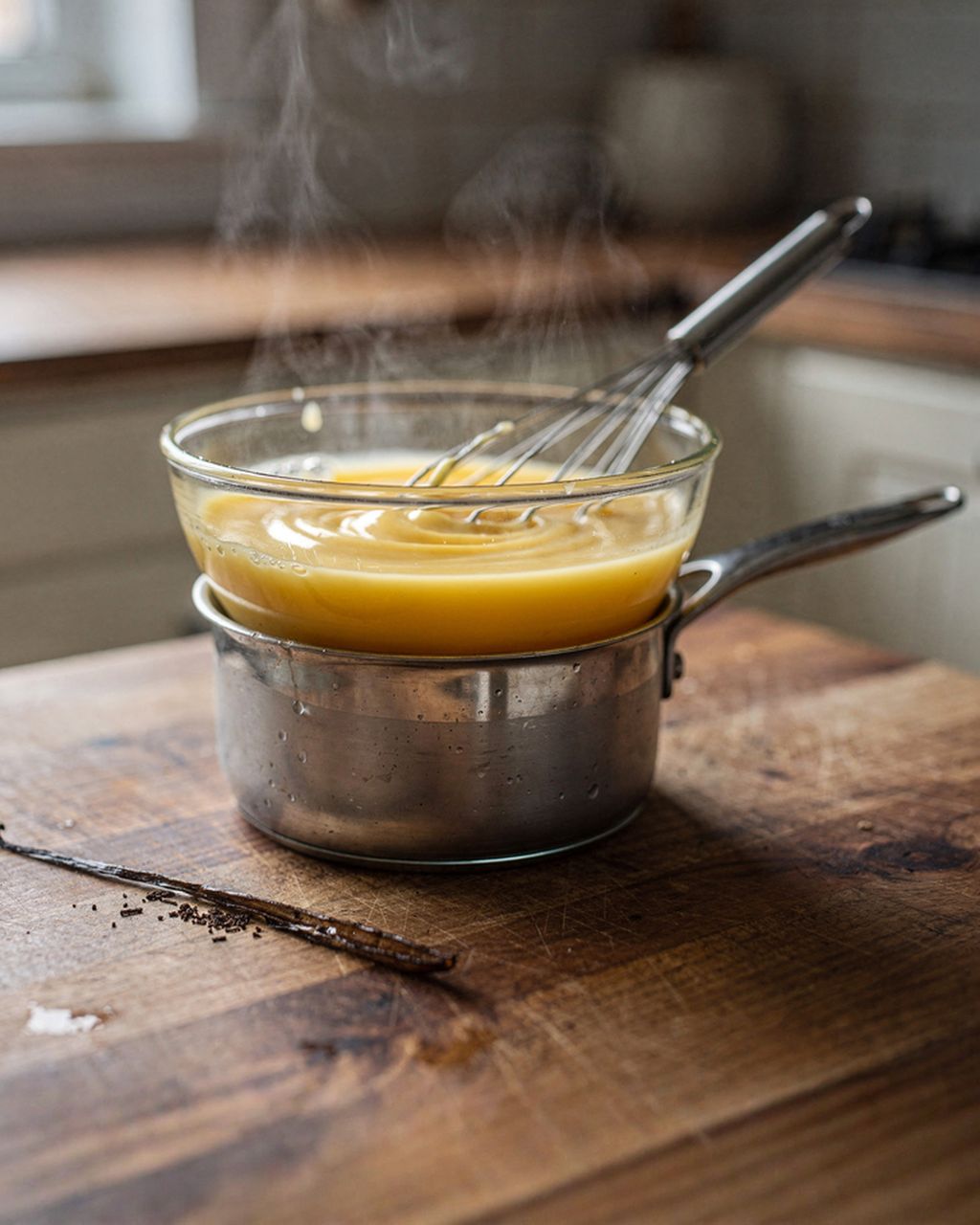
Hollandaise is a warm emulsion of melted butter in egg yolks that only holds while warm, so keep the finished sauce at roughly 50–60 °C (122–140 °F). It's creamy but delicate: if it overheats, the yolk scrambles, and if it's too cold, the butter won't combine. So keep the water bath only gently hot, never at a full boil, and add the butter gradually, exactly like the oil in mayonnaise. Keep the finished sauce warm (not on the burner), otherwise the fat sets and the sauce separates. This is the sauce that makes eggs Benedict.
You'll find the same principle elsewhere: the French butter sauce beurre blanc is butter whisked into a reduction of wine and vinegar (here the milk proteins in the butter hold the emulsion), and a pan sauce "mellowed with butter" only comes together if you swirl in cold cubes of butter off the heat. If cream curdles on you instead, that isn't a broken emulsion but curdled proteins. We cover what to do about it in the article why a cream sauce curdles. And watch out for yolks that heat can curdle in eggnog too (formally an egg liqueur), as explained in why eggnog curdles.
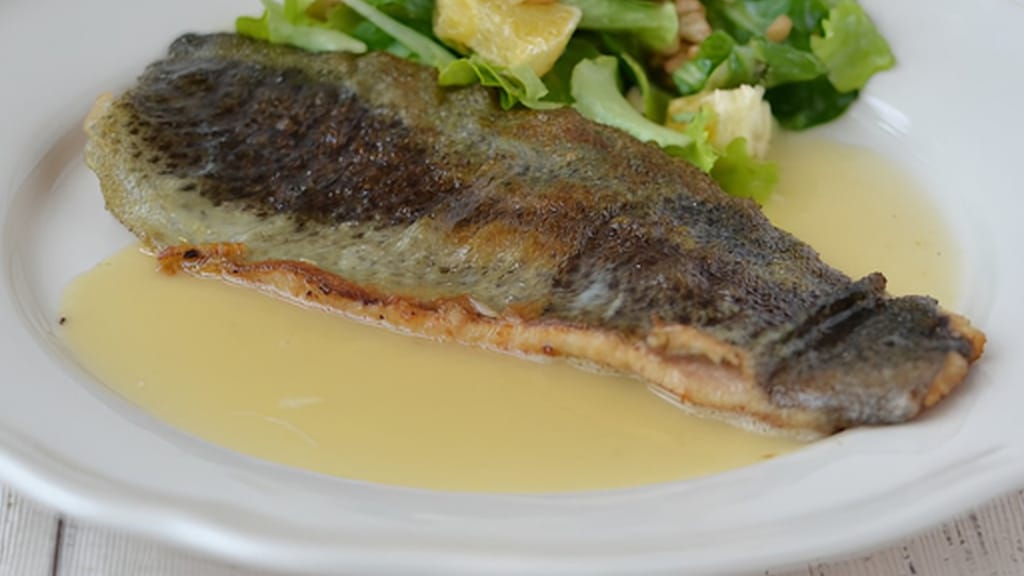
Easy quick hollandaise sauce
Hollandaise made easy and fast: a warm emulsion of butter and egg yolks
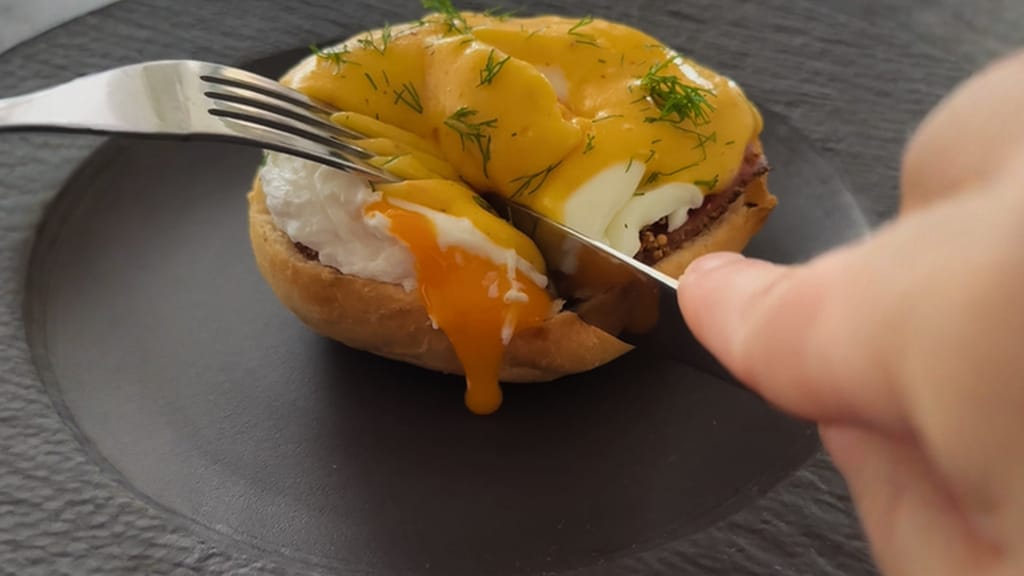
Eggs benedict with spicy hollandaise and pastrami
Eggs Benedict with hollandaise: an emulsion at work on the plate
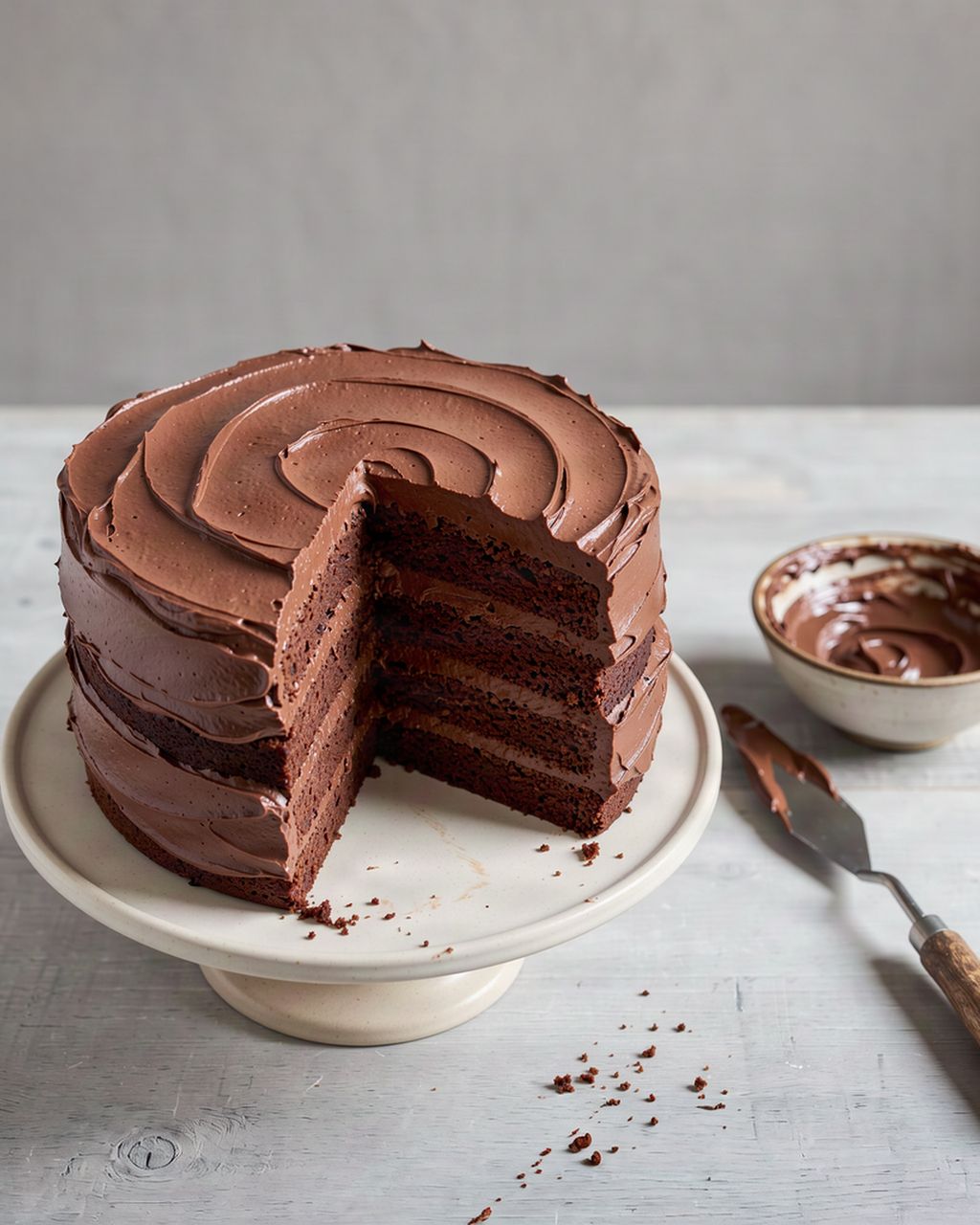
Ganache and buttercream are both emulsions, and they split for the same reason as mayonnaise: the ratio of fat to water is off, or the temperature is wrong. Ganache is an O/W emulsion (chocolate fat in the water from the cream), buttercream is W/O (a water-based ingredient in butter). When you know which is which, you know how to rescue them.
Ganache splits when it has too much fat for too little water, or when it's emulsified at the wrong temperature. Then the cocoa butter rises as a shiny, greasy layer and the mixture turns grainy. It most often happens with ganache that has a high proportion of chocolate, when it's overheated above roughly 50 °C (122 °F), or when it cools below 30 °C (86 °F) before it has come together.
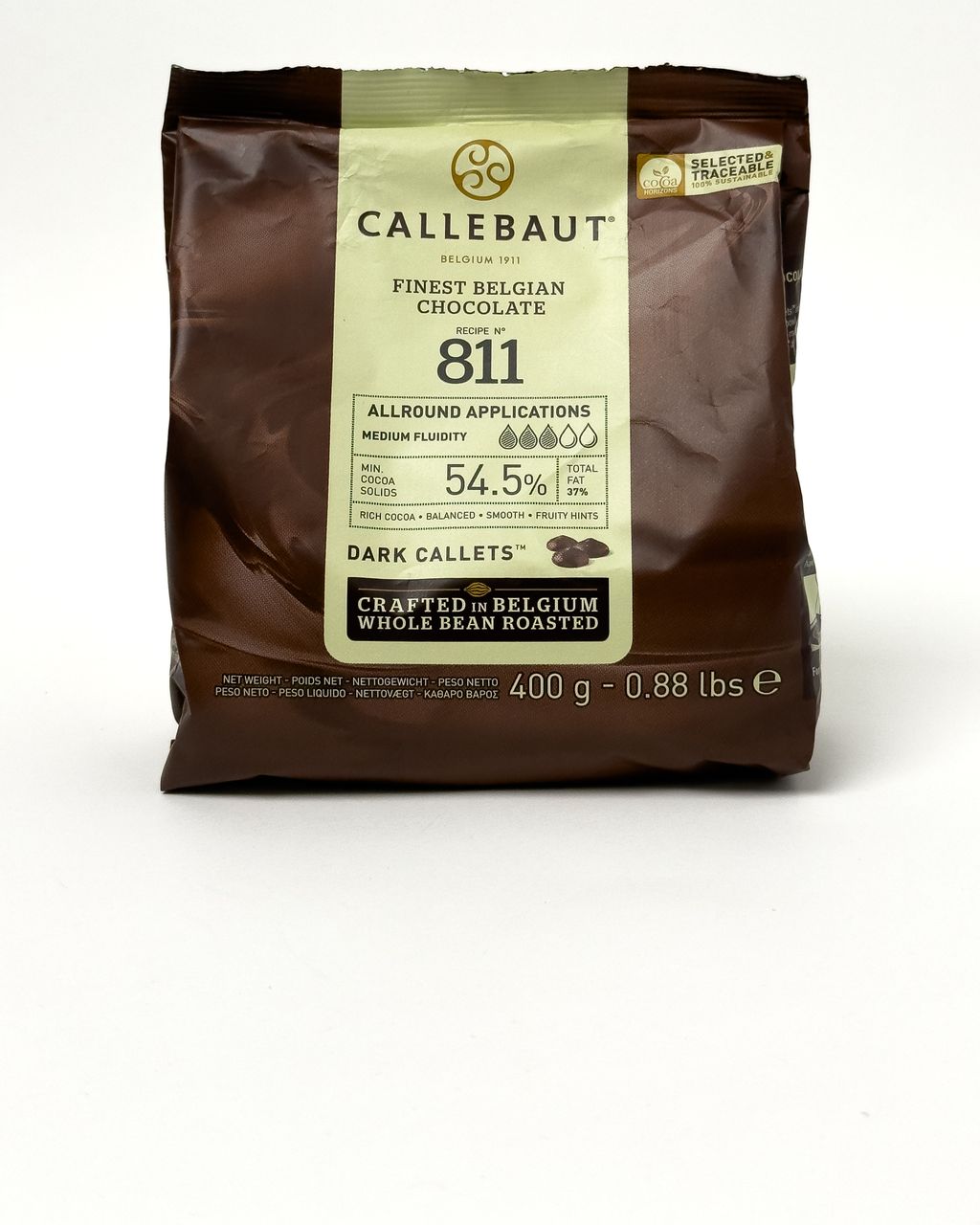
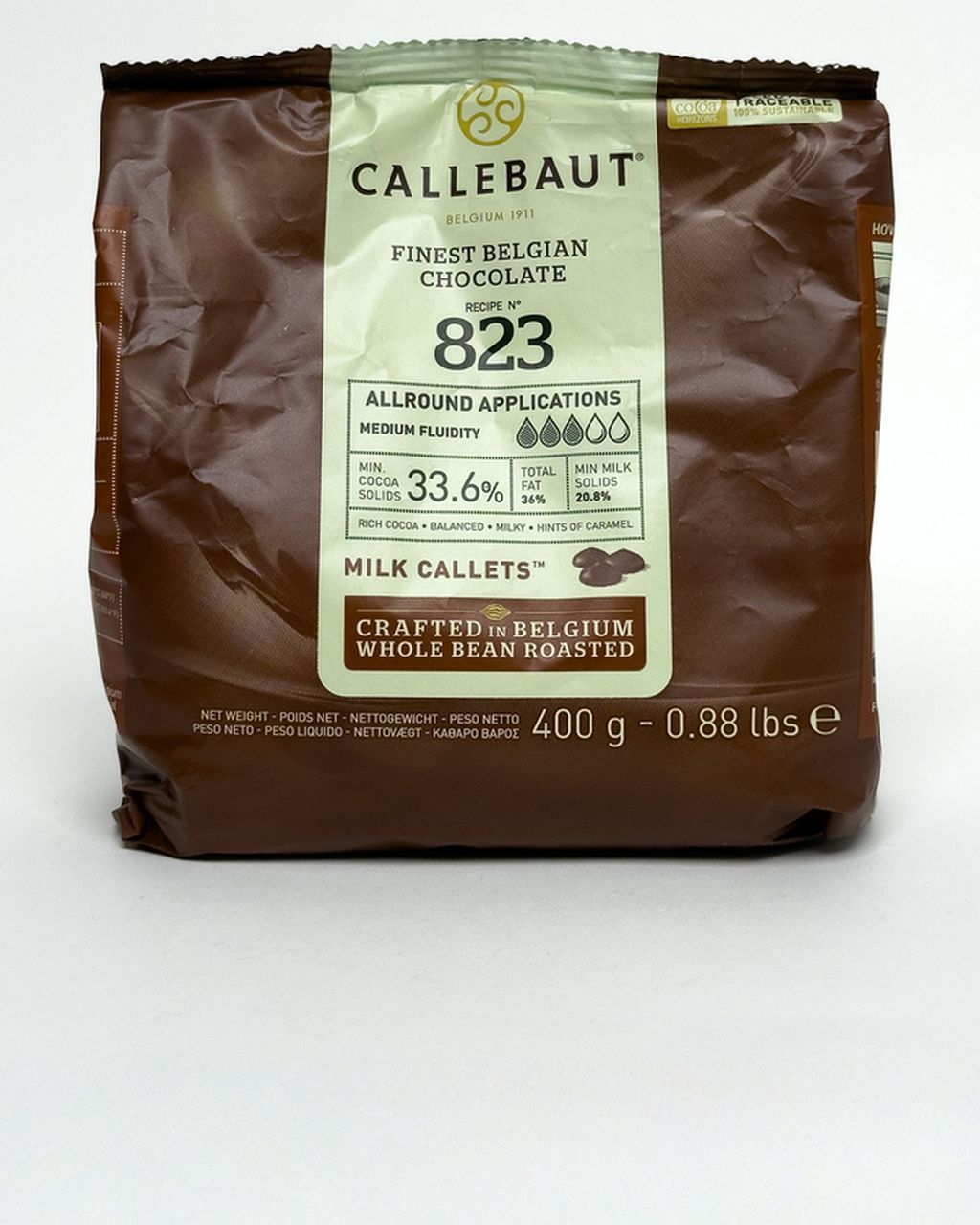
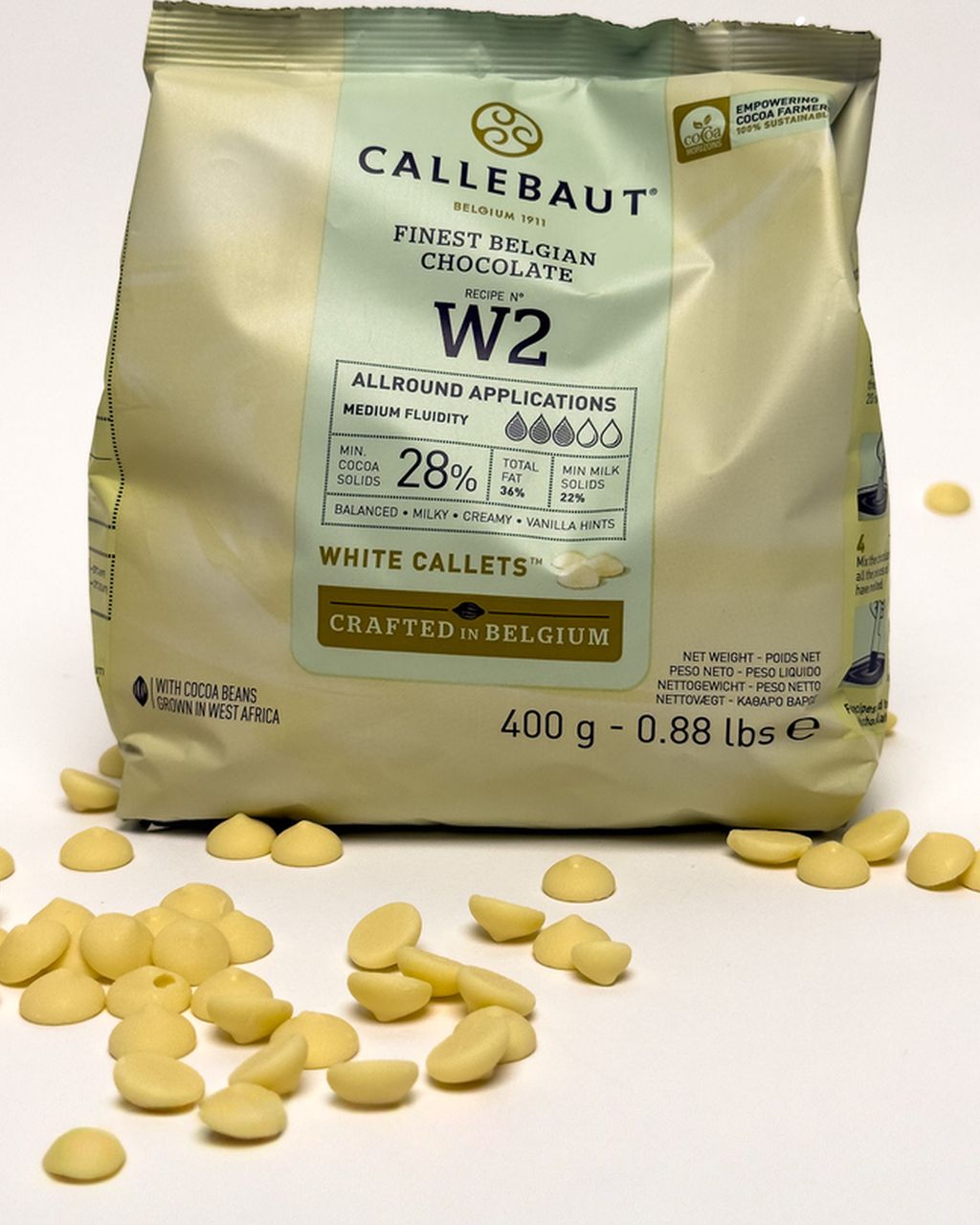
The temperature window: heat the cream to just below boiling, pour it over chopped chocolate, let it sit for 1–2 minutes and emulsify when the mixture is at 35–45 °C (95–113 °F). Rough ratios of chocolate to cream: dark 1 : 1 for glazes and cakes, 2 : 1 for truffles; milk 2 : 1; and white roughly 3 : 1 (they have less cocoa solids and more sugar and milk solids, so they need less cream). For a milk chocolate ganache, something like Valrhona Equatorial milk chocolate 35% works well, because with ganache you can really tell the quality of the chocolate.
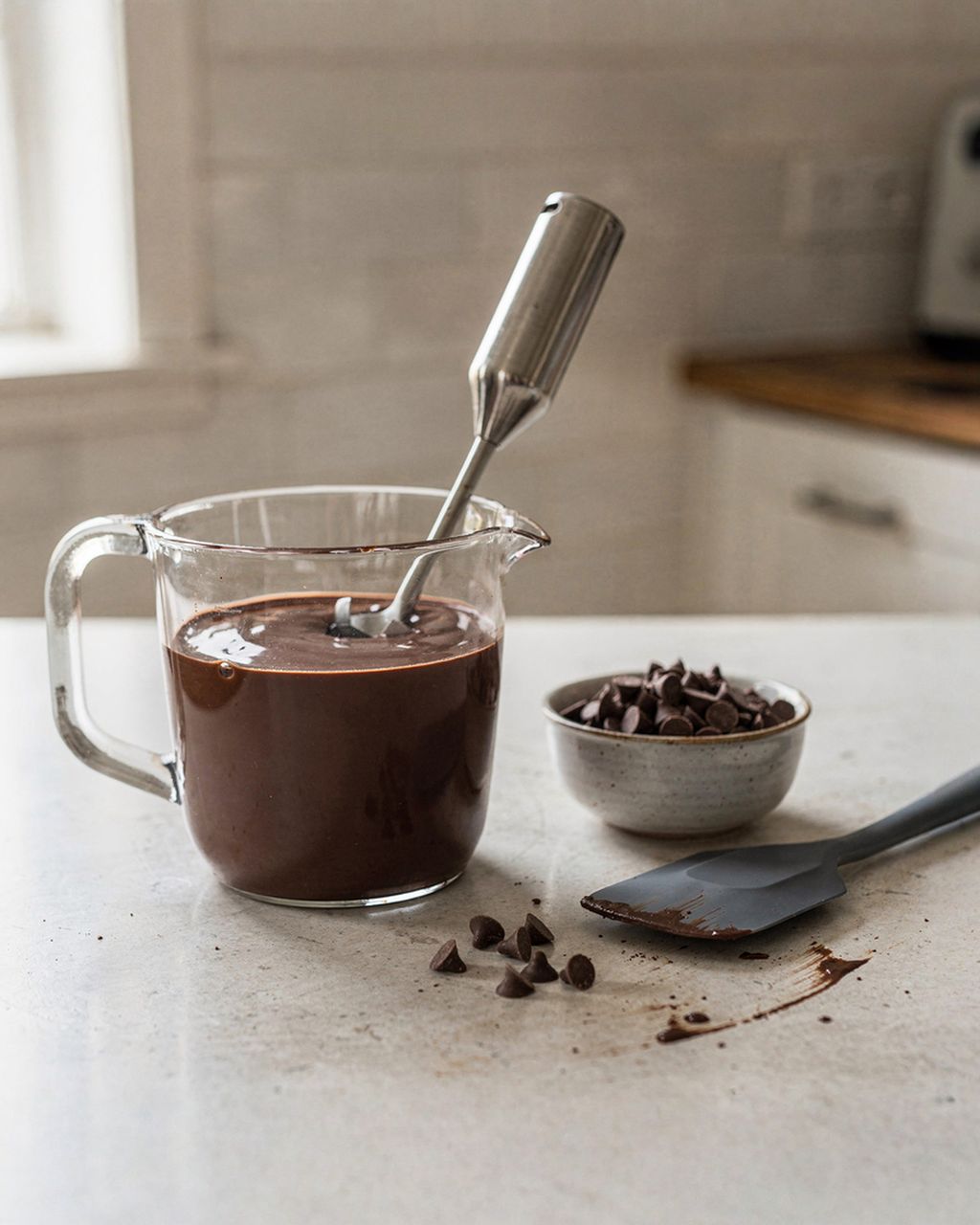
The rescue: pour the ganache into a tall, narrow container, add a spoonful of warm cream or milk (about 40 °C / 104 °F) and blend it with a stick blender held at the bottom so you don't whip in air. The extra water gives the emulsifiers room to coat the fat, and the ganache turns glossy within seconds. We go into detail in the article why ganache splits, you'll find ratios and uses in the guide to chocolate ganache, and glucose in ganache explains why a little sugar syrup is added to it.
Buttercream splits when the butter or the added ingredient (pudding, syrup, meringue) is too cold. The fat sets and won't take up the water, so the cream looks like curd cheese. If it's too warm instead (butter above roughly 24 °C / 75 °F), it turns runny and starts to feel greasy. The ideal is when both the butter and the added ingredient are at 18–22 °C (64–72 °F), so the butter dents easily under a finger but isn't shiny and doesn't run.
The rescue: warm up split buttercream. Warm the bowl for a few seconds with a hot towel, or take out 2–3 spoonfuls, melt them and return them to the cream while whisking continuously. Runny buttercream, on the other hand, goes in the fridge for 10–15 minutes and then gets whipped again. For how to whip it so the cream isn't greasy, see the article buttercream that isn't greasy. Mascarpone cream splits in a similar way, but for different reasons; see why mascarpone cream splits or turns runny.
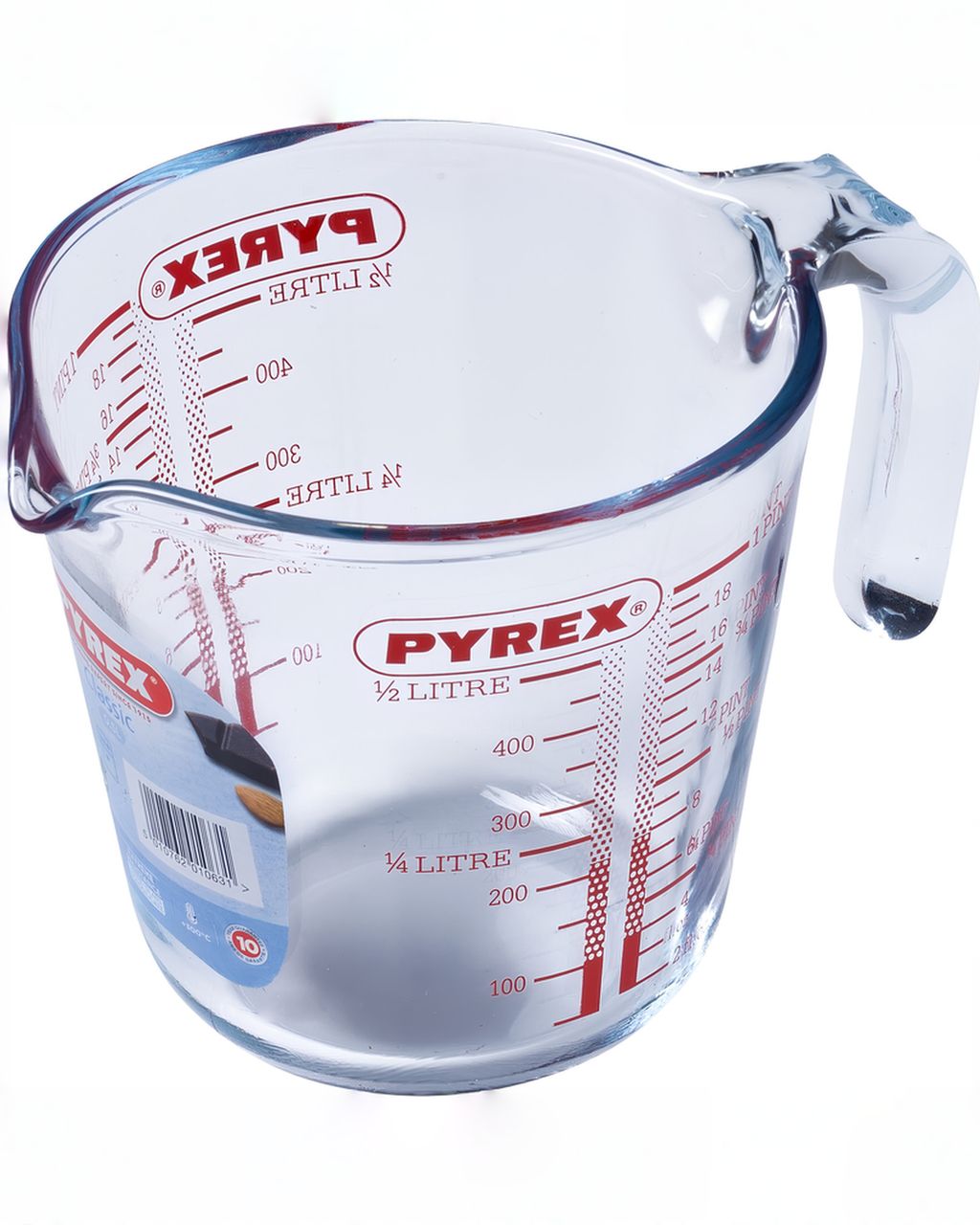
The fastest route to a stable emulsion at home is a stick blender. Its high speed breaks the oil into finer droplets than a hand can, and mayonnaise is done in seconds. It does need a tall, narrow container, such as a 0.5 l Pyrex glass measuring jug, in which you can just as easily bring mayonnaise together or rescue a ganache. A hand whisk gives you more control and is enough for vinaigrette or a smaller batch of mayonnaise, but it takes patience and slow pouring. A food processor or stand mixer pays off with larger batches and with buttercream. Whichever you reach for, the principle stays the same: energy plus slowly added fat. You'll find more about equipment in our article on kitchen tools.
Yes. Vegan mayonnaise is made with aquafaba (the liquid from a can of chickpeas), which replaces the egg yolk as the emulsifier. Whisk it with mustard, vinegar and oil just like classic mayo, but use 3 tablespoons of aquafaba per 200–250 ml of oil instead of the egg. It holds well because the plant proteins in the liquid coat the oil droplets in a similar way to lecithin.
Homemade mayonnaise made with raw egg keeps in the fridge for about 2–3 days, in a sealed container and kept cold the whole time. It has no preservatives like store-bought mayo, so don't make it in advance, and never leave it standing in a warm place, because the risk of bacteria multiplying rises quickly.
You can, but extra virgin olive oil gives mayonnaise and vinaigrette a pronounced, slightly bitter flavor, and it can turn even more bitter when blended at high speed. A mix works well: a base of neutral oil (rapeseed or sunflower) with just some olive oil for flavor. For a delicate mayonnaise, reach for a neutral oil.
An emulsion is a mixture of two liquids that don't mix (droplets of fat in water), while a suspension is a solid dispersed in a liquid (such as flour stirred into water). Both involve dispersed particles, but in an emulsion they're droplets of another liquid, not solid particles.
You can freeze ganache, but not mayonnaise. Ganache keeps in the freezer in a sealed container for about 2–3 months; thaw it slowly in the fridge, then whisk it briefly. With mayonnaise, ice crystals tear apart the coating around the droplets, and once thawed the oil separates for good.
One recipe worth heating the oven for, one tip, and one deal from the shop. Nothing else.