Piping Bags 36x20 cm, 100-Pack
Doughnut Fillings: Vanilla Custard, Pudding, Chocolate, Poppy Seed and Quark Fillings — Ratios and How to Fill Doughnuts So They Don't Leak
Updated Nov 17, 2026
Fill doughnuts after frying when the filling is vanilla custard, pudding, chocolate ganache, quark or a runny jam. Fill them before frying only with thick plum butter (povidla) or poppy seed filling. Each doughnut takes 25–30 g, so plan on about 300–360 g of filling for 12. Below you'll find six ffillings with grams per 12 doughnuts, how to fill a doughnut from the side so nothing leaks out, and when cream-filled doughnuts have to go in the fridge.
Fill anything creamy or runny after frying, and fill before frying only with fillings so thick a spoon stands up in them. The reason is simple: in hot oil the water in the filling turns to steam, which looks for a way out and bursts the seam of the dough. Runny jam then leaks into the oil, and custard curdles.
After frying: vanilla custard, pudding, chocolate ganache, quark, Nutella, pistachio cream, regular jam.
Before frying: thick plum butter (povidla), thick poppy seed filling.
How much filling: a doughnut made from 50–60 g of dough holds 25–30 g of filling. For 12 doughnuts, that means 300–360 g, and you should make 40–50 g more, because some always stays in the bag and the tip.
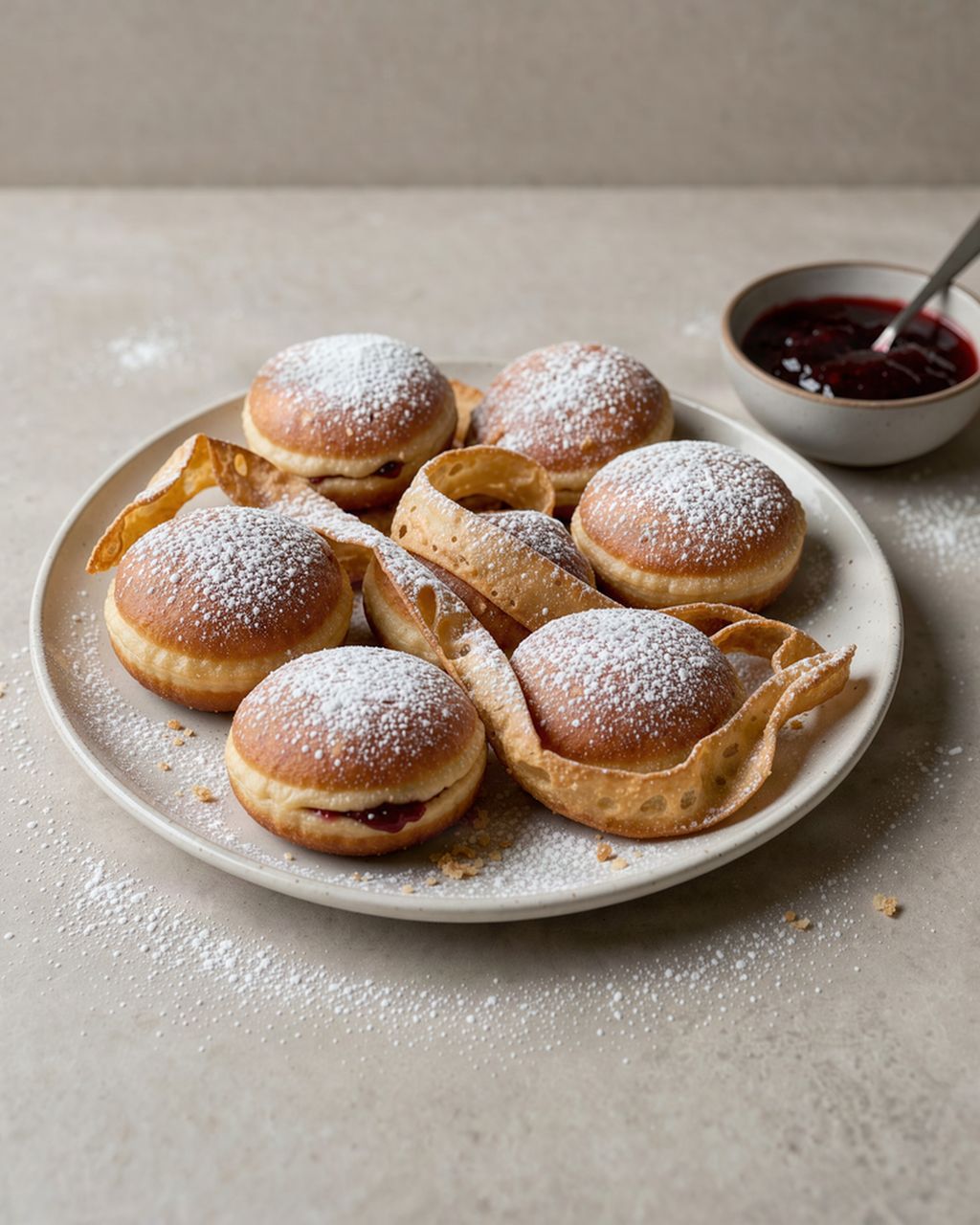
For the dough and frying itself, see the recipe for fried doughnuts filled with jam.
Seasonal baking plans, tested recipes and kitchen tricks that save you time. Unsubscribe in one click.
Six tried-and-true fillings: vanilla custard with real vanilla, pudding, chocolate ganache, poppy seed, quark, and plum butter (povidla) or jam. Each makes enough for about 12 doughnuts at 25 g each, and each is smooth enough to pass through a piping tip.
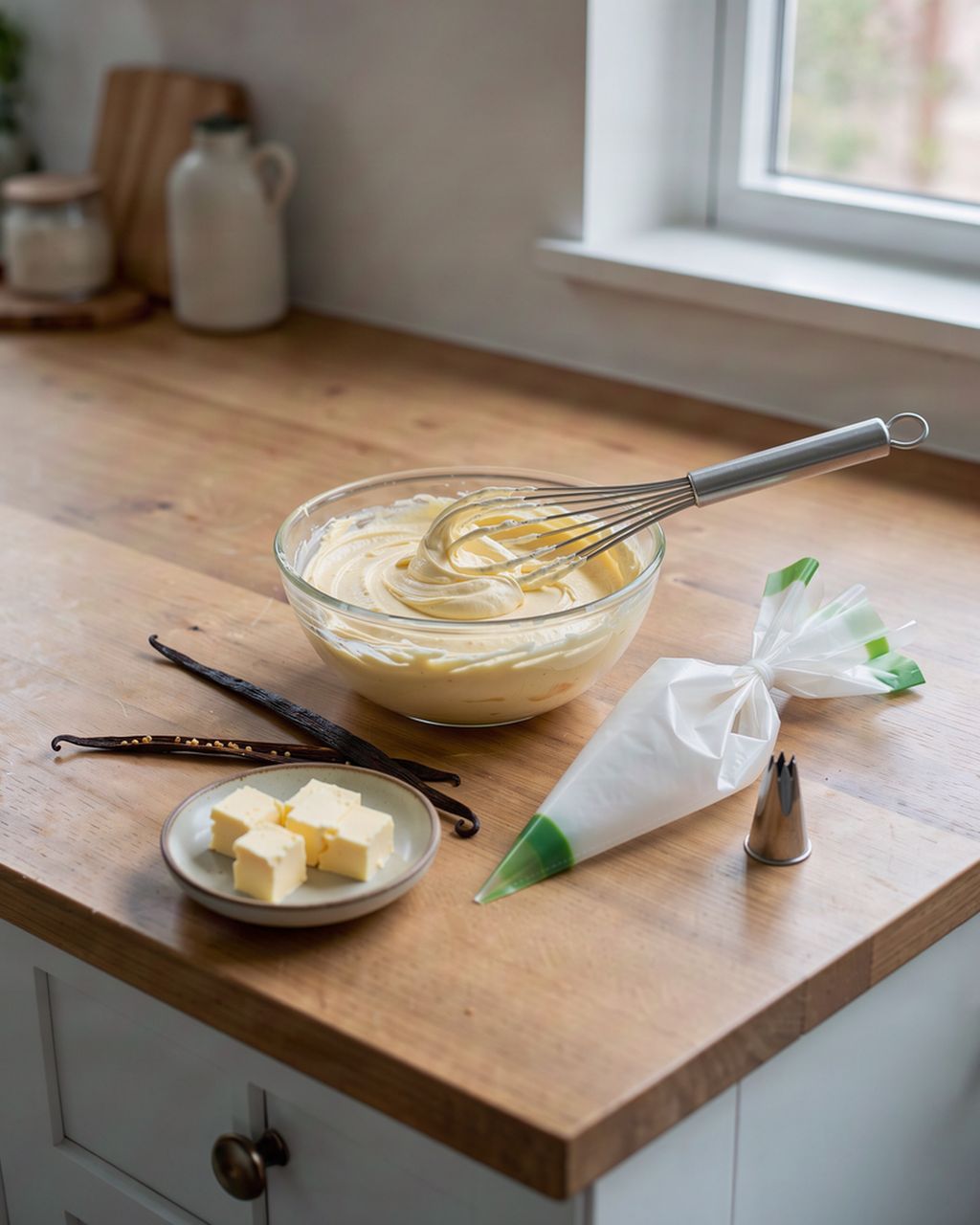
Vanilla custard (pastry cream, crème pâtissière) is the best doughnut filling because it holds its shape yet feels silky in the mouth. For 12 doughnuts (about 420 g):
300 ml whole milk
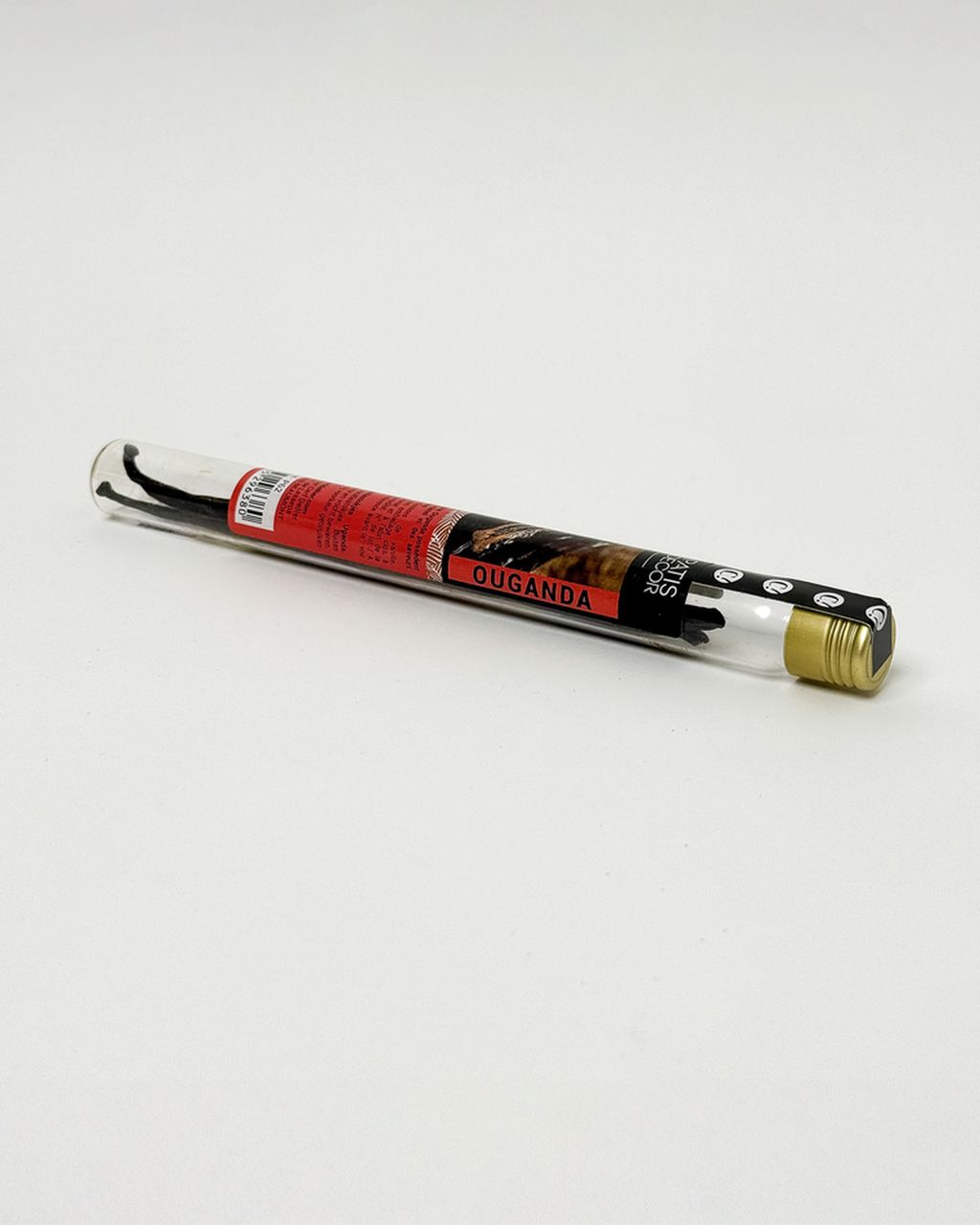
1 vanilla bean
3 egg yolks
60 g sugar
25 g cornstarch
20 g butter
Split the bean lengthwise, scrape out the seeds and add both to the milk. Bring to a boil and leave to infuse for 15 minutes. Whisk the yolks with the sugar and cornstarch, pour the hot milk over them (take out the bean), return everything to the pot and, whisking constantly, let the custard bubble for 1–2 minutes. This is the key step: custard that only thickens without coming to a boil will thin out again in the fridge, because egg yolks contain an enzyme that breaks down starch, and only boiling destroys it. Stir in the butter, transfer the custard to a shallow bowl, cover with plastic wrap pressed directly onto the surface and refrigerate for at least 2 hours. Briefly whisk it smooth before filling.
Don't throw away the rinsed, dried bean. Tuck it into sugar and you have homemade vanilla sugar from vanilla beans.
Pudding filling is a quick route to a cream: cook the pudding thicker than the instructions say, and once it has cooled, whip it with butter. For 12 doughnuts (about 500 g):
1 packet of vanilla pudding mix (cook-and-serve, similar to custard powder) (37–40 g)
400 ml milk (not the 500 ml on the packet)
40–60 g sugar
60 g softened butter
Cook the pudding with 400 ml of milk, cover the surface with plastic wrap and leave to cool to room temperature, for no more than 2 hours. Then whip it with the butter. Both must be at the same temperature, because cold pudding and warm butter (and vice versa) will curdle into lumps.
Pistachio variation: stir 80–100 g of pistachio cream or 100% pistachio paste into the cooled pudding or vanilla custard. The filling will thicken, so loosen it with a spoonful of milk if needed.
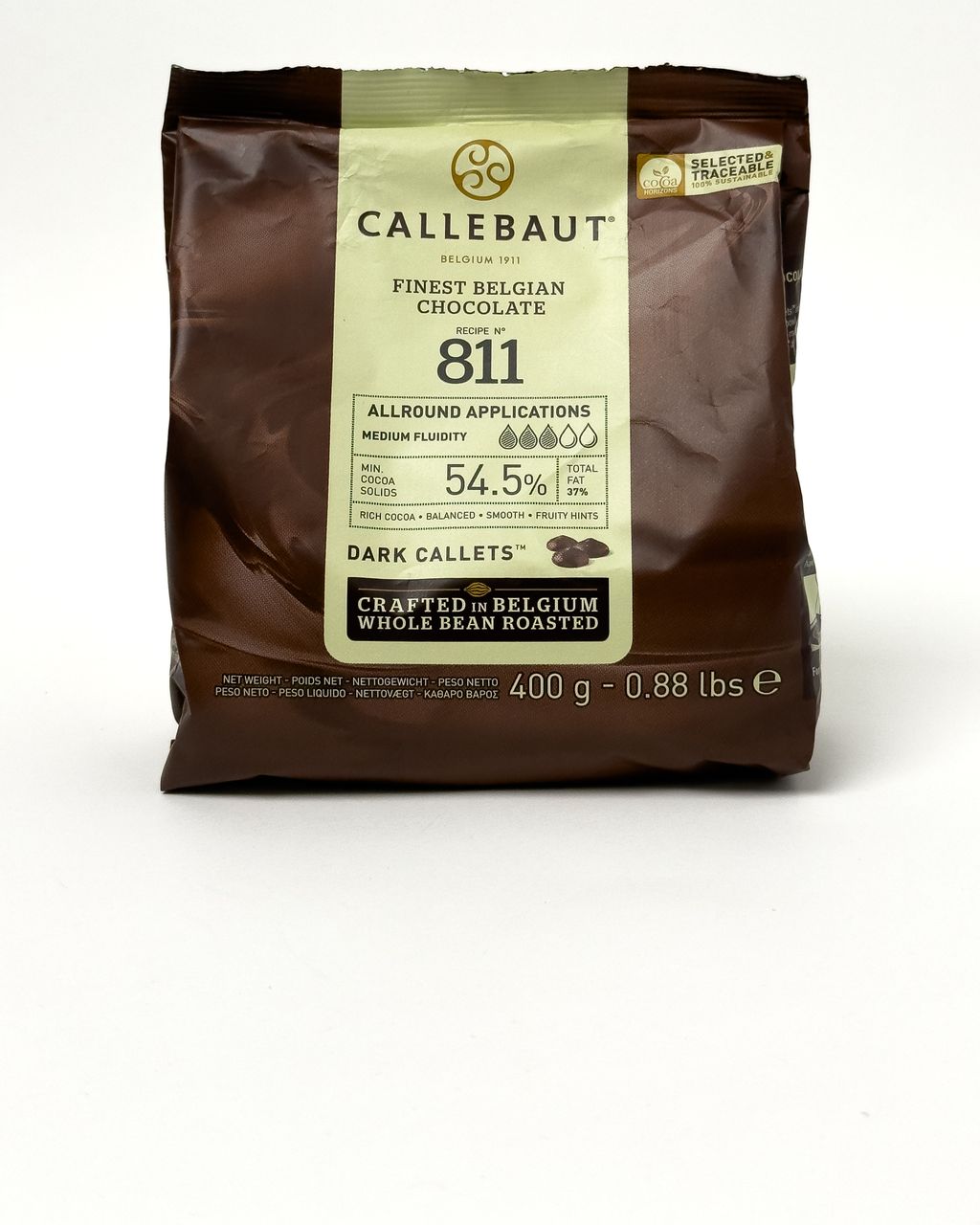
Chocolate doughnut filling is a 1:1 ganache, with equal parts chocolate and cream. Dark Callebaut 811 has 54.5% cocoa, so the ganache comes out distinctly chocolatey without overpowering the doughnut with bitterness. For 12 doughnuts (about 330 g):
160 g Callebaut 811 dark chocolate
160 g whipping cream (33%)
15 g butter
a pinch of salt
Heat the cream to just under a boil and pour it over the chocolate. Let it stand for a minute, then stir from the center outward until it comes together into a glossy mass, and stir in the butter. Leave the ganache to set at room temperature for 2–3 hours, until it has the consistency of toothpaste, which is when it's easiest to pipe. Straight from the fridge it's too stiff, so warm it briefly.
A lighter, whipped version: pour 250 g of hot cream over 100 g of chocolate, leave it in the fridge overnight and whip to soft peaks. It's airy like a mousse, but doughnuts filled with it belong in the fridge.
Doughnuts with Nutella or another hazelnut spread: pipe it straight from the jar, just loosen it briefly in a water bath so it passes through the tip.
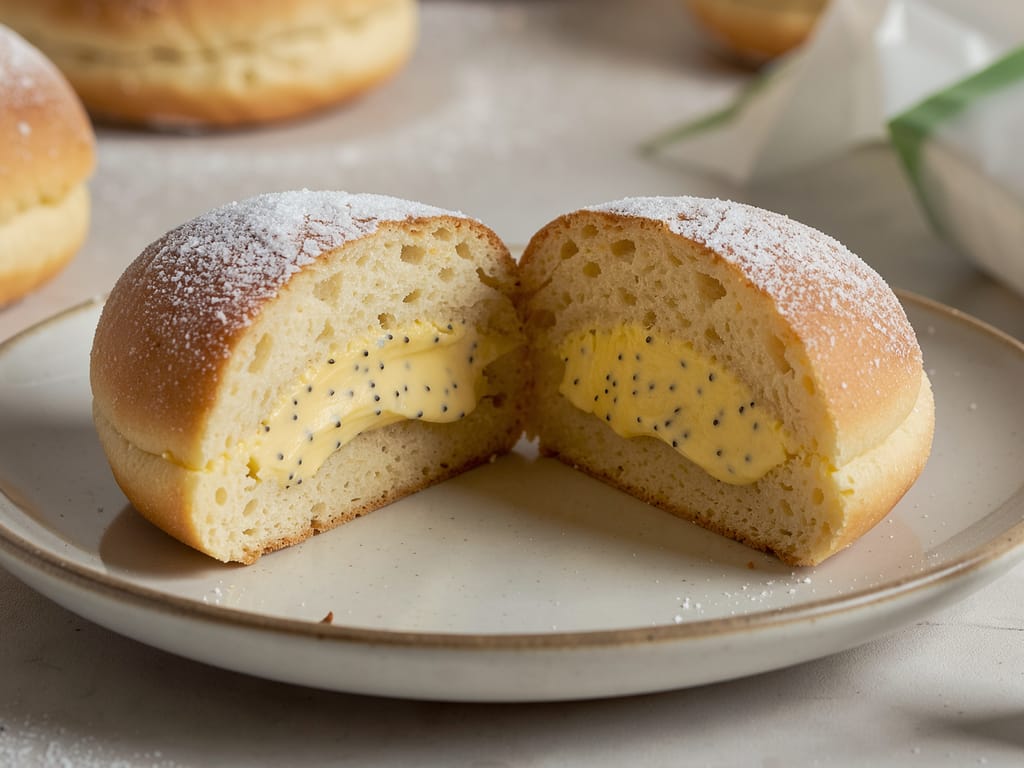
Poppy seed filling, along with thick plum butter (povidla), is the only filling you can put inside before frying, as long as it's thick. For 12 doughnuts (about 350 g):
120 g finely ground poppy seeds
150 ml milk
50 g sugar
20 g butter
1 tablespoon honey
zest of ½ lemon, optionally 1 tablespoon rum
Bring the milk to a boil with the sugar, honey and butter, add the poppy seeds and cook, stirring, for 3–5 minutes, until the poppy seeds absorb the milk. Add the zest and leave to cool.
Before frying: thicken it with 1–2 tablespoons of breadcrumbs or crushed ladyfingers so a spoon stands up in it.
After frying: loosen it instead with 2–3 tablespoons of milk and use a wider tip (8–10 mm), because poppy seeds will clog a thin one.
Quark filling for doughnuts isn't baked, so it shouldn't contain raw egg. Mascarpone softens it instead. For 12 doughnuts (about 400 g):
250 g full-fat quark (tvaroh, a Czech fresh curd cheese)
100 g mascarpone
50 g powdered sugar
seeds from ½ vanilla bean or zest of ½ lemon
Blend everything with an immersion blender until completely smooth. Lumpy quark will clog the tip, so either blend it or press it through a sieve. If it's runny, drain it in the fridge for an hour beforehand in a sieve lined with a kitchen towel. Pipe it only after the doughnuts have been fried and cooled.
Runny jam leaks because it contains a lot of water and little pectin: in a warm doughnut it thins out even more, soaks into the crumb and finds its way back out through the hole. During frying, the water in it also turns to steam and bursts the seam of the dough. For 12 doughnuts, plan on 300 g.
Thick plum butter (povidla) (a spoon stands up in it) can go in even before frying, which is why it's traditional. The best is homemade plum butter (povidla), cooked long and thick.
Jam should be piped in only after frying, and choose a smooth one without pieces of fruit, because pieces clog the tip. If needed, press it through a sieve.
Thickening runny jam: bring 300 g of jam to a boil, stir in 1 teaspoon (5 g) of cornstarch mixed into 1 tablespoon of cold water and cook for 1 minute. Or, without starch, simmer it down for 5–10 minutes. Test: a drop on a cold saucer shouldn't spread after a minute.
Always let it cool, because warm jam is runny even when it's well thickened.
Fill the doughnut from the side, into the pale band around its edge, only once it has cooled, and stop when it has gained 25–30 g or filling appears at the hole. Step by step:
Let the doughnuts cool. Warm dough melts ganache, thins jam, and custard won't hold in it. A lukewarm doughnut can take jam, but custards need a completely cooled one.
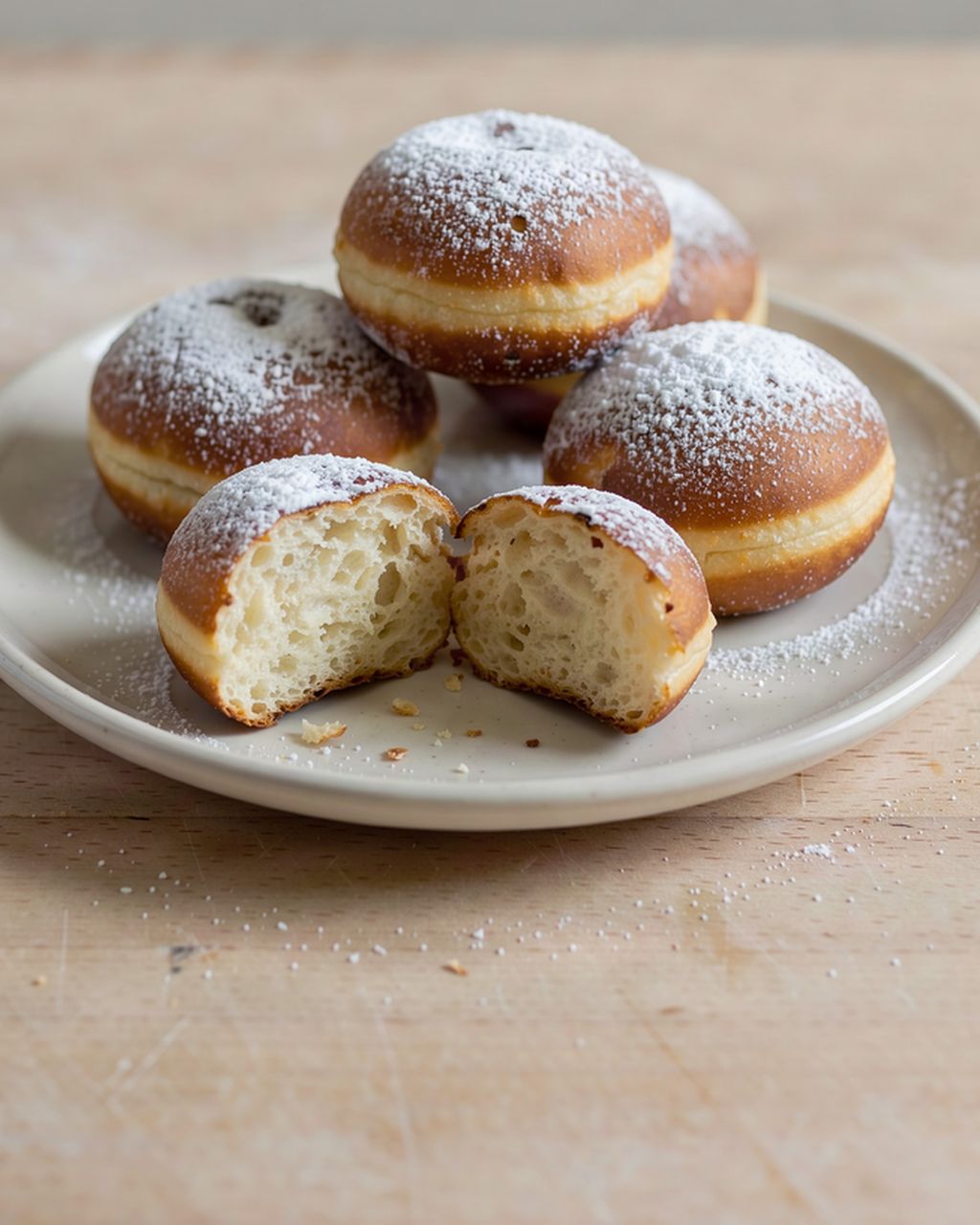
Make a hole in the side, in the pale band that a well-fried doughnut has all the way around. The dough is thinnest there, and the hole then hides. Poke it with a skewer, a sushi chopstick or a thin knife.
Make a pocket. Push in about two thirds of the doughnut's width (3–4 cm) and move the skewer from side to side. This loosens the crumb, so the filling spreads inside rather than collecting at the edge.
Fill with the tip pushed to the center. Insert the tip as deep as it goes, squeeze steadily and pull it out slowly, and the filling spreads evenly.
Know when it's full. The doughnut gets heavier in your hand and puffs up slightly, you'll feel resistance, and a drop of filling appears at the hole. The surest way is to put the doughnut on a kitchen scale, zero it and fill until it shows +25 to +30 g.
Sugar last. Roll the doughnuts in sugar or dust them with powdered sugar only after filling, otherwise the sugar will clog the hole and gum up the tip.
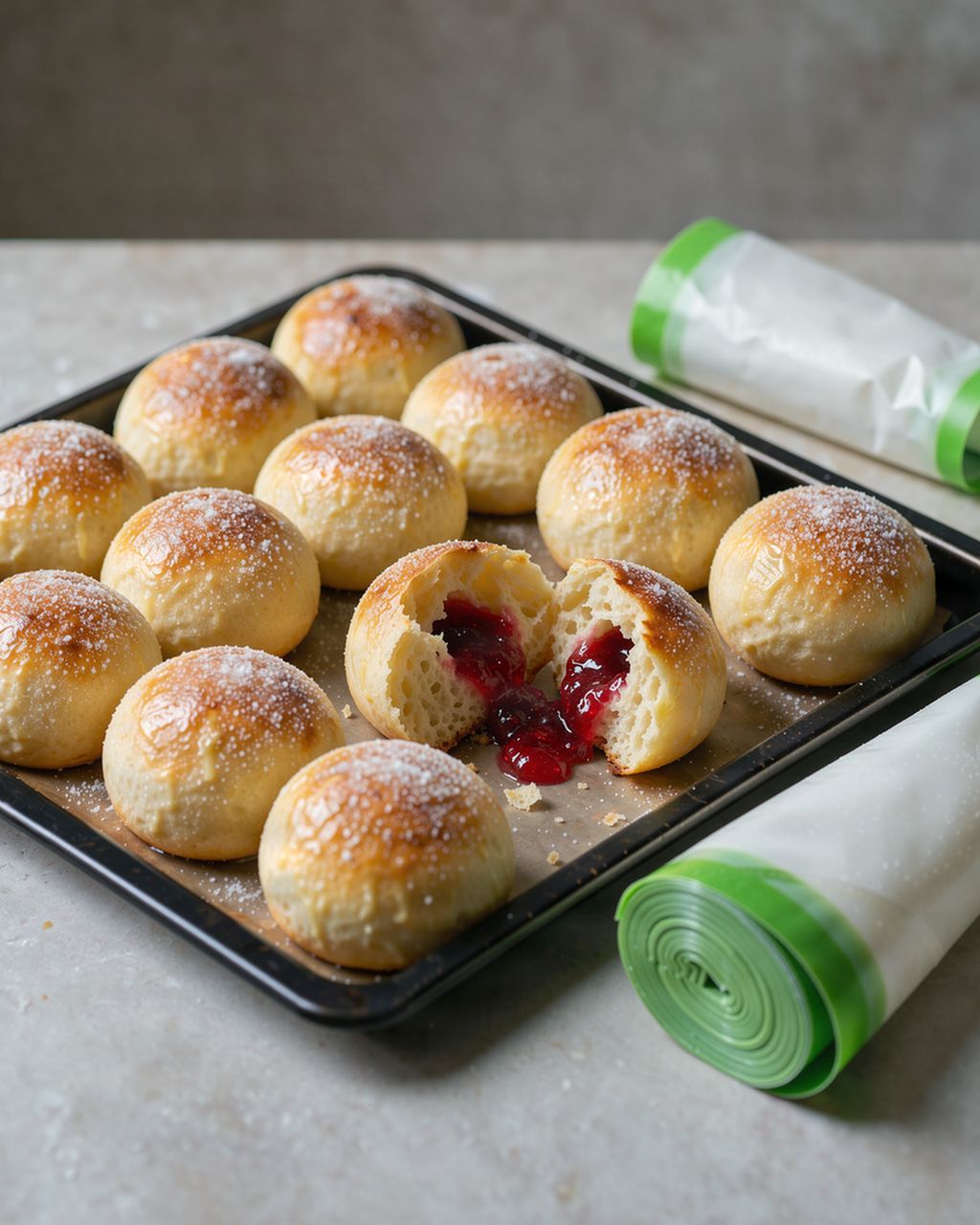
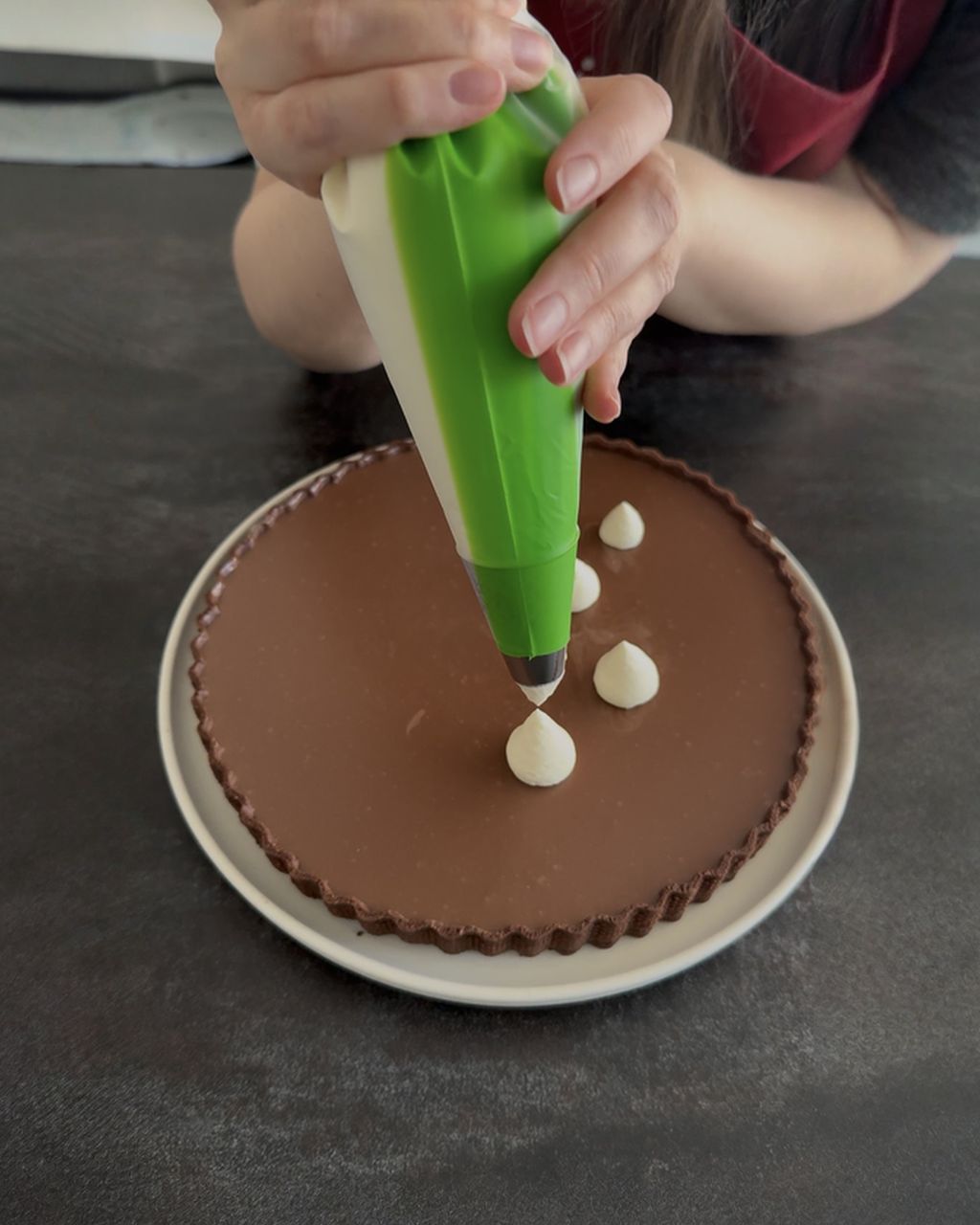
You need a disposable piping bag and a round tip with an opening of about 5 mm. You'll find a selection in the piping bags and tips category. For poppy seed and quark, use a wider tip (8–10 mm) or simply snip off the end of the bag.
A doughnut filler, with a long narrow nozzle known as a Bismarck tip, or a piston-style filler, is worth it when you're filling dozens. It reaches right to the center, and you don't need to make a pocket first. For a single batch of 12 doughnuts, though, a piping bag with an ordinary round tip and a skewer is plenty.
Before frying, you fill doughnuts between two layers of dough: put 10–15 g of thick filling on one round, cover with a second and press the edges firmly together. There's less filling than when you fill after frying, because more would not stay sealed.
Roll the dough out to 5–7 mm and cut out rounds 7–8 cm in diameter.
Place the filling in the middle and leave 1 cm of the edge clean, because poppy seeds or plum butter (povidla) on the edge will never let the seam seal.
Brush the edge lightly with water, lay the second round on top, press, and go around with a smaller cutter so the seal is firm.
Then leave the doughnuts to rise (prove) as normal.
Doughnuts filled with custard, pudding, ganache or quark belong in the fridge (at 4°C / 40°F or below), and shouldn't be out of it for more than 2 hours, or for no more than 1 hour in heat above 32°C (90°F). This rule comes from the guidance of the US Food Safety and Inspection Service, FSIS (USDA): perishable food shouldn't stay longer than 2 hours in the danger zone of 4–60°C (opens in a new tab), where bacteria thrive best, and a dairy filling with plenty of water and protein is an ideal environment for them. How many days it keeps in the fridge is our own recommendation: eat them within 2 days.
Custard, pudding, quark, ganache (classic and whipped): in the fridge within 2 hours at most, eat within 2 days.
Plum butter (povidla), jam, poppy seed: fine at room temperature for 1–2 days.
A doughnut goes stiff in the fridge and loses its fluffiness, though. So fill only as many as will be eaten that day, and keep the rest of the doughnuts unfilled in a bag at room temperature. The filling keeps separately in the fridge, and you can fill a doughnut in a minute, right before serving.
All the fillings work the same way in oven-baked doughnuts. Try baked doughnuts with jam and the guide to how to bake fluffy doughnuts in the oven. A baked doughnut has no pale band, so make the hole in the side at about half its height.
You can freeze doughnuts filled with jam, plum butter (povidla) or poppy seed filling, but it's better not to freeze ones filled with custard or pudding. Starch-thickened cream weeps water after thawing and turns grainy. The best approach is to freeze the doughnuts unfilled, thaw them at room temperature and fill them with fresh filling.
Replace a vanilla bean with a teaspoon of vanilla bean paste or real vanilla extract, stirred into the finished, slightly cooled custard. Paste also gives you visible seeds. Vanilla sugar is weaker and mostly just sweetens the custard.
We recommend using vanilla custard, pudding filling and quark (tvaroh, a Czech fresh curd cheese) filling within 2 days, stored in a covered container with plastic wrap pressed directly onto the surface. Thick plum butter (povidla), thickened jam and poppy seed filling keep a few days longer. Always let ganache soften at room temperature before filling, because straight from the fridge it's too stiff.
For 30 doughnuts, prepare about 750–900 g of filling, which is 2.5 times the batch for 12, and add about 100 g extra for what's left in the piping bag. Cook the custard in two batches, because a large amount is harder to stir evenly in the pot and scorches easily.
One recipe worth heating the oven for, one tip, and one deal from the shop. Nothing else.