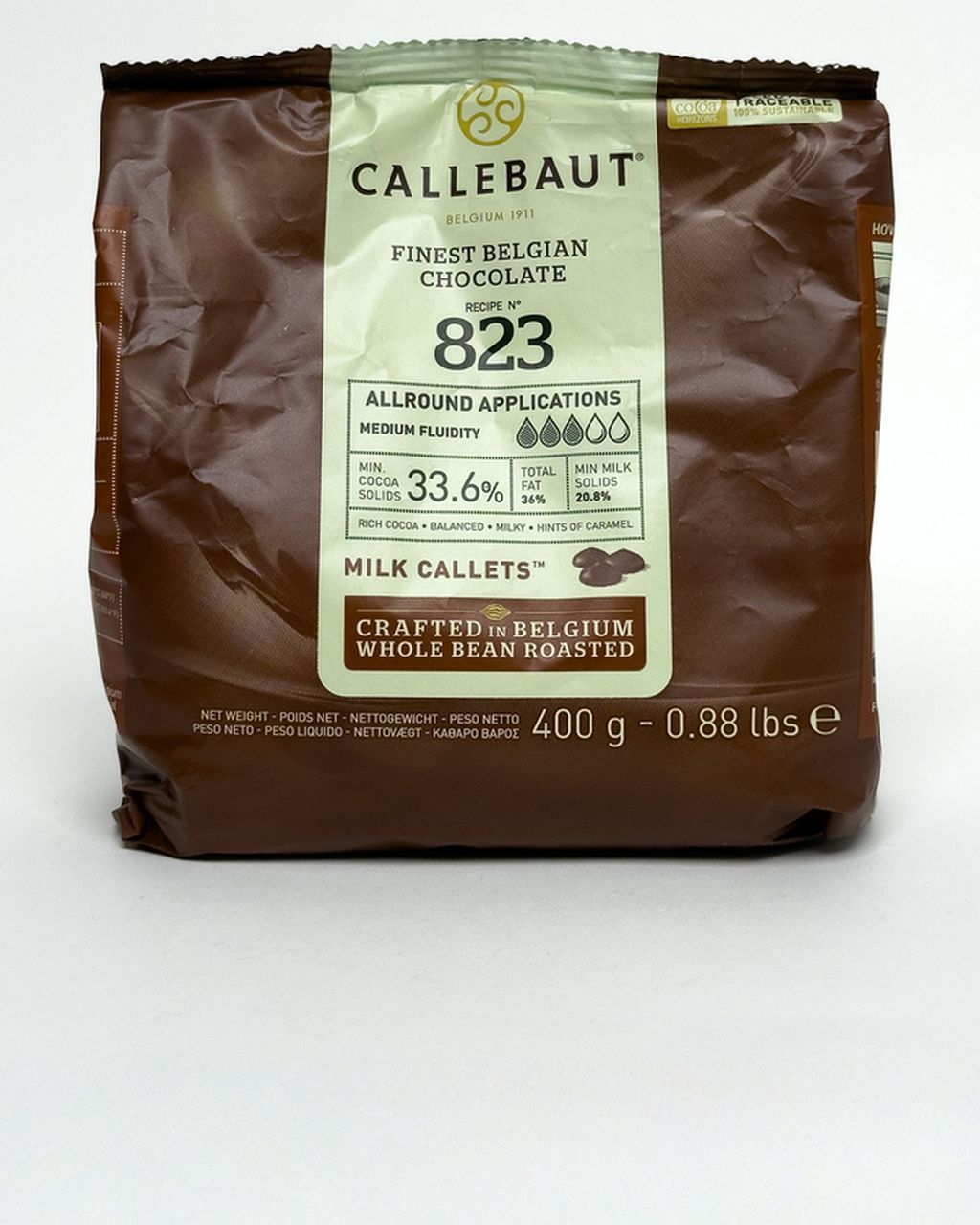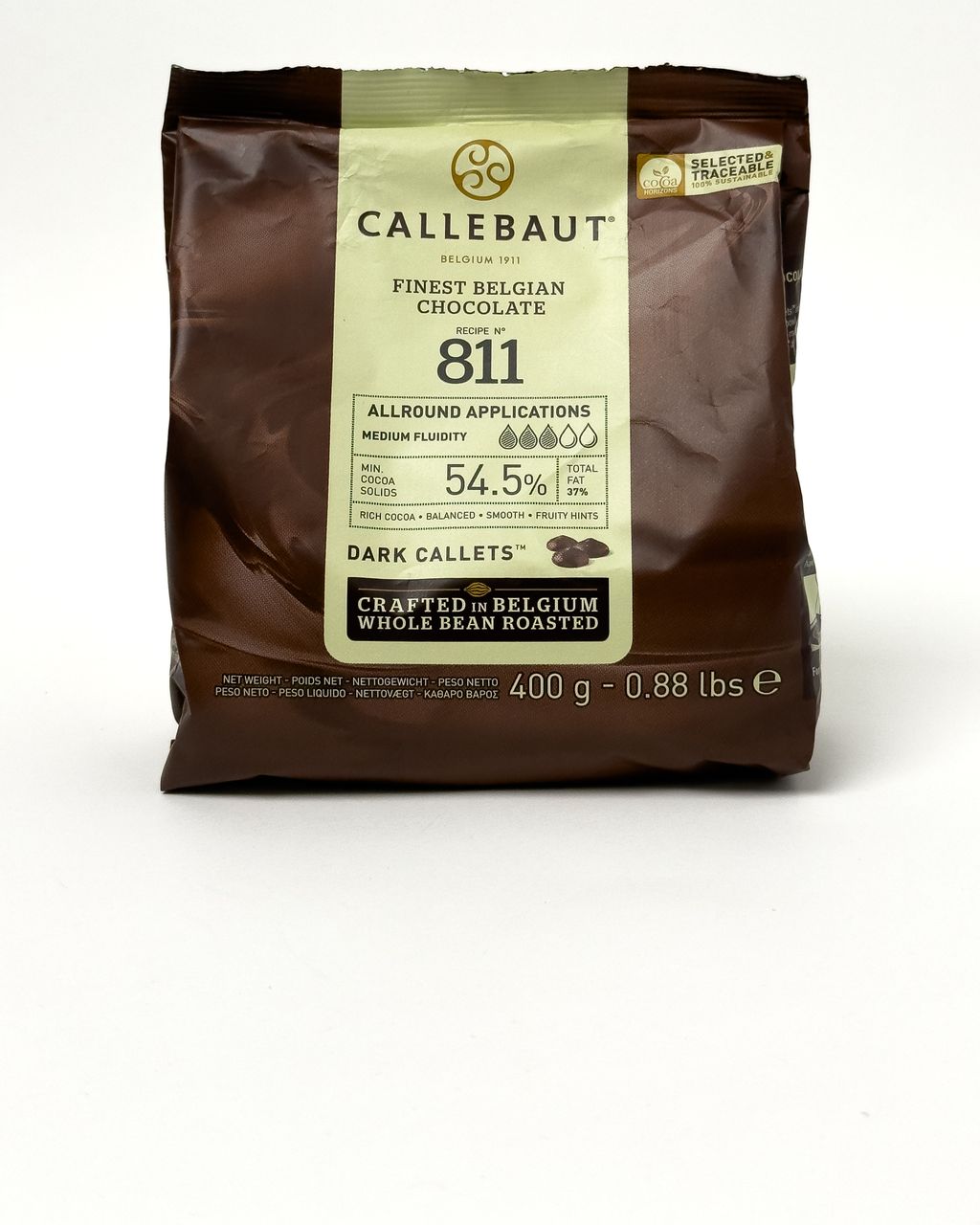
Callebaut Dark Chocolate Callets (811) 400 g
Donut Glaze: Chocolate, Pink, Lemon and White Chocolate — That Sets and Doesn't Run
Updated Nov 16, 2026
Donut glaze is either sugar-based (250 g powdered sugar to 45–50 g liquid) or chocolate-based (chocolate and cream at 1:1 to 2:1, or chocolate with 10% coconut fat). Dip the donuts while they're lukewarm, no warmer than about 35°C (95°F). Sugar glaze should be 35–40°C (95–104°F) and chocolate glaze 30–32°C (86–90°F). Everything else is just fine-tuning: how much liquid, which fruit, when to add the sprinkles. Below you'll find the grams for every flavor, from lemon to Ruby chocolate pink, and above all why glaze runs, cracks or stays sticky, and what to do about it. It works exactly the same way on filled doughnuts (koblihy).
Choose a sugar glaze for donuts when you want a thin, shiny shell, bright colors or fruit flavors. Choose chocolate when you want a bold flavor: with cream it stays soft, and with 10% coconut fat it sets into a firm crust. That gives you three options: sugar glaze, chocolate with cream (ganache) and chocolate with coconut fat. Each one behaves differently:
Sugar glaze – powdered sugar mixed with a small amount of liquid. It sets in 5–10 minutes into a thin, shiny, slightly crisp shell. It's easy to color and to flavor with fruit and lemon. This is the classic "American" glaze.
Chocolate with cream – soft, creamy and it stays tender. It tastes best, but it never sets completely, so don't stack the donuts.
Chocolate with fat (10% coconut fat by weight of the chocolate) – sets into a firm, glossy crust that snaps when you bite it. Best when you're transporting or packing the donuts.
Measure by weight, not by spoonfuls. With a sugar glaze, every extra 5 g of liquid changes the result.
Seasonal baking plans, tested recipes and kitchen tricks that save you time. Unsubscribe in one click.
Sugar glaze for donuts is always 250 g powdered sugar to 45–50 g liquid, and chocolate glaze is 150–200 g chocolate to 100–150 g cream or 20 g coconut fat. All amounts are for 12 donuts about 8 cm (3 in) across, dipped on the top only. Always sift the sugar; you can't stir lumps out of a glaze later.
White sugar glaze (classic): 250 g powdered sugar, 50 g milk, 10 g melted butter, a pinch of salt, ½ teaspoon vanilla extract. The butter adds shine and softens the glaze slightly so it doesn't crack.
Lemon: 250 g powdered sugar, 45 g lemon juice, grated zest of 1 lemon. Lemon juice has no protein or fat like milk does, so the glaze comes out thinner, hence 5 g less liquid.
Strawberry: 250 g powdered sugar, 45 g strawberry purée strained through a sieve, 5 g lemon juice. The lemon brightens both color and flavor.
Raspberry: 250 g powdered sugar, 45 g seedless raspberry purée. Raspberries give a deeper color than strawberries, so the pink comes out on its own.
Dark chocolate: 150 g dark chocolate (around 55%), 150 g whipping cream (33%), 15 g honey or glucose syrup for shine.
Milk chocolate: 180 g milk chocolate, 120 g whipping cream (33%). Milk chocolate has fewer cocoa solids, so it needs more chocolate.
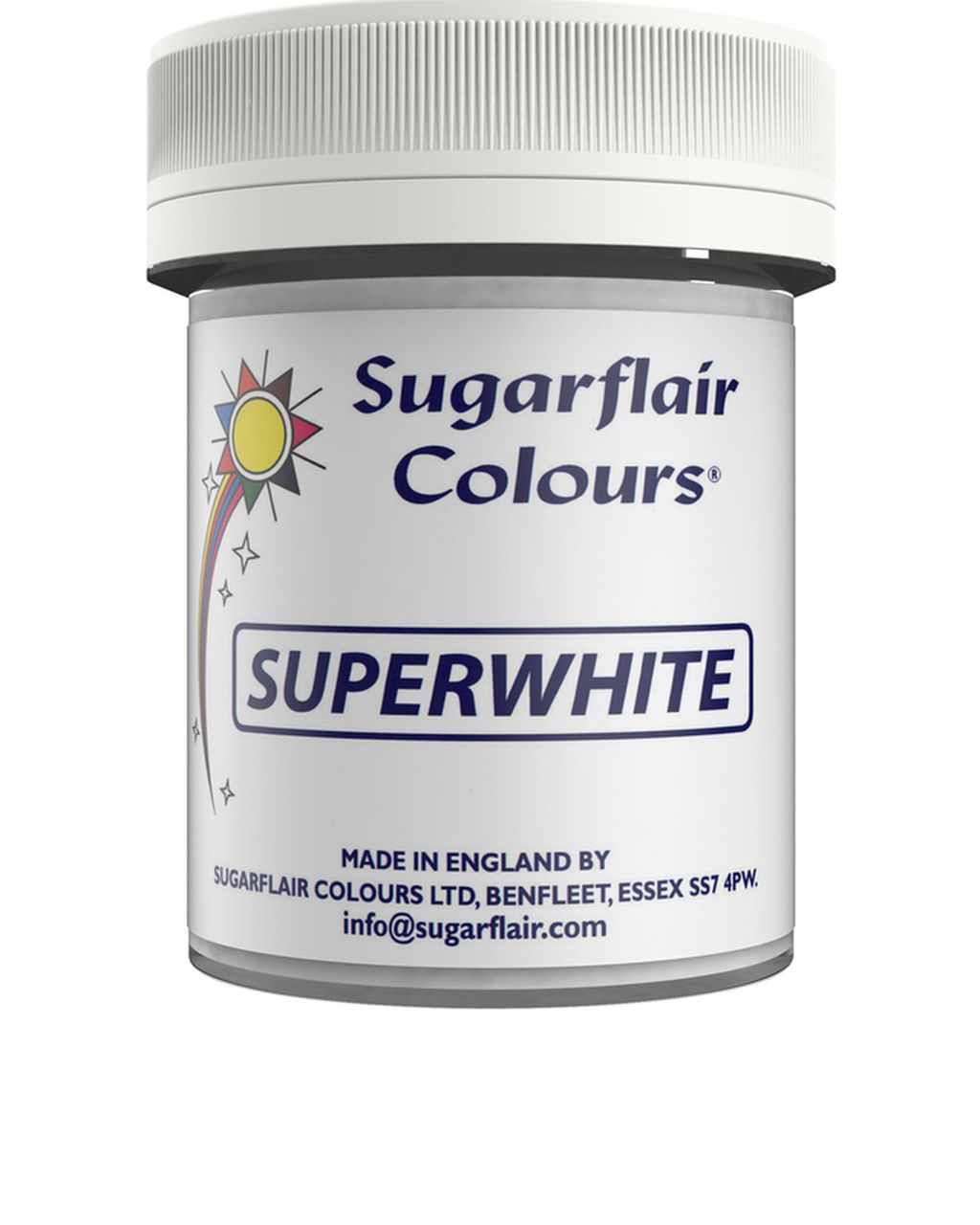
White chocolate: 200 g white chocolate, 100 g whipping cream (33%). White chocolate is naturally ivory; if you want it whiter, stir a knife tip of white powder color (such as Sugarflair Super White) into the finished glaze and mix it in thoroughly so no specks remain.
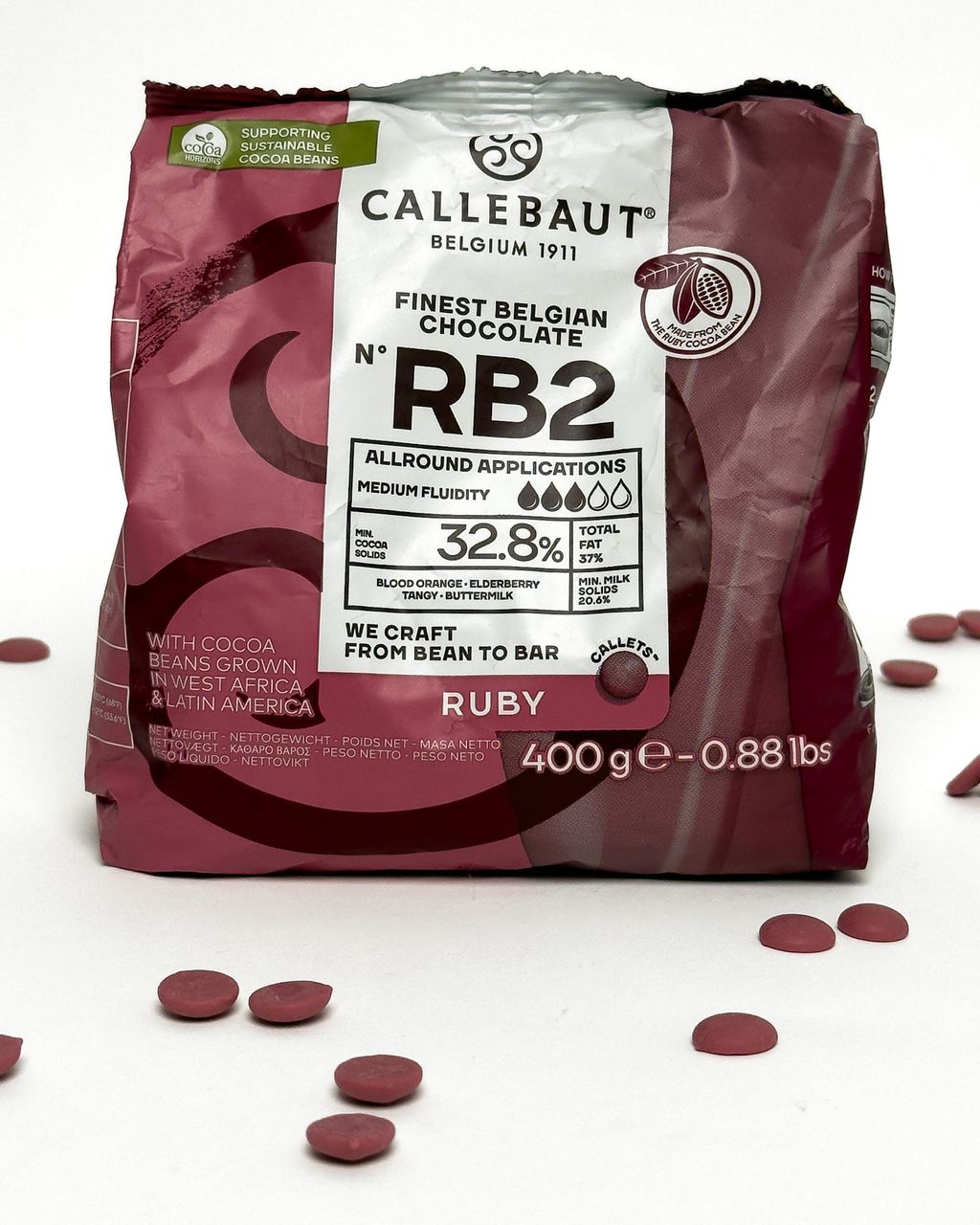
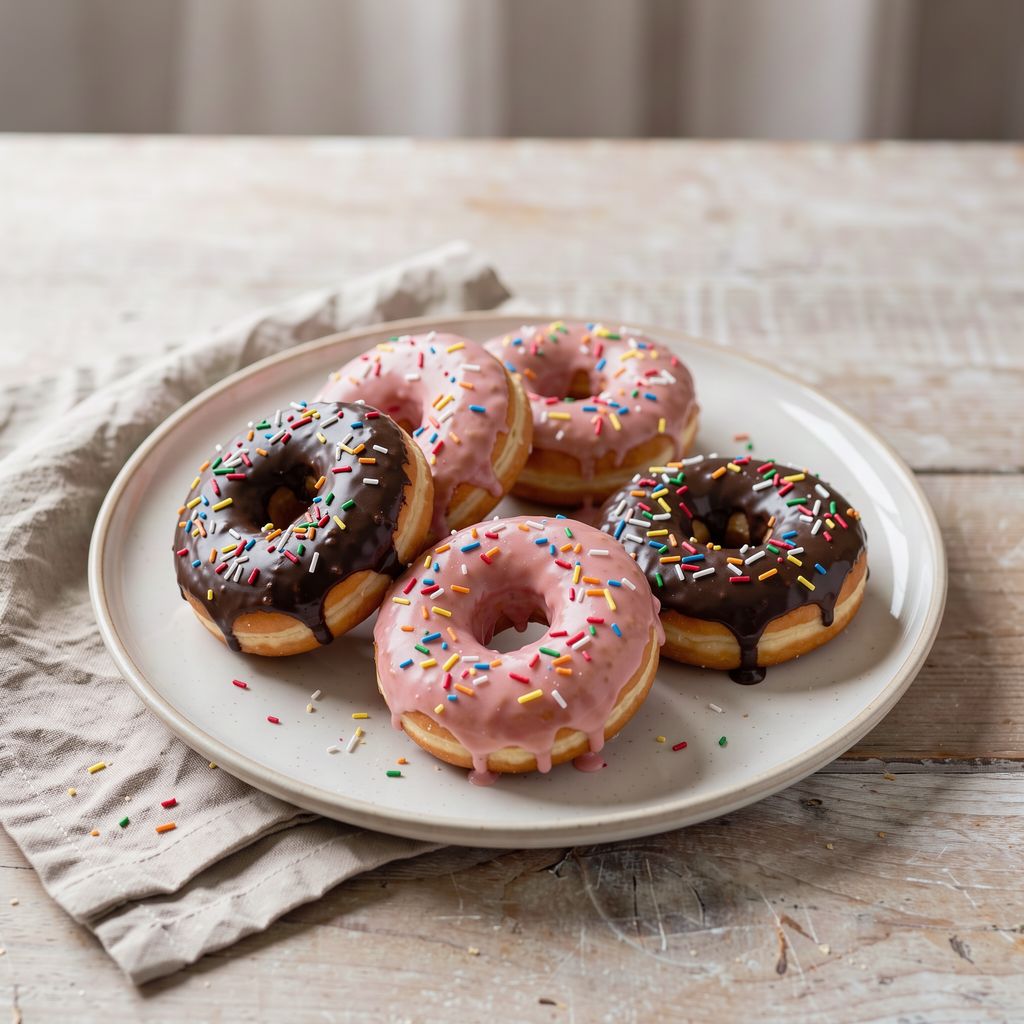
Pink Ruby chocolate: 200 g Ruby chocolate, 20 g coconut fat. Melt it gently, up to 40°C (104°F). With cream the pink fades; with fat it stays brighter.
Pink sugar glaze: a batch of white sugar glaze plus gel color picked up on the tip of a toothpick. Add it gradually, a little at a time: gel color is strong, and the glaze darkens by a shade as it dries.
Firm chocolate (for transport): 200 g dark or milk chocolate, 20 g coconut fat, dipped at 30–32°C (86–90°F).
Thickness: a good sugar glaze runs off the spoon like thick honey, and the trail it leaves on the surface disappears in 5–8 seconds. If it's too thin, add 10 g sugar; if it's too thick, add 1 teaspoon of liquid.
Dip lukewarm donuts into warm glaze in a single motion and let them drip over a rack. Here's how:
Let the donuts cool to lukewarm – to 35°C (95°F), so you can comfortably hold one. A hot donut gives off steam and melts the glaze from underneath.
Warm the glaze to dipping temperature: sugar glaze to 35–40°C (95–104°F) (a few seconds in the microwave or over a water bath is enough), chocolate with cream or with fat to 30–32°C (86–90°F). Without a thermometer: chocolate should feel barely lukewarm on your lip.
Dip the top half of the donut for about 1–2 seconds, lift it out, twist it around its axis and let the excess drip back into the bowl.
Turn the donut glaze side up and set it on a rack over parchment paper. With sugar glaze you can dip a second time after 3 minutes, which gives a thicker, opaque layer.
Let it set at room temperature, not in the fridge: sugar glaze 10 minutes, chocolate with fat 15–20 minutes, ganache about 30 minutes.
The glaze cools and thickens as you work. Warm it back up briefly every few donuts. Temperature matters more than the exact ratio.
Donut glaze runs, cracks or stays sticky almost always because of the wrong temperature (of the donut or of the glaze) or the wrong amount of liquid. Depending on what you see:
Glaze runs down the sides: the donut was too warm, or the glaze too thin or too hot (sugar glaze above 45°C / 113°F turns almost to syrup). More sugar, a cooler donut and dipping only the top third will help.
Glaze is see-through and "soaks in": the same problem, as heat and moisture from the donut have dissolved it. Let the donut cool and dip again.
Glaze cracks: the sugar glaze is too thick (not enough liquid, no butter), or you put the donuts in the fridge to set and the glaze shrank faster than the dough. With chocolate, a crust without added fat cracks; add 10% coconut fat.
Glaze stays sticky: too much liquid, an acidic fruit purée without enough sugar, or humidity. Donuts closed into a box while still warm steam themselves. Ganache with cream never fully sets; that's its nature.
Chocolate turns gray and dull: it overheated (the cocoa butter rises to the surface as a grayish film), or it sweated in the fridge and the sugar on the surface crystallized. Melt it slowly at a low temperature and let it set at room temperature.
Chocolate suddenly thickens and turns grainy: water got into it, or steam from the water bath did. Always work with a dry bowl and spatula; seized chocolate can only be rescued by stirring in more cream to make a ganache.
White chocolate thickens into a paste: it overheated. White and Ruby chocolate tolerate less heat than dark, so keep them under 40°C (104°F).
Add decorations right after dipping, while the glaze is still wet: within 1–2 minutes for sugar glaze, within 3–5 minutes for chocolate. Once a skin forms on the surface, the decorations just slide off.
Sugar glaze sets fastest: dip and decorate one donut at a time, not the whole batch at once.
Ganache is so fluid right after dipping that heavier beads slide down it. Wait a minute to let it firm up slightly.
Fruit glazes are moister, and colored decorations can bleed in them within a few hours. Add them only on the day of serving.
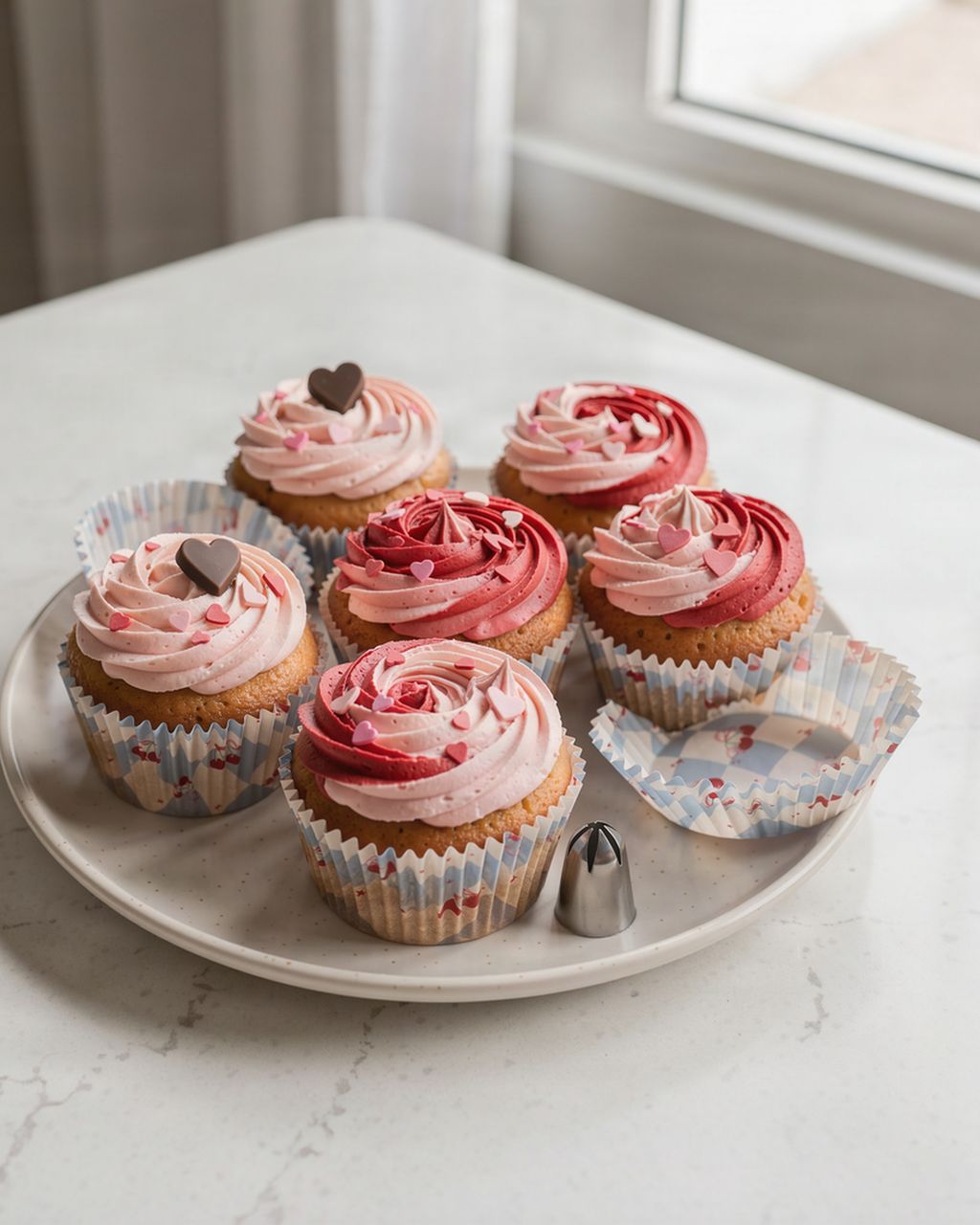
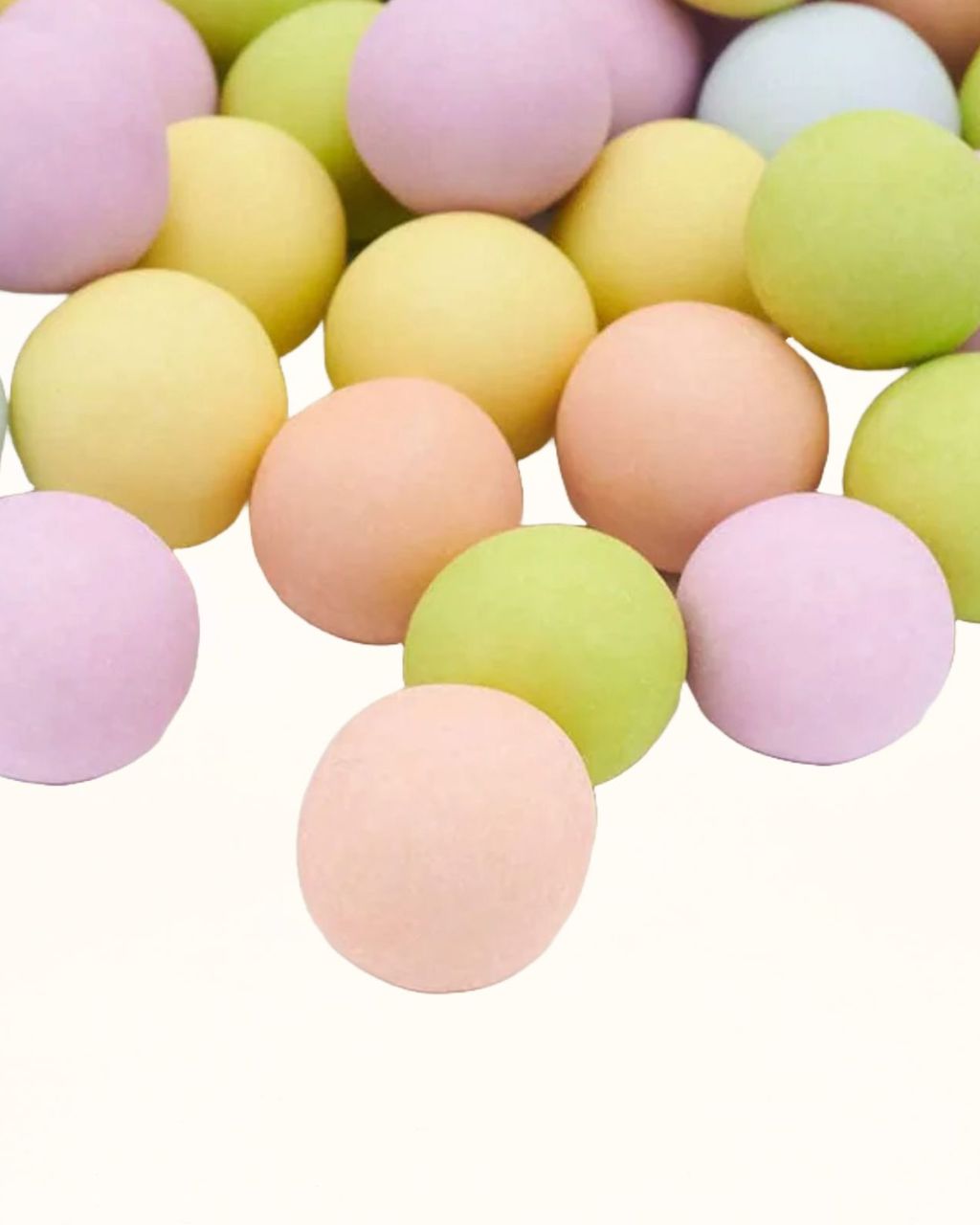
Large pieces such as hearts or large pastel XXL sugar pearls should be placed by hand and pressed on lightly. Scatter tiny sugar pearls or colored poppy-seed-style sprinkles from a height of about 20 cm (8 in) so they spread evenly.
A donut is a ring with a hole, usually unfilled and glazed; a kobliha and a Berliner are round, have no hole and are filled.
Donut (American doughnut) – ring-shaped. Either made from yeast dough (light and airy) or a "cake donut" made from a thick batter with baking powder (denser, like a bundt cake, or bábovka). The flavor comes mostly from the glaze.
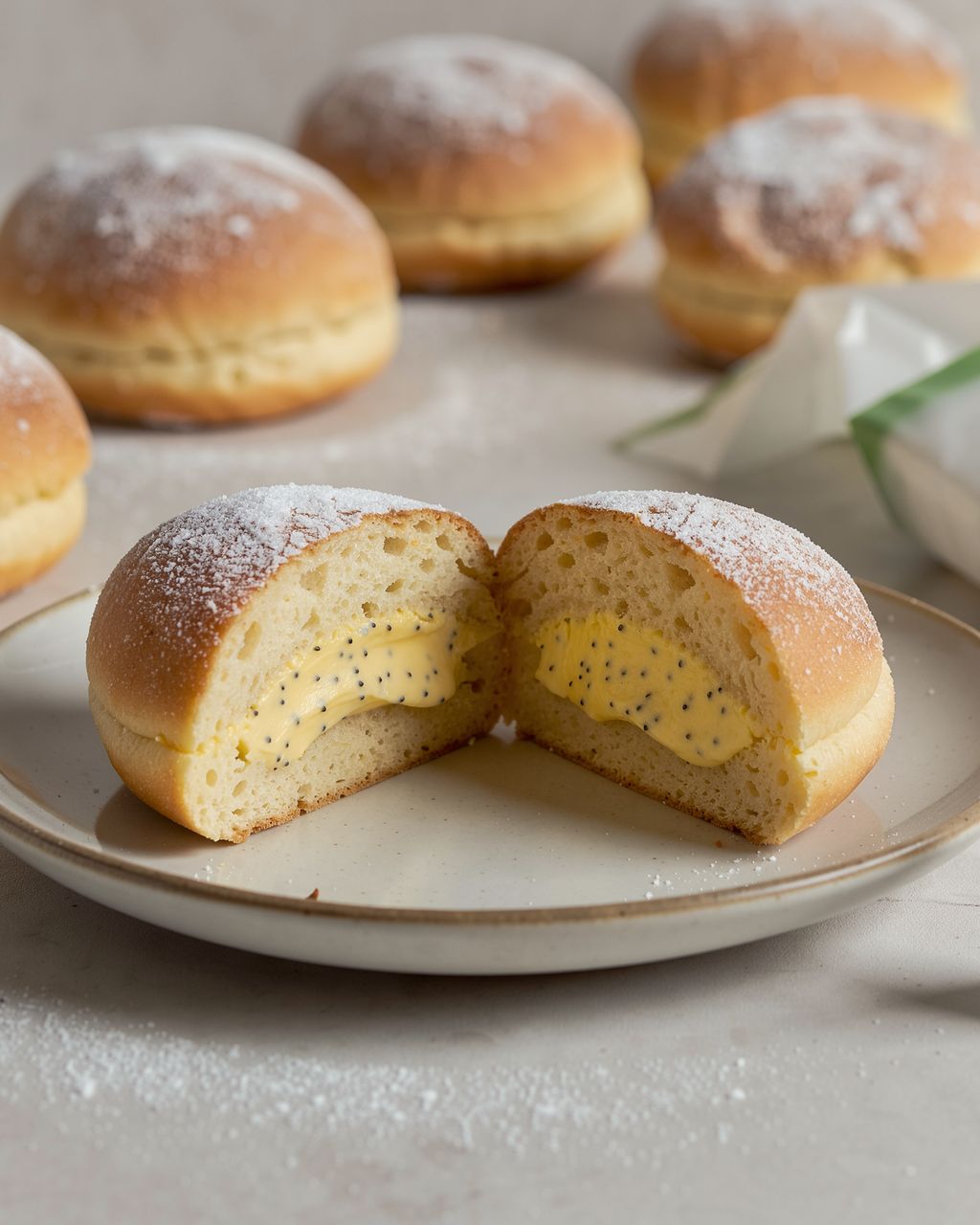
Kobliha (Czech filled doughnut) – round, made from yeast dough with eggs and butter, with a pale band around the middle. It's filled with jam or cream and dusted with powdered sugar, only sometimes glazed. For inspiration: fried doughnuts filled with jam or baked doughnuts with jam.
Berliner (Berliner, Krapfen) – basically the same round filled doughnut; the name just gives away its German origin. Often rolled in sugar.
Glaze holds equally well on all three. With a filled doughnut, just dip after filling so the glaze doesn't seal up the filling hole.
Yes, glaze holds even better on baked donuts than on fried ones, because their surface is smoother and drier. Bake them in a donut pan, sold in baking supply shops. Fill the wells only two-thirds full with batter and bake at 180°C (350°F) for about 10–12 minutes, until the surface turns golden and springs back. Dip them the same way as fried ones: lukewarm, top half only.
Temperature and thickness decide the result just as much for donuts as for chocolate-dipped fruit or gingerbread cookies. Here are guides to other glazes:
Donuts with sugar glaze or chocolate made with added fat taste best the same day, or the next day at the latest. Eat donuts with cream-based ganache the same day and refrigerate them overnight. Store them at room temperature in a box with the lid slightly open; in the fridge, sugar glaze turns damp and sticky and the dough goes hard. The exception is donuts with a cream filling, which belong in the fridge within 2 hours (a rule from the US Food Safety and Inspection Service, FSIS).
Yes. A chocolate glaze without cream is chocolate with 10% coconut fat, for example 200 g chocolate and 20 g fat. For a sugar glaze, replace the milk with the same amount of water, fruit juice or a plant-based drink.
You can. Glaze actually holds well on older donuts because they no longer give off steam. Warm them briefly (5 minutes in a 150°C / 300°F oven), let them cool to lukewarm and dip as usual. The surface perks up a little.
10 g butter or a teaspoon of glucose syrup adds shine to a sugar glaze, and 15 g honey or glucose does the same for a chocolate glaze. Temperature helps too: glaze dipped at the right temperature (sugar 35–40°C / 95–104°F, chocolate 30–32°C / 86–90°F) and left to set at room temperature stays glossy, but it goes dull in the fridge.
It's better to freeze the donuts unglazed and add the glaze after thawing. Sugar glaze turns damp and sticky after thawing, and chocolate glaze can sweat and turn gray.
One recipe worth heating the oven for, one tip, and one deal from the shop. Nothing else.