Types of Czech Dumplings: Bread, Potato, Bacon, Fruit and More
Czech Fruit Dumplings (Ovocné Knedlíky): Doughs, Fruits and Toppings
Updated Nov 20, 2026
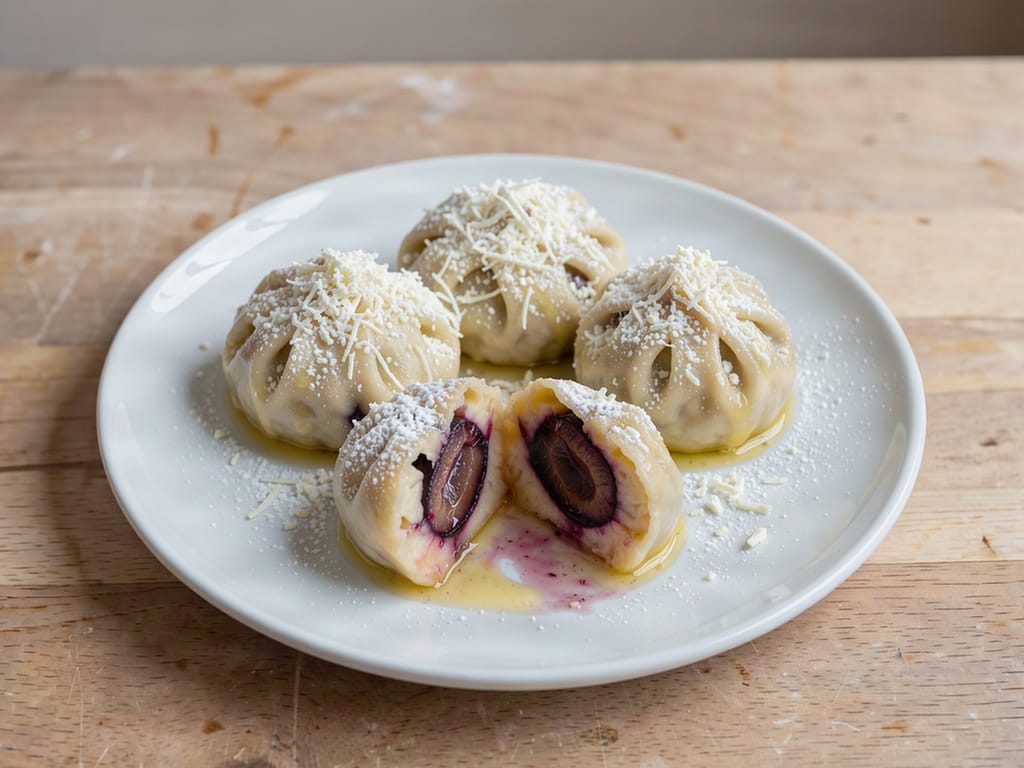
Czech fruit dumplings, ovocné knedlíky, are whole fruits such as plums, apricots or strawberries wrapped in dough, boiled or steamed, and served as a sweet main course with melted butter, sugar and a topping. The dough can be made with tvaroh, yeast, potato or choux. Here is how each dough differs, which fruits work best, and how Czechs top them.
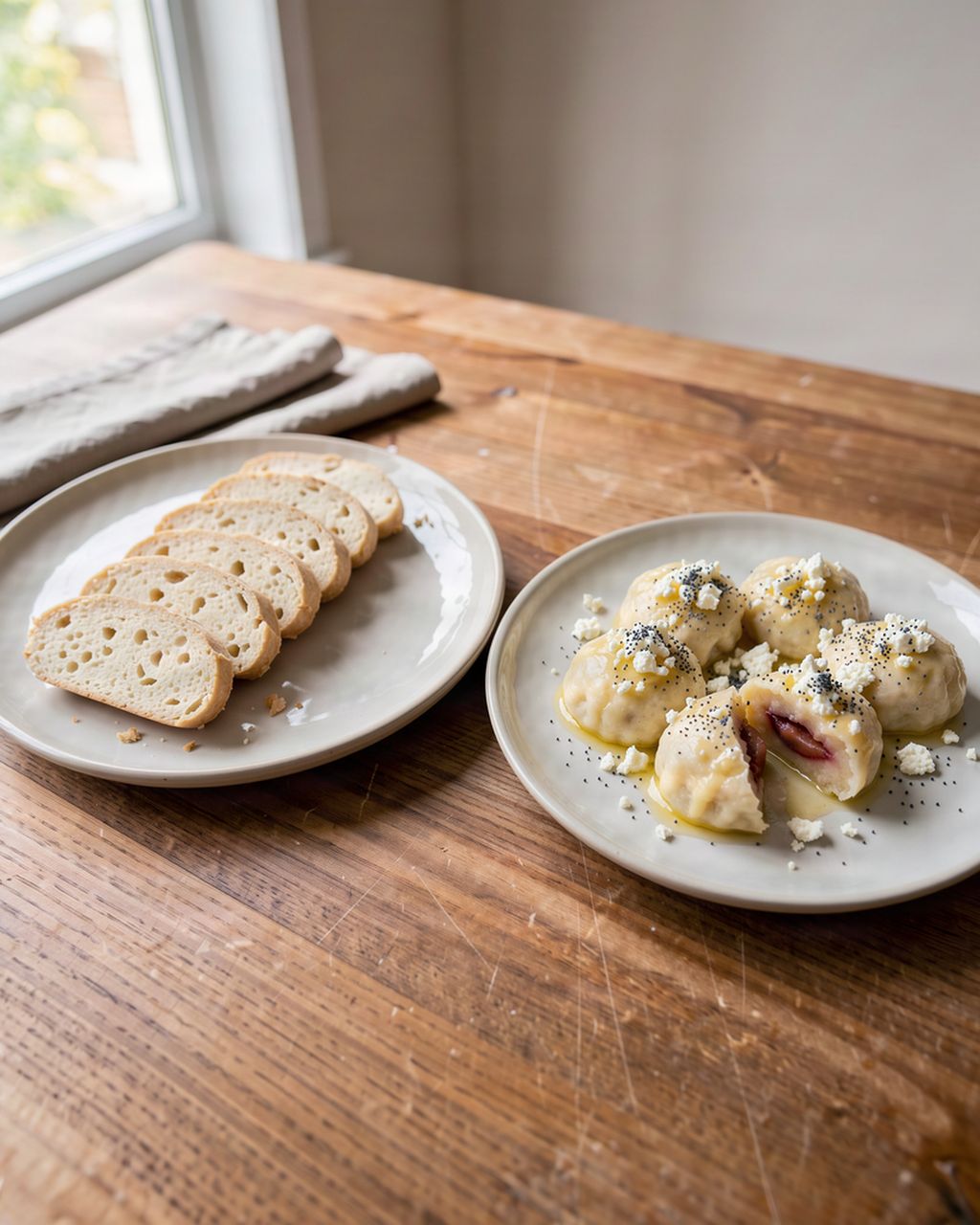
Ovocné knedlíky (fruit dumplings) are balls of soft dough with a whole piece of fruit inside. They are boiled in water or steamed, then served hot, glistening with melted butter, dusted with sugar, and covered in a topping.
Two things surprise people who did not grow up with them:
They are a main course. In Czech homes, a plate of five or six fruit dumplings is lunch, especially in summer when plums, apricots and berries are in season. School canteens serve them as the main dish too.
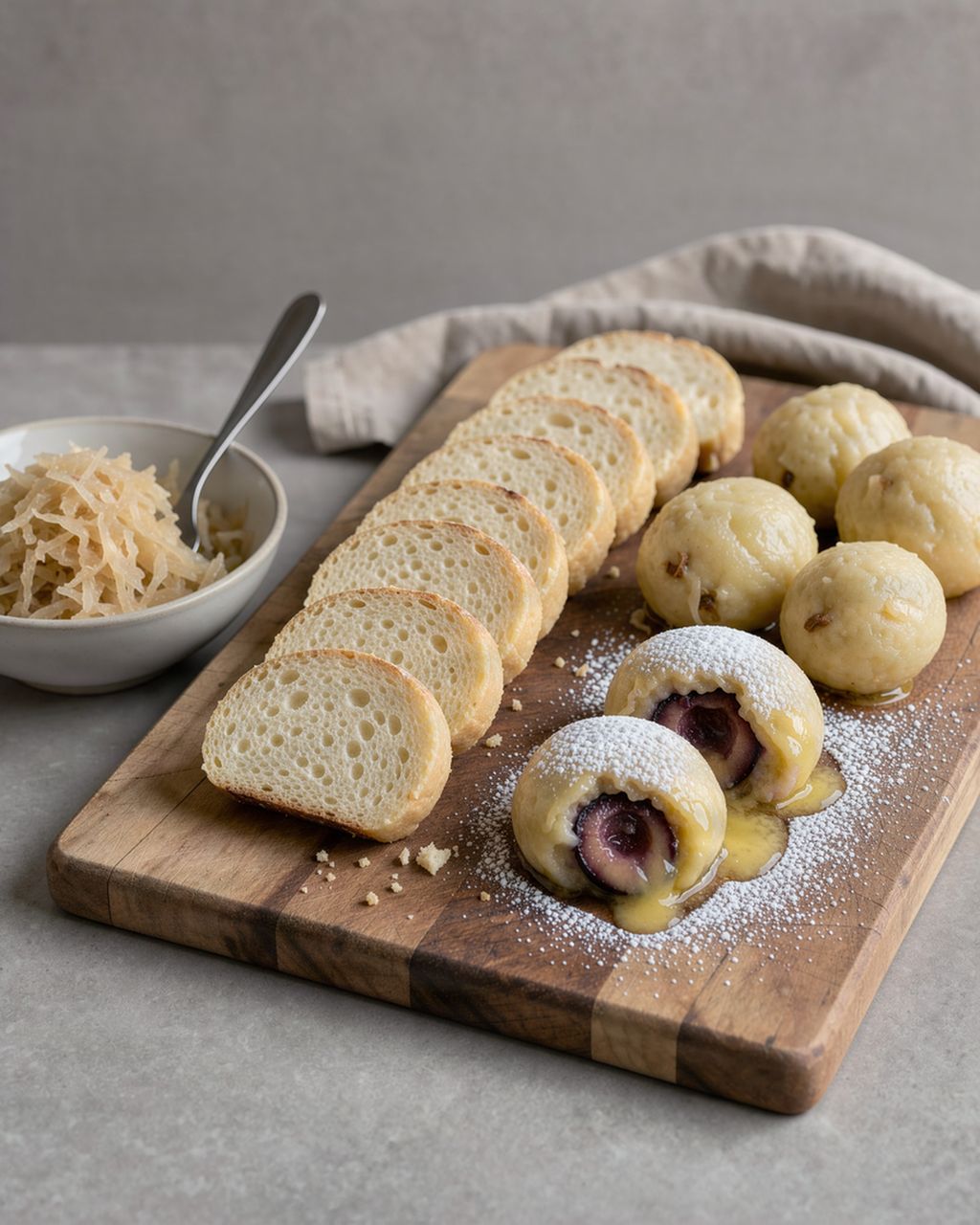
They are not related to Czech bread dumplings apart from the name. Knedlík covers almost anything shaped from dough and boiled, savory or sweet.
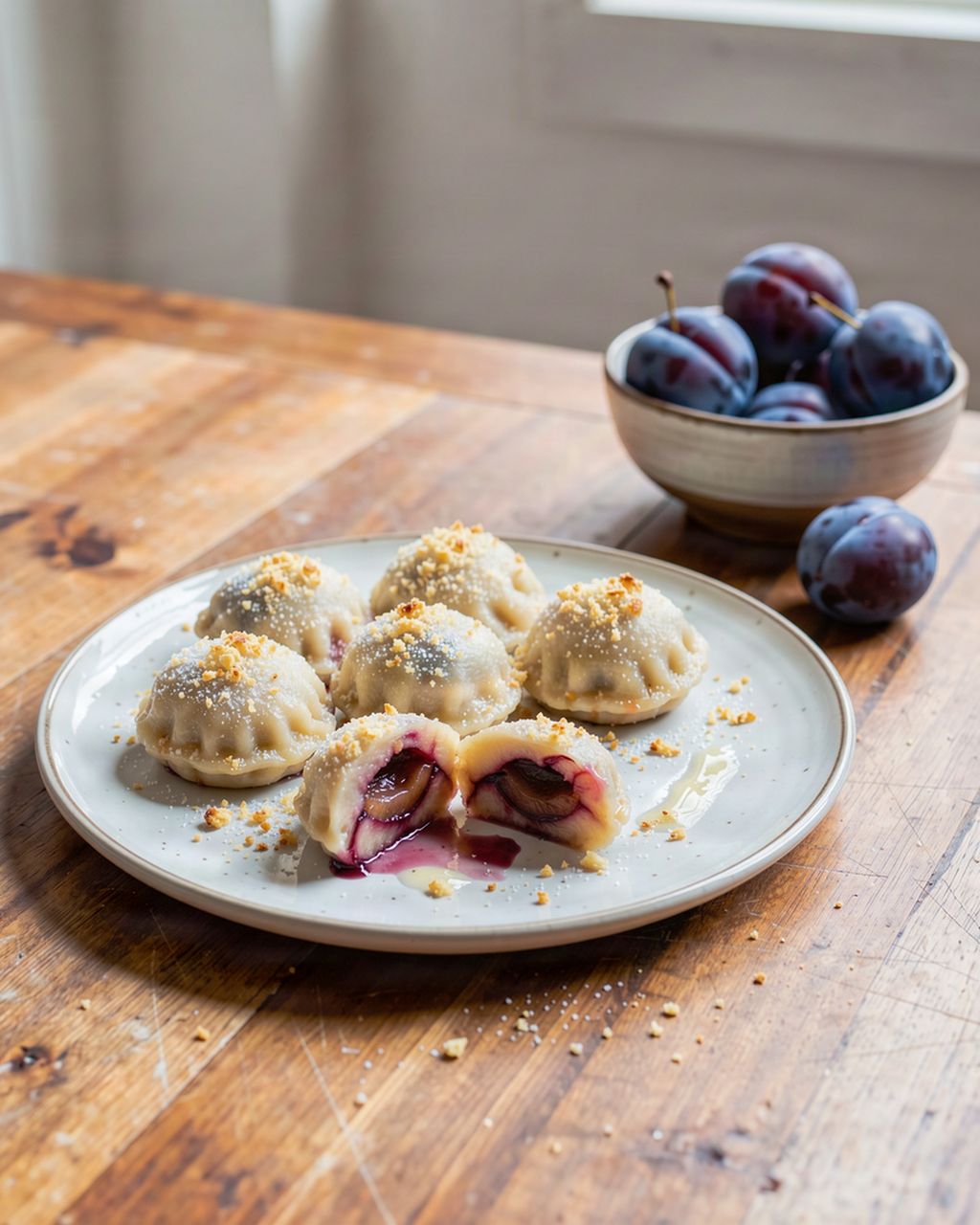
The best-known version is švestkové knedlíky (plum dumplings). Apricot dumplings (meruňkové knedlíky) are a close second, and strawberry dumplings (jahodové knedlíky) are the early-summer favorite.
Czech cooks use four main doughs. None is the one true version, and families argue about them happily.
Tvaroh dough (tvarohové těsto). Made with tvaroh (Czech curd cheese, close to quark or farmer's cheese), egg, and flour or semolina, sometimes butter. Tender, slightly tangy, and quick, since it needs no rising. Probably the most common home choice today.
Yeast dough (kynuté těsto). A soft, enriched yeast dough, risen, wrapped around the fruit, then boiled or steamed. Light and fluffy, almost like a steamed bun. Takes the longest.
Potato dough (bramborové těsto). Made from cooked, cooled potatoes with flour and egg. Dense, soft and slightly chewy. The classic pairing for plum dumplings with gingerbread.
Choux-style dough (odpalované or pálené těsto). Flour cooked into hot milk or water with fat, then beaten with egg, as for choux pastry. It is smooth, easy to shape, and holds together well in the water.
For detailed help choosing, see plum dumplings: which dough to choose. The choux version has its own guide: choux pastry dough for fruit dumplings. For the yeast version, see yeasted dough for sweet dumplings.
Almost any fruit that holds its shape can go in, but these are the classics:
Plums (švestky). The king of fruit dumplings. Czech cooks use small, firm, oval prune plums (Italian or European prune plums, sold as Zwetschgen in Germany), which are less watery than big round dessert plums and come away cleanly from the stone. The stone is often taken out and replaced with a sugar cube. See our guide to plums for baking.
Apricots (meruňky). Whole or halved, stone removed. Sweet and slightly tart.
Strawberries (jahody). Whole, hulled. Juicy, so the dough needs to be sealed well.
Blueberries (borůvky). A spoonful per dumpling, often in yeast dough. They stain everything purple, which is part of the fun.
Others. Apples, cherries or sour cherries, peaches, and, out of season, frozen fruit or a spoon of thick plum butter.
Whole fruit gives the best result. Very soft or wet fruit releases juice that weakens the dough, so drain frozen fruit well and keep it cold until it goes in.
The toppings matter as much as the dumplings. The base is always the same, then you add one of the classic sprinkles.
Melted butter. Poured generously over the hot dumplings. Browned butter is a favorite in some homes.
Sugar. Powdered sugar is most common; granulated sugar works too. Vanilla sugar is a popular extra.
Grated tvaroh. Firm, dry Czech curd cheese grated over the top, then sugared. Outside Czechia, a dry, crumbly farmer's cheese is the closest swap.
Poppy seeds. Ground poppy seeds mixed with sugar. They are sold ground in Czech shops, and grinding them fresh gives the best flavor; see how to process poppy seeds.
Gingerbread crumbs. Grated perník (Czech gingerbread), often mixed with sugar. A classic with potato-dough plum dumplings. Store-bought gingerbread can carry a may-contain warning for nuts, so check the package if you cook for someone with a peanut or tree-nut allergy.
One Czech account says poppy seeds were the usual topping in Moravia and tvaroh in Bohemia. Today most families mix and match, and many put out two or three toppings and let everyone choose. A spoon of sour cream or whipped cream on the side turns up in some homes too.
Recipe of the week, one tip that saves you time and one deal from the shop. Unsubscribe in one click.
The next issue goes out on Thursday, November 26.
Whatever the dough, the method follows the same pattern:
Make the dough and let it rest or rise as it needs.
Prepare the fruit. Wash, dry, and stone it if needed. A sugar cube in place of the plum stone is a common Czech touch.
Wrap. Flatten a piece of dough in your palm, set the fruit in the middle, and pinch the dough closed all round. Roll it into a smooth ball so no seams show.
Cook. Lower the dumplings into a wide pot of salted water at a gentle simmer, or steam them. They are done when the dough is cooked through; cut one open to check.
Serve at once with melted butter, sugar and toppings.
The usual failure is dumplings opening in the water. Our plum dumplings article explains why it happens and how to fix it.
Yes. Many Czech families make a big batch in plum season and freeze some, either uncooked or cooked. Tvaroh and potato doughs are the ones most often frozen. Our guide on how to freeze dumplings covers raw versus cooked, how to freeze them so they do not stick together, and how to cook them from frozen.
If you are making them for the first time, start with tvaroh or choux dough and plums or apricots. They are the most forgiving combinations, and the most Czech.
Czech fruit dumplings are called ovocné knedlíky. The plum version is švestkové knedlíky and the apricot version is meruňkové knedlíky.
In Czech homes, fruit dumplings are usually eaten as a sweet main course, especially for lunch in summer. They can be served as a dessert too, in smaller portions.
Czech fruit dumplings are made from one of four common doughs: tvaroh (curd cheese) dough, yeast dough, potato dough or choux-style dough. Each family tends to swear by one of them.
Czech fruit dumplings are topped with melted butter and sugar, plus grated tvaroh, ground poppy seeds with sugar, or grated gingerbread. Many families put out several toppings and let everyone choose.
Plums and apricots are the classics, followed by strawberries and blueberries. Apples, cherries and other firm fruit work too.
Fruit dumplings usually fall apart because the dough is too soft or too thin, or the fruit is too juicy. A firmer dough, well-sealed seams and gently simmering water rather than a hard boil help.
One recipe worth heating the oven for, one tip, and one deal from the shop. Nothing else.