What Is Povidla (Lekvár)? Plum Butter vs Plum Jam Explained
Traditional Czech Kolache Fillings: Tvaroh, Poppy Seed and Povidla
Updated Nov 18, 2026
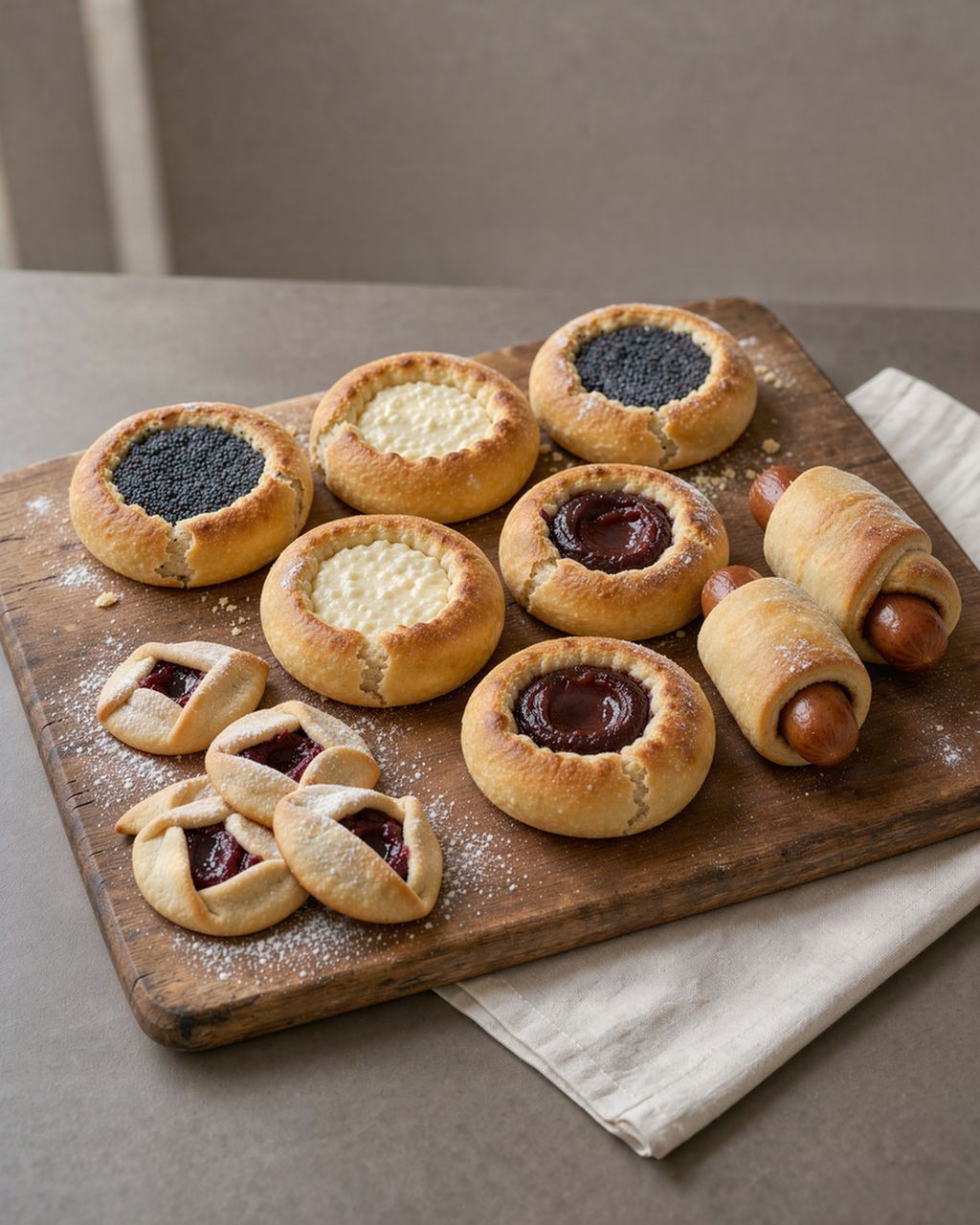
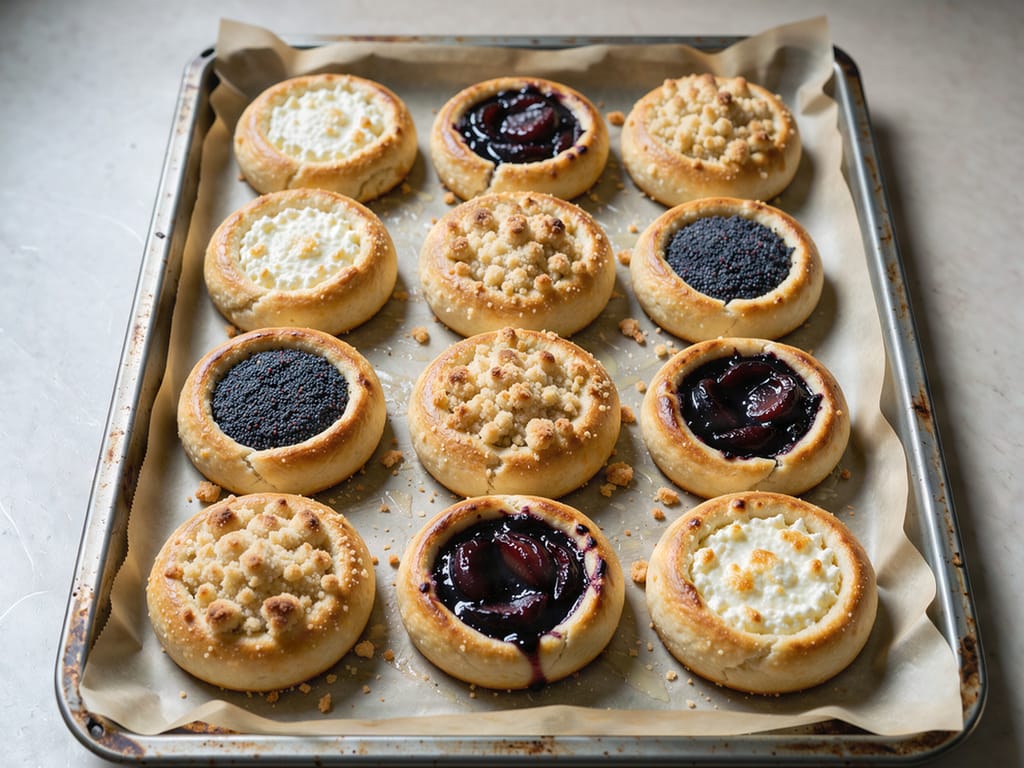
The traditional Czech kolache fillings are tvaroh (sweet curd cheese), mák (cooked ground poppy seeds) and povidla (thick plum butter), usually topped with drobenka, a buttery crumb. Each is simple to make once you know what it should be like. Here is how each filling is made in outline, what to buy outside Czechia, and how Texas fillings differ.
In Czech kitchens, three fillings make up the classic koláč (round yeast pastry, plural koláče), with a fourth thing on top:
Tvaroh: sweetened fresh curd cheese, close to farmer's cheese or quark.
Mák: ground poppy seeds cooked into a thick, dark paste.
Povidla: very thick plum butter, cooked down from plums with little or no added sugar.
Drobenka (posýpka): a sweet butter crumb scattered over the filling before baking.
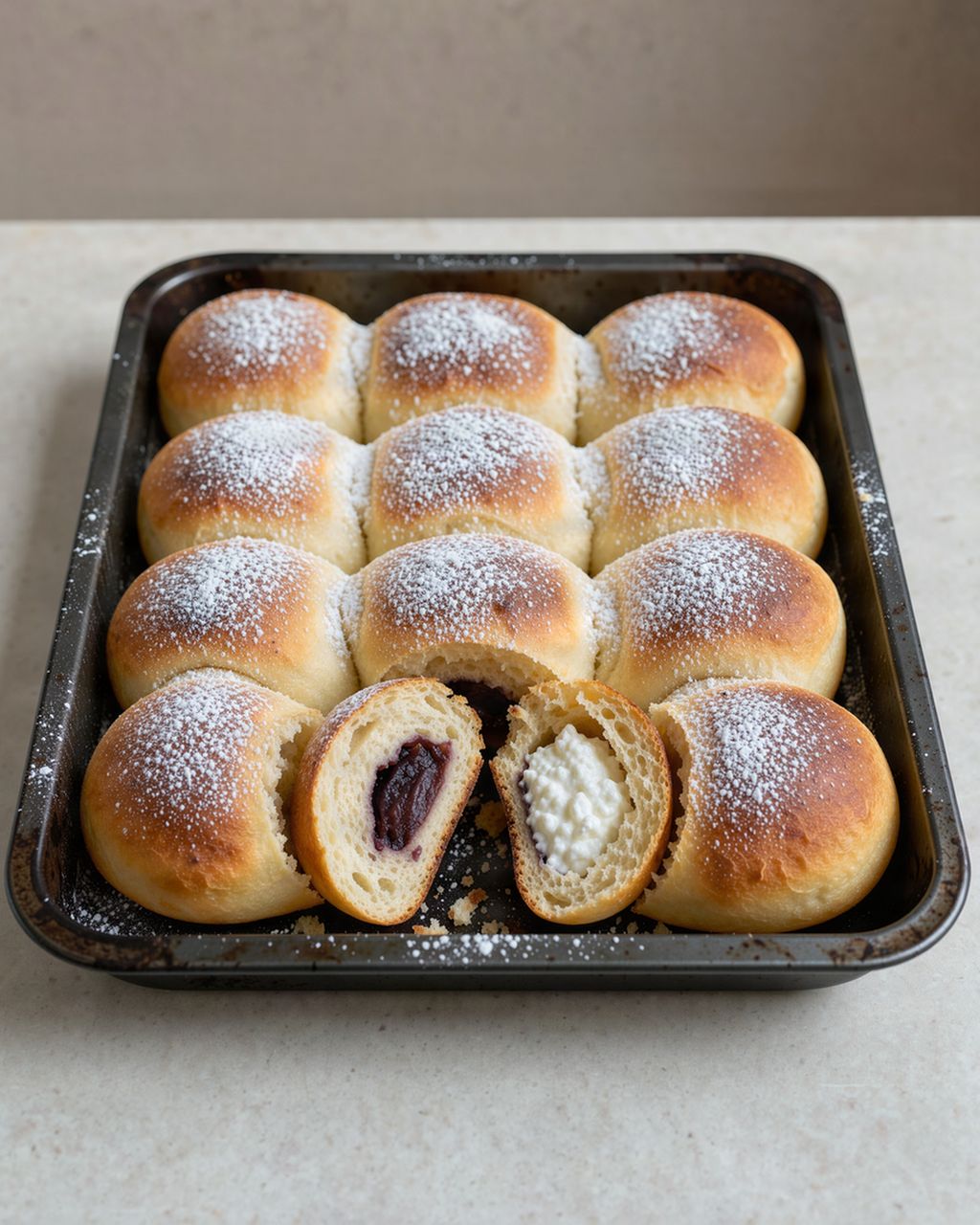
A Czech bakery tray often mixes them. Sunday and wedding koláčky (small koláče) come in all three flavors, and the big plate-sized koláče from the Chodsko region of western Bohemia combine several fillings on one round. Fruit such as apricots, plums or blueberries appears in season, usually on top of a layer of tvaroh.
What you will rarely see in Czechia: cream cheese, pie filling, or anything savory. Those are Texan developments, covered at the end.
Seasonal baking plans, tested recipes and kitchen tricks that save you time. Unsubscribe in one click.
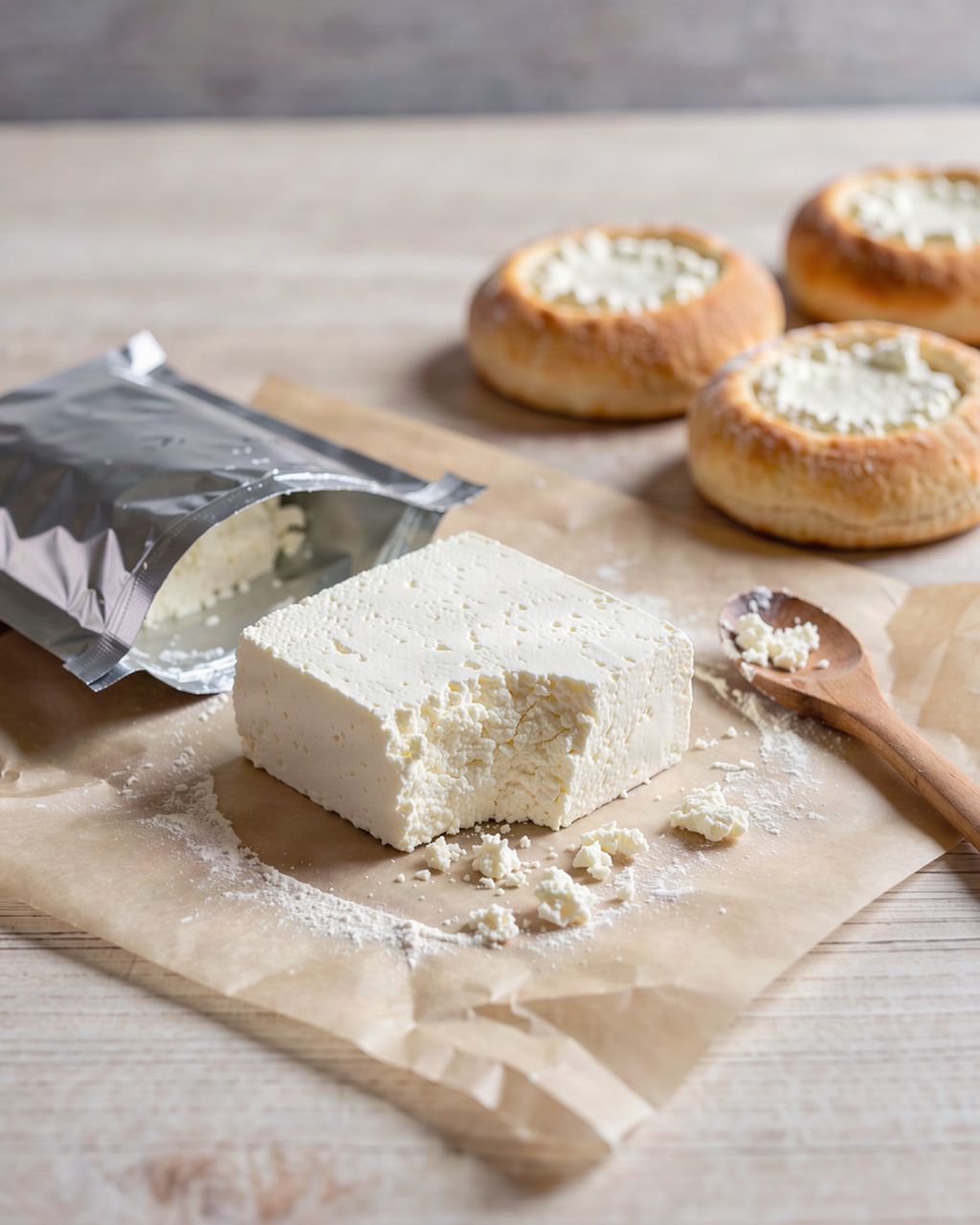
Tvaroh is a fresh, crumbly, mildly sour curd cheese. It is the most common koláč filling in Czechia and the hardest one to find abroad.
How it is made, in outline: the tvaroh is mashed or pushed through a sieve until smooth, then mixed with sugar, an egg yolk, vanilla (Czech cooks use vanilla sugar) and grated lemon zest. Raisins soaked in rum or water are a common addition. If the cheese is wet, a spoonful of fine semolina or vanilla pudding powder helps the filling set in the oven, so it stays in a soft dome rather than running across the tray.
What to buy outside Czechia:
UK and much of Europe: quark, sold in supermarkets near the yogurt. Choose a full-fat one if you can; fat-free quark is wetter and sharper.
US and Canada: farmer's cheese (a dry, crumbly fresh cheese) is the closest match. Polish and Eastern European grocers often sell twaróg, which is essentially the same thing as tvaroh.
In a pinch: well-drained ricotta or cottage cheese pressed through a sieve. Both are softer and milder, so add less liquid and a little more lemon.
For the cheese itself, see our ingredient page for full-fat curd cheese.
Poppy seed filling is the flavor most Czechs associate with grandmother's koláče: dark blue-gray, nutty and slightly bitter under the sweetness.
How it is made, in outline: the seeds are ground first. Whole poppy seeds give a gritty filling with little flavor; ground seeds release their oil and turn creamy. The ground poppy is simmered with milk and sugar until it thickens, anywhere from equal weights of poppy seed and milk to about twice as much milk. It is flavored with grated lemon zest, a little butter, sometimes cinnamon or a splash of rum, and thickened further with fine semolina, crushed biscuits or breadcrumbs if needed. It should cool to a spreadable paste that holds its shape on a spoon.
What to buy outside Czechia:
Whole blue poppy seeds: sold in Polish, German, Hungarian and Middle Eastern shops, and online. Czech bakers use the blue-gray variety. Grind them in a dedicated spice or coffee grinder.
Ready-ground poppy seeds: convenient, but buy small amounts. Ground poppy seeds go stale and bitter faster than whole ones.
Canned poppy seed filling: sold in the baking aisle of many US supermarkets. It is sweeter and smoother than a Czech home filling, but it works.
Our article on processing poppy seeds covers grinding and cooking the filling in detail, and the whole poppy seeds page has the ingredient basics.
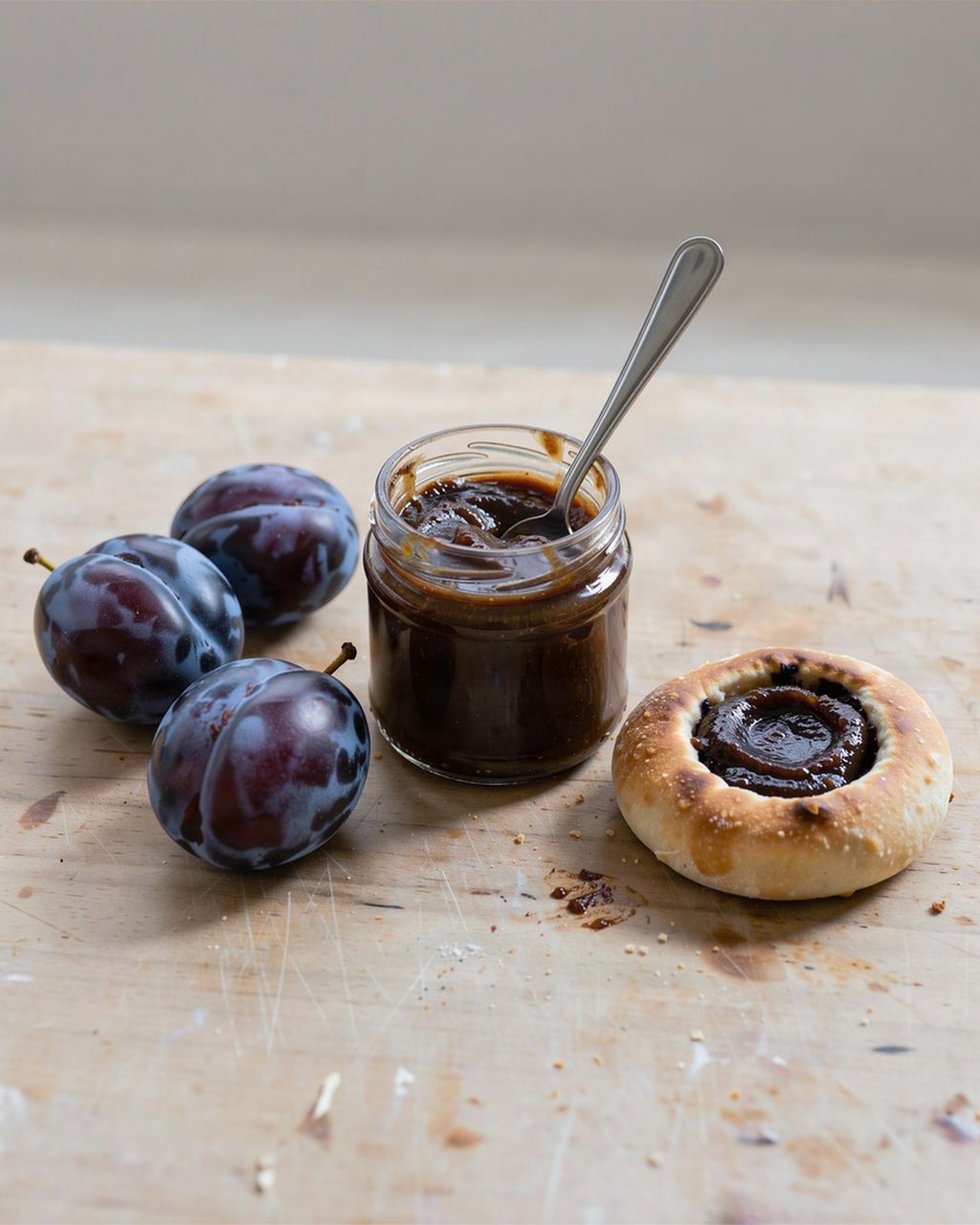
Povidla is plum butter: plums cooked for hours until they turn almost black, thick and glossy. Traditional povidla uses ripe, late-season plums (Czech švestky, Italian-type prune plums) and little or no added sugar, because the long cooking concentrates the fruit's own sweetness.
How it is used as a filling: povidla goes in more or less straight from the jar. Bakers often loosen it with a spoonful of rum or water, and sometimes add a pinch of cinnamon or ground cloves. The key property is thickness. Ordinary plum jam is too runny: it boils, spreads and burns on the tray. Povidla stays where you put it.
What to buy outside Czechia:
Lekvar: the Hungarian name (lekvár, jam) used in the US for thick prune or apricot butter. Prune lekvar is the closest match.
Polish powidła śliwkowe: the same thing as povidla, sold in Polish grocers.
Prune butter or plum butter: check the label; you want thick and spoonable, not set with pectin.
If you have the plums and the patience, see how to make plum butter at home.
Drobenka (from drobit, to crumble; also called posýpka, a sprinkling) is the crumbly topping that goes on a koláč over the filling. It is the same idea as streusel.
How it is made, in outline: plain flour, sugar and cold butter are rubbed together with the fingertips until the mixture forms crumbs of different sizes. Czech recipes vary: some use roughly equal weights of flour, sugar and butter, others closer to two parts flour to one part each of sugar and butter. A pinch of vanilla sugar or cinnamon is common. The crumb is scattered over the filling just before the koláče go into the oven.
A US recipe may give these in cups. Weigh if you can: drobenka relies on the balance of butter to flour, and cup measures of flour vary a lot. For reference, a US cup (236.6 ml) of all-purpose flour is about 125 g (spooned and leveled), a US cup of granulated sugar is about 200 g, and a US stick of butter is 113 g. Our cups and spoons to grams calculator converts other amounts.
Kolaches came to Texas with Czech immigrants in the second half of the 19th century, and the oldest Czech-Texan bakeries still sell poppy seed, prune and cottage-cheese kolaches. Over time, Texas bakeries added fillings that suited American tastes and ingredients:
Fruit: apricot, cherry, peach, strawberry, blueberry, pineapple and apple, usually as a thick jam or pie-style filling.
Cream cheese: sweetened cream cheese replaced tvaroh, which was hard to find. It is richer and smoother, with less of the fresh sourness of curd cheese.
Combinations: cream cheese with fruit, or chocolate, in many modern shops.
Savory: sausage, ham and cheese, and jalapeño versions, which purists call klobasniky rather than kolaches.
None of these is wrong; they are a regional tradition of their own. If you want the Czech taste, though, skip the cream cheese and go for tvaroh (or farmer's cheese), mák and povidla, with drobenka on top.
A filling is only as good as the koláč around it. Czech koláč dough is a soft, enriched yeast dough with milk, butter, egg yolks and sugar, rolled into balls, pressed in the middle, filled and left to rise again before baking. It should stay soft the next day.
Two practical points for the fillings: keep them thick and cool when you add them, and do not overfill. A wet or warm filling soaks into the dough and can make the base soggy. For the dough itself, see our guide to soft yeast dough for kolaches.
The traditional Czech kolache fillings are tvaroh (sweetened curd cheese), mák (cooked ground poppy seeds) and povidla (thick plum butter). They are usually finished with drobenka (also called posýpka), a sweet butter crumb topping.
Czech kolaches use tvaroh, a fresh, crumbly curd cheese. Outside Czechia, use quark, farmer's cheese or Polish twaróg; Texas bakeries often use sweetened cream cheese instead.
Quark, farmer's cheese or Polish twaróg are the best substitutes for tvaroh. Well-drained ricotta or cottage cheese pressed through a sieve also works, though it is softer and milder.
Povidla is called plum butter in English, and in the US thick prune butter is often sold as lekvar. Ordinary plum jam is too runny to replace it as a pastry filling.
Yes, poppy seeds for kolache filling should be ground before cooking. Whole seeds give a gritty filling with little flavor, while ground seeds turn creamy and nutty.
The crumb topping on Czech kolaches is called drobenka, or posýpka. It is a streusel-like mix of flour, sugar and butter rubbed into crumbs and scattered over the filling before baking.
One recipe worth heating the oven for, one tip, and one deal from the shop. Nothing else.