How to Make Crepes Without a Crepe Pan: Which Pan, Heat and Swirl
Crepes vs Pancakes: The Difference in Batter, Ratios and Texture
Updated Nov 21, 2026
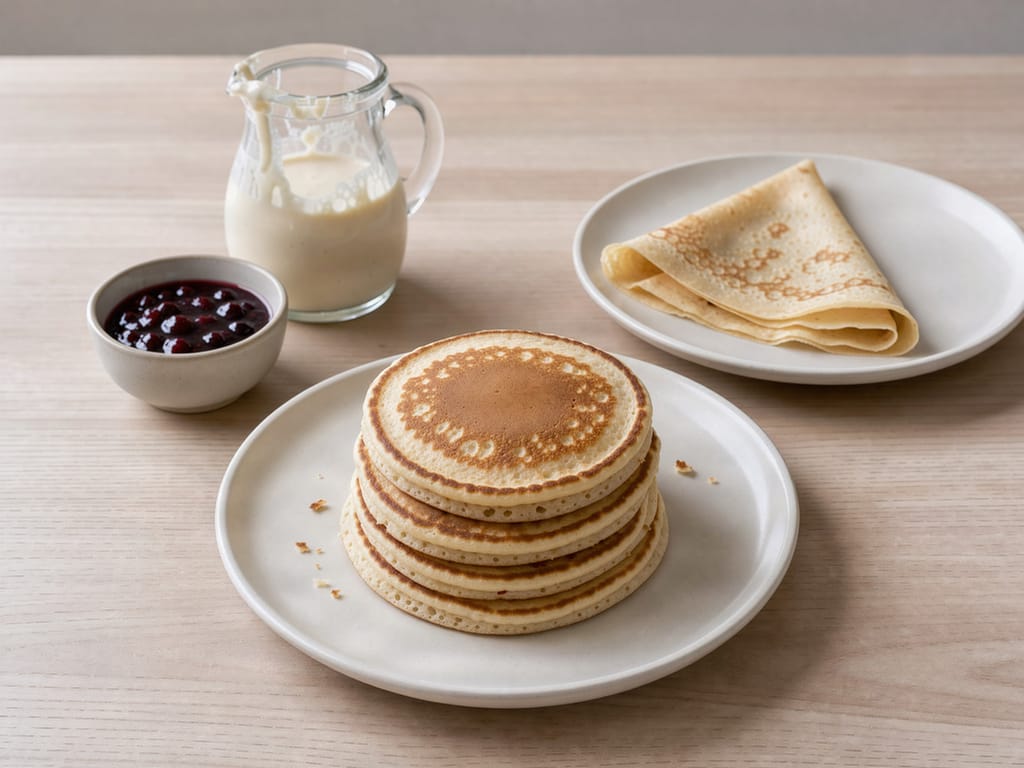
Crepes are thin, flat and tender because their batter is runny, egg-rich and has no baking powder, while American pancakes are thick and fluffy because their batter is thicker and raised with baking powder or soda. The ingredients are almost the same; the ratio of flour to liquid and the leavening make the difference. Here is how the two batters compare, where British pancakes, Czech palačinky, blini and galettes fit, and how to turn one batter into the other.
The short version: same pantry, different proportions.
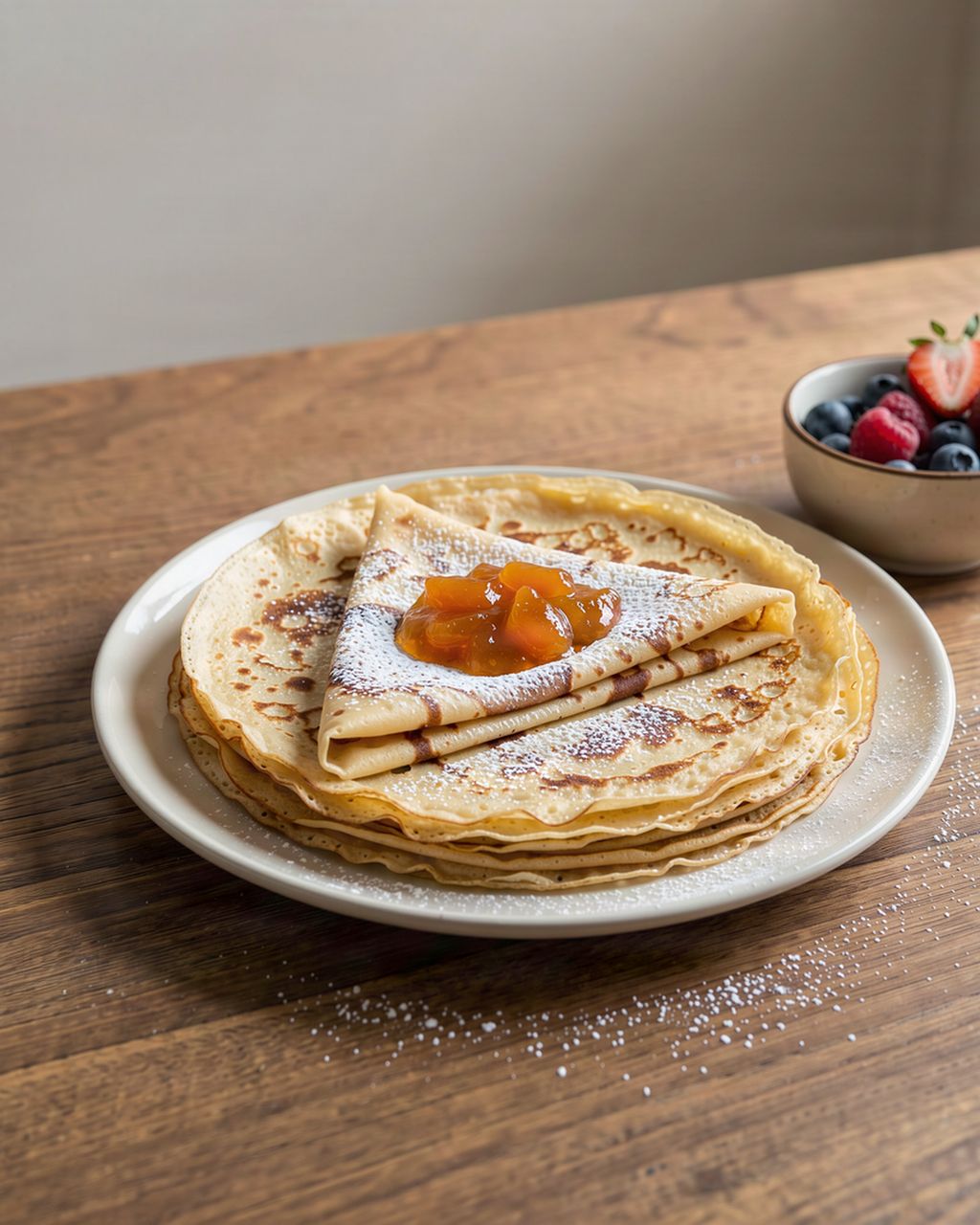
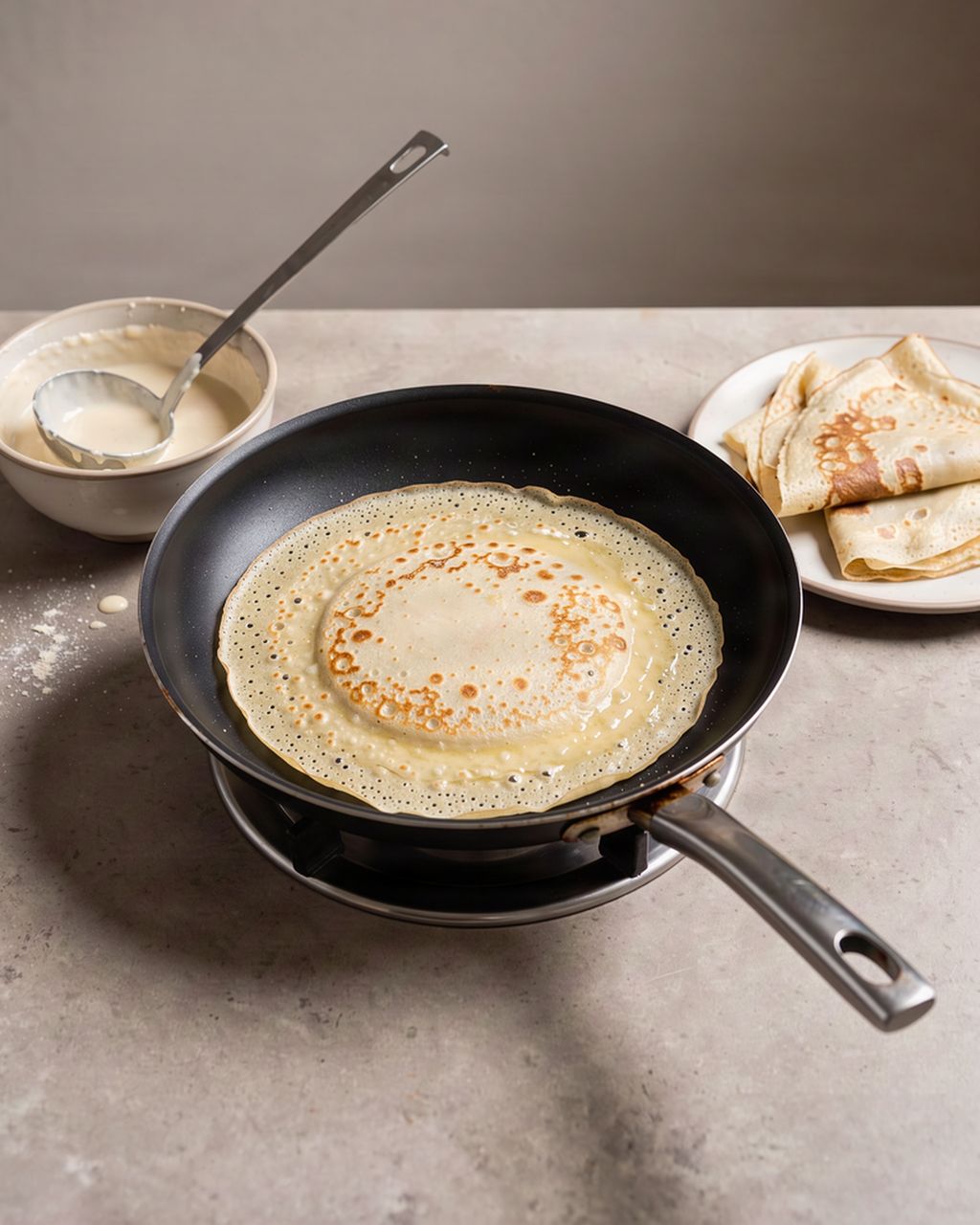
Crepes: thin, pourable batter of flour, milk, eggs, a little melted butter and a pinch of salt. No baking powder. Spread across a hot pan into a sheet about 1–2 mm thick. Tender, slightly elastic, with lacy brown spots. Usually rolled or folded around a filling.
American pancakes: thick batter of flour, milk or buttermilk, egg, melted butter, sugar and baking powder or baking soda. Spooned into small rounds that rise to around 1 cm. Soft, fluffy and cake-like inside. Usually stacked and served with butter and syrup.
British pancakes: thin and unleavened, very close to crepes, often made a little thicker in a normal frying pan.
So if a British recipe says "pancakes", it usually means something you would call a crepe in the US.
Recipe of the week, one tip that saves you time and one deal from the shop. Unsubscribe in one click.
The next issue goes out on Thursday, November 26.
The ratios explain almost everything about texture.
Crepe batter: roughly 1 part flour to 2½–3 parts milk by weight, with plenty of egg. A common home batch is 1 US cup (236.6 ml) of all-purpose flour, which is 125 g, to about 1½ US cups of milk (about 365 g by USDA FoodData Central figures) and 2–3 eggs. Some cooks replace part of the milk with water for thinner, lacier crepes.
American pancake batter: roughly 1 part flour to 1¼–2 parts milk or buttermilk by weight, usually one egg for about 1½ US cups of flour, plus baking powder. With plain milk, use about 2 teaspoons of baking powder per US cup of flour; buttermilk batters use less baking powder plus a little baking soda.
Crepe batter should pour like single cream (US light cream). Pancake batter should hold its shape for a moment when dropped from a spoon and show a few lumps.
If you want other amounts in grams, the cups and spoons to grams calculator uses the same figures we do: 125 g of all-purpose flour per US cup and 132 g per metric cup (250 ml).
Three things push the two in opposite directions.
Leavening. Baking powder in pancake batter releases gas as soon as it gets wet and again in the heat of the pan, so bubbles lift the batter. Crepe batter has nothing to make bubbles, so it stays flat.
Thickness of the batter. Runny crepe batter flows across the pan before it sets. Thick pancake batter stays where you drop it and grows upward.
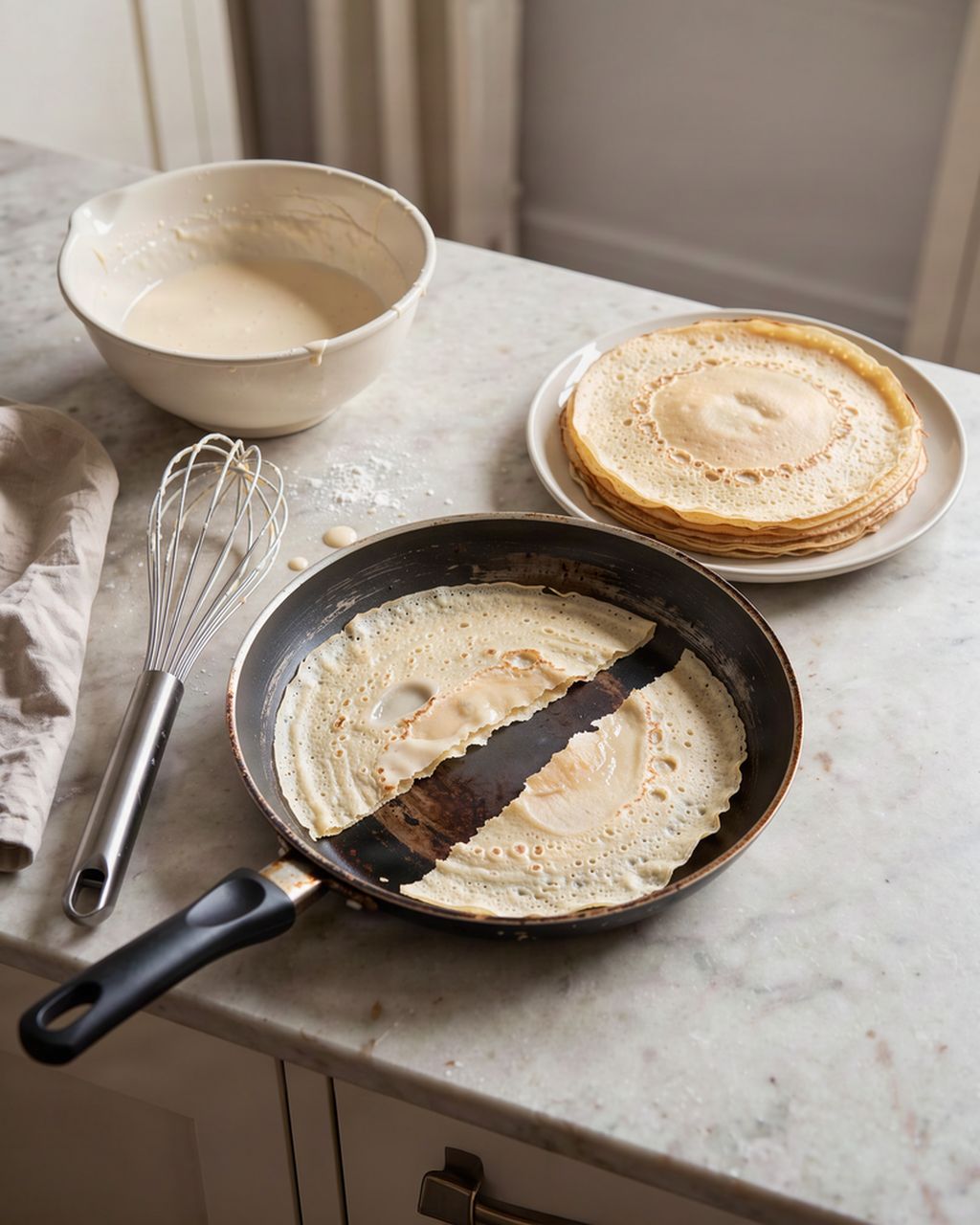
Egg and mixing. The extra egg in crepes makes them flexible enough to fold without cracking. Pancake batter is mixed briefly and left lumpy so it stays tender, while crepe batter is whisked smooth and then rested so the flour hydrates and the gluten relaxes.
Because of this, a pancake tastes mostly of its crumb and butter, and a crepe tastes mostly of its browned surface and whatever you put inside it.
In Czech kitchens we make both styles, and they have different names.
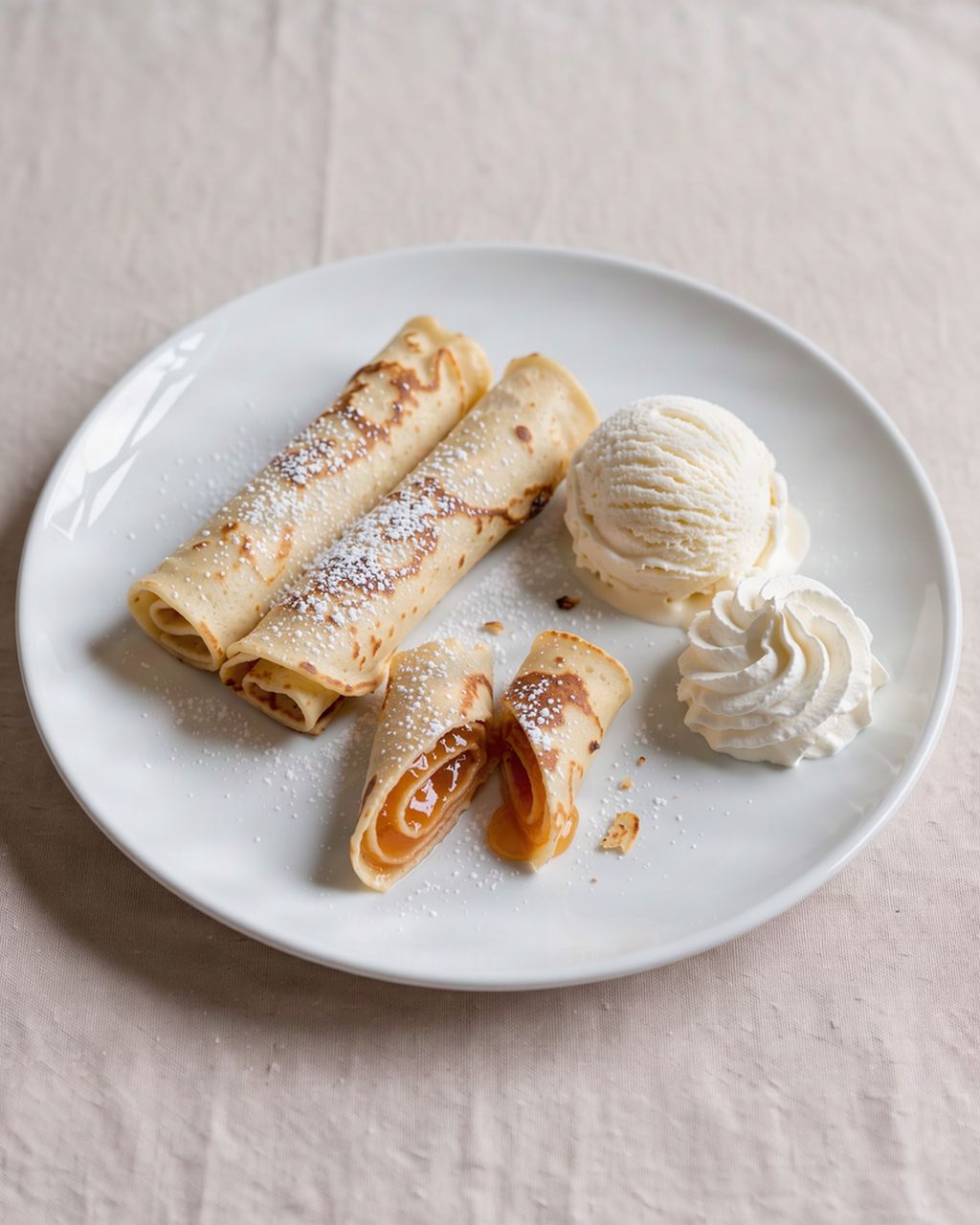
Palačinky (thin Czech pancakes) are crepe-style: unleavened, thin, rolled around jam, sweetened tvaroh (Czech curd cheese, see what tvaroh is) or fruit, often with a dusting of sugar or a spoon of whipped cream. Our batter is often a little thicker than a Paris crepe.
Lívance (small thick Czech pancakes) are closer to American pancakes: thick, small and fluffy, traditionally raised with yeast and today often with baking powder. They are cooked in a lívanečník, a pan with round hollows, and served with jam, tvaroh or blueberries.
A few more you may meet on a menu:
Galettes: Breton buckwheat crepes, usually savory. Buckwheat itself contains no gluten, so the batter behaves differently; see buckwheat flour. Many galette batters include some wheat flour, and buckwheat flour is often milled alongside wheat, so if you are cooking for someone with coeliac disease, use flour labelled gluten-free.
Blini: thin, pan-sized pancakes from Russia, traditionally yeasted and often partly buckwheat, served with sour cream, butter or caviar. The small cocktail blini sold in the West are closer to Russian oladyi.
Blintzes: crepe-like pancakes cooked on one side, filled with sweet cheese, folded into parcels and fried or baked.
Dutch baby (German pancake): a batter close to crepe batter, baked in a hot skillet in the oven until it puffs.
You can move between the two with a whisk.
Pancake batter or mix to crepes:
Leave out any extra baking powder the recipe asks you to add.
Add milk, a little at a time, until the batter pours like single cream.
Add one more egg for every 1 US cup of flour (or mix) if you have it. It makes the crepes easier to flip.
Let the batter rest for 30 minutes so the flour hydrates.
The baking powder already in a mix keeps the crepes a little spongier. They will taste fine but tear more easily when you fold them.
Crepe batter to pancakes:
Whisk in more flour until the batter is thick enough to hold a soft mound.
Add about 2 teaspoons of baking powder per US cup of flour in the batter and a spoon of sugar.
Cook straight away.
If you are out of baking powder, see what to use instead of baking powder.
It depends on what you want to eat.
Pick crepes when you want a wrapper for a filling, sweet or savory: jam, fruit, chocolate spread, ham and cheese, or creamed spinach. They also make a good dessert, and you can cook them ahead; our make-ahead crepes guide covers batter and cooked crepes in the fridge and freezer.
Pick pancakes when you want a soft stack that soaks up syrup and butter, or something kids can eat with their hands.
Crepes take a little practice with the swirl. Pancakes are more forgiving but need a gentle hand with mixing. Pancakes are also a forgiving place to start with other flours; see fluffy gluten-free pancakes.
Crepes are made from a thin, pourable batter with no leavening, so they cook into wide, flat, tender sheets; American pancakes use a thicker batter with baking powder or soda, so they rise into small, fluffy rounds. Crepes also usually have more egg in proportion to flour.
No. Crepe batter has roughly twice as much liquid as flour by weight, or more, and no raising agent, while American pancake batter is much thicker and contains baking powder. British pancake batter sits close to crepe batter.
Yes, but thin the mix with extra milk until it pours like single cream, and add an egg if you can. The baking powder in the mix still makes the crepes a little spongier and less flexible than a plain crepe batter.
Close, but not quite. A British pancake is a thin, unleavened pancake made from a batter very like crepe batter, often a touch thicker and cooked in an ordinary frying pan, and it is classically served with lemon and sugar.
A blintz starts as a crepe-like pancake cooked on one side only, which is then filled, usually with sweet cheese, folded into a parcel and fried or baked again. A crepe is the pancake itself, served folded or rolled.
A Breton galette is a crepe made with buckwheat flour, usually savory and filled with ham, cheese or egg. Sweet crepes are made with wheat flour. Buckwheat itself contains no gluten, but many galette batters include some wheat flour and buckwheat flour is often milled alongside wheat, so if you are cooking for someone with coeliac disease, use flour labelled gluten-free.
One recipe worth heating the oven for, one tip, and one deal from the shop. Nothing else.