How to Make Crepes Without a Crepe Pan: Which Pan, Heat and Swirl
Why Are My Crepes Rubbery or Tearing? Causes and Fixes
Updated Nov 21, 2026
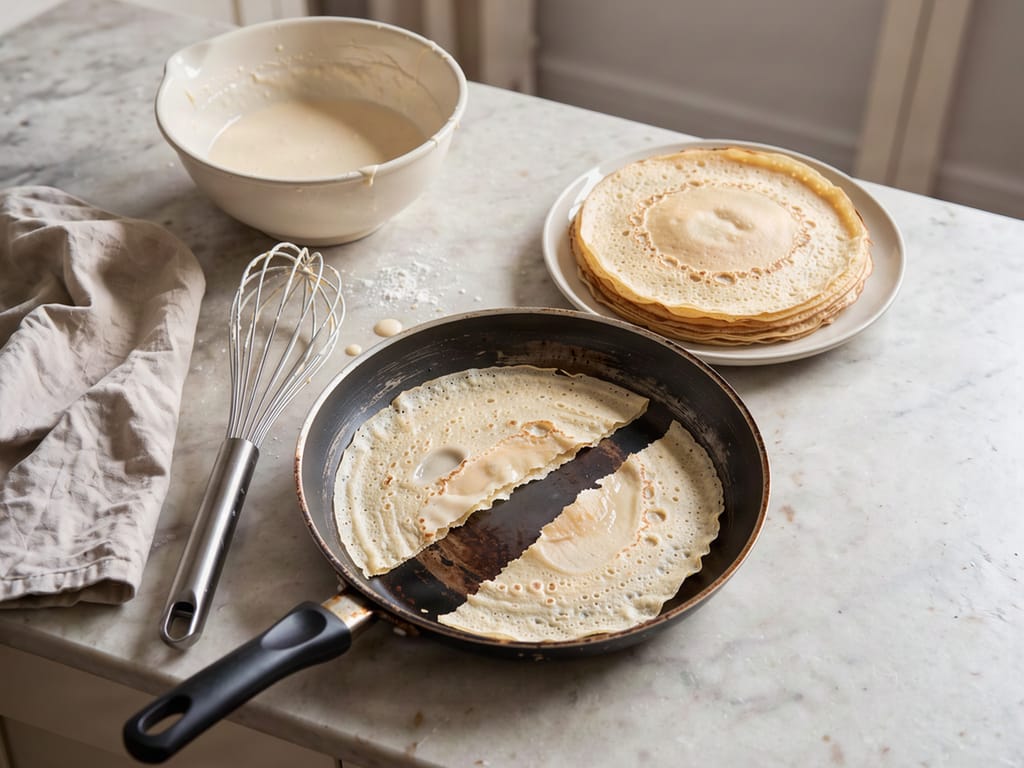
Crepes turn rubbery when the batter is overmixed, too eggy or too thick, or when they cook too long on low heat; they tear when the batter has not rested, is too thin or too lean, or when the pan is not hot and greased enough to let them release. Most problems come from the batter rather than the pan. Here is how to tell which fault you have and how to fix it, from the next crepe onwards.
Look at the crepe you just made.
Rubbery, chewy, bouncy: too much gluten (overmixing, no rest), too much egg, batter too thick, or cooked too long on low heat.
Tears as you flip: batter not rested, too thin or too lean, pan not hot or greased enough, or flipped too early.
Falls apart in pieces: not enough binder, often with gluten-free flour or no egg.
Hard, crisp, brittle: overcooked, too much fat in the pan, or very thin batter with a lot of sugar.
Sticks and rips: pan problem: not preheated, not greased, or a worn nonstick surface.
Full of holes: pan too hot, or batter with a lot of air beaten in.
Fix one thing at a time and test it on the next crepe. A single batch of batter is enough to try two or three changes.
A crepe should be soft, a little elastic and easy to fold. Rubbery means the structure is too strong.
Overmixing. Beating flour with liquid builds gluten. A blender or a long whisking session gives a smooth batter, but it needs a rest afterwards to relax again.
Too much egg. Egg proteins set firm. A batter with lots of egg and little milk cooks into a bouncy, omelet-like crepe. Two or three eggs to 125 g (1 US cup) of flour is a usual range.
Batter too thick. A thick crepe takes longer to cook through and turns spongy and chewy. Whisk in milk until the batter pours like single cream (US light cream).
Heat too low. On a cool pan, a crepe sits for minutes before it browns and dries into something leathery. Aim for about a minute on the first side and 20–30 seconds on the second.
Bread flour or strong flour. High-protein flour makes tougher crepes. Use plain (all-purpose) flour; our guide to flour numbers and Czech flour types helps if you are working from a European packet.
A spoon or two of melted butter in the batter also makes crepes more tender.
Tearing is the opposite problem: the crepe is too weak, or it is stuck to the pan.
Unrested batter. Without a rest, the flour has not fully absorbed the liquid and the crepe is fragile. Rest it for 30 minutes or more.
Batter too thin. Too much milk or water gives lacy, fragile crepes. Whisk in a spoon of flour, or an extra egg.
Too little egg or fat. Egg holds a crepe together and fat makes it flexible. Lean, egg-free batters tear easily.
Gluten-free flour. Rice flour or pure buckwheat batters have no gluten to bind them (if you are cooking for someone who must avoid gluten, use flour labelled gluten-free, since buckwheat flour can contain wheat). Give them a longer rest, add an egg if you can, and make the crepes a little thicker and smaller.
Flipping too early. Wait until the top looks matte and dry and the edges curl and lift on their own.
Pan not hot or not greased. The crepe sticks in patches and rips when you lift it.
Bigger crepes tear more easily. If you keep losing them, use a smaller pan until the batter is right.
Sticking is usually about the pan, not the batter.
Heat the pan for 2–3 minutes before the first crepe, longer for cast iron or stainless steel.
Wipe on a thin film of butter or oil with folded kitchen paper, and repeat every two or three crepes.
Don't pour the batter onto a pan that is smoking hot. It sets in a ridge and sticks.
Replace scratched nonstick pans. They lose their release and no amount of butter fixes it.
A little melted butter in the batter itself helps the crepes release.
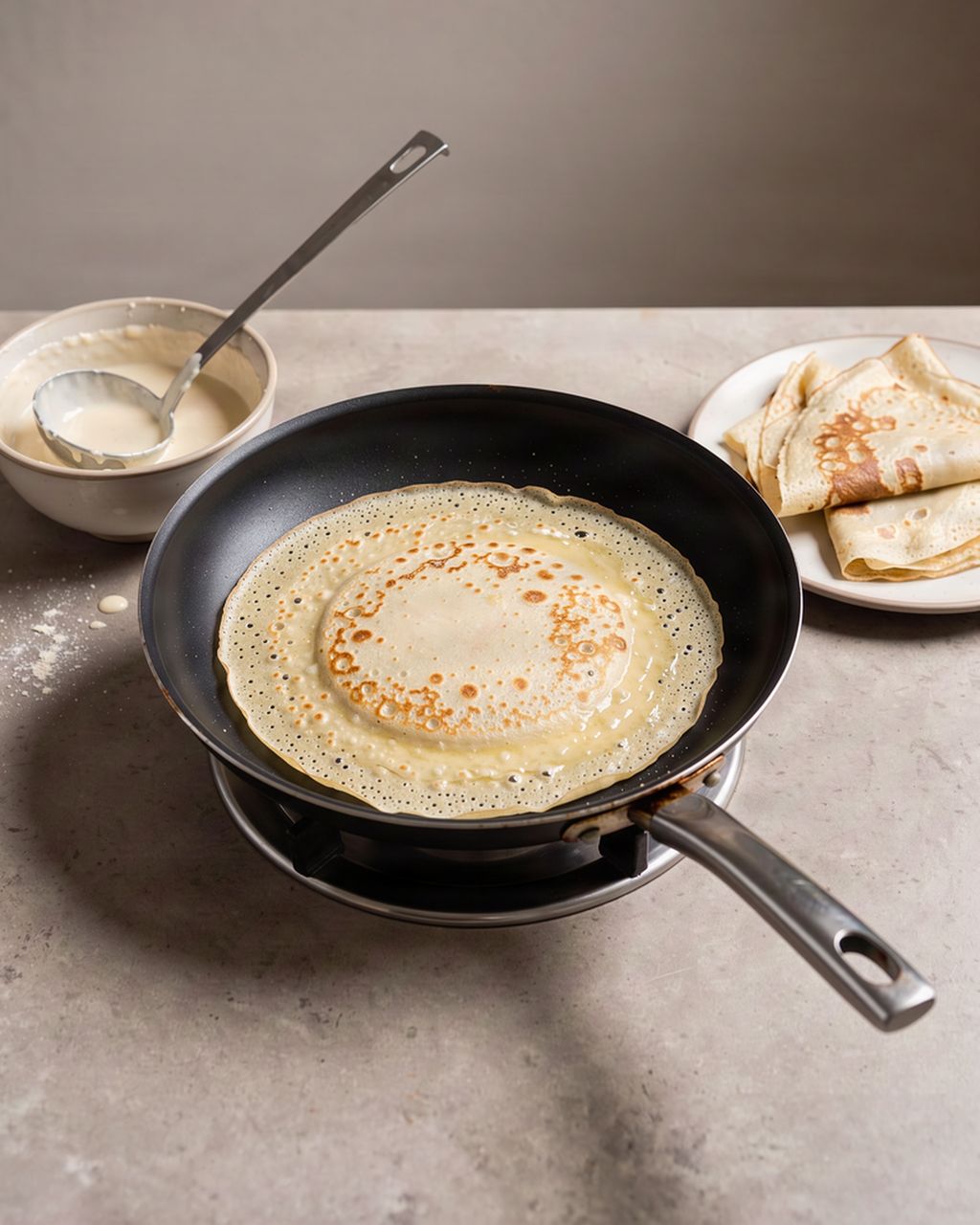
If you don't have a crepe pan, an ordinary 20–25 cm (8–10 in) nonstick frying pan is all you need.
Recipe of the week, one tip that saves you time and one deal from the shop. Unsubscribe in one click.
The next issue goes out on Thursday, November 26.
Some crispness at the edge is nice. A crepe that snaps when you fold it is overcooked.
Cooked too long. One side should take about a minute, the second side 20–30 seconds.
Too much fat in the pan. Butter pooled in the pan fries the edges. Wipe it on, don't pour it.
Thin batter with a lot of sugar. Sugar browns and crisps quickly; cut it back for soft crepes.
Not stacked. Crepes left spread out on a rack dry out and harden as they cool. Stack them on a plate, and cover the stack with a clean tea towel.
Bubbles and holes: the pan is too hot, or the batter was beaten so hard it is full of air. Let a blended batter rest so the foam settles, and lower the heat a little.
You don't need to start over.
Rubbery: whisk in 2–3 tablespoons of milk and a spoon of melted butter, turn the heat up slightly, and let the batter rest 10 minutes if you can.
Tearing: whisk in 1 tablespoon (about 8 g) of flour through a sieve, or one beaten egg, and let it sit for 10 minutes.
Sticking: turn the heat up a little, wipe the pan with more butter, and wait longer before flipping.
Crispy: wipe out excess butter and cook each side for less time.
If you are converting a recipe from grams, the cups and spoons to grams calculator gives flour, sugar and butter in US and metric cups and spoons.
Rubbery crepes usually come from overworked batter, too much egg in proportion to flour and milk, a batter that is too thick, or cooking slowly on low heat. Rest the batter, thin it with milk and cook it quickly over medium to medium-high heat.
Crepes tear when the batter has not rested, when it is too thin or has too little egg or fat, when the pan is not hot or greased enough, or when you flip them before the edges have set. Fix the batter first, then the heat.
Crepes fall apart when there is not enough egg or flour to hold them together, which is common with gluten-free flour or egg-free batters. Add an egg or a spoon of flour, rest the batter and make the crepes a little thicker.
It is not essential, but a rest of at least 30 minutes makes crepes noticeably more tender and less likely to tear, because the flour hydrates and the gluten relaxes. Rest it covered, in the fridge, if you leave it longer.
Crepes turn crisp and hard when they cook too long, when the pan holds too much butter so the edges fry, or when the batter is very thin with lots of sugar. Stack the cooked crepes on a plate so the steam keeps them soft.
The pan is either not hot enough before the batter goes in or not greased, or the surface is worn. Preheat it properly, wipe a thin film of butter on, and wait for the edges to lift before flipping.
One recipe worth heating the oven for, one tip, and one deal from the shop. Nothing else.