ProGel Gel Food Colouring Rainbow Set of 6
Colored Sugar for Decorating: How to Dye It at Home with Gel Food Coloring
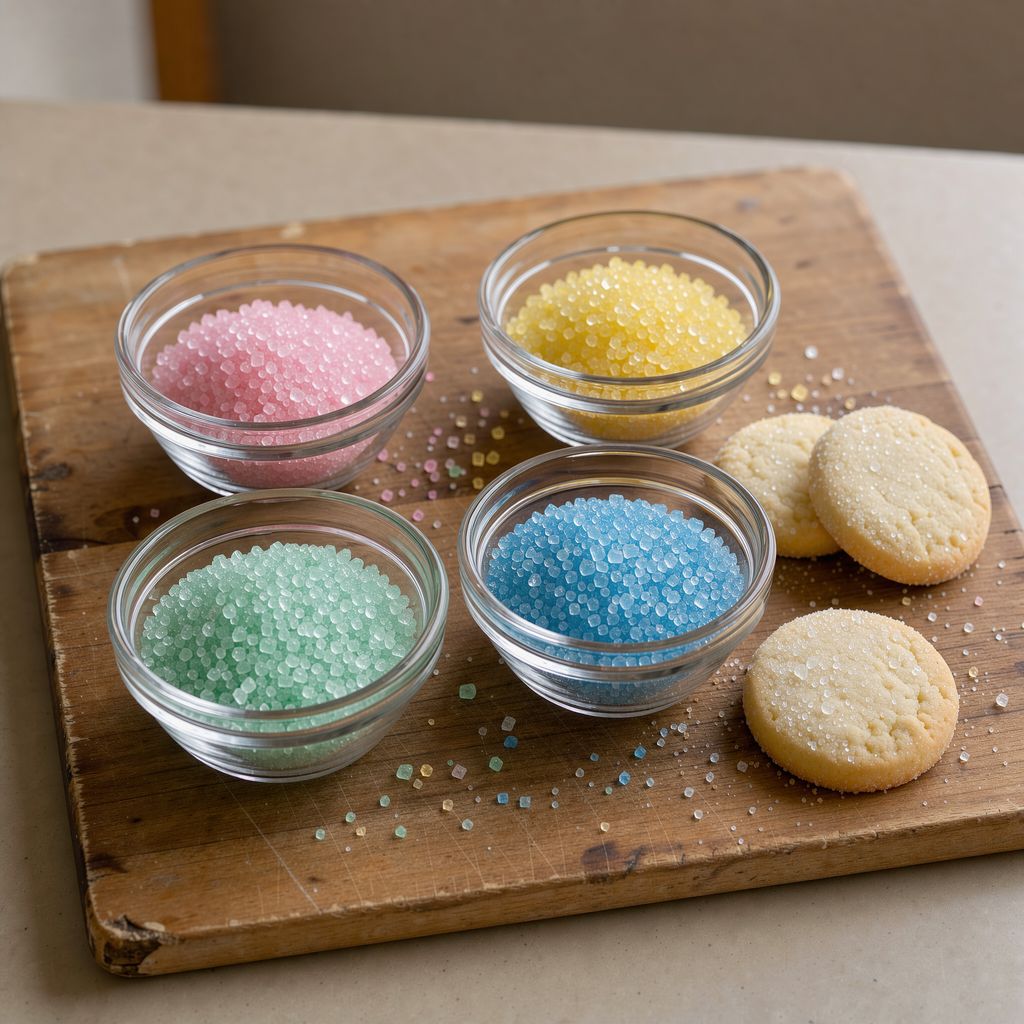
Updated Oct 15, 2026
You can make colored decorating sugar at home with plain granulated sugar and a drop of gel food coloring. It takes ten minutes of work and an hour of drying, and you end up with sprinkles in exactly the shade you need. For every 100 g of sugar, use just the tip of a toothpick of gel for a pastel shade, or 2–3 drops for a deep one. Then rub the sugar together in a bag and spread it out to dry. Below you'll find which sugar to choose, why gel beats the liquid coloring from the supermarket, how to dry the sugar so it doesn't clump, and when it's better to buy ready-made sprinkles.
Here's how to color sugar: weigh it, add the gel, rub it in, dry it and sift it. In more detail:
Weigh the sugar. 50–100 g is enough for one shade, and roughly 30–50 g for a tray of cookies.
Add the gel coloring. Pick it up with the tip of a toothpick and start with less than you think you need. You can always add more, but you can't take it out.
Rub it in. Put the sugar and coloring in a sturdy resealable bag and squeeze and shake it for 1–2 minutes, until the dark specks disappear. You can also do it in a bowl with a spoon, but rubbing it in a bag spreads the color more evenly and keeps your hands clean.
Dry it. Spread the sugar in a thin layer on parchment paper and leave it to dry for 1–2 hours at room temperature, or put it in a 50–60 °C (120–140 °F) oven for 5–10 minutes.
Sift it. Push the dry sugar through a coarse sieve or break up any lumps with your fingers. Then tip it into a dry jar with a lid.
Coloring takes just 10 minutes of work. The rest of the time the sugar is simply drying.
For 100 g of sugar, use the tip of a toothpick for a pastel shade, 1 drop for a medium shade and 2–3 drops for a deep color of gel coloring. Concentrated gels such as ProGel color so strongly that you usually don't need more. And every extra drop adds moisture to the sugar.
Pastel shade (pink, mint, baby blue): the amount of coloring that clings to the tip of a toothpick, roughly the size of a grain of rice.
Medium shade: 1 drop.
Deep shade: 2–3 drops. Beyond that, the sugar is more likely to get damp and clump than to get any stronger in color.
A few things worth knowing:
Wet sugar looks darker than dry sugar. The shade gets noticeably lighter once it dries, so judge the intensity on a dry sample. Take a teaspoon, leave it on paper for 10 minutes, and only then add more.
Red and black are the hardest. The gel saturates the sugar more slowly and makes it damper. Think of deep red sugar as more of a dark pink. For truly black decorations, ready-made sprinkles are the better choice.
You can mix shades just as you would with frosting. You'll find how to build tones from pastel to dark in our article on how to mix frosting colors. The same logic applies to sugar.
The best choice is white granulated sugar or coarse decorating sugar. Large clear crystals carry color well, they sparkle and they don't dissolve as quickly.
Granulated sugar (grains of roughly 0.5–1 mm): the all-round choice, cheap and already in your cupboard. It gives a fine, sparkly sprinkle.
Coarse sugar / pearl sugar: larger grains, a more dramatic effect and better staying power in the oven. But on big crystals the color sits only on the surface, so the shade comes out a little lighter.
Fine semolina-style sugar: a finer grain with a more matte, more pastel look. It suits delicate surfaces.
Not powdered sugar. With a drop of gel it turns into a paste and dries into a hard crust. For colored powdered sugar you need powdered coloring, not gel.
Not cane sugar if you want clean colors. Its brown tint muddies everything: blue turns greenish-gray and pink turns salmon.
For coloring sugar, gel or powdered coloring works best. Liquid coloring from the supermarket makes the sugar damp before it colors it properly.
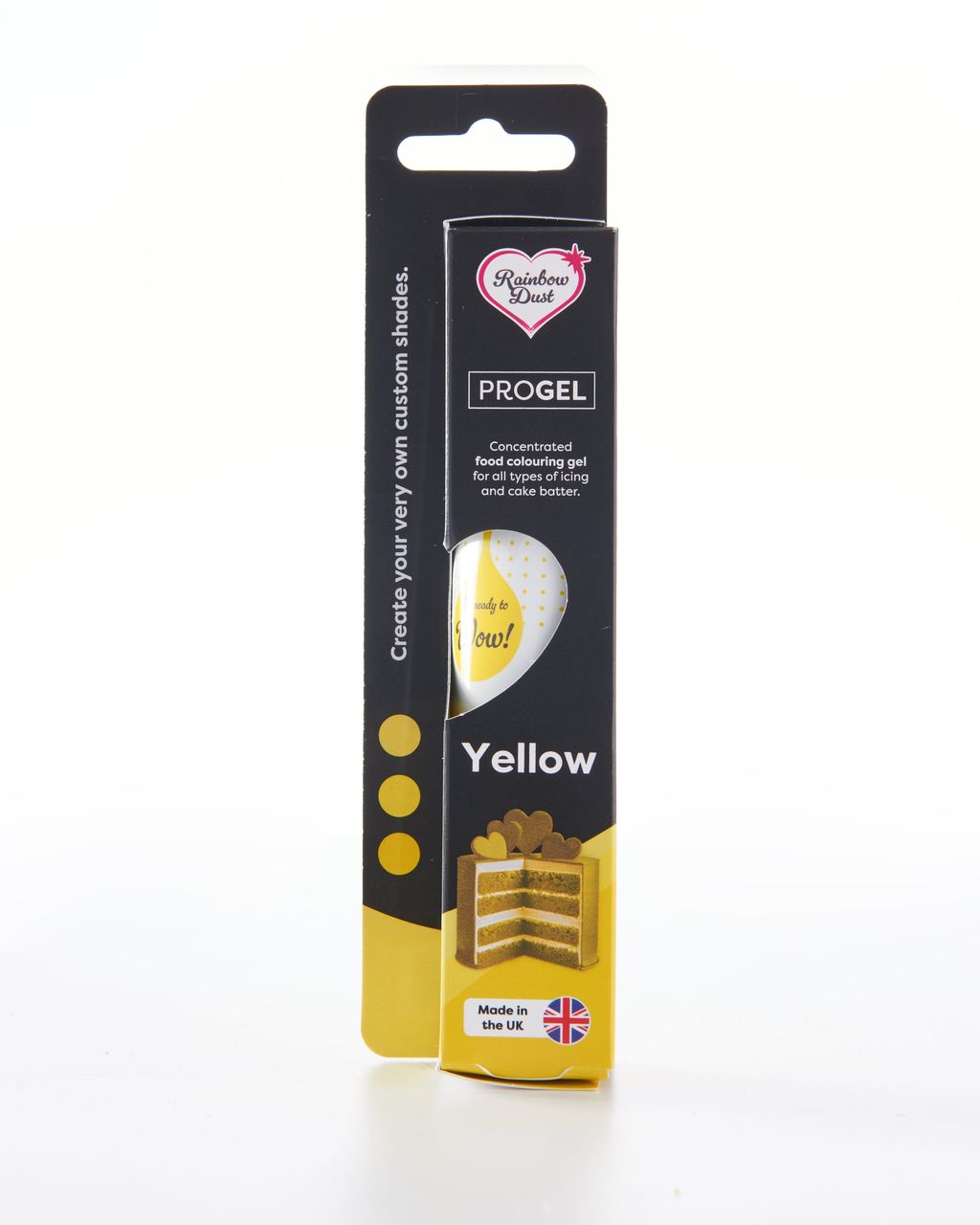
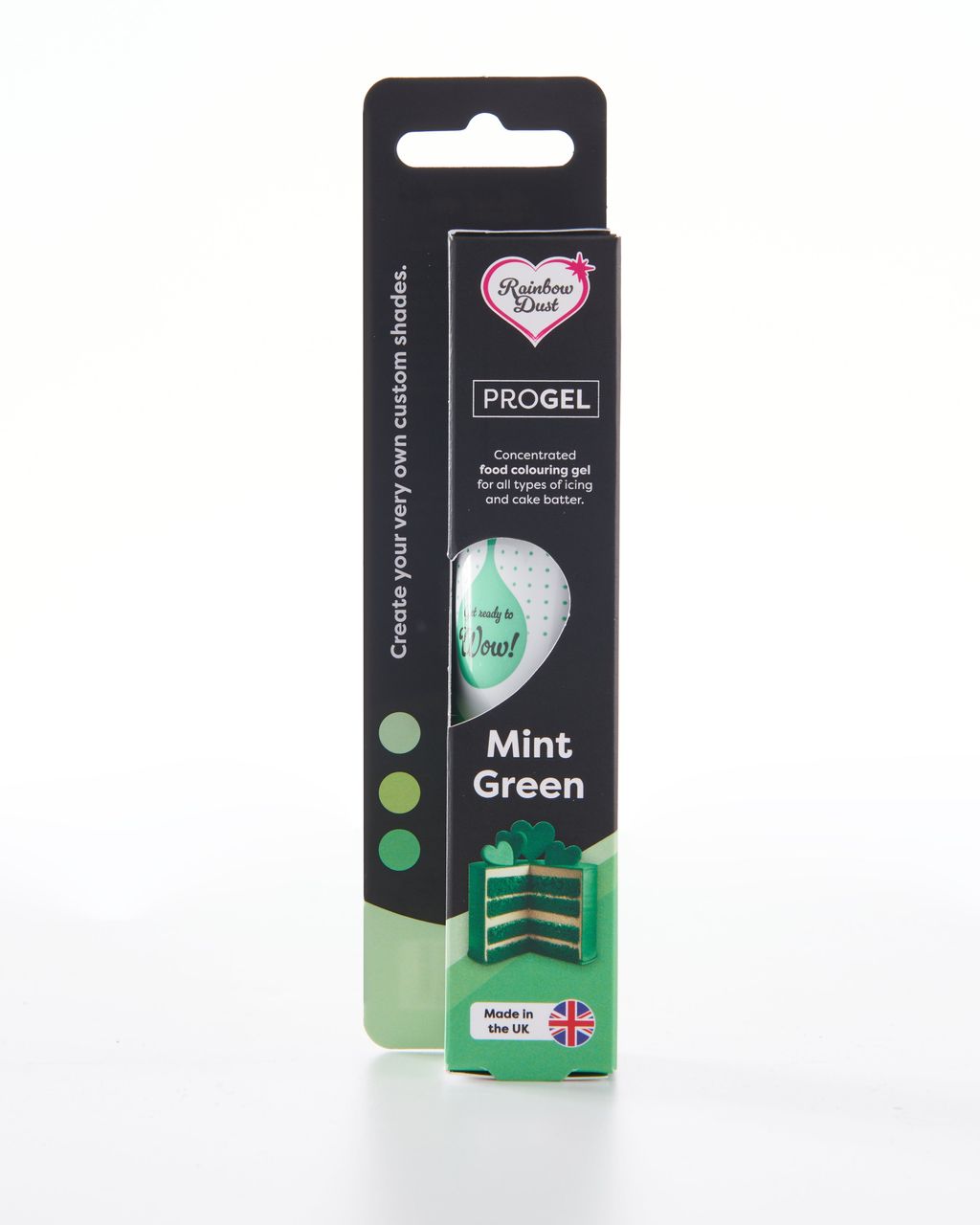
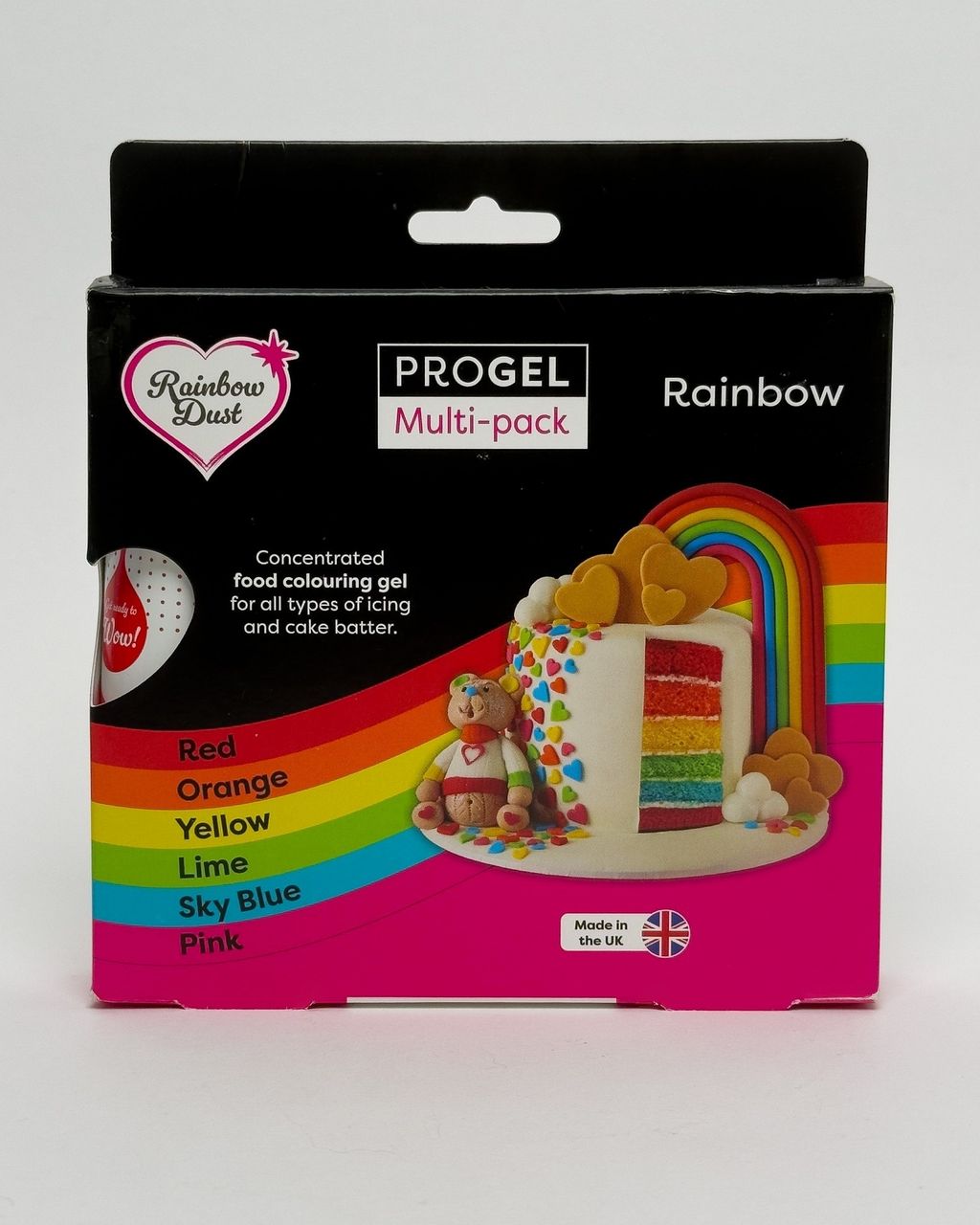
Gel coloring: highly concentrated, so a little goes a long way, the sugar hardly gets damp and it dries quickly. You can also use it for frosting, dough or fondant, so one tube does it all. We use ProGel gel colors in 25 g tubes. If you want several shades at once, the ProGel rainbow set of six colors is handy, and you can mix the shades in between.
Liquid coloring (little bottles from the drugstore or supermarket): works for pastel shades. But for a deep color you need so much that the sugar gets damp, clumps together and takes several hours to dry.
Powdered coloring: actually ideal for sugar, because it adds no moisture and there's no drying. But the shade is harder to judge, and it's less convenient for frosting or dough. If you have it, go ahead and use it.
Natural colorings (matcha, beet powder, turmeric): usable in powder form, but they give muted tones and add flavor and aroma. Beet or blueberry juice is far too wet for sugar.
To dry colored sugar, spread it in a thin layer (up to 3–4 mm) on parchment paper and leave it for 1–2 hours in the open air, or 5–10 minutes in a 50–60 °C (120–140 °F) oven. Clumps come from moisture, so the thinner the layer and the drier the air, the better.
Air drying: 1–2 hours, or longer in damp weather or in a steamy kitchen. Stir the sugar with a fork once or twice.
In the oven: 50–60 °C (120–140 °F), fan setting, with the door slightly ajar. Check after five minutes. A higher temperature won't help: the sugar starts to cake at the edges and light shades can turn yellow.
It's done when the sugar pours freely off a spoon and doesn't stick to your fingers.
Lumps: break them up with your fingers or push the sugar through a sieve. Throw away anything that won't crumble, because it hasn't dried through.
If you put dry sugar into a jar while it's still warm from the oven, steam condenses on the lid and the sugar clumps again. Let it cool down first.
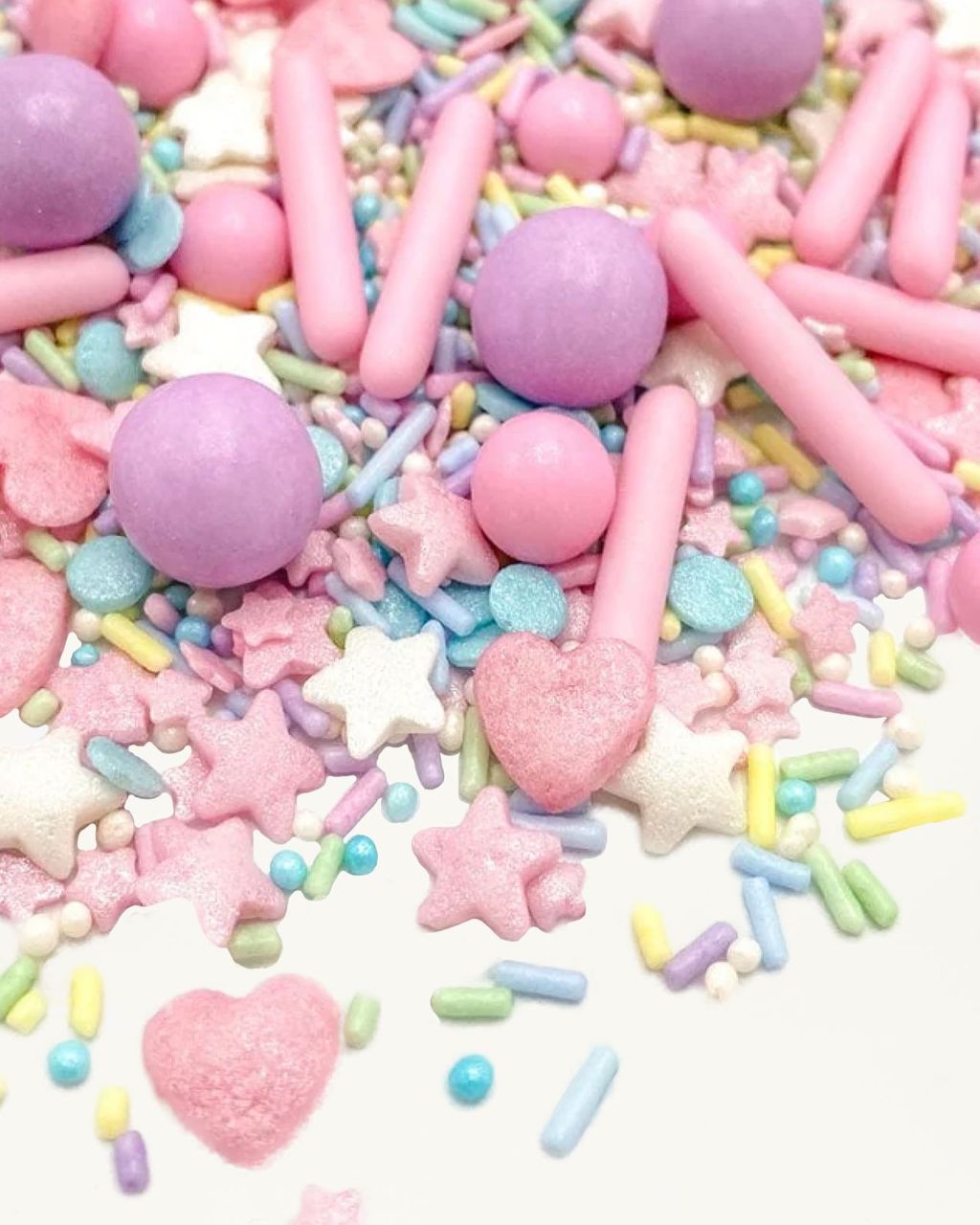
Homemade colored sugar pays off when you want an exact shade, a continuous sparkly surface or a large amount of one color for pennies. Ready-made sprinkles (here, for example, Happy Sprinkles) are better when you want shapes, color mixes, or black and deep red, and you're short on time.
When homemade colored sugar wins:
An exact shade. You can match the sugar to your frosting, napkins or party colors, because you use the same gel.
A continuous surface. Coating cookie edges, covering a whole iced surface, rimming a glass: fine crystals do this better than sprinkle sticks.
A large amount of one color. Half a kilo of granulated sugar and a drop of gel works out far cheaper than the same amount of ready-made sprinkles.
When ready-made sprinkles win:
Shapes and mixes. Sticks, hearts, eggs, confetti, or a ready-made color combination such as a pastel party mix or rainbow sticks. You can't make these at home from sugar.
Black and deep red. Ready-made sprinkles have a bright color without any fight against moisture.
Speed. No drying: just open and sprinkle.
Taste and texture. Sticks and confetti are softer and less sweet to bite into than pure sugar crystals.
Feel free to combine both: a base of colored sugar topped with a few sprinkle shapes looks best on both cookies and cupcakes.
Colored sugar works best on cookies before baking, wet icing, glass rims and cupcakes. Anywhere else it dissolves quickly.
Cookies and holiday biscuits before baking: sprinkle it over cut-out dough, or roll balls of dough or the edges of a log in sugar and then slice. The crystals survive baking at 170–180 °C (340–355 °F), and light shades only fade a little. For how to color the dough itself so the color survives the oven, see our article on colored cookies.
On fresh icing: sprinkle the sugar on while the icing is still wet, otherwise it won't stick. It works wonderfully with royal icing for cookies. Apply the icing, sprinkle right away, let it set and tap off the excess.
Rims of cocktail and lemonade glasses: dip the rim in lemon juice or syrup and turn it in a saucer of sugar.
Cupcakes and cakes: on buttercream or ganache, just before serving. On whipped cream and moist frostings, the sugar melts within a few hours and bleeds color.
Well-dried colored sugar keeps for several months in a dry, airtight jar. Moisture is the enemy, not time, so don't store it in the fridge or next to the stove. If it clumps over time, break it up with your fingers or put it back in a 50 °C (120 °F) oven for a few minutes.
To make sparkly colored sugar, mix a pinch of edible glitter into sugar that has already been colored and dried. Don't add it to wet sugar, because it will clump and the sparkle will go dull. Only buy glitter labeled as edible; "non-toxic" decorative glitter isn't meant to be eaten and doesn't belong on sugar that will be consumed.
Colored sugar baked inside dough dissolves and the color spreads into uneven blotches, so you won't get colored dots in the finished bakes. It only works on the surface, where the crystals stay whole in the oven. For colored dots inside the dough, use ready-made sprinkles designed for baking.
You can color vanilla sugar with gel just like plain sugar. Homemade vanilla sugar made from granulated sugar and vanilla seeds takes color without any trouble. Store-bought vanilla sugar is often as fine as semolina, so the result looks more matte and pastel.
Patchy colored sugar is almost always not rubbed together enough. The gel hasn't spread over all the crystals yet. Put it back in the bag and rub for another minute. If the patches only show up after drying, add a spoonful of white sugar and rub it again.
One recipe worth heating the oven for, one tip, and one deal from the shop. Nothing else.