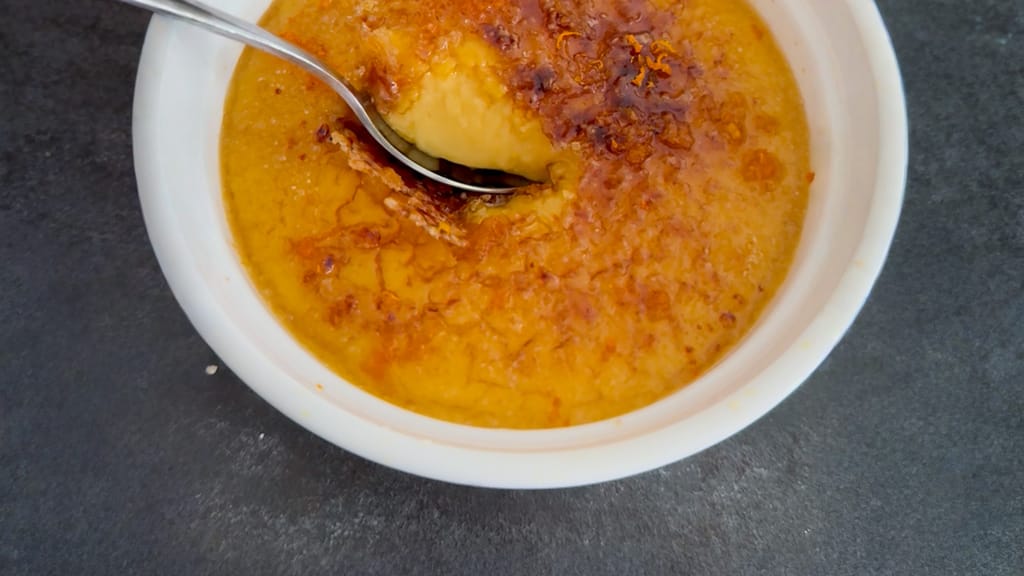
Crema catalana with orange zest and cinnamon
Leftover Egg Yolks: Recipes from Custard to Mayonnaise
Updated Oct 6, 2026
What to do with leftover egg yolks? Put them where the yolk does the heavy lifting: vanilla custard (4 yolks), crème brûlée (5–6), eggnog (5–8), mayonnaise and hollandaise sauce (1–3), carbonara (1 per portion), or short-crust linzer dough. Egg yolk is roughly half water (about 52%), with the rest made up mainly of fat (around 27%, including lecithin) and protein (about 16%), which firms up with heat — that's why it thickens, binds and tenderises better than a whole egg. Below you'll find a breakdown by how many yolks you've got, plus methods that keep them from curdling. And if it's egg whites you've got left over from baking, check out [12 ways to use up leftover egg whites](/en/articles/leftover-egg-whites-what-to-do).
Got 1–2 leftover yolks? Make mayonnaise or carbonara. For 3–4, go for hollandaise sauce, vanilla custard, or linzer dough. With 5–8, think crème brûlée or eggnog, and if you've got more than 8, make homemade pasta or salt-cured yolks. Here's the breakdown:
1–2 yolks: mayonnaise, egg wash for pastry, enriching a soup or sauce, carbonara for two.
3–4 yolks: hollandaise sauce, sabayon, vanilla custard, tiramisu cream, linzer dough, vanilla crescent cookies.
5–8 yolks: crème brûlée or crema catalana, eggnog.
More than 8: homemade egg-yolk pasta, salt-cured yolks, or a double batch of custard — eat one, save the other for a cake.
In the kitchen, egg yolk does three jobs: it binds fat and water together, thickens, and adds tenderness and colour. Once you know which of these matters in a given recipe, it's easy to spot other places you can put a spare yolk to use.
It emulsifies. Yolks contain lecithin, a natural emulsifier that keeps droplets of oil or butter suspended in water. That's what holds mayonnaise and hollandaise together.
It thickens. The proteins in egg yolk firm up with heat. On its own, yolk sets at around 62–70°C (144–158°F); in a custard with milk and sugar, that threshold shifts higher, to about 80–84°C (176–183°F). Above roughly 85°C (185°F), the proteins tighten too much and the custard curdles into lumps.
It tenderises and colours. The fat in yolk coats the flour and slows down gluten development, so the dough turns out short and crumbly rather than tough. It also gives baked goods a golden colour and shine.
Which gives you a handy rule of thumb: treat egg yolks gently and over low heat. Nearly every failure — a split custard, a broken mayonnaise — comes down to temperature or rushing, not the recipe itself.
Custards are the best place to put a larger number of yolks to work — happily taking six or more — and the result rides entirely on them.
Crème brûlée and crema catalana. Roughly 5–6 yolks per 500ml of cream or milk, slow thickening and a caramelised sugar crust on top. For the Spanish version with orange zest, try our crema catalana with orange zest and cinnamon.
Vanilla (pastry) custard. Yolks, sugar and milk thickened gently over low heat — it must never boil, or it will curdle (method below). Just 4 yolks are enough for 500ml of milk. Serve it on its own as a sauce for steamed puddings and strudel, or stir in cream for the base of a homemade ice cream. Add starch and it becomes a pastry cream for filling cakes — that version can be brought to a boil, since the starch protects the yolks from curdling.
Sabayon (chaudeau). Yolks whisked with sugar and wine over a bain-marie into a warm, airy foam. A classic topping for sweet dumplings — see our soft steamed dumplings with sabayon sauce.
Tiramisu. The classic mascarpone cream rests on yolks whisked with sugar until pale and fluffy; count on 3–4 yolks per 500g of mascarpone. Find inspiration in our raspberry tiramisu.
Crema catalana with orange zest and cinnamon
Crema catalana made with egg yolks, orange zest and cinnamon
Custard won't curdle if you heat the yolks gradually and take it off the heat before it goes above 85°C (185°F). Here's how:
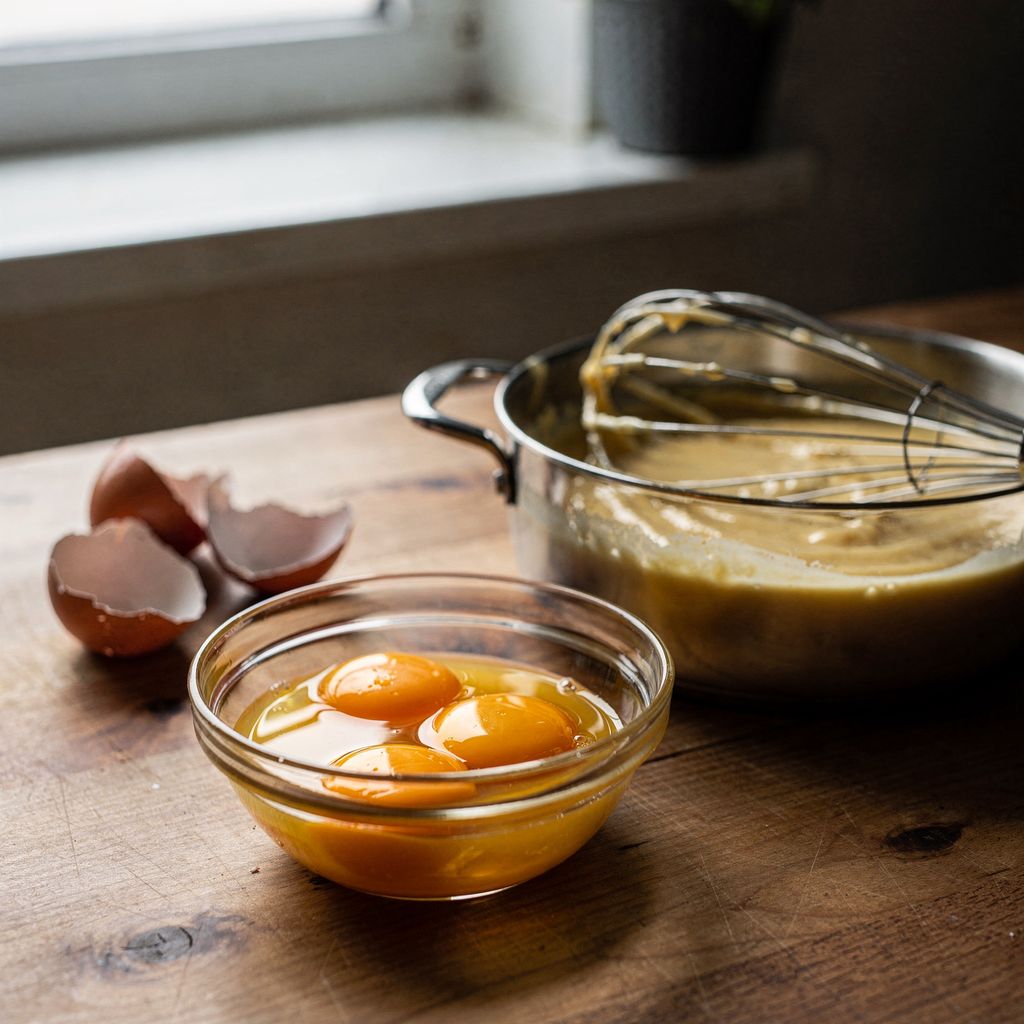
Whisk the yolks with sugar until pale and smooth. The sugar disperses the proteins and raises the temperature at which they set, giving you more room for error.
Temper. Heat the milk until just below boiling, then pour it into the yolks in a thin stream while whisking constantly — never the other way round, since yolks dropped straight into hot milk will scramble instantly.
Thicken over low heat, stirring constantly, especially along the bottom and corners of the pan. Aim for 80–83°C (176–181°F). No thermometer? The custard should coat the back of a spoon, and a line drawn through it with a finger should hold its shape cleanly.
Strain it straight away through a fine sieve into a cold bowl. This stops the cooking and catches any lumps.
Cover with plastic wrap pressed directly onto the surface so it doesn't form a skin.
If the custard does start to curdle (a grainy look, liquid separating out), pour it into a cold bowl right away and blitz it with a stick blender. A lightly curdled custard can still be rescued this way — one that's fully split can't.
Sauces only need a couple of yolks, making them the fastest way to use up one or two spares.
Mayonnaise. Use roughly 1 yolk per 200–250ml of oil. The key is adding the oil drop by drop at the start and keeping everything at room temperature — a cold yolk won't take to the oil as readily.
Hollandaise sauce. About 3 yolks per 200g of melted butter, whisked over a bain-marie. Keep it warm, not hot — around 60–65°C (140–149°F); overheat it and the butter will split out. At that temperature, though, the yolks aren't fully cooked through, so anyone in a higher-risk group should use pasteurised yolks (see the safety note below). It's lovely with asparagus, fish, or on eggs Benedict with a spicy hollandaise, as well as with tuna steak with asparagus and hollandaise.
Carbonara. Allow one yolk per portion, beaten with grated pecorino. Stir the mixture into the pasta off the heat, loosened with just a splash of hot pasta water — the residual heat from the pasta thickens the yolks into a silky sauce, while direct heat would simply scramble them. Try the spaghetti carbonara below, or our linguine carbonara.
Enriching soups and sauces. A yolk beaten with a little cream will add silkiness and body to a cream soup or béchamel. Stir in a ladleful of hot soup first, mix well, then return it to the pan — and don't let it boil again, just warm it through.
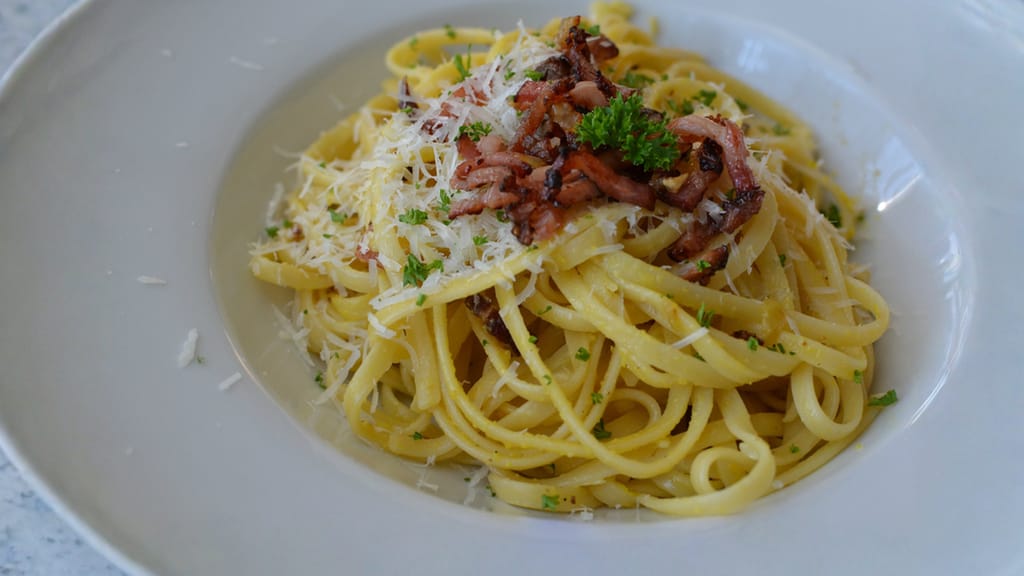
Spaghetti carbonara – an italian classic
Spaghetti carbonara with egg yolk and pecorino
Yolks are ideal for cookies because they keep the dough short and crumbly — you'll mainly use them in linzer cookies, vanilla crescents, and for egg-washing.
Linzer cookies. Using yolks instead of whole eggs makes the dough more tender and less elastic, so it cuts cleanly and melts in the mouth once baked. Try the classic short-crust linzer cookies below, or the salted caramel-filled version.
Vanilla crescent cookies. Yolks hold the dough together here without making it tough — find the basic recipe in our best vanilla crescent cookies.
Egg wash. A yolk beaten with a spoonful of milk or cream gives Christmas bread, gingerbread, and filled cookies a glossy, deep golden finish. One yolk is enough for a whole baking tray.
If you're baking a big batch of Christmas cookies, send the separated whites off to make meringues and nut macaroons, and keep the yolks for linzer cookies and custards — nothing goes to waste. For everything you can bake with leftover whites, see our article on what to do with leftover egg whites: meringues, macaroons and more.
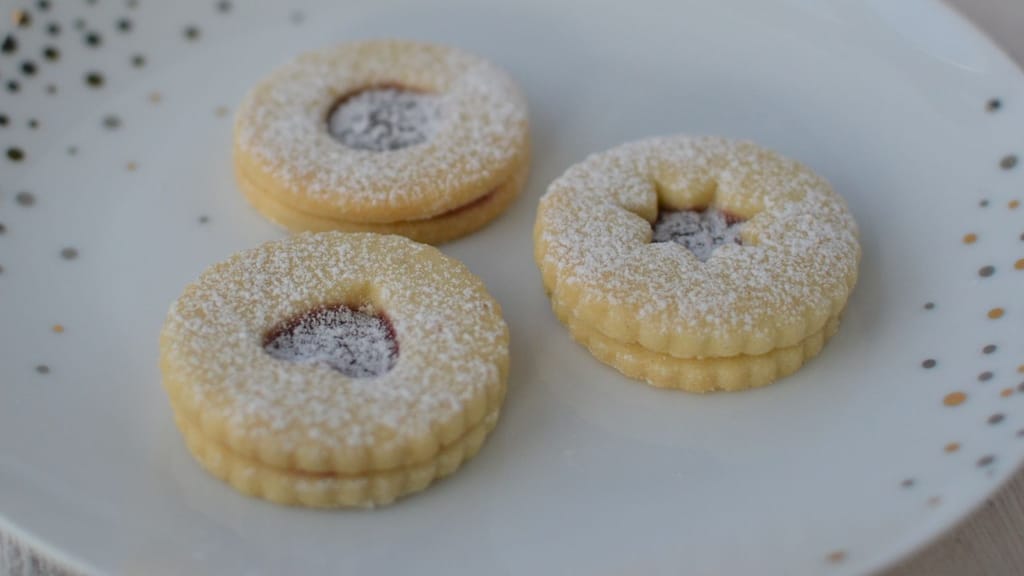
Classic christmas cookies: delicate linzer cookies
Classic short-crust linzer cookies made with egg yolk
Eggnog is the fastest way to use up 5–8 yolks in one go — and it doubles as a lovely Christmas gift. In the homemade version, yolks are whisked with sugar until thick and pale, mellowed with milk or condensed milk, and rounded out with alcohol, usually rum or vodka. The alcohol helps keep it fresh longer, but since the yolks stay raw, it still needs to live in the fridge. You'll find a tried-and-tested homemade method in the recipe below.
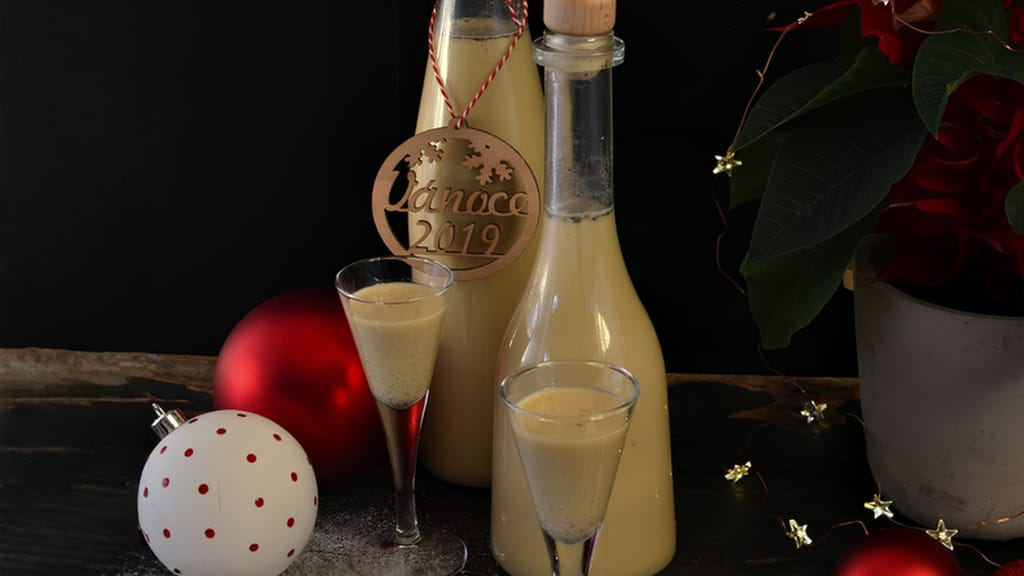
Homemade eggnog – the best christmas drink
Homemade Christmas eggnog with egg yolk
If you've got a real glut of yolks, homemade pasta and salt-cured yolks will use up the most.
Egg-yolk pasta. Northern Italian tajarin is made almost entirely from yolks — roughly 3–4 yolks per 100g of 00 flour (traditionally 30–40 yolks per kilo of flour). The dough comes out deep yellow and firm, and the finished pasta has a silky, springy bite. It'll start out dry and crumbly, so knead for 8–10 minutes and let it rest under plastic wrap for 30 minutes before rolling it out.
Salt-cured egg yolks. Yolks cured for several days in a mix of salt and sugar until they firm up. Once ready, grate them over pasta, risotto, or salad just like parmesan.
Raw egg yolks keep in the fridge for roughly 2–4 days in a sealed container, covered with a little cold water so they don't dry out. For storage tips and how to tell when they've gone off, see our article raw egg yolks in the fridge: how long they last and when to toss them. If you know you won't get to them in a few days, freeze them (see the questions below) or turn them straight into salt-cured yolks.
Yes, leftover egg yolks can be frozen, but only if you mix in a pinch of salt or sugar first — otherwise they'll set into a gel-like lump once thawed and won't be workable. About 1/8 teaspoon of salt (for savoury dishes) or 1–2 teaspoons of sugar (for desserts) is enough per 4 yolks. Label the container with the number of yolks and what you added. For how long egg yolks keep, see our article on raw egg yolks in the fridge.
A yolk from a medium to large egg weighs roughly 15–17g. If a recipe lists yolks by weight, just divide the total by that figure — so for 100g of yolk, you'll need about 6 yolks.
Yes — in cookie, cake and custard doughs, a ratio of 2 yolks per 1 whole egg works well. The result will be shorter, richer and more tender, but less airy, since it's the whites that give batter its structure and lift. This swap isn't suited to sponge cakes or foams that rely on whipped whole eggs.
To rescue split mayonnaise, crack a fresh yolk into a clean bowl and whisk in the broken mayonnaise drop by drop. Once the emulsion takes hold, you can add it faster. The usual culprit behind splitting is pouring the oil in too quickly, or starting with a cold yolk.
One recipe worth heating the oven for, one tip, and one deal from the shop. Nothing else.