Summer Herbs: How They Taste, When to Add Them, and How to Store Them
Marjoram vs Oregano: How to Tell Them Apart and When to Swap Them
Updated Nov 20, 2026
Marjoram and oregano are close cousins in the same plant genus, but marjoram is sweeter, softer and more floral, while oregano is sharper, more peppery and holds up better to long cooking. You can swap one for the other if you adjust the amount: about two thirds as much oregano in place of marjoram, or about half as much again of marjoram in place of oregano. In Czech kitchens marjoram is the one that matters, because potato soup, potato pancakes and goulash don't taste right without it.
They are relatives, not the same plant. Both belong to the genus Origanum, in the mint family:
Marjoram is Origanum majorana, also sold as sweet marjoram or knotted marjoram. In Czech it is majoránka.
Oregano is Origanum vulgare. In Czech it is oregano, or dobromysl in a field guide. Greek oregano is a subspecies of the same plant with a stronger bite.
The names cause trouble. In Britain, Origanum vulgare has long been called wild marjoram, so a UK seed packet or older recipe that says wild marjoram means oregano. And Mexican oregano is not an Origanum at all: it comes from Lippia graveolens, a different plant family, and tastes more citrusy and resinous.
Recipe of the week, one tip that saves you time and one deal from the shop. Unsubscribe in one click.
The next issue goes out on Thursday, November 26.
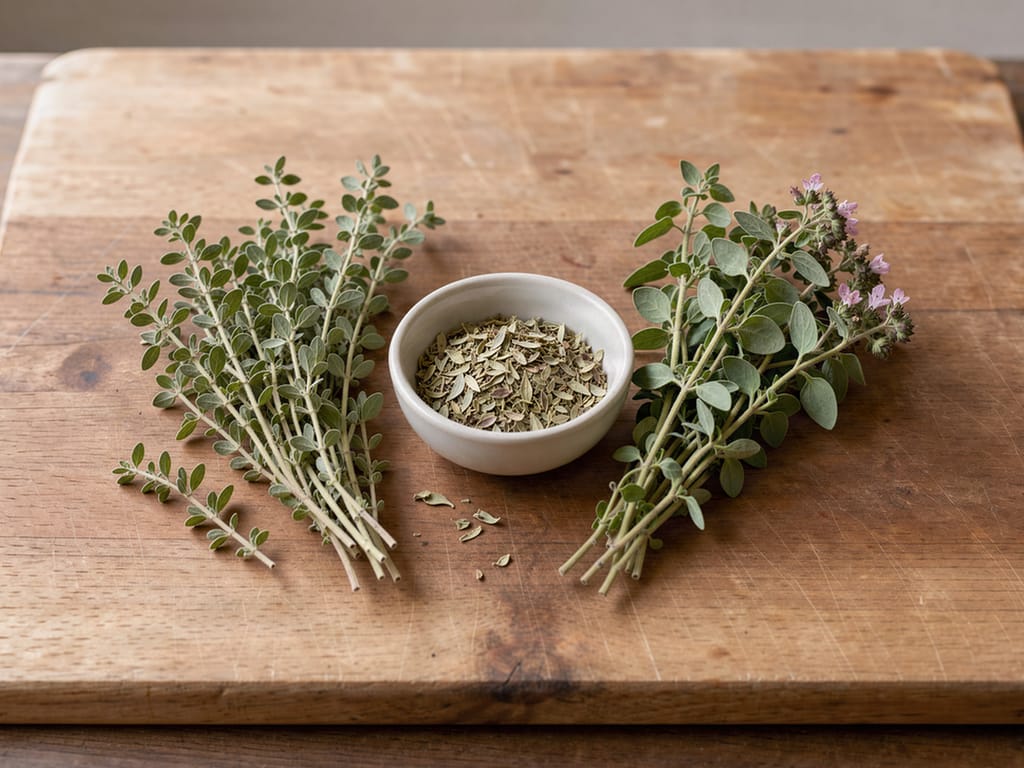
If you have both in a garden or a supermarket bunch, look at the leaves, the flowers and the habit:
Marjoram: small, soft, oval leaves, usually under an inch long, pale grey-green and slightly fuzzy. The flower buds form tight little knots at the tips of the stems, which is where the name knotted marjoram comes from. It is a tender perennial, so in cold climates it is usually grown as an annual.
Oregano: leaves a little larger and greener, set in pairs on stems that are often reddish. The flowers are pink to purple in loose, open clusters. It is a hardy perennial that spreads and comes back every year.
The quickest test is your nose. Rub a leaf between your fingers: marjoram smells sweet, soft and slightly floral, oregano smells sharp and peppery. Origanum species also cross readily in gardens, so a plant sold under one name can sit somewhere in between.
Marjoram is the gentle one. It tastes sweet, floral and a little piney, with a soft warmth and very little bitterness. Oregano is louder: peppery, slightly bitter and pungent, with a bite that lingers.
The difference shows up in their essential oils. Sweet marjoram oil is usually led by terpinen-4-ol, often with sabinene hydrate, while oregano oils are typically rich in carvacrol and thymol, the sharp compounds also found in thyme. The exact make-up varies with the plant, where it grew and how it was dried, which is why one jar of oregano can taste much stronger than another.
Marjoram is delicate. Its aroma fades with long simmering, so Czech cooks add dried marjoram near the end of cooking, often in the last few minutes of a soup or stew. Many rub it between their palms over the pot first to wake up the aroma.
Oregano is tougher. It holds up to long cooking, tomato sauces and the heat of a pizza oven, which is why Italian and Greek cooking lean on it. Dried oregano is usually the better choice on pizza, because fresh leaves can burn.
Both herbs are used dried more often than fresh, and both dry well. As a rule, 1 tablespoon of chopped fresh herb equals about 1 teaspoon dried. Our fresh marjoram and dried marjoram pages have the details for each form.
Dried marjoram sits in every Czech spice drawer, and a handful of classic dishes are built around it:
Bramboračka (potato soup): potatoes, root vegetables, dried mushrooms, garlic, caraway and a good pinch of marjoram at the end. See our guide to Czech potato soup.
Bramborák (potato pancake): grated raw potato with garlic and marjoram, fried in lard or oil. Garlic and marjoram are what make it taste Czech rather than like a latke.
Guláš (Czech goulash): mostly onion, paprika and beef, with caraway and usually marjoram stirred in near the end.
Pork: marjoram goes into jitrnice (a pork sausage made at pig-slaughter time) and into many home rubs for roast pork, alongside the caraway and garlic that lead there.
Why marjoram rather than oregano? Mostly taste. Its sweet, mellow flavor sits well with potatoes, garlic, onion and pork fat, the backbone of this kind of cooking, where oregano's sharpness would push the dish toward Italy. Oregano is common in Czech kitchens too, but for pizza, pasta and anything with tomato.
You can swap them in a pinch, but not one for one:
Oregano instead of marjoram: use about two thirds of the amount, because oregano is sharper. In bramboračka or bramborák, start with half and taste.
Marjoram instead of oregano: use about half as much again (1½ times the amount), because marjoram is milder. Add it late, so it doesn't cook away.
Fresh instead of dried: use about three times as much fresh herb, finely chopped.
Thyme is the other good stand-in for either herb, though it is more resinous. Mexican oregano is too strong and citrusy to replace marjoram in Czech food. For more swaps, see our herb substitutes guide.
Most US and UK supermarkets sell dried marjoram in the spice aisle, either as whole dried leaves or as ground marjoram. For Czech cooking, buy the leaf form: it keeps its aroma longer and you can crumble it yourself. Fresh marjoram is harder to find than fresh oregano, but it is easy to grow in a pot on a sunny windowsill.
Dried herbs lose their aroma over time, faster once ground. Our guide to storing spices explains how to keep a jar fragrant for longer.
No, marjoram and oregano are different species in the same genus, Origanum. Marjoram (Origanum majorana) is milder and sweeter, while oregano (Origanum vulgare) is sharper and more pungent.
Yes, use about two thirds as much oregano as the recipe's marjoram, because oregano is sharper. In delicate Czech dishes such as potato soup, start with even less and taste before adding more.
One teaspoon of dried marjoram is roughly equal to one tablespoon of chopped fresh marjoram, so use about three times as much fresh herb as dried.
Wild marjoram is a traditional British name for Origanum vulgare, the plant most people call oregano. If a UK recipe or seed packet says wild marjoram, it means oregano, not sweet marjoram.
No, Mexican oregano comes from a different plant (Lippia graveolens) in another family, with a stronger, more citrusy flavor. It is not a good stand-in for marjoram.
One recipe worth heating the oven for, one tip, and one deal from the shop. Nothing else.