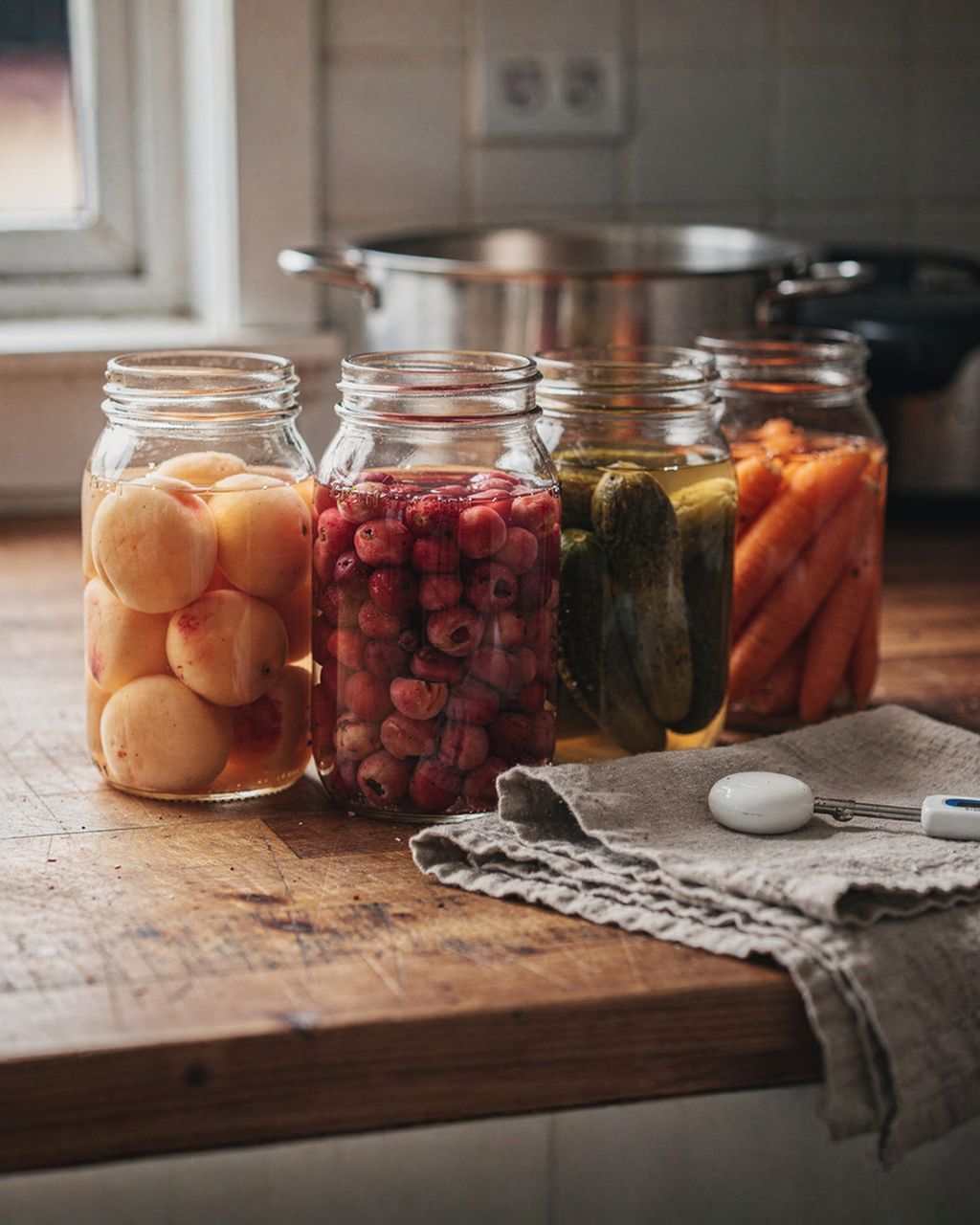
Canned Pickles and Fermented Pickles: How Long They Last and How to Store Them Once Opened
Canned Pickles: Brine, Vinegar Ratio and How to Keep Them Crisp
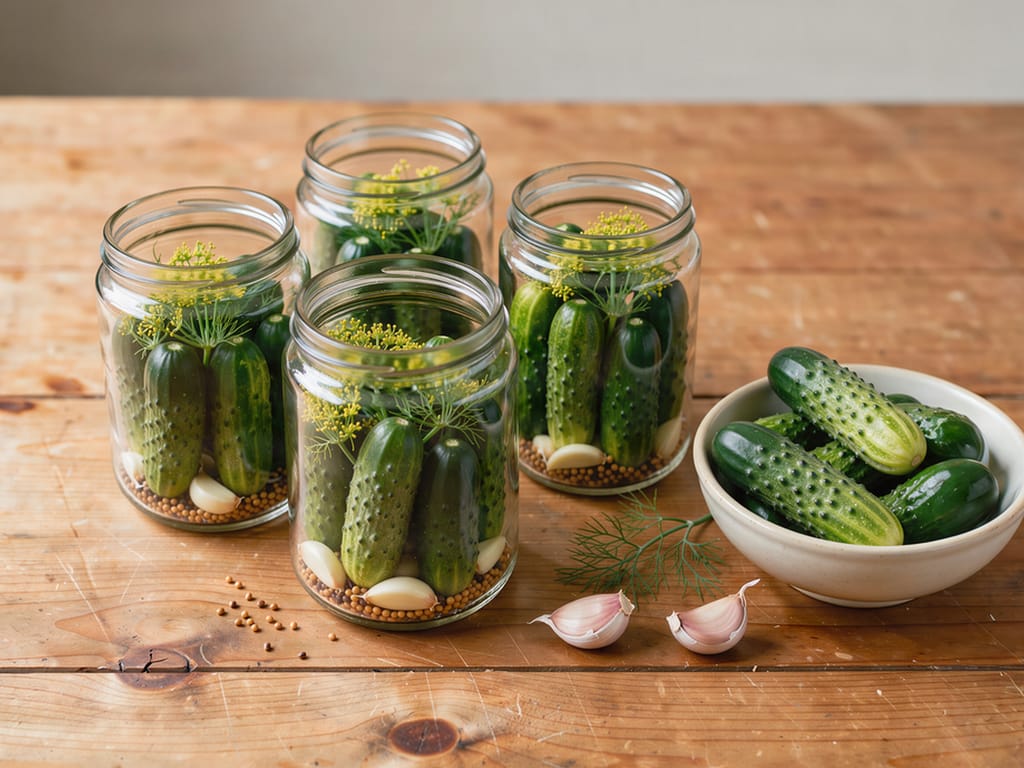
Updated Nov 17, 2026
Canned pickles stay crisp when you cover them with a sufficiently acidic brine and pasteurize them for 30 minutes in water at 82–85°C (180–185°F) instead of boiling them for a long time. The times and temperatures follow the recommendations of the US NCHFP (National Center for Home Food Preservation), which are based on the USDA guide. The brine of 300 ml 8% fermented vinegar to 700 ml water is our own conversion of their recipe, which uses 5% vinegar, to the 8% vinegar sold in Czech stores. Below you'll find the full stovetop method, including for a single jar, why pickles go soft, and why you're better off not using the oven or dishwasher.
Canning pickles means packing them into jars, covering them with hot vinegar brine and heat-processing the jars. There are five steps:
Choose and prepare the cucumbers: pickling cucumbers, as fresh as possible, 4–5 hours in ice water (or overnight in a salt brine, see below), and trim a thin slice off the blossom end.
Make the brine: 300 ml 8% fermented vinegar, 700 ml water, and salt and sugar to taste. You only need to bring it to a boil.
Fill the jars: cucumbers, dill, mustard seeds, and garlic if you like. Pour in the hot brine and leave 1–1.5 cm (about ½ inch) of headspace at the top.
Process in a pot: either 30 minutes at 82–85°C (180–185°F) (the pickles will be crisper), or in boiling water for 10 minutes for half-liter jars and 15 minutes for 1 liter jars.
Let cool and check the lids: 12–24 hours, then check the seal.
The times and temperatures follow the NCHFP (opens in a new tab) recommendations for vinegar pickles. If you're canning for the very first time, start with canning for beginners, where jars, lids and pot are explained from scratch.
Seasonal baking plans, tested recipes and kitchen tricks that save you time. Unsubscribe in one click.
For 1 liter of brine, use 300 ml 8% fermented vinegar and 700 ml water, a 3 : 7 ratio. The finished brine has about 2.4% acetic acid. That is a little more acidic than the tested USDA/NCHFP recipe for dill pickles, which dilutes 5% vinegar and works out to about 2.1%. Acid is the main safety safeguard here, which is why we rounded the conversion toward the more acidic side.
Vinegar: fermented, 8%. A different strength means a different ratio. If you only have 5% vinegar, buy 8% instead so you don't have to recalculate.
Salt: about 1 tablespoon (20 g) per liter. Use salt without iodine and anti-caking agents, because according to NCHFP, iodized salt can cloud and darken the brine.
Sugar: 80–150 g per liter, depending on how sweet you like your pickles. Sugar is only for flavor.
Flavorings for the jars: dill (flower head or seed), mustard seeds, allspice, bay leaf, slices of onion or horseradish.
This is an adaptation of a tested recipe, not an exact copy. The NCHFP original (Quick Fresh-Pack Dill Pickles) first leaves the cucumbers for 12 hours in a salt brine (about 30 g salt per liter of water) and puts more salt in the brine, roughly 40 g per liter. If you want to stay as close to the original as possible, soak the cucumbers overnight in brine, drain them, and only then fill the jars. You can salt the brine up to 40 g per liter, and the pickles will be saltier.
Don't dilute the brine more than stated here. Family recipes with a 1 : 4 or 1 : 5 ratio give milder pickles, but nobody has tested their acetic acid level. Such pickles belong straight in the fridge, not the pantry. Likewise, don't cut the vinegar or add more water if the brine seems too sour. Balance the sourness with sugar instead.
Pasteurize canned pickles in a pot for 30 minutes at 82–85°C (180–185°F), or process them in boiling water for 10 minutes (half-liter jars) or 15 minutes (1 liter jars). Both methods come from NCHFP (opens in a new tab). Pasteurizing at the lower temperature gives crisper pickles; boiling is simpler because you don't need a thermometer.
Pasteurizing for crisp pickles takes 30 minutes at 82–85°C (180–185°F):
Fill the pot halfway with warm water at 49–60°C (120–140°F) and stand the filled jars in it.
Top up with hot water so it is about 2.5 cm (1 inch) above the lids.
Heat until the water reaches at least 82°C (180°F), then hold it between 82 and 85°C (180–185°F) for 30 minutes. Measure with a thermometer the whole time, because guessing isn't good enough here.
Above 85°C (185°F) the pickles soften unnecessarily. If the water drops below 82°C (180°F), you won't reach the required processing.
When boiling (100°C / 212°F), the jars must be fully submerged, and you start counting the time once the water returns to a boil:
half-liter jars: 10 minutes
1 liter jars: 15 minutes
These times apply up to 300 m elevation. Above 300 m (up to 1,800 m), boil half-liter jars for 15 minutes and 1 liter jars for 20 minutes (NCHFP). When pasteurizing at 82–85°C (180–185°F), keep an eye on the water temperature with a thermometer for the whole 30 minutes.
The pickles themselves are not cooked beforehand; they get all their heat in the jar. Every extra minute softens them, so don't stretch the times "just to be safe."
Pickles go soft because of enzymes that break down pectin, because of too much heat, and because they sat too long after harvest. Five things help (sources: Iowa State University Extension (opens in a new tab) and NCHFP):
Freshness. It's best to process the cucumbers within 2 hours of picking. If you can't manage that, put them in the fridge right away.
Remove the blossom end. Trim off at least 1.5 mm, because that is where the enzymes that soften pickles sit. On the stem side, leave a little bit of stem.
Ice bath. Before pickling, leave them for 4–5 hours in ice water.
Less heat. Pasteurize at 82–85°C (180–185°F) instead of boiling, and add no extra minutes.
Calcium chloride (optional). About 1/8 teaspoon in a half-liter jar and 1/4 teaspoon in a 1 liter jar, directly into the jar before putting on the lid. Don't use alum or pickling lime: alum doesn't improve crispness in vinegar pickles, the FDA no longer recommends it, and in excess it actually softens the pickles. Pickling lime lowers acidity, and if it isn't rinsed off thoroughly, it is a safety risk.
Traditional tricks help too: a horseradish, oak or sour cherry leaf at the bottom of the jar. They contain tannins, which slow the enzymes. It costs nothing, but don't expect miracles from a leaf if the cucumbers sat in the fridge for a week.
You can't safely can pickles in the oven or the dishwasher; NCHFP lists both methods as not recommended (opens in a new tab):
Oven: dry air conducts heat less well than water, so the contents of the jar heat unevenly and less than the thermostat suggests. Canning jars also aren't made for dry heat and can crack in the oven or when you take them out. This applies equally to conventional and convection ovens.
Dishwasher: you can't control the temperature or the length of the program, and a dishwasher doesn't reach the temperature needed to destroy yeasts, molds and bacteria.
You won't gain any crispness in the oven either. The best result comes from pasteurizing in a water bath with a thermometer. For a detailed comparison of all three methods, see the article canning in a pot, oven or dishwasher.
Don't use salad or overgrown cucumbers for pantry canning following this article; we don't have a tested time for them here. According to NCHFP, salad cucumbers don't make good-quality pickles: they have thin skin, a lot of water and large seeds. Store-bought cucumbers are often waxed, and the brine can't get through the wax into the flesh.
The NCHFP times in this article apply only to whole or lengthwise-quartered pickling cucumbers. Don't transfer them to slices or cubes.
Cucumber salad from overgrown cucumbers: for now, make it only for the fridge, not the pantry. We're preparing canned cucumber salad as a separate recipe.
For a single meal, slice salad cucumbers fresh instead, for example into a fresh cucumber and dill salad.
If you want pickles without vinegar, that's a different technique: fermented pickles are made by lactic acid fermentation, not a vinegar brine.
Canned pickles with properly sealed lids keep for about a year in the dark at 10–21°C (50–70°F). You can tell whether a lid has sealed after 12–24 hours of cooling: press the center and it doesn't flex. A properly sealed lid is also slightly curved inward. (Source: NCHFP, storing home-canned foods (opens in a new tab).)
Lid didn't seal: put the jar in the fridge and eat the pickles within a few days, or reprocess the jar with a new lid within 24 hours (NCHFP). Why this happens is explained in the article lids didn't seal when canning.
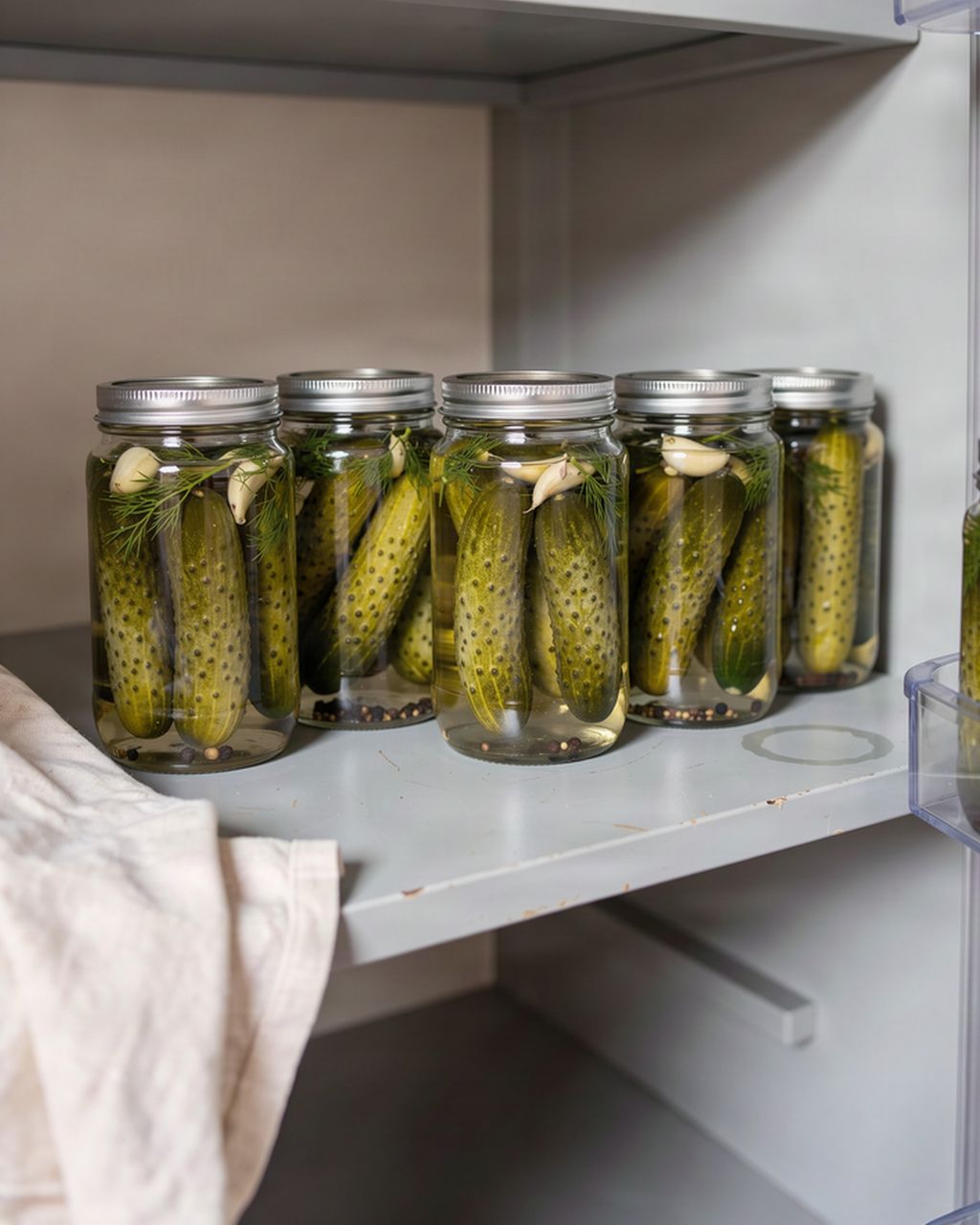
Sealed jars: store them in the pantry or cellar. The pickles keep for more than a year, but lose quality (NCHFP).
Opened jar: goes in the fridge, and the pickles must stay submerged in the brine.
They only start to taste good after a few weeks, once the brine has permeated the whole cucumber. Don't open the jar on the second day.
Just bring the pickle brine to a boil and let it boil only until the salt and sugar dissolve. Boiling it for long evaporates the liquid, and its acidity and flavor change in an uncontrolled way. Pour it over the pickles hot, as soon as the salt and sugar have dissolved.
Cloudy brine in canned pickles most often comes from iodized salt or salt with anti-caking agents, from hard water, or from the dill and spices. This kind of cloudiness is harmless and settles to the bottom. But if the brine bubbles or foams, the lid is bulging, the pickles are slimy, or the jar smells off, that is spoilage. Throw the jar out without tasting it.
You can a single jar of pickles the same way as a whole batch, just in a smaller pot. For a 0.7 l jar, about 105 ml of 8% vinegar and 245 ml of water (the same 3 : 7 ratio) is enough, with a teaspoon of salt and sugar to taste. Put a kitchen towel on the bottom of the pot so the jar doesn't rattle against it, and cover the jar with water to about 2.5 cm (1 inch) above the lid. Treat a 0.7 l jar like a 1 liter jar: either 30 minutes of pasteurizing at 82–85°C (180–185°F), or 15 minutes of boiling (20 minutes above 300 m elevation). The shorter time for half-liter jars is not enough for it.
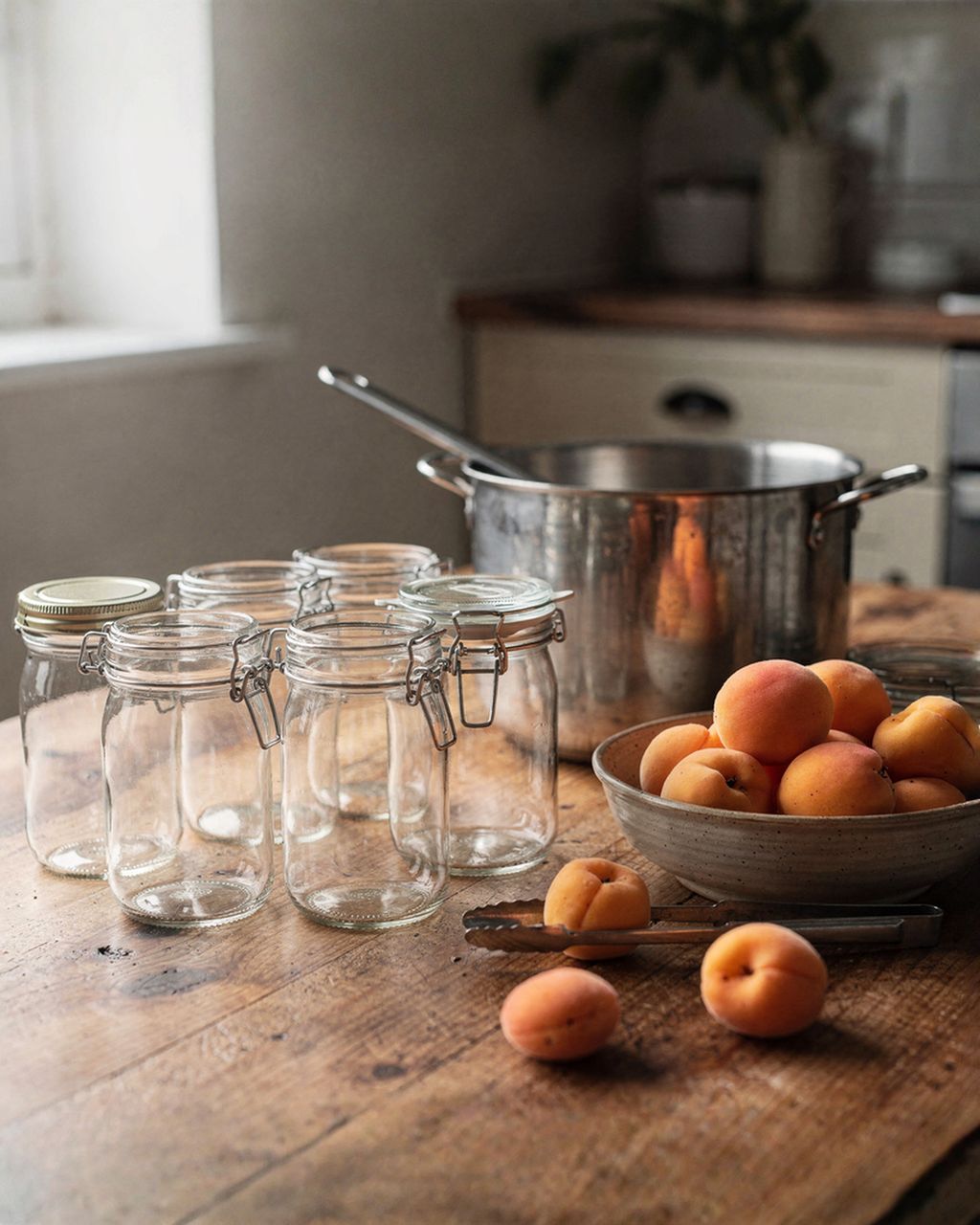
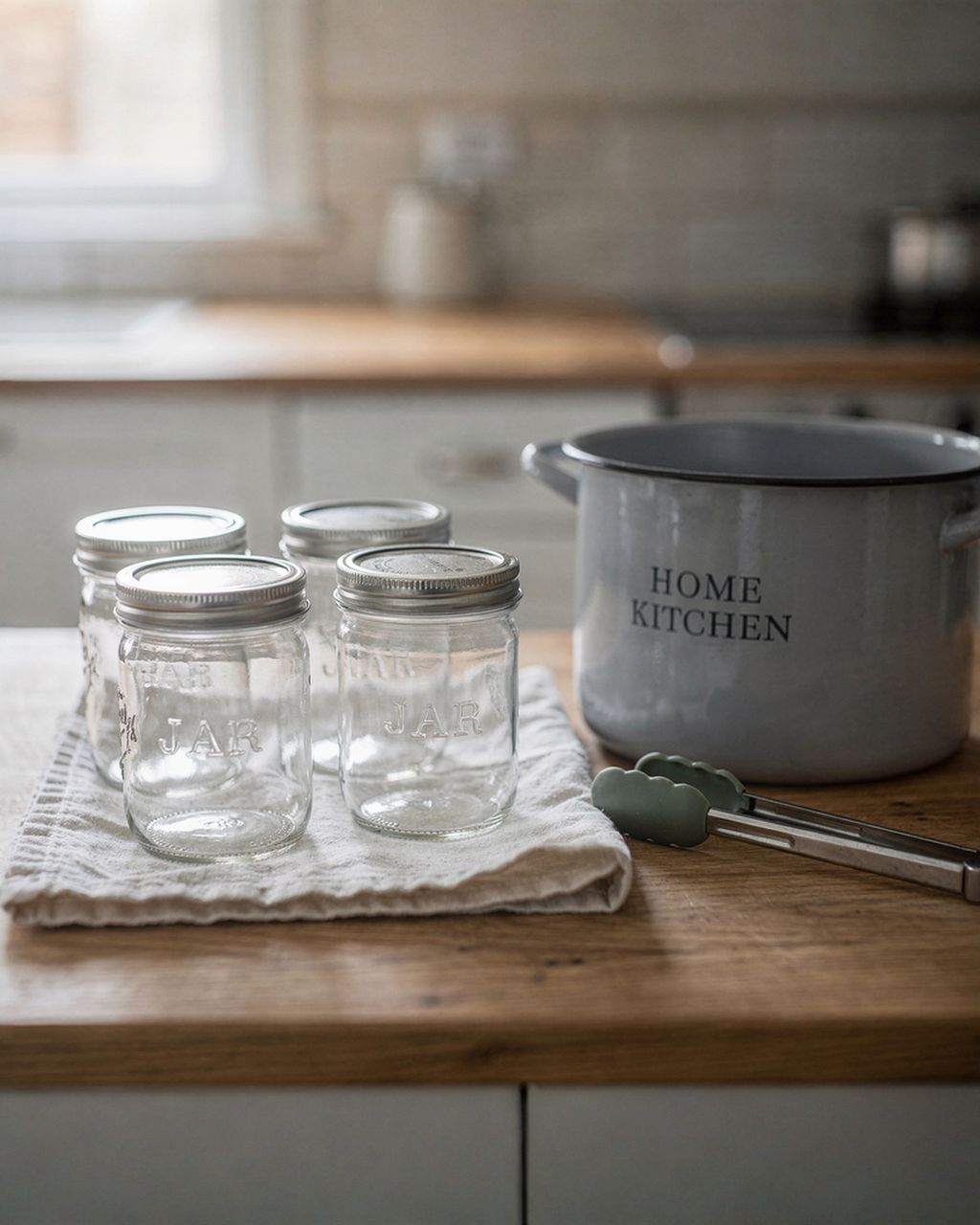
You don't need a canning pot. Any pot tall enough for the water to reach about 2.5 cm (1 inch) above the lids will do. Put a rack or a folded kitchen towel on the bottom so the jars don't sit directly on the hot base and crack. For pasteurizing at 82–85°C (180–185°F) you also need an ordinary kitchen thermometer.
One recipe worth heating the oven for, one tip, and one deal from the shop. Nothing else.