Cheesecake Crust Substitutes: What to Use Instead of Graham Crackers
Basque Cheesecake vs New York Cheesecake: Texture, Method and Taste
Updated Nov 21, 2026
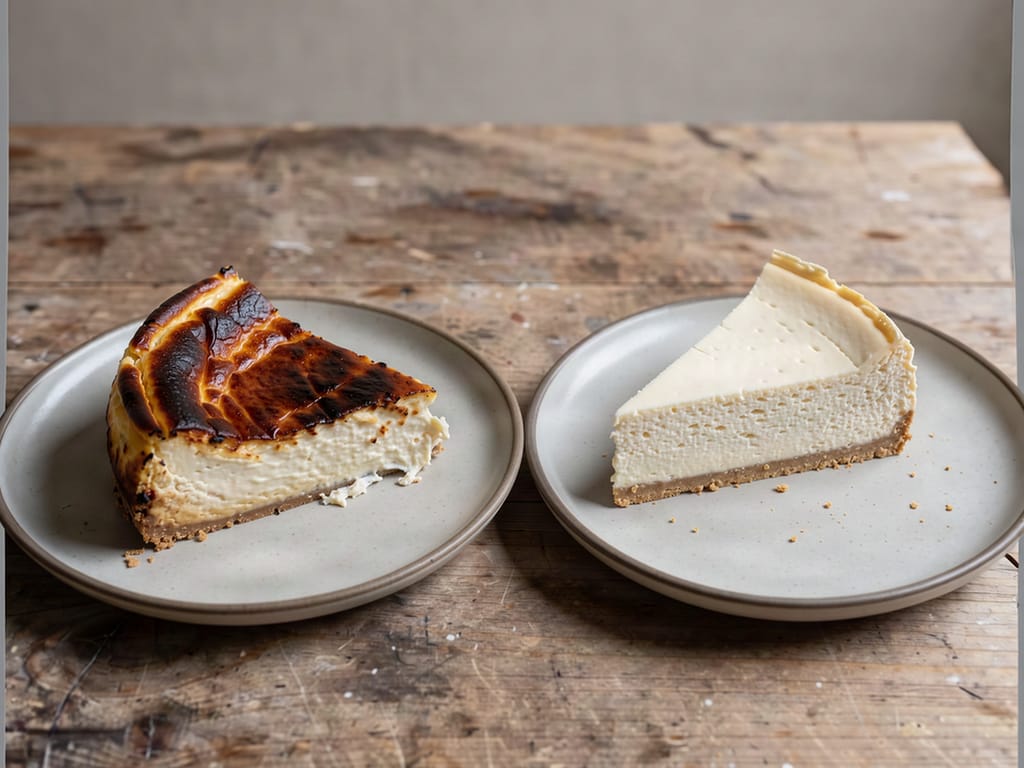
Basque cheesecake has no crust, is baked fast in a very hot oven until the top is almost black, and stays soft and creamy in the middle; New York cheesecake sits on a crumb crust and is baked low and slow, often in a water bath, into a tall, dense, smooth slice. Both are baked cream cheese cheesecakes, but the method changes almost everything about them. Here is how they compare, where the classic baked cheesecake and European quark cheesecakes fit, and which is easier to make at home.
Basque (burnt) cheesecake:
Crust: none. The batter is poured into a pan lined with crumpled parchment that sticks up above the rim.
Batter: cream cheese, sugar, eggs, heavy cream and a little flour. America's Test Kitchen counts just these five in the original.
Bake: very hot and fast. Home recipes often use around 200–220 °C (400–425 °F) in a conventional oven.
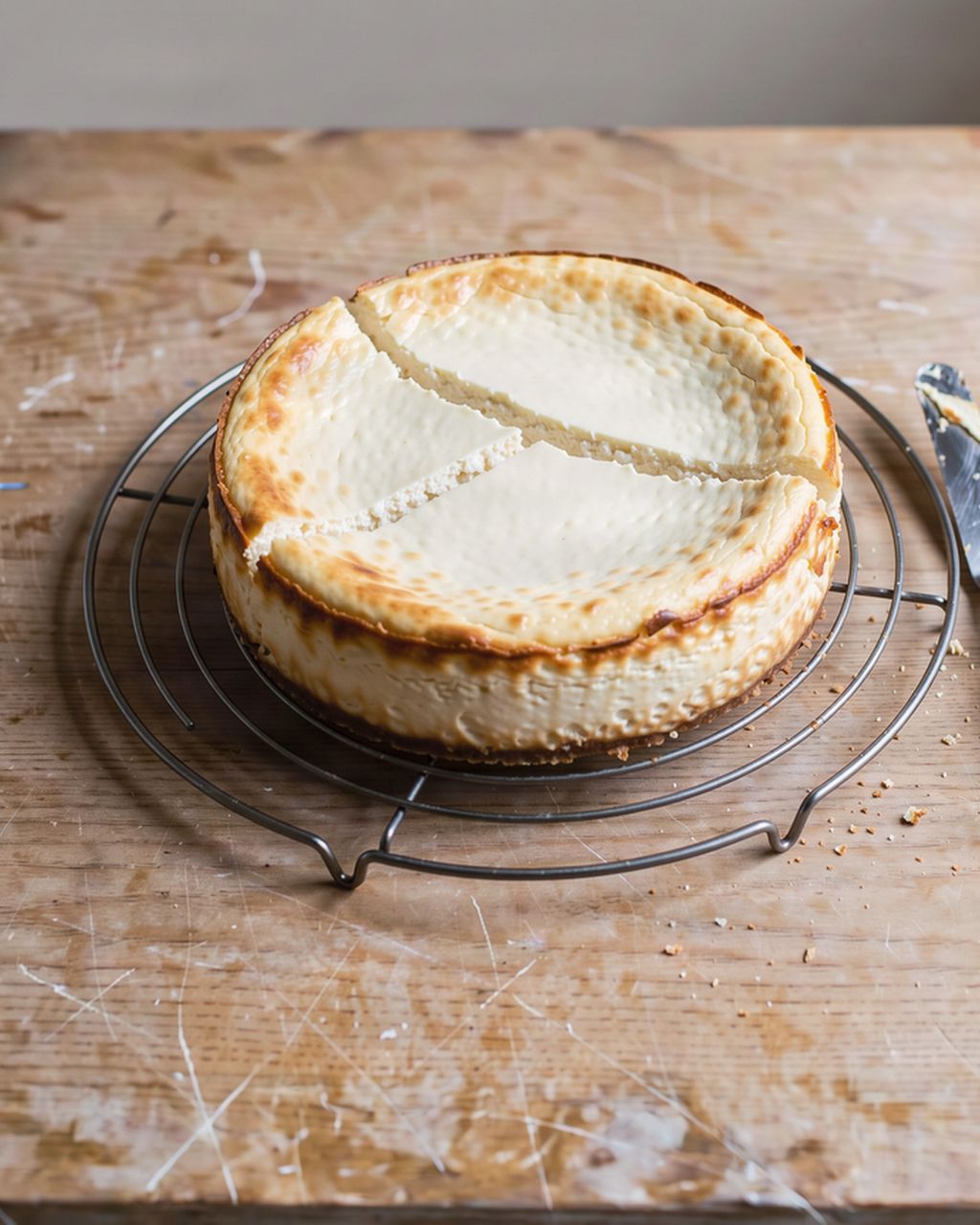
Look: dark brown to near-black top, cracked, rustic sides.
Texture: firm, caramelized edges; soft, creamy, almost spoonable center.
Taste: bitter caramel and toasted notes over a mild, creamy cheese.
New York cheesecake:
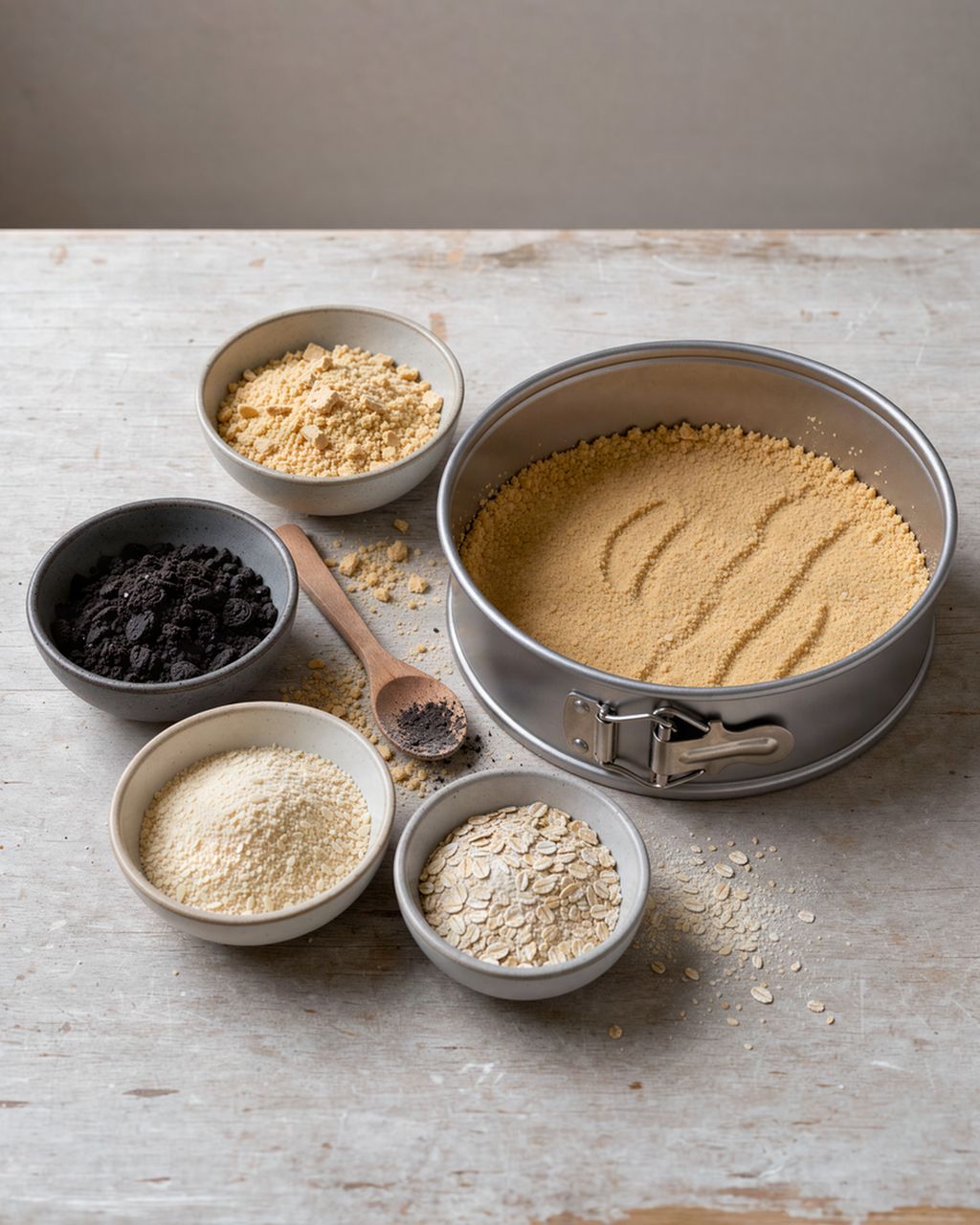
Crust: usually graham cracker crumbs (in the UK, digestive biscuits) with butter. Some famous versions, like Junior's, use a thin sponge cake base instead.
Batter: lots of cream cheese, eggs (sometimes extra yolks), sugar, often sour cream or heavy cream, vanilla and lemon.
Bake: low and slow, often in a water bath, then cooled gradually.
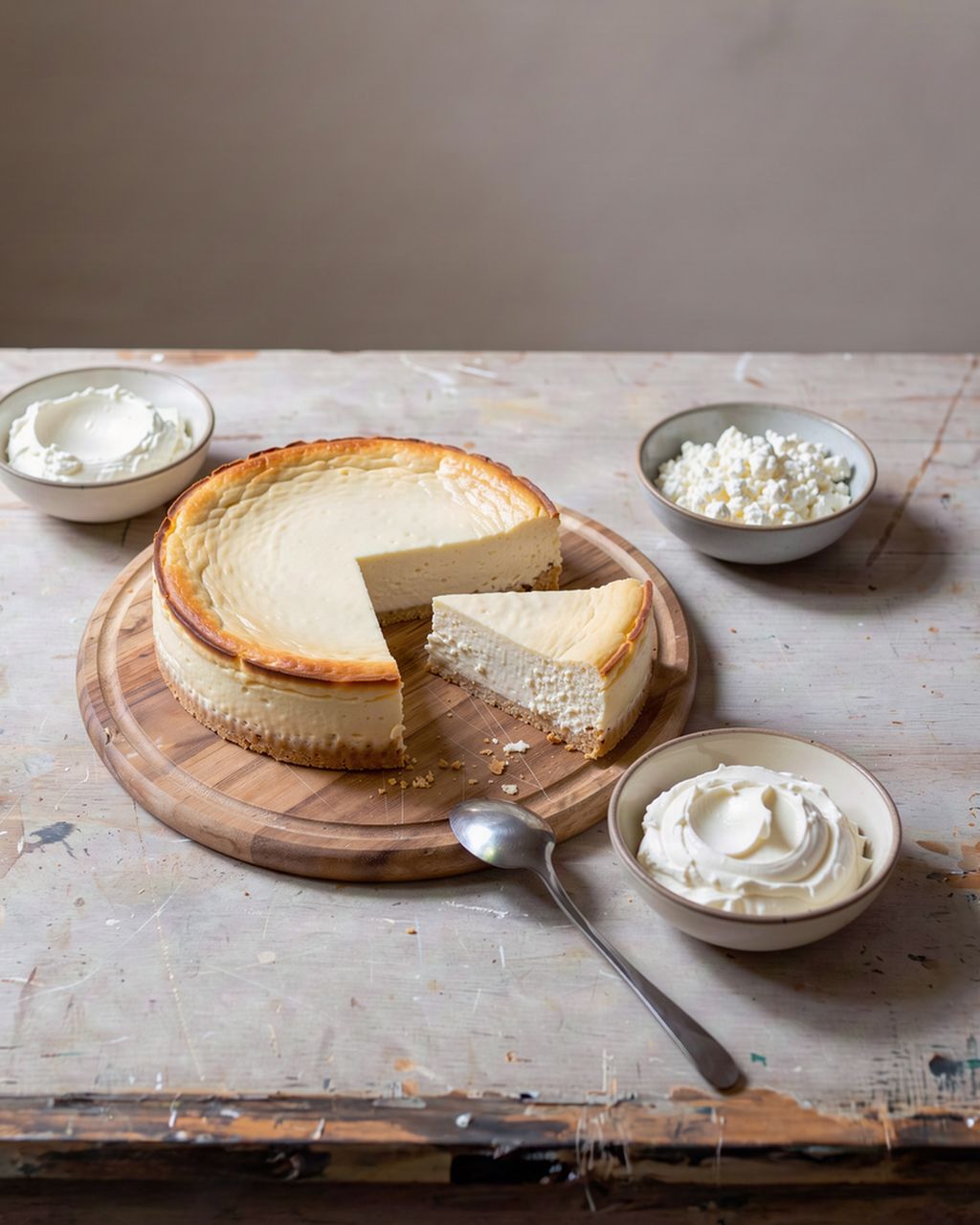
Look: tall, pale, smooth top with golden edges.
Texture: dense, rich, evenly firm and smooth from edge to center.
Taste: tangy cream cheese, clean and rich.
Recipe of the week, one tip that saves you time and one deal from the shop. Unsubscribe in one click.
The next issue goes out on Thursday, November 26.
The batters are not far apart. The oven makes the difference.
A New York cheesecake is baked like a custard: gently, so the eggs set evenly without curdling or puffing. A water bath keeps the edges from overcooking before the middle sets, and slow cooling stops the surface from cracking. The goal is one even texture from edge to center.
A Basque cheesecake does the opposite on purpose. The high heat sets and browns the outside quickly, while the middle is still soft. The cake puffs up in the oven and sinks and cracks as it cools, which is expected. The goal is contrast: a caramelized crust-like outside and a creamy inside, with no crust needed.
That is also why Basque cheesecake is baked in a shorter time, and why its crumpled parchment liner, not a smooth collar, is part of the look.
Basque cheesecake comes from La Viña, a pintxos bar (Basque small-plates bar) in the old town of San Sebastián, Spain. It is credited to Santiago Rivera, who developed and refined it there; sources disagree on the exact year, but most place it around 1988–1990.
In Spain it is simply called tarta de queso (cheesecake). The "burnt" in "burnt Basque cheesecake" is an English-language nickname, and America's Test Kitchen calls it somewhat exaggerated: the top is deeply browned, not charred.
New York cheesecake has a looser history. Its defining ingredient, cream cheese, has a long history in New York state, and the dense style became tied to New York delis and bakeries in the 20th century. Who made the "first" one is disputed, and we won't pick a side.
"Regular" or "classic" baked cheesecake covers a lot of recipes. Compared with New York style:
More sour cream, cream or milk and less cream cheese, so the texture is lighter and softer.
Often a shorter, flatter cake, sometimes with a sour cream topping baked on at the end.
The same gentle bake, with or without a water bath.
In Central Europe, baked cheesecakes are often made with fresh curd cheese rather than cream cheese. In Czech kitchens that is tvaroh (fresh curd cheese, close to quark), which gives a lighter, drier, slightly grainy, tangier slice; see what tvaroh is and what quark cheese is. German Käsekuchen is made the same way with quark.
Japanese cotton cheesecake is a different thing again: whipped egg whites folded in make it light and wobbly, like a soufflé.
For a first cheesecake: Basque. No crust, no water bath, and cracks are expected. Use a deep 20–23 cm (8–9 in) pan lined with parchment.
For neat slices and toppings: New York. Its smooth, flat top takes fruit, ganache or caramel; see how to decorate a cheesecake.
For making ahead: New York holds its shape for longer in the fridge and slices cleanly straight from it.
For a crowd that likes caramel and gooey middles: Basque.
Both need full-fat cream cheese for the right texture. Outside North America, cream cheese labels vary in fat and water, so if you are swapping, see what to use instead of cream cheese in cheesecake. If your New York cheesecake stays soft in the middle after chilling, see why your cheesecake won't set. For a cheesecake you don't bake at all, see no-bake cheesecake in a ring.
First bite: Basque gives a bitter-sweet, caramelized edge, then cream. New York gives a crunchy, buttery crust, then a dense, smooth filling.
Sweetness: Basque tastes less sweet because of the dark top. New York tastes cleanly sweet and tangy.
Richness: both are rich. New York feels heavier per slice; Basque feels lighter but creamier.
Best temperature: Basque at cool room temperature for the creamiest middle; New York well chilled for clean slices.
Best with: Basque on its own or with coffee; New York with fresh berries or a fruit sauce.
Basque cheesecake has no crust, is baked hot and fast until the top is deeply browned, and has a soft, creamy, almost custardy center; New York cheesecake has a crumb crust, is baked gently, often in a water bath, and is dense, smooth and evenly firm. Basque tastes of caramel; New York tastes of tangy cream cheese.
The very hot oven caramelizes the sugar and browns the proteins in the surface of the batter before the center has time to set. The dark top is intentional and gives a bitter-caramel flavor, while the middle stays soft.
It is meant to be soft and creamy, especially when served at room temperature, but it should not run out like liquid batter. A center that pours rather than oozes means it was underbaked.
New York cheesecake uses more cream cheese and often extra eggs, so it is denser and richer; many other baked cheesecakes use more sour cream or cream, which makes them lighter and softer. The names are loose, and recipes overlap.
Usually, yes. It has no crust, needs no water bath, and cracks and a dark top are part of the look, so there is little that can go visibly wrong. New York cheesecake needs gentle baking and slow cooling to stay smooth and uncracked.
It is often served at room temperature, when the center is at its creamiest, or chilled, when it slices more cleanly. Keep it out of the fridge for no more than 2 hours, or 1 hour if the room is hotter than 32 °C (90 °F), as the FDA advises for egg dishes.
One recipe worth heating the oven for, one tip, and one deal from the shop. Nothing else.