What to Use Instead of Breadcrumbs for Breading: 9 Substitutes That Stay Crunchy
Cheesecake Crust Substitutes: What to Use Instead of Graham Crackers
Updated Nov 21, 2026
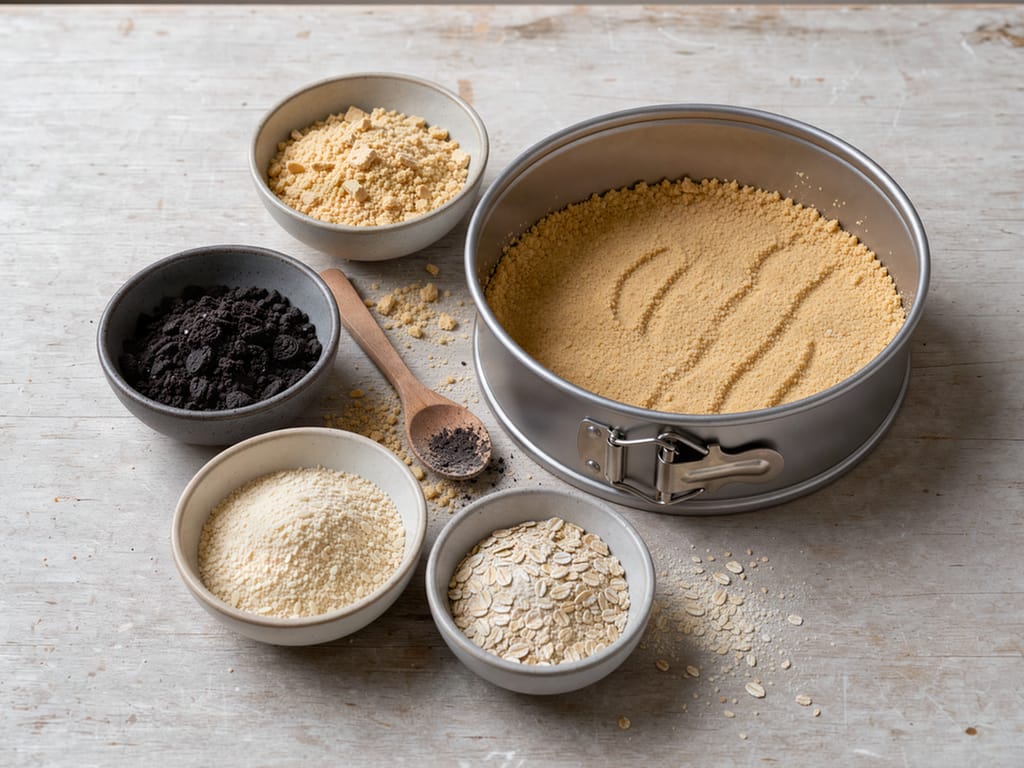
The best substitute for graham crackers in a cheesecake crust is digestive biscuits, or any plain, lightly sweet biscuit, crushed and mixed with melted butter in the same way. Speculoos, shortbread, chocolate cookies, gingernuts and ground nuts all work too, with small butter adjustments. You can also skip the crust entirely.
Graham crackers are an American cracker made with whole wheat (graham) flour and sweetened with honey or sugar. Outside North America they can be hard to find. Any dry, crisp, lightly sweet biscuit can stand in, because the job is the same: crumbs plus melted butter, pressed into a firm layer.
Good swaps, closest first:
Digestive biscuits (UK, Ireland, Australia): the classic substitute. Slightly less sweet and a little more crumbly.
Plain biscuits (rich tea, Marie-type and other plain biscuits): what most Czech home bakers use. Mild and neutral.
Speculoos (Biscoff-style spiced biscuits): caramel and spice flavor, great with pumpkin, apple or white chocolate fillings.
Chocolate sandwich cookies: crush them whole, filling and all. Very rich, so use less butter.
Shortbread or butter cookies: already buttery, so cut the added butter down a lot.
Gingernuts or ginger snaps: sharp and spicy, lovely under lemon or orange fillings.
Amaretti: crisp almond cookies, good with ricotta or coffee cheesecakes. They usually contain almonds, apricot kernels or both; check the pack if you are baking for someone with a nut allergy.
Whichever you use, swap by weight rather than by count, because biscuits differ in size.
Recipe of the week, one tip that saves you time and one deal from the shop. Unsubscribe in one click.
The next issue goes out on Thursday, November 26.
For a standard 23 cm (9-inch) springform, most recipes use around 200 g of crumbs and 80–100 g of melted butter, plus a spoonful of sugar if the biscuits are plain. Use up to 250 g of crumbs for a thicker base, with a little more butter. That is roughly 2 parts crumbs to 1 part butter by weight.
Adjust for the biscuit:
Dry biscuits (digestives, plain biscuits, graham crackers): the full amount of butter.
Buttery biscuits (shortbread, butter cookies): start with about half the butter.
Cream-filled chocolate cookies: start with about a third to a half.
The squeeze test: press a handful of the mixture in your fist. It should hold its shape like damp sand. If it falls apart, add a little more melted butter; if it looks greasy, add more crumbs.
Measuring in cups? Our cups and spoons to grams calculator converts butter and sugar measures.
Ground nuts: ground almonds or ground hazelnuts mixed with melted butter and a little sugar make a crisp, rich base. They brown faster than biscuit crumbs, so watch them during prebaking. See almond flour vs ground almonds for which to buy.
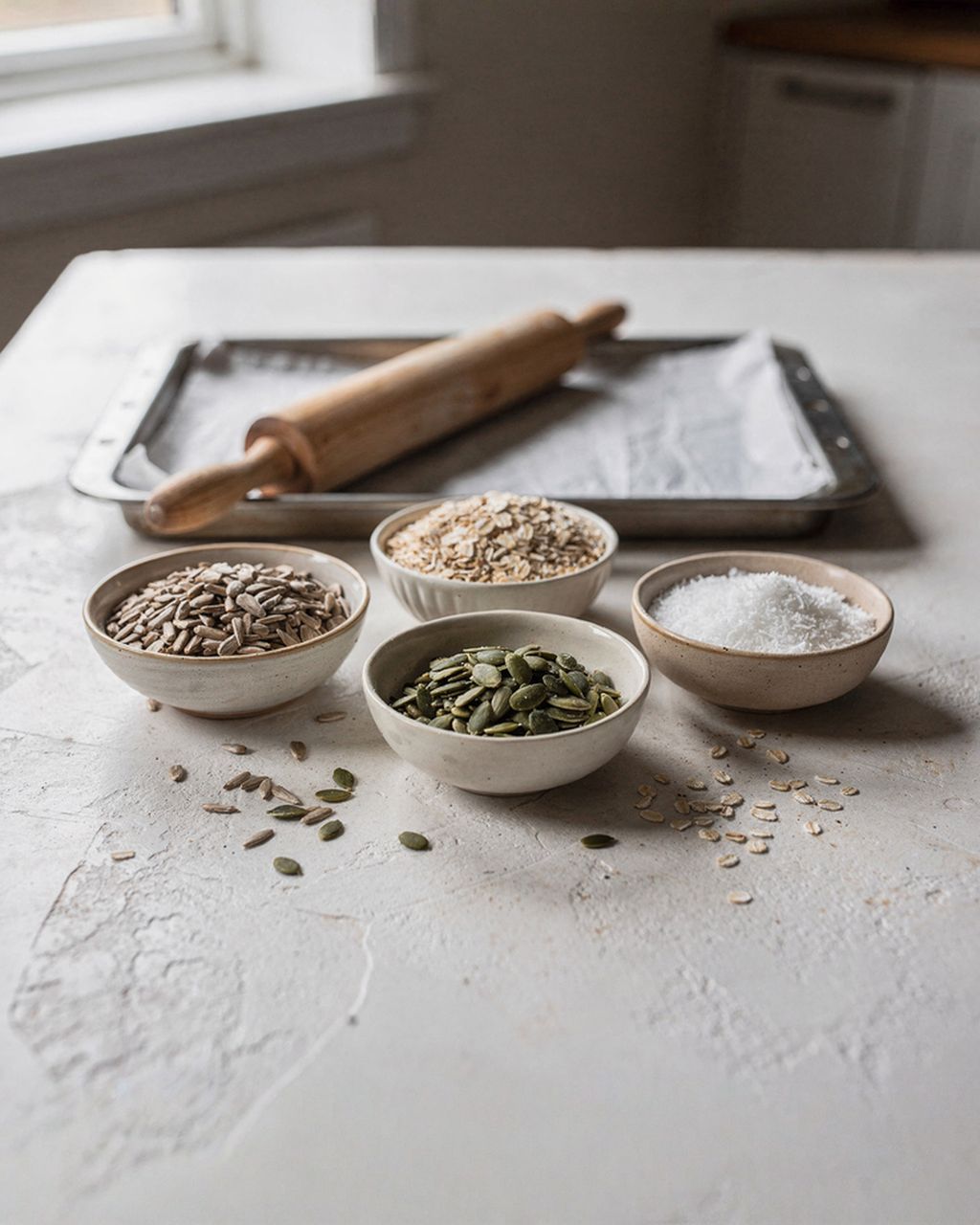
Oats: rolled oats blitzed briefly, with butter and brown sugar, give a flapjack-like base. Toast it first for flavor.
Pretzels: crushed, with a little extra sugar, for a salty-sweet base under caramel or chocolate. Pretzels are made with wheat flour, so they are not gluten-free unless the pack says so.
Gluten-free: use gluten-free biscuits or a ground-nut base. If you use oats, choose ones labeled gluten-free (in Australia and New Zealand oats can't be labeled gluten-free, so use a nut or gluten-free biscuit base instead), and check with whoever you are baking for: a few people with coeliac disease cannot eat even gluten-free oats. Check every pack for a "may contain" warning. Our gluten-free flour guide covers the basics.
Allergens: nut crusts contain tree nuts, and many biscuits carry a "may contain nuts" or "may contain peanuts" warning. If you are baking for someone with a peanut or tree-nut allergy, check the package of every ingredient.
A crust is optional. A crustless cheesecake is quicker to make and has no base to go soggy.
Grease the pan and line the base with baking paper. Lining the sides too helps the cheesecake shrink away cleanly as it cools.
Dust the greased sides with a little sugar or fine crumbs if you want a thin, crisp edge.
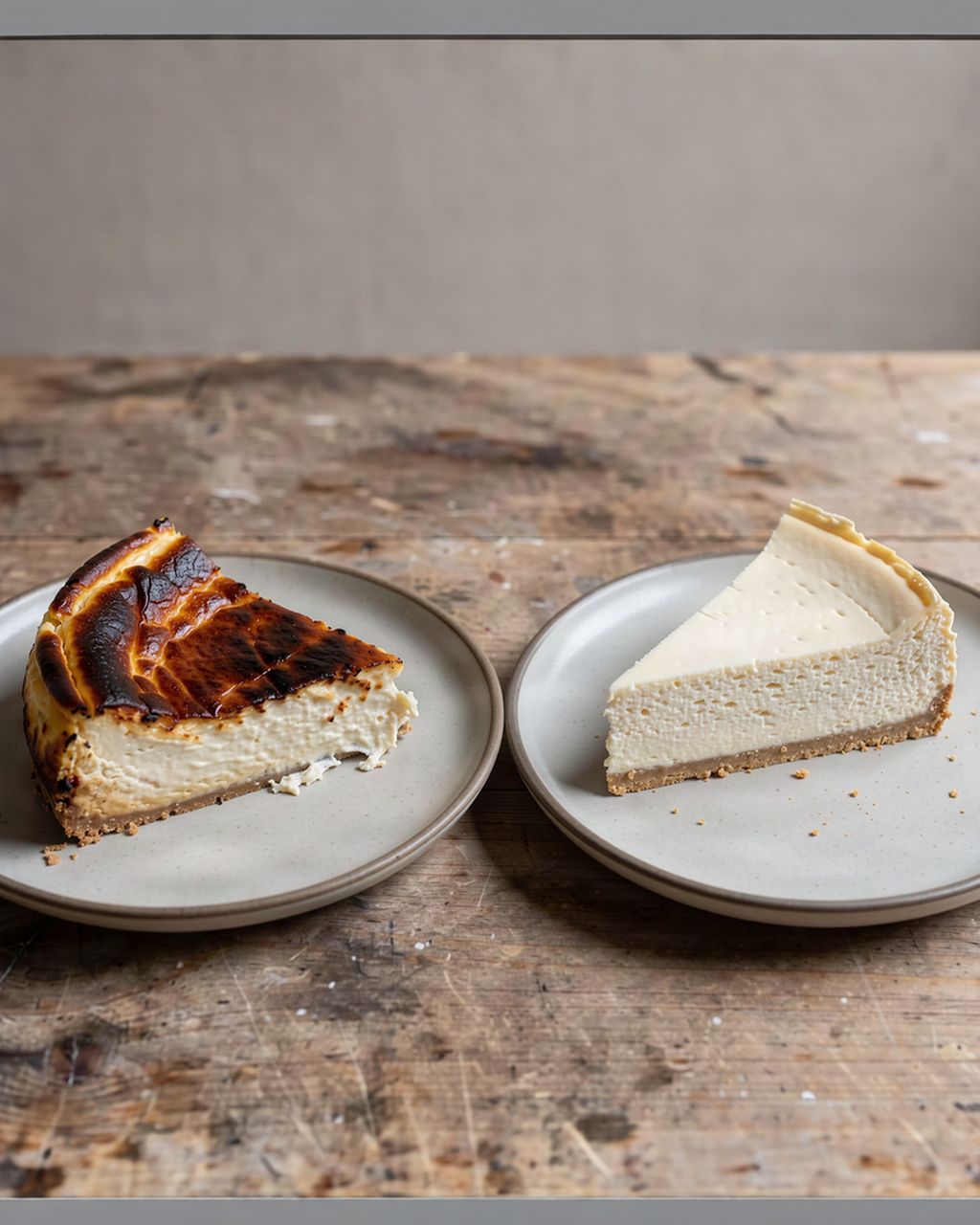
Basque cheesecake is crustless by design and baked very hot so the outside caramelizes.
Thin crumb topping instead: scatter a few crumbs over the top of a crustless cheesecake before serving for some crunch without a base.
A food processor gives the finest, most even crumbs, but you don't need one.
Bag and rolling pin: put the biscuits in a sturdy freezer bag, squeeze out the air, and roll and bash with a rolling pin until fine. Do it in two batches so the bag doesn't split.
Bowl and the end of a rolling pin: pound them in a deep bowl, like a mortar and pestle.
Grater: firm biscuits such as digestives can be grated on the coarse side of a box grater.
Aim for crumbs like coarse sand, with no pieces bigger than a lentil. Big pieces leave gaps, so the base crumbles and lets filling seep under. Chocolate sandwich cookies and very buttery biscuits turn pasty if overprocessed, so pulse them briefly.
For a baked cheesecake, a short prebake makes the base crisper and stops it turning soggy under the wet filling. Most recipes bake a biscuit crust for about 10 minutes at around 180 °C (350 °F) in a conventional oven, then cool it while they mix the filling.
For a no-bake cheesecake, skip the oven: press the crumbs in firmly and chill the base, covered, in the fridge until set before adding the filling. Cold butter holds the crumbs together.
Nut crusts and sugary cookie crusts color quickly, so check them a few minutes early.
Soggy: water from the water bath seeped in, or the crust was not prebaked. Wrap the pan in two or three layers of heavy foil, or set it inside a slightly larger solid pan, and prebake the base.
Hard as rock: too much butter or sugar, crumbs packed too hard, or baked too long. Use less butter and press just firmly enough to hold, with the bottom of a glass rather than your full weight.
Crumbly, falls apart: too little butter, or crumbs too coarse. Grind the crumbs finer and do the squeeze test.
Stuck to the pan: line the base with baking paper and run a knife around the edge before releasing. For a no-bake cheesecake set in a ring, see no-bake cheesecake in a ring.
Digestive biscuits are the closest substitute for graham crackers in a cheesecake crust, and they swap in by weight. Other plain, lightly sweet biscuits work the same way. Speculoos, chocolate cookies, shortbread and gingernuts give different flavors and need small butter adjustments.
Yes, cheesecake works without a crust. Grease the pan and line the base with baking paper so it releases cleanly, then bake the filling as usual. Basque-style cheesecake is made crustless on purpose.
A classic American cheesecake crust is graham cracker crumbs, melted butter and a little sugar, pressed into the pan. In the UK, Ireland and Australia it is usually crushed digestive biscuits and butter. In Czech kitchens it is often crushed plain butter biscuits.
A cheesecake crust turns soggy when water from the water bath leaks into the pan or when wet filling soaks an unbaked base. Wrap the pan well in foil or set it in a larger pan, and prebake the crust briefly before adding the filling.
A hard cheesecake base usually has too much butter or sugar, was pressed down too firmly, or was baked too long. Butter that sets solid in the fridge turns a dense base rock hard. Use a bit less butter and press just firmly enough to hold together.
One recipe worth heating the oven for, one tip, and one deal from the shop. Nothing else.