Banana Bread Without Baking Soda: Baking Powder Ratios and What Changes
Why Does My Cake Taste Like Baking Powder? Bitter, Metallic or Soapy
Updated Nov 21, 2026
A cake tastes like baking powder when there is too much leavening for the flour, when the powder wasn't mixed in evenly, or when baking soda had too little acid to react with. Bitter or metallic usually points to baking powder, and soapy to baking soda. Here is how to find the cause and get the amount right next time.
The chemical taste comes from leavening that didn't fully react, or from more of it than the batter needed. The usual causes:
Too much baking powder or soda. A misread recipe, a tablespoon instead of a teaspoon, or a conversion error.
Uneven mixing. Clumps of powder or soda leave bitter pockets and sometimes small brown specks (or green ones around blueberries or sunflower seeds).
Baking soda with too little acid. Leftover soda tastes soapy.
The type of baking powder. Some people taste a slight metallic note from powders made with sodium aluminum sulfate.
Old baking powder makes things worse in a roundabout way: when a cake doesn't rise, the instinct is to add more next time, which brings the taste.
Recipe of the week, one tip that saves you time and one deal from the shop. Unsubscribe in one click.
The next issue goes out on Thursday, November 26.
Bitter or sharp: most often too much baking powder overall.
Metallic: too much leavening, or a powder containing sodium aluminum sulfate (SAS). In an America's Test Kitchen tasting, a couple of tasters noticed a very slight metallic flavor from aluminum-based powder and most could not tell a difference, so this is subtle and personal. If you are sensitive to it, buy an aluminum-free baking powder and check the ingredient list.
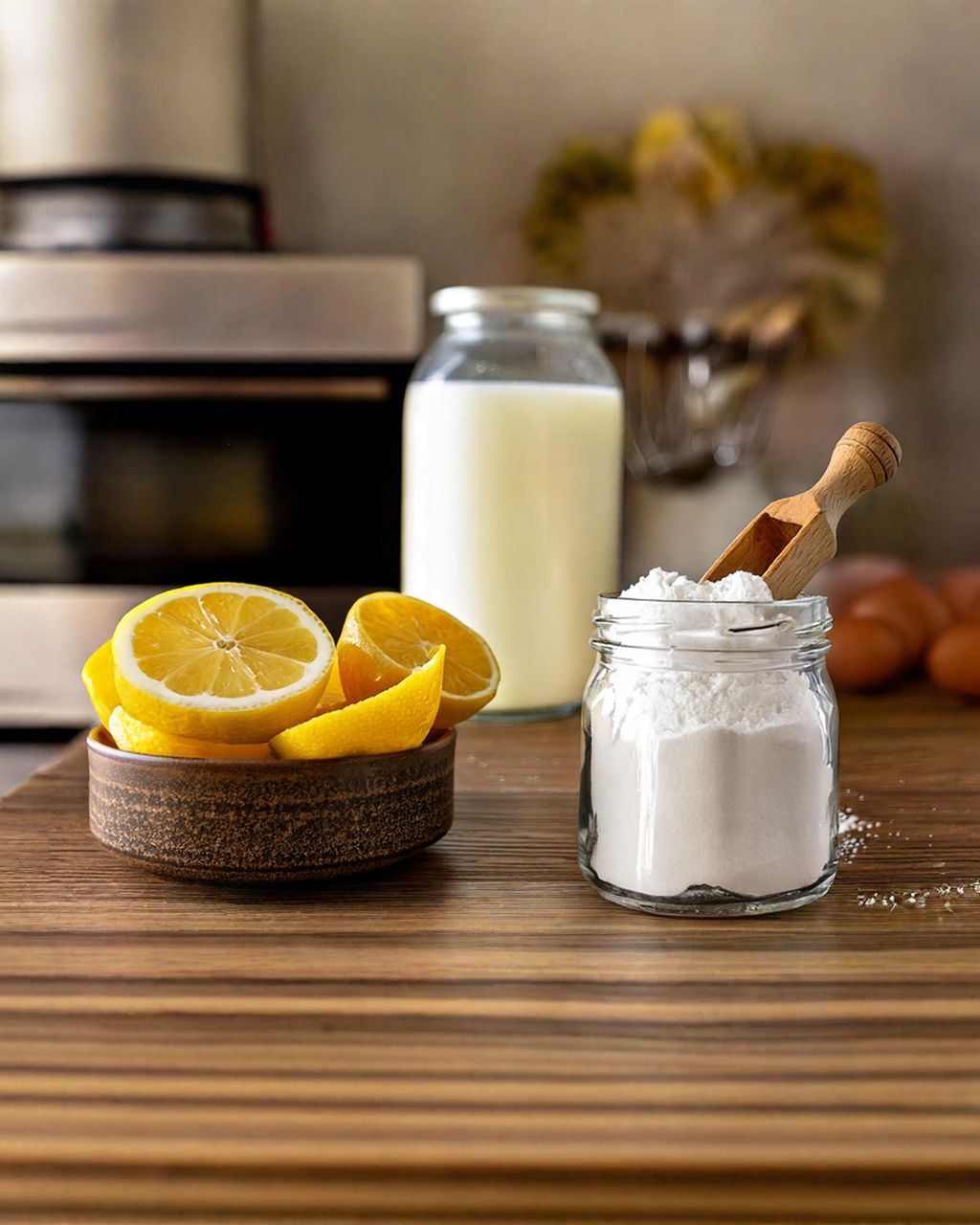
Soapy or salty-chemical: almost always baking soda. Baking soda is alkaline. It needs an acid, like buttermilk, yogurt, lemon juice, brown sugar or natural cocoa, to react. Any soda left over after the acid is used up stays in the cake and tastes soapy.
Bitter only in spots, with tiny dark specks: clumps of leavening that weren't mixed in.
Too much soda also over-browns cakes and can make them rise fast and sink.
Taste is personal, too. Some people are much more sensitive to leavening than others, so a cake one person finds fine can taste chemical to someone else. If only one person at the table notices it, the amount may be at the top of the normal range rather than far over it.
A common guideline for cakes, muffins and quick breads is about 1 teaspoon of baking powder per US cup of all-purpose flour, and rarely more than 1¼ teaspoons. A US cup of all-purpose flour is about 125 g; see a cup of flour in grams.
For baking soda the usual guideline is much lower, about ¼ teaspoon per US cup of flour, and it must be matched by an acidic ingredient.
Recipes vary, and a recipe that has been tested is a better guide than any rule. But if your recipe asks for far more than this, and it tastes chemical, that is likely the reason.
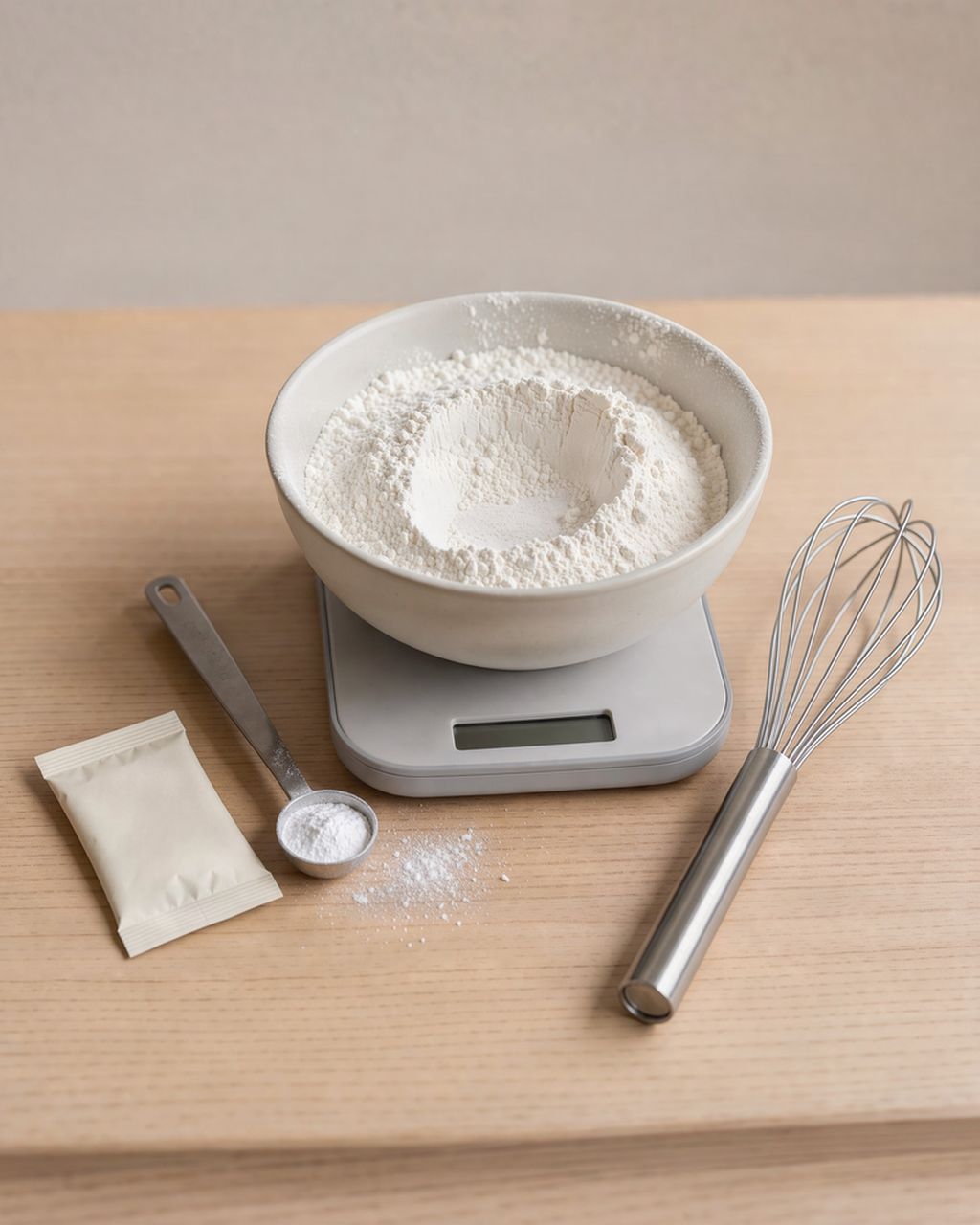
Czech and German recipes tend to use less. A Czech Dr. Oetker sachet holds 12 g of baking powder, about 2½ level US teaspoons, and is meant for 500 g of flour, which is about 4 US cups. Our guides to European baking sachets in grams and teaspoons in grams help with conversions.
Many chemical-tasting cakes come from a conversion, not the recipe itself:
Teaspoon and tablespoon mixed up. A tablespoon is three teaspoons. In recipes, "tsp" and "tbsp" (or "t" and "T") are easy to misread.
A sachet read as a spoon, or the reverse. A Czech recipe that says "1 baking powder" means one 12 g sachet, not one teaspoon. Watch the flour side too: a whole sachet stirred into a half batch, say 250 g of flour, doubles the dose.
Heaped spoons. Measuring spoons should be level. A heaped teaspoon can hold far more than a level one.
Halving a recipe but not the leavening.
Self-raising flour plus baking powder. Self-raising flour (UK) or self-rising flour (US) already contains leavening. Adding the full amount of baking powder on top doubles it.
When a cake tastes chemical, go back to the written recipe and recount every spoon before blaming the powder. It is the cheapest fix there is.
Pockets of unmixed leavening taste bitter even when the total amount is right. To avoid them:
Whisk or sift the baking powder and soda into the flour before adding it to the wet ingredients.
Break up lumps first. If your powder has clumped, press it through a fine sieve. Lumps also suggest it has taken up moisture and lost strength; see what to substitute for baking powder if it has stopped working.
Don't add leavening last, sprinkled on top of a finished batter; it won't spread evenly without overmixing.
If you have measured carefully and still notice a metallic note, try a different powder:
Aluminum-free baking powder uses other acids, usually phosphates or cream of tartar, instead of sodium aluminum sulfate. Check the ingredient list.
Baking powder with cream of tartar is sold in Europe as a separate, often organic, product and has a clean taste. We list a cream of tartar baking powder on our ingredient pages.
Some powders are single-acting and react mostly once wet, so bake the batter promptly.
If you make your own from baking soda and cream of tartar, mix it thoroughly, because a homemade blend is the easiest way to end up with soda pockets. Our baking soda substitutes guide covers the soda side.
Your cake tastes of baking powder because there was too much leavening for the amount of flour, or because the powder wasn't mixed evenly and left concentrated pockets. Measure level spoons, check any conversions, and whisk the powder into the flour before it meets the wet ingredients.
A bitter or metallic taste usually means too much baking powder or baking soda. Some people also notice a slight metallic note from baking powders made with sodium aluminum sulfate; aluminum-free baking powder avoids that.
A soapy taste comes from baking soda left over without enough acid to react with. Use only as much soda as the recipe's acidic ingredients, such as buttermilk, yogurt or brown sugar, can neutralize.
A common guideline is about 1 teaspoon of baking powder per US cup (about 125 g) of all-purpose flour, and rarely more than 1¼ teaspoons. Czech recipes use less: one 12 g sachet, about 2½ teaspoons, for 500 g of flour.
You can't remove the taste once the cake is baked, but you can mask it. Serve it with a tart fruit sauce, whipped cream or a frosting, or use it in a trifle where other flavors take over.
One recipe worth heating the oven for, one tip, and one deal from the shop. Nothing else.