At a glance
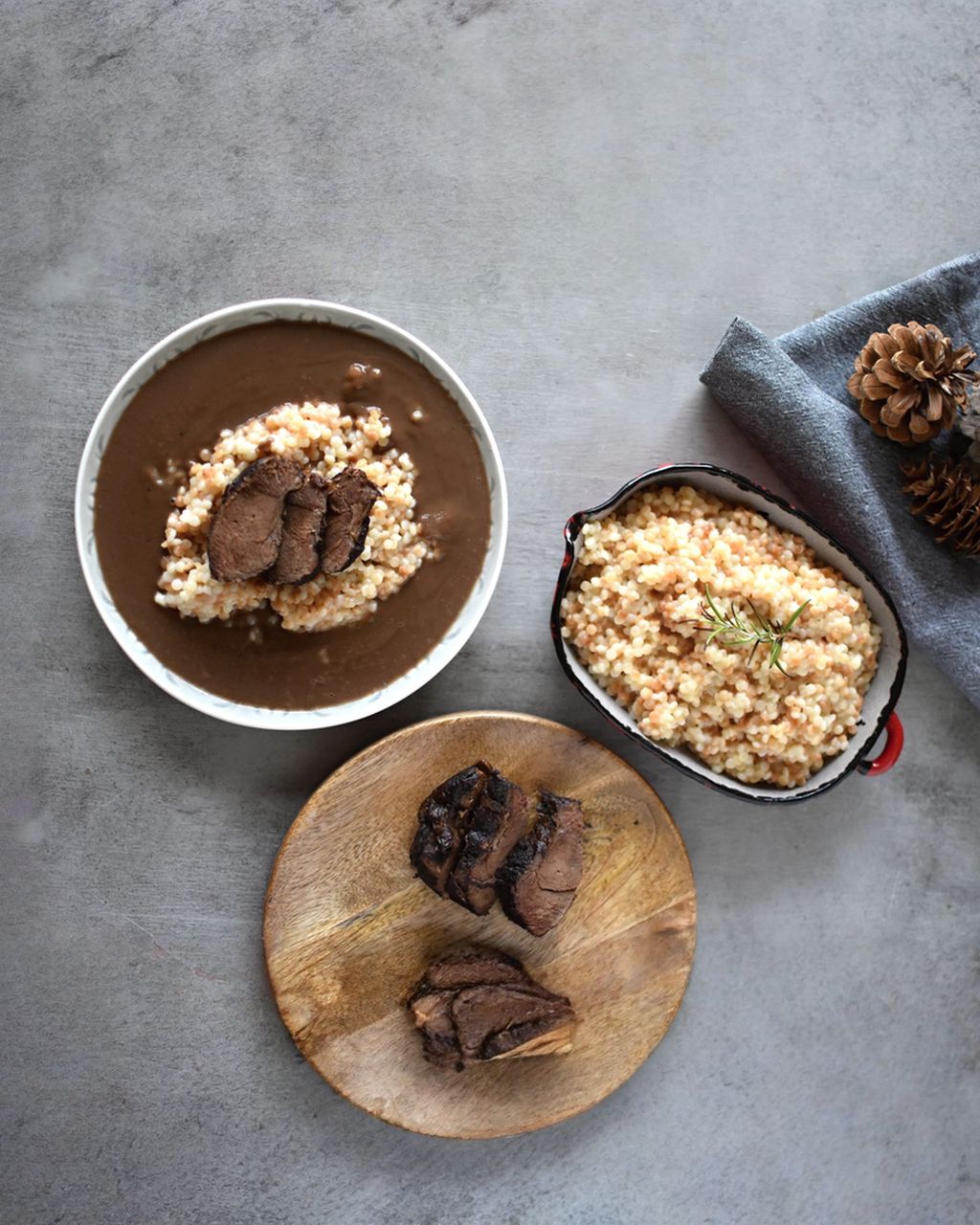
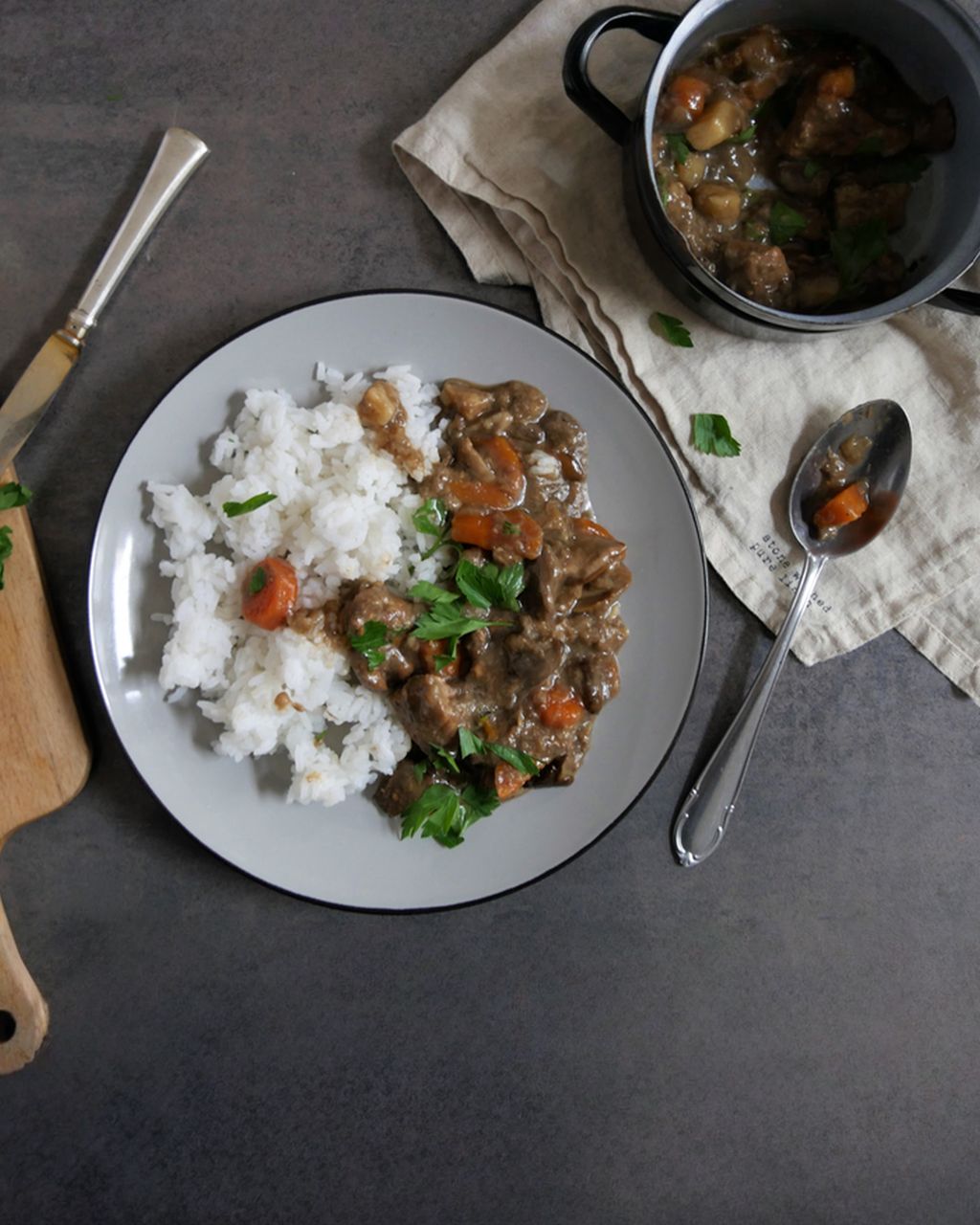
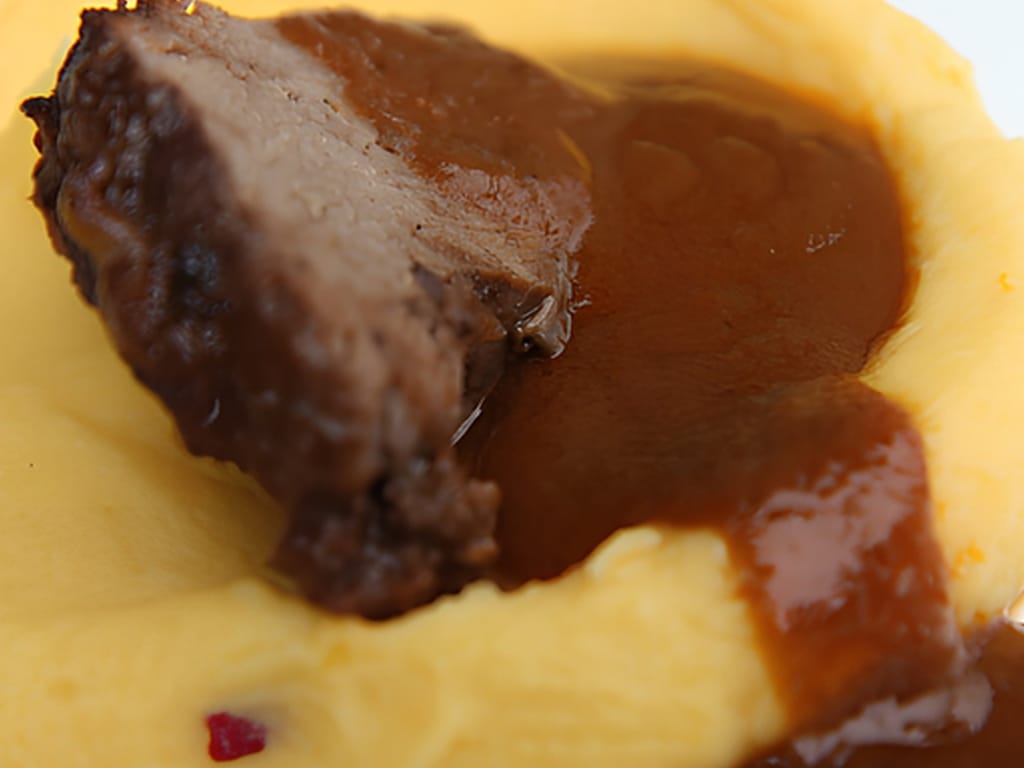
This autumn-inspired game dish requires a bit of planning—you're marinating the wild boar haunch the evening before so the meat becomes tender and flavorful. The next day involves searing and slow-roasting for about two hours until everything falls apart beautifully, while you finish things off with a smooth, rich sauce. It all comes together with a velvety potato-pumpkin purée for a cozy, warming meal that's worth the wait.
1/5
Marinade
The evening before, peel one onion and the root vegetables, chop them, and fry in lard. Pour in the red wine, turn off the heat, and let the marinade cool. Add the meat to the cooled marinade.
For this step
0/72/5
Sear the meat
The next day, chop the second onion and fry it in a large cast-iron pot. Take the meat out of the marinade, add it to the onion, and sear it quickly on all sides.
For this step
0/13/5
Finish the sauce
Pour in the marinade and add salt, pepper, tomato paste, and plum jam. Stir well, then top up with stock or water so the meat is fully covered.
For this step
0/4
How it went
Nobody has tried this recipe yet
Be the first to say how it went.
Anyone can answer, without signing in or buying. Answers aren't verified. The percentage is the share of “Worked out” answers, shown from 5 answers.
Tips from the Yumsto kitchen
Why it works
An overnight marinade of sautéed vegetables and red wine flavors the game and softens its strong character. Leg of boar is lean with firm fibers, so it cooks slowly in the oven, submerged in liquid, until tender. Tomato paste and plum butter give the sauce depth and gentle sweetness, and because it is blended with the vegetables from the pot at the end, it thickens without flour.
Game safety
Wild boar can carry trichinella. Only buy meat that has been veterinary-tested for trichinella. With store-bought game this is standard; with meat from a hunter, ask for the test result. Always cook wild boar through, to at least 71 °C in the thickest part; it is never served pink. Long braising until tender does this. Let the cooked marinade cool completely before adding the meat, and marinate in the fridge.
Tips and what-ifs
Pat the meat dry before searing, or it will not brown. During roasting check that it is still submerged and top up with stock or water if needed. Still tough after two hours? It needs more time; every piece is different. It is done when a fork slides through without resistance. Thin sauce: after blending, simmer it uncovered for a while.
Substitutions
Pork shoulder or leg of venison work instead of wild boar; judge the braising time by how tender the meat is. You can replace the wine with stock and a dash of vinegar; the sauce will be less rich. Cranberries instead of plum butter give a tarter note that suits game.
Purée, making ahead and storage
For the purée, dry the boiled potatoes well over the heat and beat them with warm milk and butter. Do not use a stick blender; it makes potatoes gluey. The meat in sauce is even better the next day. Refrigerate it within 2 hours of cooking; it keeps up to 3 days and freezes well. Reheat slowly until bubbling.
Common questions
Is wild boar safe to eat?
Yes, provided it is veterinary-tested for trichinella and fully cooked. Don't skip either.
Do I have to marinate overnight?
The recipe is built on it, and the flavor goes deepest that way. Always marinate in the fridge and cool the marinade before adding the meat.
How do I know the meat is done?
A fork or knife slides through without resistance and the meat pulls apart along the fibers. It must not be pink inside.
Can I use pork?
Yes, pork shoulder works well. The flavor is milder and braising may be shorter.
Want a recipe like this every Thursday?
One recipe worth heating the oven for, and one tip that saves you time. Nothing else.