- Season
- Year-round. Most smoked salmon is made from farmed Atlantic salmon, which is available all year.
- Price
- High
Calories and nutrition
per 100 g
200 kcal
Calories
20 g
Protein
0 g
Carbs
13 g
Fat
Smoked Salmon
Smoked salmon is salmon that has been salted and smoked over wood. Most is cold-smoked and sold in thin slices, which stay raw; hot-smoked salmon is cooked through and flakes. It is a chilled ready-to-eat fish that we advise pregnant women and people with weak immunity to eat only when thoroughly heated.
per 100 g
200 kcal
Calories
20 g
Protein
0 g
Carbs
13 g
Fat
Do not leave it at room temperature for more than 2 hours, or 1 hour above 32 °C. Take slices for canapés out of the fridge just before you assemble them.
Keep it in the coldest part of the fridge at 4 °C or below, or at the temperature on the pack. Eat it unopened by the use-by date, not a day later. Eat an opened pack as the producer advises, usually within 1–2 days, tightly wrapped.
It can be frozen for about 2 months. Freeze it soon after buying, ideally in the original vacuum pack or as slices interleaved with baking paper in a bag with the air pressed out. Thaw overnight in the fridge and eat within 24 hours. Thawed, it is softer and weeps more, so it suits spreads or pasta better.
Check the pack for whether it is cold- or hot-smoked, the species, whether it is farmed or wild, and where it was farmed or caught. Buy it only from the chiller, with an intact vacuum and a use-by date well ahead. Slices should be glossy, springy and orange-pink, without dull dark edges or slimy liquid in the pack.
Gravlax or smoked trout. Gravlax has a similar silky texture without smoke; smoked trout is hot-smoked and flakes.
Canned salmon or smoked mackerel for spreads and salads. They do not work as slices for canapés.
Smoked salmon needs no cooking unless you are serving it to pregnant women, older people or people with weak immunity. Separate the slices cold, straight from the fridge, ideally with a knife or fork. Skin hot-smoked salmon and break it into flakes. Add it to hot dishes at the very end; hard cooking toughens it and makes it taste saltier.
Blend trimmings and edges that are too small for canapés into a spread with quark or cream cheese. Crisp the skin of hot-smoked salmon in a dry pan and crumble it over a salad.
Roughly what one piece weighs.
198 g
1 piece
Serve cold-smoked salmon cold on bread, canapés, bagels and in salads, or roll it up with cream cheese. Add it to hot dishes such as pasta, scrambled eggs or quiche at the end. Hot-smoked salmon suits spreads, salads and fishcakes.
Smoked salmon is made by salting salmon fillets with dry salt or brine, letting them dry, then smoking them over beech, alder or oak. In cold smoking the smoke stays below about 30 °C, so the flesh remains raw, silky and translucent and is cut into thin slices. In hot smoking the smoke is about 60–80 °C, so the flesh cooks through, turns opaque and flakes. Most smoked salmon in shops is farmed Atlantic salmon.
Cold-smoked salmon is gently salty, buttery and smoky, with a smooth, almost creamy texture. Hot-smoked salmon is drier and tastes more like baked fish with a smoky crust and a stronger wood aroma.
3 min read
Cold smoking uses smoke at up to about 30 °C and can take tens of hours. The flesh does not cook; salt and smoke only firm and flavour it, so it stays raw. This is the classic thinly sliced salmon. Hot smoking runs at about 60–80 °C, the flesh cooks through and the result resembles baked fish with a smoky taste. Packs usually say "hot-smoked" or "kiln-roasted".
For safety the difference is smaller than it seems: hot-smoked salmon is cooked, but bacteria can get onto it again during slicing and packing. Both are therefore chilled ready-to-eat fish that belong in the fridge and carry a use-by date.
Smoked salmon can carry Listeria monocytogenes, a bacterium that survives cold smoking, is not killed by freezing and, unlike most bacteria, slowly multiplies even in the fridge. According to the European Food Safety Authority (EFSA), smoked and cured fish are among the ready-to-eat foods through which people most often get listeriosis. For a healthy adult the risk is low, but in pregnancy listeriosis can cause miscarriage, and in older people and people with weak immunity it is often serious.
We therefore advise pregnant women, older people and people with weak immunity to eat smoked salmon, cold- or hot-smoked, only when heated until steaming hot, at least 70 °C in the centre. For cold-smoked salmon, the UK's NHS gives the same advice. Just warming it through in pasta or scrambled eggs is not enough: bake it into a pasta bake, quiche or savoury tart that cooks until piping hot throughout.
Unopened smoked salmon keeps in the fridge until the use-by date on the pack; the producer's date takes priority over general tables because it is based on that product. Eat an opened pack as the label advises, usually within 1–2 days. Smoked salmon can be frozen for about 2 months; eat it within 24 hours of thawing. More on storing and freezing smoked fish in salmon and sushi in the fridge.
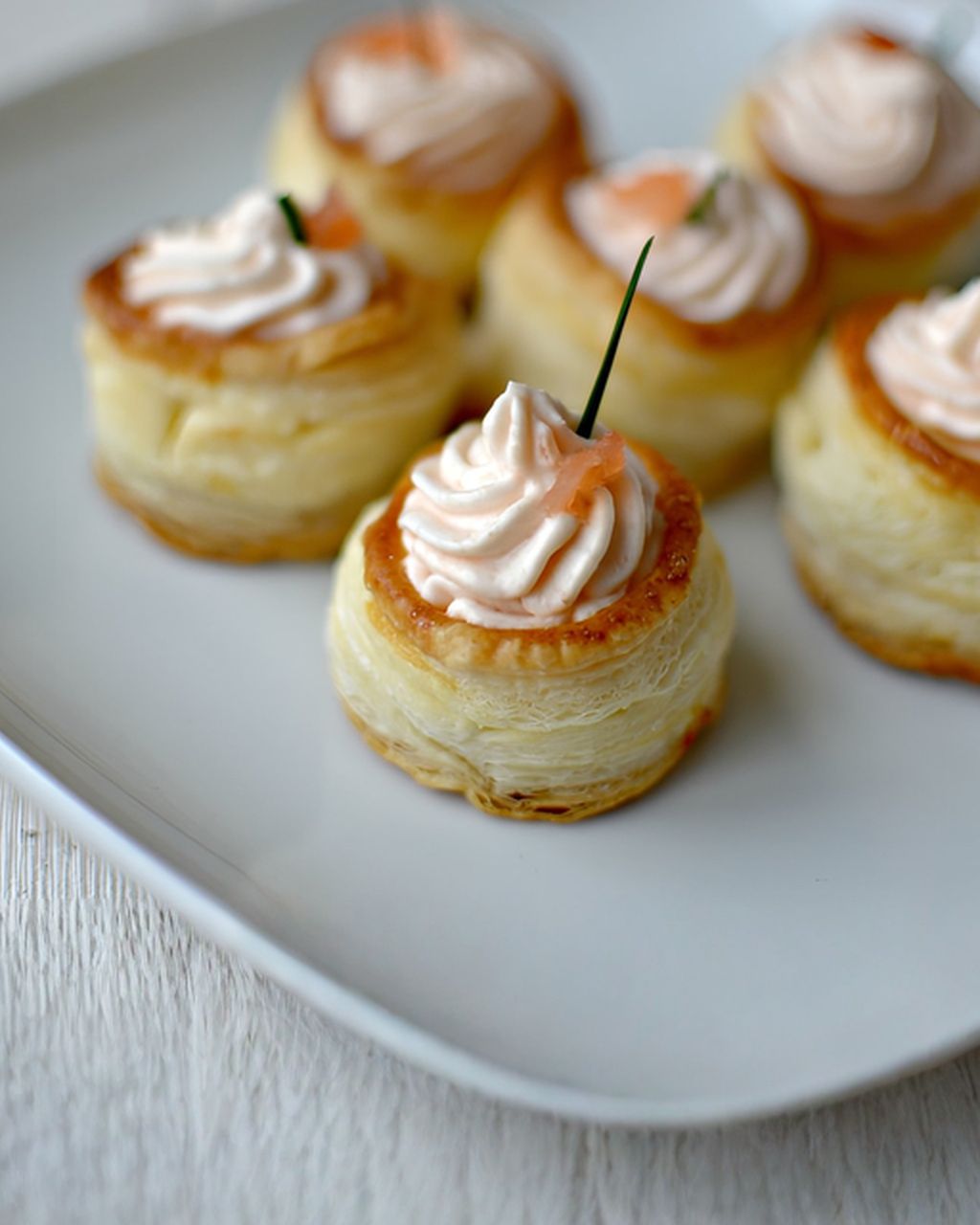
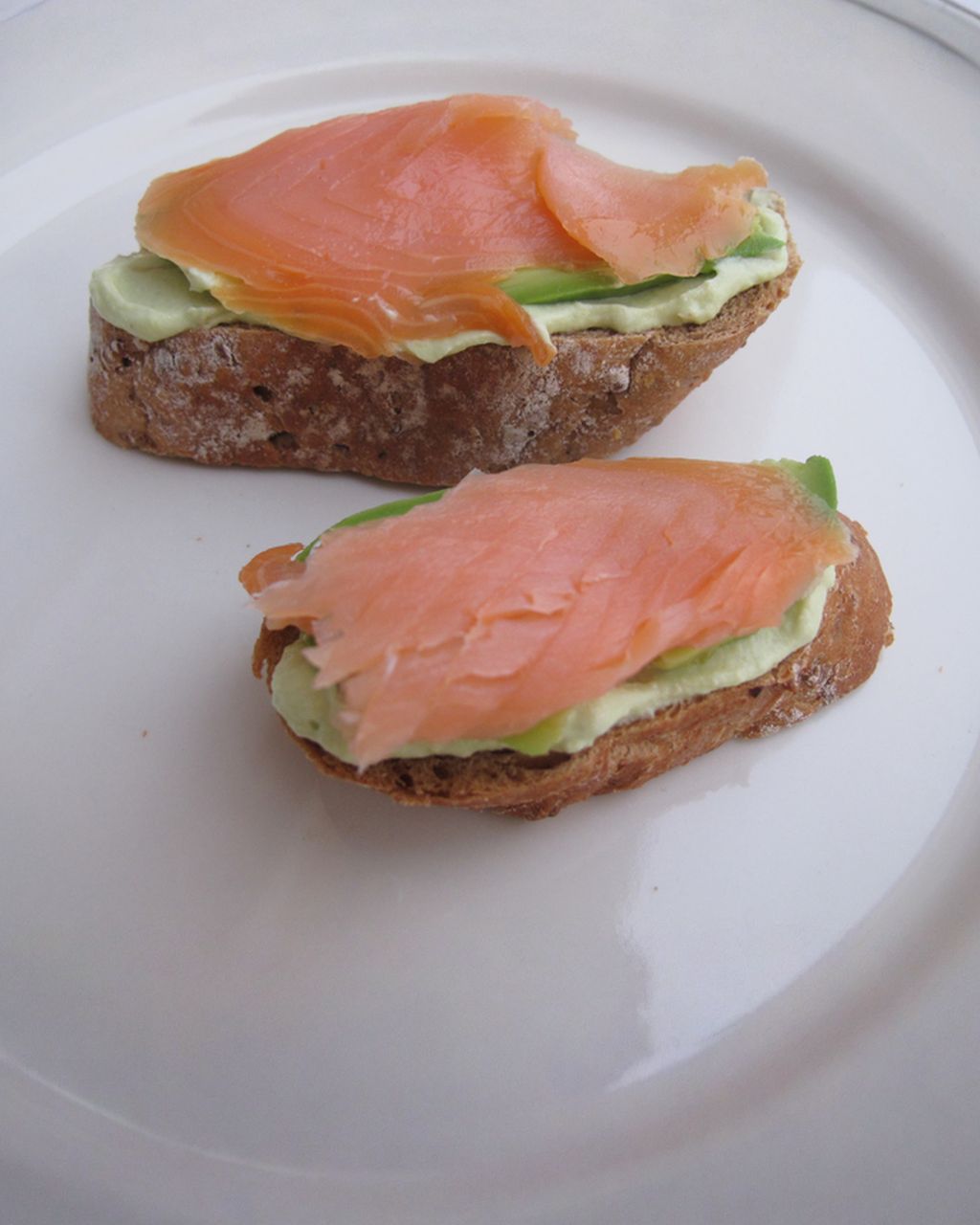
Slices of cold-smoked salmon are the classic topping for canapés, open sandwiches and bagels with dill, lemon and cream cheese. Lay the slices on no more than 2–3 hours before serving so they do not dry out; see smoked salmon canapés.
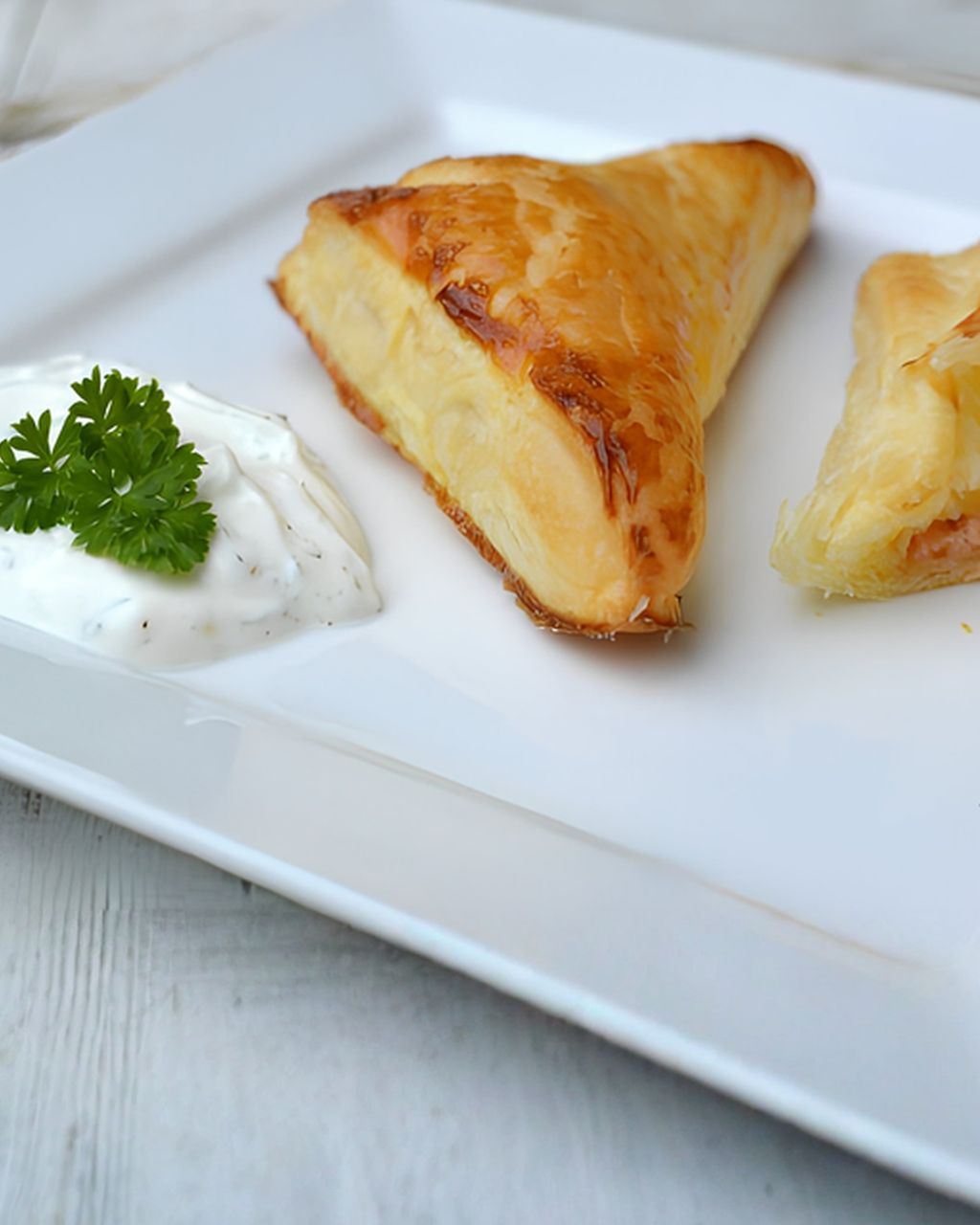
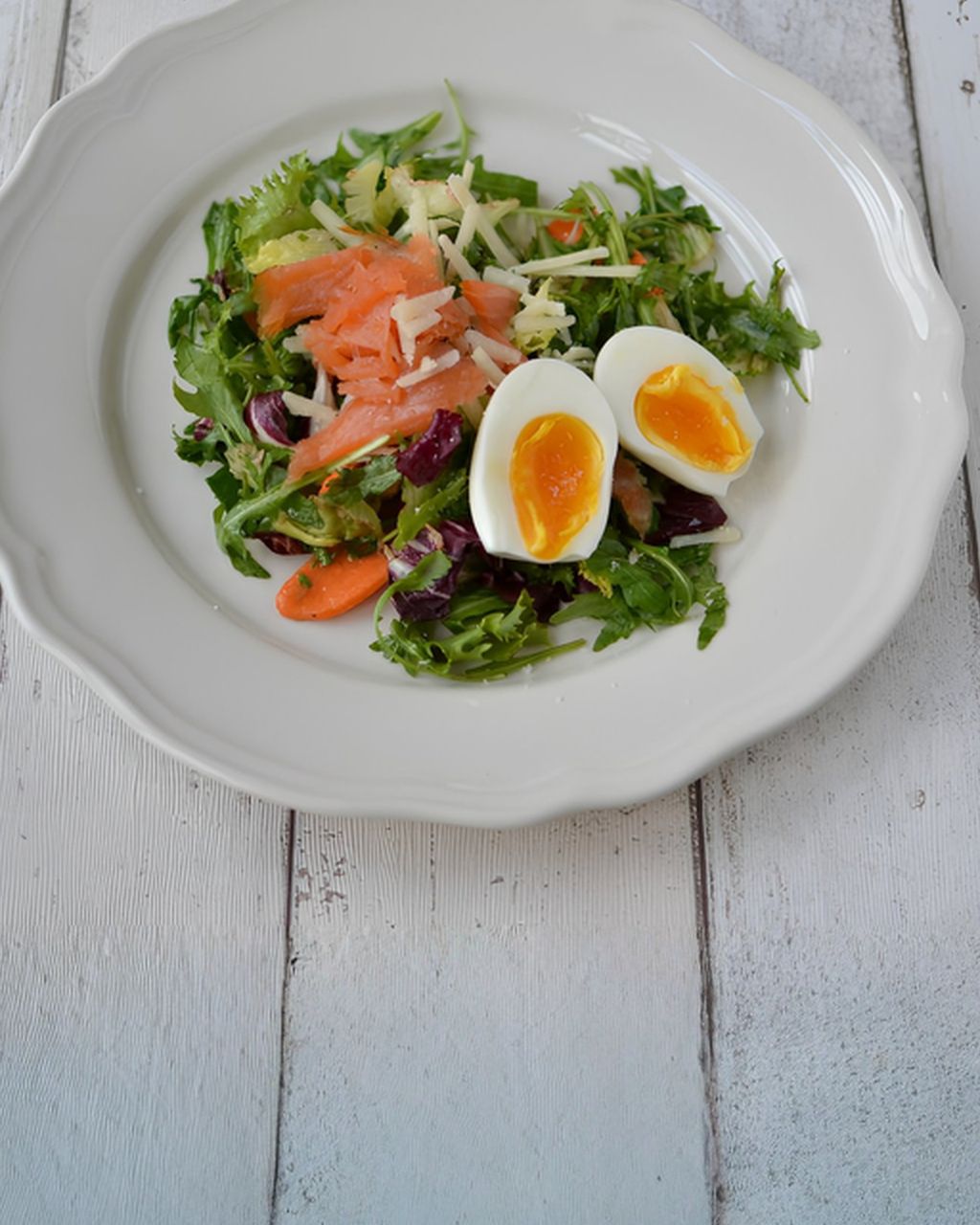
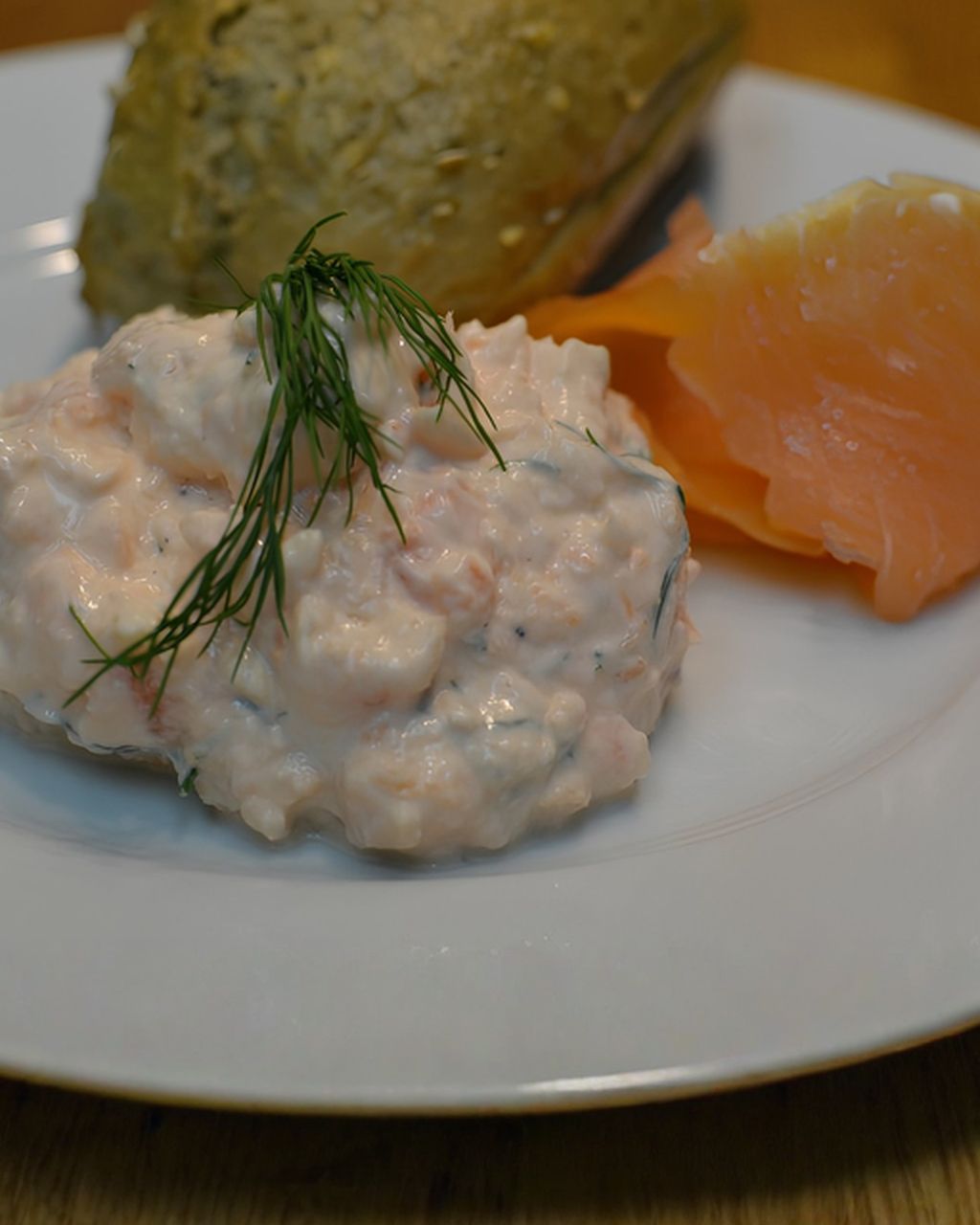
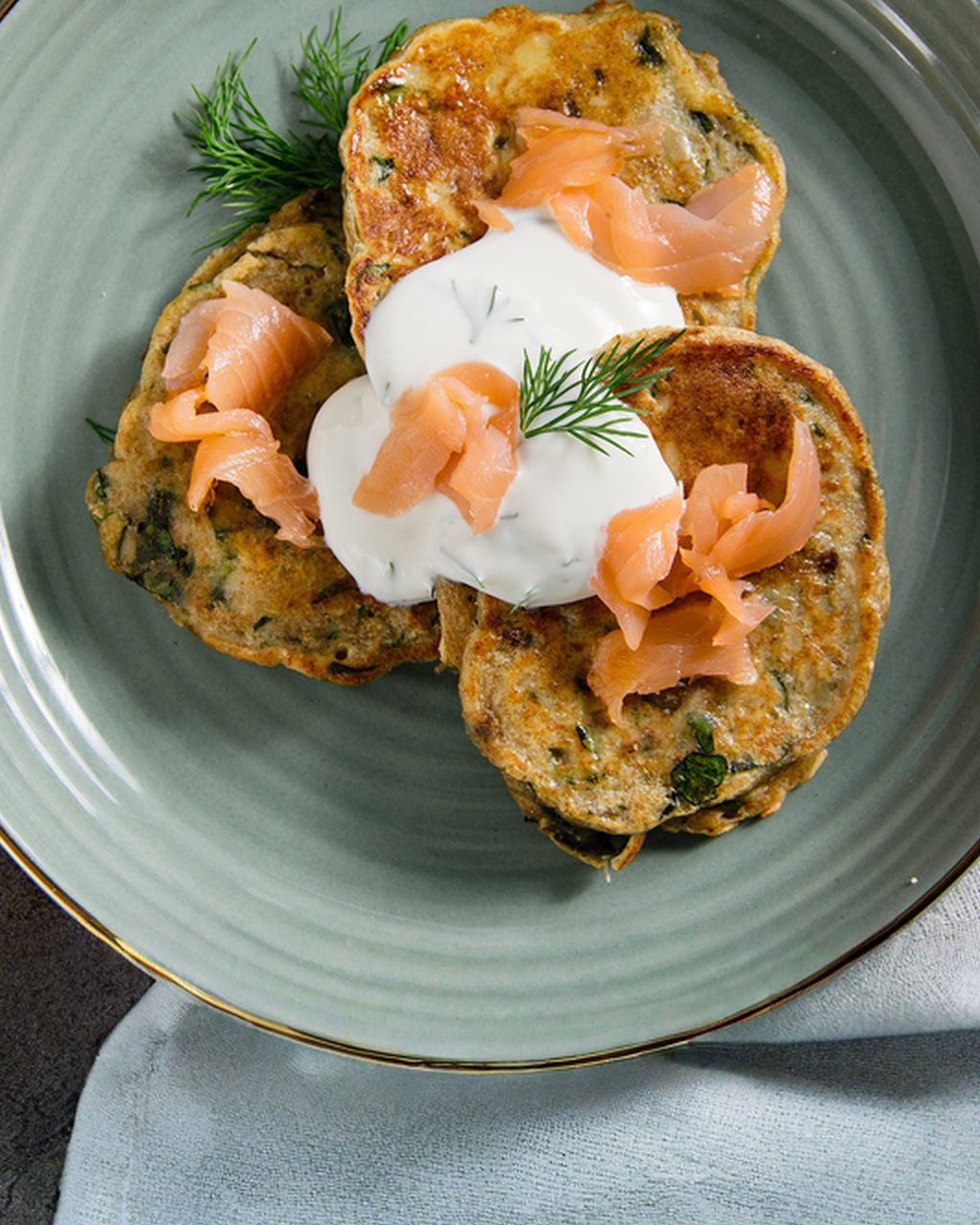
Trimmings and hot-smoked salmon suit spreads, such as our smoked salmon spread, salads with eggs or spinach pancakes with yogurt dip and smoked salmon. Add it to hot dishes at the end.
The fillets are salted with dry salt or in brine. Salt draws out some water, firms the flesh and forms a thin tacky layer on the surface that the smoke clings to. Then the fish is smoked: smoke from beech, alder or oak chips adds phenolic compounds that give aroma and slow the fat from going rancid. That is why smoked salmon is salty; the salt content is on the pack.
Most smoked salmon in shops is farmed Atlantic salmon. EU rules require the pack to say whether the fish is farmed or wild and give the country of farming or catch area. Salmon farming's main issues are sea lice, escapes and fish-based feed; the ASC label marks farms that meet stricter rules. Smoked wild Pacific salmon, such as keta or sockeye, carries the MSC logo if it comes from a certified fishery.
Salting and smoking are among the oldest ways to preserve fish, and northern Europe has long treated salmon this way. Smoked salmon from wild fish used to be a rare delicacy; with the growth of salmon farming it became an everyday festive fish.