- Season
- Available year-round
- Price
- Medium
Calories and nutrition per 100 g
- 237 kcal
- 18.4 g protein
- 17.8 g fat
- 0 g carbs
Beef Chuck
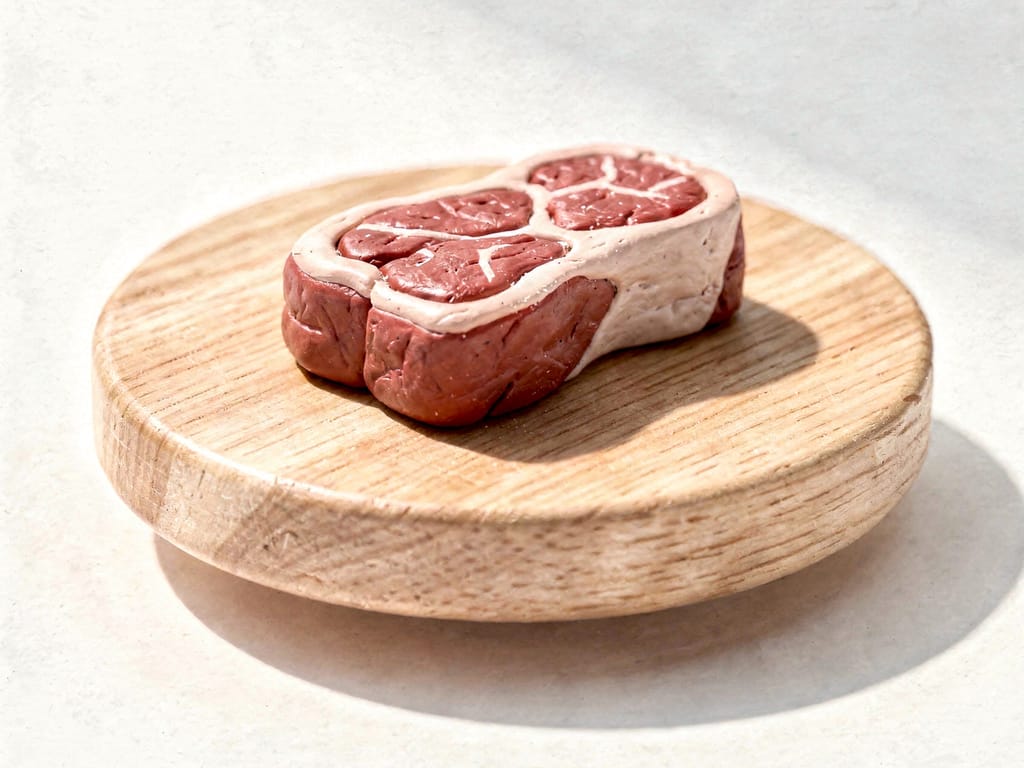
Hovězí přední (beef forequarter) is the Czech term for beef from the front quarter: neck, chuck, brisket, ribs, flank and fore shank. It is cheaper and fattier than hind-quarter beef and suits goulash, braising, stock and mince; the closest English cut is beef chuck.
Do not leave raw beef at room temperature. Cool cooked goulash or braised beef and refrigerate it within 2 hours.
Keep it wrapped on the bottom shelf of the fridge at 0–4 °C. A whole piece keeps 3–5 days, diced stewing beef and mince only 1–2 days, never beyond the use-by date. Eat cooked goulash within 3–4 days.
At −18 °C whole pieces keep their quality for 4–12 months, mince for 3–4 months. Wrap airtight and date it. Thaw in the fridge. Cooked goulash keeps 2–3 months in the freezer.
Choose deep red meat with white to cream fat, moist but not wet, with no grey or greenish patches and no sour smell. Under EU rules the beef label must state where the animal was born, reared and slaughtered. For goulash pick neck or chuck (podplečí), for falling-apart braises fore shank, for stock ribs, flank or bone-in brisket. Boneless forequarter mix works for both goulash and mince.
Beef shin or beef cheeks. They are rich in connective tissue and behave the same in long braises; cheeks need about an hour longer.
Pork shoulder or pork neck. They taste milder and cook in roughly half the time, so shorten the cooking.
Trim thick fat and the tough shiny silver skin, but leave the marbling inside. For goulash, cut the meat into 3–4 cm cubes, pat them dry and brown them in small batches in hot fat so they colour rather than release liquid. For mince, chill the meat well before grinding. Wash your hands, board and knife after handling raw meat.
Simmer bones, trimmings and sinew with root vegetables and onion for beef stock. Chop leftover goulash or braised beef smaller and turn it into goulash soup with potatoes and stock, or use it to fill pancakes.
Roughly what one measure weighs, scooped the way you normally would in the kitchen.
Forequarter beef needs time and moisture. For goulash, brown the cubes on softened onion, add paprika and braise under a lid for 2–3 hours until tender. In a pressure cooker 35–60 minutes is enough, depending on the cut. Ribs, flank and brisket are simmered whole for stock and served sliced. Slow roasting in a covered pot at 150–160 °C also works. Cook mince until it reaches at least 70 °C inside.
Hovězí přední (beef forequarter) is the Czech term for beef from the front quarter: neck, chuck, brisket, ribs, flank and fore shank. It is cheaper and fattier than hind-quarter beef and suits goulash, braising, stock and mince; the closest English cut is beef chuck. Czech butchers split a side of beef into fore and hind quarters between the 8th and 9th rib. The forequarter muscles carry the head and front legs and work hard, so they have more connective tissue and fat. In Czech shops it is sold either as a mix labelled hovězí přední bez kosti (boneless) or s kostí (bone-in), or as named cuts such as krk (neck) or podplečí (chuck).
Forequarter beef tastes rich and full, more so than lean hindquarter cuts, thanks to its fat and connective tissue. After long cooking it is soft, juicy and shreddable and gives the sauce body and gloss. Cooked quickly like a steak, it stays tough and rubbery.
Seasonal baking plans, tested recipes and kitchen tricks that save you time. Unsubscribe in one click.
4 min read
Czech butchery divides beef into cuts with fixed names under the standard ČSN 57 6510. These are the forequarter cuts; each needs a slightly different time.
A marbled muscle with plenty of connective tissue and coarse fibres. It is one of the best and cheapest cuts for goulash, ragù and mince. It needs 2–3 hours of braising on the hob, or 40–50 minutes in a pressure cooker. Step by step: beef neck: how to cook it until it falls apart on the fork.
The transition between neck and the fore rib. It is less sinewy than neck and leaner than the rib, and suits braising, goulash and roasting whole, and on the grill when well marbled. Braised, it is done in about 2–2.5 hours.
The back section between chuck and sirloin. It belongs to the forequarter, but well-marbled pieces are cut into steaks (ribeye, entrecôte), so it is sold separately and not counted as hovězí přední.
Ribs (the 1st to 8th rib) are marbled, bone-in meat, an excellent base for stock and long braising. Brisket is the fatty slab from the chest between the front legs, a Czech classic for boiled beef and stock; simmered whole it takes 3–3.5 hours.
A flat, marbled cut from the belly wall below the ribs. It is the cheapest; on the bone it is called short rib (nízké žebro). It suits stock, soup and mince, or boned and rolled for a braised roulade.
Muscle from the front leg laced with tendons, the most collagen-rich forequarter cut. Braised for 3–3.5 hours it falls apart and its sauce sets as it cools. Shank is often sold separately.
Anatomically the shoulder (plec) is the front leg, but the Czech standard and shops traditionally count it as hindquarter meat, together with the leg. Boneless shoulder is split into lean pieces similar to the leg cuts: the chuck tender (kulatá plec, also called false tenderloin), the shoulder clod (loupaná plec) and the top blade area (vysoká plec). So on a label you will usually find shoulder under hovězí zadní or under its own name, not under hovězí přední.
Some butchers and guides still list it with the forequarter, because it sits at the front and braises in a similar way. When you need a particular cut, ask for it by name rather than just fore or hind. The full beef map is in our guide cuts of beef: which one to use for goulash, steak or pot roast.
American beef chuck is a large primal from the neck to the 5th rib, including the shoulder blade and the upper front leg. In Czech it corresponds mainly to krk (neck), podplečí and part of the plec (shoulder); Czech shops sell chuck roll as krk or podplečí, and chuck tender is kulatá plec, sold as falešná svíčková. British chuck and blade covers a similar area. The cuts are butchered differently, though, so they do not match one to one.
For a recipe that calls for beef chuck, use boneless hovězí přední, krk or podplečí. For an American pot roast, use a whole piece of podplečí or kulatá plec.
Cubes of 3–4 cm need 1.5–3.5 hours on the hob, or 35–60 minutes in a pressure cooker once it is up to pressure. Chuck is ready first, then neck, and shank, brisket and ribs take longest. The meat is done when a fork slides in without resistance, not when the timer goes. If it still will not soften after hours, see why is your goulash tough and the meat won't soften. How much liquid to use in a pressure cooker or slow cooker is covered in goulash in a pressure cooker, slow cooker or oven.
An overview of every cut with times and what to cook from each is in beef forequarter: how to choose, cook and what to make with it.
Whole pieces of beef keep 3–5 days in the fridge at 0–4 °C, diced stewing beef and mince 1–2 days. Cook mince and burgers until they reach at least 70 °C inside, because grinding carries surface bacteria into the meat. Cool cooked goulash within 2 hours and reheat it until it reaches at least 70 °C in the middle for 2 minutes.