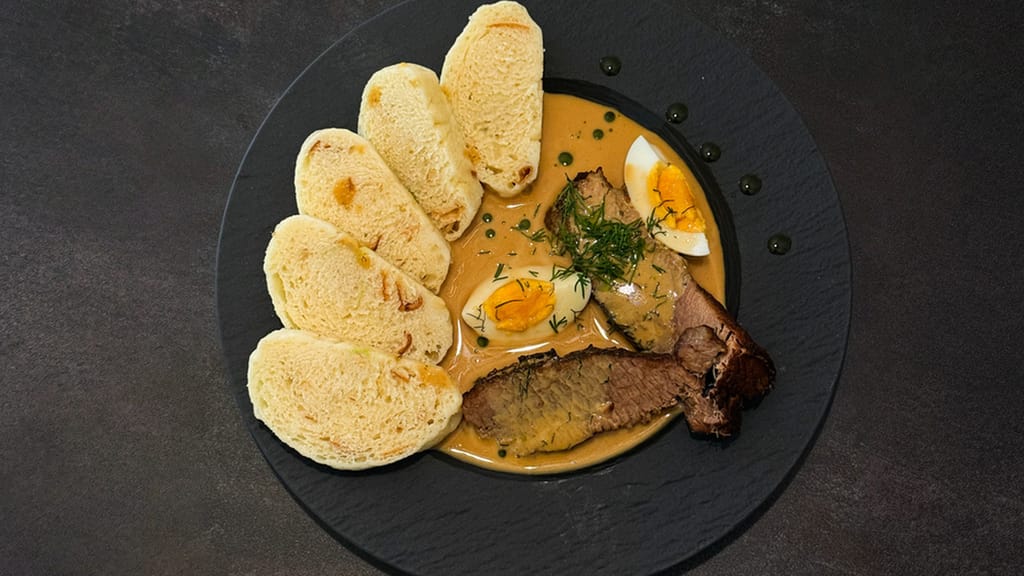
Dill sauce with slow-roasted beef
Beef Neck: How to Cook It Until It Falls Apart on the Fork

Updated Jul 19, 2026
Beef neck is one of the cheapest yet most rewarding cuts of beef – it's rich in collagen and connective tissue, so after a few hours of slow braising it practically falls apart into tender strands. In short: don't buy it for a quick pan-fry, buy it for goulash, ragù, braised beef and stock. In this article you'll learn how to recognise and choose beef neck, how to prep it before cooking, and which method gets the best out of it – plus links to specific recipes that show it all in action.
Beef neck is meat cut from the neck area, between the head and the shoulder– a cut running through with fat and connective tissue that's tough when cooked quickly but turns wonderfully tender and falls into strands when braised or roasted slowly. It's one of the more affordable forequarter cuts and it's practically made for goulash, ragù, braised beef and stock.
Because neck is threaded through with collagen and fine marbling, it has a big, full flavour – it's the fat and connective tissue that, over long cooking, turn into juicy meat and a thick, rich sauce.
Tenderness comes down to collagen. When heated to around 60–70°C, muscle fibres contract and the meat is initially tough; but if you hold it for a long time around 80–90°C, the collagen gradually breaks down into gelatine. According to both culinary practice and food science, this happens roughly between 70 and 82°C, but it needs time – anywhere from 2 to 4 hours.
The gelatine then locks moisture into the meat itself and gives the sauce body and a silky texture. Elastin (the tough white sinew), on the other hand, never breaks down no matter how long you cook it, so it's best to trim it off before cooking.
Beef neck is built for slow, moist cooking methods. It works best for:
goulash and braised meat in sauce
ragù for pasta and lasagne
braised or pot-roasted beef (in wine, or with dill sauce)
stock and rich bouillon – the collagen makes it wonderfully full-bodied
ground meat for homemade burgers and meatballs
What it's not suited for is quick steaks and pan-fried minute cuts – without long cooking it stays tough.
Good beef neck has a deep red colour, fine marbling and a fresh smell. Here's what to look for when buying:
Colour: deep red to cherry-red. Greyish or greenish patches and overly pale meat suggest it isn't fresh.
Marbling: fine white streaks of fat running through the meat mean more juiciness and flavour.
Smell: fresh beef has only a mild, faintly sweet smell; any sour or ammonia-like odour is a red flag.
Surface: moist, but not slimy or sticky.
If you're not sure which cut is actually neck and how it differs from chuck or shoulder, check out our guide to types of beef.
Fresh beef neck keeps in the fridge at 0–4°C for about 2–3 days. For longer storage, freeze it – ideally vacuum-packed so it doesn't get freezer burn – and it'll keep in the freezer for 6–12 months.
Thaw it slowly in the fridge, never at room temperature. Take it out at least 30–60 minutes before cooking so it isn't ice-cold – it'll then heat through more evenly.
Before you start cooking, trim off tough membranes and sinew, pat the meat dry, and cut it according to your recipe. For braising, go for 3–4cm cubes; for stock, leave the meat whole; for goulash, cut it smaller. This basic prep matters more to the final result than any secret spice.
A marinade adds flavour, but you don't need to marinate neck for tenderness – that comes from cooking, not acid. If you have time, marinate it for a few hours or overnight in oil, garlic, rosemary or thyme, and a splash of wine or vinegar. If you're short on time, a generous seasoning of salt and pepper is enough; caraway, sweet paprika or bay leaf all work well with it.
Don't be shy with the salt, and season well ahead of time – it needs time to work its way in and season the meat from the inside, not just the surface.
Browning it well is the foundation of flavour. When you sear the meat on all sides in hot fat until it's deep brown, you kick off the Maillard reaction, which gives the dish depth and caramel notes. Only then do you add liquid and braise – the fond dissolves into the sauce and becomes the base of its flavour.
You don't need to tenderise neck for braising; that only makes sense for thin slices meant for quick cooking.
There are four main ways to cook beef neck: braising, slow roasting in the oven, sous-vide, and simmering into stock. What they all have in common is the same thing – low temperature and plenty of time for the collagen to turn into gelatine.
Braising is the most foolproof way to cook beef neck. Sear the meat hard first, then add stock or wine, plus onion and spices (bay leaf, thyme, allspice), and braise covered at a gentle simmer for 2.5–3 hours, until it falls apart. The liquid should just lazily bubble, not boil hard.
Roast beef neck covered at a low temperature. Ideally 150°C for 3–4 hours in a roasting dish with a little liquid, covered with a lid or foil. The low temperature heats the meat through evenly without drying it out.
Sous-vide gives you tender meat from neck even without a sauce. Cook the vacuum-sealed meat in a water bath for a long time at a steady temperature – around 65–75°C for 24–48 hours. The lower the temperature, the more pink colour the meat retains; after the water bath, sear it hard in a pan to build a crust.
For stock, put the neck into cold water and just let it gently simmer. The water should barely bubble (around 90°C) for 3–4 hours; the collagen dissolves into the stock and gives it body and shine. A hard boil is a mistake – it clouds the stock and dries out the meat.
Beef neck really shines in slow-cooked dishes – braised beef in wine, dill sauce, or ragù. Here are recipes from Yumsto where you can put the technique into practice:
Dill sauce with slow-roasted beef
Dill Sauce with Slow-Roasted Beef – a classic where the neck turns beautifully tender
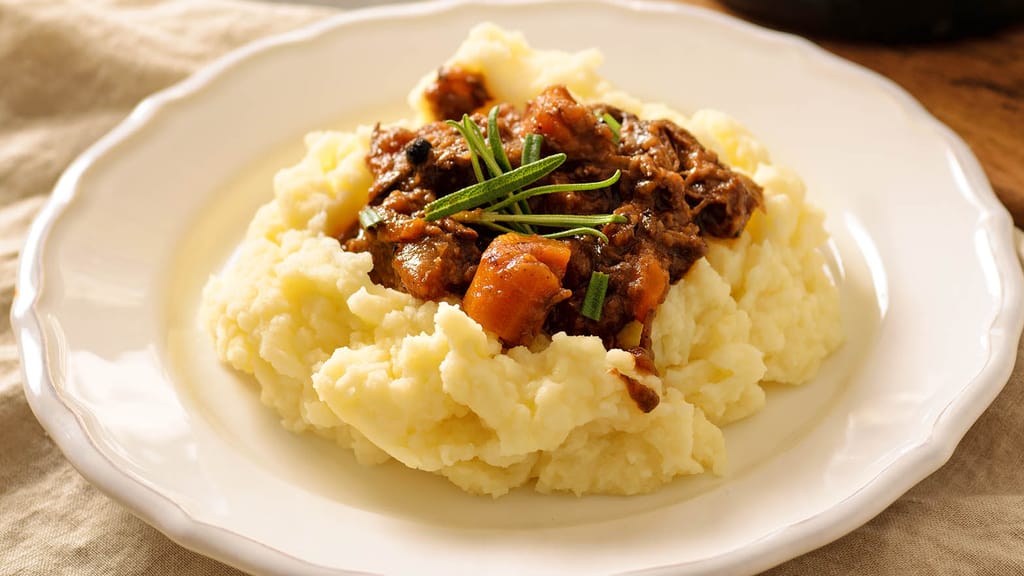
Oven-braised beef in red wine with vegetables
Oven-Roasted Beef with Wine and Vegetables – a great example of slow-roasting neck
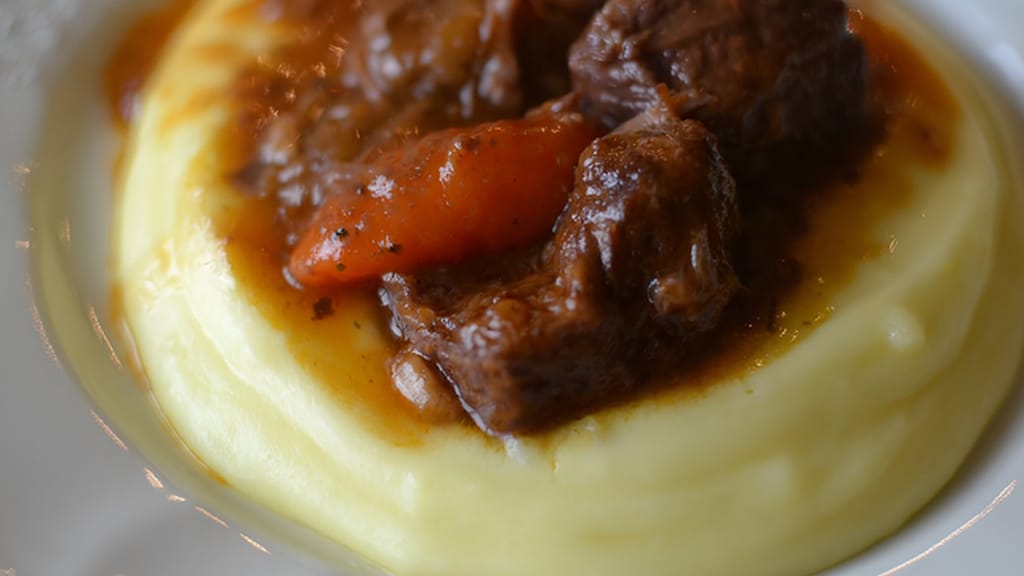
Beef cheeks in red wine with vegetables
Beef Cheeks in Red Wine – another collagen-rich cut braised until tender
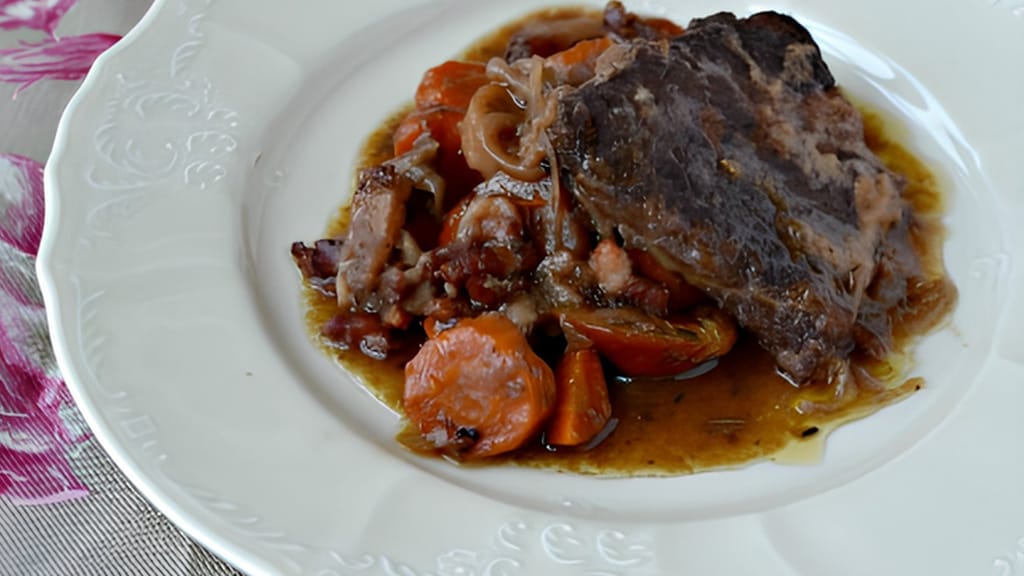
Provençal beef with root vegetables
Provençal Beef with Vegetables – a fragrant braised one-pot dish
Beef neck goulash and stir-fried Asian noodles with beef are among its most popular uses – we're still working on dedicated recipes for these, so you can cook them exactly by a tried-and-tested method.
Beef neck pairs well with side dishes that soak up the sauce – bread dumplings, mashed potatoes, roasted root vegetables or fresh bread. As for drinks, go for full-bodied red wines (Cabernet Sauvignon, Merlot) or dark beer and stout, whose caramel notes bring out the meaty flavour.
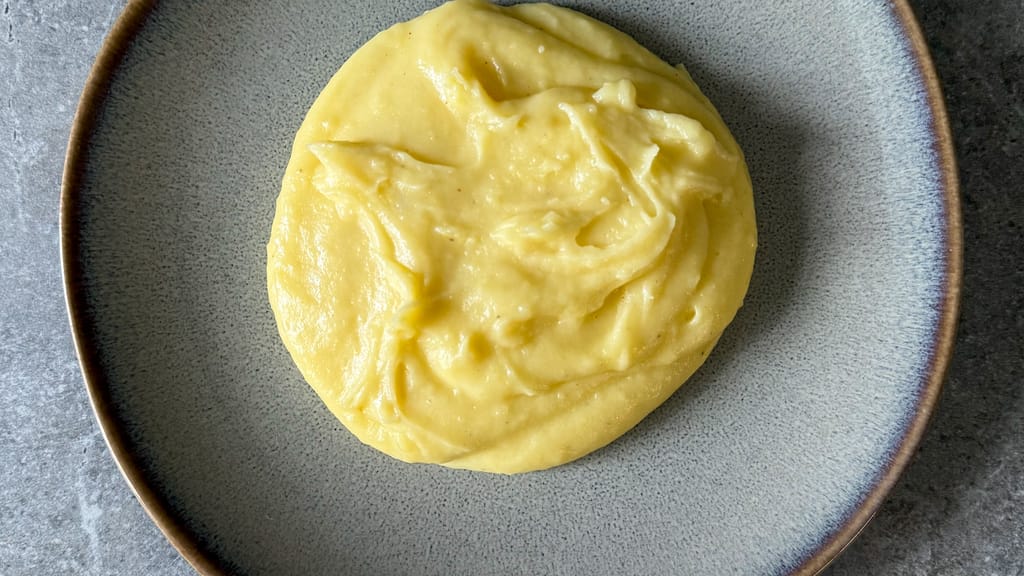
Silky smooth creamy mashed potatoes with nutmeg
Silky Creamy Mashed Potatoes – the perfect side for braised beef
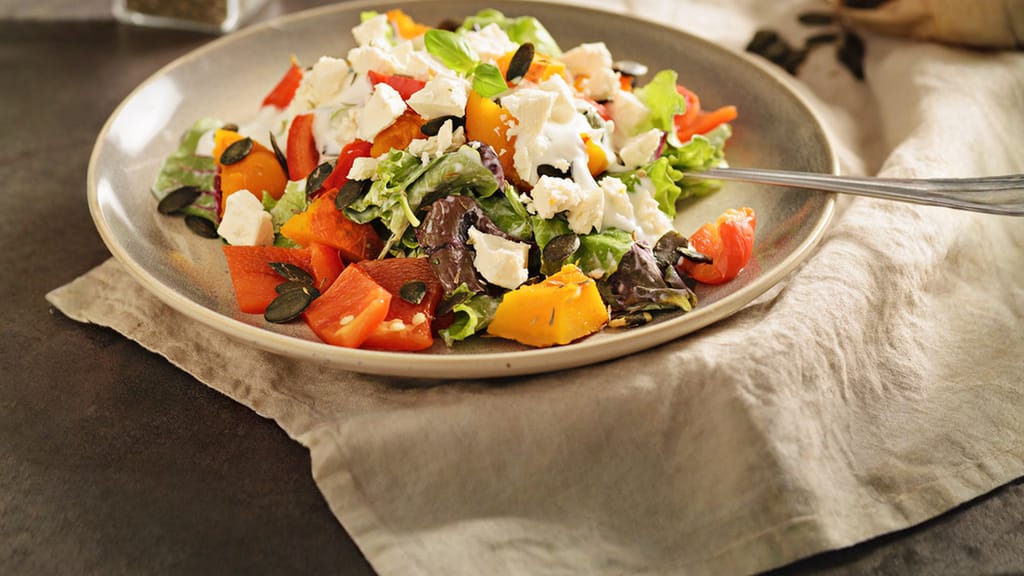
Roasted vegetable salad with feta
Roasted Vegetable and Feta Salad – a lighter side for rich, juicy meat
The most common mistake with beef neck is not enough time and too high a temperature. Here's what to avoid:
Boiling too hard: the meat seizes up and dries out before it has a chance to soften. Keep it at a gentle simmer.
Cooking too briefly: collagen needs hours, not minutes – don't rush it.
Skipping the trim: tough elastin never breaks down, so cut it away beforehand.
Thin slices for a quick cook: neck isn't meant for minute steaks – a few minutes in the pan and it'll stay tough.
Other collagen-rich forequarter cuts work best – chuck, beef cheeks, shoulder or boneless short rib. They all handle long braising and fall apart into strands just like neck, so you can swap them into goulash or braised beef almost one for one.
No, but they behave similarly. Neck comes from the neck area and tends to be fattier, while chuck comes from the shoulder/leg area and has a distinct band of connective tissue running through the middle. Both are cheap cuts made for slow cooking, and you can substitute one for the other in goulash or braised dishes.
Beef neck isn't suited to a quick classic steak – without long cooking it stays tough. You can grill it, but only after it's already been braised or cooked sous-vide until tender, using the grill just to finish it with a crust.
Properly cooked neck can be pierced with a fork with no resistance, and the meat pulls apart into strands on its own. Don't rely on time or a meat thermometer the way you would for a steak – here it's all about tenderness, i.e. giving the collagen enough time to melt into gelatine.
For braised or roasted dishes, plan on roughly 150–200g of raw meat per person, since it loses volume during cooking. For stock or bone-in cuts, add a bit more.
One recipe worth heating the oven for, one tip, and one deal from the shop. Nothing else.



