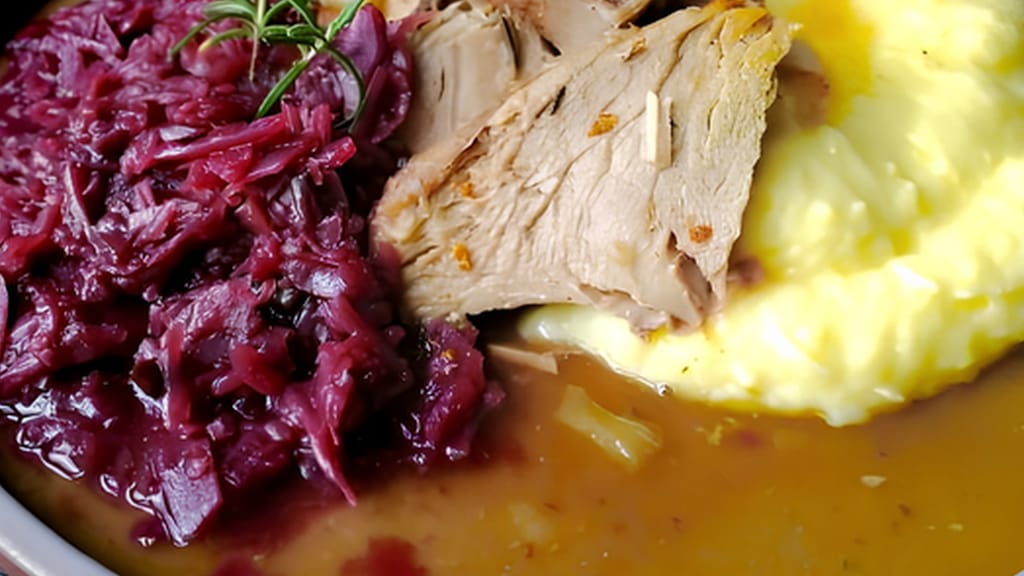
Slow-roasted pork with red cabbage
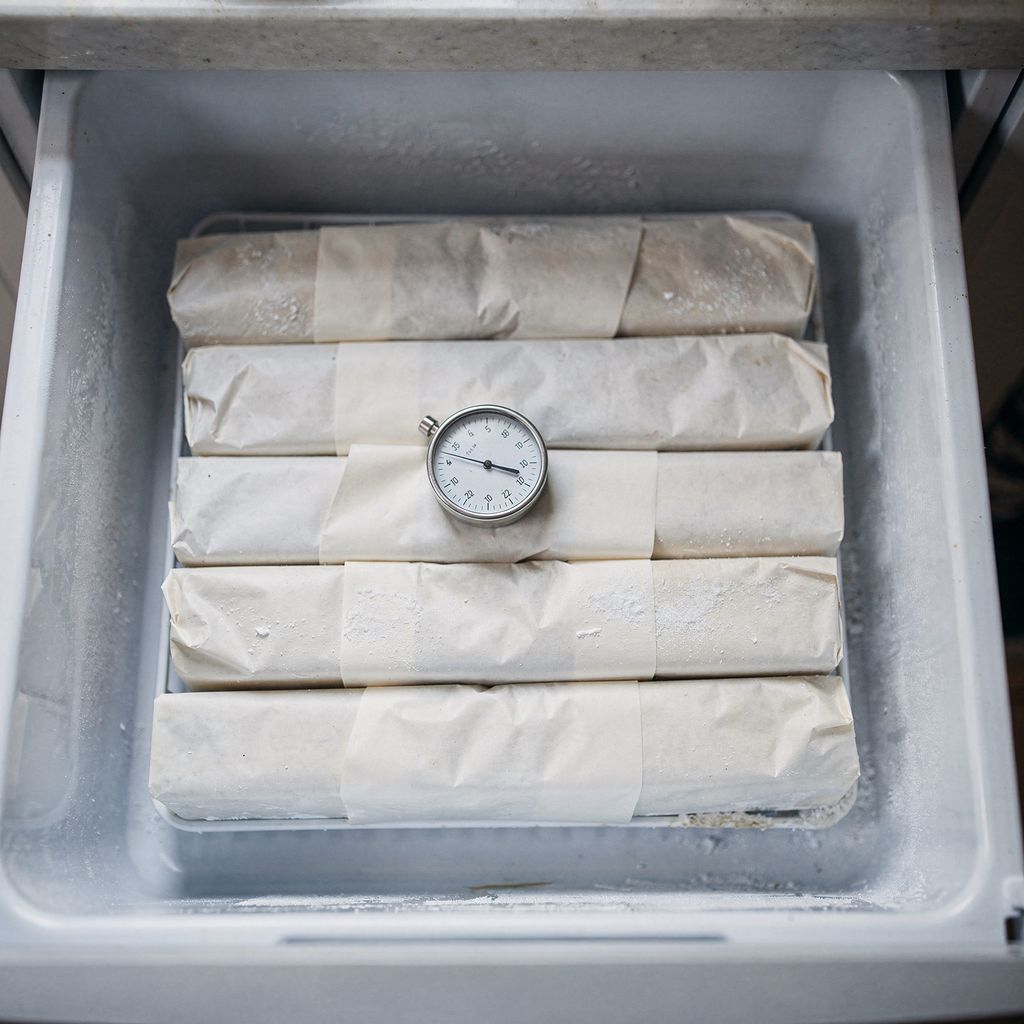
Updated Sep 18, 2026
Kept at a steady −18 °C, frozen meat is safe indefinitely — what fades over time is quality: beef steaks last 4–12 months, pork chops 4–6, ground meat 3–4 months, a whole chicken up to a year. There are only three safe ways to thaw meat: in the fridge, in cold water changed every 30 minutes, or in the microwave with immediate cooking straight after. Never on the kitchen counter. Below you'll find a full table by type of meat, thawing times by weight and temperature, and the safe internal temperature to cook to.
At a steady −18 °C or below, frozen meat is safe indefinitely. The times below are quality windows, not safety limits — after them the meat won't spoil, it just dries out, the fat oxidizes, and the flavor starts to taste like the freezer. They're based on USDA guidelines, which most European sources also draw on:
Beef steaks, chops and roasts: 4–12 months
Pork chops: 4–6 months
Pork roasts: 4–12 months
Lamb and veal, whole cuts (roasts): 4–12 months
Ground meat — beef, pork, chicken, turkey: 3–4 months
Whole chicken or turkey: up to 12 months
Chicken pieces — breasts, thighs, wings: 9 months
Offal and giblets: 3–4 months
Sausages and cured meats: 1–2 months
Bacon: 1 month
Ham, cooked and sliced: 1–2 months
Cooked meat and leftovers: 2–3 months
Lean fish — cod, pike-perch, flounder: 6–8 months
Fatty fish — salmon, mackerel, sardines: 2–3 months
Two rules explain the whole table. The more surface area, the shorter the window: ground meat is surface all the way through, a whole cut only on the outside — that's why chops keep less well than roasts, and why ground meat has the shortest window of all. And the more fat and salt, the shorter the window: fat oxidizes even at −18 °C, and salt speeds that up. That's why bacon lasts a fraction as long as a beef roast, even sitting in the same drawer.
Freezing doesn't destroy bacteria — it just pauses them. At −18 °C, salmonella and E. coli stop multiplying but survive, and as soon as the meat thaws, they pick up right where they left off. That's why thawing, not freezing, is the risky part of the whole process.
There's a second implication too: the freezer won't rescue meat that was already borderlinebefore it went in. Freeze meat while it's fresh, not because it won't fit into tomorrow's plans. Whatever quality goes into the freezer is the quality that comes back out.
What actually damages meat in the freezer is physics. Water inside the cells forms ice crystals, and those crystals rupture the cell walls — the slower the meat freezes, the bigger the crystals and the greater the damage. That's exactly why a puddle forms on the board after thawing: it's water the meat can no longer hold onto. So freezing speed affects not just how long the meat lasts, but how juicy it'll be on the plate.
Freezer burn is a dried-out, grayish-white or brownish patch on the surface of the meat — the water there has sublimated away and been replaced by air. It's not spoilage and it's not a health issue; it's a taste-and-texture issue, since that patch turns tough and tastes stale. Just cut it off and use the rest as normal.
There's only one way to prevent it, and it's unglamorous: push out the air. Wherever the wrap doesn't touch the meat, freezer burn will form — it's just a matter of time.
Quality after thawing comes down mostly to what you do before freezing — how fast the meat freezes and how much air is left in the packaging.
Portion it for single use. Half a kilo of mince, two steaks, four thighs. It'll freeze faster, thaw faster, and you won't be left wondering what to do with the leftover bit.
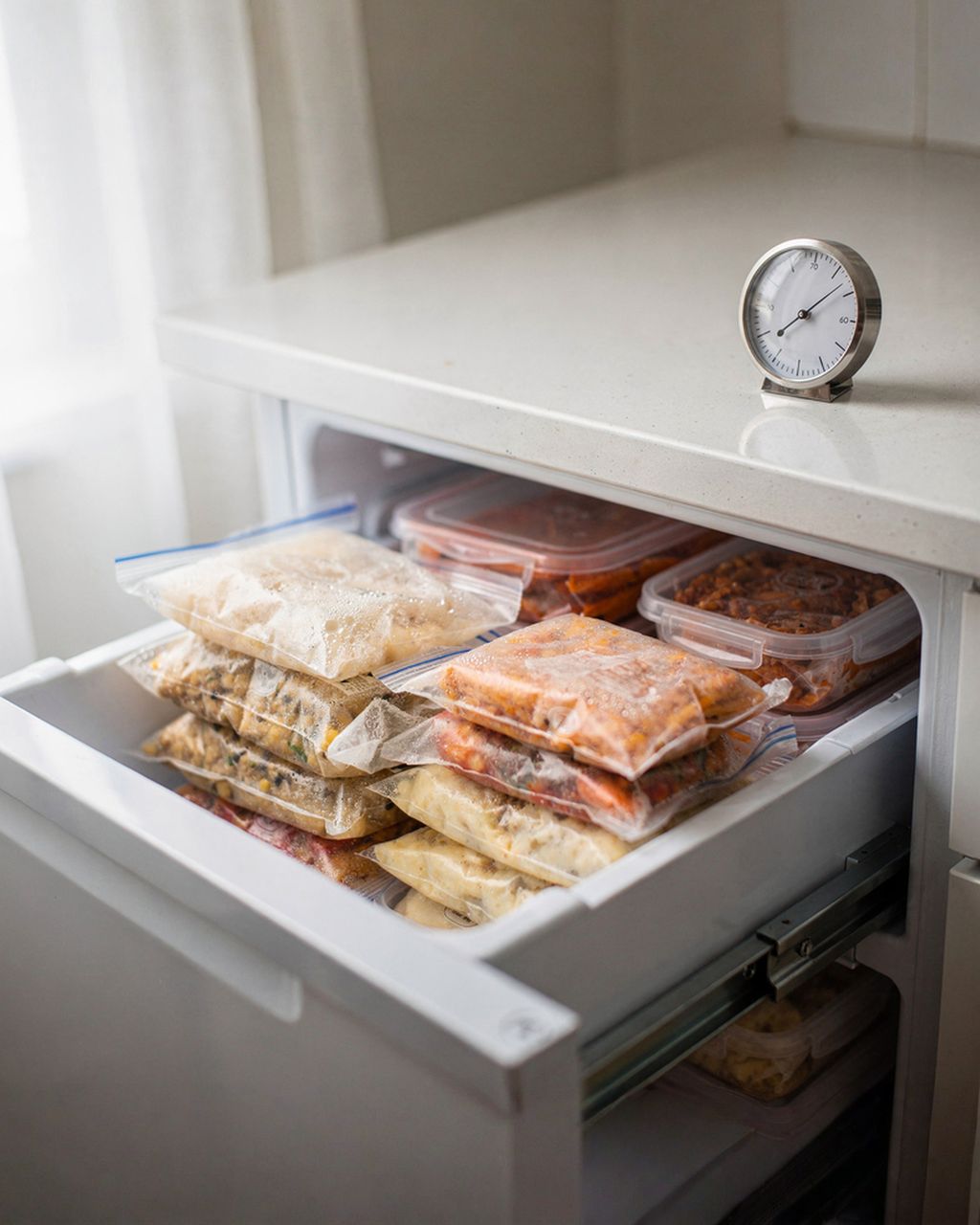
Push out the air. A vacuum sealer is best, but an ordinary zip-lock bag submerged in water up to the seal works too — the water pushes the air out for you. Meat pressed tight against the wrap doesn't dry out.
Freeze it flat. Roll the bag out into a thin slab. A thin layer passes through the critical temperature zone fastest, so crystals stay small — and a flat slab thaws in a third of the time a solid lump would.
Put it against the back wall or in the bottom drawer. That's where the temperature is most stable. Never in the door.
Don't freeze one huge batch at once. A four-star freezer is rated to freeze at least 4.5 kg per 100 liters of capacity within 24 hours — that's an appliance specification, not a USDA guideline like the rest of the figures in this article, and you'll find your freezer's exact freezing capacity (in kg/24h) on its rating label. A bigger batch raises the internal temperature and slows freezing for everything else already in there.
Label it. Type and date, marker on the bag. Three months from now you won't be able to tell ground beef from ground pork, and that's a silly reason to throw something out.
If your freezer has four stars, it can freeze fresh food and hold −18 °C. Three stars means it can store already-frozen food but won't freeze fresh meat quickly — in that case, portion even thinner and in smaller batches.
There are only three safe ways to thaw meat: in the fridge, in cold water changed every 30 minutes, and in the microwave followed immediately by cooking. A fourth option is not thawing it at all and cooking it straight from frozen. All four share one rule: the surface of the meat must not rise above 4 °C before the inside has thawed.
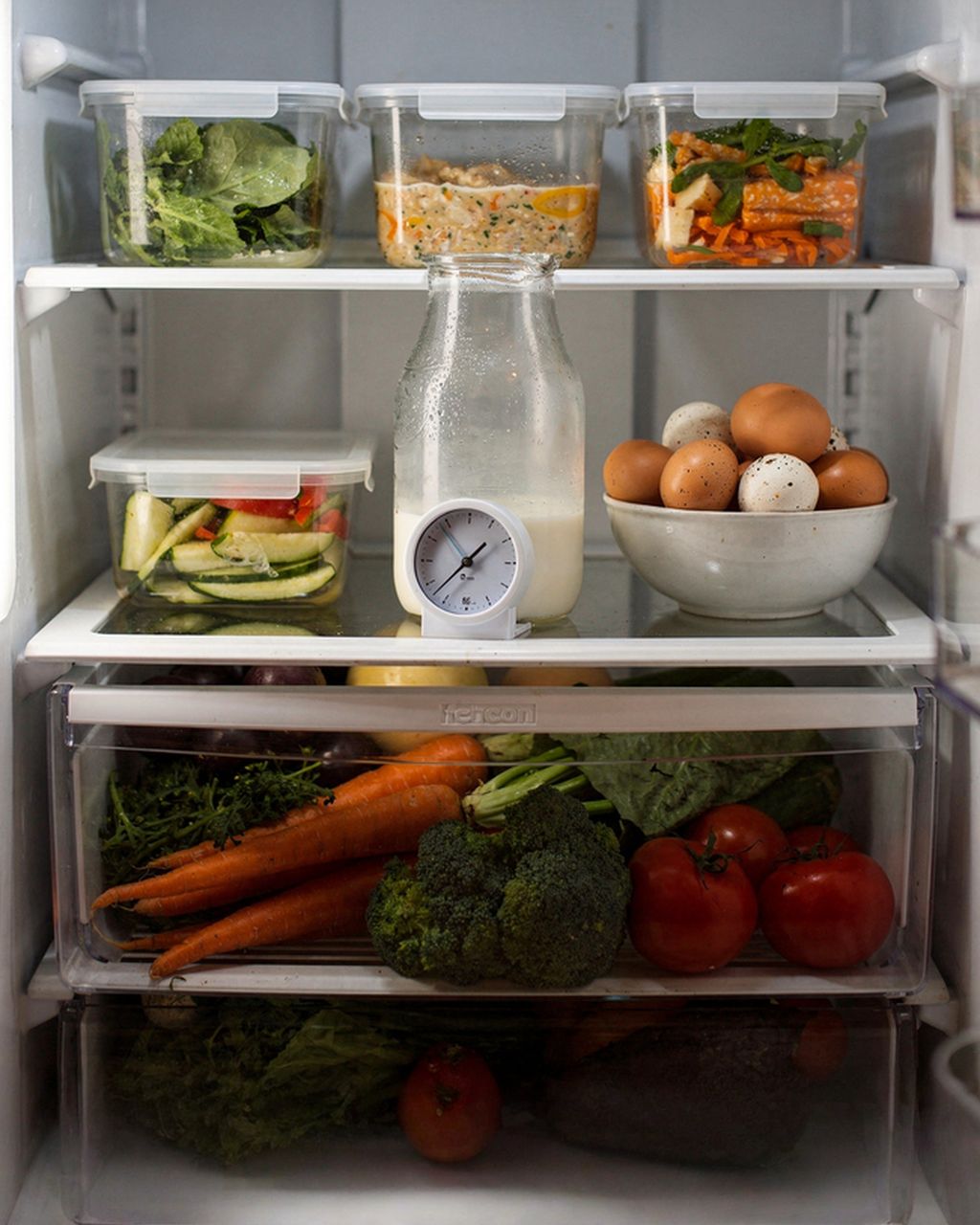
The fridge is the only method where you don't need to watch the clock, and the meat can happily wait an extra day if needed. Put it in a bowl or on a tray on the bottom shelf so juices don't drip onto anything below, and let it thaw at 4 °C or below.
Times by weight:
A flat pack of mince, one steak, a fish fillet: 8–12 hours, i.e. overnight
Chicken breasts or thighs, about 0.5 kg: 12–24 hours
Larger cuts, roasts, whole chicken: roughly 24 hours per 2.3 kg
A whole 6 kg turkey: allow 2–3 days — this isn't one to leave until the last minute
Two extra perks: meat thawed in the fridge loses the least liquid, so it stays juicier, and it's the only method where you can safely put the raw meat straight back in the freezer.
Cold water thaws meat about ten times faster than fridge air, since it conducts heat far better. There are three conditions, and all three must be met at once:
The meat must be in an airtight bag. If water reaches it, it washes flavor out of the meat and lets in whatever's lurking in your sink.
The water must be cold straight from the tap, not lukewarm and definitely not warm.
Change the water every 30 minutes. The meat cools it down, so after half an hour it's sitting in a layer that's no longer doing any cooling.
Times: a pack under 0.5 kg is ready in an hour, 1.5–2 kg takes 2–3 hours. Meat thawed in water needs cooking right away — don't put it back in the freezer raw.
The microwave thaws a portion in minutes, but unevenly — thin edges start cooking before the center has even thawed. That pushes part of the meat into the temperature range where bacteria multiply, so it must go straight into the pan or oven right after. No "I'll let it sit for a bit."
In practice: run the defrost setting based on weight, flip the meat and pull out any pieces that have already thawed after each minute, and don't try to finish the job in the microwave — let the last few ice crystals melt away in the pan instead. Don't use this method for large roasts at all; unevenness will win every time.
Yes — it's safe to cook frozen meat directly, with no thawing at all. According to the USDA, it just takes roughly 50% longer than cooking it thawed.
For stews and braises, cooking from frozen is actually the easiest route: stew cubes, ribs, chicken thighs, meatballs. The water released by the broken ice crystals ends up in the sauce anyway — right where you want it.
Where it doesn't work: a steak you want medium, and generally anything meant to sear quickly in a pan — by the time the center warms through, the outside is overcooked. And never do this with large stuffed or rolled cuts: the center won't heat through properly, and a thermometer won't warn you in time.
Thawed meat is best suited to slow, moist cooking — that's where a small amount of lost liquid goes unnoticed, since it ends up in the sauce that puts it to use.
Long-braised and slow-roasted dishes work best: slow-roasted pork with braised red cabbage, dill sauce with slow-roasted beef or Provençal beef with vegetables. Just as reliable is oven-braised beef with wine and vegetables, where the meat sits in liquid for hours and has no chance to dry out.
Where the difference shows: quick-seared lean cuts. Grilled pork tenderloin in mustard or a steak from thawed meat will release water into the pan, stop browning and start steaming instead. There are three fixes, and they only work together — pat the meat completely dry with paper towel, heat the pan hotter than you would for fresh meat, and don't crowd it with more pieces than fit with room to spare.
Two dishes where you genuinely can't tell the meat was ever frozen:
Slow-roasted pork with red cabbage
Slow-roasted pork with braised red cabbage — the long cooking time forgives any water thawed meat has lost
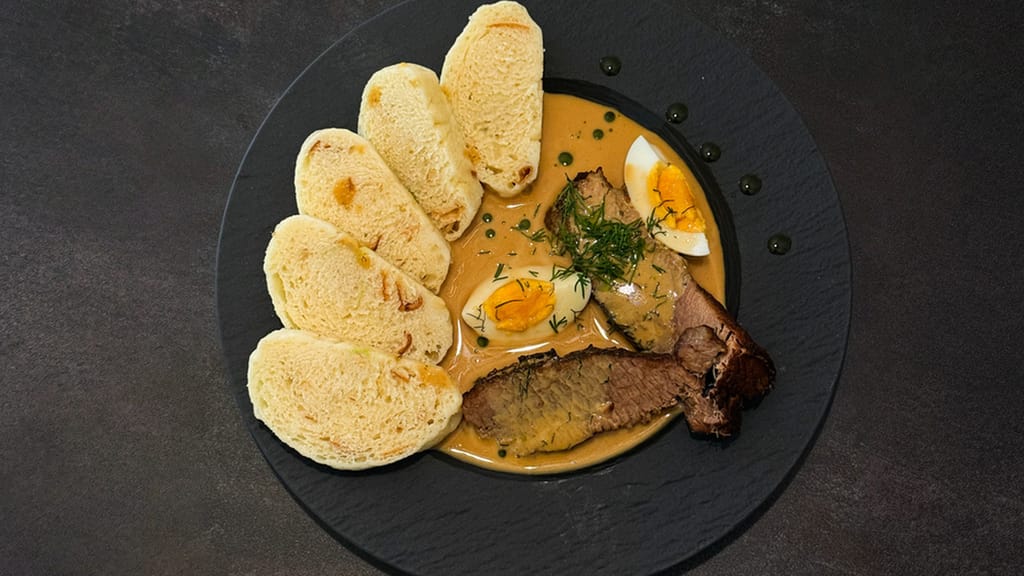
Dill sauce with slow-roasted beef
Dill sauce with slow-roasted beef — a moist dish where frozen beef performs just as well as fresh
Thawed meat keeps in the fridge at 4 °C for 1 to 5 days depending on the type — and the clock starts from the moment it thawed, not from when it came out of the freezer.
Ground meat, offal, fish: 1 day, 2 at most
Poultry, whole or cut up: 1–2 days
Whole cuts of beef, pork, lamb: 3–5 days
That difference isn't about stricter rules — it's about surface area again. In ground meat, surface bacteria are mixed all through the volume; in a whole cut, they stay on the outside, where a hot pan reliably kills them off. The same goes for meat that's been pounded thin or cut into strips: every cut moves it a step closer to ground meat.
Yes, but only meat that thawed in the fridge and stayed below 4 °C the whole time. Everything else follows clear rules:
Thawed in the fridge: you can put raw meat straight back in the freezer without cooking it. Quality drops — a second round of ice crystals damages the cells, and the meat comes out drier — but it's safe.
Thawed in cold water or the microwave: cook it first, and only freeze it once it's a finished dish.
Thawed at room temperature: don't refreeze it and don't eat it. Freezing doesn't reduce the bacteria count — it just locks it in for later.
Rather than a second freezing cycle, it's usually more practical to cook the meat and freeze the finished dish instead. Goulash, ragù or braised meat in sauce keeps in the freezer for 2–3 months and tastes noticeably better reheated than a raw cut frozen twice.
Thawed meat needs the same internal temperatures as fresh — freezing doesn't change that. Check with a probe thermometer at the thickest point, away from any bone:
Poultry, whole or ground: 74 °C
Ground beef, pork, lamb: 71 °C
Whole cuts of beef, pork, lamb, veal: 63 °C, then rest 3 minutes
Fish: 63 °C
Those three minutes of rest aren't about juiciness. The temperature inside the meat holds steady or keeps climbing during that time, and that's exactly when the last of the bacteria are finished off — which is why whole cuts are rated at 63 °C, and not higher.
And here's why the ground-meat threshold sits 8 °C higher: bacteria that stay on the surface of a steak are mixed all the way through ground meat. A pink center in a burger means something very different from a pink center in a steak.
With poultry, this is where you first notice the difference between measuring and guessing: slow-roasted turkey breast pulled at 74 °C is juicy; ten degrees later, it's cotton wool.
A full freezer keeps food frozen for about 48 hours, a half-full one for 24 — as long as you don't open it. According to the USDA, the closed door is what matters most; every peek shortens that window, which is exactly why a full freezer outlasts a half-empty one. Once power comes back, you can safely refreeze meat that's still hard or still has ice crystals in it. If meat feels lukewarm to the touch, or has spent more than two hours above 4 °C, throw it out — and don't taste it to check.
Yes, you can freeze it right up to and including the last day of the use-by date — the freezer locks in that condition. It won't make the meat any fresher, though, so once thawed, cook it straight away rather than expecting it to keep for a few more days in the fridge. And if the meat already smells off or feels sticky before freezing, the freezer won't fix that either — that belongs in the bin, not the freezer drawer.
No, never wash raw meat or poultry before freezing. Water doesn't remove bacteria — it just splashes them across the sink, counter and everything nearby. Simply pat the meat dry with a paper towel instead: a drier surface forms fewer ice crystals in the freezer, and it'll brown faster in the pan too.
Yes, and it's one of the best make-ahead tricks there is. Pour the marinade over the meat in a bag, squeeze out the air, and freeze — the meat then marinates as it thaws in the fridge, so the work's done by the next day. Just be careful with marinades heavy on lemon, vinegar or salt: the acid will keep working for the full 12–24 hours of thawing, so use less of it, or add the marinade only after thawing so the surface of the meat doesn't turn mushy.
Practically not — freezing doesn't change protein, fat or minerals, and studies find no meaningful difference between frozen and fresh meat. A small loss happens during thawing: some water-soluble B vitamins leave with the liquid that drains out. That's another reason thawing in the fridge pays off nutritionally, since it releases the least liquid. And if you catch that liquid and use it in a sauce, you don't even lose that.
One recipe worth heating the oven for, one tip, and one deal from the shop. Nothing else.