Why Your Goulash Is Tough and the Meat Won't Soften
Why Is My Stew Meat Tough? Cut, Time, Heat and How to Fix It
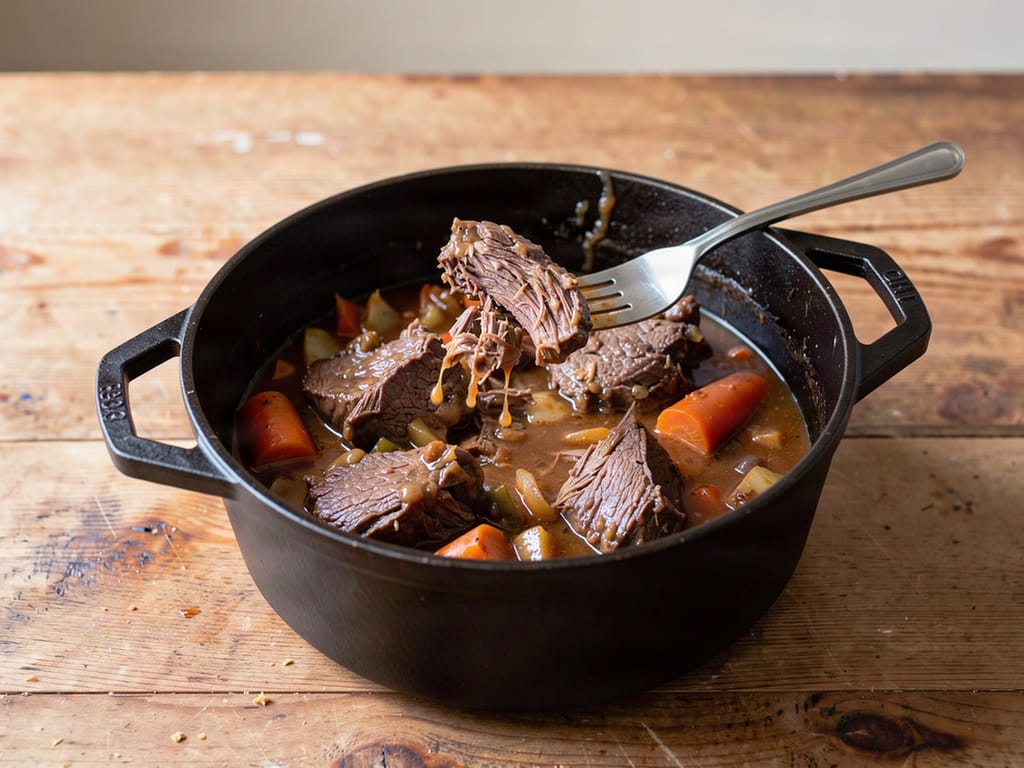
Updated Nov 21, 2026
Stew meat is usually tough because it hasn't cooked long enough, or because the cut was too lean for stewing. Boiling instead of simmering and overcooking also make it dry and chewy. Here is how to tell which one happened and how to fix it.
Tough stew meat almost always means one of two things: the meat hasn't cooked long enough, or it was the wrong cut for stewing. Less often, the stew boiled hard instead of simmering, or the meat was cooked so long it dried out into strings.
Here is how to tell which one you have:
Firm, rubbery and springy: not cooked long enough. Keep going.
Dry, grainy and tight, from a lean cut: the wrong cut. Lean meat has nothing to melt.
Dry and stringy, falling into threads but still chewy: overcooked, or boiled too hard.
Tender inside but chewy edges: the pieces were cut too small or seared too hard.
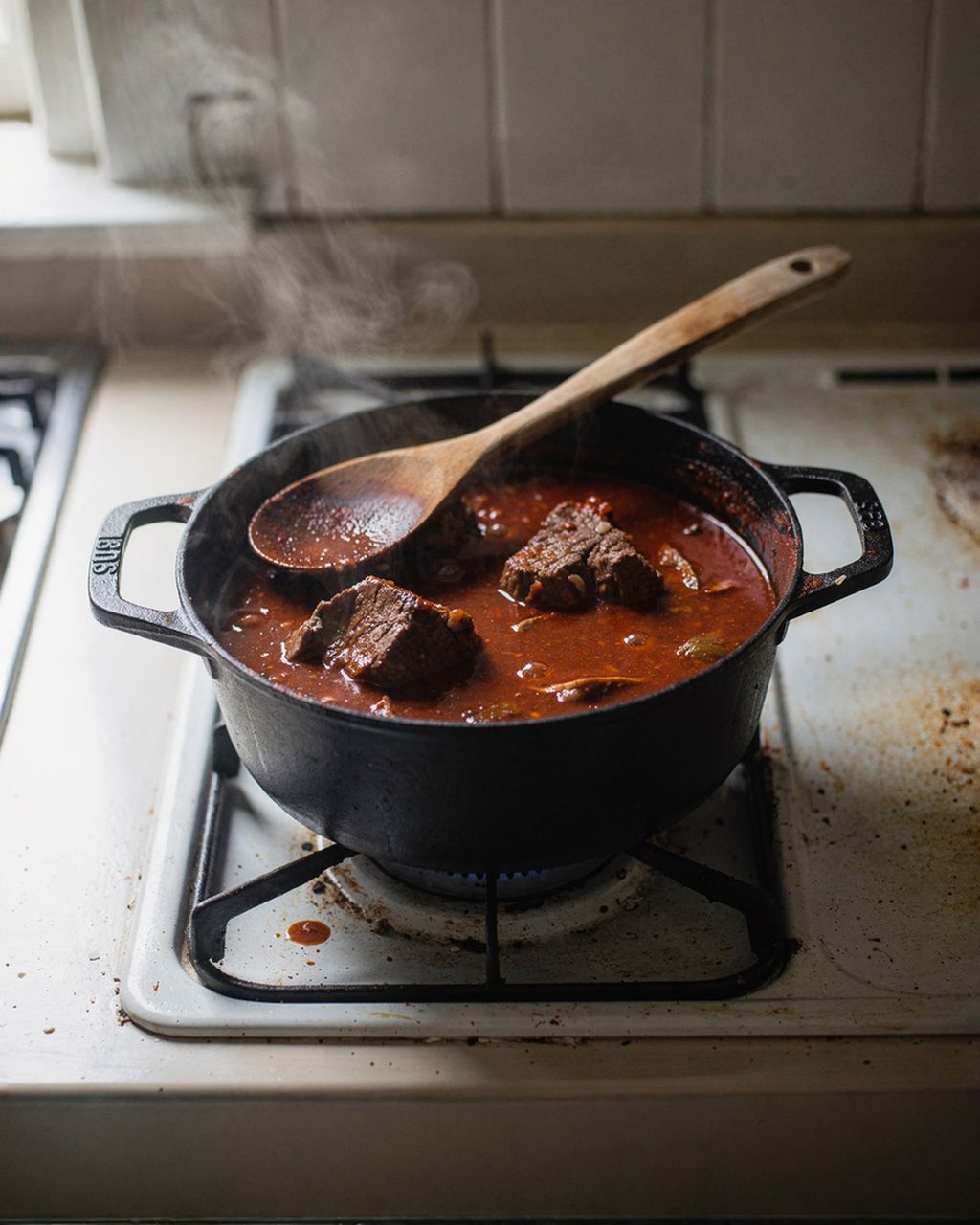
The good news is that the first, and most common, problem fixes itself with more time. If you are cooking Czech goulash, we have a separate guide on why goulash meat won't soften.
Recipe of the week, one tip that saves you time and one deal from the shop. Unsubscribe in one click.
The next issue goes out on Thursday, November 26.
This is the part that confuses people. Stewing cuts come from hard-working muscles full of connective tissue, mostly collagen. When you start cooking them, the muscle fibers firm up and squeeze out juice, so the meat gets tougher at first. Only after long, gentle cooking does the collagen slowly turn into gelatin, which is what makes the meat feel soft and juicy again.
So if you taste a cube after an hour and it is tough, you are in the middle of that process, not at the end of it. Taking the pot off the heat then is the single most common reason for tough stew.
The fix is simple: put the lid back on, keep it at a gentle simmer and test again later. Cook until tender, not until a recipe's time runs out. Cuts vary, pieces vary, and pots vary, so recipe times are only a guide.
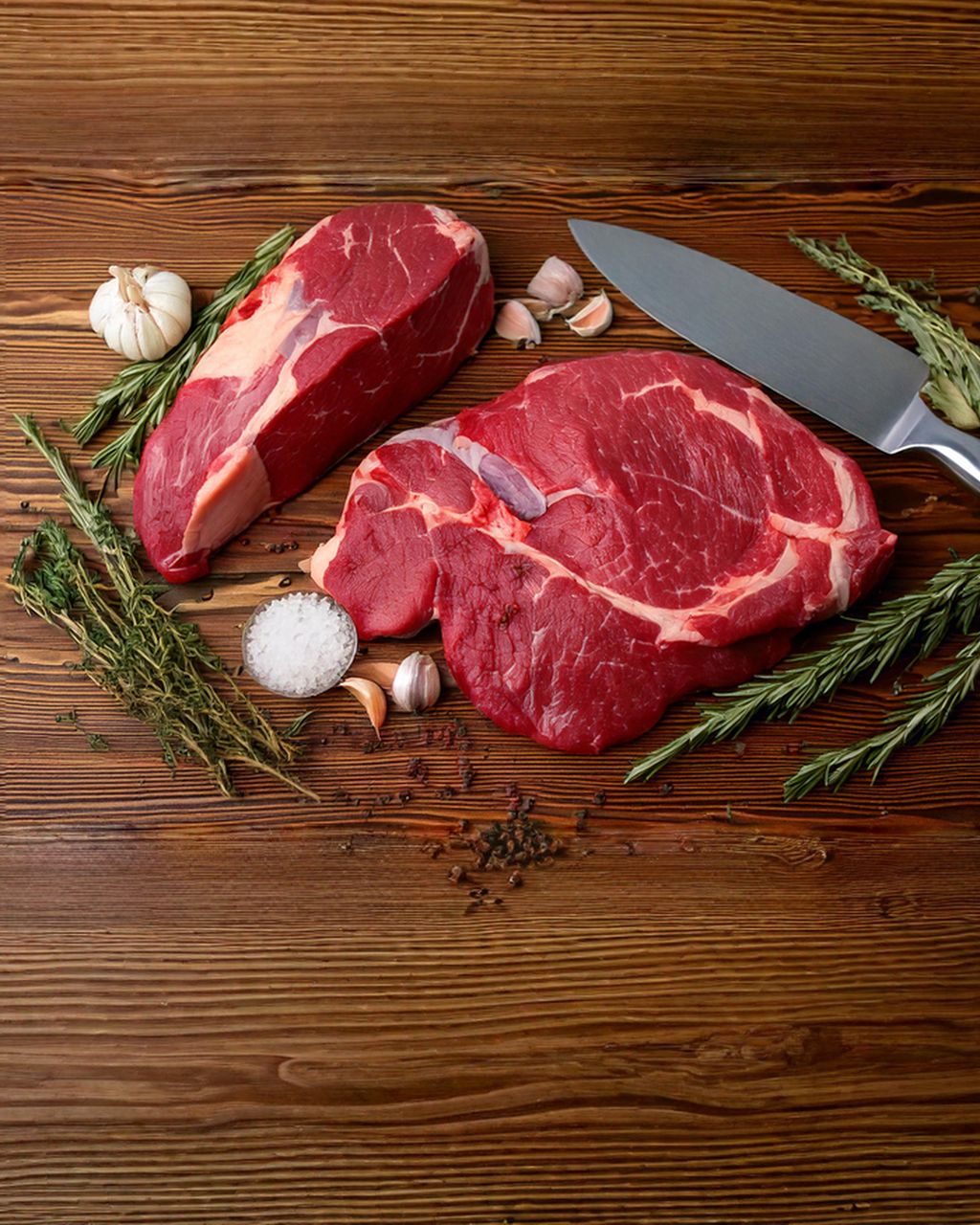
Pick a cut with plenty of connective tissue and some marbling. These are tough raw and tender after a long braise:
Chuck or shoulder: the classic stewing cut, well marbled and forgiving. Our beef chuck page has more on it.
Shin or shank: lean-looking but full of collagen, which turns rich and sticky. In Czech kitchens this is kližka (beef shin), the usual choice for goulash.
Cheeks: very rich and silky when done. See beef cheeks.
Brisket: good flavor, a little leaner, best in larger chunks.
Cuts to avoid for stew are the lean, tender ones: sirloin, tenderloin, and most round or rump cuts. They have little collagen, so long cooking only dries them out. They are best cooked quickly.
Packs labeled "stew meat" in supermarkets are often offcuts from several muscles, some lean and some fatty. That is why a few pieces in the pot can stay tough while others go soft. If you can, buy a whole piece of chuck and cut it yourself. Our guide to beef cuts and what to use them for covers the European names too.
A stew should simmer, not boil. At a hard boil the meat fibers tighten and squeeze out moisture faster than the collagen can melt, so the outside of each piece turns dry and stringy while the inside is still chewy.
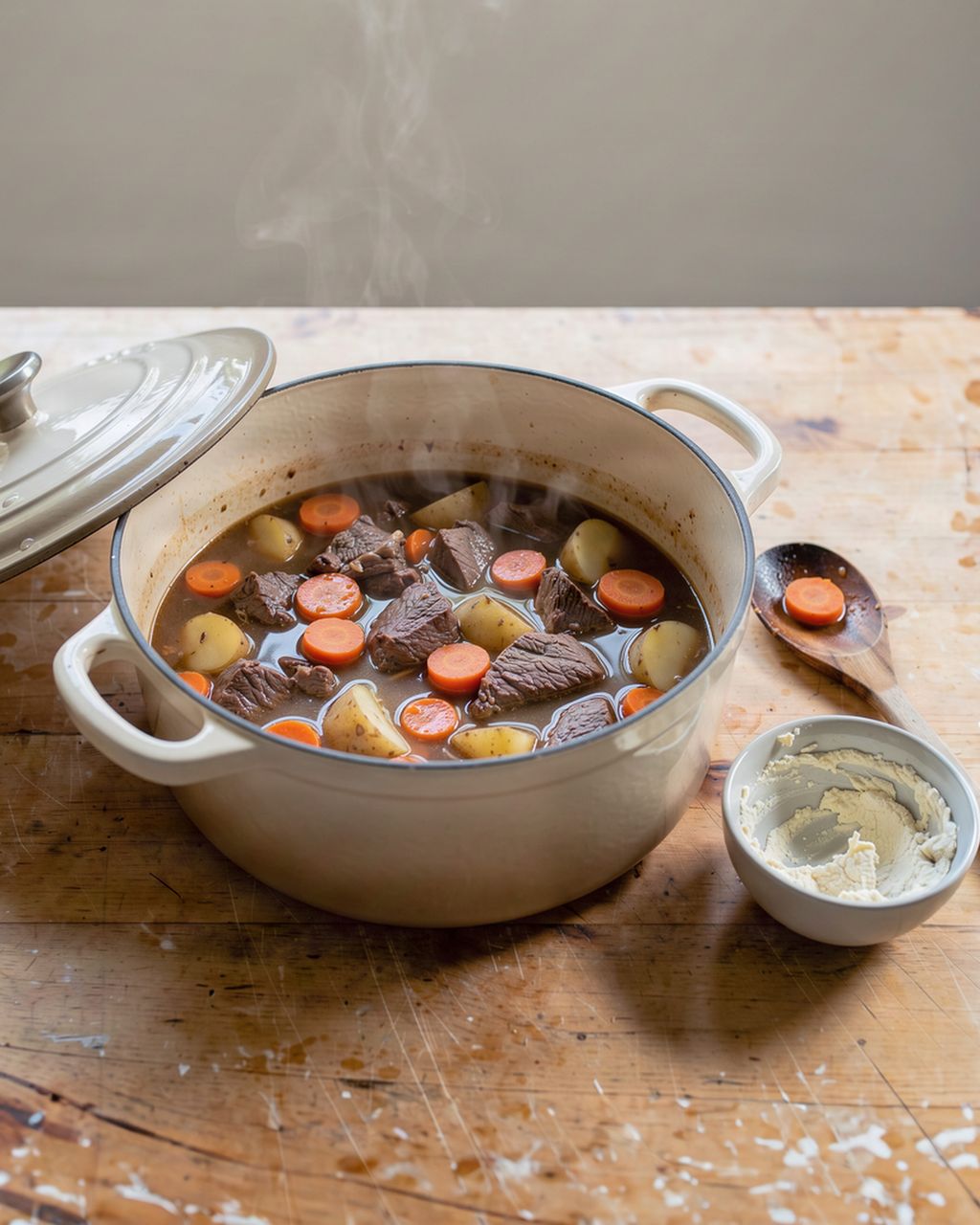
A gentle simmer looks like this: small bubbles breaking the surface lazily, here and there, not a rolling boil. On the stove that usually means the lowest or second-lowest setting with the lid on. Many cooks find the oven easier, because the heat comes from all sides and doesn't spike from below.
The same is true in a slow cooker. The high setting cooks faster, but many cooks find the low setting gives softer meat from lean-ish cuts.
Yes. Stew meat can be overcooked, and it shows as meat that falls into dry threads that still feel chewy in the mouth. Once the collagen has melted, the muscle fibers keep losing moisture if the cooking goes on for hours more.
Signs you have gone too far:
The pieces shred when you lift them, but each strand is dry.
The meat has shrunk a lot and the liquid tastes very meaty.
Lean cuts are worse than marbled ones.
You can't undo overcooking, but you can rescue the dish. Shred the meat into the sauce so the threads soak it up, and serve it over mash, rice or dumplings. Next time, start testing earlier and stop as soon as a piece breaks apart easily under a fork.
A few smaller things also make stew meat feel tough:
Pieces cut too small. Small cubes dry out before the collagen has time to melt. Aim for generous chunks, about 4 cm (1½ inches).
Cutting with the grain. Look at the lines of the muscle fibers and cut across them. Long fibers in the mouth feel stringy even when cooked.
Searing too hard or for too long. Browning adds flavor, but a deep crust cooked for many minutes dries the outer layer. Brown in batches in a hot pan, then move on. Our guide on why you sear meat before braising explains what searing does and doesn't do.
Too little liquid. Meat sticking up out of the liquid cooks in dry heat. Keep it mostly covered, and add a splash of hot stock if the level drops.
Acid added too early. A lot of wine, vinegar or tomato at the start can make some cuts take longer. It is rarely the main cause, but it adds up.
Slow cooker stew meat is tough for the same reasons as on the stove: the cut is too lean, or it needs more time. A slow cooker is forgiving with chuck and shin, but a lean cut will stay dry however long you leave it.
Pressure cooker stew meat is tough most often because it came out too early. Many cooks also let the pressure come down naturally for meat, because a quick release tends to leave it drier. Test a piece, and if it is still firm, close the lid and cook it a little longer.
For timings and how much liquid each method needs, see our guide to goulash in a pressure cooker, slow cooker or oven. The same logic applies to any beef stew.
Tough does not mean unsafe, and tender does not mean safe. They are different questions.
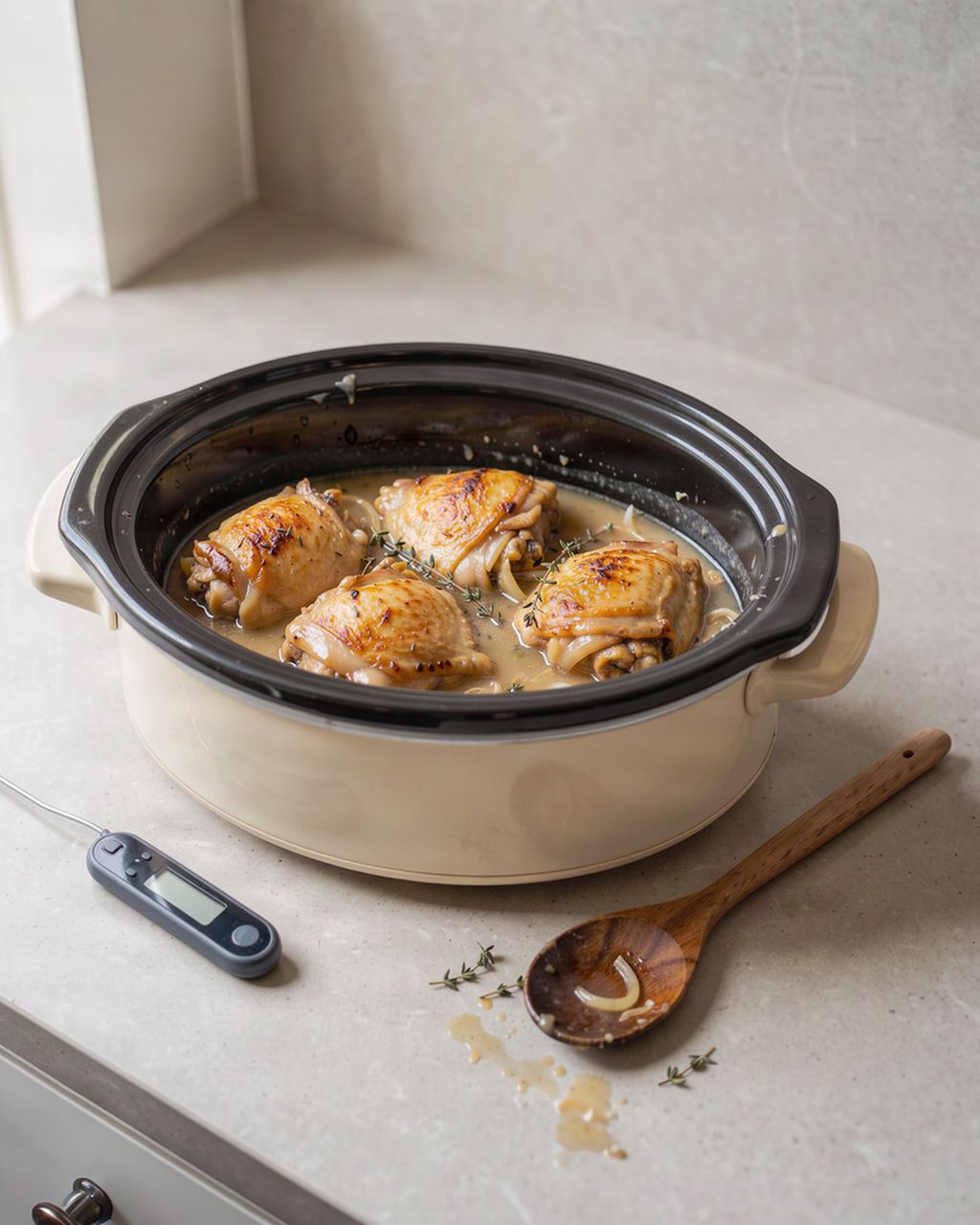
USDA FSIS sets the safe minimum internal temperature for whole cuts of beef, pork, veal and lamb at 63 °C (145 °F), checked with a food thermometer, followed by a 3-minute rest before carving or eating. Ground meat needs 71 °C (160 °F), and USDA FSIS puts all poultry, including chicken thighs in a stew, at 74 °C (165 °F).
Stew meat that has simmered in liquid until tender has gone far past those figures. Tenderness is a separate goal: it comes from collagen breaking down, which takes time at a simmer. If you ever doubt a pot that was barely simmered, check the thickest pieces with a food thermometer.
Up to a point, yes. Stewing cuts get firmer first, then soften as their collagen turns into gelatin with long, gentle cooking. After that, more hours only dry the fibers into strings, so test regularly and stop when a piece breaks apart under a fork.
Most tough stew meat just needs more time at a gentle simmer with the lid on. Add a little hot stock if the liquid has dropped, keep the heat low and test a piece every so often until it is tender.
Stew meat in a slow cooker is usually tough because the cut is too lean or it hasn't cooked long enough. Chuck and shin turn tender with more time on low; lean cuts such as round or sirloin stay dry however long they cook.
The best meat for beef stew is a cut with lots of connective tissue, such as chuck, shoulder, shin or cheeks. Lean, tender cuts like sirloin or tenderloin dry out in a long braise.
Stew meat that falls apart but tastes dry has usually been overcooked, boiled too hard, or came from a lean cut. Shred it into the sauce to rescue it, and next time keep it at a gentle simmer and stop once it is just tender.
One recipe worth heating the oven for, one tip, and one deal from the shop. Nothing else.